Category Archives: Uncategorized

Locust Walk Talk: Book Club

Author: Casey Ryan, C’95

As a member of the Class of 1995, I am part of the inaugural Penn Reading Project (PRP) class. During the summer of 1991, I received a book in mail from Penn and I put it aside to save as the reading for my flight to San Francisco for our “last family vacation” before I left for college.  After settling into my seat for the transcontinental flight, I opened the envelope which revealed The Bacchae by Euripides.

Image

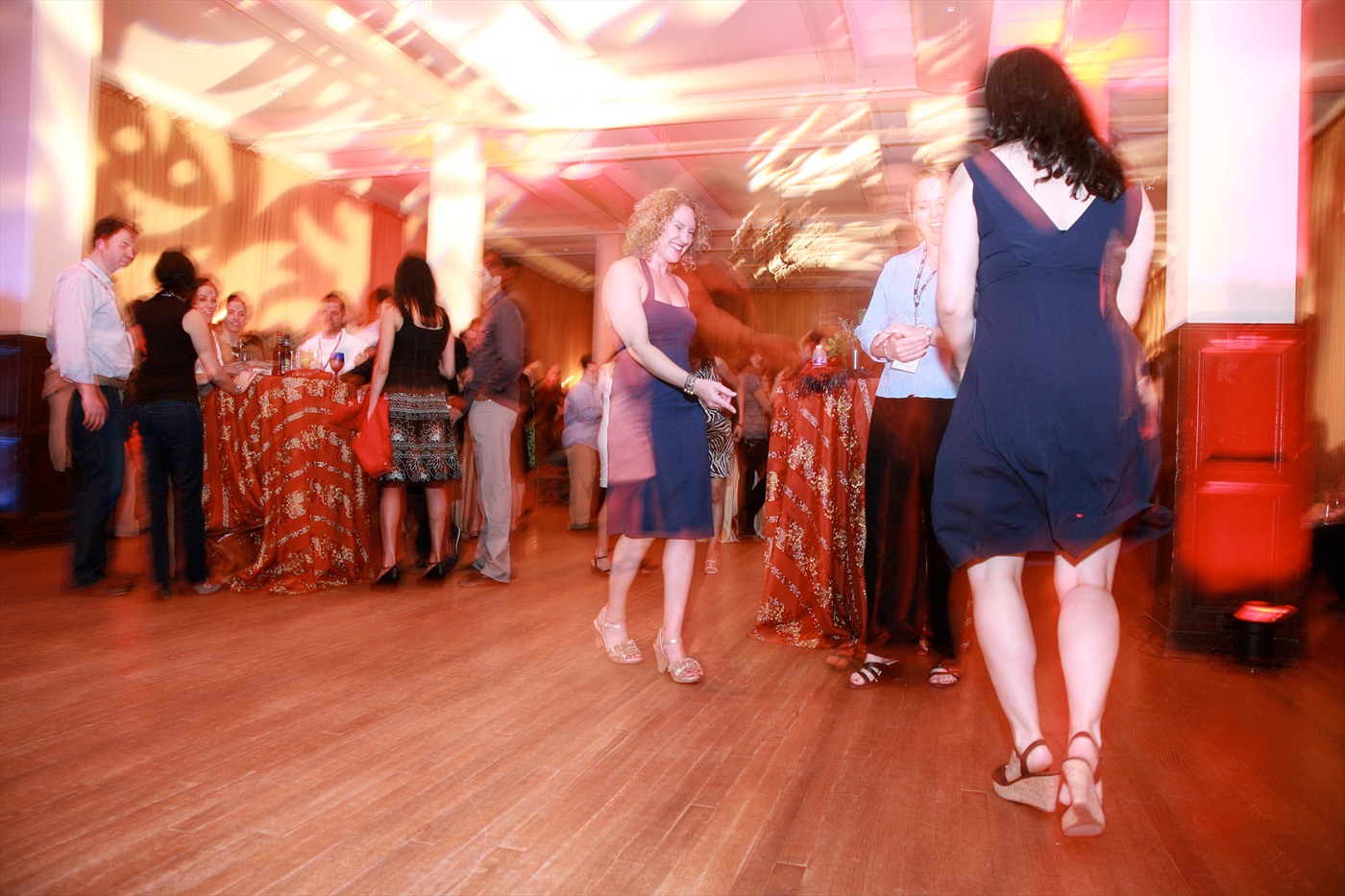
This Greek tragedy, based on the mythological story of King Pentheus of Thebes and his mother Agauë, whom god Dionysus punished for their refusal to worship him, was to be our class’s first shared educational experience in college.  This common experience did, in fact, resonate with us.  We incorporated the Greek theme into our 15th reunion party.
Image

The Class of 95’s Greek Bacchanalia 15th reunion

Now in its 21st year, the PRP returned to its roots with Doubt: A Parable by John Patrick Shanley as this year’s book.  Since 2007, The Penn Reading Project has been incorporated as part of the larger Academic Theme of the year.  This initiative is sponsored by the Provost’s office to develop a series of year-long events around a theme chosen by faculty, staff and students.  This year’s theme is the Year of Proof, which charges us to investigate how we know that what we know is true and discover our search for proof.

Image

As a nice professional development exercise, we in Sweeten attended our own private PRP discussion group at lunch.  Several of us on staff have read Doubt and eagerly talked about the play framed within the structure of the students’ PRP discussions which are facilitated by a faculty or staff member.  Our own Lisa Vaccarelli, C’02, GED’10, Director, Alumni Education, Alumni Travel & Career Networking, moderated our talk – pushing us to address both absolute proof and the varying degrees of doubt with working in tandem can either distort or illuminate the truth.

Lisa provided us with some questions in advance:

•             Did you like any of the characters in the play? If so, did your personal feelings for this character change in the course of the story?  Why?

•             Did you identify with any character in the film? If so, with whom and why? If not, why not?

•             Father Flynn said, “The truth makes for a bad sermon. It tends to be confusing and have no clear conclusion.” What do you think he meant by this? Do you agree with him?

•             Sister Aloysius remarked to Sister James, “In the pursuit of wrongdoing, one steps away from God.” What do you think she meant by this? Do you agree?

As well as creating questions on the fly:

•             In reference to the opening sermon, how is doubt isolating?  Unifying?

•             Who are the moral guardian’s in our society?

•             The subtitle for the play is “Doubt: A parable”.  How is the play a parable?

The conversation was heated and passionate; it encouraged about twenty of us to analyze and articulate our own beliefs on the actions in the play. It was invigorating to have such an exchange among a group of well-read colleagues.

Hopefully, this little exercise in our office may inspire you to seek out the current and former PRP books to add to your reading list. Or, if you are a class, club, diversity alliance leader or alumni volunteer, feel free to work with us in Alumni Relations to vet the ideas of how you can host a small book club and discussion group event for your fellow alumni on your own.

1 Comment

Filed under Casey R., Locust Walk Talk, Uncategorized

“I road my bicycle past…”

Author: Lisa Marie Patzer

In 2006, when I moved to Philly from Denver, I decided to sell my Subaru and see if I could get by without a car.  I relied on SEPTA, Philly Car Share, and my two trusty bicycles for transportation.  Since then, I’ve developed a new appreciation for what people do with bikes.  This first picture is of a 1988 Pinarello Montello and is very similar to the bike I ride around town.  A very average bike.

Pinarello Cherry Red

Cherry Red Pinarello

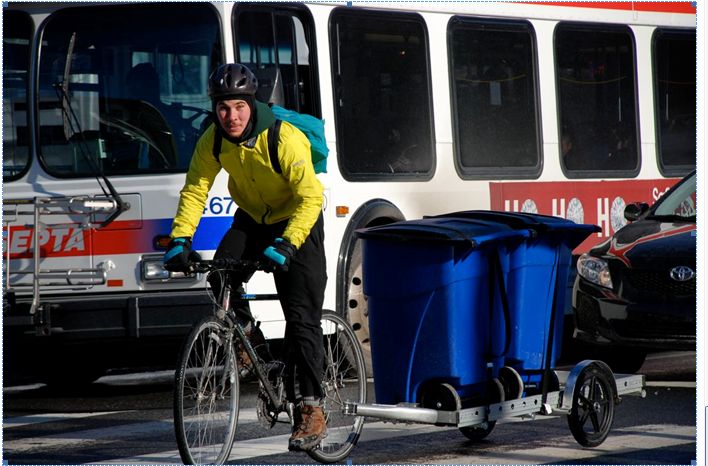
But then there is this guy.

Wash Cycle Laundry

Wash Cycle Laundry

He works for Wash Cycle Laundry, Philadelphia’s sustainable laundry and linen rental service.  They haul tons of laundry every week using bicycles and trailers. Bilenky Cycle Works, (BCW) is a specialty bicycle shop in North Philly dedicated to making custom bicycles “one frame at a time.”  They can make you a pizza delivery bike similar to this one if you want.

Bilenky Cycle Works

Pizza Delivery Bike by Bilenky Cycle Works

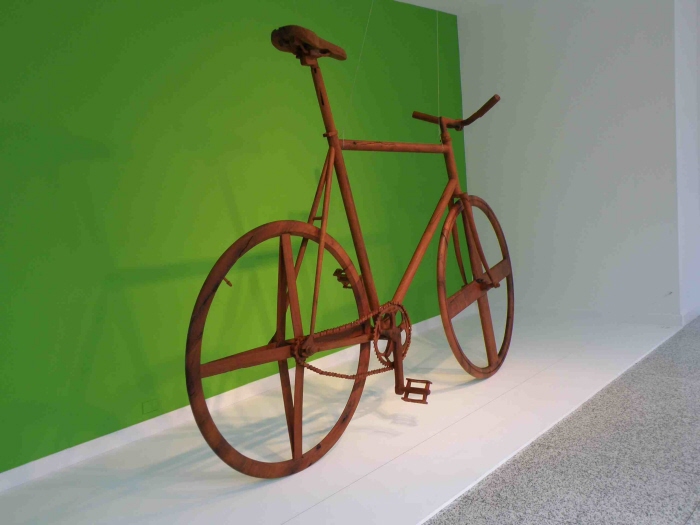
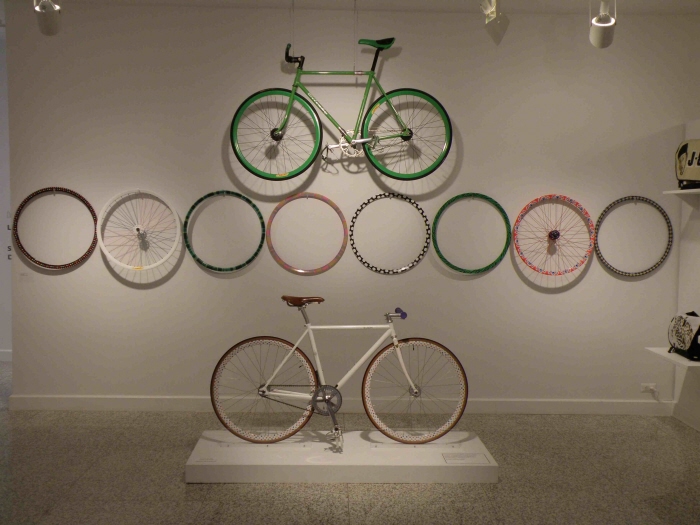
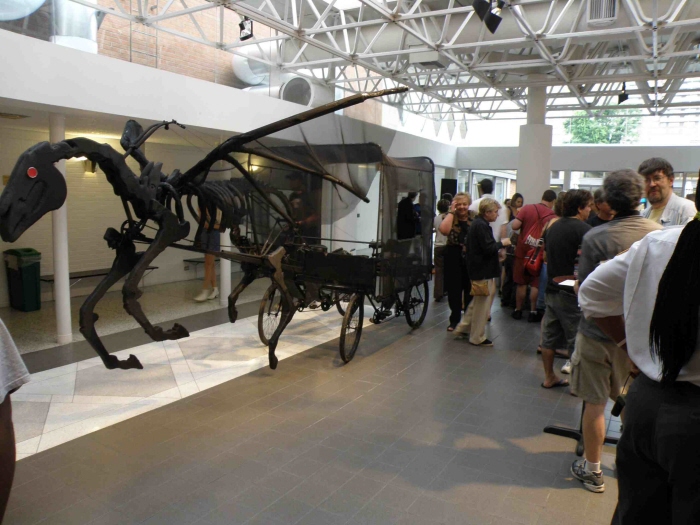
In October of 2010, BCW organized the first ever Philly Bike Expo, bringing together bicycle makers and enthusiasts from around the country.  Here are a couple of my favorite photos from that event.

Wooden Bike Sculpture

Wooden Bike Sculpture

Fixed Gear Display

Fixed Gear Display

Pink Cargo Bike

Kensington Kinetic Sculpture Derby piece in reception area.

Kensington Kinetic Sculpture Derby display

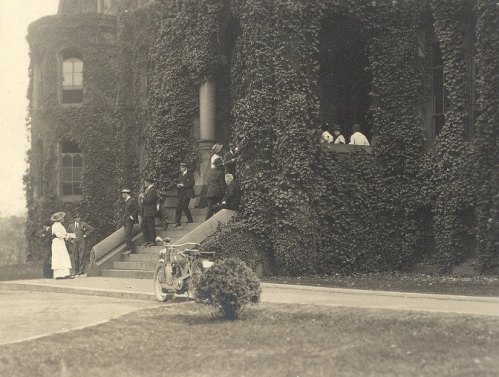
The University of Pennsylvania has it’s own history with the bicycle.  This photo, made available by the University Archives Digital Image Collection, was taken in 1914 in front of College Hall.  I would like to see the woman in the white dress and big hat riding one of those bikes.

College Hall, 1914

College Hall, 1914

And this was taken in 1963 in front of Annenberg Center.

Annenberg Center, 1963

Annenberg Center, 1963

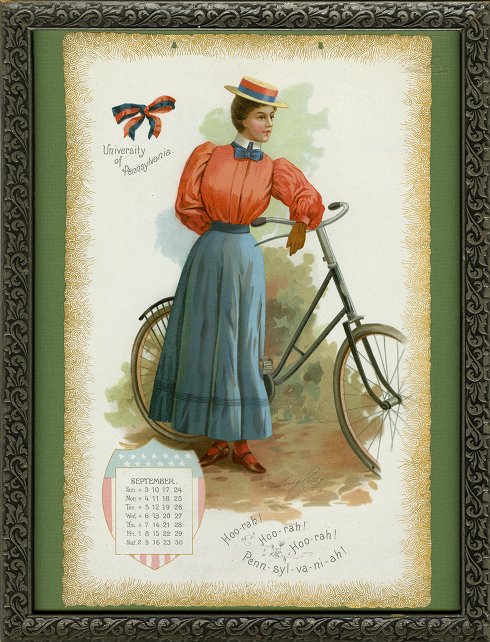
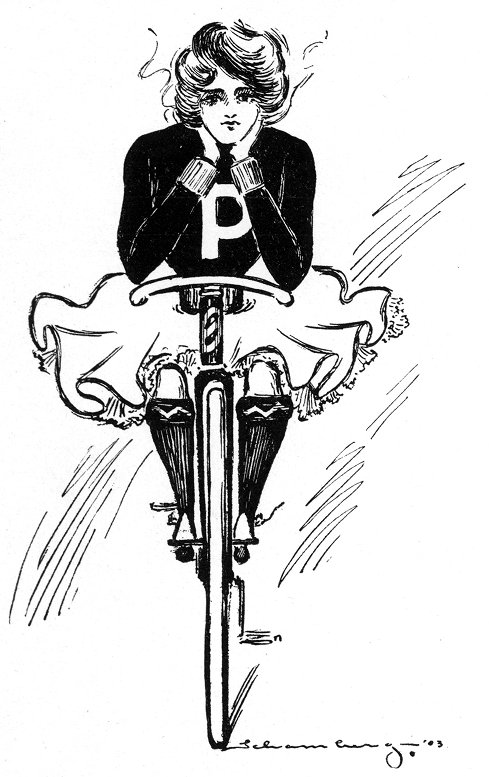
This illustration is from the University Calendar, September 1905, and below it is a black and white drawing by Morton Livingston Schamberg, circa 1900.

University Calendar, Illustration, September 1905

University Calendar, Illustration, September 1905

Illustration by Morton Livingston Schamberg, 1900

Illustration by Morton Livingston Schamberg, 1900

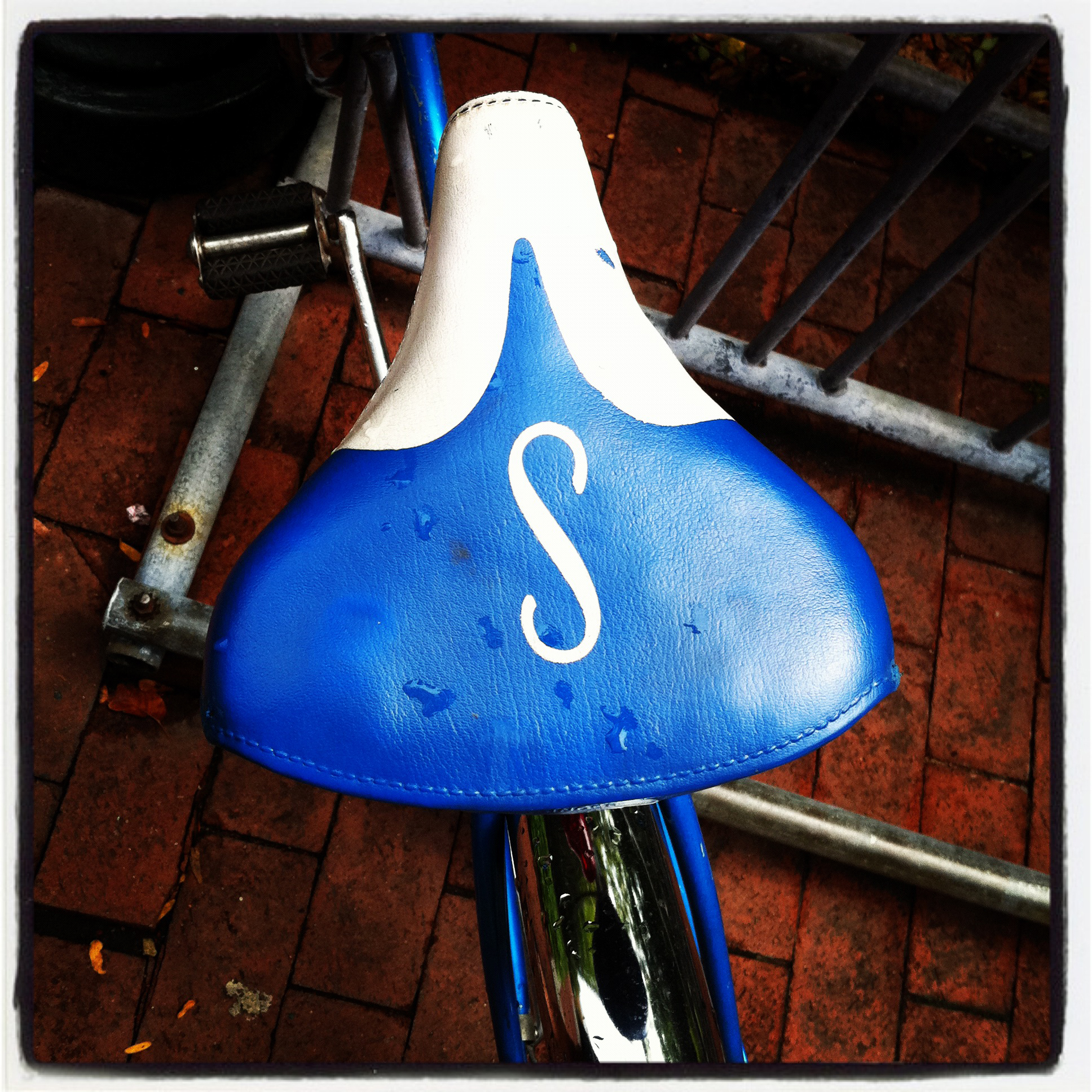
And here is a photo I took today on campus.

Schwinn Seat - Photo from 8/14/12 on Penn's Campu

Schwinn Seat

Old and new, bicycles are a part of the Philadephia experience and life on campus.  For more information about bicycling in Philadelphia, check out The Bicycle Coalition of Philadelphia web site.

Leave a comment

Filed under Campus Life, Historical, Lisa Marie Patzer, Penn in the Summer, Philadelphia, Photos, Uncategorized

What You’ve Been Missing: Penn Museum 125

Author: Nicole C. Maloy, W’95

One of Penn’s most exciting resources is one that many students and alumni have never explored. Now there is a new way for you to see what you may have been missing.

The University of Museum of Archaeology and Anthropology is a gem, with permanent and traveling exhibits that offer access to rare and fascinating items from around the world. In honor of the Museum’s 125th anniversary, 125 objects in the collection are being featured on the Museum’s blog under the tag “Object of the Day.” This began on June 15, so take a look at what has been highlighted so far, and watch for an additional piece each weekday through the Museum’s birthday on December 6. Wherever you are now, don’t miss this easy chance to familiarize yourself with an amazing center of knowledge at your own alma mater.

Attic red figure amphora from Athens, Greece, around 490 BCE, featuring a winged Nike, goddess of victory.

Attic red figure amphora from Athens, Greece, around 490 BCE, featuring a winged Nike, goddess of victory.

This funerary/guardian figure from Gabon, on the West coast of Central Africa, is made of wood covered in sheets of copper and brass.

This funerary/guardian figure from Gabon, on the West coast of Central Africa, is made of wood covered in sheets of copper and brass.

Satin Mandarin square from the Qing Dynasty, China (19th century) depicting a Qilin, a mythical horse-like animal reserved for the weaves of first rank military officers.

Satin Mandarin square from the Qing Dynasty, China (19th century) depicting a Qilin, a mythical horse-like animal reserved for the weaves of first rank military officers.

This Egyptian statue from 1479-1458 BCE is made of sandstone, and pigment remains on the wig, face and hands.

This Egyptian statue from 1479-1458 BCE is made of sandstone, and pigment remains on the wig, face and hands.

You can find even more items via the Penn Museum’s new Online Collections Database, but the “Object of the Day” blog feature is great place to start. Check it out, and remember to build in a visit next time you return to campus so you, friends, and family can learn about objects like these, among many, many more.

Leave a comment

Filed under Historical, Nicole M., Penn Museum, Photos, Uncategorized

Penn Olympic Athletes – Photo Essay

Author: Lisa Marie Patzer

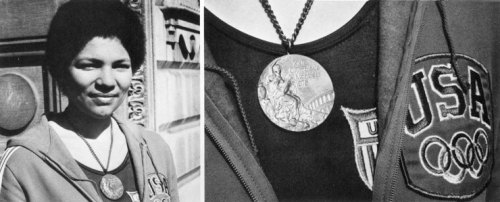
Penn Alumni have a long history of Olympic success.  Pictured here are some of the University’s past and present Olympic Athletes.

George Washington Orton (1873-1958), winning his Olympic gold medal, July 1900

George Washington Orton (1873-1958), winning his Olympic gold medal, July 1900

Donald Fithian "Don" Lippincott (November 16, 1893 – January 9, 1963)

Donald Fithian “Don” Lippincott (November 16, 1893 – January 9, 1963)

William Arthur Carr (1909-1966), B.S. in Economics 1933, at the starting line

William Arthur Carr (1909-1966), B.S. in Economics 1933, at the starting line

Anita Luceete DeFrantz (born 1952), J.D. 1977, yearbook photograph

Anita Luceete DeFrantz (born 1952), J.D. 1977, yearbook photograph

Gold medal winner Susan Francia C'04 G'04, and Koko Archibong C'03, stopped to pose together in the Olympic Village earlier this week

Gold medal winner Susan Francia C’04 G’04, and Koko Archibong C’03, stopped to pose together in the Olympic Village earlier this week!

This photo is today’s competitor in the Ivy+ Alumnipics competition.  Show your Penn Pride by “liking” the photo on Facebook here before 11EST tomorrow.  The more “likes” we receive, the greater our chances of winning the gold medal!

(Archival images courtesy of the University Archives Digital Image Collection, http://dla.library.upenn.edu/dla/archives/index.html)

Leave a comment

Filed under Alumni Profile, Athletics, Historical, Lisa Marie Patzer, Notable Alumni, Photos, Uncategorized

Mirror, Mirror on the Wall

Author: Stephanie Yee, C08

Last week, I had the pleasure of eating dinner at Doc Magrogan’s, the newest restaurant on Penn’s campus. The food was delicious, the service was fantastic, and the décor was perfectly Penn. The private room upstairs was decorated with a beautiful mirror etched with the Arms of the University of Pennsylvania. I can’t stop thinking about the Penn mirror, and I want to know where I can find one for my home. Any ideas?

Leave a comment

Filed under Uncategorized

Alumpics Competition: Day 4

Author: Aimee LaBrie

This is the fourth day in a row of the Alumpics Ivy+ photo competition, and Penn is decidedly behind the rest of the pack, in large part because we have so many loyal followers to our Penn Facebook page.

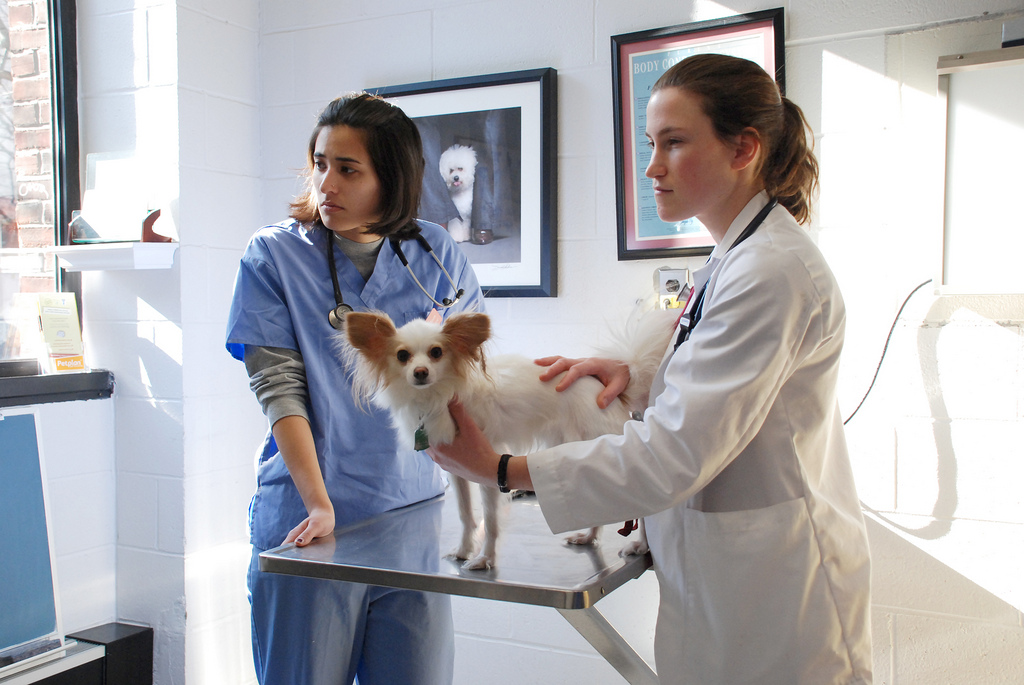
However, you can still make a difference by liking today’s photo on Facebook here. The topic was academics, and I thought I’d post something totally adorable. Here is the associated photo from Penn Vet’s Summer program. He’s looking right at you and saying, VOTE!

To see what our peer institutions are posting, visit the Alumpics website.

Leave a comment

Filed under Aimee L., Ivy+, Uncategorized

Honoring the Past and Engaging the Future – Our Founder

ASSOCIATION OF ALUMNAE – CELEBRATING 100 YEARS
Author: Sue Czarnecki, G’82

Our Founder
Catharine Wetherill Beekley, C’1910

This year the Association of Alumnae celebrates its 100th anniversary. As part of our year-long celebration, we are bringing to you some interesting stories about the Association and its alumnae. The first women at Penn, Gertrude Pierce, Anna Flanigen, and Mary Lewis, were chemistry students in the 1870s. Continuing in this fine tradition of Penn women in science, our founder, Catharine Wetherill Beekley was a biologist.

Catharine was born on June 3, 1888 and lived in Media. Her childhood home on 116 N. Lemon Street, built in 1890, still stands. Catharine was a gifted student and majored in biology at Penn. At that time biology was largely taught as botany and zoology. Founded in 1884, the Department of Biology was the third academic program at Penn to admit women. Catharine also was a member of the Kappa Kappa Gamma Fraternity, Beta Alpha chapter, the first sorority on campus. The Beta Alpha chapter was established in 1890, and five of its six founders were biology students. One of its founders, Josephine Feger Ancona was the first woman to earn a bachelor’s degree at Penn, a degree in biology in 1895! Catharine graduated first in her class with a BS in Biology with Honors in 1910. At the June commencement, she received the JSH Prize in Biology for her distinguished studies, a prize she won earlier as a sophomore. At Penn the biology curriculum had a strong focus on botany, invertebrates and protozoology, and Catharine developed an interest in aquatic biology.

After graduation, Catharine began teaching at the Philadelphia High School for Girls as a second assistant in biology. She remained close to her fraternity sisters and hosted social meetings of her fraternity sisters at her home in Media. On February 7, 1912, on the invitation of Catharine, seventy women met at the College Club, 1300 Spruce Street, to form the Association of Alumnae. She later remarked “…the objective I had in mind…to further the interests of women students…” The mission of the Association of Alumnae was

 “to unite the women graduates of the University of Pennsylvania and to further among them a spirit of cooperation in work and fellowship; to promote the welfare of the women students at the University; and to keep  alive the interest of the women graduates in all the activities of their Alma  Mater.”

The first officers of the Association of Alumnae were Pauline Wolcott Spencer, Sarah Pleis Miller, Jennie Ritner Beale, Zeta Berenice Cundey, Eleanor Fulton Karsner, and Elizabeth N. Woolman Pennock. Of the six officers two were biologists, Sarah Miller and Eleanor Krasner, and one a chemist, Elizabeth Woolman Pennock.

The Association of Alumnae held its first annual meeting on June 19, 1912, Commencement Day, at 3:00 PM in the Botanical Gardens. The women graduates of the Class of 1912, Provost Dr. Edgar F. Smith, the Vice Provost, Deans and their families attended.  A Japanese comedy was presented and was followed by an informal reception.

Class of 1912
University Archives, The Women’s Record 1912

After two years of teaching at the high school, Catharine resigned and accepted a position as teacher and social worker at the Biological Laboratory at Cold Spring Harbor, a division of the Brooklyn Institute of Arts and Sciences (Brooklyn Museum) established for the training of educators in marine biology. By 1917 she had written a book, Laboratory Manual in Biology and decided to pursue a research career in marine biology.During the summer of 1919, Catharine traveled to the Marine Biological Laboratory at Woods Hole and attended the course, Embryology, a decision that changed her life.

The following year, Catharine joined the faculty of the University of Oregon, Eugene as an instructor and later became assistant professor of zoology. It was there that Catharine met and married another biologist, Dr. Harry Barclay Yocom, on September 21, 1921. Dr. Yocom was born on July 12, 1888 in Pennsville, Ohio and received a BS from Oberlin College in 1912 and his MA and PhD from the University of California, Berkley in 1916 and 1918. In 1920, Harry moved from the City College of New York to the University of Oregon, Eugene where he accepted a position as assistant professor of zoology. Dr. Yocom later became professor and chair of the department and remained on the faculty for over twenty-five years.

Catharine shared an office with her husband in Deady Hall and taught a wide variety of courses, mostly in marine biology during the 1920s. She taught Marine Biology, Marine Zoology, Invertebrate Morphology, Marine Algae, Botany, Botanical and Zoological Problems and several botany and algae labs on campus and at the marine zoology station.

Beginning in the summer of 1924 and for many summers thereafter, the Yocoms and their students traveled to Sunset Beach on the Oregon coast, south of Coos Bay, to its sandy beaches, rocky shores, tide pools, and mud flats to conduct research on its marine residents. The Yocoms established the University’s marine zoology station and taught courses there each summer, setting up their laboratories under tents and residing first in tents and then at the Boy Scouts camp. From these primitive beginnings, the marine zoology station evolved to the Oregon Institute of Marine Biology (OIMB) now located in Coos Bay a short drive north from Sunset Beach. Dr. Yocom, recognized as the founder of the OIMB, now a world-renown research institute, became its first director. In 1956 he was honored for his pioneering work and received the Outstanding Oregon Scientist Award from the Oregon Academy of Science. But, of course, we know that none of this would have been possible without his colleague, wife, and co-founder, Catharine.

Leave a comment

Filed under Association of Alumnae, Historical, Kristina C., Uncategorized

Traditional Archival Photos

Author: Lisa Marie Patzer

Penn Alumni have a long history of engaging in tradition and thanks to the University Archives Digital Image Collection, it is easy to access digital photos of the University’s traditions.  Here are some of my favorites from the collection:

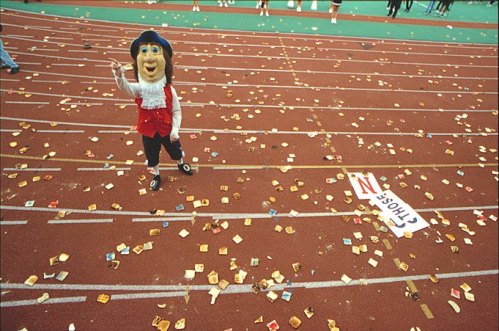
Penn fans throw toast onto Franklin Field after the third quarter of every home football game. The toast-throwing tradition was in response to the line “Here’s a toast to dear old Penn” in the school song “Drink a Highball”. The act of throwing toast was adopted after alcohol was banned from the stadium in the 1970s. In a good season, 20,000 to 30,000 pieces of toast are thrown per game!

Throwing toast - a Penn tradition,1999, Tommy Leonardi,  photographer

Throwing toast – a Penn tradition,1999, Tommy Leonardi, photographer

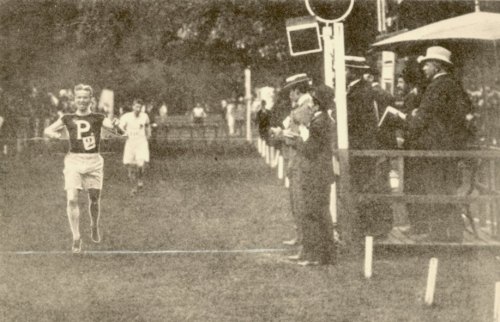
Established in 1895, The Penn Relays represent the largest amateur track meet and oldest organized relay competition in the United States. The event is held every April for three days at Franklin Field. The Relays bring together the best track and field athletes from high schools and colleges worldwide, in addition to races on Saturday with Olympic athletes. An important event to the community, the Relays bring in over 100,000 spectators each year.

Penn Relays, 1913, 4-mile, George Atwell Richardson, photographer

Penn Relays, 1913, 4-mile, George Atwell Richardson, photographer

Although it’s possible to get basketball season tickets without camping out overnight at the Palestra, the best seats go to those who wait in “The Line”. Groups spend 24 hours in the nation’s oldest basketball arena just to score coveted court-side seats. The tradition started in 1969, and now the date and location where the tickets will be sold is changed every year and kept top secret.

University of Pennsylvania campus, 1932

University of Pennsylvania campus, 1932

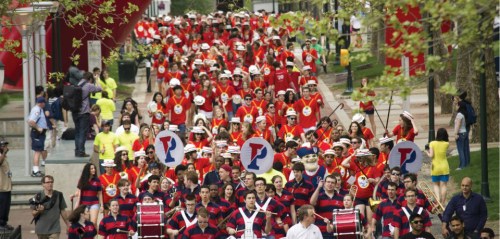
In 1916, Hey Day was established as a “Moving-Up” celebration to mark the advancement of each class. In recent decades, Hey Day has represented the official passage of the junior class to senior status and is characterized by thousands of marching students parading around campus and wearing red T-shirts, carrying canes, and biting into fake straw hats.

Class Hey Day crowds,1950

Class Hey Day crowds,1950

Hey Day has changed a bit since 1950 and the celebration is bigger and more festive than ever.  Here is a photo from the 2012 Hey Day parade.  This photo is today’s competitor in the Ivy+ Alumnipics competition.

Hey Day 2012

Hey Day 2012

Show your Penn Pride by “liking” the photo on Facebook between 11am EST Tuesday, July 31st and 11am EST August 1st.  The more “likes” we receive, the greater our chances of winning the gold medal!

Leave a comment

Filed under Athletics, Awards, Historical, Lisa Marie Patzer, Notable Alumni, Photos, Traditions, Uncategorized

Show Your Penn Pride

Author: Aimee LaBrie

There are many ways to show your Penn pride each and every day. For example, my entire wardrobe consists of red and blue, and I wear some color combination of this every day :

One of the 75 red and blue, mix and match pieces I wear each and every day, including weekends.

Another way to show your pride is to sing Penn songs loudly and often. Many of our alumni do just that by gathering around the piano at Sweeten each afternoon, wearing skimmer hats, and belting out “Red and Blue” as the carillon chimes along in the background.

Photo taken just last week when the women’s glee club stopped by.

Others even go so far as the have the Penn “P” permanently tattooed on their faces:

In truth, these tattoos are made of face paint.I think?

And now, starting next Monday, July 30, alumni, students, faculty, and staff can show their collective Penn spirit in much easier way: by “liking” our Facebook posts as part of a national contest with the other universities who make up the Ivy+ alumni groups.

Who exactly are we competing against? Here’s the confirmed list of our competitors to date (Brown, Dartmouth, and Yale are still undecided):

Columbia

Cornell

MIT

Princeton

Stanford

You can read more about it by visiting our Facebook page. You can also get into the habit of “liking” our posts by doing so now on the Penn Facebook page here.

I’ll write up another reminder post and link next week, but keep your fingers poised over the keyboard until then. We want to win the gold and prove that we have the most engaged alumni and friends in the country!

Leave a comment

Filed under Uncategorized

Keeping the Personal in “Personal Computing”

Author: Lisa Marie Patzer

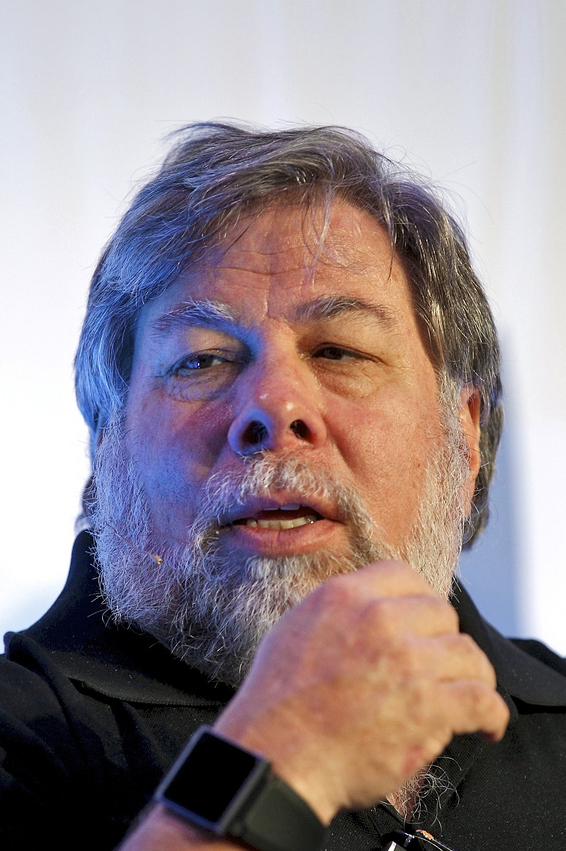
Last week I attended the 5th annual Wharton Web Conference at the University of Pennsylvania.  As expected, I learned about current trends in web design, was exposed to some new tools for writing efficient CSS as well as saw a presentation about the developments with HTML5.  The unexpected highlight of the day was the keynote speaker Steve Wozniak, known to some as “Woz”.

Steve Wozniak, photo by the DEMO Conference

Steve Wozniak, photo by the DEMO Conference

Prior to the conference, my knowledge of Wozniak was fairly general.  I knew he was the engineer of the first Apple Computer and that he and Steve Jobs revolutionized the world of personal computing.

Apple_I_Computer_byEdUthman

Apple I Computer, photo by Ed Uthman

What I didn’t know, and what became clear during Wozniak’s presentation, is Wozniak is truly committed to the “personal”.  He spoke at length about the importance of the individual having access to technology, the role of individual creativity in innovation and his belief in hacking as a means for discovery. It was Wozniak’s commitment to free expression and individual ingenuity that prompted him to create devices on his own and ultimately led to the first marketable personal computer.

Apple II Computer, photo is in the public domain

Apple II Computer, photo is in the public domain

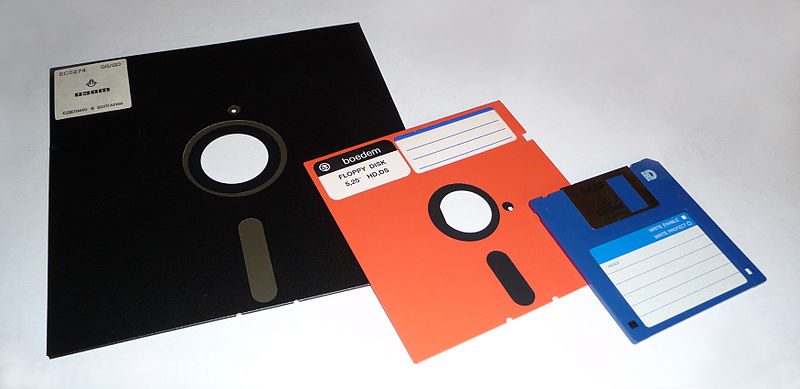
8-inch, 5,25-inch, and 3,5-inch floppy disks, image is in the Public Domain

8-inch, 5,25-inch, and 3,5-inch floppy disks, image is in the Public Domain

As a web designer and new media artist, it was inspirational to hear Wozniak speak about the influence an individual can have on the development of technology.  It was a good reminder to me that technology is not only a means to an end.  Technology can be a playground for exploration, tinkering and personal expression. One other fun bit of trivia I learned was that Wozniak developed the first version of the Atari Video game Breakout in just 4 days. It was never mass produced, but it led to the development of the popular home video game featured in this commercial.

Leave a comment

Filed under Uncategorized