Author: Thomas Max Safley, Professor of History, University of Pennsylvania
[To learn more about academic alumni tours with Penn Alumni Travel, visit our website here. To learn more about our November departure to Morocco, click here.]
From 30,000 feet in altitude, the coast of Morocco first showed itself a blue-green landmass under a red sunrise. I might have been looking at a print by Georgia O’Keefe, so strange and familiar it seemed. The night had been rough. The delayed flight from winter-bound JFK and the listless service from the Royal Air Maroc crew drove me to seek refuge in sleep. I awoke in a very different place.
As our plane descended, the image resolved itself not into O’Keefe’s stark desert, but into the verdant coastal plain outside Casablanca. Even in February the northwestern tip of Africa showed itself lush. Planted fields (what crops?) and pastures lapped about walled farmyards and small villages, all white from above. The airport itself seemed small and primitive, especially in comparison to the international gateway we had departed, but the sun was warm and its light promising. A very different place. Just how different I would discover gradually.

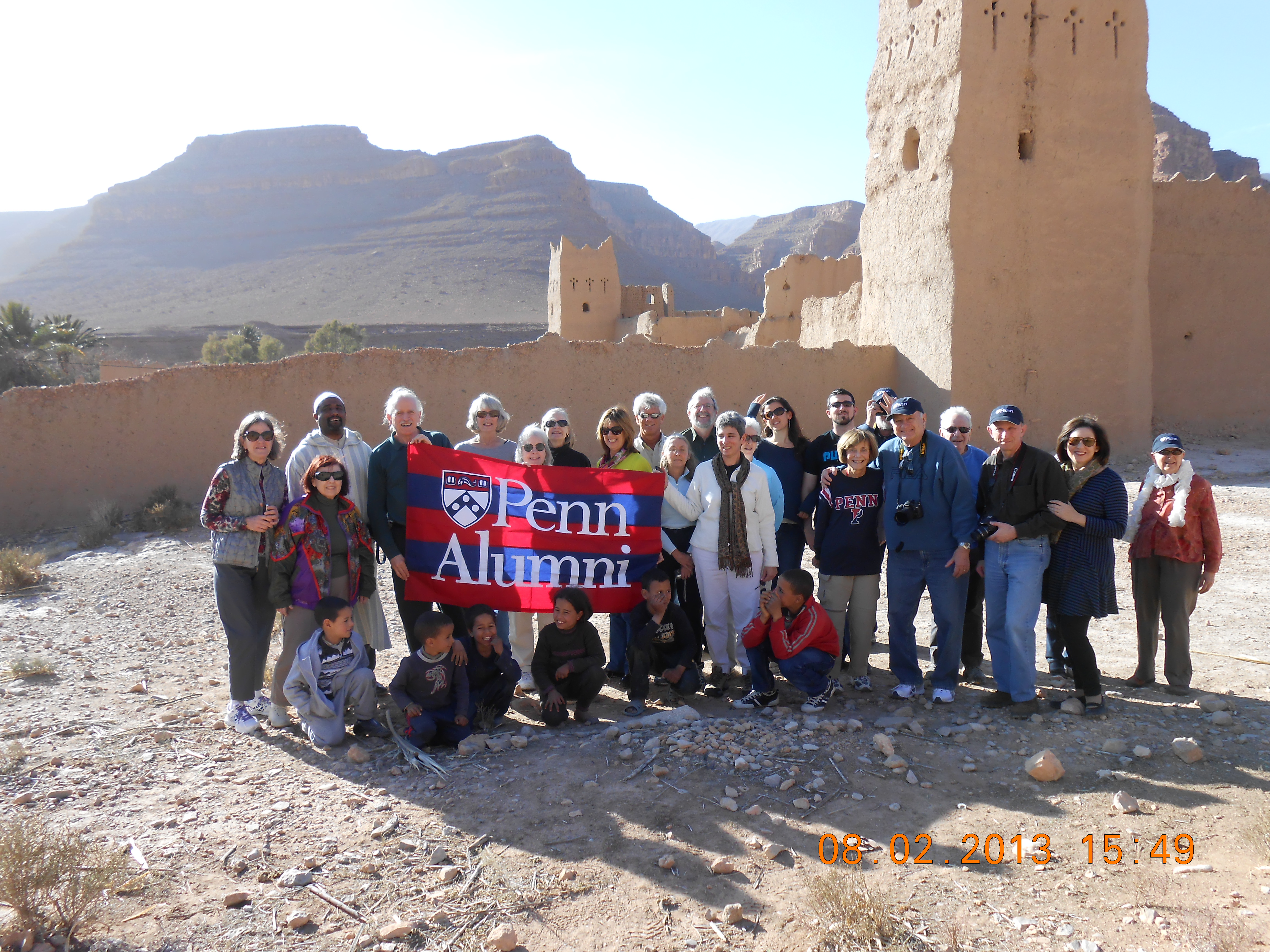
Penn alumni and friends in Morocco with Professor Thomas Max Safley. You can view all the pictures from this tour here.
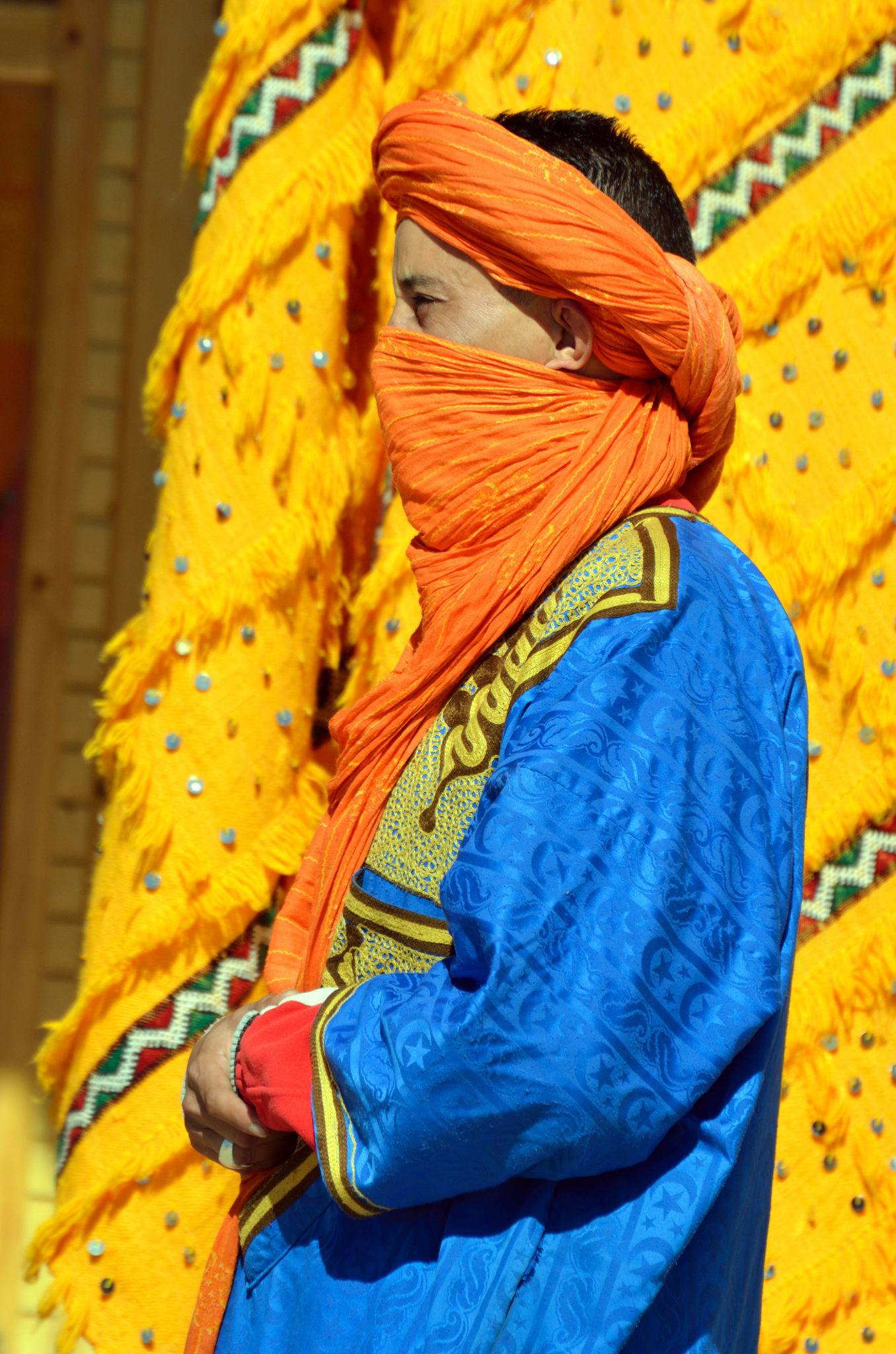
Through passport-control and baggage-claim, I entered Morocco proper. Our local guide, Sedik collected our group gradually, and, as I waited for everyone to arrive, I looked about. The arrivals hall was modern; the ATMs were reassuring; the advertisements were familiar, if cosmopolitan in Arabic, French and English. But the Moroccans themselves were fascinating. They were African, Berber, Arab and European, as well as every conceivable mixture. They spoke Berber, Arabic, French and English, as well as many languages or dialects I could not identify, a truly polyglot country. Their dress reflected their various preferences and heritages: men in expensive suits, hip-hop fashion and traditional djellabas; women in dress suits, tights and boots and full burqas. What had I been expecting?
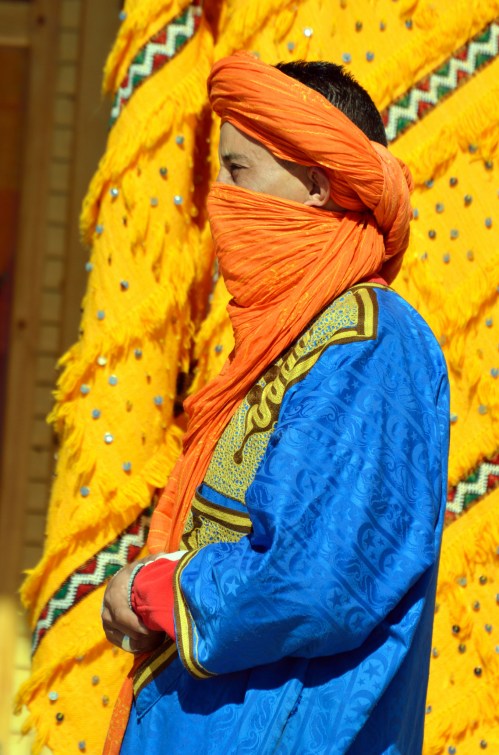
Photo by Penn alumnus Murray Sherman, GR’69.
A modern tour bus conveyed us comfortably, despite jetlag and culture shock, to our first destination, the capital city of Rabat. It moved along a modern, divided highway. I could have been anywhere, but the fascinating dissonances continued. The farms and villages, so clean and white from above, proved to be four-square, flat-roofed, one-story, mud-brick structures of indeterminate color, fading from white into shades of brown, gray and ochre. More people were moving across the fields on packed-earth paths, afoot or astride burros, than were travelling on the roads in vehicles. Rest stops offered not only the usual physical comforts, but also spiritual comfort in the form of prayer rooms for Muslim devotion. And cats everywhere. They watched us with far more interest than did the Moroccans.
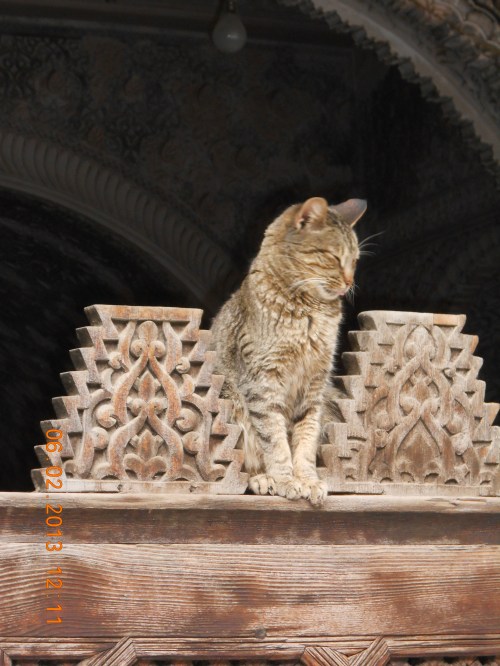
Cat sentry. Photo by Professor Thomas Max Safley.
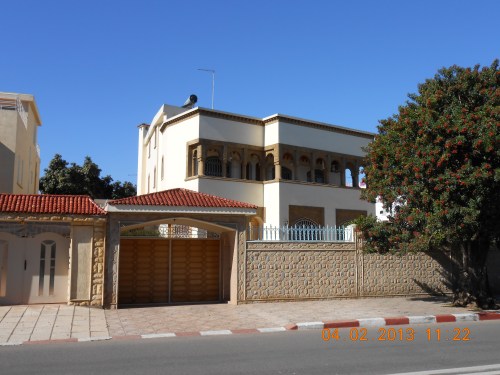
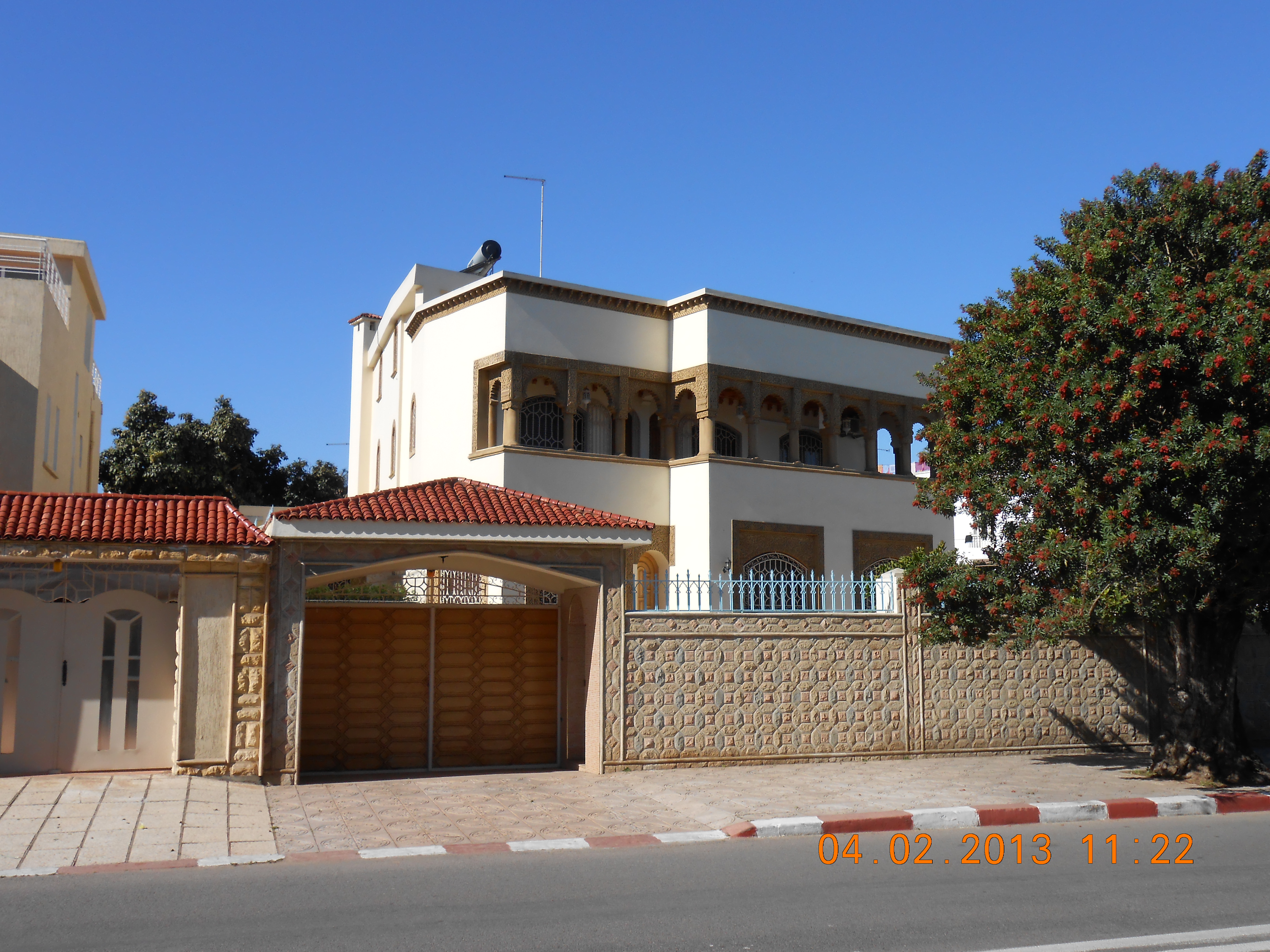
Domestic architecture in Rabat. Photo by Professor Thomas Max Safley.
Rabat began to dispel that sense of “anywhere” modern. True, the city has a large, contemporary district, filled with sleek office and residential buildings, up-scale shops and restaurants. Our first hotel, La Tour Hassan, was likewise modern, with every comfort Eastern or Western travelers might need or want. Large, elegant rooms overlooked an enclosed garden filled with palms, flowers and fountains. Here, I got my first taste of the country’s legendary hospitality—friendly, communicative, accommodating—that would be repeated at every restaurant and hotel throughout the trip. Yet, that sense of the 21st century could not obscure far older, timeless elements. The modern district surrounds in a great arc Rabat’s medieval medina and the castellated Kasbah des Oudaias, which contains in turn a royal palace from the 17th century with its Andalusian gardens, there at the point where the Bou Regreg empties into the Atlantic. Across the river lies Sale, Rabat’s no less ancient sister city, a haunt of Barbary pirates, known into the 19th century as Sale Rovers. Inland along the river, lies the 11th-century ruin of the necropolis of Chellah, built upon the even more ancient ruin of a 3rd-century Roman settlement, Sala Colonia. Even in the modern part of Rabat, cocks crew at dawn and the azan, the Islamic call to prayer, taken up by one muezzin after another only a bit less early, at 5:30 AM, until it rang across the city, disturbing my sleep and stalking my dreams. I had a sense of the Ancient and Middle Ages gradually invading my safely familiar world.

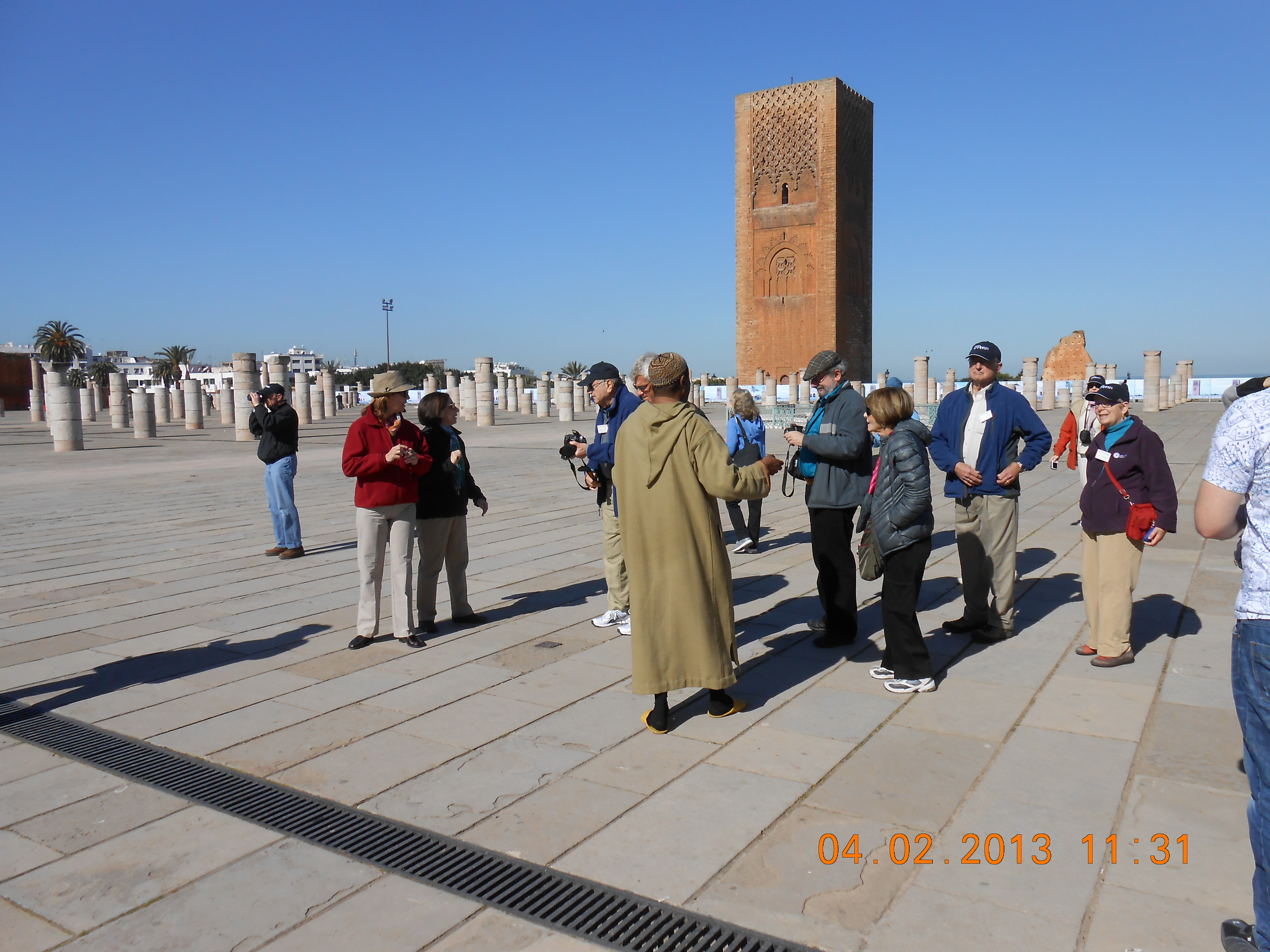
Penn alumni visit the Hassan Tower in Rabat. Photo by Professor Thomas Max Safley.
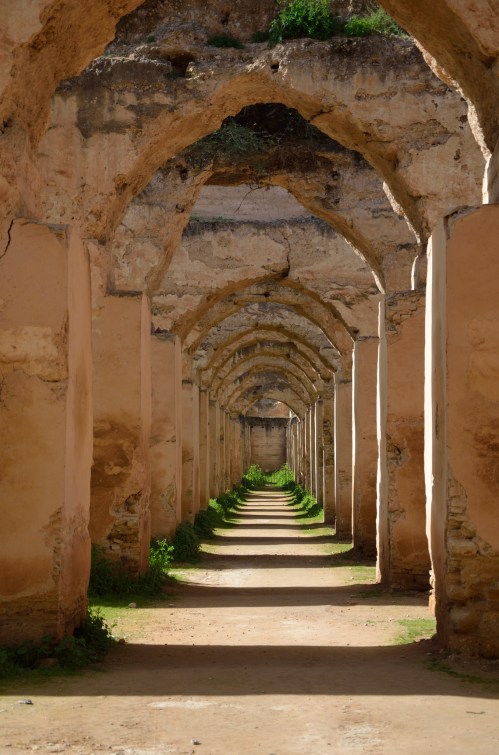
Ruins at Sala Colonia. Photo by Penn alumnus Murray Sherman, GR’69
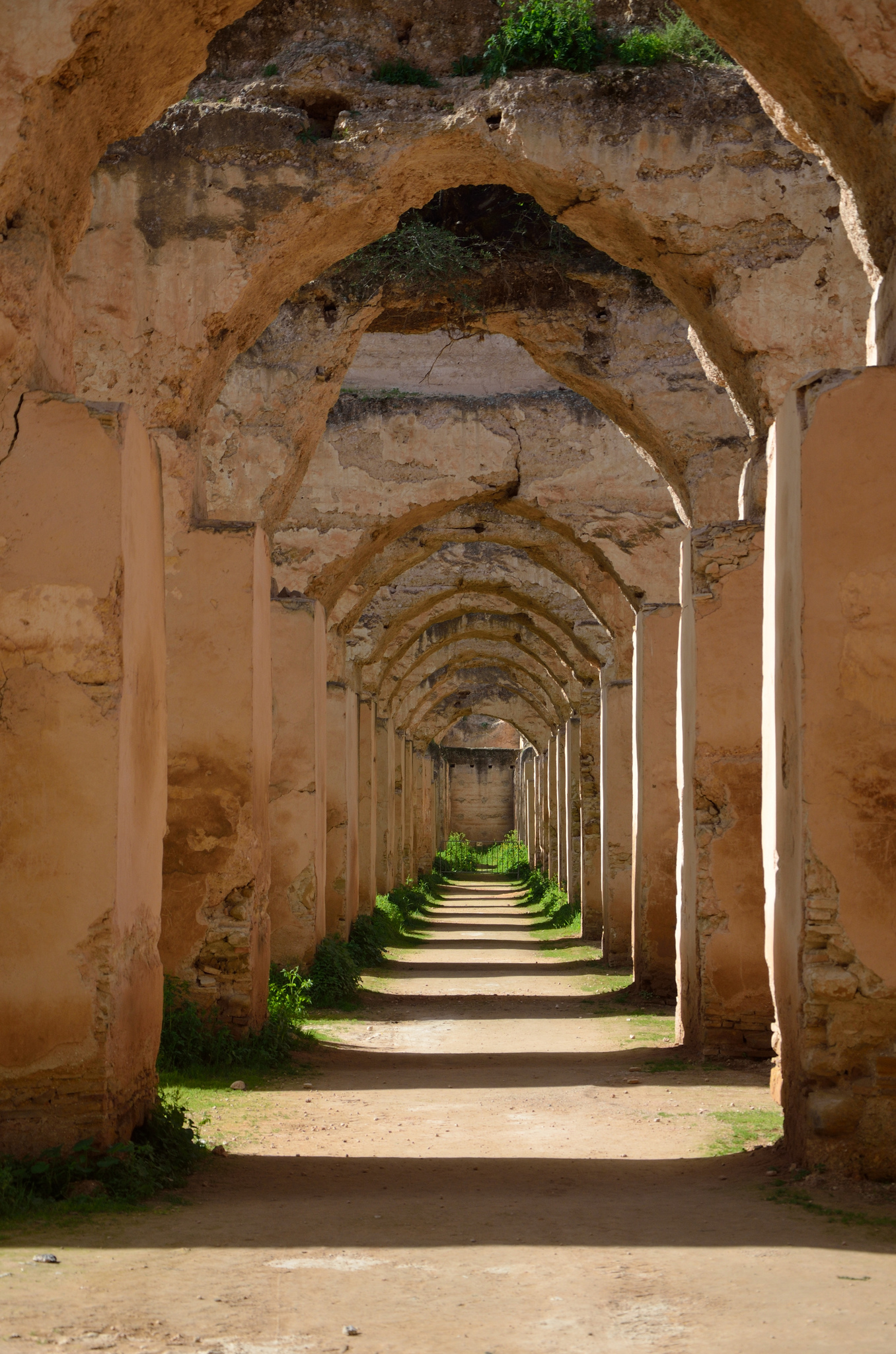
Slowly we traveled back in time, via Meknes, imperial city in the 17th century under the Sultan Moulay Ismail, and Volubilis, a Roman border town. Meknes seems to have risen and fallen with its great and ruthless ruler. A tale connected to the Bab el Mansour gate, perhaps the town’s finest architectural gem gives us a sense of the Sultan: When he asked the gates builder, the famous architect, el Mansour, whether he could do better, the honest man felt compelled to answer yes, whereupon the enraged ruler had him executed. What remains of Moulay Ismail is now mostly ruins, an indication, perhaps, that his people and even his family felt compelled to neglect the memory of a man, whose reign was marked by constant warfare and indiscriminate murder. The white pillars on either side of the gate were, not surprisingly, given the Sultan’s reputation for mayhem, plundered from the Roman city of Volubilis. What remains of it stands not far outside Meknes, on the edge of a fertile plain, its pillars like white tree trunks rising from green fields. Established in the 3rd century BCE as a Carthaginian trading outpost, Volubilis flourished under Roman rule, survived Berber and Arab invasions only to be abandoned in the 11th century. Today, visitors walk through a field of tumbled stone, noting what has survived centuries of upheaval and neglect: the extraordinary mosaic floors, the olive mills and the unmistakable bordello. Even more imposing, however, are the reaching vistas across a barely settled plain and the extraordinary silence that presses in on all sides. Beautiful and evocative as it is, how could Edith Wharton have described the still very much alive town of Moulay Idriss, seated white on the shoulders of a nearby mountain, the “Sacred City of Morocco,” eponymous resting place of the nation’s 9th-century founder, as “more dead and sucked back into an unintelligible past than any broken architrave of Greece or Rome”? Cultural prejudices aside, any sense of the modern, shabby or otherwise, does not so much fall away as recede in significance.

Gateway to Meknes. Photo by Professor Thomas Max Safely.
In Fez it appears the invader. Never mind the elegantly remodeled Sofitel Palais Jamai, which is as welcoming as it is comfortable, or the innumerable motorscooters that clog every street and pathway. Here, the present becomes lost in the past, swallowed up, as if those scooters and the radios blaring Arab rap had always existed side-by-side with the beggars who huddle in their need before the gates of Al Karouine, the oldest university in the world, and with the porters and burros that supply medina and mellah. Again, the extraordinary hospitality: I felt always alien—out of place as well as out of time—but never unwelcome. I recall the brief smile of welcome from a holy man (an imam?) in one of the few madrasahs open to non-believers. I recall the open curiosity of children passing on the streets. And I recall people selling, constantly selling, their wares at every shop front and on every street corner. They came at me with a persistence that might have been annoying—or, in some instances, more annoying—had it not been so good-natured. Of course, that good nature could go too far. A rug-seller, intent upon a potential Western buyer, flung a small sample from the upper-story of a riad with the cry, “A flying carpet for Ali Baba!” It landed on my head. Had the carpet been larger, I’d have needed a hospital. A glass of mint tea, well sweetened, restored both his countenance and my humor. Neither could be lost long under the circumstances. The tea brings to mind other senses. Its scent recalls the extraordinary smells of the medina in Fez: the odor of raw hides at auction in the open-air, leather market; the odor of charcoal fires and grilled meats from thousands of street vendors; the whiff of manure from the varieties of beasts of burden; the fragrances of exotic spices, many utterly unknown to me, piled artistically in the open air by spice merchants; the stench of toxic tanning baths in which laborers finished and dyed leather with their bare hands and feet. Its color evokes others: the green of the tiled roofs of Al Karouine amidst a cityscape of white; the reds and blues of the tiled walls in every palace and mosque; the orange of citrus trees and the purple of bouganvillia that seem to grow from every crack and crevice. As the azan invades my dreams, so does Fez fascinate my waking mind to this day.

View of Fez. Photo by Professor Thomas Max Safley.

Moroccan shops. Photo by Penn alumnus Murray Sherman, GR’69.
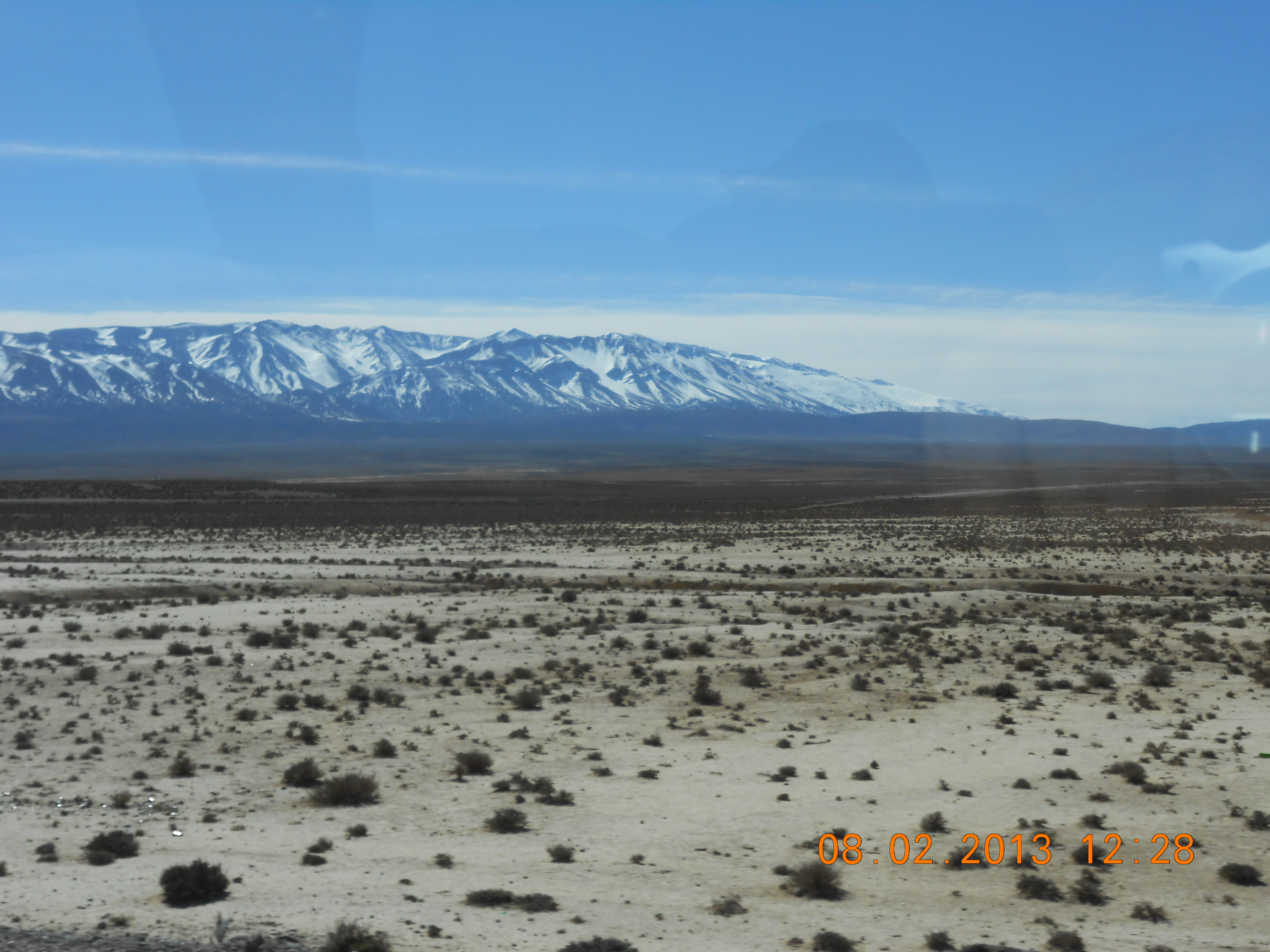
Beyond that still so medieval city, the modern disappears altogether into a kind of timelessness. We journeyed over the Moyen Atlas, seeing fields of snow and herds of camels in places high and low. We journeyed across the arid Plaine de Tamlelt, where we enjoyed the conundrum of a lunch of freshly caught and grilled trout served in a place so manifestly without water. As we traveled, the landscape became more hostile and the lifestyle more precarious. The villages consisted largely of one-story mud-brick structures that seemed everywhere on the verge of collapse. Apart from herding the ubiquitous sheep, goats and camels, how could these people scratch a living from such a place? Scratch they did, however. Surrounding these friable yet durable huts were neighborhoods of contemporary, concrete structures, all in various stages of incompletion, most unoccupied. Sidek explained that young men and women leave these villages for lack of education and employment opportunities to make a living in the cities of Morocco or Europe. Yet, they never leave home in the sense that they return during their vacations to buy land and build houses—projects that can extend over decades—to which they hope eventually to retire. Those who do not emigrate, barter and truck. At every stop they appear, seemingly out of nowhere, surrounding the bus to sell all kinds of hand-made, sometimes quite lovely, trinkets: camels plaited from palm fronds, jewelry polished from small fossils, scarves woven from local cotton. On the very few dollars they earn from each sale, they somehow manage to survive. At the far edge of the Tamlelt, the highway picks up the Wadi Ziz and follows it. This shallow river in its deep gorge was once a great caravan route, leading from the desert into and across the mountains to the cities along the coast, a contested route as evidenced by the many ksar (fortified villages) and fortresses that mark its progress. At the water’s edge is a lushly fertile strip, a surprising contrast to the wasteland surrounding it in all directions, that broadens eventually into the great oasis of Tafilalt. For centuries it had offered haven to the merchants and teamsters who trafficked between the Niger River to the south and the Atlas Mountains to the north. At the end of this oasis, and at the end of a seemingly endless day, we arrived at Erfoud on the edge of the Sahara Desert.

On the way to Erfoud and the Sahara- snow! Photo by Professor Thomas Max Safley.
It seems a town in the middle of nowhere, like many other small communities in the Moroccan “out back,” but, it provides an excellent point of departure. From Erfoud, we viewed the ruins of Sijilmassa, once a great caravanserai, one of the wealthiest cities of all Northern Africa, many times sacked and rebuilt, finally destroyed and abandoned in the 19th century. Little of it remains now, mud-brick walls melting back into the desert sands from which they were built. We inspected the ksar of Rissani with its warren of alleys and ruins. We ventured to Merzouga, where camels transported us into the great erg, or dune sea, at sunset. I say “ventured” because the road stopped well short of our destination. We proceeded in four-wheel-drive vehicles, for which the lack of roads was no barrier. At speeds of 40 miles per hour, I learned just how rough the reg, or stone desert can be. Beyond Erfoud, along the “Route of 1,000 Kasbahs,” lies Ouarzazate. A kasbah is a fortified dwelling, not unlike the fortified tower-houses of medieval Italian cities, such as San Gemignano, that housed several generations of a single clan. Like the ksar, it is constructed entirely of sun-baked mud-bricks that dissolve eventually, if not constantly repaired and maintained. Abandonment spells disintegration. Hence, to preserve a material part of the Berber heritage, the government pays people to live in them, the lack of such modern conveniences as plumbing, sanitation and electricity notwithstanding. Left alone, these structures never lose their intrinsic beauty and proportion, but quite literally recycle themselves within a generation of two. What a stark contrast to the plastic permanence of the Hollywood sets that dot the landscape around Ouarzazate, the film capital of Morocco. Here, American movie companies have made such blockbusters as The Mummy, Gladiator and The Kingdom of Heaven, and their structures, the most impressive of which, in my opinion, was the city of Jerusalem, have an ugly agelessness, very much at odds with indigenous construction.
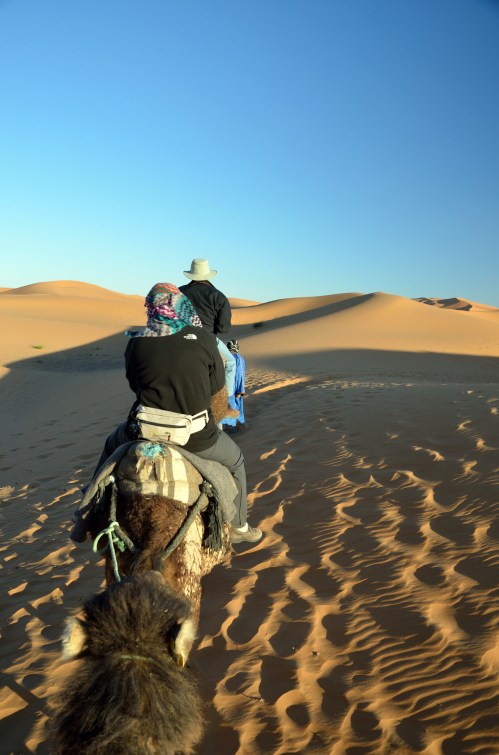
Penn alumni voyage across the desert on camels. Photo by Penn alumnus Murray Sherman, GR’69.

Camel passage. Photo by Penn alumnus Murray Sherman, GR’69.
I wonder, whether there is anything more to Ouarzazate. We barely paused there, arriving late and leaving early. Our road led now to Marrakech, for Westerners synonymous with Morocco itself. Yet, before we got there, the way passed by Ait ben-Haddou and over the Haut Atlas. Ait ben-Haddou is one of Morocco’s best-preserved ksar, a village of tightly packed kasbahs that sits blood red on the shoulder of white sandstone mountains at the bend of the Ounila valley, where palm trees and vegetable gardens border the wadi. Achingly beautiful, it is, perhaps, one of the most spectacular sites I saw in a country filled with spectacular sites. The Haut Atlas offer tremendous vistas across mountain ranges and into secret valleys. The road traversed Tizi N’Tichka, a high-altitude, serpentine pass without benefit of guardrails that tests our nerves on more than one occasion. Moroccan drivers seem to possess a kind of fatalism on the road. Though their speeds are never reckless, their maneuvers bespeak a confidence at odds with the situation. They seem unfazed by passing on a blind curve, between granite and the abyss. At one point, I spied a young man, probably a shepherd, lying on his side at the edge of the road, absorbed in the show. To each passing vehicle he waved. Was he greeting or encouraging?
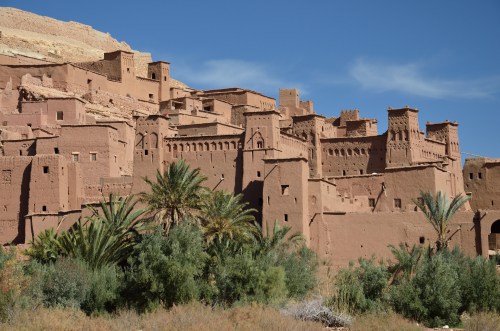
Ait ben-Haddou, a village of tightly packed kasbahs. Photo by Penn alumnus Murray Sherman, GR’69.
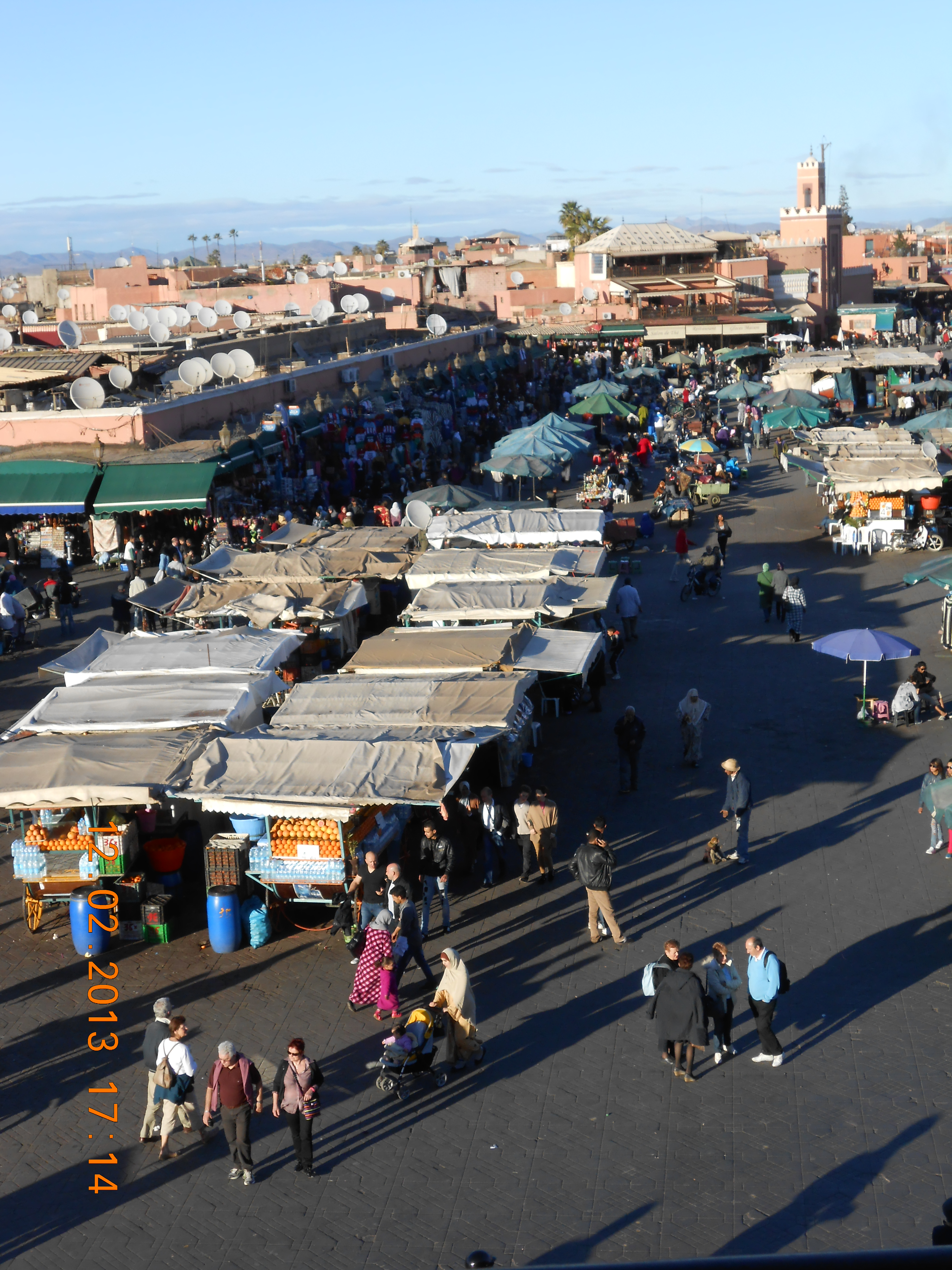
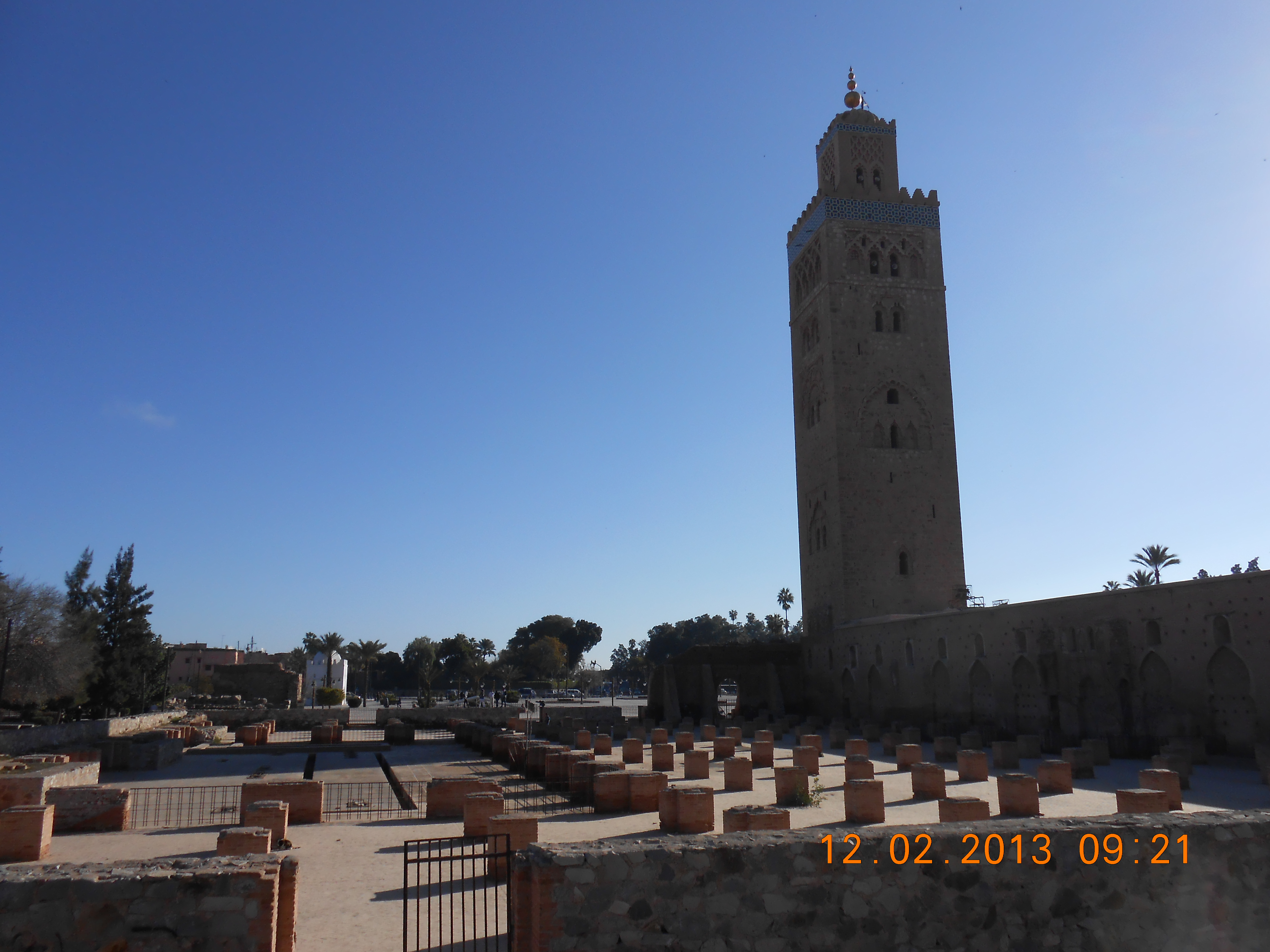
From the high pass, the road wound down into the lush coastal plain, and we arrived at dusk in the city of Marrakech. I got the impression that most of my companions were looking forward to our stay here. I was. In the minds of many, Marrakech stands for Morocco. Indeed, the entire country was long known in the West as the Kingdom of Marrakech. The generation that came of age in the city recognized Marrakech as a different sort of Mecca. It is, by all accounts, Morocco’s most cosmopolitan and, according to some, most beautiful city. But I found it Morocco’s most disappointing city. Certainly, Marrakech has much that is sophisticated, beautiful and interesting. No visit to Morocco would be complete without time spent there. One can stroll the spectacular Jardin Majorelle, donated to the city and the world by Yves St. Laurent and Pierre Bergé. There, too, one finds the Musée Berbère with its unique exempla of Berber arts and crafts. Not to be missed are the Koutoubia Mosque with its soaring minaret and the Palais El Badii and the El Bahia Palace, evidence of the wealth and power of Moroccan sultans. The medina with its extraordinary artisans, aggressive salesmen and bewildering passages and the souk, Djemaa El Fna, meet every expectation of Morocco. Yet, Marrakech did not impress me the way Fez had done. Perhaps I was tired at the end of a long journey. I nonetheless had an irrepressible sense of the artificial or, perhaps better put, of a city acted out with Westerners in mind. The city is real enough, as are its inhabitants. They display what I had by now come to think of as Moroccan courtesy and hospitality, which is high praise. Unlike Fez, however, here they seemed to me to be putting on a show. Though there were plenty of Moroccans in the Menara, I do not recall many in the Majorelle. I did not get the same sense of Moroccans shopping in the medina to meet their daily needs. These shops seemed designed for the tourist trade. The Djemaa El Fna lived up to its reputation as the busiest open-air market in all of Africa, and to call it colorful is to understate the case, but its snake charmers, monkey handlers and street musicians seemed intent upon Western custom. Not so much a city or even a museum as a carnival. As I write, I think this cannot be accurate. It was a fascinating city. Why was I not fascinated? What did I miss? I will have to go back.
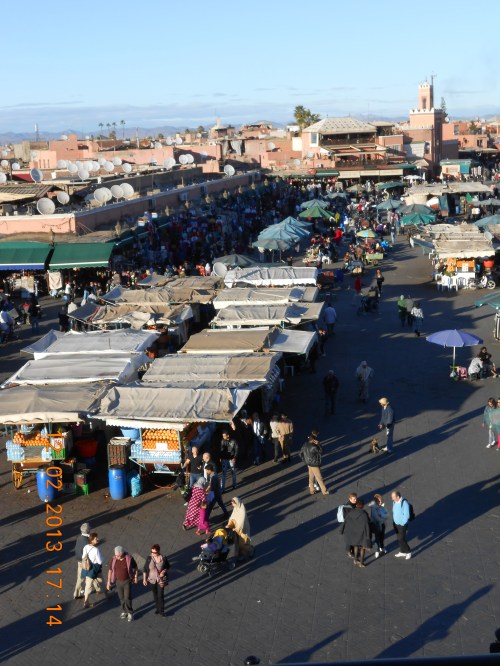
The souk, Djemaa El-Fna. Photo by Professor Thomas Max Safley.

The Koutoubia Mosque of Marrakech. Photo by Professor Thomas Max Safley.
Of Casablanca, I have little to say. It remains to me nothing more than a port of entry and exit. I have no real impressions of it beyond a too sudden return to the modern. Expansive suburbs and a high-rise center speak to the global urban experience in ways that leave no unique mark or memory. Of course, there is Rick’s American Café, located near the harbor. We had a meal, such as we might have eaten in any American restaurant, but in a place meant to invoke the classic movie of 1942, an American story and the American self-image. I enjoyed myself thoroughly, as I had throughout the trip, but I suspect I was ready to go home. And the next day I did.
[For more information about Penn Alumni Travel or to browse our upcoming tours (including our November departure to Morocco), click here. To view all the pictures from this tour, click here.]

















 Frankly Penn