Category Archives: Casey R.

Locust Walk Talk: A Small World & Craic

Author: Casey Ryan, C’95

While I was on vacation, I got the following tweet:

Earlier that day, I had a difficult choice to make upon returning to Dublin from our driving tour of the Irish countryside. Do I continue with my parents to see the literary treasures at Trinity College (which I had seen before) or go to the Guinness Storehouse (which is missed seeing 12 years ago) without them? We had spent most of the vacation together and I wanted to see their reaction to the Book of Kells, the illuminated manuscript of the four Gospels in Latin and one of Ireland’s national treasures. Yet, I had made this thorny decision before and missed out on the Storehouse because of it.

So, beer won out this time for me over books.  Sounds like the stereotypical decision of a college student, no?

While I was at the Guinness Storehouse on the tour, getting my serendipitous second Guinness (a random fellow and former rugger seeing me in my Dubai rugby t-shirt handed me his ticket for his free Guinness at the end of the tour,) my parents saw my brother’s good friends and my follow Penn alumnus two kilometers away from me at Trinity.  I knew that Matt was going to be in Ireland; he told me that he and his wife had made rather last-minute plans to visit the country and I shared some tips before we all embarked.  However, there weren’t too many days that we were going to be in the same place at the same time.

It was a lark that my parents ran into Matt and his wife, Emily.  My folks had finished their tour of Trinity and the Book of Kells and Matt and Emily had missed the last tour.  Heading in opposite directions, all four of them quite literally bumped into each other.  Or so Emily explained later to me.

Looking toward Trinity College from the Gravity Bar of the Guinness Storehouse

During my trip, I had gone out of my way to make sure that I chatted with strangers at the bars.  However it was rather funny that I didn’t meet many locals. There were Germans and Australians, Irish tourists from the more rural counties and even some Philadelphians.  Only once in Killarney did I meet a local – born and raised in the town, he was traveling in a group with a Filipino and a German.

On my last night in Dublin City Centre, I meet Matt and Emily at the Porterhouse Central, one of the five restaurant and bar fronts of Ireland’s largest genuine Irish brewery.  This place was packed with locals and only a few tourists.  As we shared our stories of Ireland and our lack of meeting locals, we were swept into one table’s hens night, a.k.a. bachelorette party, who chatted us up since they heard our accents.  Another table was celebrating their fifth wedding anniversary and their first “date night” out since the birth of their son.  Yet others that we met were out for a night on the town. Throughout it all, Matt and I continually were asked how we knew each other (since Matt and Emily were obviously married) and we told everyone that we knew each other through Penn.

Matt, GEN’08, and I, C’95, having enjoyed a few pints in Dublin

Many of the Dubliners that we chatted with were impressed with Penn and they knew that it wasn’t Penn State.  They asked us if we had visited Trinity and wanted to know more about our experiences in college compared to theirs.  All in all, the craic was grand!

I’m always amazed how our tight connections as alumni and the reputation of Penn are well received all around the world.  Fortunately, it took me a night in Dublin to remind me how great being an alumnus of Penn is.

2 Comments

Filed under Alumni Perspective, Casey R., Locust Walk Talk

My Top Penn List: Ten to Penn

Author: Casey Ryan, C’95

I’m currently on vacation but I wanted to make sure that I still wrote a blog entry on schedule.  In honor of Penn Park’s opening this weekend, I wanted to pay homage to my follow bloggers, Jason and Leigh Ann, with my Top Penn List’s Ten to Penn.

10.

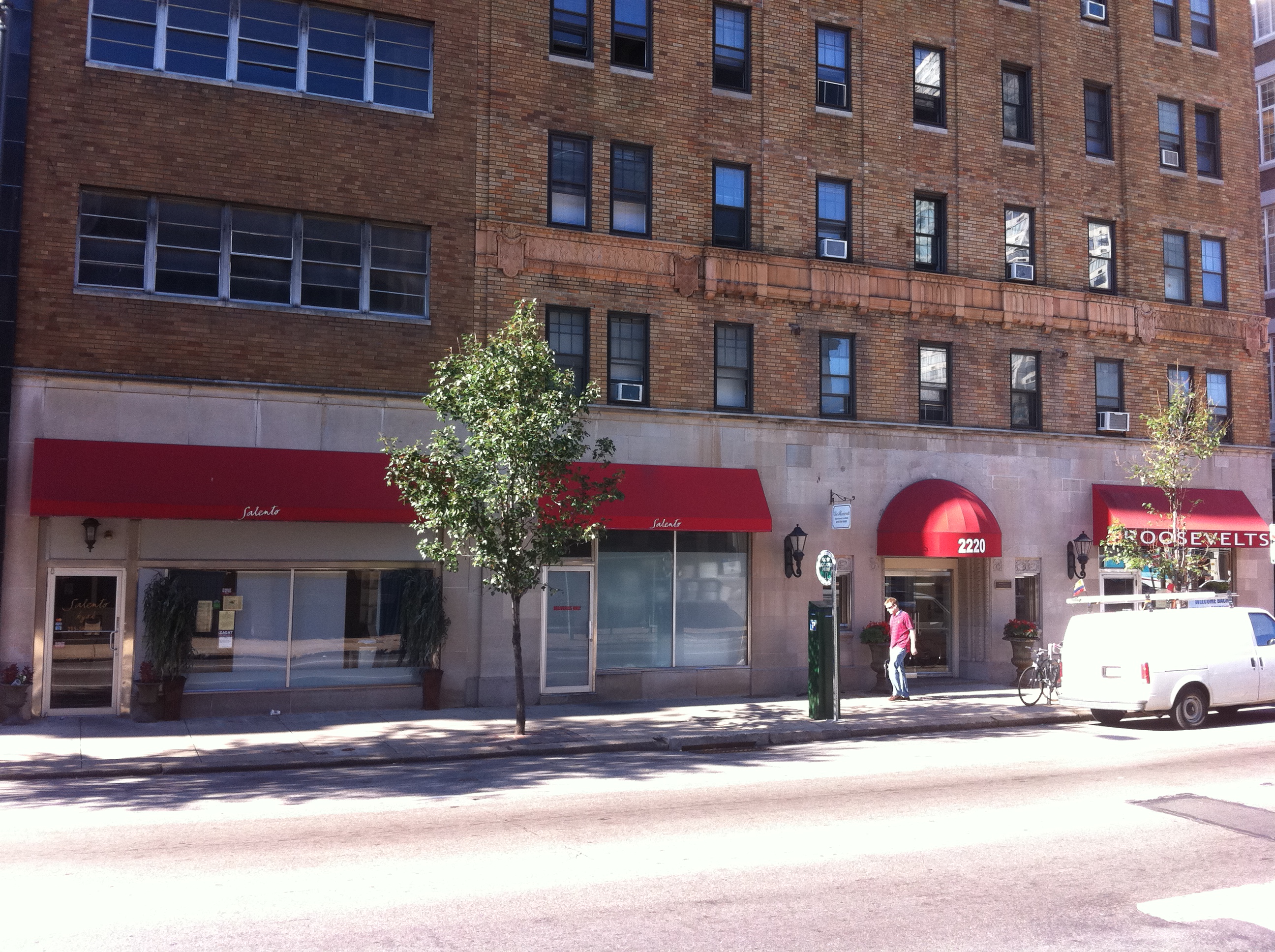
It’s a quiet morning, right outside my apartment door. It’s sunny and a wonderful day to walk to work, snapping pictures on my iPhone for a Ten to Penn blog post. It looks like Roosevelt’s and Wharton MBAs survived another night together.

9.

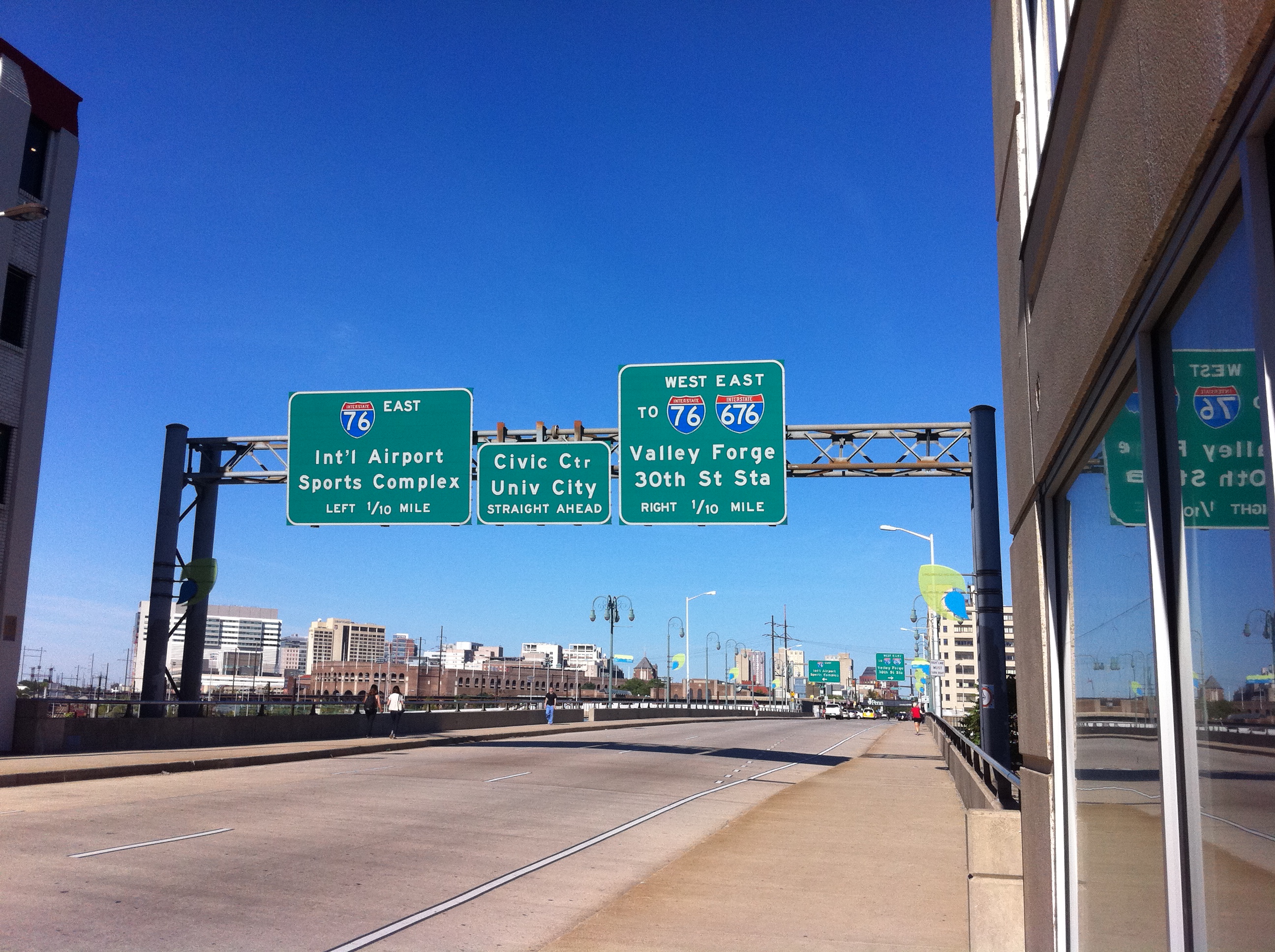
Walking a mere block west, I see Penn on the horizon. What I didn’t take a picture of was the upcoming traffic on 76 since the trek is limited to 10 pictures and I wanted to focus on pictures with a strong Penn theme. It’s traffic like that which makes me happy I can walk to work.

8.

The Cira Center juts out behind 30th street and the old United States Post Office-Main Branch, the Art Deco building on the National Register of Historic Places that Penn now owns as part of the Postal Lands purchase.

7.

The pièce de résistance of this entry, Penn Park. Originally the asphalt parking lot of the Postal Lands purchase, it is a vibrant, verdant open space for our Penn athletes, students and community to enjoy.

6.

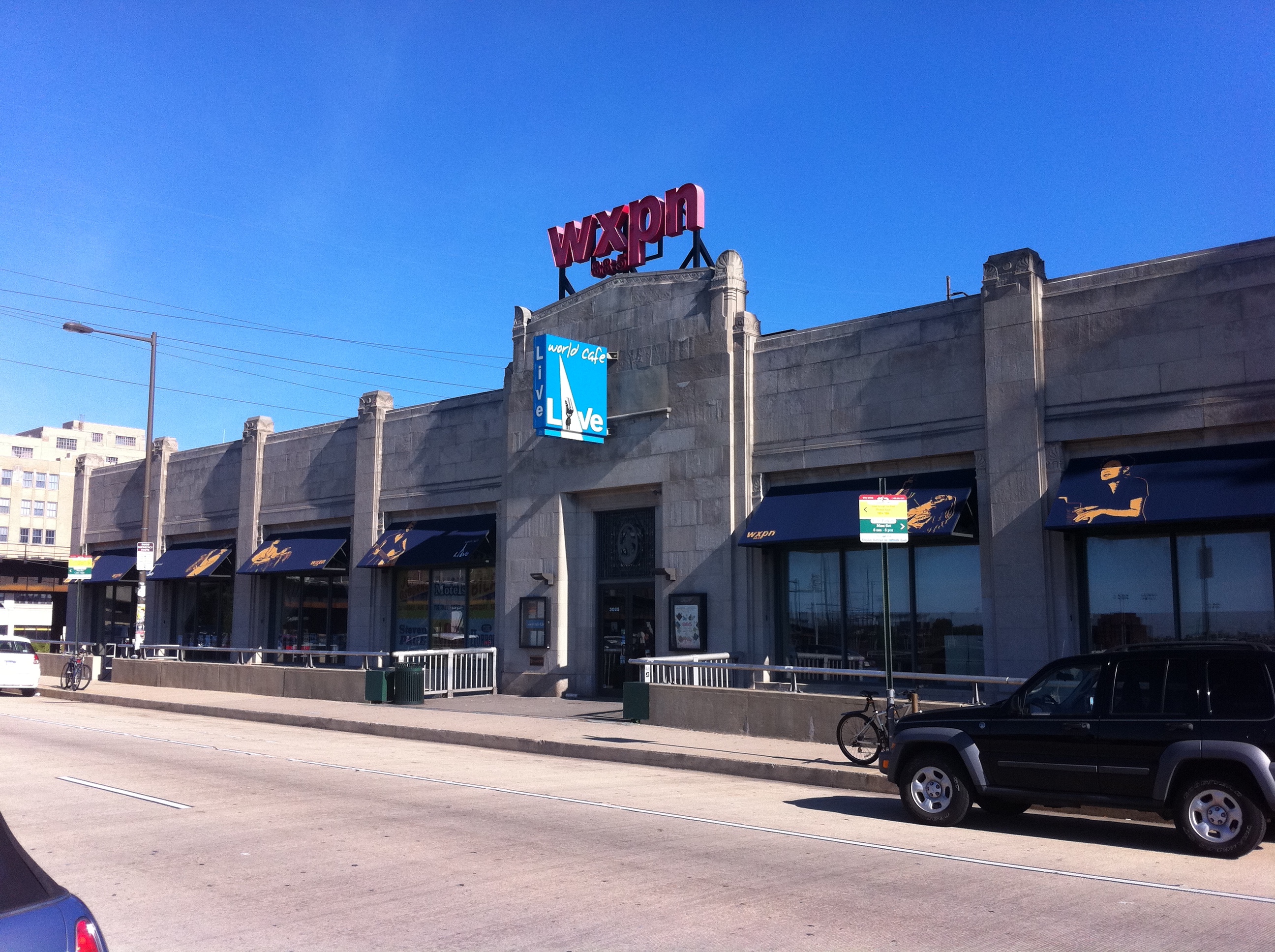
World Café Live is the home of WXPN, member-supported radio from the University of Pennsylvania and two live venues for music. I have been lucky to see my classmate, Gabriel Mann, C’95, of the Rescues, John Forté, Heart, Tori Amos and Carly Simon at shows here.

5.

I love this bold announcement of Penn on the side of the train trestle. “Welcome to University City.”

4.

Here’s the back view of the Cathedral of Basketball, the Palestra. Beyond to the left, you can see some of Franklin Field poking through and to the right, there stands Irvine Auditorium.

3.

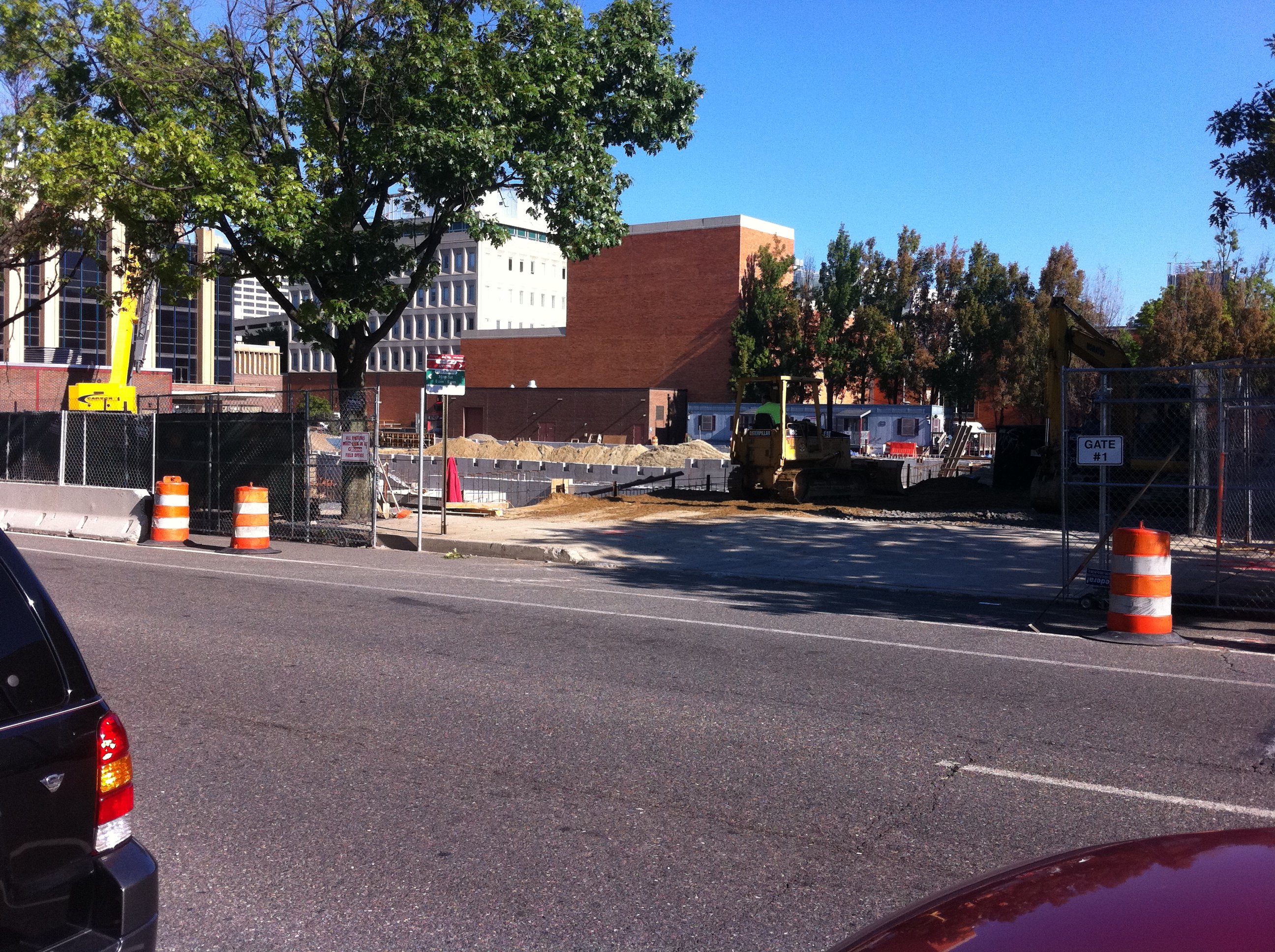
Here is the construction site of the Krishna P. Singh Center for Nanotechnology, which promises the future collaboration, exchange, and integration of knowledge in this emerging field.

2.

Known more for designing the Gateway Arch and choosing Jørn Utzon’s winning plans for the Sydney Opera House, Eero Saarinen is the mastermind behind the architecture of Hill College House. I thought that I would take a more pedestrian view of the building since I don’t view the main entrance along my walk to Sweeten.

1.

Finally, I am at campus, stepping onto Locust Walk (though technically it’s Woodland Walk here.) I’m ready to start the workday, and I check in on foursquare to see if I remain the Mayor of the University of Pennsylvania.

1 Comment

Filed under Alumni Perspective, Casey R., Philadelphia, Photos, Top Ten

Locust Walk Talk: Penn Traditions Family Picnic on College Green

Author: Casey Ryan, C’95

I can’t believe that it’s been over two months since I wrote about things to do when the students aren’t at Penn. Over the last week, campus’s energy has increased as student volunteers, like the Phins come back for training before move-in. The buzz culminated for us this past Thursday as Alumni Relations welcomed the class of 2015 and their parents.

Welcome

Penn Traditions Family Picnic serves as brief respite for parents and incoming first years from the move in process.  Alumni Relations and Penn Traditions welcome all to grab a bite to eat and relax on College Green.  Everything now seems so unfamiliar and imposing.  Yet, the view from the grass on a red or blue blanket is of new beginning and opportunities.

Families and the incoming Class of 2015, getting a bite to eat

There’s College Hall, Wednesday’s site of an introductory class.  There’s Van Pelt library, the future site of an all-nighter to write a research paper.  There’s Split Button, a midnight study break where students play Whac-A-Mole with friends. (Seriously, I did this a few times to blow off some finals steam.)

The Penn Band entertaining the crowd

Now, it’s fodder for memories – the grown-up versions of the first day of School.  A young student takes her first steps to independence.  Parents acknowledge the son has grown-up well.  A brother is inspired by his sister and looks forward to his college search.  Grandmothers and grandfathers are in awe of their granddaughter’s achievements. These are all moments for everyone to be proud.

Signing the Class of 2015 banner – this banner follows the class throughout their four years at Penn and beyond

This all subtext, though.  For now, parents, freshman and transfer students are on the green, sharing a soda, eating some fun and enjoying the break.  It doesn’t seem too important right now, but this picnic will be the first of all lifelong Penn traditions that each student will experience.

Taking a very deserved break on hillside of College Green

Leave a comment

Filed under Alumni Perspective, Campus Life, Casey R., Locust Walk Talk, Traditions

My Top Penn List: National Register of Historic Places on Campus

Author: Casey Ryan, C’95

As a member of the GAN alumni network staff, I contribute periodically to the Did You Know?, the weekly Penn update to our Regional Alumni Club Leadership.  We review Penn news, read local newspapers, scan recent and upcoming news magazine shows and more for the leads for our stories that we start off with our stylized phrase: “Did You Know…”, like in the following:

Did you know… that Philadelphia is the site of one of only 21 UNESCO World Heritage Sites in the US? Independence Hall was bestowed this honor since it was “directly or tangibly associated with events or living traditions, with ideas, or with beliefs, with artistic and literary works of outstanding universal significance.” Obviously the “works of outstanding universal significance” are the Declaration of Independence and the Constitution, including the Bill of Rights, all of which have influenced lawmakers, politicians and governmental charters around the world.

Independence Hall

I bring this up because I was recently watching Anderson Cooper 360° and someone made a passing reference to UNESCO World Heritage Sites. I figured that I should read up more on World Heritage Sites, having been to a few like the above mentioned Independence Hall, Great Barrier Reef and Delos.  Since I was using Wikipedia for my research, I searched on so many links, and, as was mentioned in a prior entry, I ended up on an interesting reading journey. I eventually landed on the entry on the National Register of Historic Places in Pennsylvania from my starting point of the Independence Hall Wikipedia article.

Independence Hall is the centerpiece of the Independence National Historical Park, a United States National Historical Park.  This NHP, in turn, is on the National Register of Historic Places. Did you know what else is on this register? The University of Pennsylvania Campus Historic District.  This is a significant part of campus is bounded by portions of Woodland and Hamilton Walks, Convention Boulevard,  32nd, Walnut, 36th, Spruce, and 39th Streets. This area comprised of 28 contributing properties.

The Fisher Fine Arts Library, Interior (number 9)

Here are my favorite ten historic contributing properties:

10.          The Quadrangle (a.k.a. University Dormitories) – 1895-1910. The popular dormitory building just had to be on my list.

9.            The Fisher Fine Arts Library (a.k.a. Furness Library) – 1888-1891, and Duhring Wing, 1914-1915. This library is one of the pure architectural gems on campus designed by Frank Furness.

8.            Irvine Auditorium – 1926-1928.  Though there is a false story about the blueprints being an alumnus’s failed thesis, this building holds a grandiose charm.

Towne Building (number 3)

7.            Veterinary School and Hospital – 1906, 1912. Another quadrangular historic building of note on Penn’s campus that hosts Pennsylvania’s only veterinary school (also mentioned in yesterday‘s post).

6.            Richards Medical Research Laboratories – 1964. Like Furness, the Richard Labs are notable for having a famous designer, Louis Kahn.

5.            University of Pennsylvania Museum of Archaeology and Anthropology (a.k.a. University Museum) – 1895-1899; additions, 1912, 1929, 1979, 2002. The original proposal for the museum had planned for the building to be 3 times its size, but it was

250 S. 36th Street, "The Castle" (number 2)

4.            Franklin Field – 1904, 1925. The first double tiered collegiate stadium needs to be on this list.

3.            Towne Building – 1903. The astronomy class that I had in this building always had a feel of being the stereotypical Ivy League setting, so I needed to include the building.

2.            250 S. 36th Street (a.k.a. “The Castle” -Tau chapter of Psi Upsilon Fraternity) – 1897–1899. The lead house on Locust Walk dominates many traditional shots to demonstrate college life.

Irvine Auditorium, Interior (number 8)

1.            College Hall – 1871-1872. The oldest building on the register which house the Office of the President and of the Secretary is the administrative and symbol heart of campus.

An honorable mention goes to the building that houses Alumni Relations, E. Craig Sweeten Alumni House (aka Delta Tau Delta), 1914.

College Hall (number 1)

For a complete list of all 28 buildings, visit Wikipedia’s University of Pennsylvania Campus Historic District entry.

4 Comments

Filed under Alumni Perspective, Casey R., Historical, Philadelphia, Top Ten

Locust Walk Talk: Penn MBA Panel Partnerships

Author: Casey Ryan, C’95

Last month, I traveled to DC to attend a club-hosted event, sponsored by Kaplan Test Prep: the MBA Admissions Panels.  Through the work of an alumnus serving on our Alumni Programming Committee of the Penn Alumni Board of Directors, he made the connection with the test preparation company to give our Clubs the opportunity to partner together to offer this informative discussion to our alumni.  This event started as a single discussion in Boston and has evolved into a multi-city panel event.

Hosts and sponsors of the MBA Panel

Our young alumni who are contemplating going back to graduate or professional school are looking for advice on how to apply.  We are able to offer this chance those thinking about business school.  Working with Kaplan, we invite admissions officers from Harvard Business School, Kellogg School of Management, MIT Sloan Management, Stanford Graduate School of Business, and Penn’s own Wharton to explain the application process, as well as talk about the aspects of admissions process.

Kaplan and Club Members working registration

Moderated by a new member of the Penn Alumni Club of Washington, DC, the admissions officers elaborated about many of the facets on the process, including test scores, essays, work experience, volunteer work, MBA interviews and more.  After the conversation, our moderator asked questions submitted to the panel by attendees prior.  These questions went into more depth about specifics and the panel noted how very thoughtful the crowd was.  At the conclusion of the panel, the speakers are available for our attendees to get more information about specific programs and talk one-on-one.

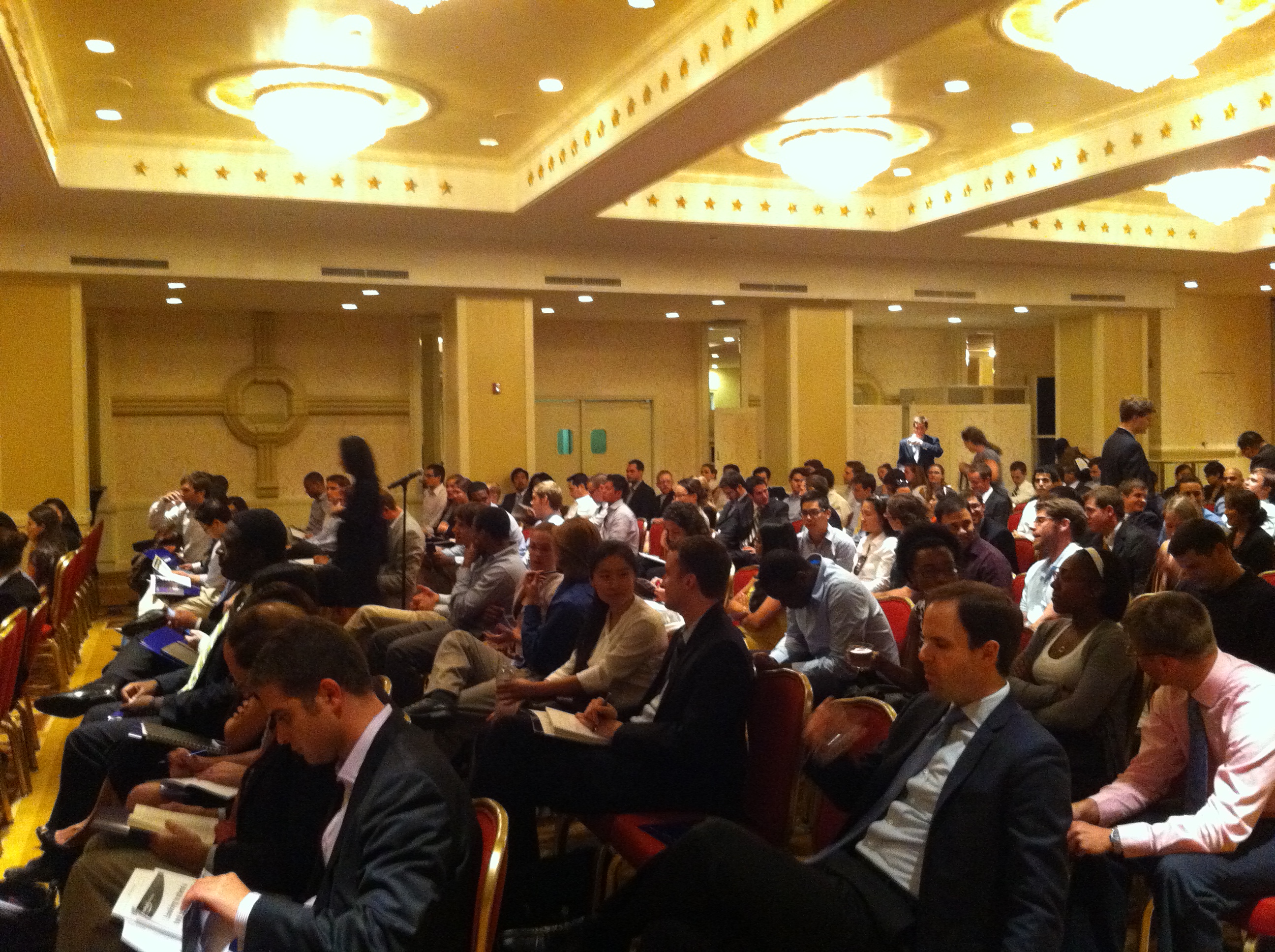
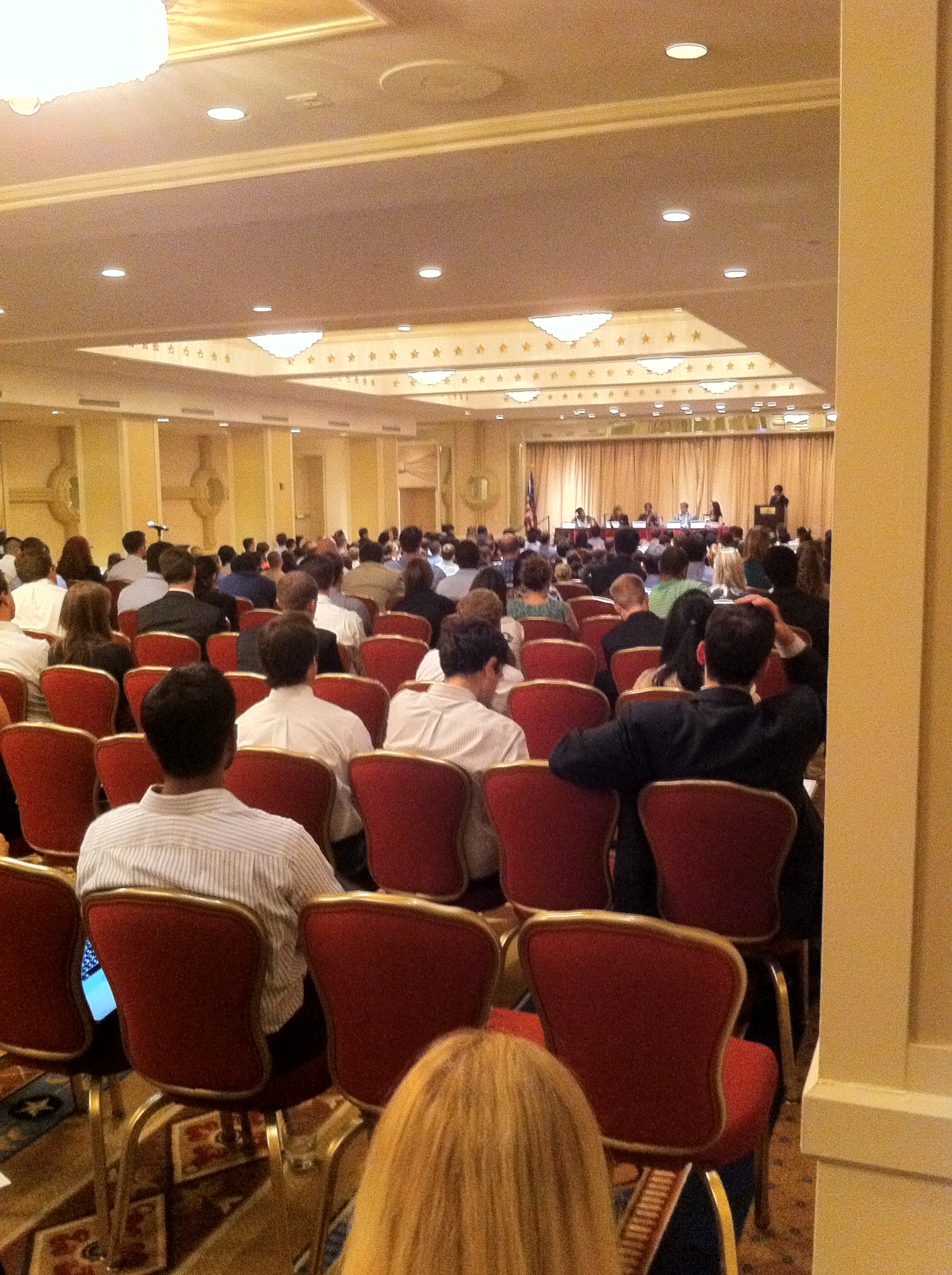
Congressional Room of the Washington Hilton fills up

Currently, the Penn Alumni Clubs in Washington, Philadelphia and New York work with Kaplan to present this event. In DC, the event was a success with 300 alumni and friends in attendance.  Club members and Kaplan employees were busy checking in all those who signed in on-line as well as taking care of the walk-on registrants.

The advice that I gleaned from the panel was that most people who apply to these selective MBA programs have the skills and the rigor to do the work.  The fact remains that more people apply than there are spots in an incoming class, so one needs to differentiate oneself from the applicant pool.  Honest, thoughtful and well-written essays are the key to telling the story about how one would both stand out and fit in at the Business School of choice.

Attendees listening and taking notes

I think this advice can be relevant to all us, regardless future aspirations, as long as we aim to be honest, thoughtful and clear in our objectives, we will stand out and be able to work together to get the goals for which we’re striving.

Leave a comment

Filed under Alumni Perspective, Casey R., Locust Walk Talk

My Top Penn List: “Do Over”

Author: Casey Ryan, C’95

Working in academia, I have so many opportunities for education, whether it’s taking a class, listening on a guest lecture, or visiting one of the many museums on campus.  The one thing I can’t do is revamp my undergraduate career.  Recently, while checking out the 2011-2012 course register for potential graduate level classes, I found myself wishing that some of the currently-offered undergraduate classes were available when I was a student.  Here are the 10 elective courses I would have liked to have taken if I could get a “do over” (some descriptions have been edited for length).

10.          LING051 (Linguistics) Proto-Indo-European LanguageNoyer.

Most of the languages now spoken in Europe, along with some languages of Iran, India, and central Asia, are thought to be descended from a single language known as Proto-Indo-European, spoken at least six thousand years ago. Speakers of Proto-Indo-European eventually populated Europe in the Bronze Age, and their societies formed the basis of the classical civilizations of Greece and Rome, as well as of the Celtic, Germanic and Slavic speaking peoples. Students will learn the basis of reconstructing a language and explore the culture and society of the Proto-Indo-Europeans and their immediate descendants. In addition, we will examine the pseudo-scientific basis of the myth of Aryan supremacy, and study the contributions of archaeological findings in determining the “homeland” of the Indo-Europeans.

9.            ENG 019 (English) History of the English Language.

This course traces the history of the English language through English literary history, from Anglo-Saxon England to 21st-century America. We will consider the relationship between different language systems (e.g., syntax, morphology, orthography, grammar) and the relation of those systems to the literature of different historical periods. We will also consider the social and political events influencing language change, such as the introduction of Christianity, the Norman Conquest, the printing press, colonialism, educational policies, and mass media.

Image courtesy of the Furness Theatrical Image Collection

8.            HIST 050 (History) England and the British Isles to 1707. Todd.

The subject of this course is the history of the British Isles from the Roman Conquest in 43AD to the creation of the United Kingdom in 1707. Between these two dates the various societies and cultures in the British Isles were brought into the orbit of the Roman Empire, converted to Latin Christianity, and developed distinctive cultures and strong ties with the Continent. From the twelfth century on, the kingdom of England began to exert its power over Wales, Ireland, and Scotland. The Anglo-Norman continental empire of the Plantagenet dynasty also played a large part in shaping the English monarchy, as did the playing out of the Hundred Years War, the internal divisions in fifteenth-century English society, and the rise of the Tudor-Stuart dynasty.

7.            PHIL018 (Philosophy) The Idea of Nationalism. Steinberg.

Nationalism is one of, if not, the major geo-political forces of the past two hundred years. Its continuing power has been amply demonstrated by recent events in Eastern Europe and the Soviet Union. This course will focus on the conceptual and theoretical issues raised by competing notions of nationalism, rather than on its history or expression in particular cultures.

Image courtesy of the Fine Arts Library Image Collection

6.            URBS012 (Urban Studies) The History and Politics of Space. Schneider.

How do we understand the places in which we live? What is the relationship between workplace and home, downtown and suburb, inner city and gated communities, department store and mall, row house and ranch house? How are our lives defined by place? The city is a social and a spatial system, and its organization both reflects and reproduces social categories of race, class, and gender. The current city is also the product of past decisions about where to locate communities and how to allocate resources. Through reading sociological, historical, theoretical, and primary texts, through studying maps and photographs, and through your ethnographic explorations, we will explore the presence of the past in the city around us, the evolution of different kinds of urban and suburban places, and the encoding of wealth and power as well as inequality and poverty in the urban landscape.

5.            IPD509 (Integrated Product Design) Needfinding.

Needfinding is an approach that puts people and their needs at the center of product development and business strategy creation. Over 90% of new products introduced into the marketplace fail. A good portion of these failures are due to lack of understanding of end consumers and their needs. Designers and engineers need tools and techniques to get beyond what people can explicitly state and determine their implicit needs. In this class students will gain a tool set from which to develop their own approaches to conducting researching for design: learning how to think about other people, about culture, and about new perspectives. They will also learn tactical skills: how to define research questions, how to conduct observations and interviews, how to interpret results, how to synthesize them into fodder for design, and how to communicate their findings in a way that is compelling and actionable for designers, marketers, and business strategists.

4.            GSWS240 (Gender, Sexuality & Women’s Studies; Cross listed HIST240) Gender and Athletics. Miller.

Have women started to “play hardball” on a “level playing field” in the American sporting culture? From the commercial successes of the WNBA and World Cup Soccer to new studies that document the positive effects of athletics on girls’ self-esteem, women finally seem to be turning the American obsession with sports to their own advantage. This course will examine how physical fitness and organized athletics for men and women have both reflected and helped to create norms of masculinity and femininity over the past one hundred and fifty years.
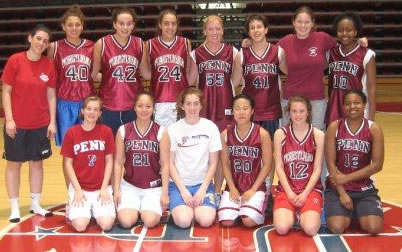
Image courtesy of the of Women's Club Basketball Team

3.            PSCI135. (Political Science; Cross Listed GAFL135 – Government Administration and HSOC -135 – Health and Societies) The Politics of Food. Summers.

This academically based community service seminar will explore the politics and institutions that have shaped – and continue to shape – food production and consumption. Students will use the readings, their community service, and ongoing “food events” at Penn to analyze the politics of food in many arenas: from farms, kitchens, supermarkets, schools, and communities of faith to corporations, research institutions, the media and international trade.

2.            MUSC014. (Music) Songwriting in the 20th Century. (M) Weesner.

This course will alternate between an analytical approach and a critical approach to the study of a wide range of songs composed throughout the 20th century. We will study musical techniques such as melody, harmony, form, rhythm, instrumentation, style, and text-setting. We will also pose far-ranging questions, such as, what makes a song a song? What makes a song a good song? What is the difference between an art song and a pop song? This course will occasionally focus on specific composers, such as Cole Porter, Charles Ives, John Harbison, and Liz Phair, and will also consider the musical ramifications of collaboration, covers and re-makes.

1.            ANTH 230 (Anthropology; Cross listed ANTH633) Forensic AnthropologyMonge.

This course will investigate and discuss the various techniques of analysis that biological anthropologists can apply to forensic cases. Topics include human osteology, the recovery of bodies, the analysis of life history, the reconstruction of causes of death, and various case studies where anthropologists have contributed significantly to solving forensic cases. Discussions will include the limitations of forensic anthropology and the application of DNA recovery to skeletal/mummified materials.
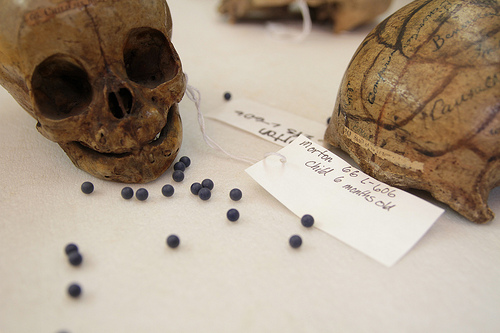
Image courtesy of the of Penn Museum Blog

I encourage you to wax nostalgic and peruse the course register, maybe your favorite class is still being taught by your favorite professor or you might find a course that inspires you to go out and learn more.

1 Comment

Filed under Academics, Alumni Perspective, Campus Life, Casey R., Top Ten

Locust Walk Talk: The Penn Museum

Author: Casey Ryan, C’95

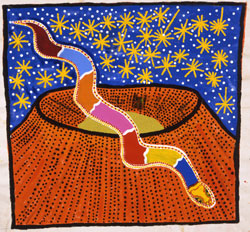
I love the University of Pennsylvania Museum of Archaeology and Anthropology.  One of my favorite reasons is its temporary exhibits.  I profoundly remember one exhibit, the “Track of the Rainbow Serpent: Australian Aboriginal Paintings of the Wolfe Creek Crater.”

In 2005, I was planning to travel to Australia and I was consuming anything I could about the country to be more informed.  I watched Rabbit Proof Fence and re-watched Muriel’s Wedding.  I read Neville Shute’s On the Beach and A Town Like Alice (a.k.a. The Legacy), Bill Bryson’s In a Sunburnt Country, Tim Winton’s Cloudstreet and even Colleen McCullough’s classic, The Thornbirds.  There was even an Animal Planet show that I stumbled upon and watched about a marsupial surrogacy program, which paired human volunteers with orphaned marsupial to recreate a pouch-like environment using book bags to help in there development and growth.  (What a tear jerker. If you don’t cry at folks trying to treat a sick wombat with an infection, you have no heart)! If it was Australia-related, I was there.

In the middle of my building excitement, I learned there was an exhibit of Aboriginal work at the Penn Museum. I was thrilled.  I searched on line for some articles to learn more about Aboriginal Art, and soon visited the Museum.

“Red Rock (Ngaimangaima)” by Daisy Kungah from Billiluna, 2002. Image courtesy of the University of Pennsylvania Museum of Archaeology and Anthropology

The culture of Aboriginal peoples is one of the world’s oldest continuous cultures, art traditions and belief system.  Though interpreted differently group by group, the creation story centers around the Rainbow Serpent, one of the important creative forces in the cosmology, and his travels to create existence during a mystical state called Dreamtiming that transcends time.
Image courtesy of Shreyans Bhansali, C’05, ENG’05

In particular, this exhibit is comprised of works from the Djaru Aboriginal people living by the Wolfe Creek Crater in Western Australia.  The story of a meteorite landing was interpreted as a star falling to Earth.  Wrapped around the light of the falling star is the Rainbow Serpent. The Serpent makes the hole in the new crater upon impact, then he continues to burrow and move underground and through the area to create waterways, landscape features. The Serpent’s movements and creation opened the land up for the Aboriginals’ First Ancestors to come and live.

The Djaru are stewards of this land and due to sacredness of the area custom prohibits them from directly discussing the story. Yet, through painting, using traditional techniques and colors, they can share the stories through art. The art is bold, using bright colors and traditional symbols for water, watering holes, stars and people.  Without speaking, these paintings tell the stories of the traditional way of life for the Djaru.

“Kandimalal (Wolfe Creek Crater) and the Rainbow Serpent” by Boxer Milner from Billiluna, 2000. Image courtesy of the University of Pennsylvania Museum of Archaeology and Anthropology

Thanks to the efforts of the Penn Museum, I had an Australian cultural experience that I wouldn’t have had anywhere in the world as I prepared for my trip.  I gained an appreciation for Aboriginal culture and I didn’t have to leave my figurative backyard to get it.

1 Comment

Filed under Campus Life, Casey R., Fine Art, Locust Walk Talk, Penn in the Summer, The Arts at Penn

My Top Penn List: When the Students Aren’t Here

Casey R., C’95

There is something almost surreal about being on campus during the summer.  The campus is beautiful but it is a calmer version of itself than in the academic year.   In turn for the buzz, the campus gains serenity.  The idyllic images that one sees on the webpage of ivy growing on a building or the flag fluttering above a seated Ben in patina in front of a similarly green College Hall are now real, and not just great photographs that, by chance and patience, captured such a peaceful scene.

The summer affords me the opportunity to slow down and enjoy some of my favorite Penn activities without the frenetic bustle that we’re used to in the school year.  It’s the same campus that I love, but now it’s more mine than the students’.  It’s like being backstage at a concert and getting to play with the instruments and the props while the performers are still at the hotel.  I’ll be off the stage before the curtain time of September.  For now, though, I’ll enjoy having campus to myself.

Here is a list of my favorite things to do on Campus during the summer break.

10.          Visiting the ICA.  The Institute of Contemporary Art is one of the country’s leading museums dedicated to exhibiting the innovative art of the current day.  Having no permanent collection, the Institute hosts new exhibits that are shown three times a year and has featured the works of Andy Warhol, Laurie Anderson, Agnes Martin, and Robert Indiana. With fewer people on campus, the museum has a more pensive feeling to it where I can get lost in my thoughts inspired by the artwork I see.

Odili Donald Odita’s Third Space from his 2009 exhibition

9.            Checking out fiction from the Library. The Van Pelt Library of the Penn Library system has a wonderful collection of recent best-sellers and current fiction.  Now that school isn’t in session, students and faculty have less demand for books and I can check out the latest Dan Brown novel or other guilty pleasure for free.

8.            Ordering from Magic Carpet. The iconic long lines for the Magic Carpet, though still long, are noticeably shorter.  I get my favorite vegetarian meal, Bella Donna – a top-secret recipe of tofu meatballs (which everyone on campus calls Magic Meatballs) and red sauce on top of rice served with a salad.  I always order mine with cheese and extra hot sauce.

7.            Sitting on a bench in Blanche Levy Park.  When the weather is nice on campus, which is about half of the summer days, I enjoy my lunch, perhaps from Magic Carpet, on a bench on College Green or read my most recently borrowed library book.

Blanche Levy Park (College Green) in its summer green

6.            Working out in the evening.  During the academic year, I follow a schedule of morning workouts at the David Pottruck Health and Fitness Center since that is the best time of day to have access to all of the machines, weights and lockers without much of a wait. However, as the daylight hours grow longer, I sleep later in the morning knowing that I can run over to Pottruck and enjoy after-work workouts without spending more time there than I have to.

5.            Taking a moment for me in a roof top lounge. As staff members with Penn Cards, we can access the public areas of the College Houses, including McClelland Hall and the High Rises’ roof top lounges.  My favorite roof top lounge is the Heyer Sky Lounge of Harrison College House, which is great place to perch to get a great view of West Philadelphia and Center City, as well as, to read The Lost Symbol without anyone knowing what I’m reading.

Entrance to the Heyer Sky Lounge

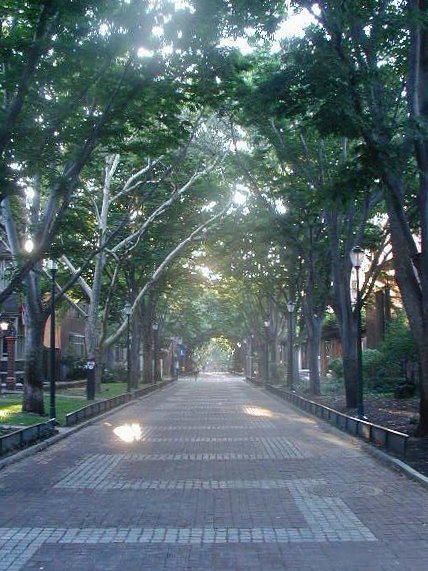
4.            Strolling leisurely down Locust Walk. (n.b. Not this summer…) The site of the long stretching Locust Walk through the rather literal center of campus is a site that I remember from the Penn application brochure or some other admissions piece years ago.  However during my years as I student I never saw that view recreated.  It wasn’t until summers at Penn that I saw the real version of the picture I remembered in my mind.

Idyllic Locust Walk

3.            Riding the Penn Bus. The Penn Bus is one of the best perks that students, staff and faculty have.  Two Penn routes take members of the Penn community in to West Philadelphia as far as 48th Street and into Center City as far as 20th. Whether or not the students are in town, the ride is convenient for me since it’s practically door to door. However, in the summer, the usually standing-room only bus has plenty of seats.  With the air conditioning on, the bus is comfortable and I have some room to sit separately from others especially if I just came from the gym.

2.            Spending a few minutes in the Arthur Ross Gallery.  In addition to the ICA, the Ross Gallery is another University art space showcasing temporary art exhibitions.  This single-room gallery was established in 1983 to view the eclectic program of changing exhibitions in all fields of the visual arts and cultural artifacts from around the globe.  When I am limited on time, this is a wonderful gallery to get lost in for 15 minutes, then I take a peek at the Furness architecture of the Fisher Fine Arts Library before heading out.

Example of an exhibition in the Arthur Ross Galley

1.            Dining at Roosevelt’s.  This is a little bit of a cheat since Roosevelt’s isn’t on campus.  However, when I get off the bus to go home from an evening workout and I don’t feel like cooking, I have a place to go.  It’s great to walk into the pub, pony up to the bar, and order a $2 or $3 beer – depending on the happy hour special that day – and burger without having to wait for all the MBA students’ to get their food before me since they’ve been there since 4pm.

2 Comments

Filed under Casey R., Top Ten

Locust Walk Talk: Locust Walk Renovation

Author: Casey Ryan, C’95

As students, I’m sure that you have strolled along this major pedestrian thoroughfare at one point on another.  Now, the walkway is under construction starting with the 3600 block this summer and will continue to the 3800 and 3900 blocks this fall.

Locust Walk is the place to go to bump into other students and peers.  It is more than a walkway; it serves as a social and interactive path between college houses (a.k.a. dorms) and classrooms.  Each and every time during my senior spring semester I would run from my house on Sansom and hop on the Walk to get to my either my Linguistics or Business Italian class in Williams Hall, I would see several of my classmates and friends.  We would catch up on last week’s cast party or make plans for that weekend, and I would be inevitably late for class.  Yet, my Penn classmates and I weren’t the only things traveling along the walk.  The renovation includes the replacement of underground utilities and the paved surface.  In addition to the thousands of students, faculty and staff that traverse the 20 and ½ foot wide Walk, electricity, gas, water, telecommunications, and sewage all passed under our feet. This infrastructure will be improved during the renovations as well.

For now, though, the intensity of the work in a confined space requires that students, faculty and staff to be re-routed from the work area.  The temporary walkways provided by the contractor for safety, will have to serve as the major social conduit through campus.

For more articles about the Locust Walk Renovation, visit:

The Daily Pennsylvanian: Construction tears up Locust Walk

Under the Button: Locust Walk Is Getting All Torn Up This Summer

Facilities: Locust Walk Renovation

This slideshow requires JavaScript.

2 Comments

Filed under Alumni Perspective, Campus Life, Casey R., Locust Walk Talk, Sustainability at Penn, The Sweeten Life

My Top Penn: Public Art

In 1959, Philadelphia passed a law that called for 1 percent of construction costs to be set aside for fine arts projects. Since then the University has acquired campus art that is displayed inside and outside many of the University building. Throughout campus there are many interesting pieces of art that are the part of the fabric of campus, and I wanted to share with you my favorite 10 outdoor pieces of Public Art.

10.          Quadrature #1 (T. G. Miller Plaza, Hamilton Walk, between HUP and Medical Education Building) – personally, I have likened it to the Medical School’s own Covenant.

9.            125 Years (Hill Square) – this public work has transformed the pathway diagonally crossing Hill Square, aka Hill Field.

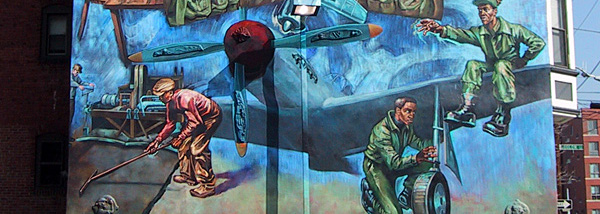
8.            Tribute to Tuskegee (20-22 39th Street – South Wall) – one of the few murals that Penn has supported through this program.

Tribute to Tuskegee

7.            Column + Capital (Hayden Hall Rear Lawn) – this subtle and sometimes unnoticed piece of art is nod to engineering, highlighting the skill of the Greeks and Romans in the middle of Penn Engineering’s buildings.

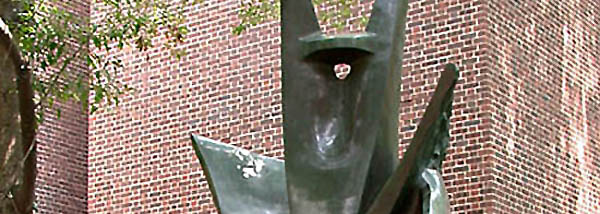
6.            Solomon (36th Street Walk, South of Walnut street) – this legendary king of Israel both blends in with the grass and flora due to its a green patina and stands out due to its massive size.

Solomon

5.            George Munger (Franklin Field) – Mungermen have left an indelible mark on the football program at Penn  and this homage to Coach Munger is a fitting tribute.

4.            Love (Blanche Levy Park) – this Robert Indiana classic has been a backdrop for many pictures, ranging from wedding save-the-dates to holiday cards.

Love

3.            Ben Franklin – this is a cheat since there are 3 statues of Ben on campus: The prominent Franklin (Blanche Levy Park, in front of College Hall), young Ben Franklin (Weightman Hall on 33rd Street) and the life-sized Ben on the Bench (37th & Locust Walk, South East Corner).

2.            Covenant (Hamilton Village, spanning Locust Walk at 39th Street) – the given name to the large cheery-red sculpture of rolled steel that dominates Hamilton Village, aka Superblock.

Covenant

1.            Spilt Button (Blanche Levy Park at Van Pelt Library) – this one needs no introduction.

To learn more about the Public Art at Penn, visit the PennCurrent article, here and to view a map of public art at Penn, visit Penn’s Facilities Map and check the “Public Art” box.  Are there pieces that you wished I included?  Which ones would you switch out from my list?

In addition, when on campus, art lovers or admirers can learn more about Penn’s outdoor art through the University’s free “Discover Penn” audio walking tour. Launched in 2008 by the Division of Facilities and Real Estate Services, this program provide a number to call, posted on a small, red ground-level sign posted at various sites around campus to hear a short narration about significant University buildings, sculptures, historical events and other points of interest.

1 Comment

Filed under Campus Life, Casey R., Fine Art, The Arts at Penn, Top Ten