Category Archives: Academics

My Top Penn List: “Do Over”

Author: Casey Ryan, C’95

Working in academia, I have so many opportunities for education, whether it’s taking a class, listening on a guest lecture, or visiting one of the many museums on campus.  The one thing I can’t do is revamp my undergraduate career.  Recently, while checking out the 2011-2012 course register for potential graduate level classes, I found myself wishing that some of the currently-offered undergraduate classes were available when I was a student.  Here are the 10 elective courses I would have liked to have taken if I could get a “do over” (some descriptions have been edited for length).

10.          LING051 (Linguistics) Proto-Indo-European LanguageNoyer.

Most of the languages now spoken in Europe, along with some languages of Iran, India, and central Asia, are thought to be descended from a single language known as Proto-Indo-European, spoken at least six thousand years ago. Speakers of Proto-Indo-European eventually populated Europe in the Bronze Age, and their societies formed the basis of the classical civilizations of Greece and Rome, as well as of the Celtic, Germanic and Slavic speaking peoples. Students will learn the basis of reconstructing a language and explore the culture and society of the Proto-Indo-Europeans and their immediate descendants. In addition, we will examine the pseudo-scientific basis of the myth of Aryan supremacy, and study the contributions of archaeological findings in determining the “homeland” of the Indo-Europeans.

9.            ENG 019 (English) History of the English Language.

This course traces the history of the English language through English literary history, from Anglo-Saxon England to 21st-century America. We will consider the relationship between different language systems (e.g., syntax, morphology, orthography, grammar) and the relation of those systems to the literature of different historical periods. We will also consider the social and political events influencing language change, such as the introduction of Christianity, the Norman Conquest, the printing press, colonialism, educational policies, and mass media.
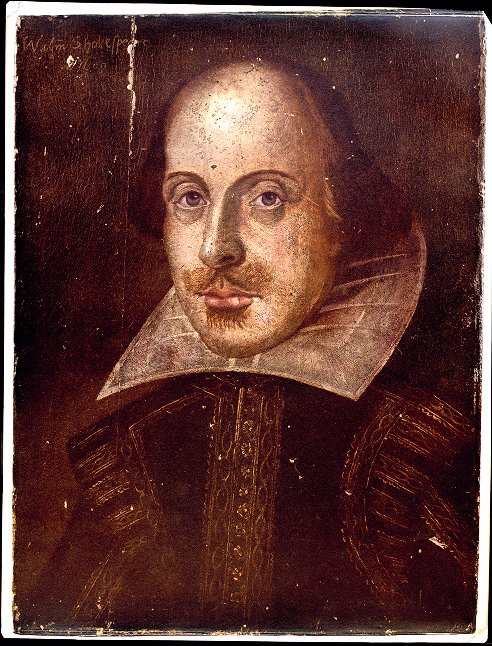
Image courtesy of the Furness Theatrical Image Collection

8.            HIST 050 (History) England and the British Isles to 1707. Todd.

The subject of this course is the history of the British Isles from the Roman Conquest in 43AD to the creation of the United Kingdom in 1707. Between these two dates the various societies and cultures in the British Isles were brought into the orbit of the Roman Empire, converted to Latin Christianity, and developed distinctive cultures and strong ties with the Continent. From the twelfth century on, the kingdom of England began to exert its power over Wales, Ireland, and Scotland. The Anglo-Norman continental empire of the Plantagenet dynasty also played a large part in shaping the English monarchy, as did the playing out of the Hundred Years War, the internal divisions in fifteenth-century English society, and the rise of the Tudor-Stuart dynasty.

7.            PHIL018 (Philosophy) The Idea of Nationalism. Steinberg.

Nationalism is one of, if not, the major geo-political forces of the past two hundred years. Its continuing power has been amply demonstrated by recent events in Eastern Europe and the Soviet Union. This course will focus on the conceptual and theoretical issues raised by competing notions of nationalism, rather than on its history or expression in particular cultures.
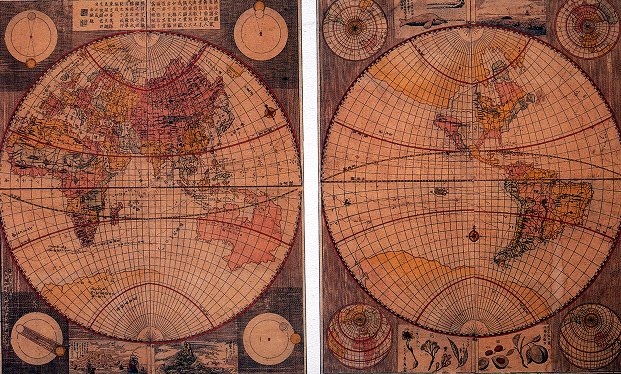
Image courtesy of the Fine Arts Library Image Collection

6.            URBS012 (Urban Studies) The History and Politics of Space. Schneider.

How do we understand the places in which we live? What is the relationship between workplace and home, downtown and suburb, inner city and gated communities, department store and mall, row house and ranch house? How are our lives defined by place? The city is a social and a spatial system, and its organization both reflects and reproduces social categories of race, class, and gender. The current city is also the product of past decisions about where to locate communities and how to allocate resources. Through reading sociological, historical, theoretical, and primary texts, through studying maps and photographs, and through your ethnographic explorations, we will explore the presence of the past in the city around us, the evolution of different kinds of urban and suburban places, and the encoding of wealth and power as well as inequality and poverty in the urban landscape.

5.            IPD509 (Integrated Product Design) Needfinding.

Needfinding is an approach that puts people and their needs at the center of product development and business strategy creation. Over 90% of new products introduced into the marketplace fail. A good portion of these failures are due to lack of understanding of end consumers and their needs. Designers and engineers need tools and techniques to get beyond what people can explicitly state and determine their implicit needs. In this class students will gain a tool set from which to develop their own approaches to conducting researching for design: learning how to think about other people, about culture, and about new perspectives. They will also learn tactical skills: how to define research questions, how to conduct observations and interviews, how to interpret results, how to synthesize them into fodder for design, and how to communicate their findings in a way that is compelling and actionable for designers, marketers, and business strategists.

4.            GSWS240 (Gender, Sexuality & Women’s Studies; Cross listed HIST240) Gender and Athletics. Miller.

Have women started to “play hardball” on a “level playing field” in the American sporting culture? From the commercial successes of the WNBA and World Cup Soccer to new studies that document the positive effects of athletics on girls’ self-esteem, women finally seem to be turning the American obsession with sports to their own advantage. This course will examine how physical fitness and organized athletics for men and women have both reflected and helped to create norms of masculinity and femininity over the past one hundred and fifty years.

Image courtesy of the of Women's Club Basketball Team

3.            PSCI135. (Political Science; Cross Listed GAFL135 – Government Administration and HSOC -135 – Health and Societies) The Politics of Food. Summers.

This academically based community service seminar will explore the politics and institutions that have shaped – and continue to shape – food production and consumption. Students will use the readings, their community service, and ongoing “food events” at Penn to analyze the politics of food in many arenas: from farms, kitchens, supermarkets, schools, and communities of faith to corporations, research institutions, the media and international trade.

2.            MUSC014. (Music) Songwriting in the 20th Century. (M) Weesner.

This course will alternate between an analytical approach and a critical approach to the study of a wide range of songs composed throughout the 20th century. We will study musical techniques such as melody, harmony, form, rhythm, instrumentation, style, and text-setting. We will also pose far-ranging questions, such as, what makes a song a song? What makes a song a good song? What is the difference between an art song and a pop song? This course will occasionally focus on specific composers, such as Cole Porter, Charles Ives, John Harbison, and Liz Phair, and will also consider the musical ramifications of collaboration, covers and re-makes.

1.            ANTH 230 (Anthropology; Cross listed ANTH633) Forensic AnthropologyMonge.

This course will investigate and discuss the various techniques of analysis that biological anthropologists can apply to forensic cases. Topics include human osteology, the recovery of bodies, the analysis of life history, the reconstruction of causes of death, and various case studies where anthropologists have contributed significantly to solving forensic cases. Discussions will include the limitations of forensic anthropology and the application of DNA recovery to skeletal/mummified materials.
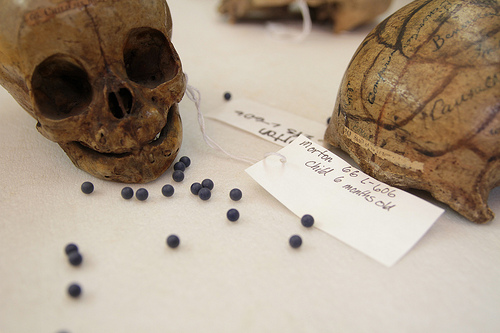
Image courtesy of the of Penn Museum Blog

I encourage you to wax nostalgic and peruse the course register, maybe your favorite class is still being taught by your favorite professor or you might find a course that inspires you to go out and learn more.

1 Comment

Filed under Academics, Alumni Perspective, Campus Life, Casey R., Top Ten

Penn Alumni Webinar: What Do We Know About Autism?

As part of Penn Alumni Education’s commitment to bringing intellectual and academic programming to alumni, Office Hours gives you the chance to learn about and discuss relevant issues with Penn faculty from your own home or office.

Next week, hear from Dr. Jennifer Pinto-Martin, the Viola MacInnes/Independence Professor of Nursing, and Interim Chair in the Bio-behavioral and Health Sciences Division, as she discuss what current sciences can tell us about autism, reviewing what is known about the causes of ASD and ongoing studies, including her CDC funded Study to Explore Early Development (SEED).

Over the past 20 years, the prevalence of Autism Spectrum Disorder (ASD) has increased markedly, spurring increased attention, speculation and research about the cause. Significant media attention has been given to recently published data on the disorder’s genetic heritability, non-genetic risk factors, and risks associated with SSRI’s, one group of commonly used antidepressant medications (see below for links to recent articles in Time and The New York Times), all of which confirms that both genes and environment matter.

The webinar will be held on Tuesday, July 26 from 1-2 PM EST. Registration and additional information available here .  It’s easy to sign up and be part on this timely and important discussion.

Leave a comment

Filed under Academics, Alumni Programming, Lisa V.

Consequence-Free Burrito is No Urban Legend; Lives and Thrives in Our Nation’s Youth

Author: Leigh Ann P.

If my mom had suggested to my 14-year-old self that it would be a good idea for me to spend the summer at venture capitalist camp at Wharton, I would have groaned, “Ugh, MOM!” and stomped back up to the roof to work on my tan sunburn. What is it with parents and their lack of understanding?

These days, when July rolls around on Penn’s campus, I am amazed at the go-getter high school students that infiltrate Locust Walk. It’s amazing to me that these kids have the ambition and the intellectual wherewithal to take advantage of their summer months further educating themselves and getting a leg up in advance of the college admission process.

When I was 14, I was thinking about three things: “When I will get my braces off?” “Do I have food stuck in my braces?” and, “What time do the ‘Hey, Dude’ reruns come on Nickelodeon in the afternoons? Am I too old to still be watching ‘Hey, Dude’?” I guess technically that was four things.

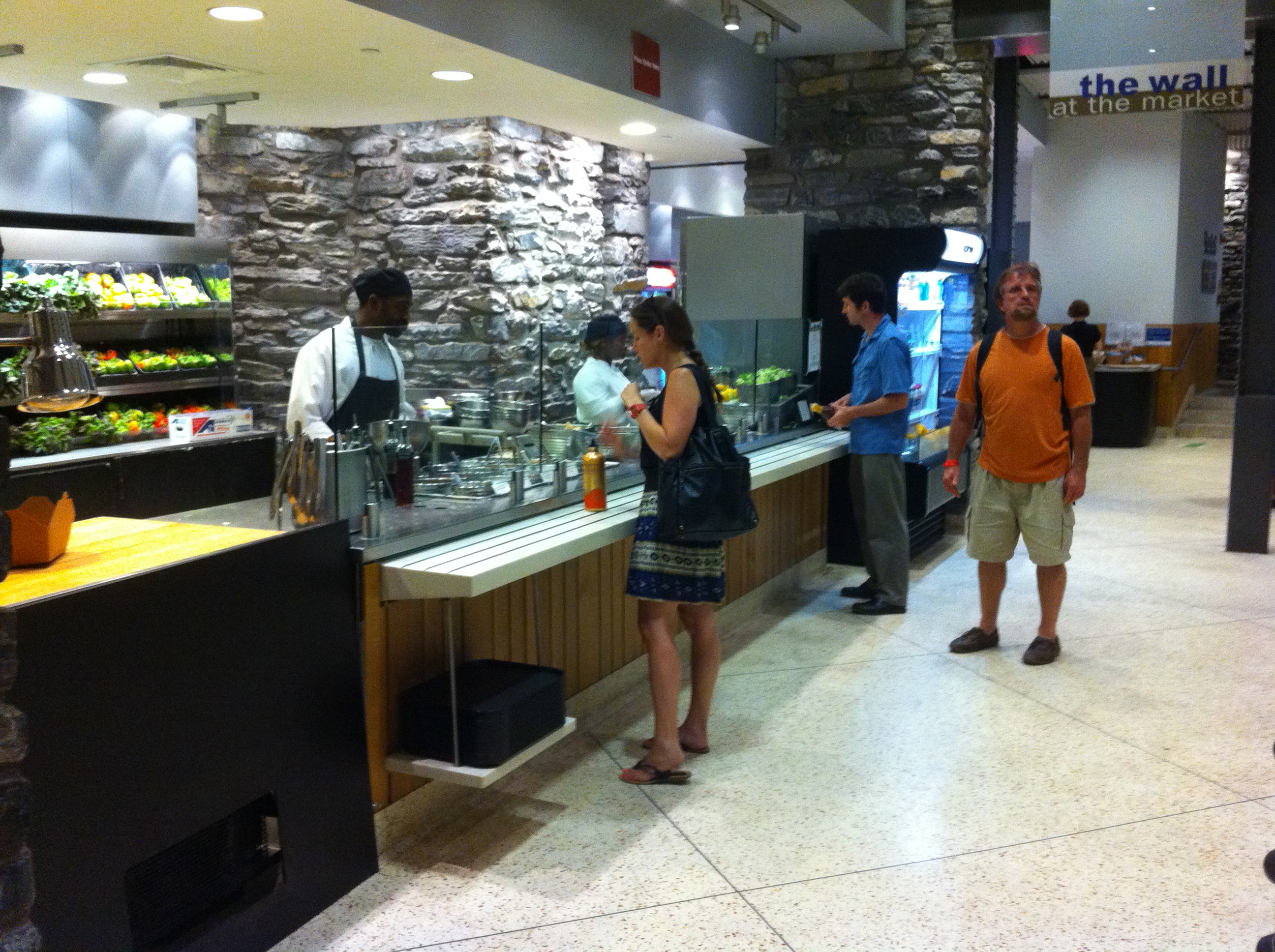
What’s really great about having all the high schoolers on campus is that the salad line at Houston Hall is so much shorter than during the regular school year, even when it’s shoulder-to-shoulder traffic down there. Remember when you were a teenager and could eat a steady diet of pizza, burritos and pasta without any consequences? Yeah, me neither. Enjoy your digestive freedom while it lasts, kids.

No salad for me ... not until I'm old like the Alumni Relations staff members.

I laugh in the face of grease and cheese!


For more information about Penn’s summer programs for high school students, check out this link.

Leave a comment

Filed under Academics, Food Fiends, Leigh Ann P., Penn High School, Penn in the Summer

My New (Second) Favorite City

Dan Bernick, SAS ‘14

It’s official – I love D.C.

There is an energy here that is infectious.  This is where it all happens.  Even if you have a lowly internship, you feel like you are in the middle of the action.

The city itself is fantastic.  When it is not scorching hot or raining, the weather is really nice – perfect for touring the national mall.  My favorite view is to look out from the top of the Lincoln Monument and see the National Mall at night.

Activities fill up the day and the night.  There is always something to do in the nation’s capital (especially if you are a nerd).  Nearly every day there is at least one free conference (which means free food!) where prominent national thinkers discuss our country’s biggest challenges.  At night, you can go to a National’s game, dine with friends, or participate in any of the Penn in Washington events; just last week we were able to meet with Ben Bernanke and hear about the Federal Reserve.

I have to go to work now (wow that feels good to say), but I’ll keep you updated on this amazing summer.  Spending the next three years in Philadelphia sounds great.  After that, who knows?  Maybe I’ll come to D.C.

Leave a comment

Filed under Academics, Daniel B.

Homecoming 2011: Penn to Celebrate 40 Years of Black History at Penn

Author: Cecilia Ramirez, C’05, Sp2’10

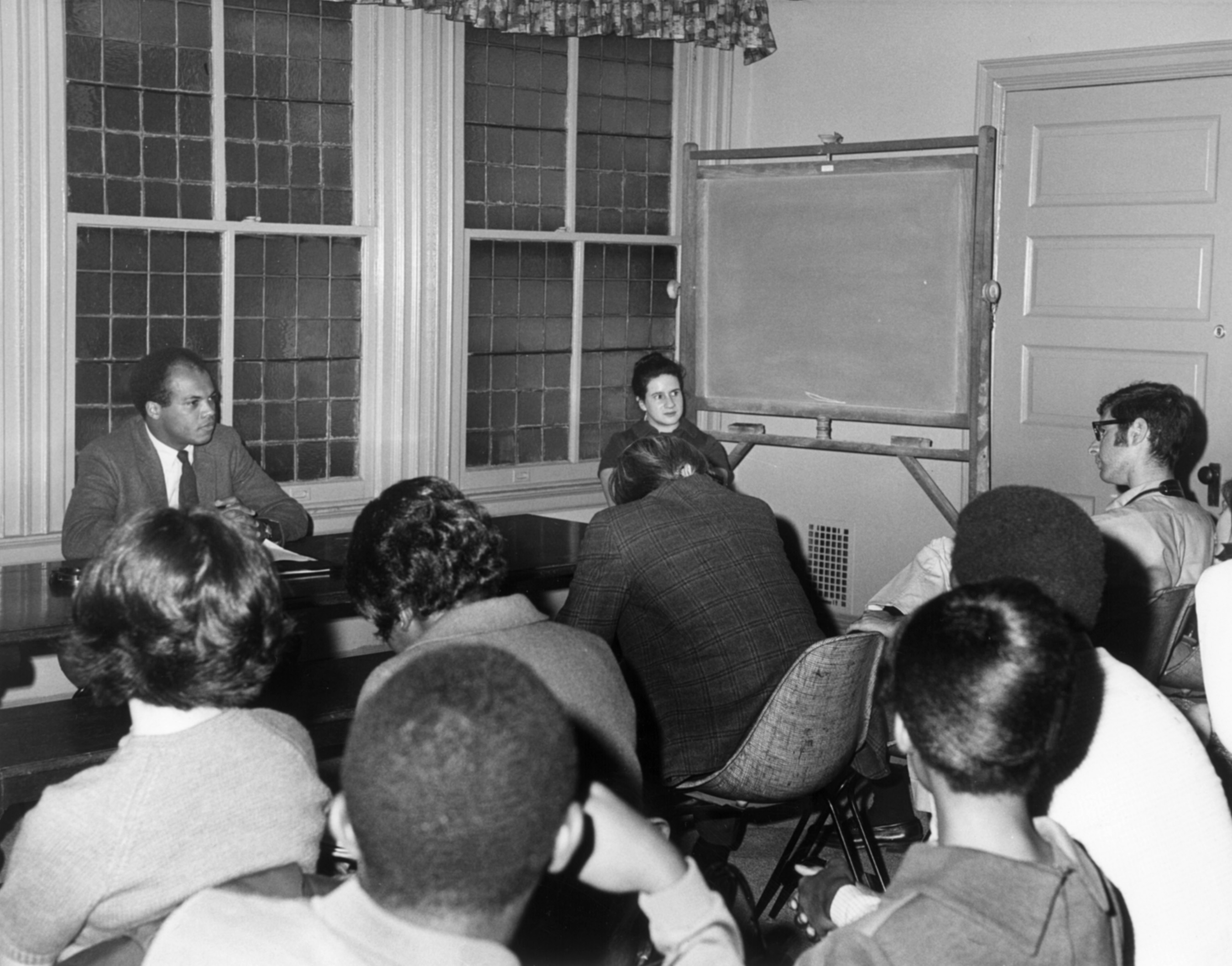
John Wideman, C’63, Hon’86, first director of the Afro-American Studies Program. October 24, 1968

In 1971, the University of Pennsylvania welcomed its first academic program focused on studies of the African diaspora, the Afro-American Studies program. The program was led by its first director, John Wideman (C’63 Hon’86), a member in the English Department and the second black tenured faculty member in Penn’s history. Dr. Wideman, tasked with a difficult challenge, laid the foundation to successfully develop a much-needed academic program without any trained faculty members and few available courses.

Forty years later, the program, now known as the Center for Africana Studies (CFAS- through a merger with the Center for the Study of Black Literature and Culture), has flourished tremendously and now boasts over 50 affiliated faculty members and over 80 courses offerings for undergraduate and graduate students. CFAS also sponsors several co-curricular programs including: the Artist- and Scholar-in-Residence Programs, The Reverend Dr. Martin Luther King, Jr. Lecture in Social Justice, The Africana Media Project, The Honorable A. Leon Higginbotham, Jr. Memorial Lecture, The annual Race and Sports program, and Brave Testimony: A Celebration of Poetry of the African Diaspora.

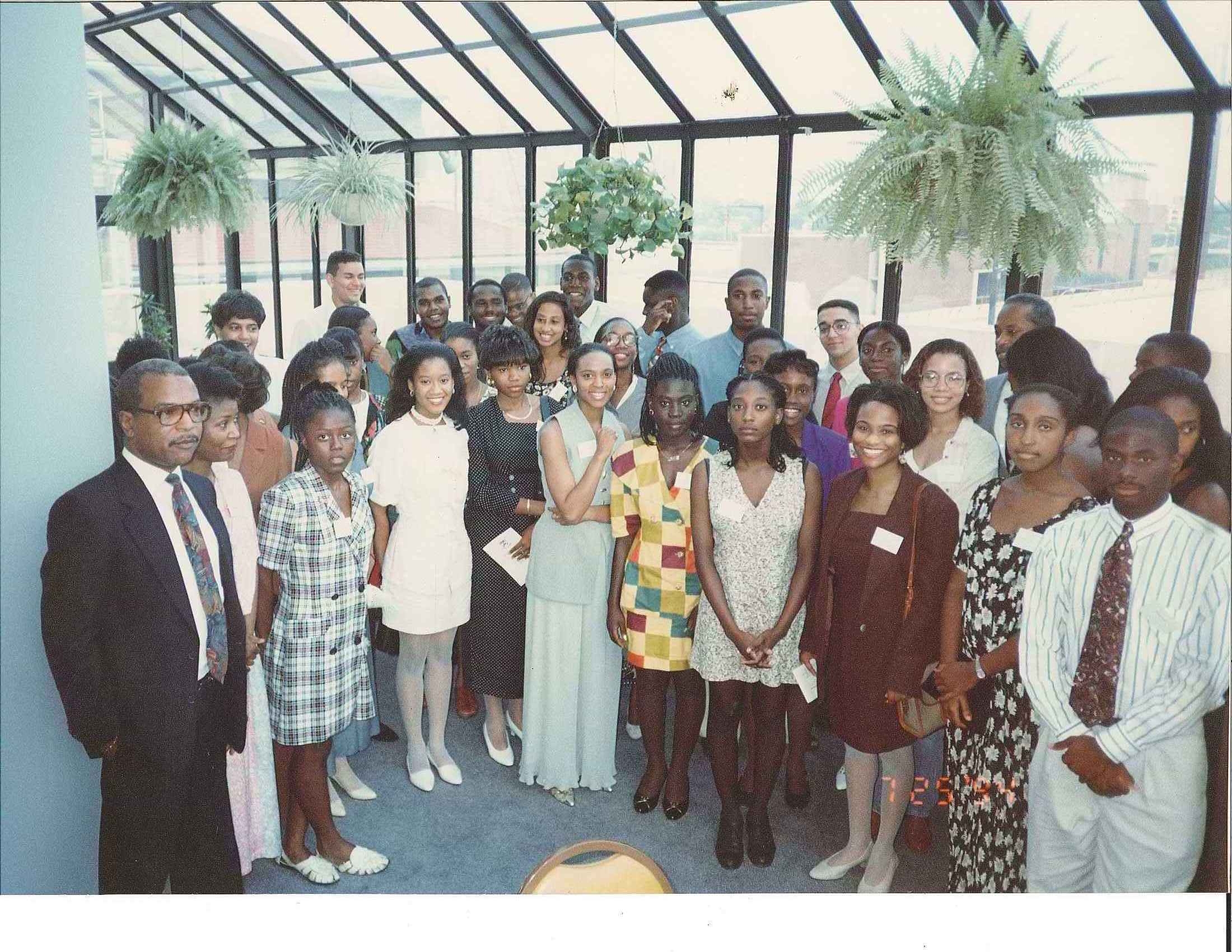
Africana Studies Summer Institute for Pre-Freshmen, 1994

Dr. Camille Z. Charles is the current Director of The Center for Africana Studies, the Chair of Penn’s Faculty Senate, Professor of Sociology and Education and the Edmund J. and Louise W. Kahn Term Professor in Social Sciences. When speaking of this historic milestone, Dr. Charles explains, “These anniversaries are truly milestones in Penn’s history. I am proud to help ensure that a once overlooked field of study has remained an integral part of the academy for forty years and continues to shape the educational experiences of all Penn students.”

This fall, the University will celebrate the 40th anniversary of the founding of Afro-American Studies at Penn and the 25th anniversary of the Center for Africana Studies Summer Institute for Pre-Freshmen, the first and, to date, only summer program of its kind and in the Ivy League.

On November 5, 2011 (Save the Date!) during Homecoming Weekend , the Black Alumni Society will join the Center for Africana Studies in a day-long series of programs and events in celebration of this milestone and in honor of Black History at Penn. The program series will include a brunch featuring the Black Alumni Society’s annual Honoring Leaving Legends program, a faculty and alumni panel, a reunion for past Summer Institute alumni and Afro-American or Africana Studies majors and minors as well as other exciting events and special guests. All alumni are invited to attend any of these historic events. For details, to RSVP, and to get involved please visit: The Center for Africana Studies Homepage or contact Michelle Houston at: mhoust@sas.upenn.edu.

Happy birthday, Africana Studies!

Leave a comment

Filed under Academics, Alumni Perspective, Alumni Programming, Cecilia R., Historical, Homecoming Weekend featuring arts and culture, Multicultural Outreach

Penn Fine Arts Abroad

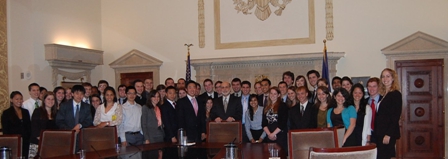
Thanks to a generous gift by Howard A. Silverstein, W’69, and his wife, Patricia Belznak Silverstein, C’81, PennDesign students have been able to participate in the Howard A. Silverstein and Patricia Belznak Silverstein Studios Abroad. Offered every two years, these studios allow a number of undergraduates and graduates from Penn Design the rare opportunity to travel to an exciting, developing city and immerse themselves in its sights and culture.

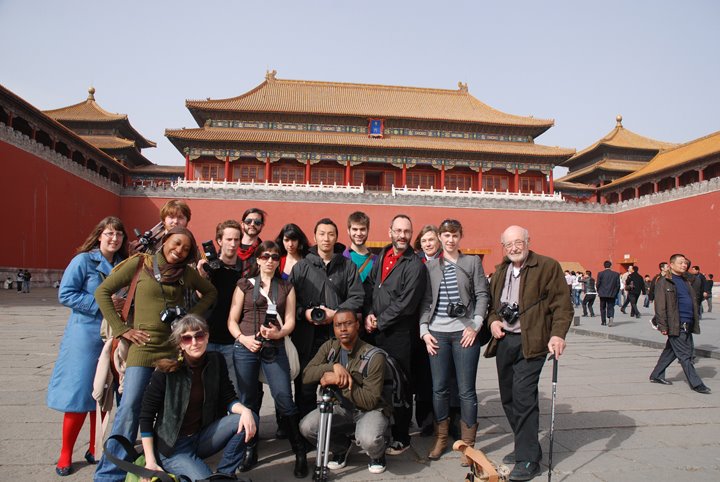
In 2009, several friends of mine were able to go to Beijing, China where they lived and created work (and blogged). When they returned from the trip, jet-lagged and dazed, I was amazed by the stories, videos and images they shared as they unpacked all their equipment and files–it took every ounce of self-control I could muster not to feel terribly jealous. Several weeks later, I was equally floored at how quickly they were able to turn around work for the gallery show.

PennDesign in the Forbidden City, Beijing

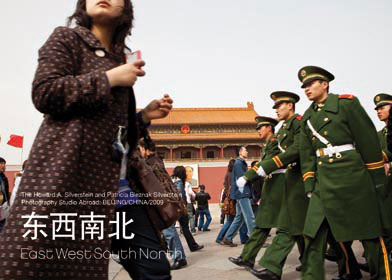
East West South North - show card

The work was surprising, beautiful and inspiring.  The show received a review from the Philadelphia Inquirer, and Penn’s President Amy Gutmann viewed the show with commentary by the artists. Click here to view more photos from her visit to the gallery.

Student describing work to Penn President Amy Gutmann

This year, fourteen undergraduate and graduate students traveled to Mumbai, India to create work for Populous Flows. Again, I was floored by the beauty, color and life in the images and videos. Again, I could really only act like I wasn’t completely and utterly jealous that these students, faculty members and staff were able to experience Mumbai so closely.

Penn Design in Agra, India

The following images were created by a faculty member and a staff member–both of whom I truly admire and respect. The first image was taken with and iPhone and does the piece absolutely no justice. I apologize…

Image from Populous Flows

And amid the hustle and bustle of life and color in the students’ work–to me, this image rounded out the experience, and made it all seem just a bit more human:

Sam Belkowitz - from Populous Flows

Populous Flows is on view at Charles Addams gallery until July 12, 2011. Anyone can view the show 10 a.m. – 5 p.m. Monday through Friday. If you have any interest in photography, art or India, I strongly encourage you to visit!

Populous Flows - Mumbai trip show

2 Comments

Filed under Academics, Fine Art, Memories of Penn, The Arts at Penn, Travel