Monthly Archives: June 2013

Extra-Curricular Activities, Redux

Author:  Nicole C. Maloy, W’95

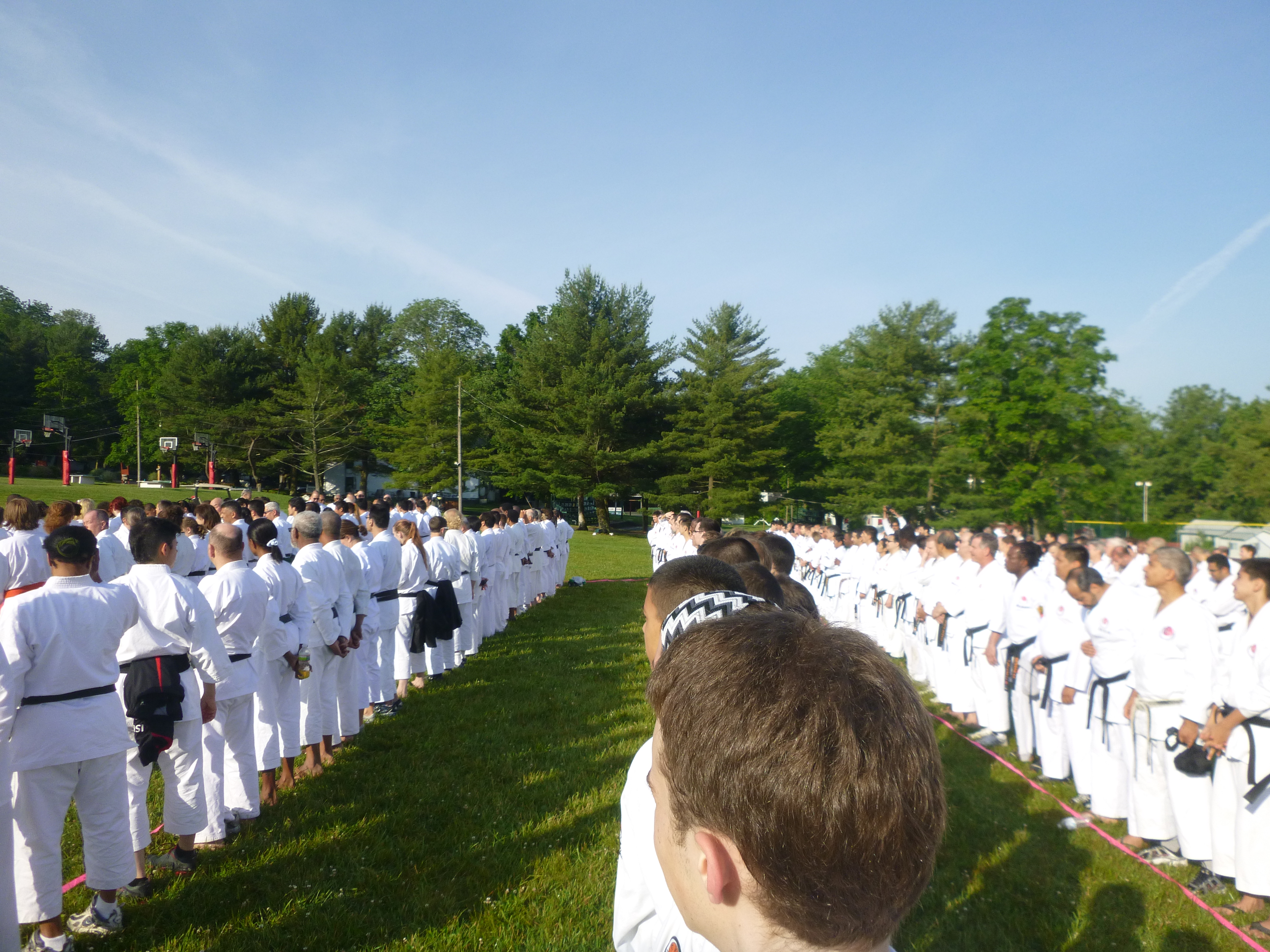
I am sending this post from my annual “Master Camp” karate vacation in Eastern PA (for the record, the masters are the instructors, not the students).

I know time is tight, and money is tight, and job/family/other obligations can often keep us from doing the things we love. but when things do come together to permit us to enjoy even a little taste of that extra-curricular life we remember from our student days at Penn, it is a great thing, no? I hope that, when you can, to whatever degree you can, all of you will carve out a bit of time to pursue not just a hobby, but a true personal interest, a passion, a love. As we have heard before, “We will find a way, or we will make one.”

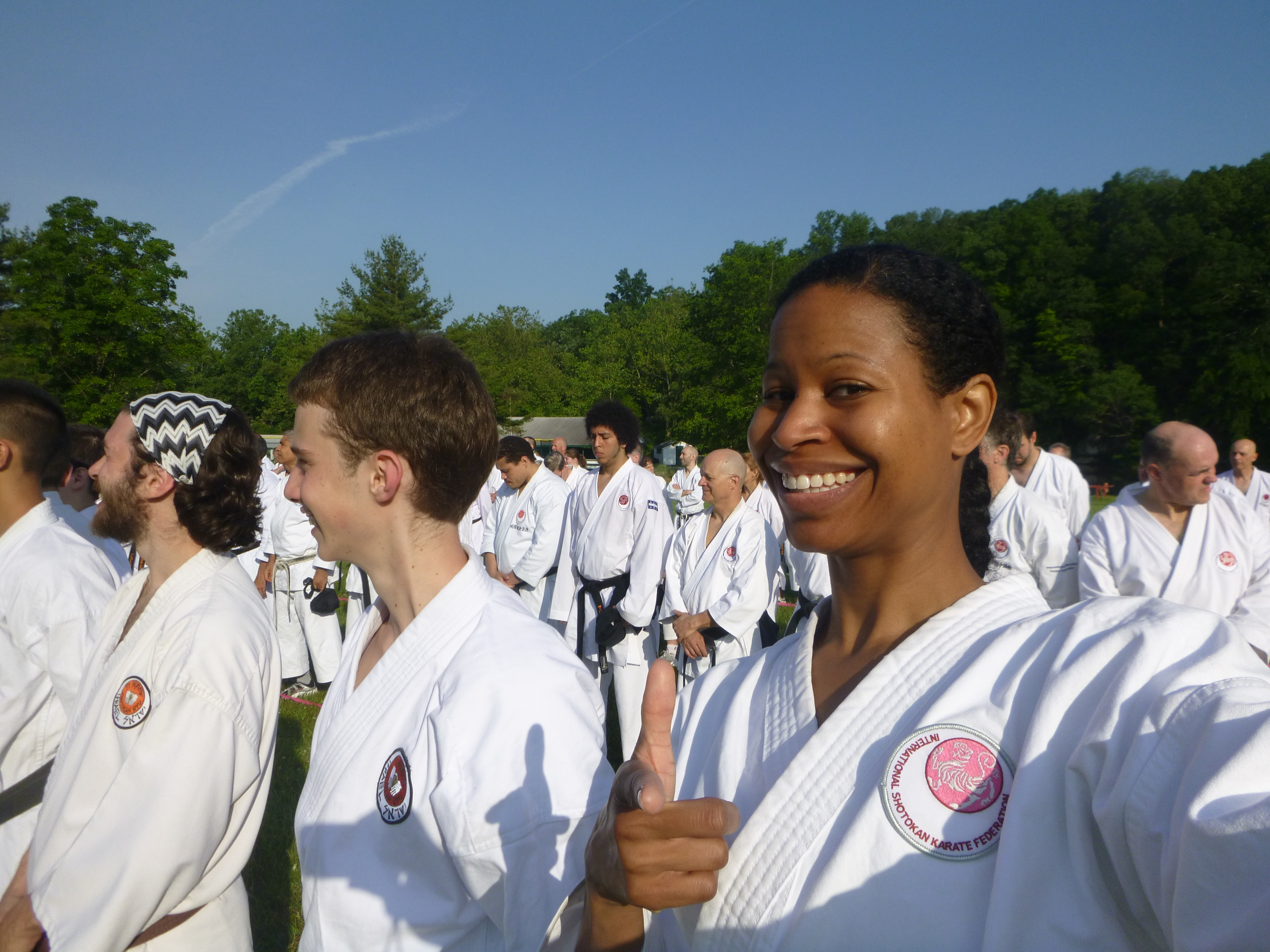
Here we are lining up for our annual camp photograph – this is just a few rows. Nearly 40 countries are represented among the several hundred attendees.

Here we are lining up for our annual camp photograph – this is just a few rows. Nearly 40 countries are represented among the several hundred attendees.

Smile!

Smile!

Leave a comment

Filed under Alumni Perspective, Nicole M.

Breaking News: Storm Approaches

Author: Liz Pinnie

It’s derecho time!

photo


Leave a comment

Filed under Campus Life, Liz P.

Swimming, anyone?

By: Jason Strohl

Cannonball!!

Cannonball!!

It’s almost summer and it’s already starting to get hot in Philadelphia. Times like these I wish I could walk over to Houston Hall circa 1900 and go for a dip, but sadly the pool is no more. I guess there’s always Pottruck or the Bio Pond. Anyway, anyone know where I can get one of those singlets?

Leave a comment

Filed under Uncategorized

For the Love of Cheese

Author: Aimee LaBrie

Because of my last name (see above) it happens some times that a person might be introduced to me, hear my name, pause, and then make this observation: “LaBrie? Like the cheese? Should I just call you Aimee the Cheese?” And I will laugh, pretending that s/he is the first person ever to think of this connection, and also feigning indifference to having been compared to an oozing piece of mold.

9780762446049_p0_v1_s260x420Despite this unfortunate connection, I do happen to love cheese, and not in a self-aggrandizing way.

I particularly love the expensive kind, and will eat it on just about anything–a Ritz cracker, an apple slice, a piece of bark. So imagine the thrill I felt when I learned that this Thursday from 6 to 7 PM, the Penn bookstore will host Tenaya Darlington as she stops by to discuss her newest book,  Di Bruno House of Cheese – A Guide to Wedges, Recipes, and Pairings. If you aren’t aware, Di Bruno Bros. happens to be Philadelphia’s oldest and finest (in my opinion) cheese emporium on record.  I cannot guarantee that she will have any fromage on hand, but I’m sure it will be good.  You should go. This cheese lover certainly is…


Leave a comment

Filed under Uncategorized

Bio Pond, Worth the Walk

Author: Lillian Gardiner, GEd’11

If you need a destination for your lunch time walks this summer, or are looking for a quiet place to sit and read, check out what is commonly referred to as the Bio Pond. It’s actually named Kaskey Park on the Penn campus map.

I stumbled upon it on a recent walk. I had heard about it but I never go that far south while on campus. Like many things off the beaten path, this one is well worth visiting.

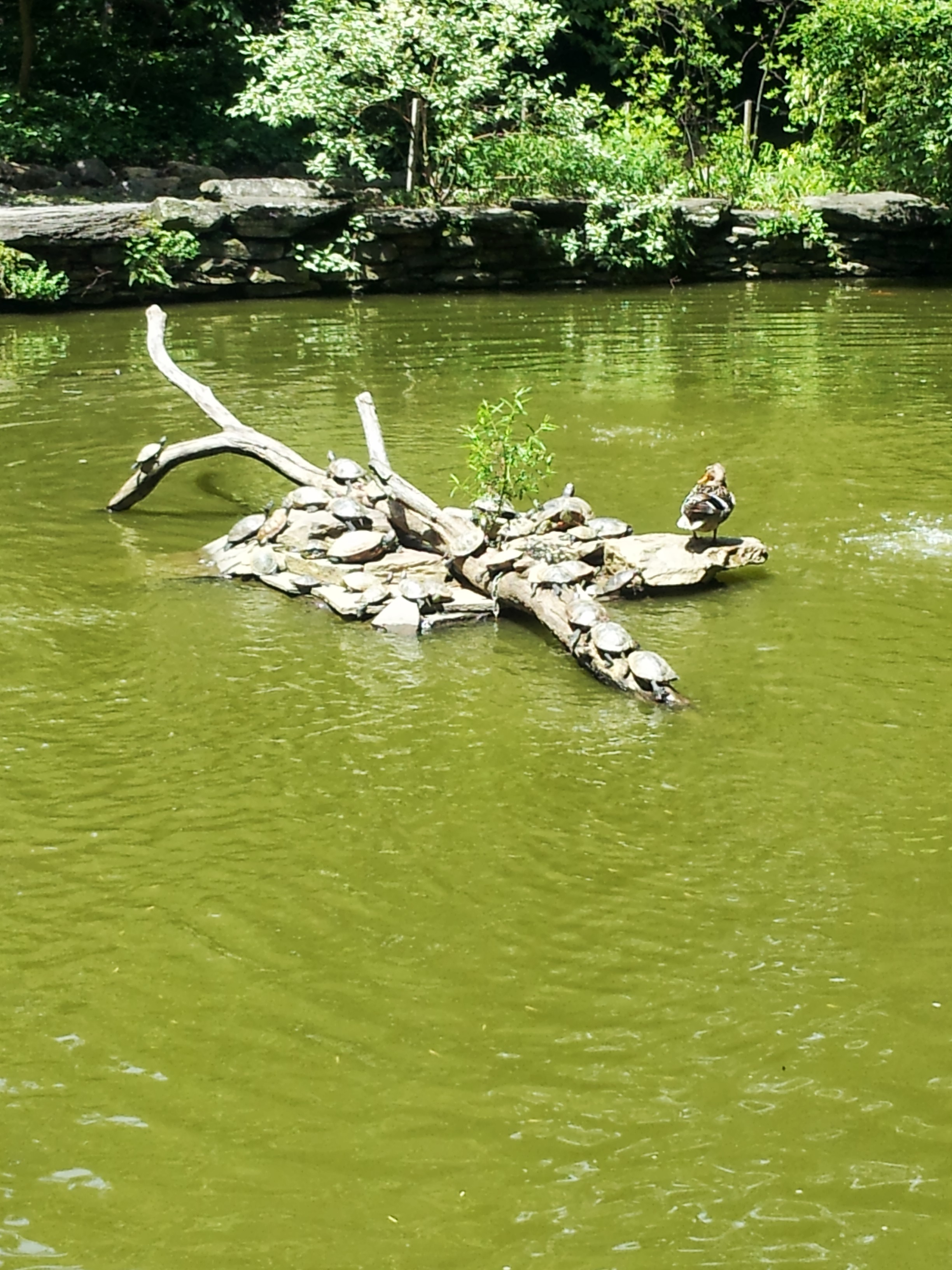
This turtle, Delilah, lives at the Bio pond with her many friends. She shares the space with Hugo, the gigantic gold fish.

This turtle, Delilah, lives at the Bio pond with her many friends. She shares the space with Hugo, the gigantic gold fish.

See Delilah sunning on her rock. Duffy the duck also lives here with his family.

See Delilah sunning on her rock. Duffy the duck also lives here with his family.

So much more to see–these are just two of the idyllic moments I had on this enjoyable trip.

Leave a comment

Filed under Alumni Perspective, Campus Life, Lillian G.

Home Sweet Home

Author: Janell Wiseley

I have worked at Penn, more specifically the E. Craig Sweeten Alumni House for over 10 years, and every day I’m thankful that I do not work in your typical nine to five office building.   Sure, we have desks and a conference room, but we also have a fire place in the living room and comfy couches in the lounge.  It’s also been a part of the Penn campus for a long time…

In 1897 two events took place at the University of Pennsylvania which would culminate 85 years later in this building.

During that year the General Alumni Society filed its papers of incorporation with the County of Philadelphia, and the Delta Tau Delta fraternity established its Delta chapter at the University of Pennsylvania in a row house at 3533 Locust Street.

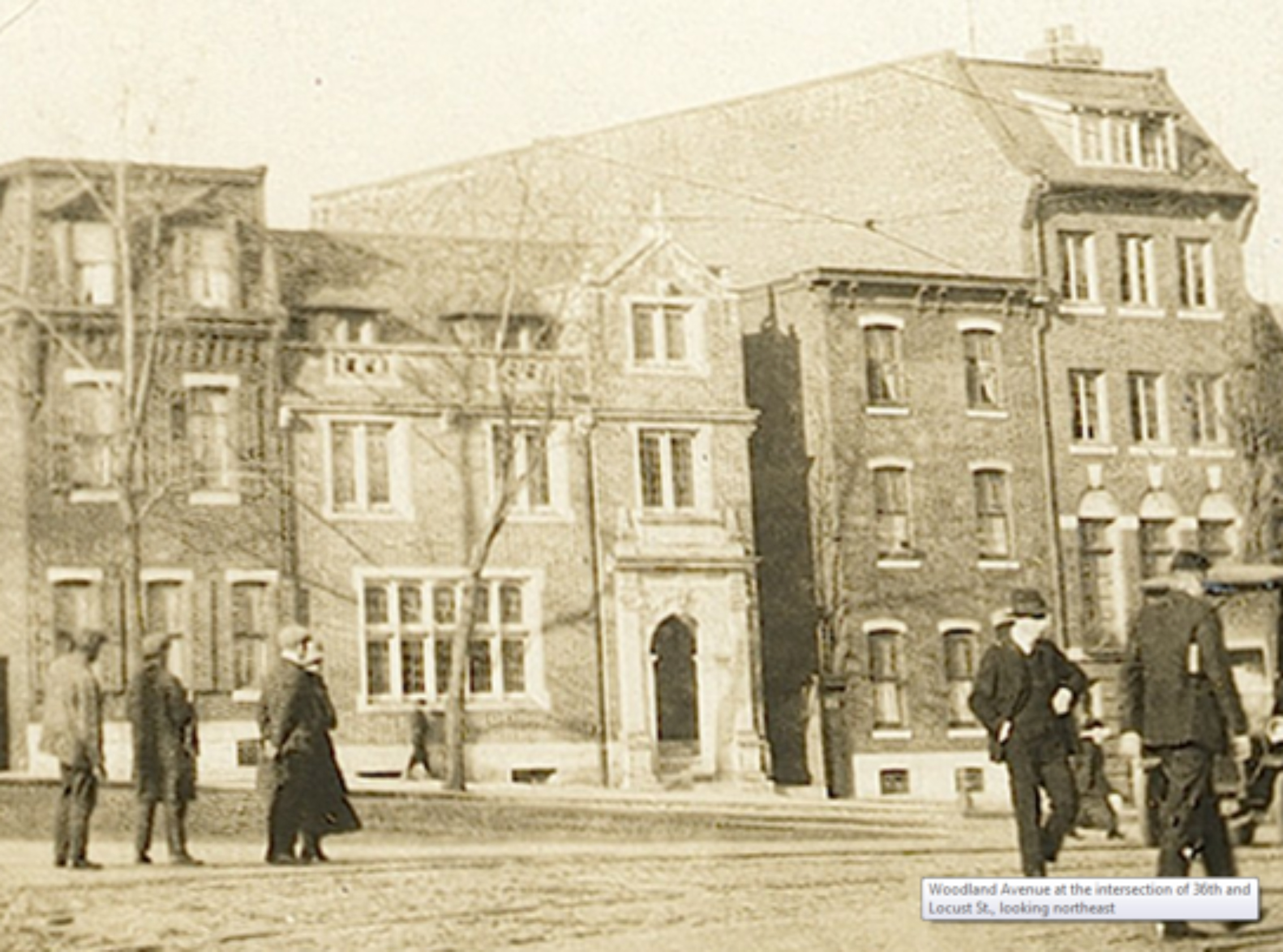
Woodland Avenue at the intersection of 36th and Locust Street

Woodland Avenue at the intersection of 36th and Locust Street

In 1914, Delta Tau Delta decided to rebuild its premises and acquired the two adjacent houses, 3535 and 3537, the latter having been briefly the home of the Lenape Club. The three structures were thrown together.  The firm of two young architectural alumni was retained for the new commission: Bissell, Sinkler &Tilden (E. Perot Bissell 1893 and John D.E. Sinkler 1898): the cost was $24,000. The house was occupied in May 1915.

The campus neighborhood in which the fraternity house stood was improved by the University’s post-World War II development programs.  The most dramatic change came in the mid 1950’s when the College Hall Green was created with the closing of Woodland Avenue and the construction of a subway system to carry the trolley cars that once crisscrossed the campus.

Further demolition in the area left the Delta Tau Delta House with a clear view of the Green, which was dramatically landscaped in 1979 as part of the Blanche Levy Park project.  In 1972 the office of the Dean of Students moved into the house when the fraternity closed its local chapter.

Nine years later the house was designated to be the new home of the alumni program.  The architectural firm of Dagit, Saylor, (Peter Saylor, AR’63) was commissioned to plan the renovations and refurbishing.

All of the funds for the renovation and refurbishing were contributed by Trustees, alumni, friends, classes and associations of the University.

E. Craig Sweeten Alumni House

E. Craig Sweeten Alumni House

On June 19, 1981, the Trustees approved a resolution naming the new Center in honor of Senior Vice President for Development and University Relations, E.  Craig Sweeten a member of the Class of 1937. On May 14, 1982, at the opening of the Class of 1937 45th reunion program, Mr. Sweeten raised the flag, officially opening the new Alumni Center at the University of Pennsylvania.

The alumni office had been one of the most peripatetic of the University departments.  Originally located in offices in downtown Philadelphia, the General Alumni Society moved to Irvine Auditorium on campus prior to World War II.  In the late 1960’s and early 1970’s there was a series of five moves that ended with the General Alumni Society and the Department of Alumni Relations in Eisenlohr Hall.

The new Sweeten Alumni House brings together under one roof the offices of Penn Alumni, the Regional Alumni Clubs, Multicultural Outreach, Classes and Reunions, the Alumni Interview Program and many other alumni programs.  It also provides facilities for alumni and student meetings and a reception area for returning alumni.

Text and pictures courtesy of University Archives.

Leave a comment

Filed under Historical, Janell W., Photos, Sweeten Alumni House, View from Sweeten

Summer Cooking

Author: Liz Pinnie

Summer is here and with it the bounty of our local farmers market!  Every Wednesday, I like to step out of the office and head over to the corner of 36th and Walnut to see the delicious produce.  Yesterday there were perfectly ripe Pennsylvania strawberries, rhubarb, greens, tiny zucchini and an abundance of mushrooms from a new vendor.  Seeing this fresh local produce gets me excited to clean off the grill, step outside, and get cooking!

Greens from the Farmers Market

Greens from the Farmers Market

1 Comment

Filed under Campus Life, Liz P., View from Sweeten

Penn Alumni Travel: Hugging the Coast

Author: Emilie Kretschmar LaRosa

Before I write about Penn Alumni Travel’s latest voyage along Europe’s Atlantic coast, I am excited to announce that the 2014 tour schedule—which includes trips to 6 Continents, 10 seas, and over 40 countries—has just been released. Click here to check out all 24 Penn Alumni Travel trips in 2014. We are already starting to take reservations for Antarctica, India, and the South Pacific. And, if you’re interested in Cuba, please email me at emiliek@upenn.edu to be added to a priority reservation list. We expect this tour to sell fast!

Every Penn Alumni Travel trip is a fantastic learning experience not only for the sights and historical visits, but also for the people you meet while on the tour—guides, local people, and passengers included. On a recent Penn Alumni Travel cruise along Europe’s Atlantic coast—starting from Lisbon, Portugal and ending in Honfleur, France—alumni connected with each other while exploring some of Europe’s coastal civilizations.

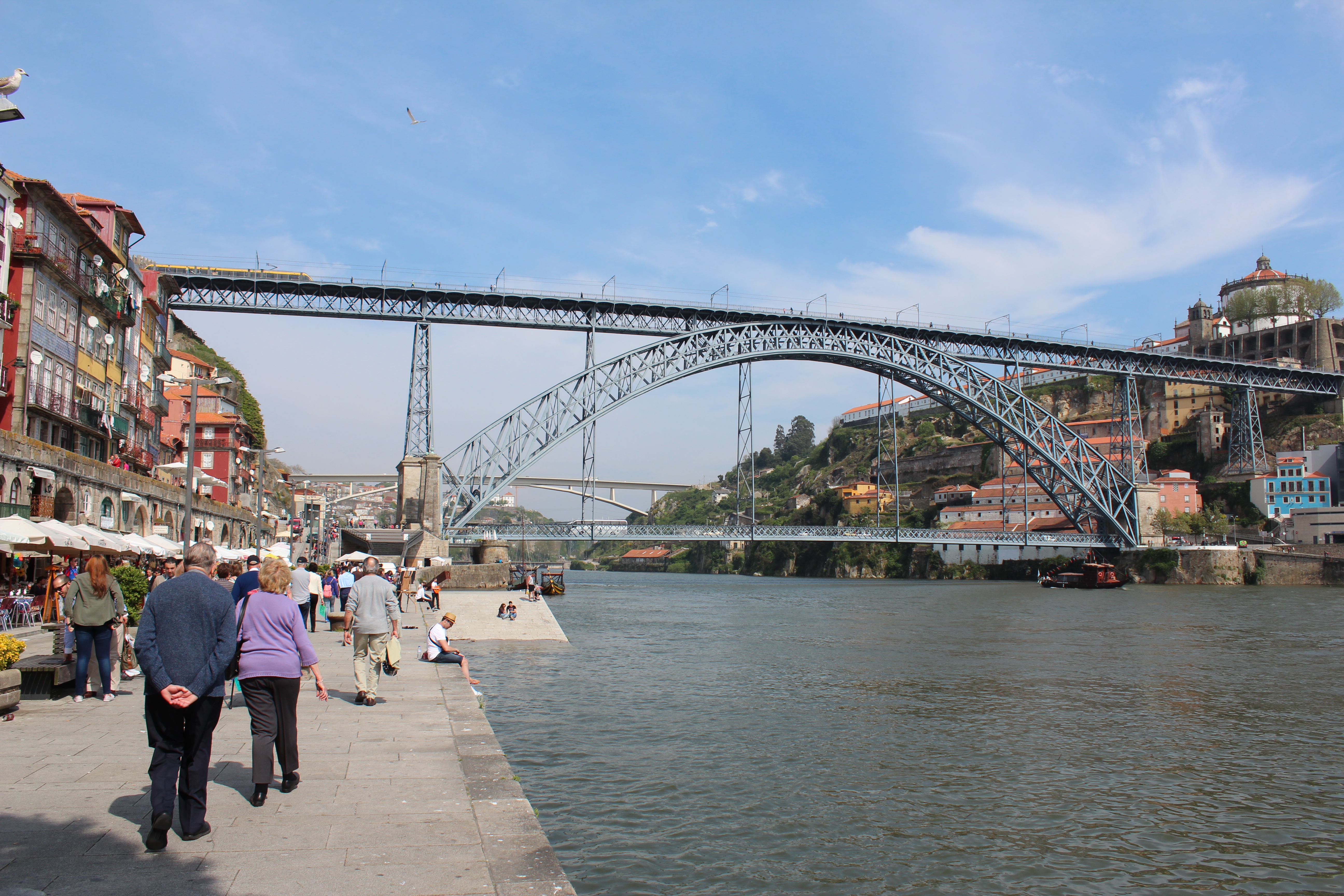
We started in Portugal with a quick visit to Lisbon followed by a tour of the town of Porto, home of the famous and eponymous Port wine. After a quick visit to the Palacio de Bolsa, or Stock Exchange, we spent some free-time in the Ribeira, the former harbor quarter of Porto. Beautiful bridges now span the river, one built by Gustav Eiffel and the one pictured below constructed by his student.

Porto bridge constructed by a student of Eiffel.

Porto bridge constructed by a student of Eiffel.

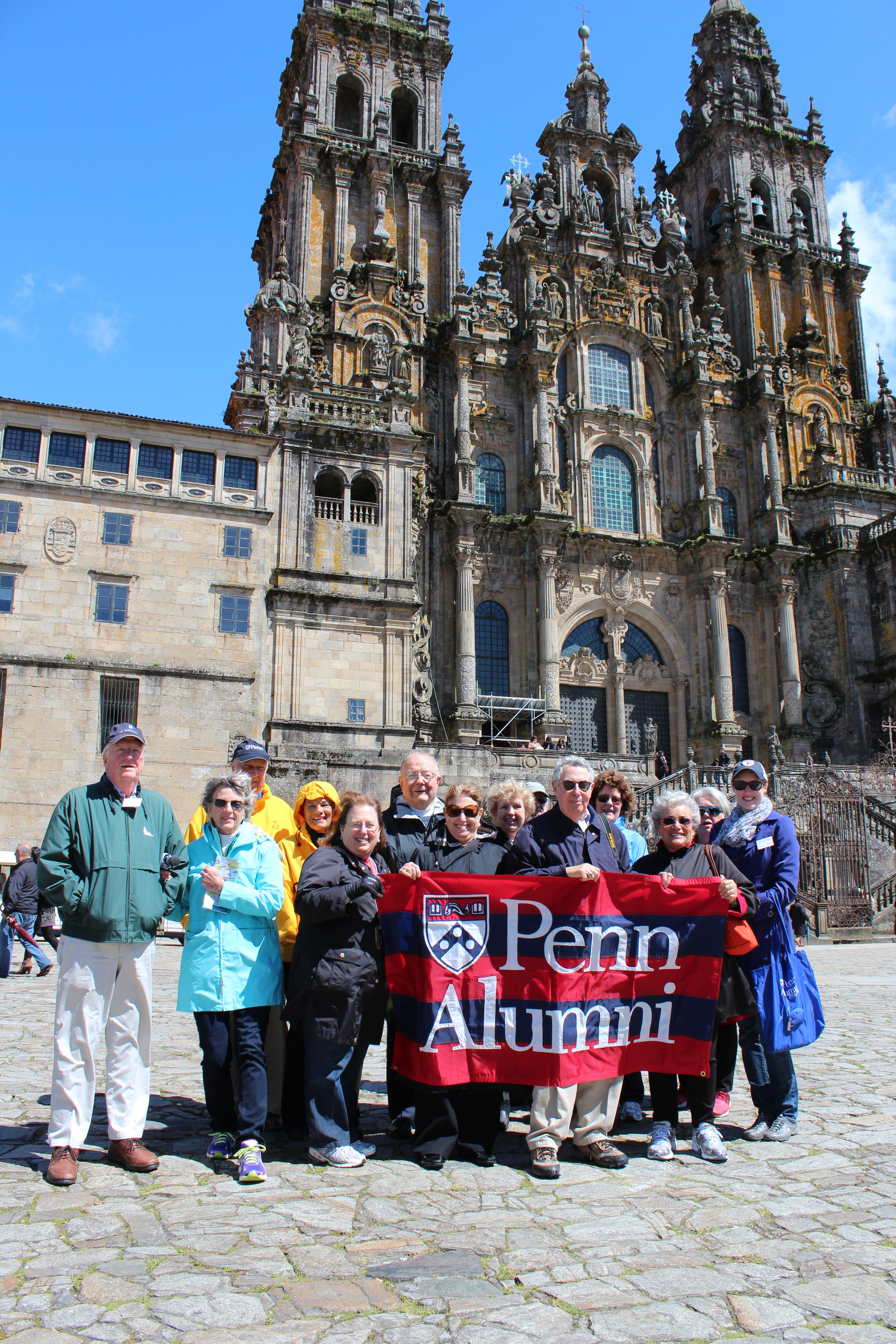
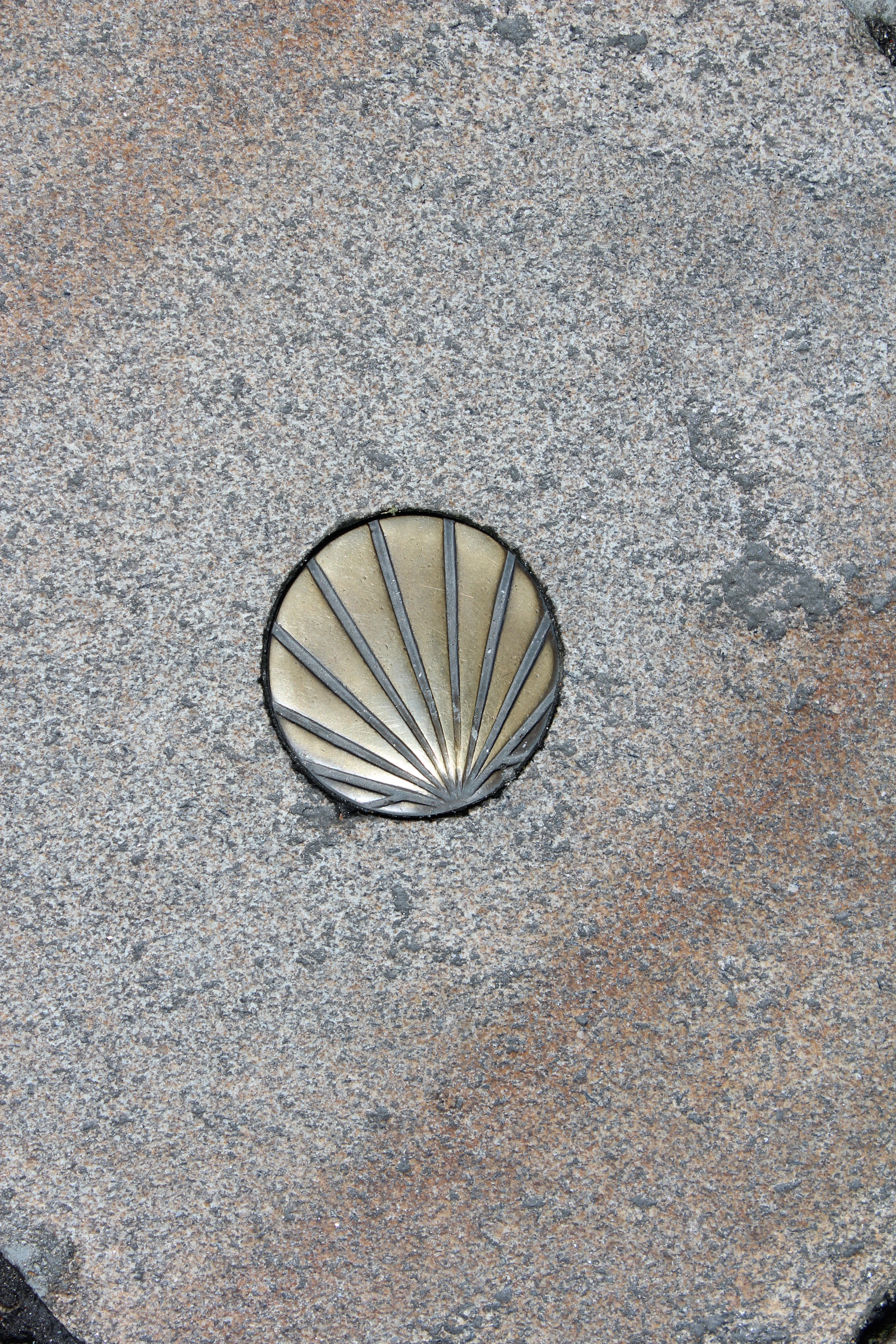
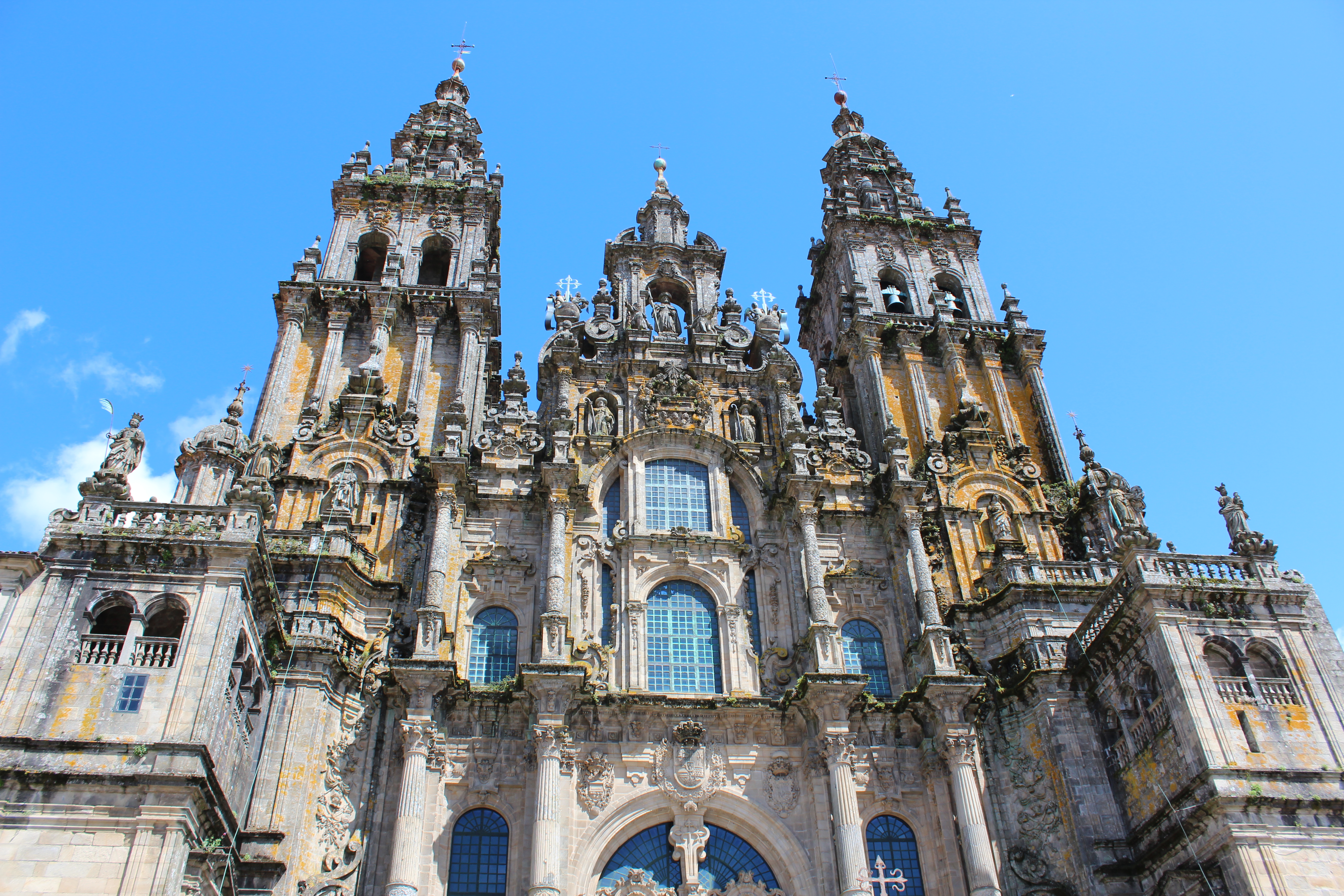
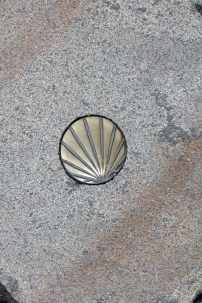
Portugal was followed by two stops in Spain, one to visit Santiago de Compostela and its magnificent gothic cathedral and one to visit Bilbao and the ultra-modern Guggenheim Museum. Both stops highlighted masterpieces of Western architecture separated by over 900 years of history. Santiago de Compostela’s cathedral was begun in 1075 and is, still to this day, the final destination of the legendary pilgrimage route Camino de Santiago (Way of Saint James). The symbol of St. James is a shell and, as we circled around the cathedral, I could identify the many pilgrims finishing their long journey by the shell attached to their pack. The cathedral itself is a great work of architecture and many pilgrimage churches throughout Spain and France copied its design and layout.
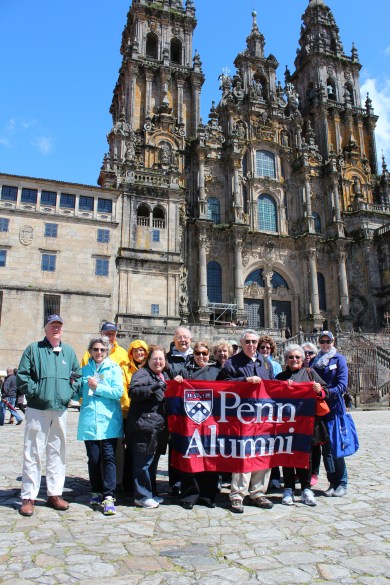
Penn alumni with the cathedral.
Penn alumni with the cathedral.

St. James’ shell imbedded in stone pavement.

St. James’ shell imbedded in stone pavement.

To follow Santiago de Compostela and its imposing cathedral with Bilbao and the Guggenheim was a fascinating lesson in architectural history. To compare the old medieval cathedral with the new and shiny Guggenheim is not as impossible as one might think. Both used cutting-edge design and engineering techniques at the time of their construction, both cathedral and museum stand as homages to the creative spirit of man, and both—in my estimation—have an architectural energy that is not found in classical pieces. Santiago de Compostela’s turrets twist and turn with decorative spirals and statues while the Guggenheim’s various wings undulate and twist from a central atrium. Can you see the semblance?

The Guggenheim Museum by Frank Gehry in Bilbao, Spain.

The Guggenheim Museum by Frank Gehry in Bilbao, Spain.

The cathedral at Santiago de Compostela.

The cathedral at Santiago de Compostela.

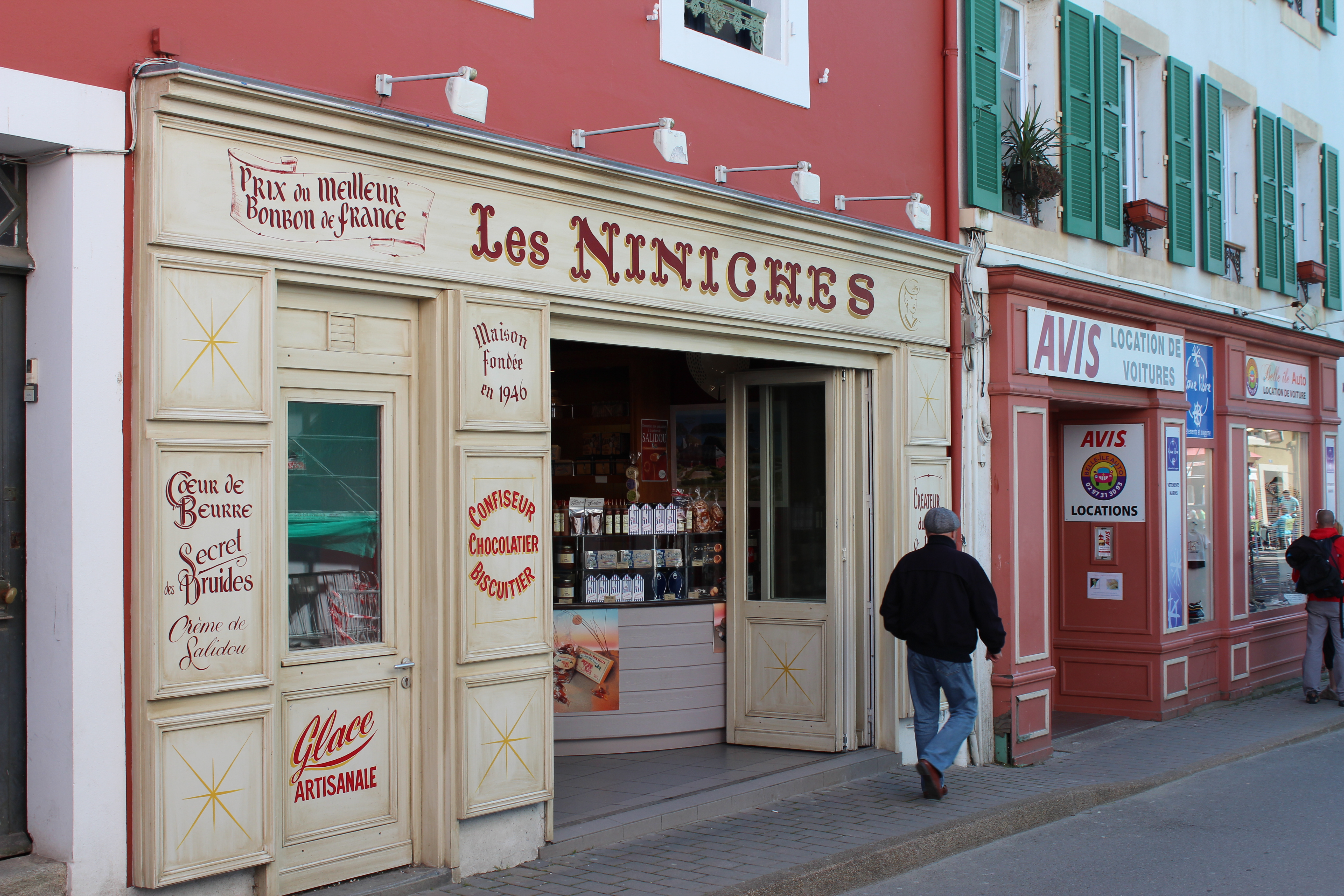
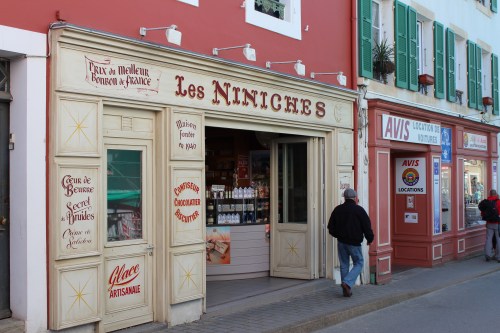
Our next stops were two Atlantic islands: Belle Ile of France and Guernsey of the United Kingdom. For me, Belle Ile was a wonderful return trip as I had spent a long weekend there as an undergraduate abroad over a decade ago. It was still as charming and belle as I had remembered. Our alumni group toured the island on a small bus before stopping in Le Palais where some lucky passengers (including myself) stumbled across a shop selling Coeur de Beurre (salted butter caramel) delicacies. Belle Ile is also known as an inspiration to artists. A number of famous painters made Belle Ile their home, including Claude Monet, John Peter Russel, Georges Clairin, Matisse, and Vasarely.
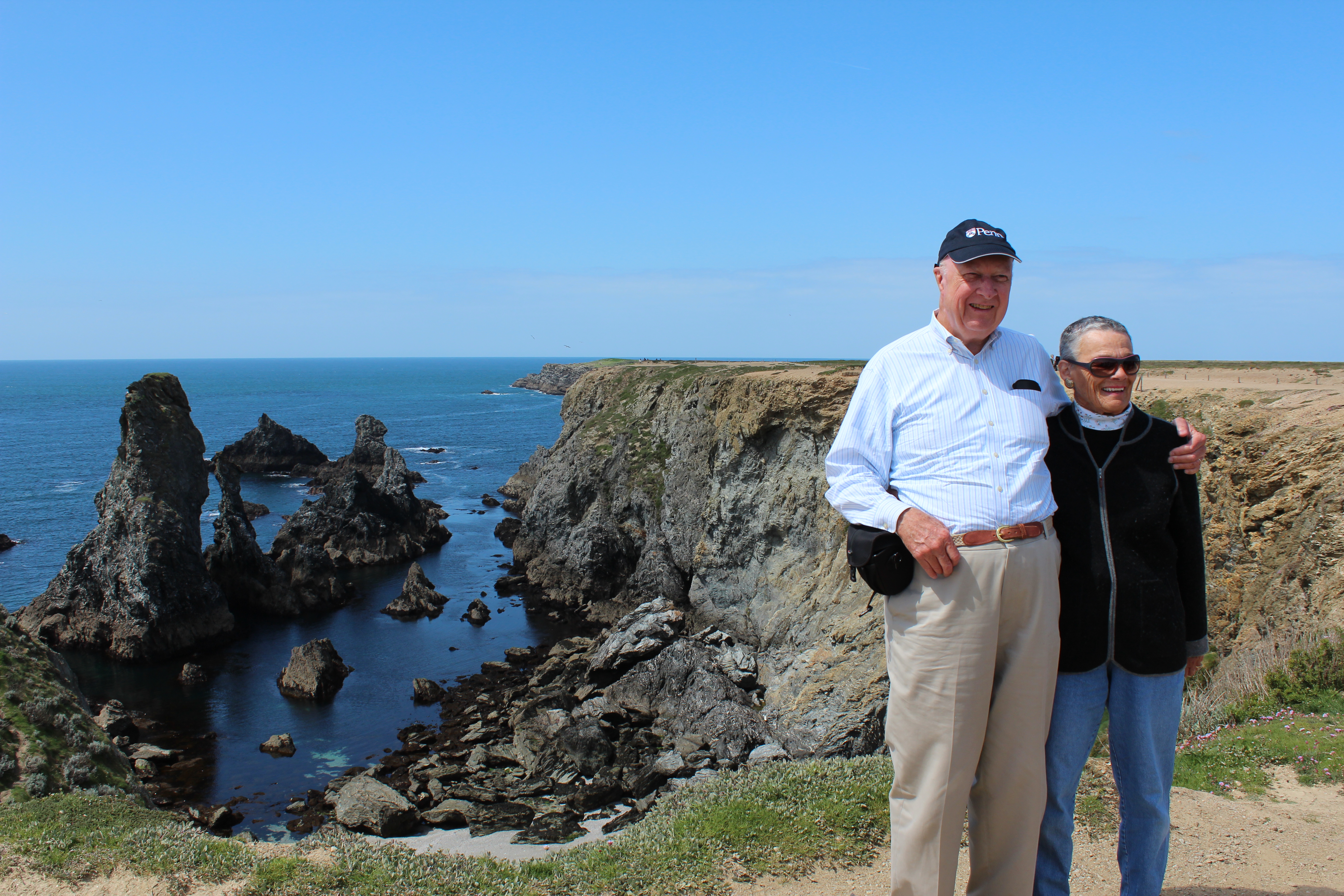
Jack, ME’56, and Joan Swope pose by the cliffs of Belle Ile. Jack was also a winner in last year’s travel photo contest!

Jack, ME’56, and Joan Swope pose by the cliffs of Belle Ile. Jack was also a winner in last year’s travel photo contest!

Les Niniches, the store where we found wonderful Coeur de Beurre cookies.

Les Niniches, the store where we found wonderful Coeur de Beurre cookies.

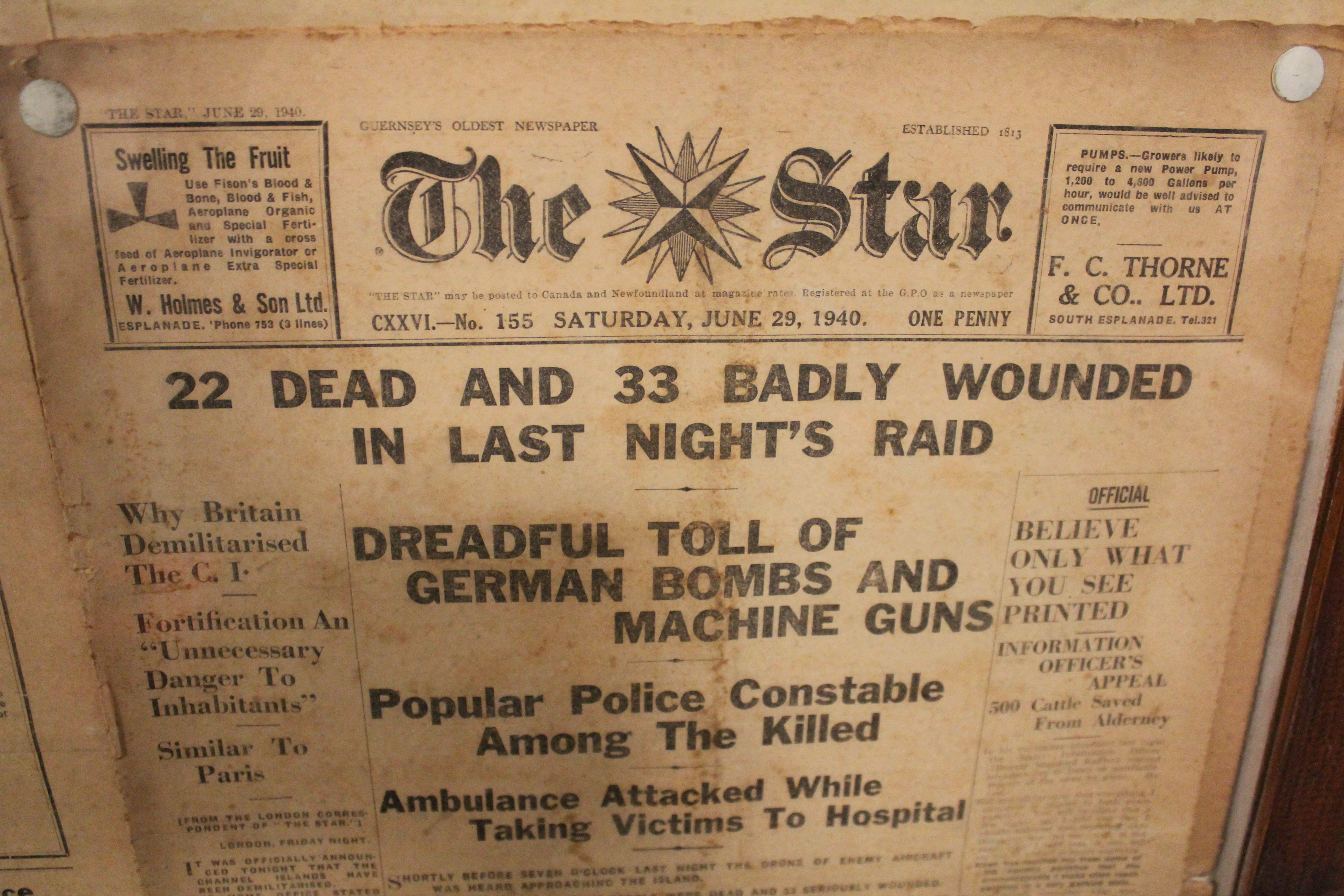
The island of Guernsey was our introduction to World War II history. As the only British territory to be occupied by the Germans during WWII, the island inhabitants remember the war quite vividly, even if it is only through the stories of older family members. German fortifications are scattered along the rugged coast, and one Guernsey islander has dedicated his life to amassing a gigantic collection of occupation memorabilia and artifacts. This collection has now become the German Occupation Museum which our group visited during the island tour.

German Occupation Museum

Guernsey newspaper in the German Occupation Museum

The Normandy beaches concluded our exploration of WWII history. It was perhaps the most anticipated, and certainly the most moving, of all our stops. As a student abroad, I had also visited the D-Day beaches with fellow classmates. The trip then was memorable, but not personal. None of us had experienced war or the effects of war, and WWII was, by then, distant history.

This second visit was very different. Many alumni passengers were veterans themselves, serving in the Korean and Vietnam Wars, and had a very strong and moving connection to these battle sites and the American cemetery. They had experienced war themselves, and knew firsthand the importance of honoring the fallen and those ideals for which they had given their lives. We began the day with a wonderful introductory tour led by a local French woman who had been giving tours for over fifteen years. She could still recount stories told to her by American and British WWII veterans. She also had many stories from her own family and French neighbors who lived through the occupation and surrender of the Germans.

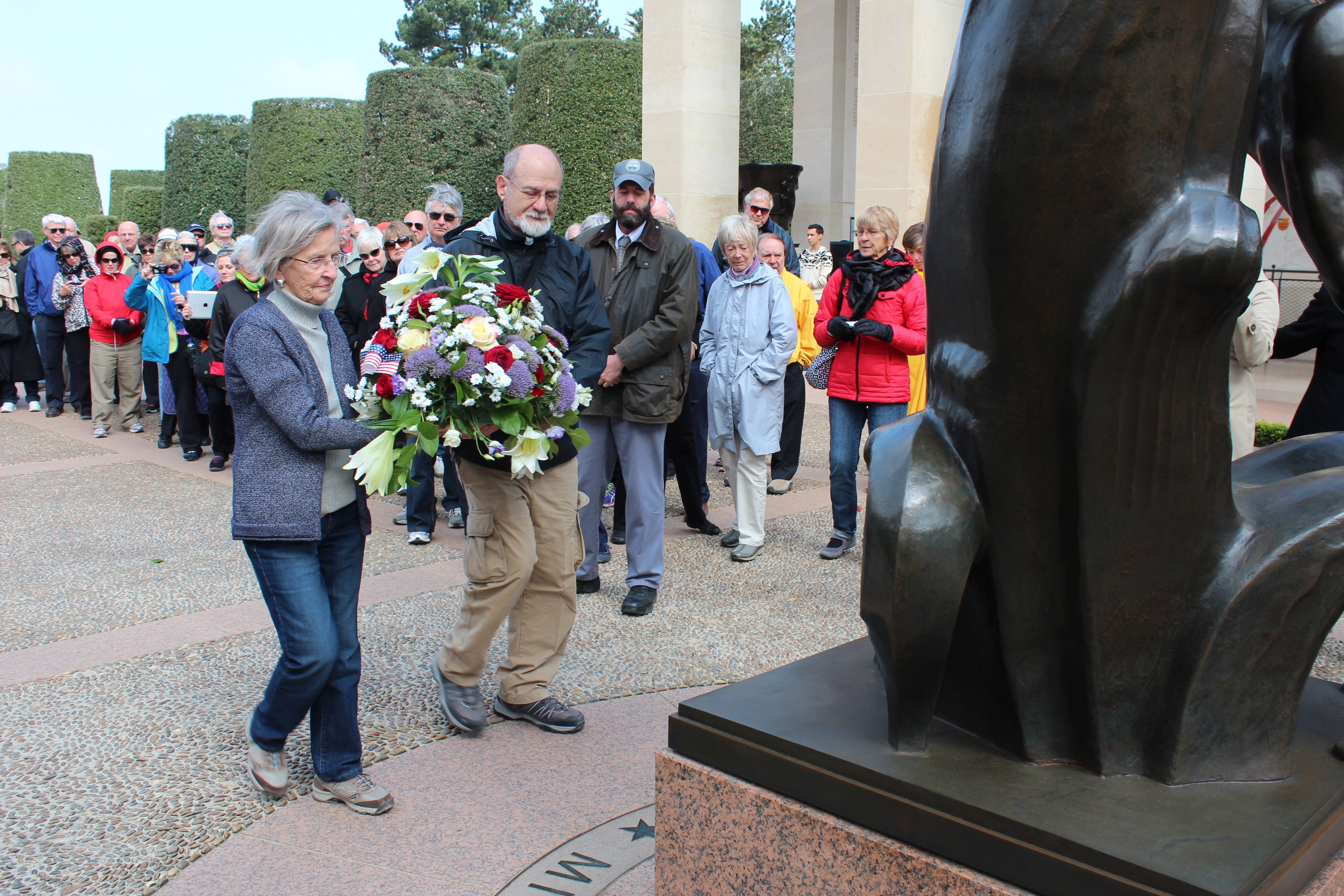
We visited the Pointe du Hoc, Omaha Beach, and the American Cemetery. At the cemetery, we honored the fallen soldiers with a wreath-laying ceremony and then recognized those veterans among our group. It was a wonderful moment of solidarity and connection between generations: a generation that had already passed, a generation represented by our alumni group, and then my own. Sometimes it is nice to know that history can live on in the small gestures of a wreath-laying ceremony or the time spent learning about the importance of a French beach.

Our tour group listens to our local guide recount the military operation at the Pointe du Hoc.
Our tour group listens to our local guide recount the military operation at the Pointe du Hoc.

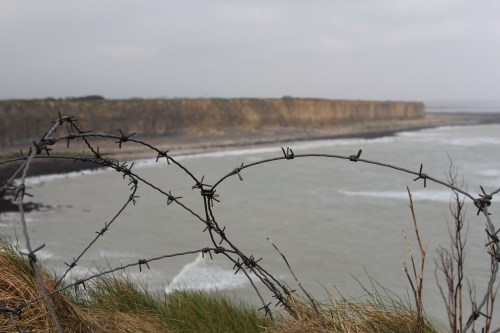
Barbed wire is commonplace on the Pointe du Hoc.

Barbed wire is commonplace on the Pointe du Hoc.

A Penn alumnus helps lay the wreath at the base of the memorial statue in the American cemetery. 9,387 American soldiers are buried here, most of whom lost their lives in the D-Day landings and ensuing operations.

A Penn alumnus helps lay the wreath at the base of the memorial statue in the American cemetery. 9,387 American soldiers are buried here, most of whom lost their lives in the D-Day landings and ensuing operations.

As always, thank you to the wonderful Penn alumni and friends who joined me on this tour. I hope we meet again and that you have many more wonderful journeys. To view all the pictures from this tour, click here.

A note to interested alumni: We are hosting another tour to the Normandy Beaches next year in honor of the 70th anniversary of the D-Day landings. Join us on the Celtic Lands tour (May 28-June 7, 2014) with faculty host Rebecca Bushnell and special speaker David Eisenhower. Contact me for more information (emiliek@upenn.edu or 215-746-7442).

Leave a comment

Filed under Emilie, Penn Alumni Travel, Travel

Penn Rugby in the College Rugby Championship

Author: Stephanie Yee, C’08

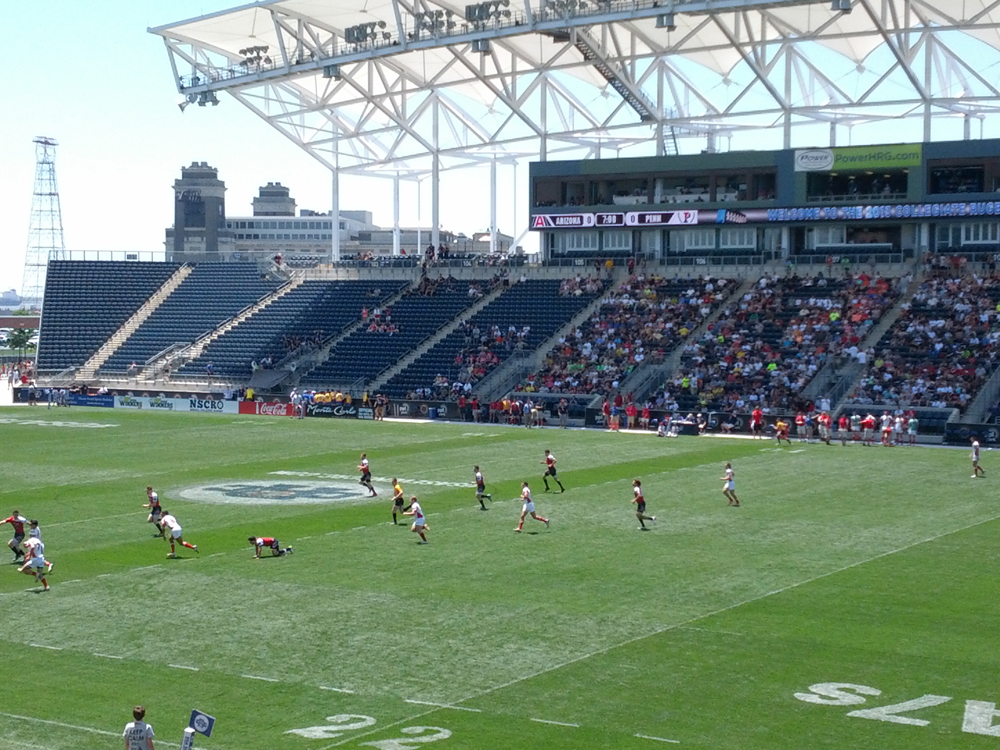
The Penn Men’s Rugby team competed in the College Rugby Championships this past weekend at PPL Park, home of the Philadelphia Union. The College Rugby Championship is a “7s” tournament – Sevens is the rugby variant which will be played in the Olympics in 2016. It’s 7-on-7 for 7 minute halves. This was Penn’s first year in the College Rugby Championship. The Penn Alumni Club of Philadelphia joined Penn Rugby Alumni and current Penn students to cheer on the Quakers.

PennRugby1

Penn flag in the PPL Park concourse

Penn Rugby on the field

Penn Rugby on the field

PennRugby3

Beautiful day in PPL Park

Leave a comment

Filed under Alumni Programming, Athletics, Clubs, Penn Club of Philadelphia, Stephanie Y., Uncategorized

The Year of Sound

Author: Lisa Marie Patzer

Each year, Penn’s Provost office sponsors a series of events around a theme chosen by faculty, staff and students.  The theme for 2013-2014 is the Year of Sound, a topic that can be further explored by nearly every area of academic study.  In conjunction with the yearly theme, a book is chosen for the Penn Reading Project (PRP), an initiative designed to introduce incoming freshmen to academic life at Penn.  Book of Rhymes: The Poetics of Hip Hop by Adam Bradley will be the text for the 2013-14 (PRP).

book-of-rhymes-cover

As a film student and visual artist, I have a keen interest in the pairing of moving image with sound.  As David Lynch said, “Films are 50 percent visual and 50 percent sound. Sometimes sound even overplays the visual.” The influence of sound design in film is perhaps one of the more common examples of how auditory experience impacts our understanding of things.

Less well-known is the use of sound in works by artists and avant-garde composers such as John Cage  (September 5, 1912 – August 12, 1992). Cage wrote music for film and also modern dance performances but his most notable works were those that dealt with chance and sound.  In 1952, Cage composed the piece that became his best-known and most controversial creation: 4′33″.

john_cage

The score instructs the performer not to play the instrument during the entire duration of the piece—four minutes, thirty-three seconds—and is meant to be perceived as consisting of the sounds of the environment that the listeners hear while it is performed.  Highly controversial at the time of Cage’s original performance, 4′33″ has since become a hallmark of the avant-garde and has been performed worldwide.

The Slought Foundation, located at 4017 Walnut Street, showcases a unique interactive installation by Cage. In 2010, with the help of the John Cage Trust, The Slought Foundation installed  “How to get Started”, featuring a rarely heard performance by the artist.  The visitor listens to a monologue by Cage and is then invited to contribute to the installation by recording their own “realizations”.  This site provides instructions for how to prepare:

1. familiarize yourself with Cage’s realization

2. get out ten index cards and write down ten topics of interest

3. practice extemporizing on each topic, in random order

4. notice that Cage never spoke for more than three minutes on a single topic

5. visit Slought Foundation and schedule a session

The topic of sound can be explored in many interesting ways and I look forward to the programming for this year.  Visit here to find out more about the Year of Sound and how you can get involved.

Leave a comment

Filed under Film, Fine Art, Lisa Marie Patzer, The Arts, The Arts at Penn, Uncategorized