Category Archives: Travel

“We will find a way or we will make one!”

Author: Lisa Ellen Niver, C’89

Do you ever wonder how you will make your dreams come true? I find inspiration from the gate at the University: We will find a way or we will make one. In December 2012 on the beach in India, I said I think we should have a contest on our website, We Said Go Travel. George said, “Great! Let’s start in January and end on February 14.” Immediately I had several objections. I could not possibly be ready so fast to run a writing contest.
We were in Konark, India at the Sand Art Festival near the UNESCO Sun Temple. I was musing that 30 years ago when the festival began, someone probably said: “Sand Art Festival! You must be nuts!” But here we were, thirty years later and it was a large festival with many international sand artists!

In January 2014, we began our fourth travel-writing contest. (Travel Writing Contest: http://www.wesaidgotravel.com/writing-contest)

Over the course of 2013, over five hundred writers from over fifty countries entered our contest. It was truly fantastic! I love all the stories and getting to email with people from all over our planet. We hope you will choose to join us by sharing a story or reading one from someone else! We did our first live announcement of the winners for our contest on google hangout on air.

WSGT gratitude 2013 google hangout (2)

Watch the hangout:

http://www.youtube.com/watch?v=dZF2DixFNiI

See the winners:

http://www.wesaidgotravel.com/gratitude-travel-writing-contest-winners-2013

We had some technical issues and had to link one judge in by skype but it worked. We found a way to make it work! I learned many life lessons at the University of Pennsylvania but the message from the gate always rings in my head: “We will find a way or we will make one!”

I remember the contest really took off when I wrote to our friend, Richard Bangs from the PBS Travel Show, “Adventure with Purpose,” who offered to be a judge.  Sometimes all you need to do is offer to participate: by joining in a contest, being the judge or simply showing up. I was honored in October 2013 to share our travel knowledge in a webinar for the University of Pennsylvania Alumni Travel. George and I talked about our journey for 27 days in Myanmar (Burma). We were invited to participate and we said YES!

http://pennalumni.adobeconnect.com/p3dzcr7cmmk/

I hope that you make your resolutions for 2014 come true by taking a first step! I would love to hear about your progress.


Leave a comment

Filed under Alumni Perspective, Alumni Profile, Guest blogger, Lisa Ellen Niver, Penn Alumni Travel, Travel

Penn Alumni Travel Photo Contest

Author: Emilie C. K. LaRosa

Penn Alumni Travel is hosting our 4th annual photo contest. If you’ve traveled with us in the past, you are eligible to enter a travel photo by FEBRUARY 28, 2014. Winners receive an Amazon Kindle or $300 trip credit.

Photos are judged in four categories: People, Places, Culture, and Nature. To learn more about the contest or to submit a picture, click here.

Our winners from 2013 were:

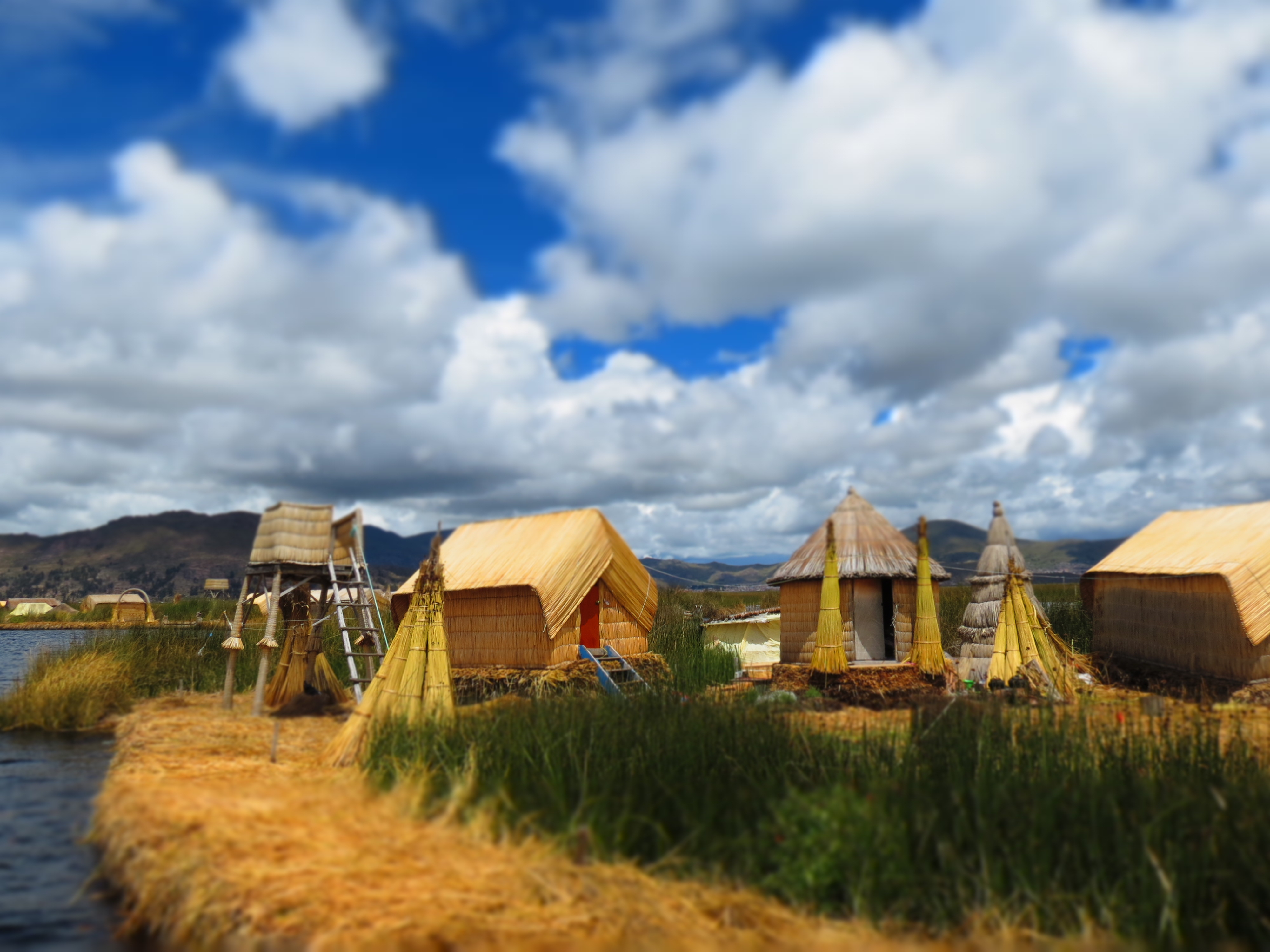
Grand Prize Winner and First Place, Places Category: “Reed House-Uros Islands,” by Amy Converse

Grand Prize Winner and First Place, Places Category: “Reed House-Uros Islands,” by Amy Converse

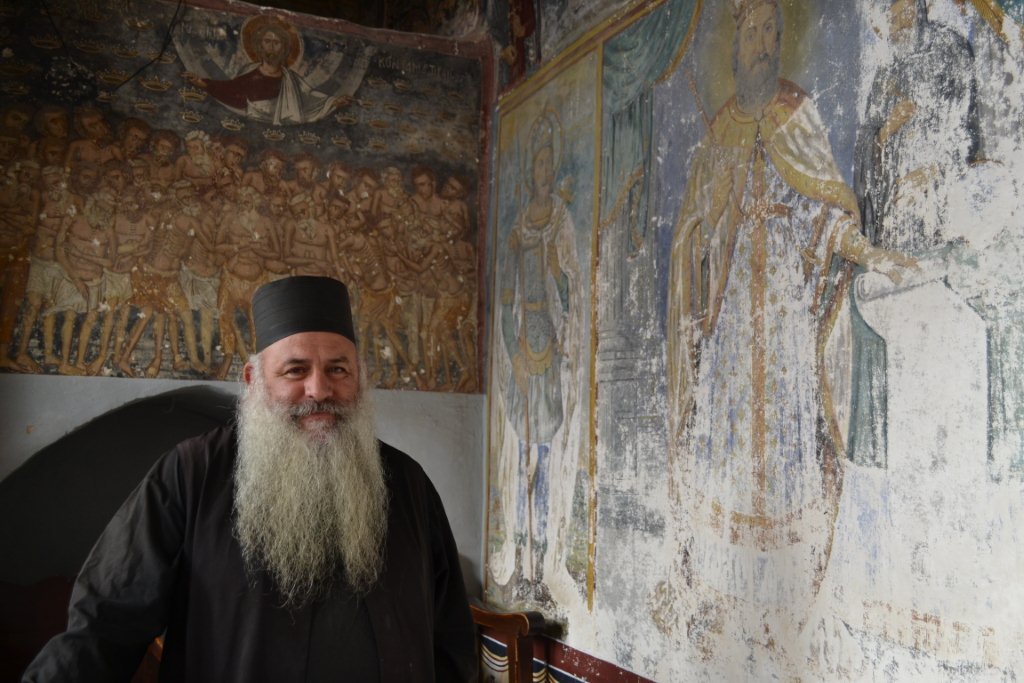
First Place People Category: “Father at Monastery of St. John,” by Robin Love

First Place People Category: “Father at Monastery of St. John,” by Robin Love

First Place Culture Category: “Street Musician-Havana,” by Arthur Brown

First Place Culture Category: “Street Musician-Havana,” by Arthur Brown

First Place Nature Category: “Orchids of Machu Picchu,” by Alex Converse

First Place Nature Category: “Orchids of Machu Picchu,” by Alex Converse

And this isn’t the first time we’ve posted about the photo contest. Check out our other photo contest blogs below!

Announcing the 3rd annual photo contest winners.

Announcing the 2nd annual photo contest winners.

The FIRST annual photo contest entries.


Leave a comment

Filed under Emilie, Penn Alumni Travel, Travel

A Year in Review at the Red and the Blue

Author:  Carolyn Grace, C’16

Play this and start reading:

Happy New Year, Quakers!  I hope you all celebrated accordingly 🙂

Since we’re only into the second day of 2014, I don’t believe it’s unreasonable to look back on the many fond memories I had in good ol’ 2013.  However, this is, after all, a Penn blog.   That’s why I’m using this post for My Top 12 Penn Moments of 2013, one for each month.  Enjoy, and try to think of your Top 12 Penn Moments as well!

12. JANUARY

I get invited to become a member of the Sigma Kappa sorority!  I celebrated my acceptance with my new sisters all through the night, right into my 19th birthday the next morning.  Talk about a great birthday present!

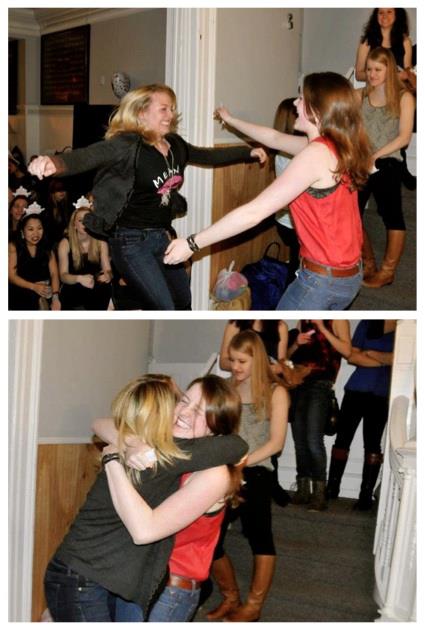
I finally meet my Big!

I finally meet my Big!

11. FEBRUARY

Big-Little Week for Sigma Kappa!  (For those who are unfamiliar with the term “Big-Little Week,” click here for more info.)  After a FULL WEEK of anonymously-sent baked goods, gifts, and guys, I discover who my wonderful Big is:  Tara!

10. MARCH

Spring Break has arrived at Penn, and what better way to spend it than with my fellow Quakers!  I take a weekend trip to Tenafly, NJ with my good friends Charlotte and Gabby, both of whom I met through the freshman seminar “Katharine Hepburn Films.”  I also travel to New York City with a few members of Counterparts:  Lilly, Scott, and Nina.

9.  APRIL

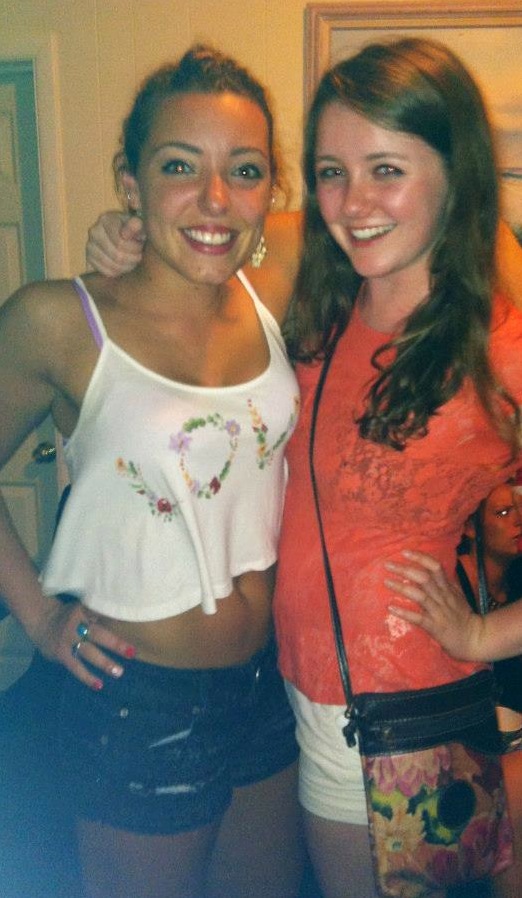
Enjoying Fling with some SK girls and Mask & Wig guys!

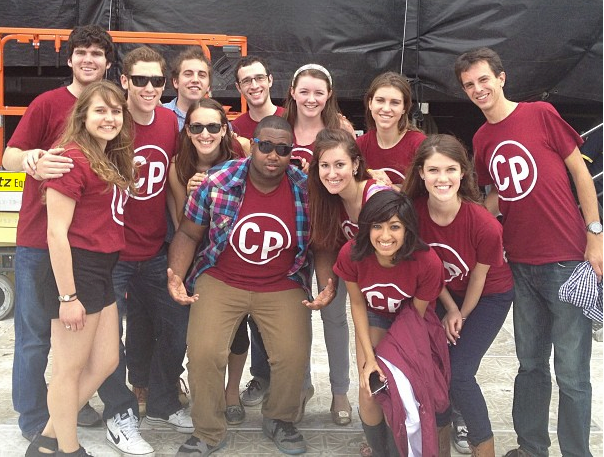
CP about to take the stage

Ok, so I’m cheating a little bit here.  I have two big moments from April 2013.  The first, of course, is Spring Fling.  I mean, how can I leave that out?  It’s the largest collegiate carnival on the eastern seaboard!  Not to mention, it was my first one.  The second moment:  Time to Shine, of course.  Counterparts was one of the many student groups to perform before the Train and John Legend concert.  What was even cooler was that we were the first group to sing on the same stage as these artists!

8.  MAY

My freshman year at Penn finally comes to a close, but not before I start recording for the new CP album!  In the midst of studying for final exams, we all come in at various times to record various songs from first and second semester.

7.  JUNE

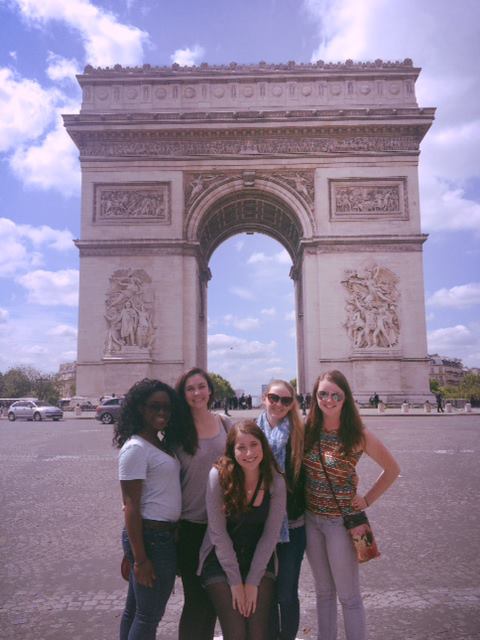
A beautiful day to see the Arc de Triomphe

A beautiful day to see the Arc de Triomphe

Bonjour de la France!  Already having departed in late May,  I am entering my  third week in Tours, France with the Penn-in-Tours summer abroad program.  For six weeks, I study a year’s worth of French at the Université François-Rabelais with about 30 other Penn students.  We all live with host families and go on weekend trips around the Loire Valley, visiting castles, exploring museums, and tasting wine!  After mid-terms, we are given a three-day weekend to travel anywhere in France.  I, along with my friends Rachel, Emily, Fola, and Faith, decide to spend those days roaming the magnificent city of Paris.

6.  JULY

A summer is not complete without a trip to the beach.  In addition to my family’s annual vacation in Strathmere, NJ, I spend a weekend in Wildwood with my good friend, Alexa.  She’s one of the first friends I made at Penn!

5.  AUGUST

BACK. TO. SCHOOL.  After another summer of not tanning at all, I am ready for Sophomore year to begin!  Before NSO even starts, however, I kick off the new school year as a student leader for the PennArts pre-orientation program.  I participated in PennArts as a freshman, and it’s just as fun to experience it again as a leader.  The 50-60 of us explore all the arts that both the Penn and Philadelphia communities have to offer.

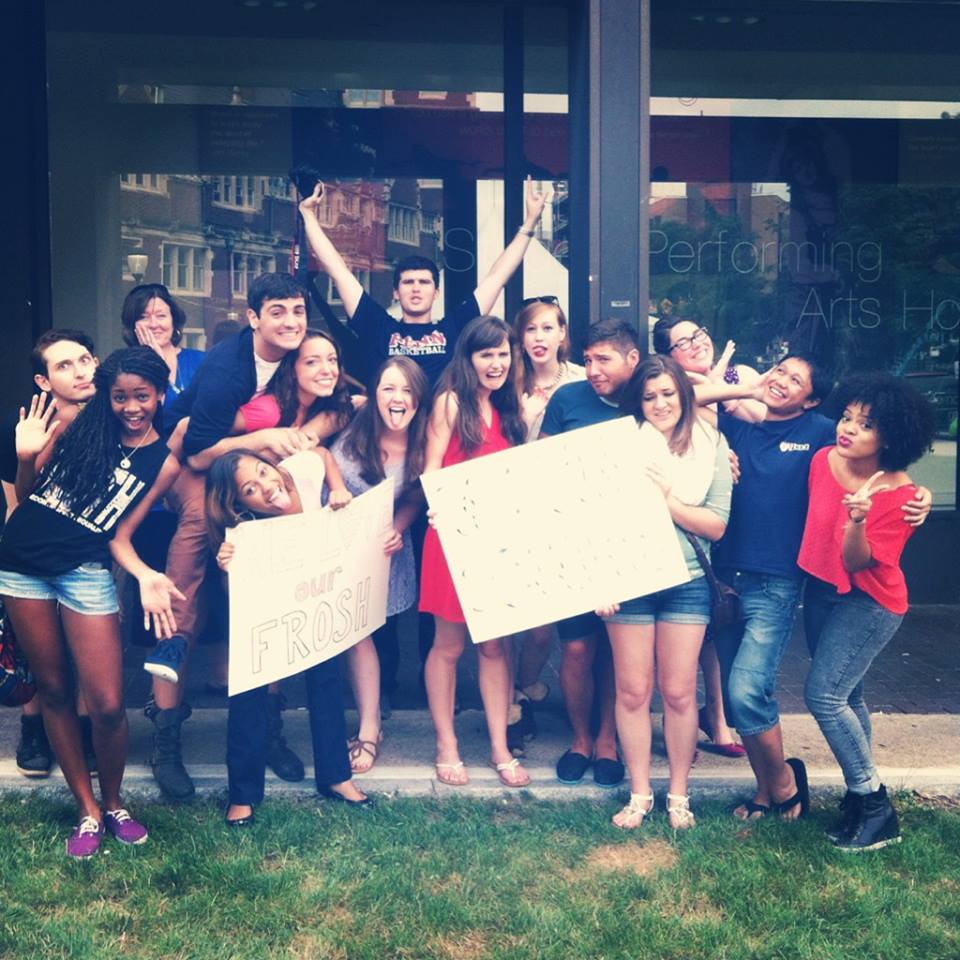
The PennArts leaders are ready to welcome the freshmen!

4.  SEPTEMBER

CP welcomes its newest members: David, Emily, Michael, and Andrew!

3.  OCTOBER

Date Night?  More like Neuro Night!  A Wharton junior in SK has partnered with the drink company, Neuro, for a class project. As a thank-you for all of her hard work, Neuro brings in manicurists and hair stylists to the SK house to help the girls get ready for our Date Night downtown!

Sarah, Virginia, and I try some Neuro while we wait to get our hair done

Sarah, Virginia, and I try some Neuro while we wait to get our hair done

2.  NOVEMBER

After weeks and weeks of rehearsal, Counterparts performs its Fall show, “Private ‘Parts.”  I sing a jazz song by Melody Gardot called “Baby, I’m a Fool.”

1.  DECEMBER

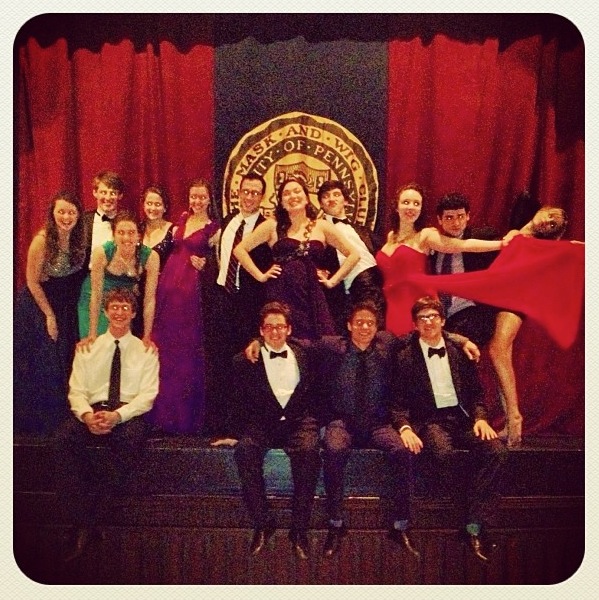
I am invited to sing at the Mask & Wig Club’s annual Charity Ball!  The band held auditions earlier in the Fall, and several girls (a bunch of them in CP!) were selected to perform.  The guys were extremely fun to rehearse with, and the songs were so much fun!  Of the three events I sang for, Charity Ball was definitely my favorite.  Everyone dresses up in gowns and tuxedos for a night of great food, dancing, and music.  What a classy way to close out the year!

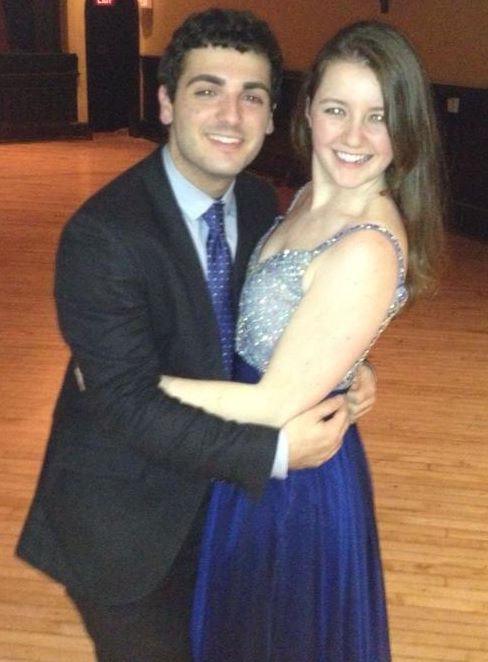
Me and my date, Luke

Me and my date, Luke

And there you have it, 2013 through the eyes of a Penn Quaker.  I hope 2014 brings just as many great moments like these, maybe even more!  Enjoy the new year, Quakers 🙂

Leave a comment

Filed under Campus Life, Carolyn G., Clubs, Fine Art, Making History, Memories of Penn, Penn in the Summer, Penn Park, Philadelphia, Photos, Student Perspective, The Arts, The Arts at Penn, Traditions, Travel, Uncategorized, Video, Videos

Penn Alumni Travel: Machu Picchu to the Galapagos 1

Author: Professor Peter Dodson, Dept. of Earth and Environmental Sciences

This November 16-30, I led a Penn Alumni Travel trip with 14 Penn alumni and friends. Four of us went on a pre-trip excursion to the Amazon, leaving from Iquitos, northeastern Peru, the largest city in the world accessible neither by road or by rail. Here the highway is the mighty Amazon itself and its tributaries. We stayed at Ceiba Tops Ecological Lodge and reveled in the treasures of the rainforest–the colorful birds and insects, the inquisitive tapir, the riotous tropical plants. We also visited two indigenous villages, one of which still maintains its pre-colonial lifestyle.

089

Back to Lima, we met the full contingent of Alumni Travelers along with our Odyssey guide for Peru, Marco Ayala. Marco was friendly, knowledgeable and witty, a great companion who anticipated our every need and was on top of every situation. After a quiet morning we spent the afternoon exploring a bit of Lima, including early Spanish churches in the city center and a visit to the splendid Larco Museum of pre-Columbian art. This was our introduction to the pre-European history of Peru. The following morning was an early departure from the hotel for our one-hour flight to Cuzco in the Andes, the capital city of the Incas.

Cuzco, the capital city of the Incas.

Cuzco, the capital city of the Incas.

Here we met our local guide, Anna Marie, who is highly knowledgeable about all things Incan. As Cuzco is 11,000 feet above sea level, it is deemed wise to begin the visit in the Sacred Valley of the Incas, which is a mere 9,000 feet high. The beautiful Casa Andina served as our base for two days as we explored the Sacred Valley and saw many Incan walls and terraces. The Incas were master engineers and stone masons, and we witnessed their impact throughout the landscape.

Llama and alpaca woolen blankets.

Llama and alpaca woolen blankets.

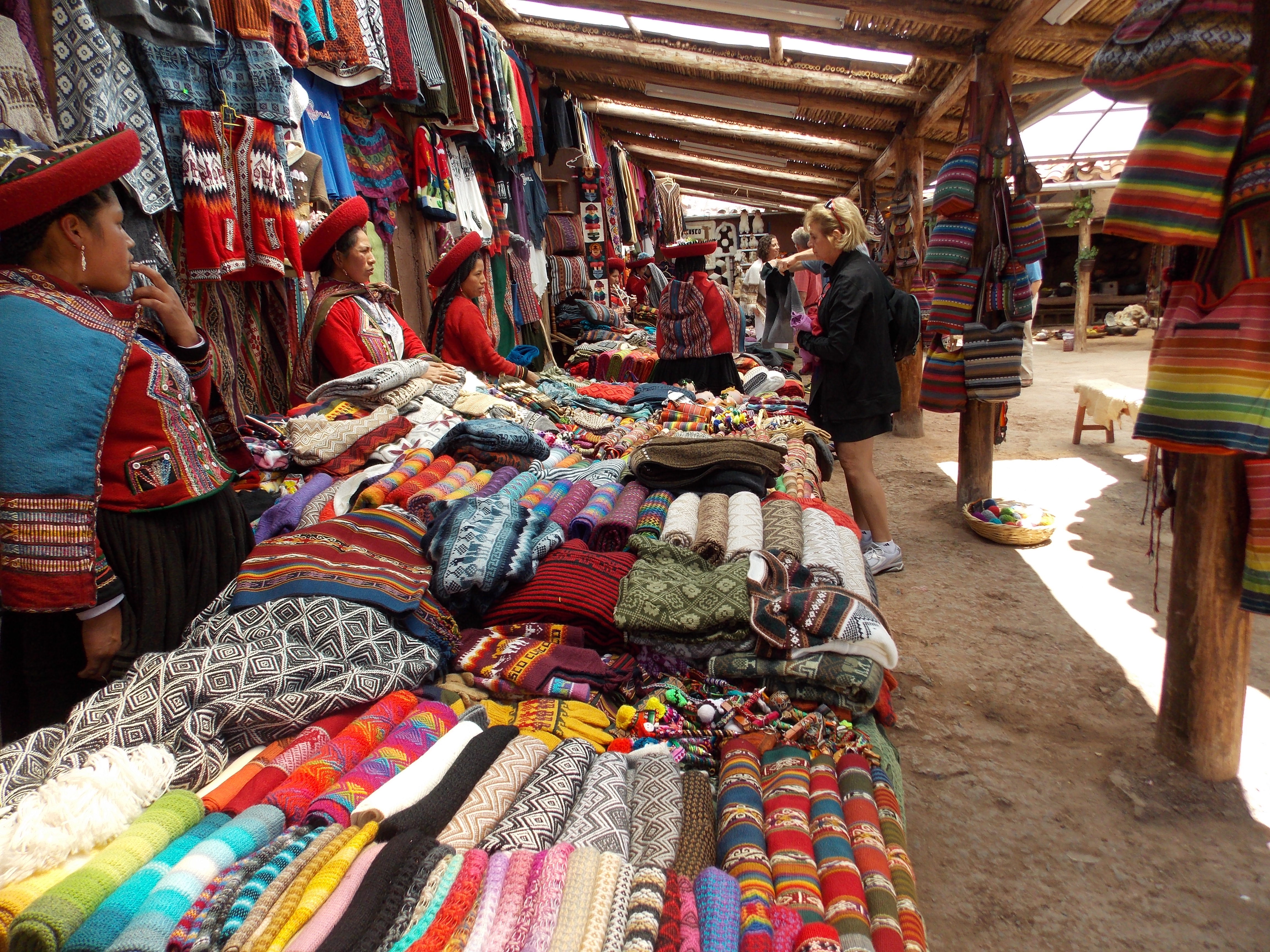
We also viewed current agricultural practices as the land was being prepared for planting of corn, potatoes and other crops as the rainy season was soon to begin in December. We could see in plots side-by-side a field plowed by hand with a team of oxen and a field plowed by modern John Deere tractor. We visited a village where native women spun llama and alpaca fleece into wool, dyed it brilliant natural colors, then wrought the wool into beautiful native consumer goods. A highlight was a visit to the Incan fortress of Ollantaytambo on the Urubamba River.

A field plowed by a team of oxen.

A field plowed by a team of oxen.

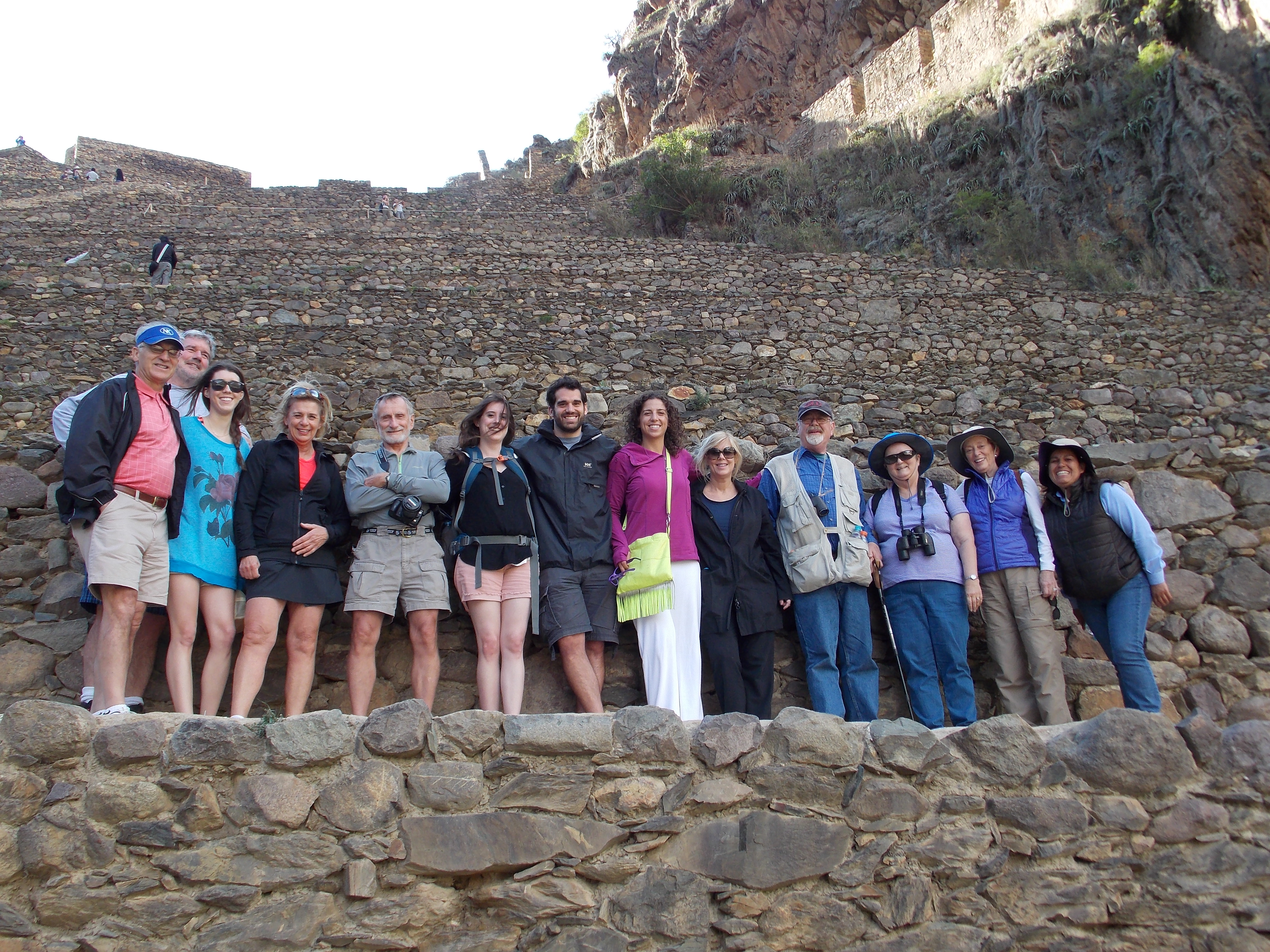
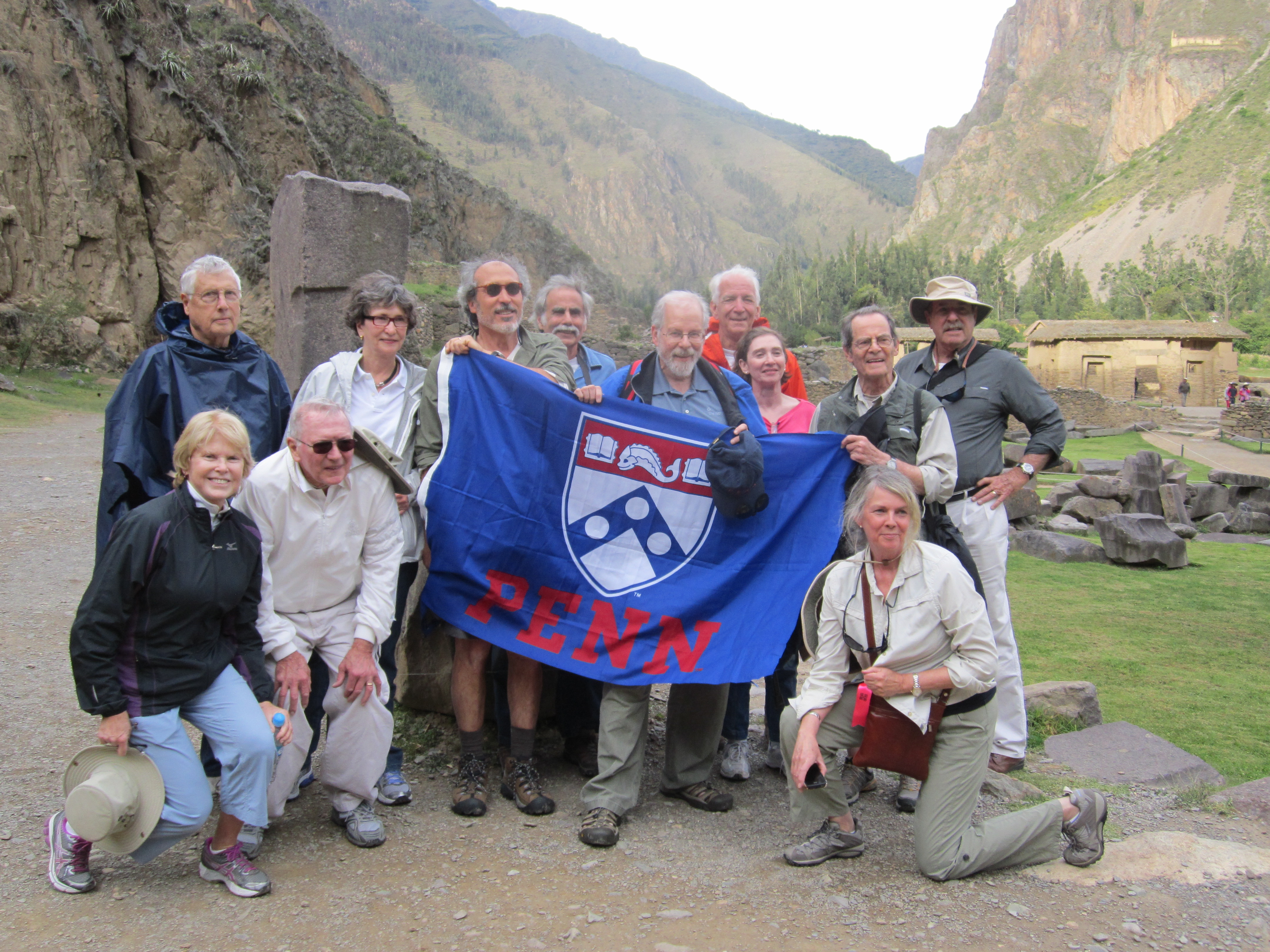
The Penn group at Ollantaytambo.

The Penn group at Ollantaytambo.

The next day we took the train down the Sacred Valley as the Urubamba River dropped 2000 feet into tropical cloud forest to Aquas Calientes. Then we took the most breathtaking imaginable bus ride up through 13 switchbacks on shear side of the mountain to arrive at Machu Picchu Ecological Lodge, where we spent the night. This exquisite boutique hotel is the only guest accommodation on site. We had the privilege of tranquil time at the site without the press of crowds. We had two guided tours of the vast and stunning site, which is truly a city in the clouds — its shear cliffs remind me of a Yosemite in the tropics. The intrepid among us even participated in a rather taxing climb of Wayna Picchu, the smaller mountain that overlooks the back of the site.

Hiking Machu Picchu.

Hiking Machu Picchu.

Penn alumni in the Andes!

Penn alumni in the Andes!

Machu Picchu is everything that I had imagined and more. As Anna Marie made clear, the Incans showed every bit of the skill of the Egyptians in moving large blocks and fitting them together flawlessly without mortar. They also understood water perfectly. A significant overnight rain failed to make any impact on the site. Reluctantly we descended the mountain and took the train back to Cuzco. We stayed in a truly original hotel, El Monasterio, a Franciscan monastery whose construction began in 1595. The guest rooms were palatial and the hospitality exquisite — as close to five star as I am ever likely to experience.

The impressive engineering skills of the Incas on display.

The impressive engineering skills of the Incas on display.

El Monasterio courtyard.

El Monasterio courtyard.

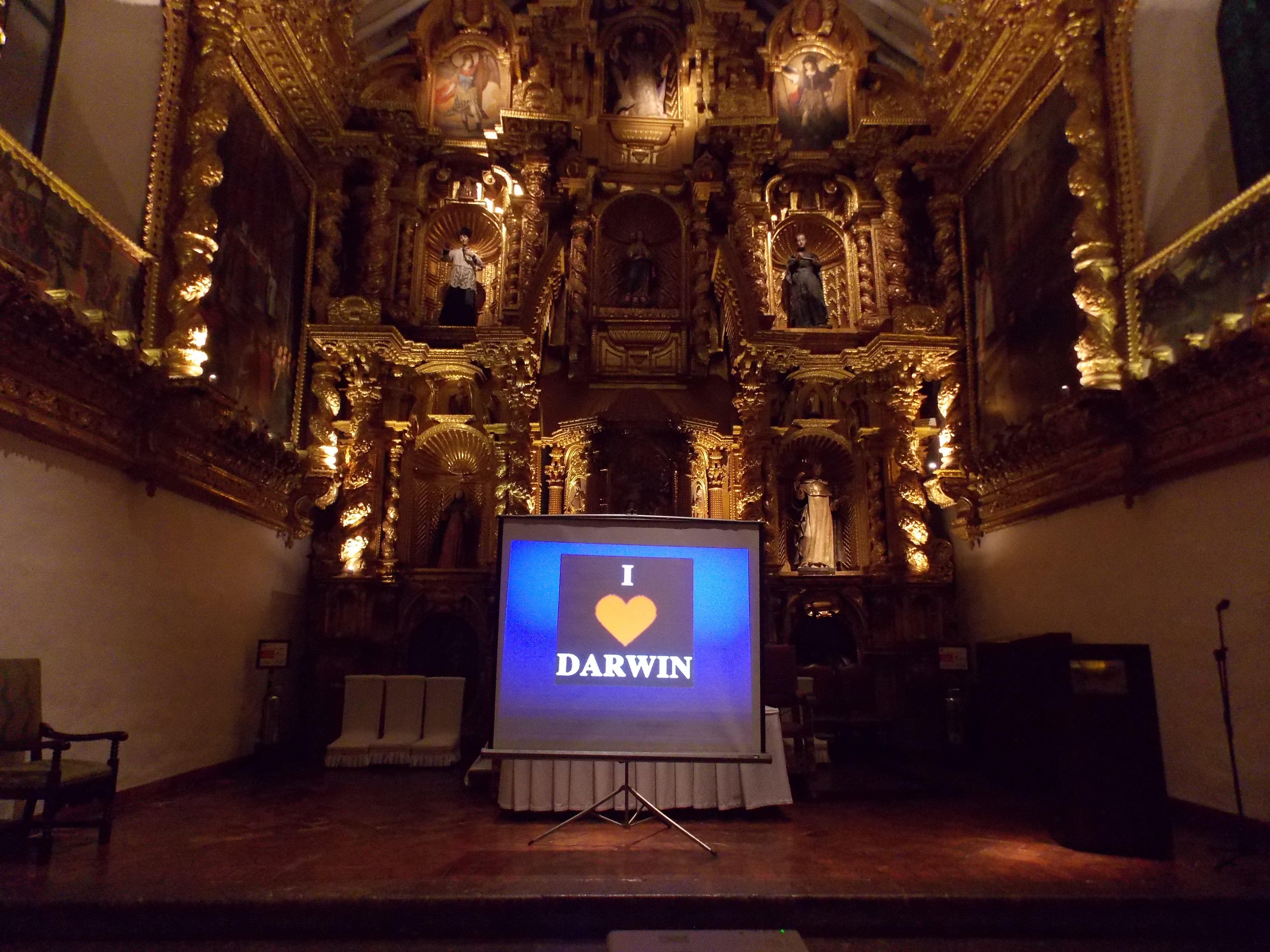
My first talk took place in a gorgeous ornate high ceilinged chapel–and oh, sweet irony–it was my Darwin talk! Some think Darwin and Christianity are incompatible, but I know differently. After exploring Cuzco, we said good bye to Marco and flew on to Quito via Lima, and were greeted by our Odyssey guide for Ecuador, Roberto Peralta. Roberto too was excellent, helpful, solicitous, knowledgeable, cheerful, and proud of is country.

Darwin in the baroque chapel at El Monasterio.

Darwin in the baroque chapel at El Monasterio.

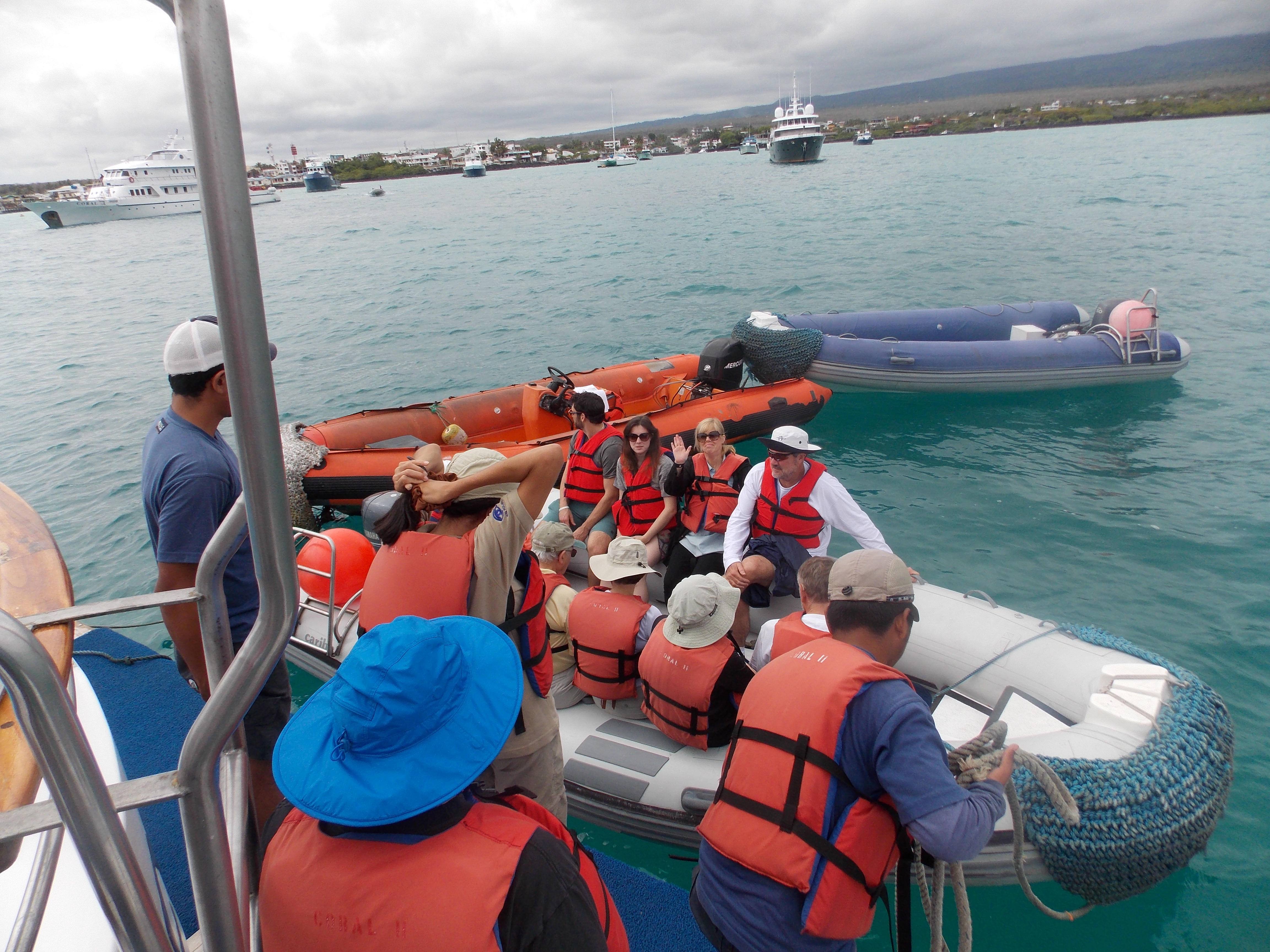
We flew on to the Galapagos via Guayaquil, Ecuador’s largest city. At Baltra Airport we were met by our local naturalist, the high-spirited Dora Ulloa. We rode by bus from the airport, ferried across a canal (where the air was alive with seabirds flying to and fro), and southward across Santa Cruz Island towards Puerto Ayora, the largest town in the Galapagos. In about 20 minutes we found ourselves in surprisingly lush vegetation at an altitude of about 2500 feet. Soon we were down at sea level again in Puerto Ayora. Here at the town dock we were met by two zodiac inflatable boats, locally called pangas, and whisked out to the Coral II, our beautiful 110 foot boat that was to be our home for the next three days.

Off on the zodiacs!

Off on the zodiacs!

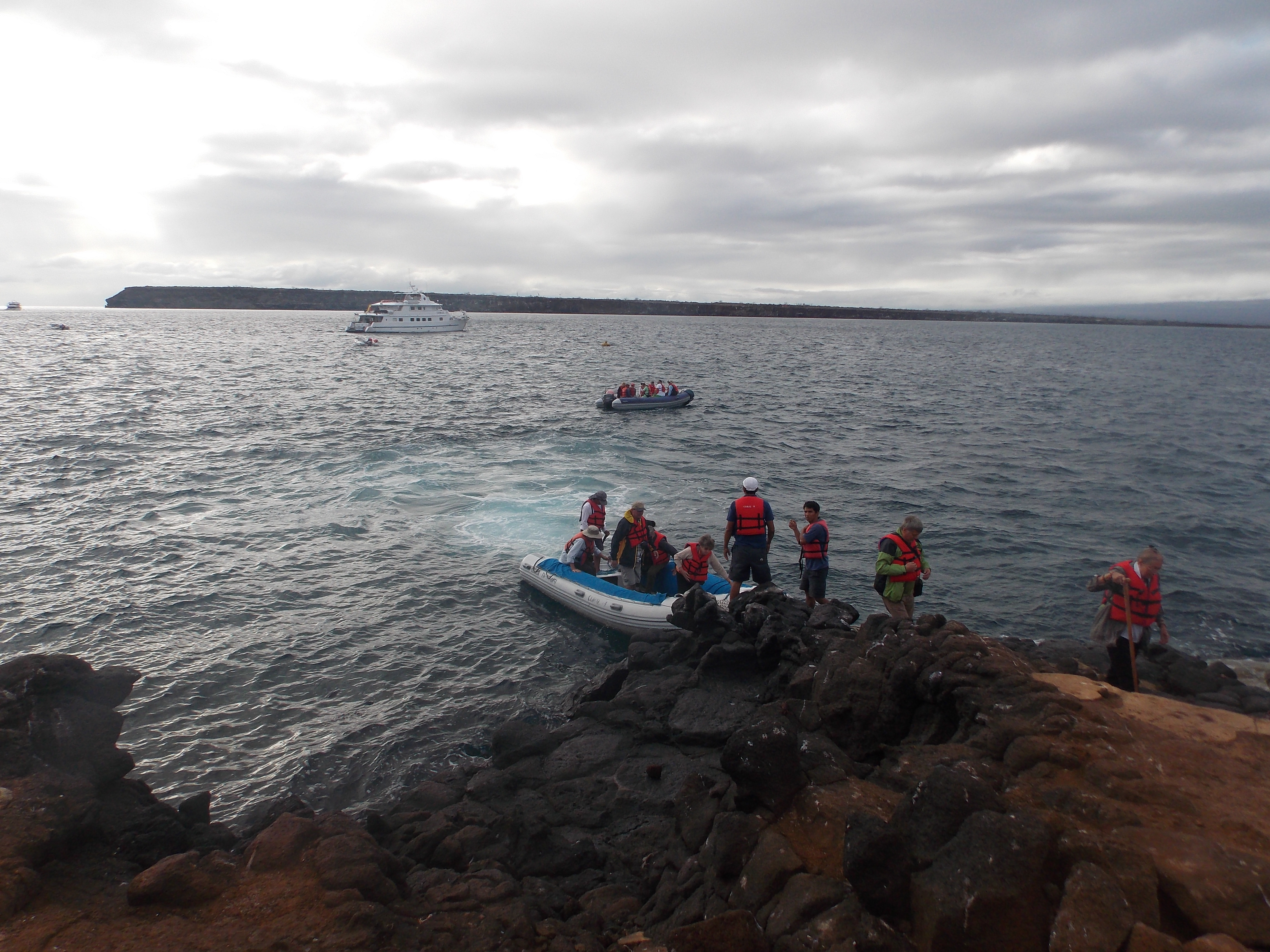
We were met by the uniformed crew with the “Galapagos Greeting,” a firm forearm-to-forearm embrace that facilitates safe transfer from panga to ship or panga to shore. We settled into our staterooms, enjoyed a nice lunch, and then went ashore with Dora and Roberto to visit the tortoise breeding facility of the Darwin Research Center. Here we saw many Galapagos tortoises of varying sizes and shapes, many destined to be returned to their native islands. We also saw Darwin’s finches and mockingbirds moving about. Later we returned to the Coral II, enjoyed an excellent dinner and eventually repaired to our cabins.

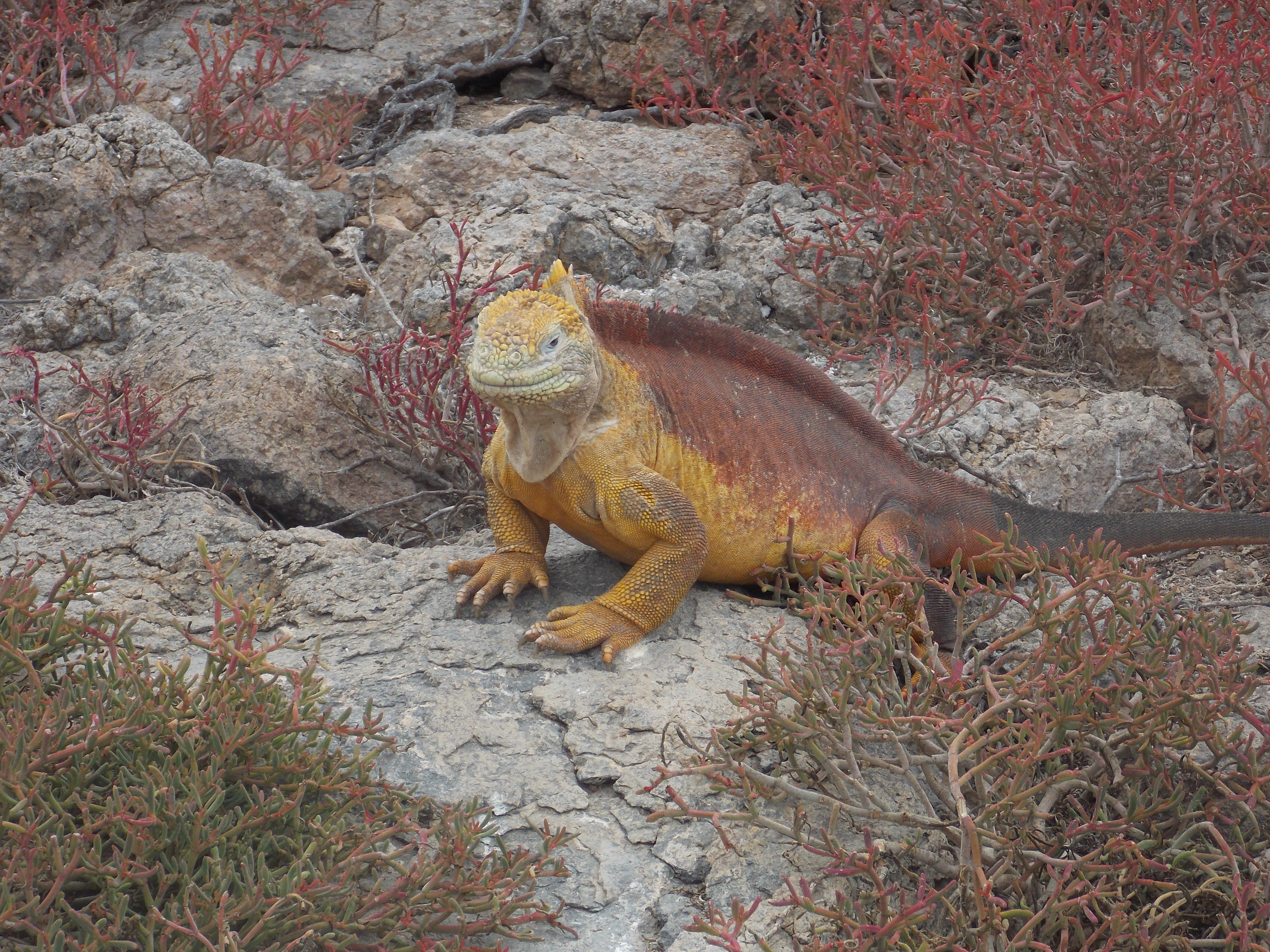
The ship sailed during the night, and walking with a cup of coffee during breakfast was a challenging. Shortly later we anchored near a tranquil lagoon, and our first shore excursion was highly rewarding. We were greeted on the beach by welcoming sea lions, Sally Lightfoot crabs and land iguanas. Later we snorkeled in the lagoon, swimming over a white-tipped reef shark and a green sea turtle, and we observed shoals of colorful reef fishes. In the afternoon we landed on beautiful South Plaza Island, whose rocky shores were guarded by sea lions and whose air space was thick with sea birds, including boobies, petrels, shearwaters, gulls and pelicans.

Sea lions on the shore.

Sea lions on the shore.

A land iguana.

A land iguana.

Transferring from the Coral II to one of the islands.

Transferring from the Coral II to one of the islands.

The following day we toured a boobie and frigate bird rookery on North Seymour Island. In the afternoon we walked a sandy beach, saw a flamingo, and snorkeled along the reef off the beach. Finally we made a long crossing to San Cristobal, visited the Galapagos Interpretive Center, and regretfully returned to Quito. Good things still remained. We spent a day at Antisana Preserve along volcano alley where we viewed 19,000 foot snow-covered volcanic cones (Antisana, Cotopaxi) and majestic Andean condors from a distance.

A lone flamingo.

A lone flamingo.

Our final day involved historic churches in Quito, a trip to the Middle of the Earth — the Equator where we stood with one foot in the Southern Hemisphere and the other foot in the Northern Hemisphere. We ate lunch at the elegant and dramatic El Crater on the very rim of an ancient caldera with Ecuadorian cloud forest falling away beneath our feet.

And so it ended. What a splendid trip filled with natural and cultural wonders. Penn Alumni Travel is absolutely first class all the way. It is an absolutely worry-free way to travel and learn about other cultures and habitats. There is something for everyone everyday. It was thoroughly enjoyable and I recommend it wholeheartedly.

[To learn more about Penn Alumni Travel and our 2014 schedule, click here.]

1 Comment

Filed under Faculty perspective, Penn Alumni Travel, Travel

Behind the Scenes: Travel Destinations 2015

By: Alyssa D’Alconzo, Ed.D. GED’04, GRD ’11

On a snowy day earlier this month,

Snowy College Hall

so snowy it was hard to see the Button in front of Van Pelt,

Snowy Button

the Penn Alumni Travel team cozied up inside Sweeten House

Snowy Sweeten

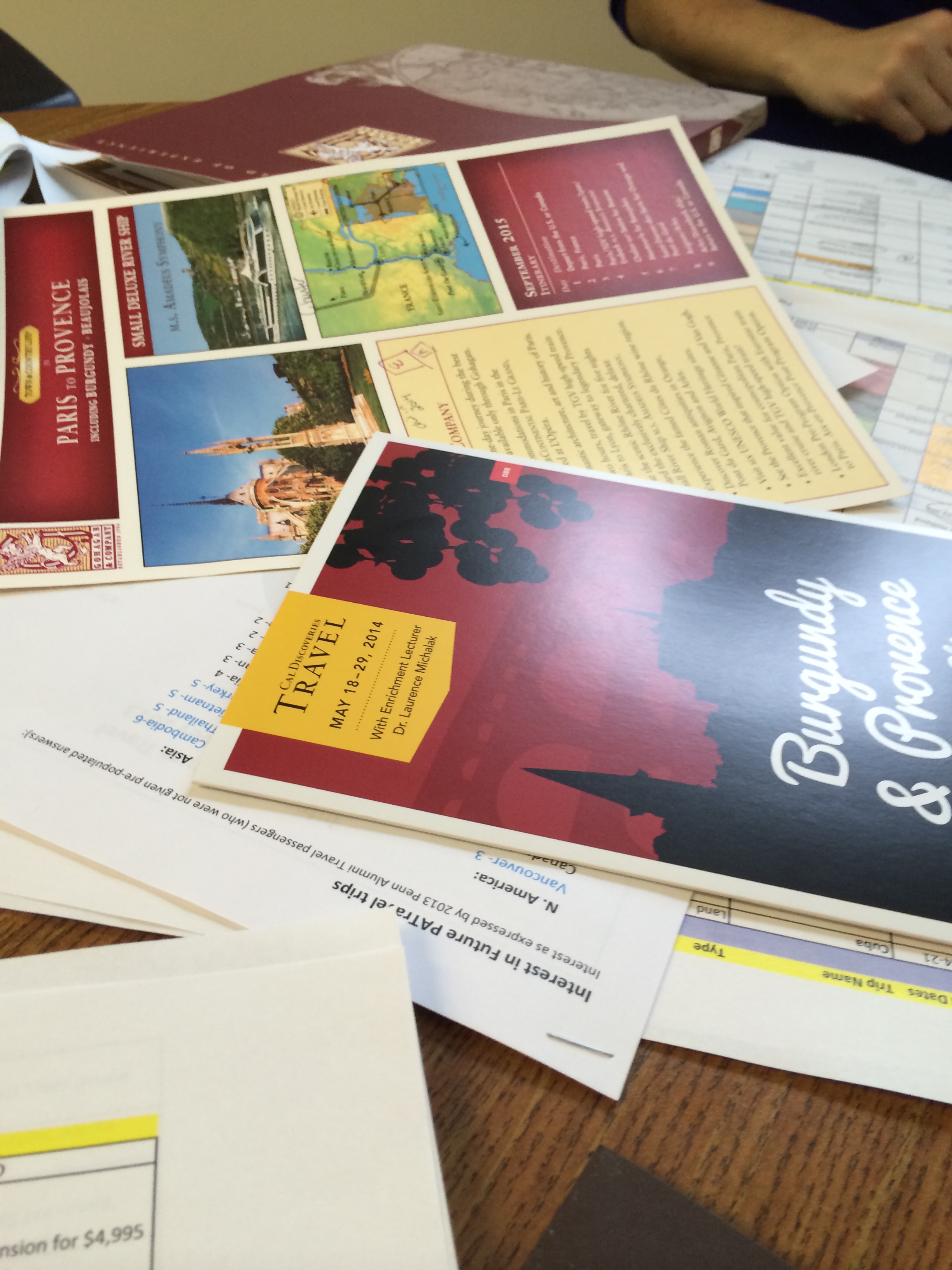
with cappuccinos and lattes to set our travel destination list for 2015. (Yes, 2015! We have begun booking for 2014 and the full schedule is available at http://www.alumni.upenn.edu/travel/trips.html)

photo 1

With all of the fabulous places to visit in the world, how did we determine where we’ll send our Penn alumni travelers and faculty hosts?

First, we gathered data. Throughout the fall semester we met with vendors to learn what new and exciting tours they’re offering. We also spent time poring over the feedback and insights we received from previous trips and our annual travel survey. Emilie created every chart and graph imaginable to help us better understand where Penn alumni and friends want to visit, when, for how long, and how!  For example, for 2015, we received a lot of interest in Italy and France, fall travel for 7-10 days, and land-based tours.

photo 2

Next we consulted available offerings to put together an interest list that covered all parts of the world, differed in lengths of trips, and offered land-based, ocean cruise, and river cruise options. We also routinely consulted the maps that hang in our offices to trace potential itineraries.

photo 3

And, of course, we thought about the expertise of our faculty hosts! Their full participation on tours, sharing lectures and expertise, is a big part of what makes Penn Alumni Travel trips so special.

After sleeping on our selections – and a bit more discussion – we think we’ve done it! We’ve created a destinations list sure to engage the most seasoned traveler, and we can’t wait to share it with you. To be one of the first to know when our 2015 schedule is released, join us on Facebook!

Leave a comment

Filed under Alyssa D., Penn Alumni Travel, Travel

Penn Alumni Travel: MP to the Galapagos 2

Author: Professor Larry Silver, Department of Art History

This fabulous “trip of a lifetime” with Penn Alumni Travel really lived up to its billing, and its two parts were like completely new chapters, each totally absorbing and totally different from the other.

Our journey began in Lima, where our local Odysseys host showed us the colonial square and the adjoining narrow streets with their charming wooden balconies.  She also gave us an hour-long introduction to pre-Spanish art and culture in the private museum, Larco Herrera, which spanned the entirety of native cultures from ten centuries BCE to the 1532 Spanish conquest.  Among treasures that we saw there were fabulous weavings from the Paracas culture of the south coast of Peru and stunning portrait vases from the later Moche culture of the north coast.

Larry Silver with alumni travelers in Peru.

Larry Silver with alumni travelers in Peru.

Soon we were winging our way to the highlands of the Incas, passing through Cuzco, their ancient capital, where we stopped to see the Koricancha, Temple of the Sun, before passing over high mountain passes into the Sacred Valley, watered by the river Urubamba.  Our next several days were spent in excursions all around the Sacred Valley, punctuated by views of sacred sites on the high plains (altiplano).  One highlight featured a morning with native weavers in Conchierro, who showed us not only their techniques but also the natural plants from which they made their dyes.  Some of us took home their exquisite traditional weavings.  In addition, one of the evenings in our Sacred Valley hotel featured (appropriately) a local shaman, whose blessings for the group in his native Quechua were translated by our regional guide and concluded with a ritual fire of the magical elements he had used in his incantations.  We had mixed reactions to the ceremony, but certainly whatever he invoked worked for the remainder of the trip, for we had remarkably trouble-free travels.

Traveling in the Sacred Valley.

Traveling in the Sacred Valley.

Learning from Peruvian weavers.

Learning from Peruvian weavers.

From Olaytatambo, a fortress town that resisted Spanish conquest (some of us hiked up to the peak of the citadel with its characteristic large, fitted Inca stone), we took one of the world’s great train rides down to Machu Picchu (still at over 8000 feet), but we noticed the greater tropical flora and birds as we descended.  Then came the climax at Machu Picchu, which sits in an overwhelming setting high above an oxbow bend of the River Urubamba on a saddle setting between two towering mountain peaks.  We there had the advantage of our great guide Julian to explain the history of the site as well as to itemize the original functions of the varied buildings, otherwise quite similar in form, except for distinctions in the stonework of their construction.

Astounding Machu Picchu.

Astounding Machu Picchu.

That location, the “Camp David” of the grand Inca Pachakuti in the later 15th century, was probably built in a mere decade but became a major shrine and outpost of the Inca even after the Spanish conquest; it was only rediscovered a century ago when an adventurer from Yale followed farmers’ tips and uncovered the place from its overgrowth.  Our two-day stay there took us over almost all of the remaining struc- tures, and we had the great advantage of a fabulous hotel location, just steps from the entrance gate, so some folks took good advantage of the early morning opening for extra activity with smaller crowds.  Some of us sat and contemplated the setting from above the ruins, while others hiked up to the segment where the Inca Trail descends finally to Machu Picchu itself.  Stunning views everywhere—and what was different from even the finest photos of the site is how its mountain peaks and gorges simply envelop the visitor in a breathtaking 3-D way no image can capture.

The view from above.

The view from above.

Penn alumni and friends stop for a photo-op.

Penn alumni and friends stop for a photo-op.

Our marvelous afternoon train ride all the way back to Cuzco included a fashion show, distracting to some but a shopping bonanza for others.   Cuzco itself is a splendid city, and our morning tour included visits to a few of the richly decorated main churches (the Spanish put in far too many churches for any short visit; they were determined to Christianize the Inca pagans, just as they built their Dominican church atop the splendid foundations of the Koricancha Sun Temple).  One of our rare bouts of wind and rain dampened the visit to the great citadel Sacsahuaman above the city, though it afforded yet another chance for a group photo and a sight of some of the most massive building stones this side of the pyramids of Egypt.  No wonder the Spanish dismantled all the building blocks that they could move; these were the inextinguishable markers of Inca engineering and power.

The group stops for another picture in front of the massive building stones.

The group stops for another picture in front of the massive building stones.

For some, the local host lunches that followed were another way to make real contact with the Peruvians, not to mention their most distinctive local dish, guinea pig.  Our Cuzco hotel, the Monasterio, was a fabulous base for free exploration of the city; its authentic colonial paintings in the main chapel and throughout the building provided a further opportunity for immersion in the religious life of the Spanish city. Almost all of us found memorable dining experiences on our own in the evening.

Logistics of leaving Peru for Ecuador occupied most of the next day, further complicated by the fact that the lovely, but largely empty, new airport of Quito has not yet been complemented by a proper roadway to get there.   We got to cross a deep gorge over a “temporary” bridge built for the oil industry, which is a major export of Ecuador out of its Amazonian basin.  Eventually, after a night in Quito, we flew to the Galapagos and met our lively naturalist Rial, plus the enigmatically named and hunky Victor Hugo.  They were our constant companions on and off the Coral I, a boat whose food was tasty, whose crew was experienced and friendly, and whose steadiness on the open ocean waters was a comforting way to visit the islands.  We grew pretty fond of the men who piloted our dinghy and the informed guides who found the full range of animals and then explained their ways to us.

The Galapagos Islands.

The Galapagos Islands.

What an amazing set of islands!  Stark, whether dry scrub or lava-covered, they hosted all of those amazing creatures we had come to see—and we were not disappointed.  Penguins not only leaped in clusters after schools of fish as we made our way along the coast in the rafts, but one of them entertained us at the stern one morning as he breakfasted among a cluster of sardines swimming in circles.  Some of us even saw penguins while snorkeling, one of the great delights of the Galapagos sojourn. Sea lions of several species were everywhere, on shore and in the water, also sometimes on view while snorkeling.  Pelicans might have been familiar, but to see them and the unfamiliar, rare blue-footed Boobies crash diving into the surf was an unforgettable spectacle.  We had a rare, calm view of a Galapagos Hawk in a tree, as well as other unfamiliar creatures, such as the Oyster-Catcher on her nest.  And who can forget the Frigate Birds, hovering like pterodactyls above the boat or following its wake, gliding gracefully above us.

Sea lions on shore.

Sea lions on shore.

Finding a pelican.

Finding a pelican.

Of course, the signature creatures of the Galapagos remains the giant Tortoise, and we saw slightly different versions on every island, not least at the Santa Cruz sanctuary on the last day, when a mudbath occupied as many as a dozen of the animals.  They were perhaps the only really shy animals we saw, pulling in and hissing when we had to share the same trail, but for the most part these placid reptiles relaxed and set a great example for travel mellowness.

Giant tortoises.

Giant tortoises.

No one who saw them, especially on Fernandina’s lava flows, will forget the Marine Iguana colony, and then later on Isabel (one of three different stops on that large island) we finally saw the yellow Land Iguana.  It was like a Jules Verne dinosaur movie to move amidst those creatures, seemingly without their having a care for us as threats—though their spit-like ejections of salt were anything but welcoming.  Even the major recent flows of lava, broken only occasionally by the intrusion of lava cactus, were a sight—really without comparison except at a few other places, such as the Big Island of Hawaii, were a spectacle to remember.  Victor Hugo gave a great talk on the boat about tectonic plates that move across the earth and about hot spots, such as the Galapagos or Hawaii, where the newest islands are on one end of the archipelago and the older, smaller, more verdant islands have drifted away, though still showing their calderas or their shield volcanoes.  We really got a great geology lesson in the Galapagos to complement our archaeology from Peru!

Plant life in the lava flows.

Plant life in the lava flows.

A final flight back to Quito resulted in a last-day tour of that capital.  We had a great morning, over-brief between sights and shopping, in the colonial city, whose gilded Jesuit church was a climax of opulent conversion technique, and we enjoyed the main square with its Franciscan church surrounded by jewelry, panama hats, local chocolate, and other goodies.  The morning ended with a most memorable view of the Ecuadorian President and the changing of the guard.  Afternoon outside the city showed a bit more of the volcanic uplands, not to mention a blustery final group shot straddling the Equator (plus a bi-hemispheric smooch photo).  And then LOTS of airport stays as we dispersed to our respective homes, armed with slides, new friends, and lots of memories.

Penn alumni and friends at the equator.

Penn alumni and friends at the equator.

This was an amazing combination of sights and sites, of archaeology and geology, not to mention zoology.  Odysseys took good care of us throughout, so that almost everything ran on time and without any cares on our part.  Their itinerary was diverse and well-planned.

Thanks to all who participated—good sports and hardy travelers who tried everything from climbing ancient steps to snorkeling in unglamorous wetsuits.  Penn can be proud of such a diverse and interesting, not to mention congenial, group of alumni (and groupies in some cases).  I hope that our paths will cross again soon, whether on another trip (with Penn Alumni Travel) or with continued personal contact.  Happy holidays to all—let’s share those great photos and email messages in the meantime and stay in touch!

[Join us as we visit the Galapagos again in 2014! Click here for more information.]

1 Comment

Filed under Faculty perspective, Penn Alumni Travel, Travel

Penn Alumni Travel Celebrates!

Author: Emilie C. K. LaRosa

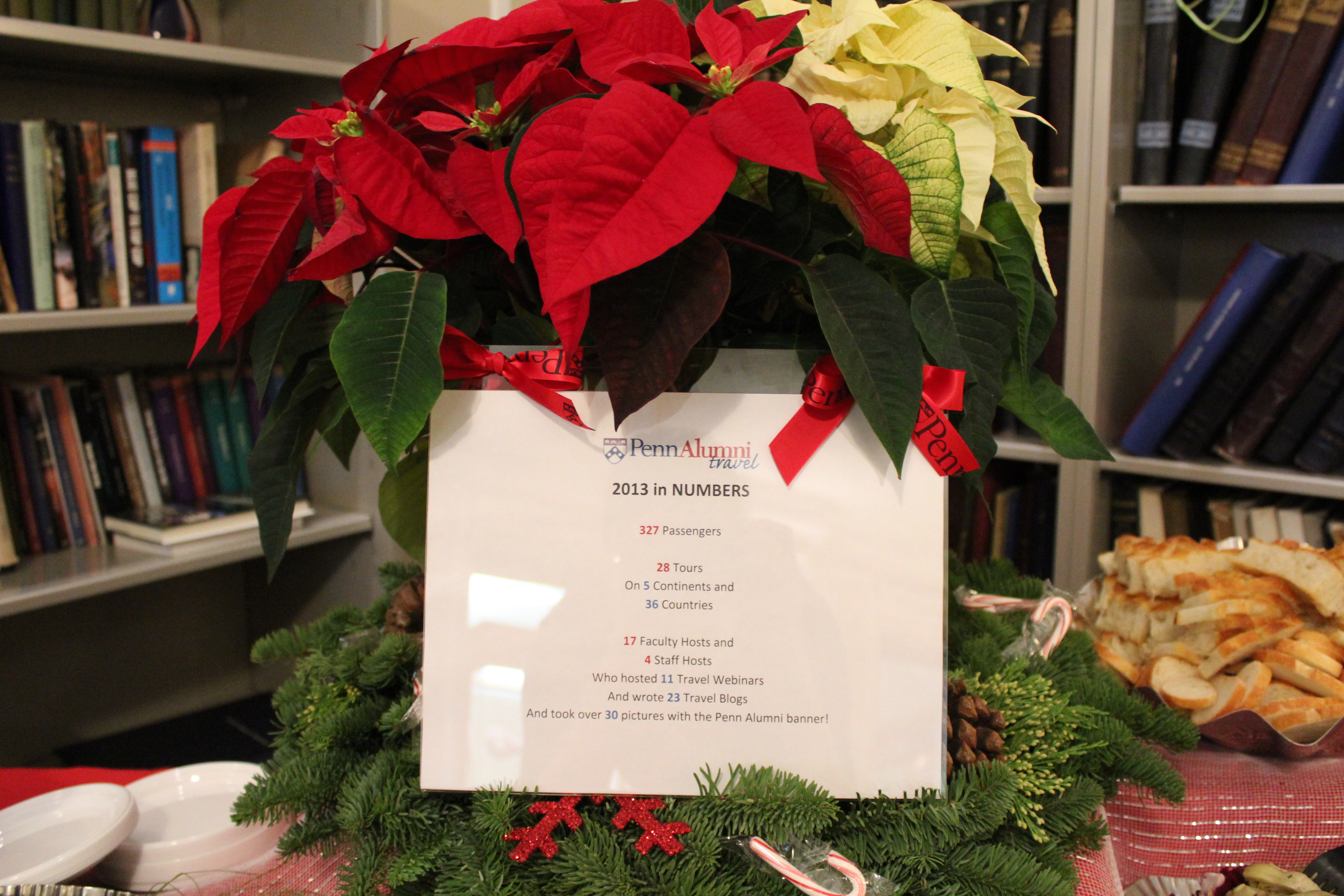
On December 11th Penn Alumni Travel celebrated another successful year of alumni tours with a staff and faculty host reception at the Sweeten Alumni House. There was much to toast. In 2013 we sent 327 alumni and friends on 28 trips to destinations across the world. Our alumni visited 5 continents and over 35 countries including: Italy, Greece, Turkey, Kenya, China, Croatia, Peru, Tahiti, Poland, and Vietnam.

A successful year of travel!

A successful year of travel!

To celebrate, we invited our faculty hosts to join the Alumni Relations staff for an afternoon of treats and hot cocoa.

Treats...

Treats…

And hot cocoa. Hot cider with cinnamon sticks was also included.

And hot cocoa. Hot cider with cinnamon sticks was also included.

It was a great opportunity to reconnect with past hosts, introduce alumni relations staff to Penn professors, and reminisce over a Penn Alumni Travel slideshow.

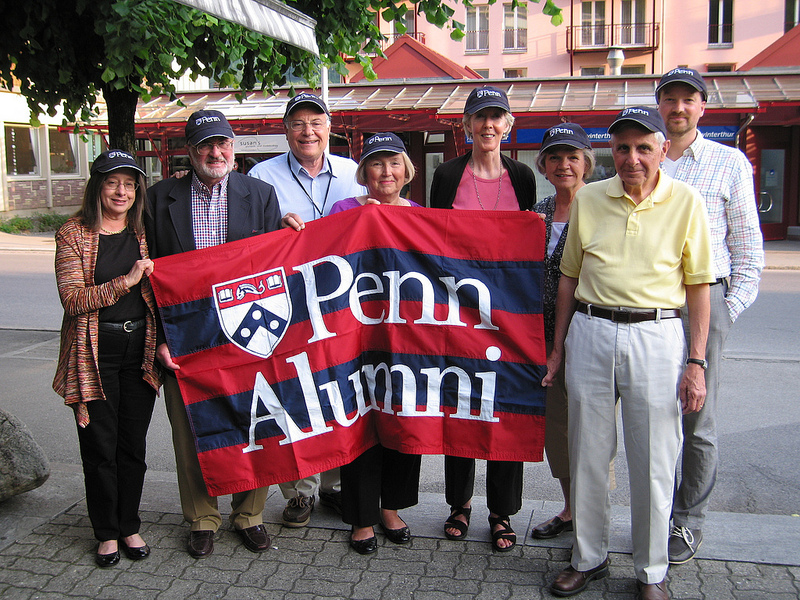
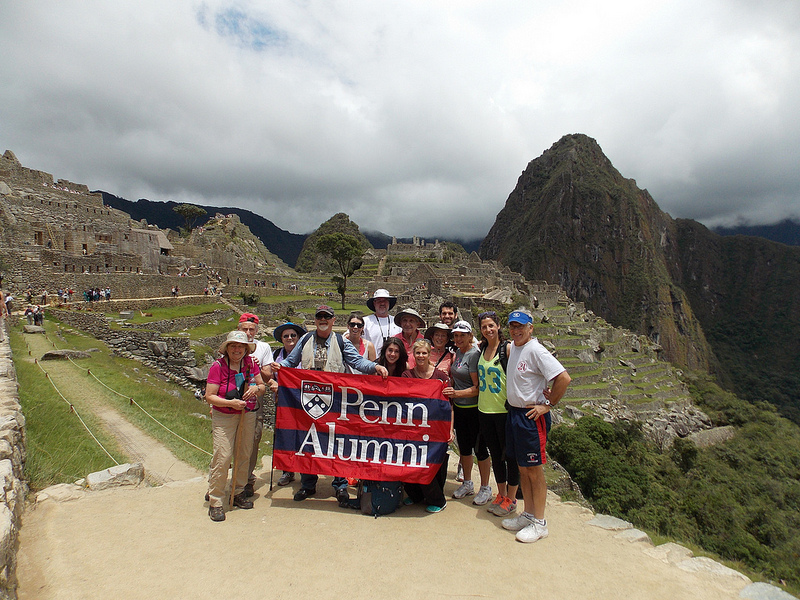
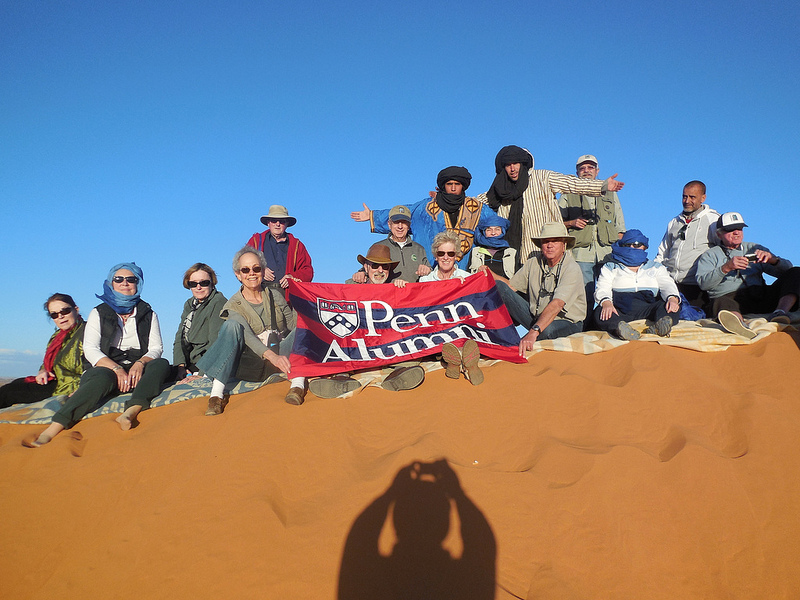
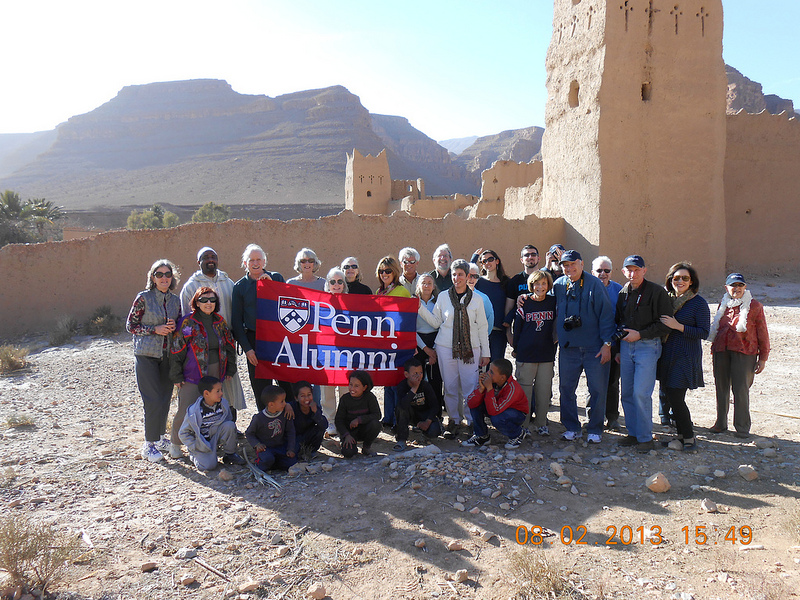
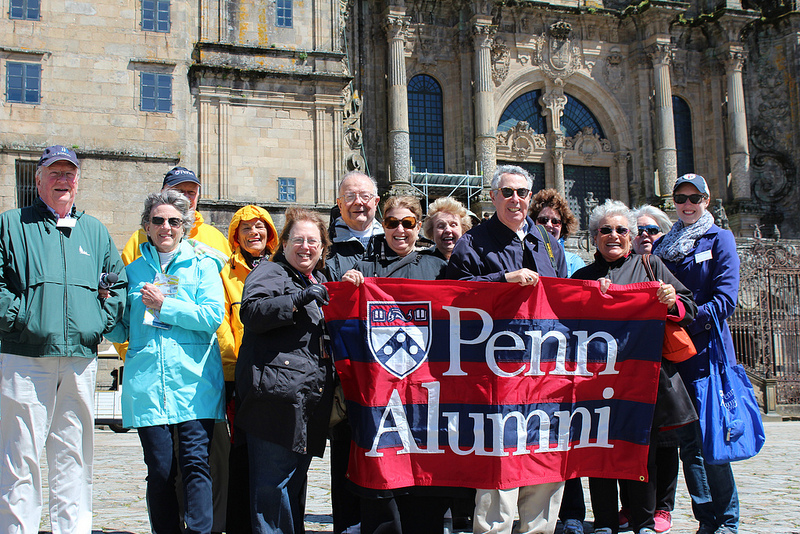
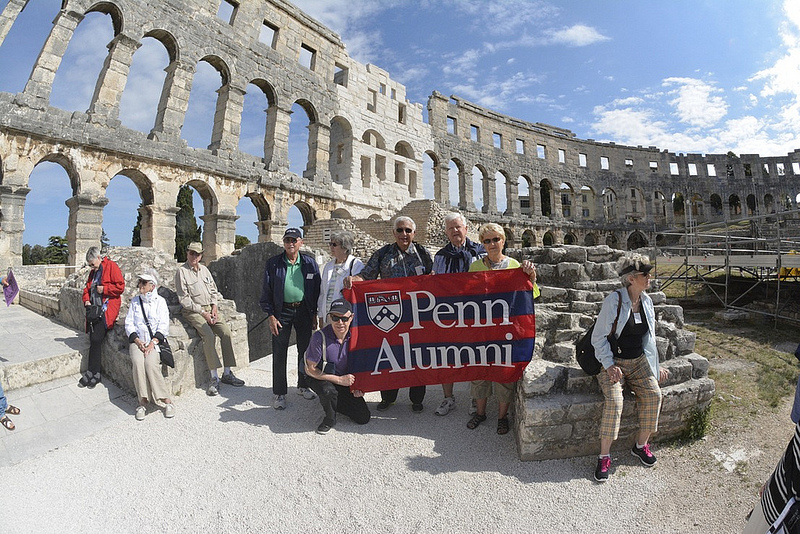
Penn Alumni Travel slideshow. Penn alumni took over 30 pictures with the Penn banner this year.

Penn Alumni Travel slideshow. Penn alumni took over 30 pictures with the Penn banner this year.

Happy Holidays from the Penn Alumni Travel team. We hope to see you on a future trip! And don’t forget- if you took a tour with us in 2013, enter our annual travel photo contest by February 28th for a chance at fantastic prizes. Click here for more information.

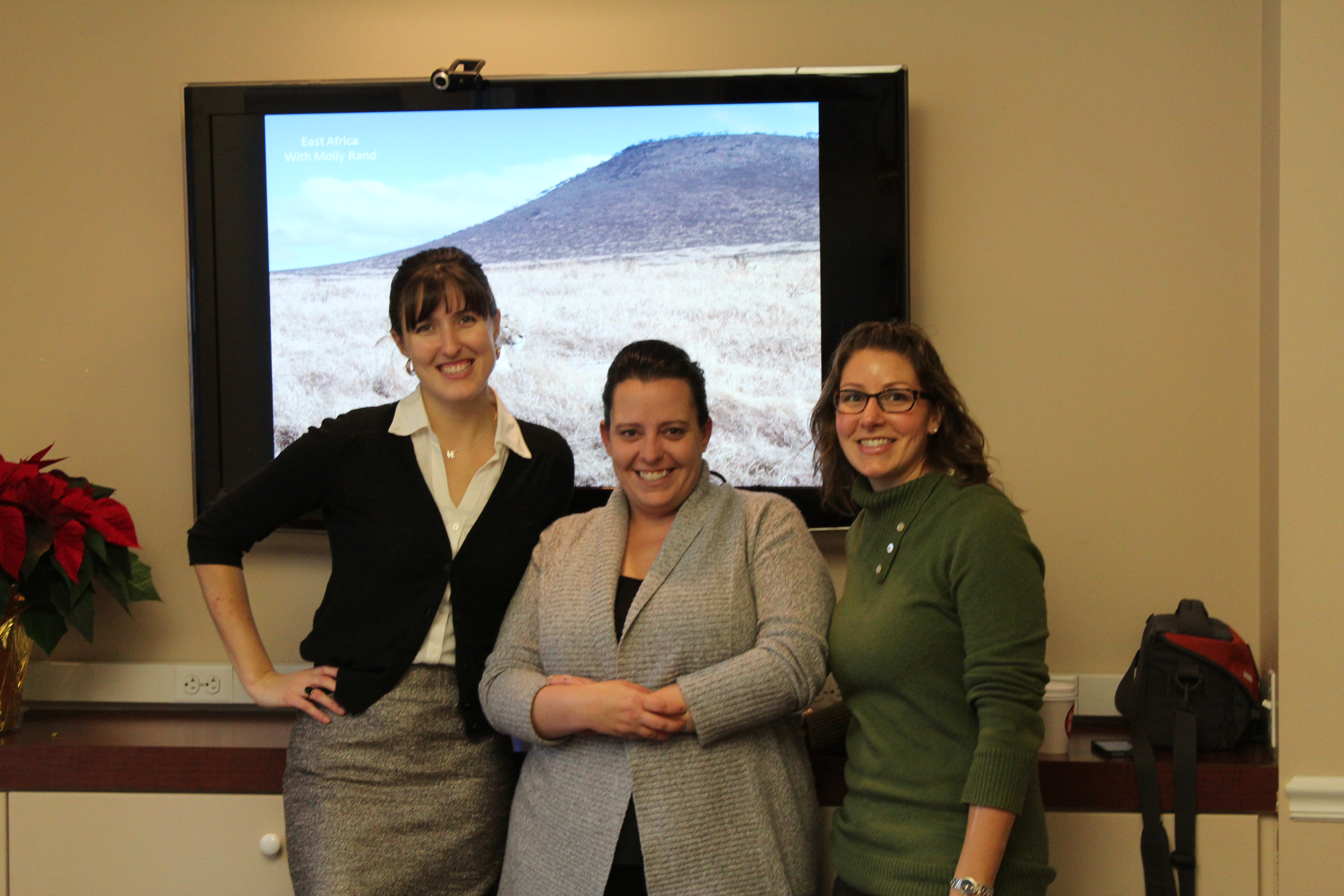
From left: Emilie LaRosa (me!), Janell Wiseley, and Alyssa D'Alconzo

From left: Emilie LaRosa (me!), Janell Wiseley, and Alyssa D’Alconzo

Leave a comment

Filed under Emilie, Penn Alumni Travel, Travel

2013 in Pictures

Author: Janell Wiseley


Penn Alumni Travel has shared many photos on Frankly Penn this year, but with 2013 drawing to a close thought I would share a couple more!    Enjoy 2013 in Pictures!

Wishing everyone Happy Holidays and a Safe and Healthy New Year!

Switzerland 2013

Switzerland 2013

Russia 2013

Russia 2013

Paris to Normandy 2013

Paris to Normandy 2013

Machu Picchu to the Galapagos 2013.  Departure 2

Machu Picchu to the Galapagos 2013. Departure 2

Villages & Vineyards of the Rhine, Mosel and Main Rivers 2013

Villages & Vineyards of the Rhine, Mosel and Main Rivers 2013

Moroccan Discovery 2013. Departure 2

Moroccan Discovery 2013. Departure 2

Machu Picchu to the Galapagos 2013.  Departure 1

Machu Picchu to the Galapagos 2013. Departure 1

Moroccan Discovery 2013.  Departure 1

Moroccan Discovery 2013. Departure 1

Italian Inspirations 2013

Italian Inspirations 2013

Waterways of Holland & Belgium 2013

Waterways of Holland & Belgium 2013

European Coastal Civilizations 2013

European Coastal Civilizations 2013

Treasures of East Africa 2013

Treasures of East Africa 2013

Symphony on the Blue Danube 2013

Symphony on the Blue Danube 2013

Dalmatian Coast 2013

Dalmatian Coast 2013

China 2013

China 2013

The Quaker resting on the Great Wall, China 2013

The Quaker resting on the Great Wall, China 2013


Leave a comment

Filed under Alumnni Education, Janell W., Penn Alumni Travel, Travel

Penn Alumni Travel: China 2013

Author: Emilie C. K. LaRosa

This fall I hosted a Penn Alumni Travel trip to China. 21 Penn alumni and friends made the long trek to Beijing where we were greeted by our tour director extraordinaire, Chen. Chen would be our tour director and guide for the next 13 days, and he did an outstanding job. He managed our itinerary, provided historical and cultural tidbits, and even got us in to see giant pandas after the Chongqing Zoo had closed.

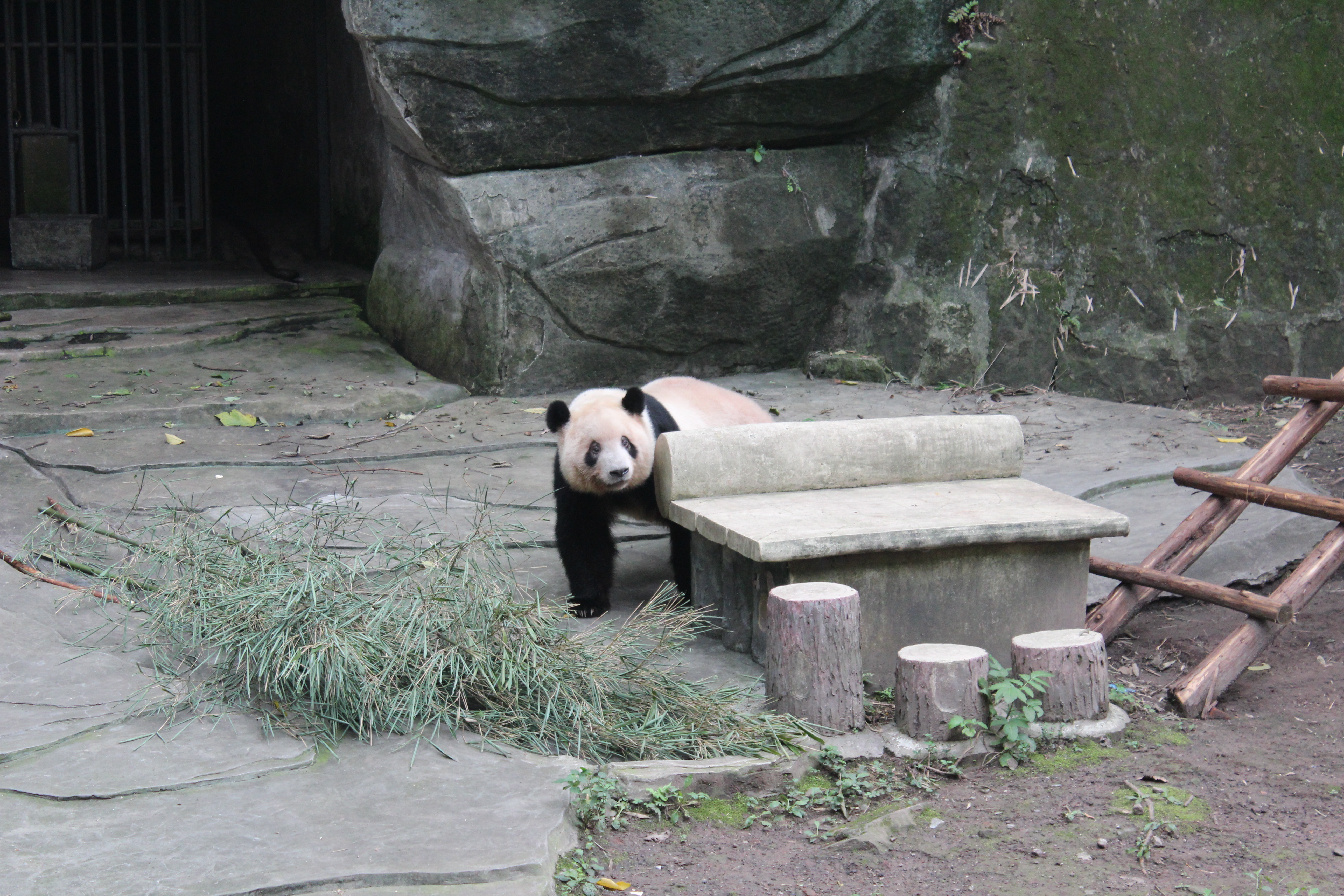
Everyone loves a good panda picture! At the Chongqing Zoo.

Everyone loves a good panda picture! At the Chongqing Zoo.

Chen with two Penn alumni (and proud Penn Parents!) in Shanghai: Daniel Behrend, WG’71 and Susan Behrend, Nu’80, GNu’86

Chen with two Penn alumni (and proud Penn Parents!) in Shanghai: Daniel Behrend, WG’71 and Susan Behrend, Nu’80, GNu’86

I had never been to China before, and, during that first shuttle ride from the airport to the hotel, I was immediately struck by two things: the seemingly endless construction and the insane traffic. Did you know that over 21 MILLION people live in Beijing? Between 2000 and 2010, the population in Beijing rose by 44%, and, judging by the amount of half-finished high rises and construction cranes in the city, it will continue to grow.  A lot. (Chen joked that the national bird of China is the crane.)

During our two weeks in China we visited the Great Wall, walked along the corridor of the Summer Palace, bumped along in rickshaws in the hutongs of Beijing, marveled at the Terra Cotta Warriors, floated down the Yangtze River through the Three Gorges, ate Chongqing hotpot, and walked along the cosmopolitan Bund in Shanghai. China is so vast, so foreign, and so culturally and historically rich that it is impossible to properly chronicle this tour in just one blog. And so I won’t! Instead, find a visual synopsis of this Penn Alumni Travel trip below.

As is always the case on our educational tours, the guides were superb, the itinerary rich (and busy!), and the company engaging and fun. Thanks to all the Penn alumni and friends who made this tour so exceptional through your conversation and company. I hope we meet again. And now a visual tour with Penn Alumni Travel:

A joint dinner with the Penn Beijing Club. Some of our travelers had Penn Beijing friends who joined us that night.

A joint dinner with the Penn Beijing Club. Some of our travelers had Penn Beijing friends who joined us that night.

A visit to China is not complete without a visit to the Great Wall. The Quaker scales the wall.

A visit to China is not complete without a visit to the Great Wall. The Quaker scales the wall.

An unusually clear day in Beijing provides the perfect photo-op at the Temple of Heaven.

An unusually clear day in Beijing provides the perfect photo-op at the Temple of Heaven.

Just a small sampling of the estimated 8,000 Terra Cotta Warriors underground- each with a face uniquely his own.

Just a small sampling of the estimated 8,000 Terra Cotta Warriors underground- each with a face uniquely his own.

A visit to the medieval wall in Xian.

A visit to the medieval wall in Xian.

Unbelievably beautiful gorges on the Yangtze River.

Unbelievably beautiful gorges on the Yangtze River.

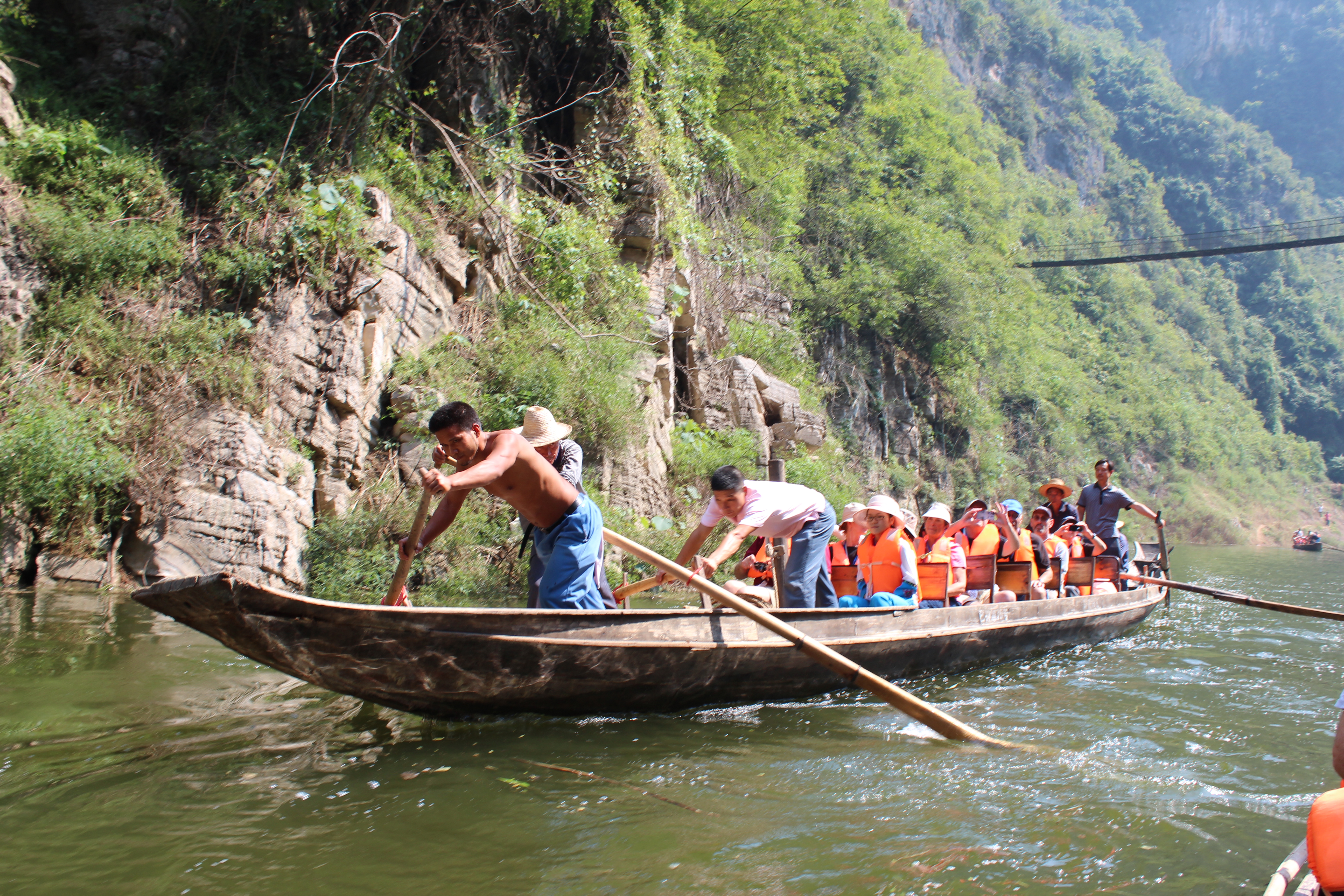
Our alumni brave the sampan for a closer look at one of the Lesser Gorges.

Our alumni brave the sampan for a closer look at one of the Lesser Gorges.

Cool cosmopolitan Shanghai. 20 years ago, these skyscrapers were nothing more than desolate swampland.

Cool cosmopolitan Shanghai. 20 years ago, these skyscrapers were nothing more than desolate swampland.

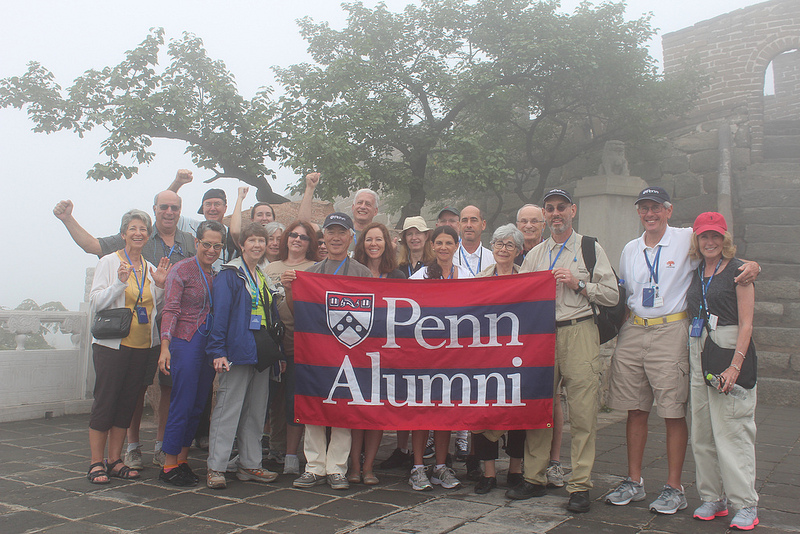
Our group at the Great Wall. What a fun bunch!

Our group at the Great Wall. What a fun bunch!

In closing, I should also mention that Penn not only has incredible resources here on campus for the study of China and the Chinese language (see the Penn Center for the Study of Contemporary China) but also recognizes the importance of on-the-ground relations with the People’s Republic of China. In fact, Wharton is moving forward with the Penn China Center in Beijing: a physical space that will allow our students and professors to build relationships with the local community, continue in-depth research, and bring together alumni, business leaders, students, and other partners. If you’re an alum looking to connect with fellow alumni in China, don’t forget we have robust alumni clubs in both Beijing and Shanghai.

If you’re interested in travel to Asia or would like more information about Penn Alumni Travel, visit our website here.

Leave a comment

Filed under Emilie, Penn Alumni Travel, Travel

Penn Alumni Travel: Morocco

Author: Professor Roger Allen, Arabic Language and Literature

[Professor Allen describes his experience as a first-time faculty host on a Penn Alumni Travel trip.]

DAY 1-2

After gathering at Kennedy Airport, we flew overnight by Royal Air Maroc to Casablanca Airport. Thanks to strong tail-winds, we arrived early (about 6.10 a.m. local time), but our guide, Muhammad Dahouac, was waiting outside the customs area when we all emerged. He welcomed us all to his country and took us out of the airport to what was to be our bus for the entire trip, along with its two wonderful adjuncts: Hasan, our driver–his driving skills a model of caution rarely found in Morocco; and (another) Hasan, his helper on everything from unloading suitcases to reversing into improbably small parking spaces. Once everybody and everything had been loaded, we set off for the drive to Morocco’s capital city of Rabat–about a two hour drive up the Casablanca-Rabat autoroute.  We stopped for a tea/coffee break on the way (as we were to do most days), and Muhammad begin to fill us in on details of our trip, contemporary Morocco, and the surrounding countryside we were passing.

When we entered the city of Rabat, we were driven to the Tour Hassan Hotel, a wonderful and luxurious facility in the center of the city. I personally took a stroll in the afternoon to refamiliarize myself with the city, but I think many people used the afternoon to get a little rest and sleep after the overnight journey.  In the evening we went to a famous restaurant, Dinarjat, in the old city (medina) where we got to know each other a bit better.  We were treated to some excellent Moroccan food and watched as the tea was poured for us in the traditional fashion. Making our way back to the bus through the alleyways of the old city, we were being gently introduced to the traditional layout of the Moroccan medina that we were to see later in several other cities.

DAY 3

The tour of the city of Rabat. It was raining (and I learn later that we were at the edge of a very large Mediterranean storm that dumped a year’s worth of rain on Sardinia in a single day, causing massive flooding). We started out at the Royal Palace, with its colorful guards standing by the gate. Moving on, we visited the Chellah, the lovely garden with its combination of ancient Roman remains and medieval Islamic buildings, including the tombs of some saints (and a veritable horde of cats beside a wishing pool).  As was to be the case everywhere we went, the tops of columns and other high spots were occupied by colonies of storks (and, in this particular case, egrets as well).  From the Chellah we proceeded to the tomb-complex of Muhammad V,  the first modern King of Morocco (and grandfather of the present king) who returned from exile in 1955 to rule post-independence Morocco (1956). The mausoleum contains the bodies of Muhammad V, his brother, and the late king, Hassan II (the father of Muhammad VI, the current monarch).
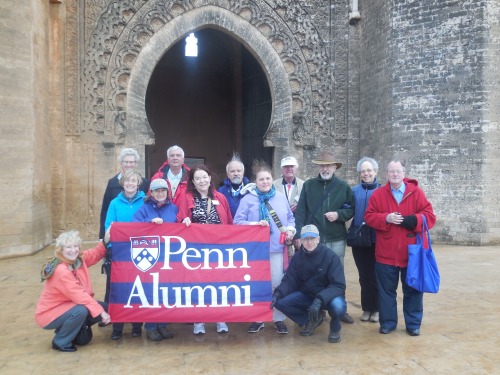
Taking a group photo in the Chellah gardens.

Taking a group photo in the Chellah gardens.

For lunch Muhammad, our wonderful guide, took us to a superb villa-restaurant, BAYT SBIHI, owned and operated by RADIA SBIHI, who welcomed us to her family home and not only fed us a superb meal, but also showed us round the house and displayed here incredible collection of jallabas.  The house, in Sale–the city opposite Rabat at the mouth of the Abu Riqraq River, commands wonderful views of Rabat, and, even in the rain, the vistas were marvelous. After this lunch we recrossed the river and went to look at the Oudaya, an old Amazigh fortress complex right at the mouth of the river.  Even though access to the ocean-front terrace was closed, we managed to persuade the guard to let us through.  We thus were able to look at both the river-mouth and the Atlantic Ocean. Descending the complex via its multiple alleyways, we came across a Gnaua singer plying his trade, and Muhammad joined him in playing the castanets for a short while. We then returned to the hotel.
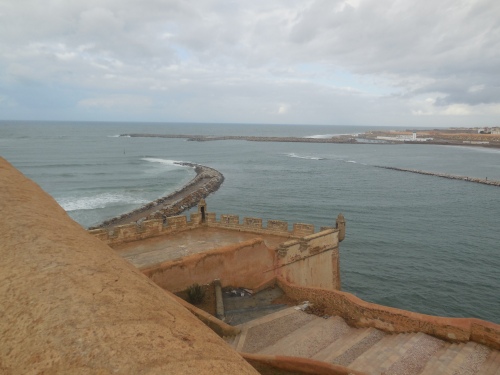
Oudaya and the view of the river mouth into the Atlantic Ocean.

Oudaya and the view of the river mouth into the Atlantic Ocean.

At 5:30 that evening, we had the first of the four lectures that I had arranged.  It was an enormous privilege for me and the group that my guest was Ahmed Toufik, the Minister of Islamic Affairs and Endowment in the Moroccan government.  I have translated two of his novels, the second of which has only just appeared.  Ahmed and I took turns reading from the Arabic and English versions of the second novel (called MOON AND HENNA TREE in English), and following that Ahmed graciously answered questions.  With incredible generosity he then invited us all to dinner at a fabulous restaurant on the outskirts of Rabat, VILLA DES AMBASSADEURS, where he joined us for yet another incredible experience in Moroccan cuisine. So ended our first full day in Morocco.
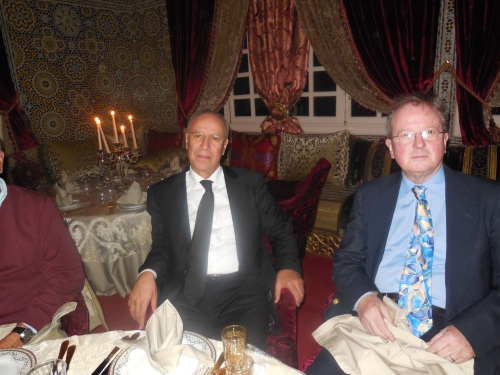
Roger Allen with the Minister of Islamic Affairs, Ahmed Toufik.

Roger Allen with the Minister of Islamic Affairs, Ahmed Toufik.

DAY 4

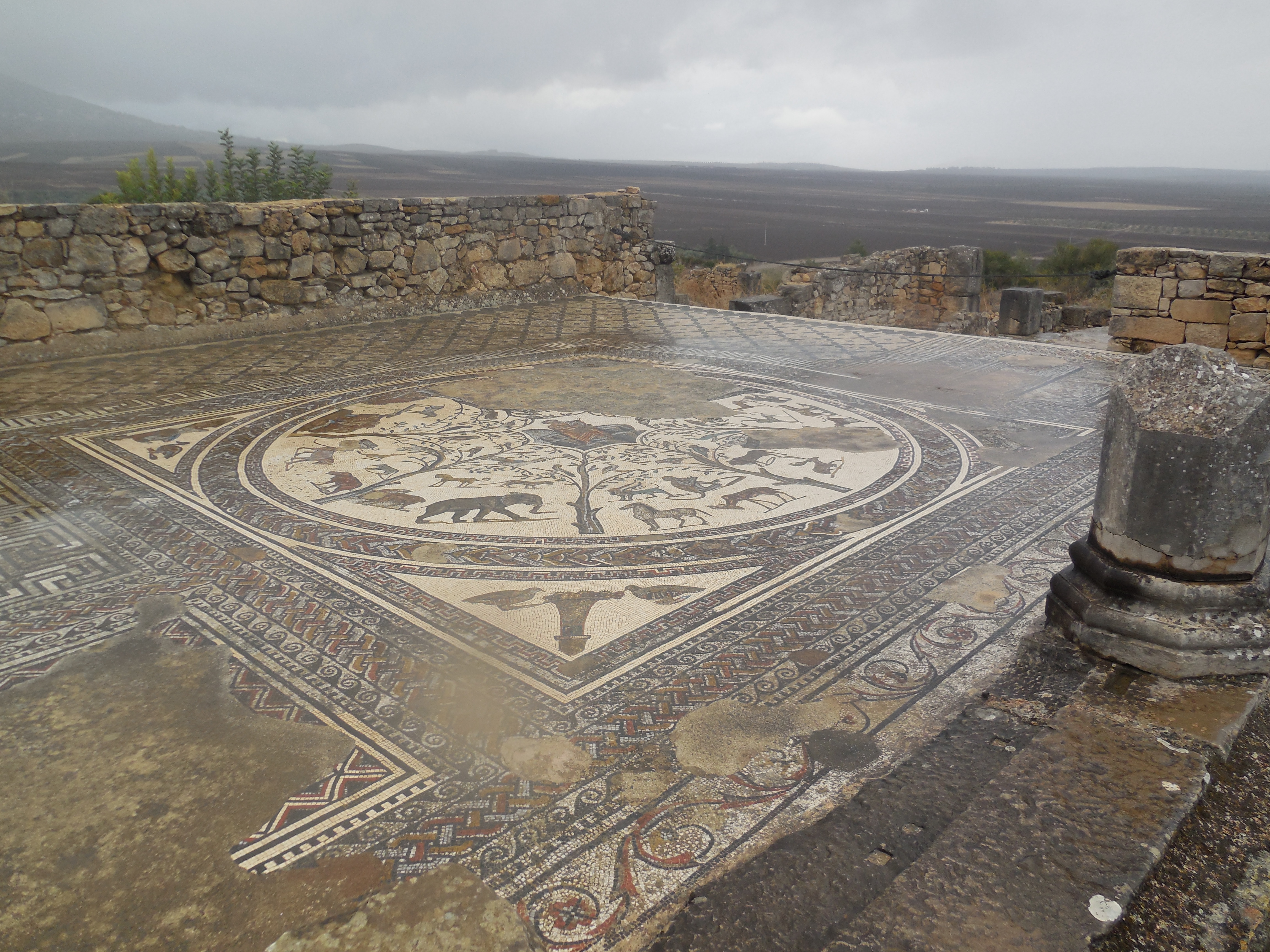
We left the Tour Hassan hotel in Rabat, and traveled by the autoroute, first to the city of Meknes, one of Morocco’s three traditional capitals, this one constructed due to the determination of the then ruler, Mawlay Ismail, to build a capital city of his own apart from Fez (removing much material from other sites in the process). Arriving in the city, we first looked at one of the ceremonial gates before traveling on to the huge granary, with its many storerooms and plentiful arches. Lunch was served as the Didi Palace Riad (yet another wonderful Moroccan meal), after which we visited a mausoleum before traveling on to the huge Roman site of Volubilis, where it was pouring with rain. In no way deterred however (semper fideles, as they say in Latin), we toured the site, admiring its lay-out and especially the fine quality of its mosaics. From there it was on to Fez itself, where we arrived at the Palais Jamai Hotel in the late afternoon.  Dinner that evening was in the hotel.
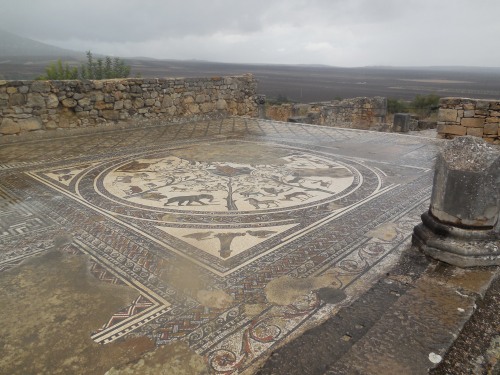
An example of the beautiful mosaics at Volubilis.

An example of the beautiful mosaics at Volubilis.

DAY 5

We spent the morning exploring the 9th century original city of Fez (Fez al-bali, as it is called)–later additions to the city being the so-called “modern Fez” (12-14th century), and the French-built 19th century city laid out in the Parisian style with broad boulevards. Descending into the medina by foot from our hotel, we learned to listen for the phrase “balak,” meaning “stand clear– a mule, donkey, and/or cart wish to get by.” Our first stop was to a wool-carding facility which also served as a food-market (especially fresh olives).  From there we meandered our way through the narrow streets, passing by emporia of every kind. We stopped at several important historical monuments: the Najjarin, the restored headquarters of the wood-carvers guild; the Attarin, a similar shrine connected to the perfumier’s trade, and the Qarawiyyin Mosque-Library complex, the world’s oldest institution of higher learning (founded 860) resulting from an endowment left to two women of Fez by their father which they devoted to constructing the exquisite mosque and library. At the end of the morning we visited a rug-cooperative run by women and were shown a number of truly beautiful rugs of various provenances. Several members of the group purchased examples of the exquisite craftsmanship.
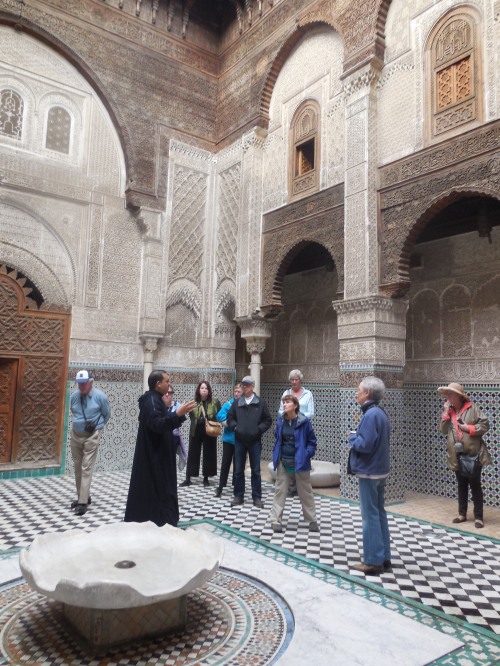
The Attarin in Fez.

The Attarin in Fez.

Returning to the hotel for lunch, it was time for the second of our tour-lectures.  This time I had invited my friend, David Amster, the Director of ALIF (the Arabic Language institute in Fez), to come and talk to us about his ongoing efforts to preserve Fez and its buildings as more and more non-residents are buying up properties in the old city and “converting” them in various ways. As David informed us through various examples and anecdotes, he has been a tireless defender of the beauty of the city and its traditional houses and has scored several notable successes on the way. His presentation provoked a number of questions from the group, and David proceeded to answer them with both authority and humor.

Later in the afternoon we visited some sites in the “modern” city (12th-14th century, that is): the Fez Museum, housed in a lovely old palace with a luxuriant garden.  We then walked through the crowded “mellah” (the traditional Jewish quarter) and emerged on the far side to discover that a fire two days earlier had destroyed a complete market complex–the sight of the twisted ruins and the livelihoods lost was not a little sad.

Finally on this day, we drove to the Naji Factory where pottery is manufactured.  We were shown the various phases that go into the production of pottery-ware and then spent time in the factory store where most of us purchased some of the wonderful products that were on display.

That evening we went to one of Fez’s most famous restaurants, the Bleue Maison–and David Amster joined us. In a beautiful example of traditional architecture near the square called “Al-Bat’ha'” we were served another superb Moroccan dinner, accompanied by the music of two Gnaua performers.

DAY 6

At 9:30 we left the hotel in Fez and traveled outside the city.  Our first stop was at a town called Bahalil where Muhammad, our guide, took us through the winding streets of the town to visit a restored troglodyte residence–underground in order to remain cool during the heat of summer. There the owner, also named Muhammad and dubbed “the intelligent” (!), treated us to his routine, which included a lesson in the preparation and serving of mint-tea (a major characteristic of which is to gradually raise the teapot (or other pouring device) to a great height so as to aerate the liquid). Having tried this myself on several subsequent occasions, I can vouch for the fact that it is not as easy as it looks.
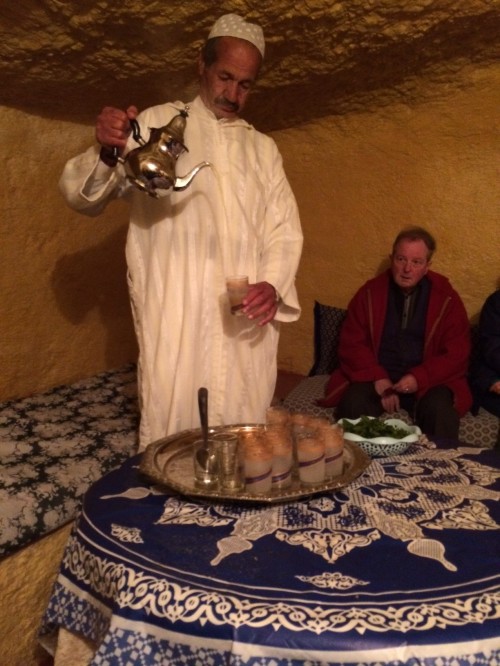
Muhammad pours mint tea from a great height.

Muhammad pours mint tea from a great height.

Walking back to the bus (and seeing a number of truly beautiful children who were obviously enjoying the sight of us), we moved on to the city of Sefrou, long recognized for the size and importance of its Jewish community. Here too we walked through the “mellah” and visited the synagogue which has been carefully restored.  We returned to the hotel for lunch, after which a number of members of our group accepted the invitation of our Fez guide, Ahmed, to return to the medina to make more purchases.  For my part, I “took to the waters,” indulging in a swim in the hotel’s heated outdoor pool.

DAY 7

This day involved a long trip to the south in order to reach our destination of Erfoud, close to the Sahara. Driving South from Fez we first stopped at the mountain town of Ifrane, a curious phenomenon for the Middle Atlas region in that it is modeled on the idea of a Swiss village, with red-colored roofs and ochre buildings, not to mention the English-speaking university of Al-Akhawayn (“the two brothers,” a co-operative project of the kings of Saudi Arabia and Morocco). After a cup of tea or coffee, it was on up the mountains until we encountered at one particular spot some of their denizens in the form of monkeys. After a delicious lunch of trout, it was on through a mountain gorge to Al-Rashidiyya, a French-built fortress and finally to Erfoud and the Shergui Hotel where we had dinner. After this day’s long drive, we were now firmly in the Moroccan South-East, close to the desert.

DAY 8

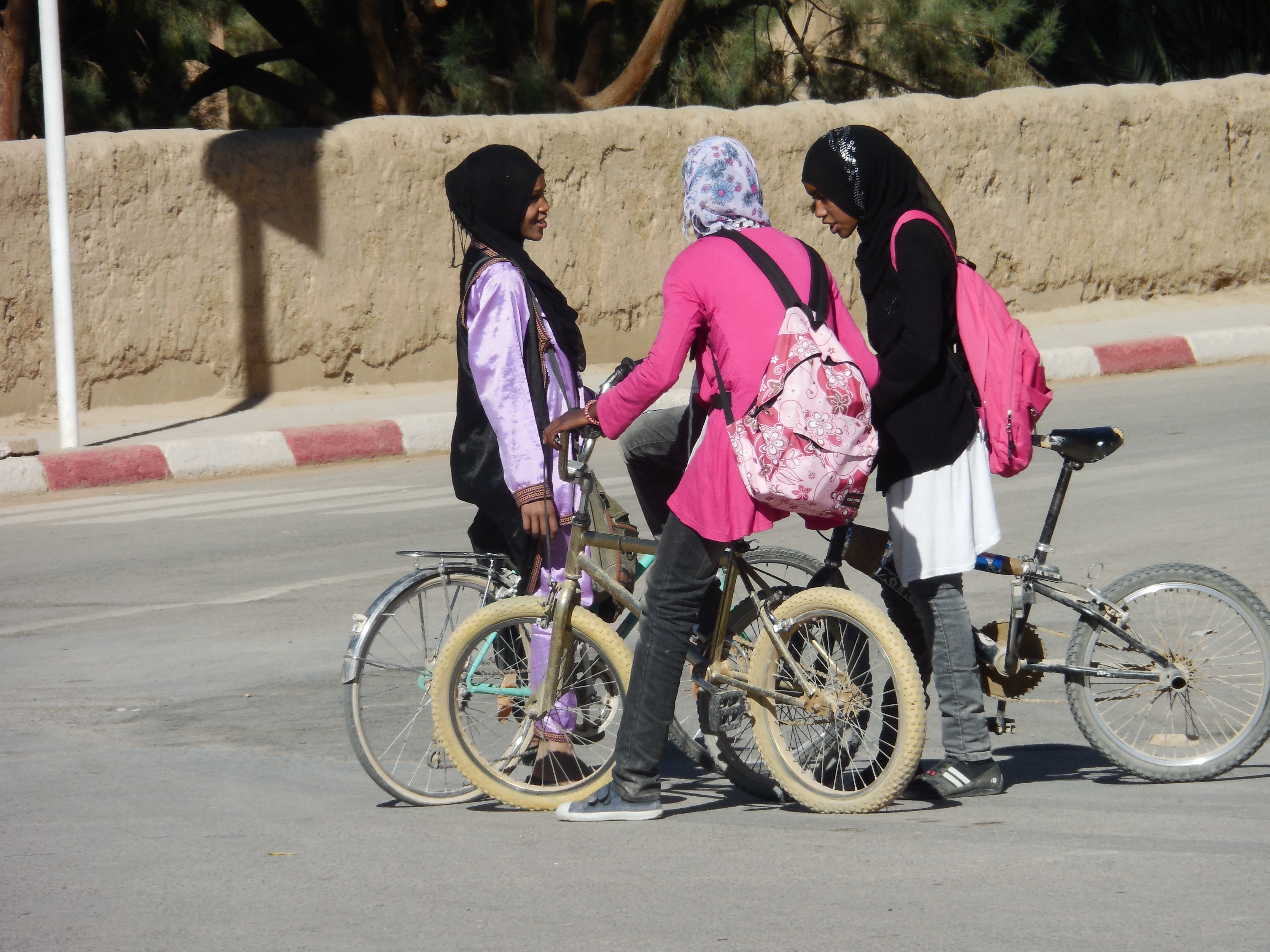
After breakfast, we drove through the town of Erfoud to the neighboring city of Rissani, where, after a brief stop at a ceremonial gateway, we headed for the Tomb of Mawlay Idris and the Ksar [enclosed quarter] of Abna’ Ibrahim, where we were welcomed by the current owner. We then went to a remarkable complex where fossilized rock was turned into beautiful pieces of art, cut, polished, and shaped into a variety of sizes and functions. Many purchases were made….
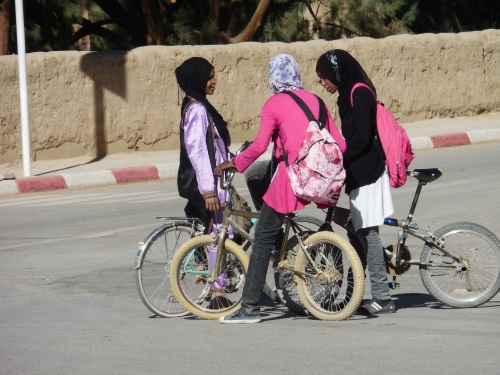
Girls in Rissani.

Girls in Rissani.

Back to the hotel for lunch, I proceeded to offer a lecture on the current state of the so-called “Middle East” (who says it’s “middle”?!) and some of the factors that should go into any attempt at understanding what is happening in the various sub-regions and what the primary motivations are.  We had a good question and answer session once I had finished my expatiations….

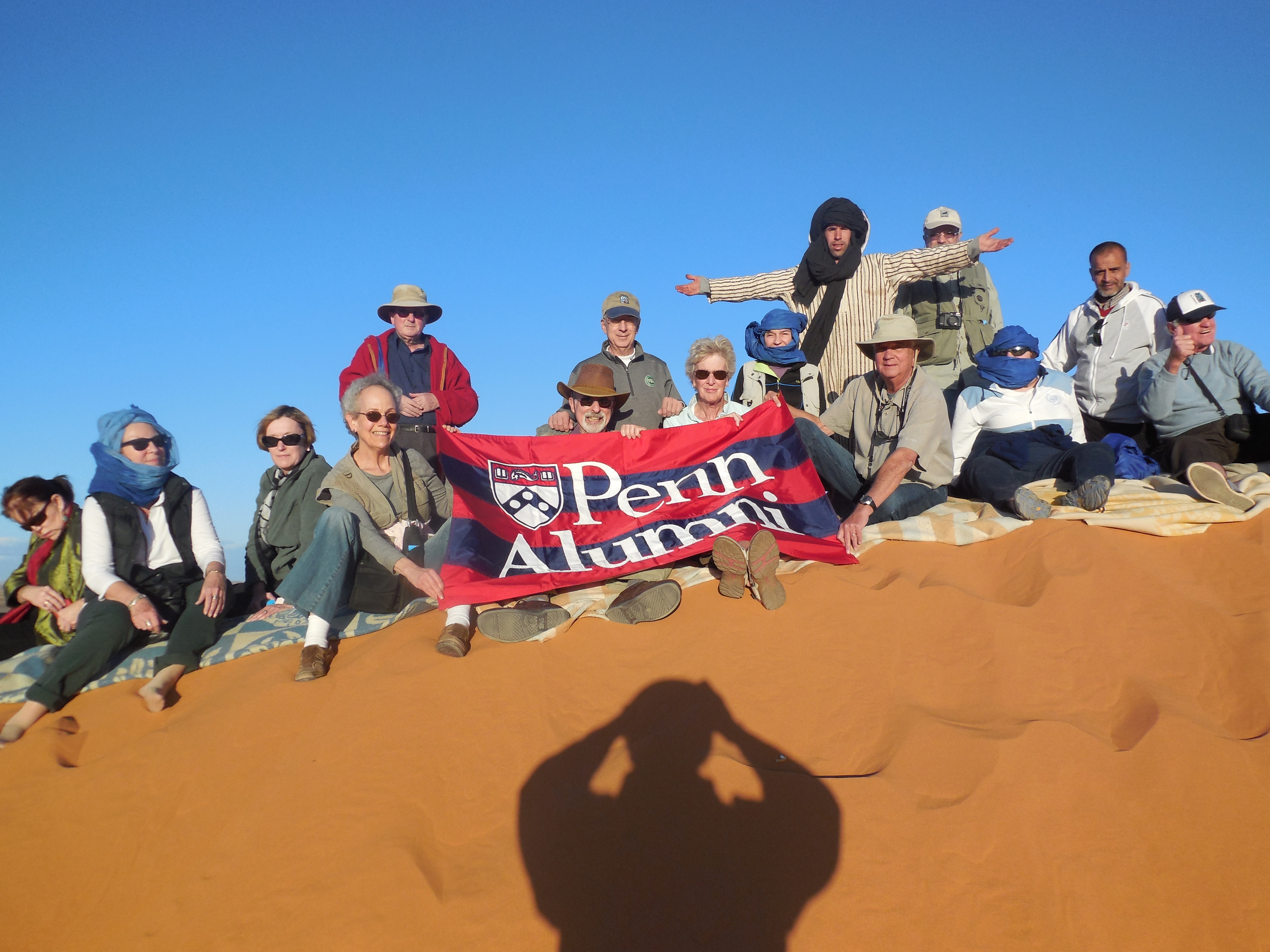
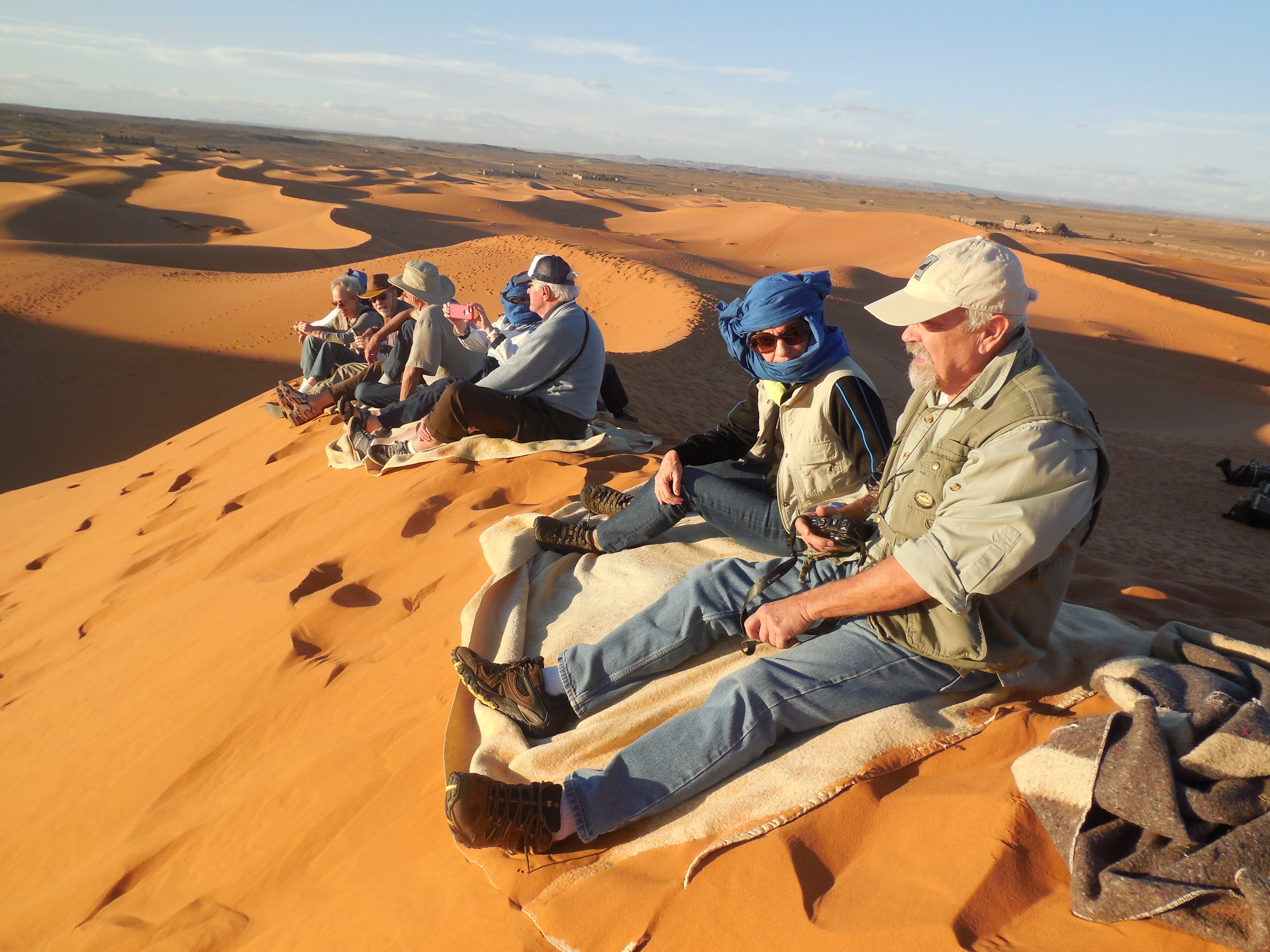
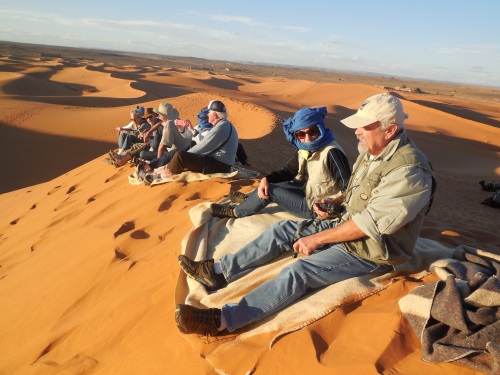
In the mid-afternoon we left the hotel for what is usually one of the highlights of this tour, a visit to the Merzouga sand-dunes and a camel (actually, a dromedary) ride. The entire group duly mounted their riding-beasts, and we set off in caravan formation–nose-to-tail–up an impressively huge set of dunes (some 400+ feet high).  I once again discovered why the camel/dromedary is known as “the ship of the desert”!  Once at the top (or nearly so), we sat on the edge of the dune and waited for sunset. The entire vista, the shadows cast against the dunes, and the gorgeous light, all were truly memorable. Once the sun had set, we made our way downwards as the sky turned to various shades of red and pink. Once again, dinner was at the hotel.
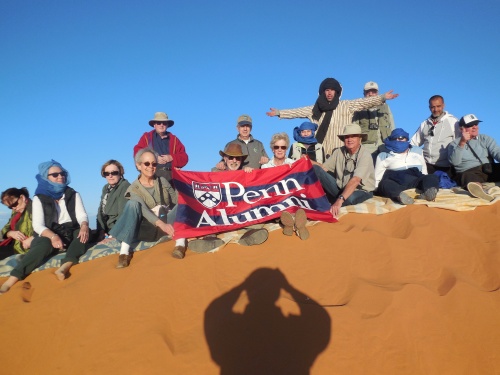
Penn alumni and friends at the top of the dune.
Penn alumni and friends at the top of the dune.

Waiting for the sun to set.

Waiting for the sun to set.

DAY 9

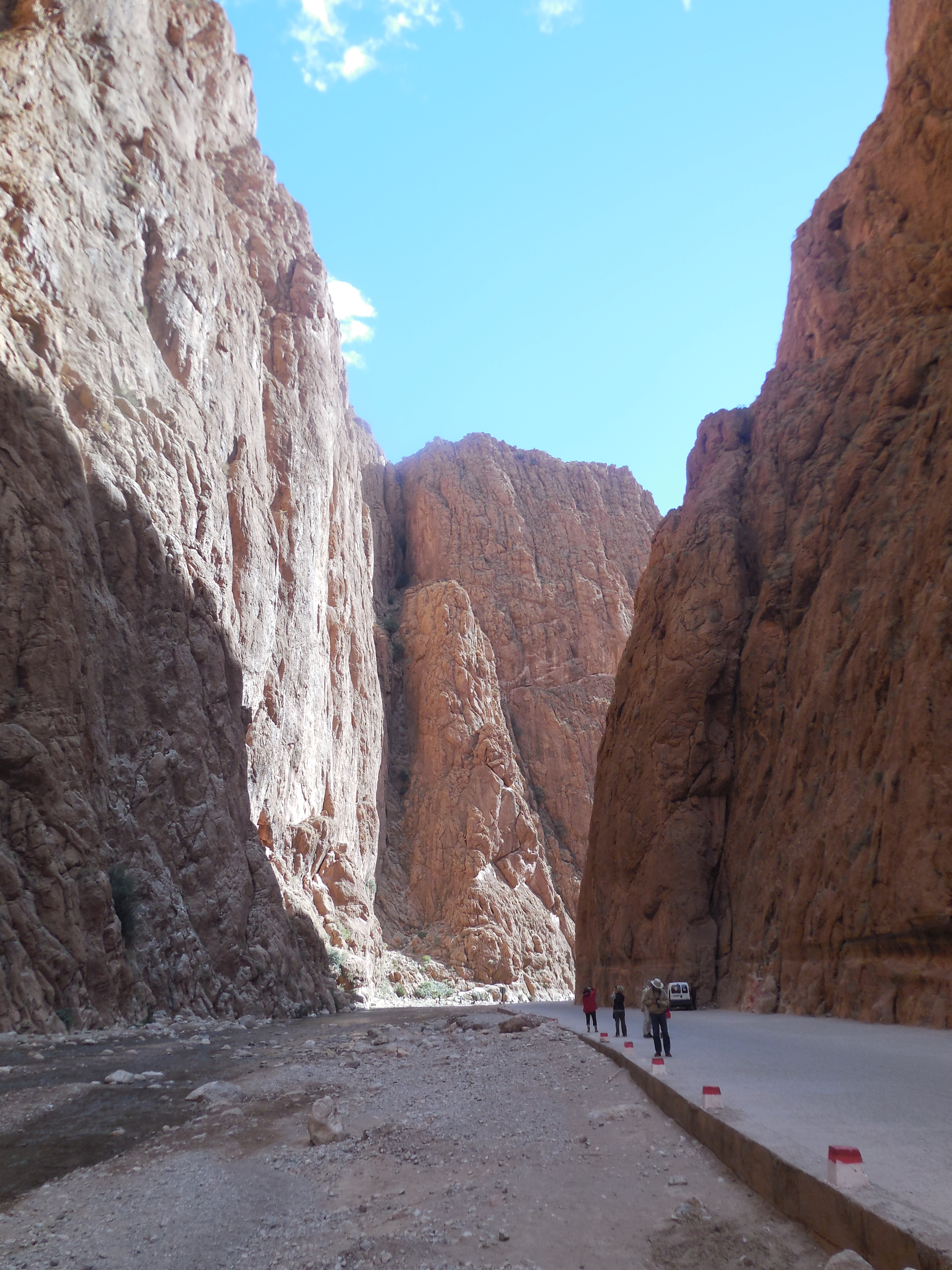
This was another day for a long-distance bus-ride. From Erfoud we traveled to the Tinchir oasis and then into the spectacular Todra Gorge with its narrow defile.  We had lunch at a restaurant named Chez Michelle (veal and creme brulée), after which we set out on the long drive to Ouarzazate via Qal`at Mgouna where we were able to purchase some of the primary local product, rose-water. We eventually reached the Berber Palace Hotel in Ouarzazate (the Moroccan version of Hollywood, we gathered) at about 6 p.m.
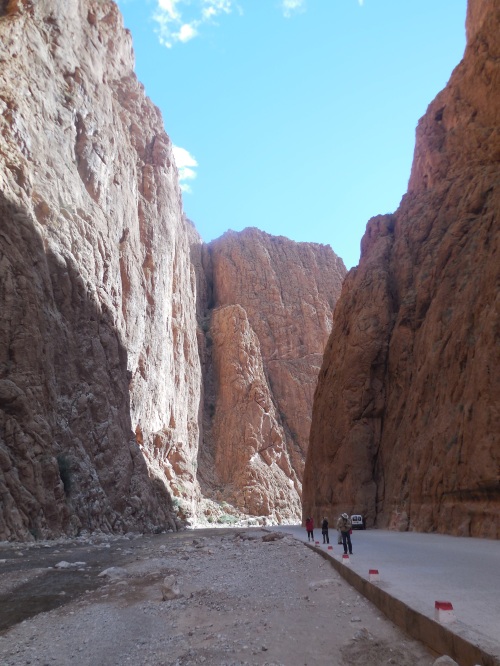
The Todra Gorge.

The Todra Gorge.

DAY 10

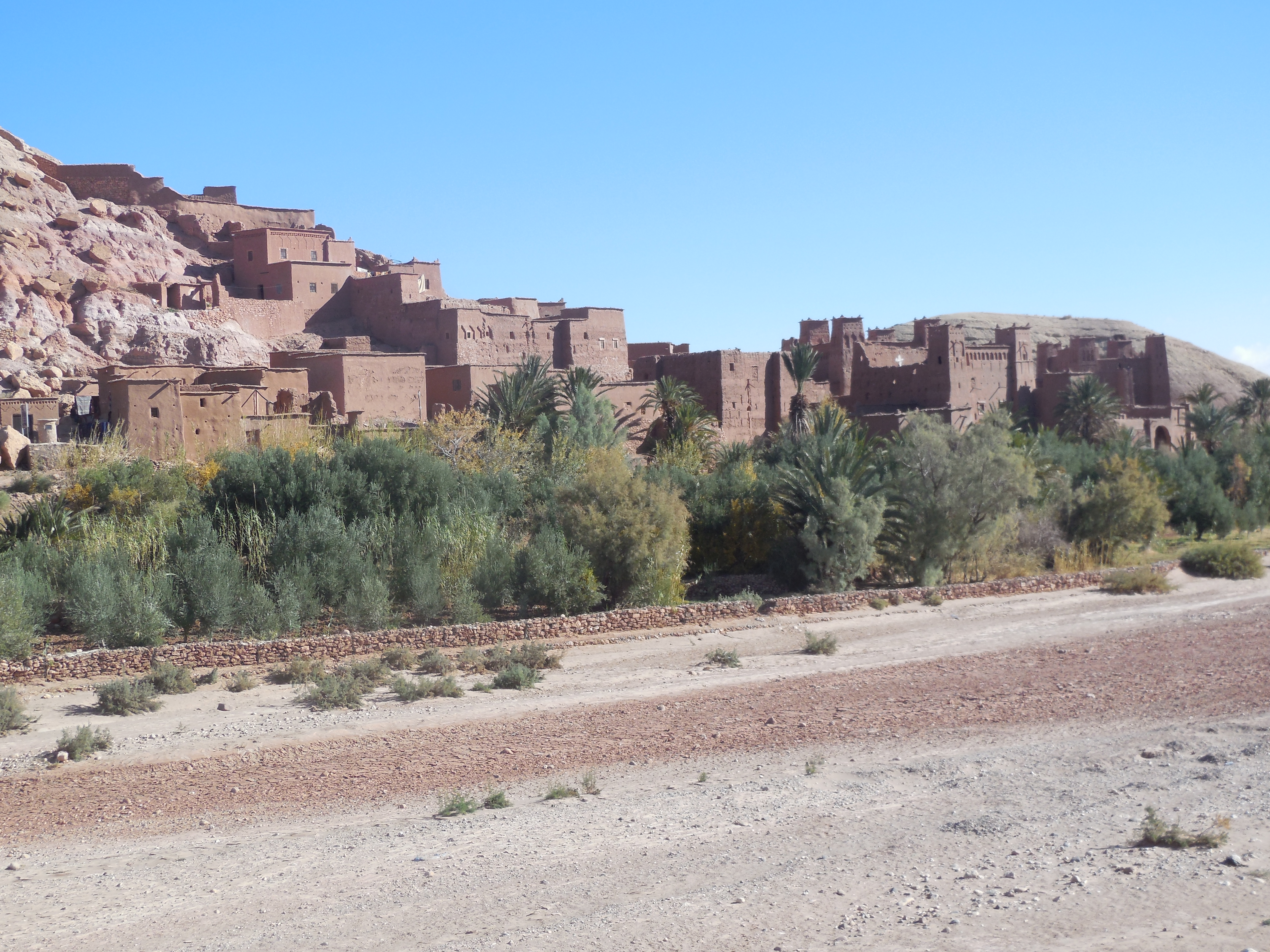
Leaving Ouarzazate at 9 a.m., we were on our way to Marrakesh.  Passing by another “kasbah” (Tifoultout), we reached the fabled “ksar” of Ait ben Hadou, situated in a lush oasis with a climb up to the top and spectacular views over the surrounding landscape. This afforded us the experience of a classic type of southern Moroccan Amazigh fortress-town, with winding alleyways (now crowded with stores of a wide variety), all enclosed within a firmly walled structure. We had lunch in a lovely restaurant that looked out directly on to the fortress-town.
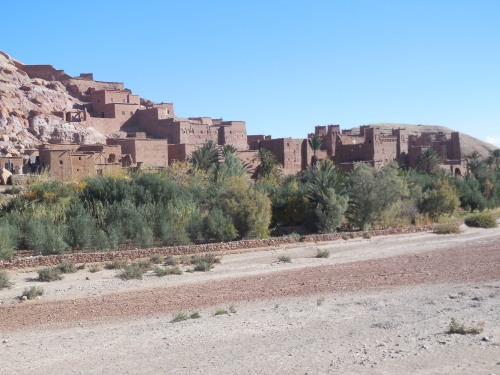
Ait ben Hadou

Ait ben Hadou

After lunch we left on another long drive, this one over the remarkable road constructed by the French that traverses the N’Tichka Pass of the High Atlas Mountains; first up the mountain to the top at about 7,000 feet and then–inevitably–down again to arrive at Morocco’s most fabled city, Marrakesh (and yes, the emphasis is on the “rak” syllable–or, if you’re using Moroccan dialect, it’s something like “Mrrksh”!). The Sofitel Hotel turned out to be a luxurious hostelry, in the “posh” part of the city known as “Hivernage.”

DAY 11

We began our visit to Marrakesh with a stop at its most visible landmark, the Tower of the Kutubiyya complex in the center of the city. Following that we made our way through part of the old medina and arrived at the huge ruined complex of the Badi` Palace.  Climbing up to a second level, we found ourselves communing with an entire army of storks who were playing their usual games of “knock me off my perch, and I’ll knock you off yours”…. They had also perfected the art of standing on one leg, a useful posture for cocktail parties. Leaving that enormous complex we headed for another palace, this one more modern (19th century), the Bahiyya Palace, with its lovely garden and its series of beautiful mosaic-ed rooms leading to a large courtyard. Then it was back to the hotel for lunch, a buffet consumed in the warm sunshine.
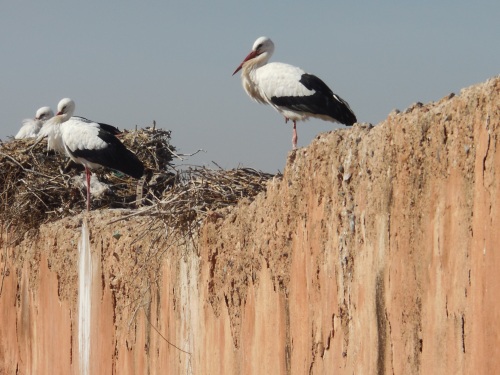
The infamous storks.

The infamous storks.

In the afternoon we made our way into the truly labyrinthine medina, exploring its many, many craft sub-divisions and paying special visits to a wood-painter and a facility specializing in spices, medicines and perfumes. In the latter we were regaled with all kinds of traditional herbs, spices and medicaments; some of our group enjoyed neck-massages, and many people purchased cooking spices, aromatic plants, and other materials of all kinds. We then continued our meandering through the various segments of this huge bazaar, finally reaching the hub of Marrakesh’s cultural life, the world-famous Jma al-Fna Square, with its multitude of traditional performers–snake-charmers, fortune-tellers, monkey-trainers, and the like; not to mention the enormous array of food-sellers (including sheep- and goat-heads for those so inclined…).

Back at the hotel, I had discovered a white grand piano.  With the great Liberace in mind, I gave a short performance on it before we went out to a dinner at a restaurant where I had dined previously: Le Foundouk in the medina, where we all enjoyed a wonderful dinner for which we had readied ourselves by indulging in a fairly lengthy walk from the bus into the medina in order to get there.

DAY 12

On our second day in Marrakesh we set out by horse-drawn carriages to the Menara, the summer-resort built by the rulers as a way of escaping the intense summer heat.  Built by the side of an artificial lake it offers splendid vistas of the surrounding countryside (not to mention the Marrakesh Airport close by).  The lake itself contains some very large carp who lived up to their reputation as voracious eaters when Muhammad offered them some bread. From there it was on (by carriage again) to the Majorelle Gardens, a lovely enclosure that had originally been planned by the French artist, Jacques Majorelle, in the 1920s and was later taken over by Yves St. Laurent, the French fashion designer, who loved to spend time in the residence there. The complex also contains a wonderful Amazigh (Berber) Museum, full of spectacular examples of the arts and crafts of the indigenous people of the region.

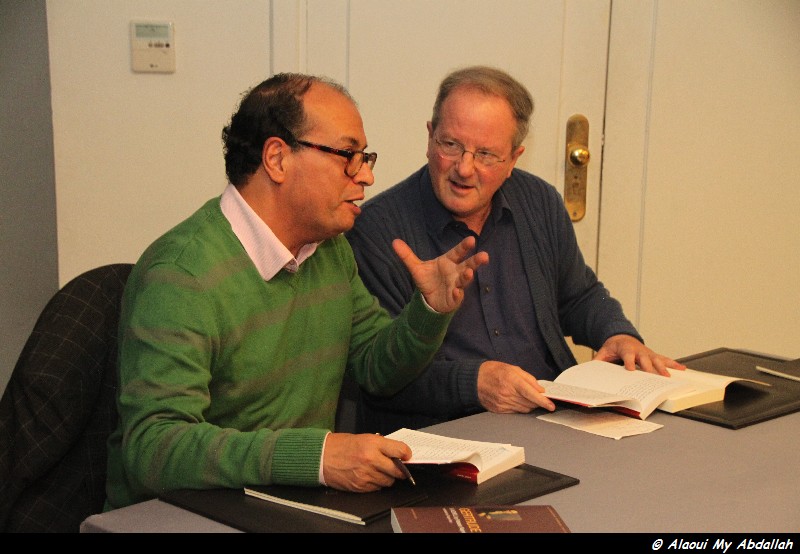
After returning to the hotel for lunch, the afternoon was open for further excursions into the medina in quest of items to purchase. At 5 p.m. the fourth and last of the tour’s lectures took place.  I had invited another Moroccan writer, Hassan Najmi, to come and do a joint reading with me of his novel, Gertrude, that I had recently translated (it is due out in January 2014).  Unlike the session in Rabat with Ahmed Toufik however, Najmi seems to have informed his colleagues in Marrakesh that he was coming and doing this reading, because just before 5 p.m. a large percentage of the literary establishment of Marrakesh showed up.  The session thus turned into what was for me a fascinating translational and trans-cultural experience, with readings in Arabic and English and follow-up questions from both segments of the audience in Arabic and English.
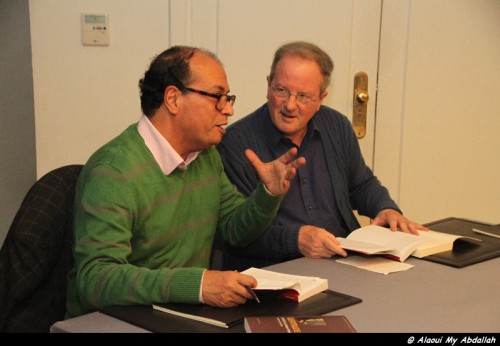
Roger Allen and Hassan Najmi conduct a joint reading of Gertrude.

Roger Allen and Hassan Najmi conduct a joint reading of Gertrude.

For our dinner Muhammad had arranged for us to visit another of Marrakesh’s most famous restaurants, Dar Moha, where we were treated to another virtuoso display of Moroccan cuisine.

DAY 13

And so from Marrakesh to Casablanca. This took us up the recently completed autoroute and into Morocco’s largest and most populous city–certainly modern in every way, but also industrial and noisy. While it may be celebrated as a result of the famous movie to which it gives its name, the present-day reality is far different (in fact, the movie itself is far more based on Tangier than on Casablanca).

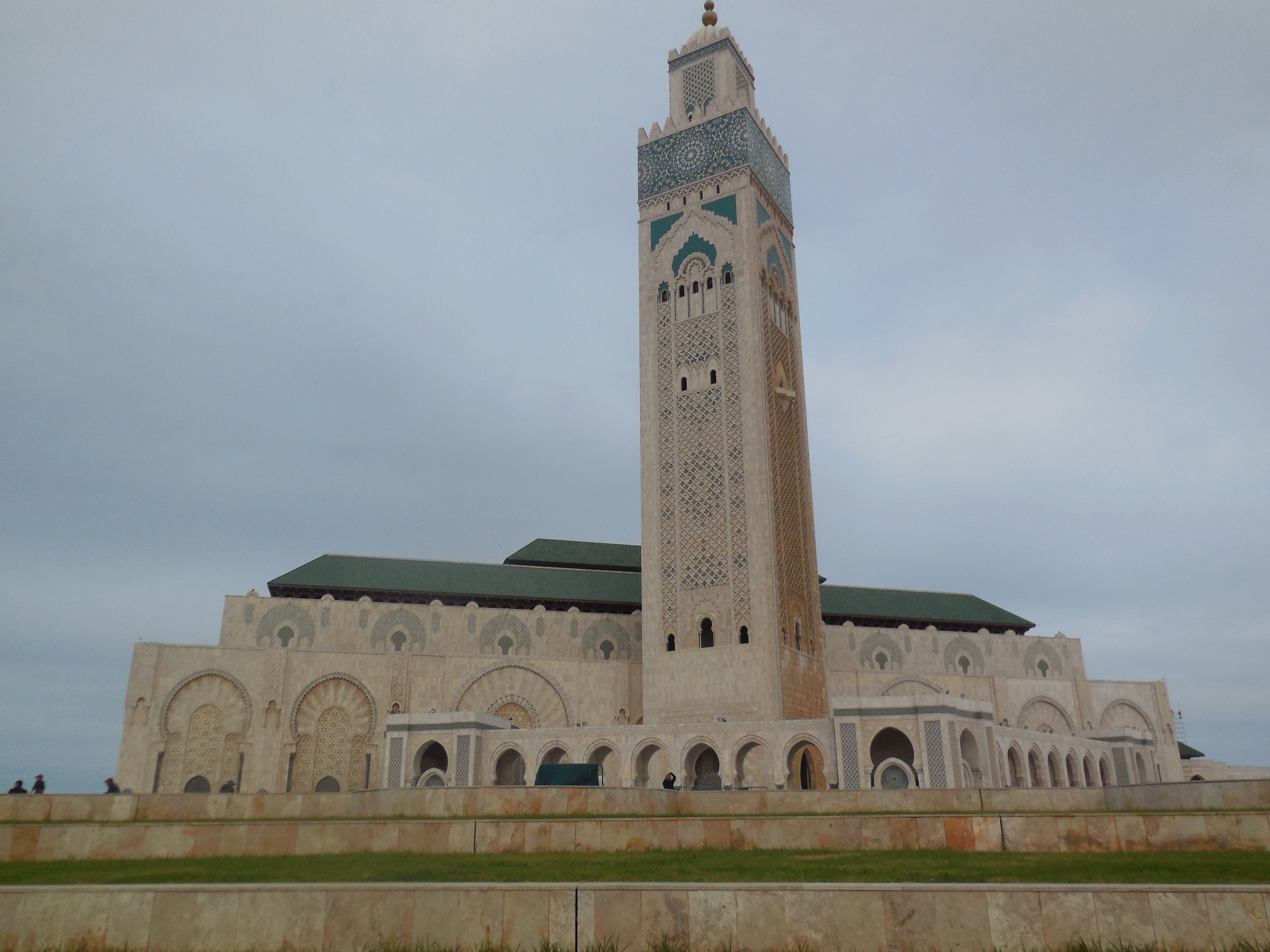
We headed first for the seaside, and had lunch at a restaurant overlooking the Atlantic Ocean. We then proceeded to the Hassan II Mosque, now the most famous and often visited site in the city, where we had been scheduled for a 2 p.m. visit. Let’s just say that opinions on this building and its esthetic pretensions will vary, but it certainly leaves an impression. The bus then took us to the so-called Habus Quarter, which the French constructed in an attempt to replicate the styles of pre-modern Morocco. Finally we made our way to the Kenzi Tower Hotel, a large building in the city center.
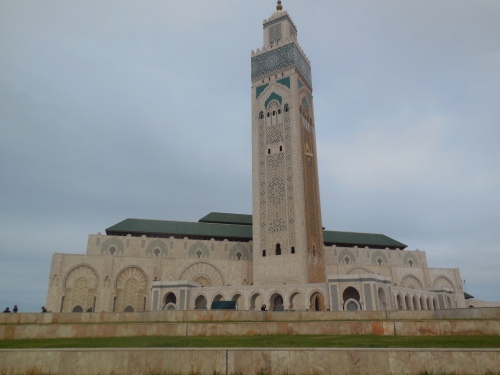
The Hassan II Mosque in Casablanca

The Hassan II Mosque in Casablanca

Our final dinner was held (on Thanksgiving Day!) in the appropriately named Rick’s Cafe.  Following caesar salad and a fish plate, we were offered a delicious cheesecake with fruits.  I took this occasion to express our group’s profound thanks to Muhammad, our guide and organizer.  This meal was just as wonderful as so many others that we had enjoyed during our visit.

DAY 14

We left the hotel for the airport at 8:30.  Since our plane did not take off until 12:30, I wondered at the length of time involved, but clearly Muhammad knew what was coming. While he was as helpful as he could possibly be before leaving us to our own devices, our experience at Casablanca Airport was probably the most negative aspect of our entire trip, but there was almost nothing that anyone could have done about it.  The level of security at this airport is taken to truly absurd levels: our baggage was scanned in order to get into the airport; every Moroccan traveler, it seemed, had an overweight bag that had to be opened and partially emptied; regular attempts at queue-barging were pre-empted in Arabic by yours truly; and there was a further security station in order to get into the passport-control. And…some 8 hours later we landed on time at Kennedy Airport and went our separate ways….

**************************

This was a truly wonderful trip; it was well organized, and it is difficult to find sufficient words to express our admiration for our Guide, Muhammad Dahouac, who is not only knowledgeable about Morocco and its history but also considerate and efficient. He was aided throughout the trip by two other wonderful Moroccans, our driver, Hasan, and his assistant, also called Hasan.

Beyond that, I have to say that the members of the group also contributed in a major way to the success of this tour. Many of them had already traveled widely, and everyone blended together and shared experiences in a way that made for some great conversations and a great deal of good humor.  Thus does the world go round….

And now I’m not “Neilie Dunn,” but fully done (and only those who were on the trip will know what that’s all about).

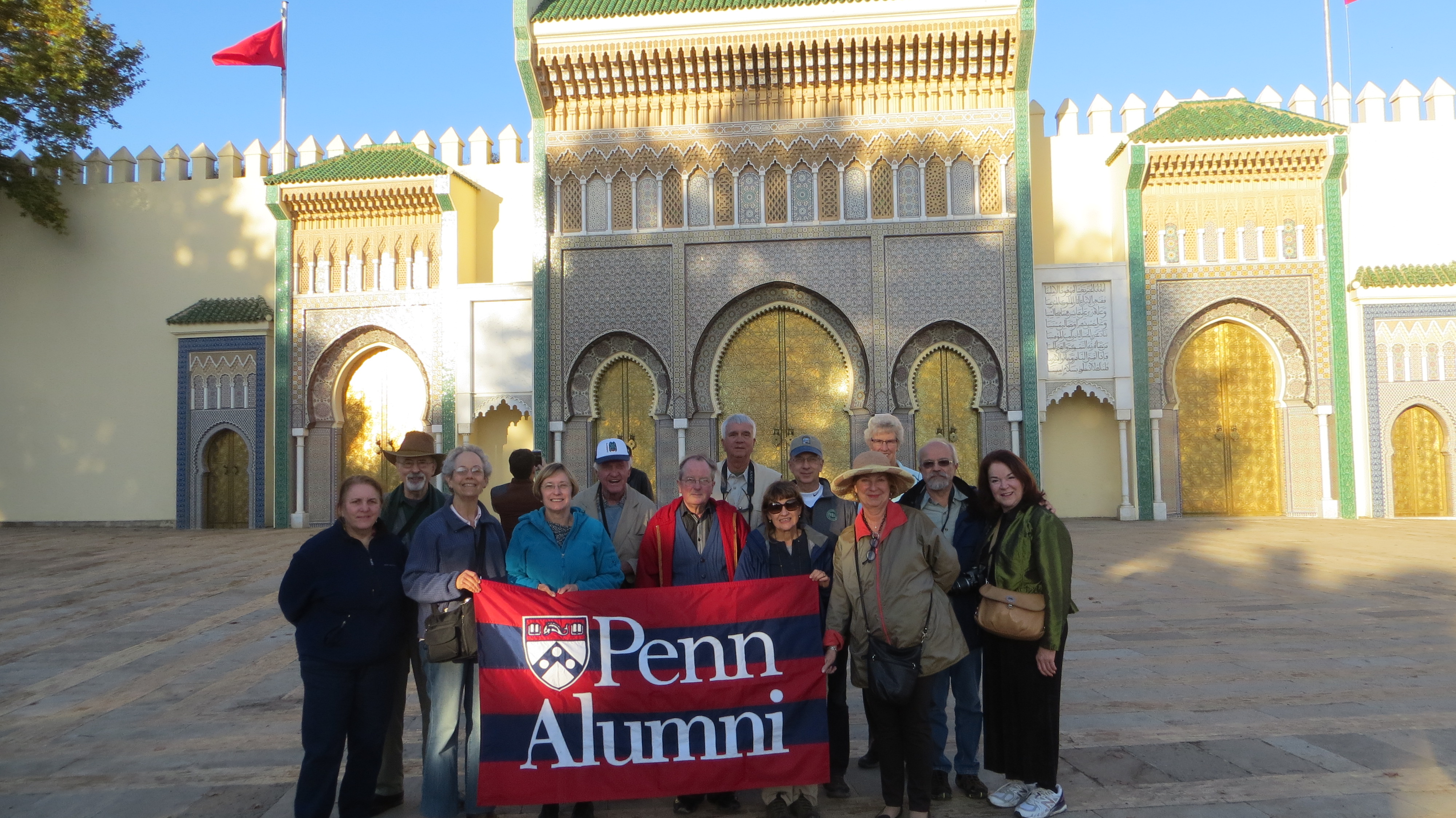
A final group shot at the Royal Palace in Fez. Photo from Susan Croll, CW’68, G’94 and Paul Monasevitch.

A final group shot at the Royal Palace in Fez. Photo from Susan Croll, CW’68, G’94 and Paul Monasevitch.

[If this blog inspired you to travel with Penn Alumni Travel, check out our 2014 schedule here.]

1 Comment

Filed under Faculty perspective, Penn Alumni Travel, Travel