Category Archives: Penn Alumni Travel

Penn Alumni Travel: Travel Webinars

Author: Emilie C. K. LaRosa

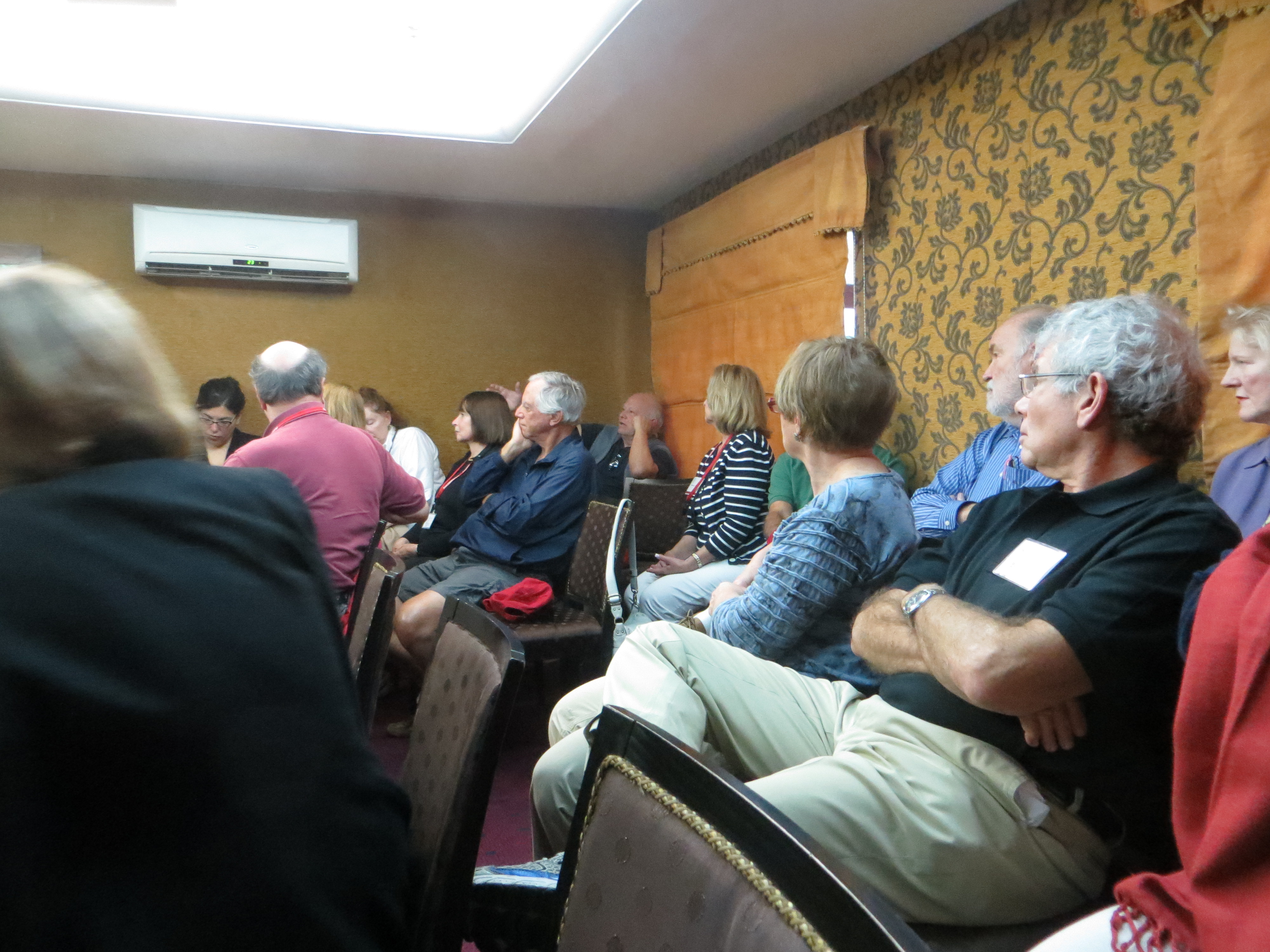
Today, Penn Alumni Travel is hosting a free travel webinar on the British archipelago and Viking culture with Professor David Wallace of Penn’s English department The webinar begins at 12 p.m. EDT, and there’s still time to register- just click here.

Professor Wallace will be discussing some of the highlights of Viking exploration as well as the legacy of Viking culture in today’s society.

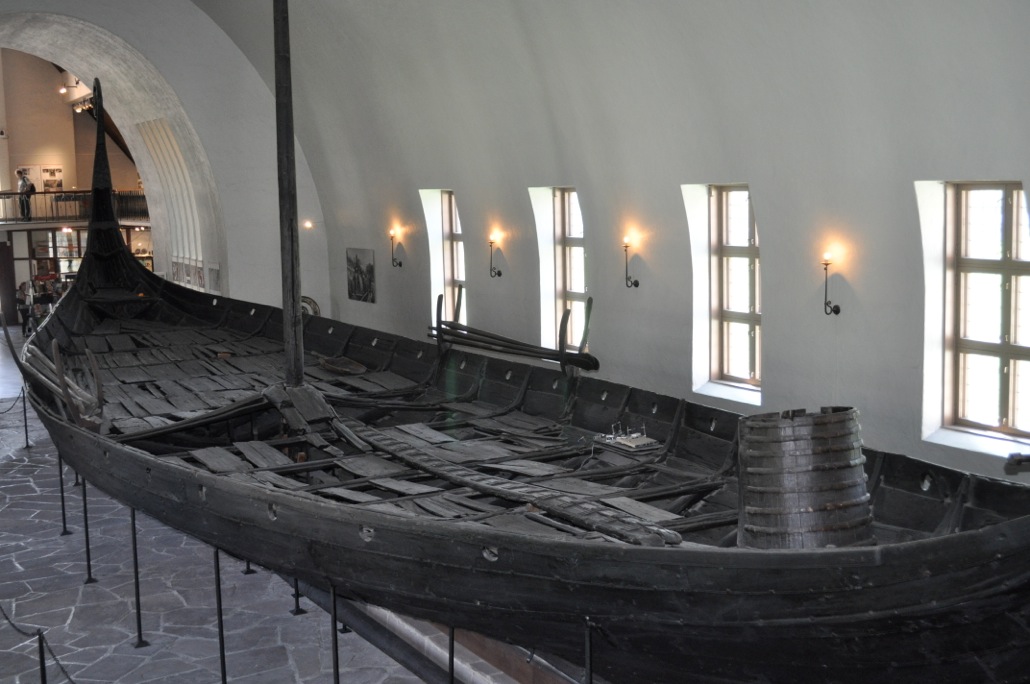
An example of Viking navigation.

An example of Viking navigation.

Our education and travel webinars are fantastic forums for interesting mini-lectures, lively discussion, and the chance to get your questions answered about the topic at hand. We encourage all our participants to come ready to engage with our Penn professor and other travel experts who join us on these hour-long webinars.

We have two additional travel webinars coming up this spring and summer: The Great Journey Through Europe with Professor Andre Dombrowski (May 15 at 12 p.m. EDT) and Turkey with Professor C. Brian Rose (August 27 at 12 p.m. EDT). Both webinars will explore the history and culture of the specified region and will follow with travel tips and an opportunity for Q & A. You can register for all these free webinars here.

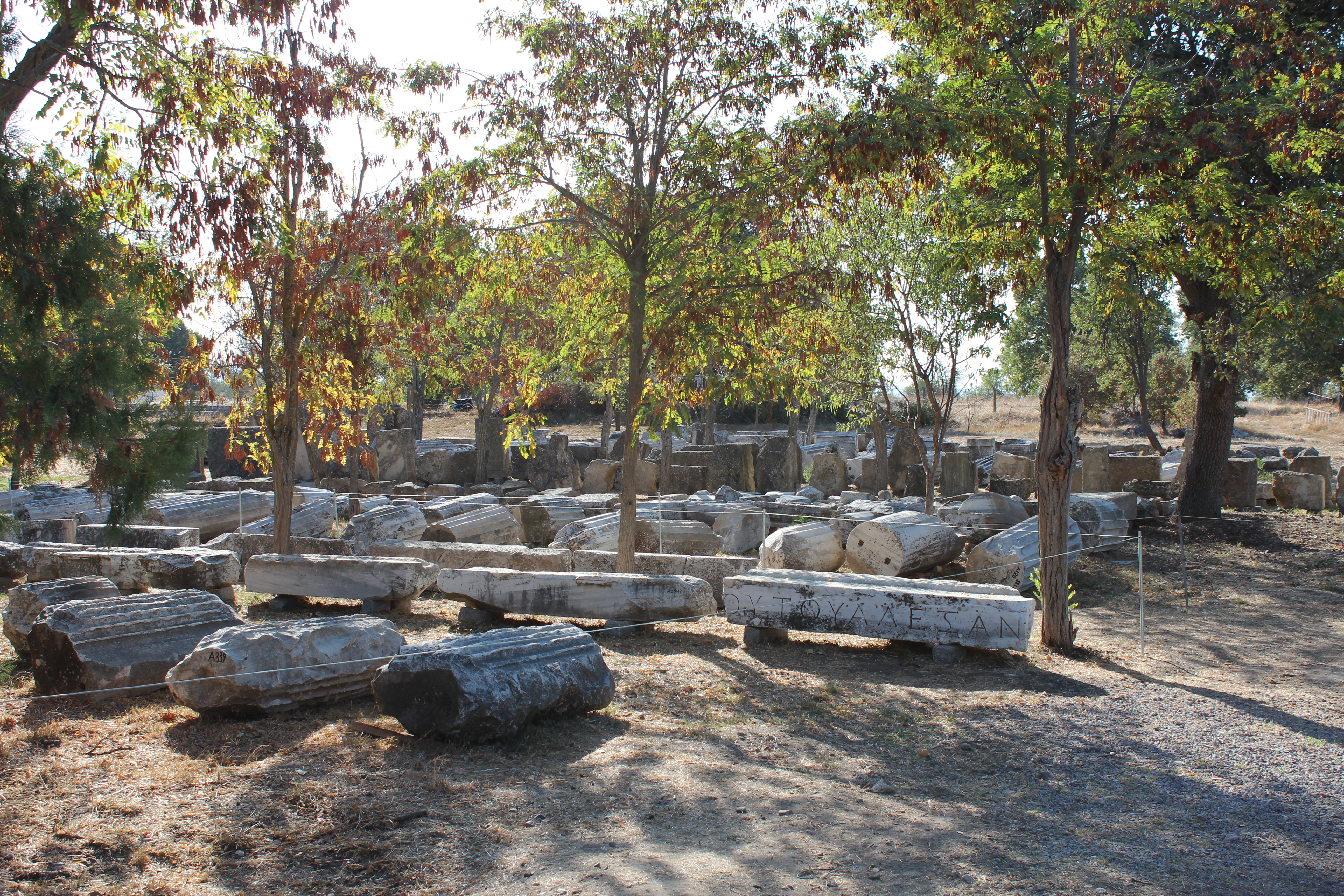
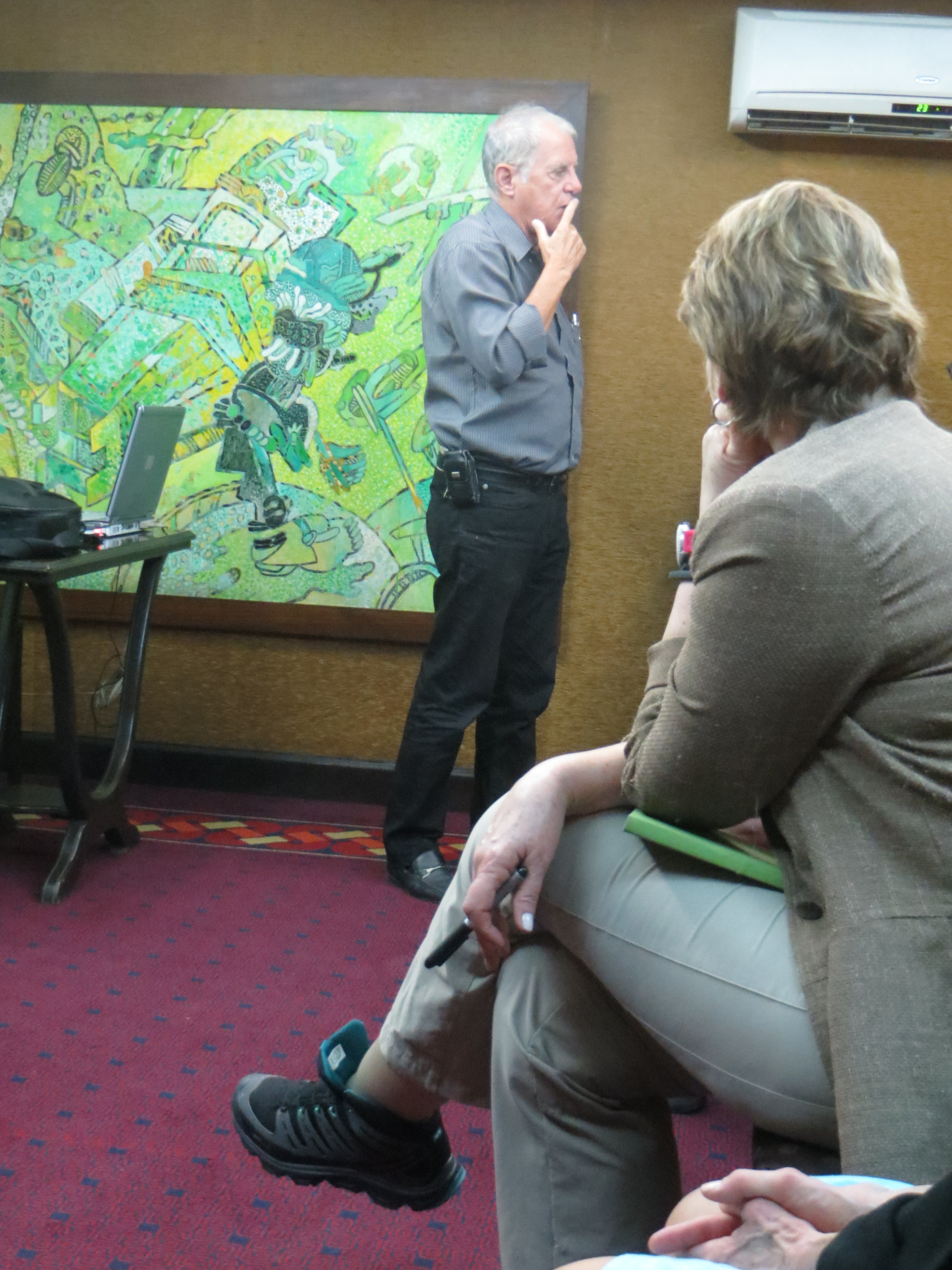
The excavation at Troy. Professor Rose spent time digging at this location.

The excavation at Troy. Professor Rose spent time digging at this location.

If you’re itching for more than just an online travel discussion, perhaps you’re ready to join a Penn Alumni Travel trip where you can visit these sites in person while having access to a Penn faculty host’s expertise. Click here to view all our 2014 tours. And check out our site tomorrow when we reveal our 2015 schedule!

2 Comments

Filed under Emilie, Penn Alumni Travel, Travel

Penn Alumni Travel Cuba 2: Part 2

Cuba 2 074

Author: Alyssa D’Alconzo, GED ’04, GRD ’11

As Faculty Host and Penn Professor Gwendolyn Dubois Shaw’s recent post suggested, Cuba was an economically, politically, and culturally fascinating country to visit. There was something new to see, learn, and experience around every corner, and we certainly made the most of our time in Havana. What follows is a brief overview of our day-by-day itinerary. The memories, feelings, and lessons we took away are difficult to articulate in a blog post, so I encourage you to experience it yourself on the Penn Alumni Travel 2015 Cuba departure!

Saturday, January 18: MIAMI/HAVANA

We had a fantastic group of Penn Alumni and friends on our trip.

Cuba 2 101

After convening in Miami, we flew to Havana and connected with the rest of the support team for the week.
Cuba 2 629

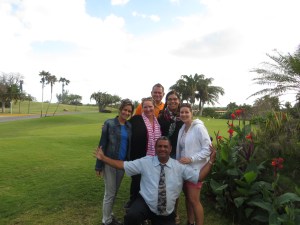
Front: Bus Driver Jaoquin; Center: (left to right) Tour Guide Yuni, Tour Director Ute, Professor Gwendolyn, Staff Host – me!; Back: Translator John

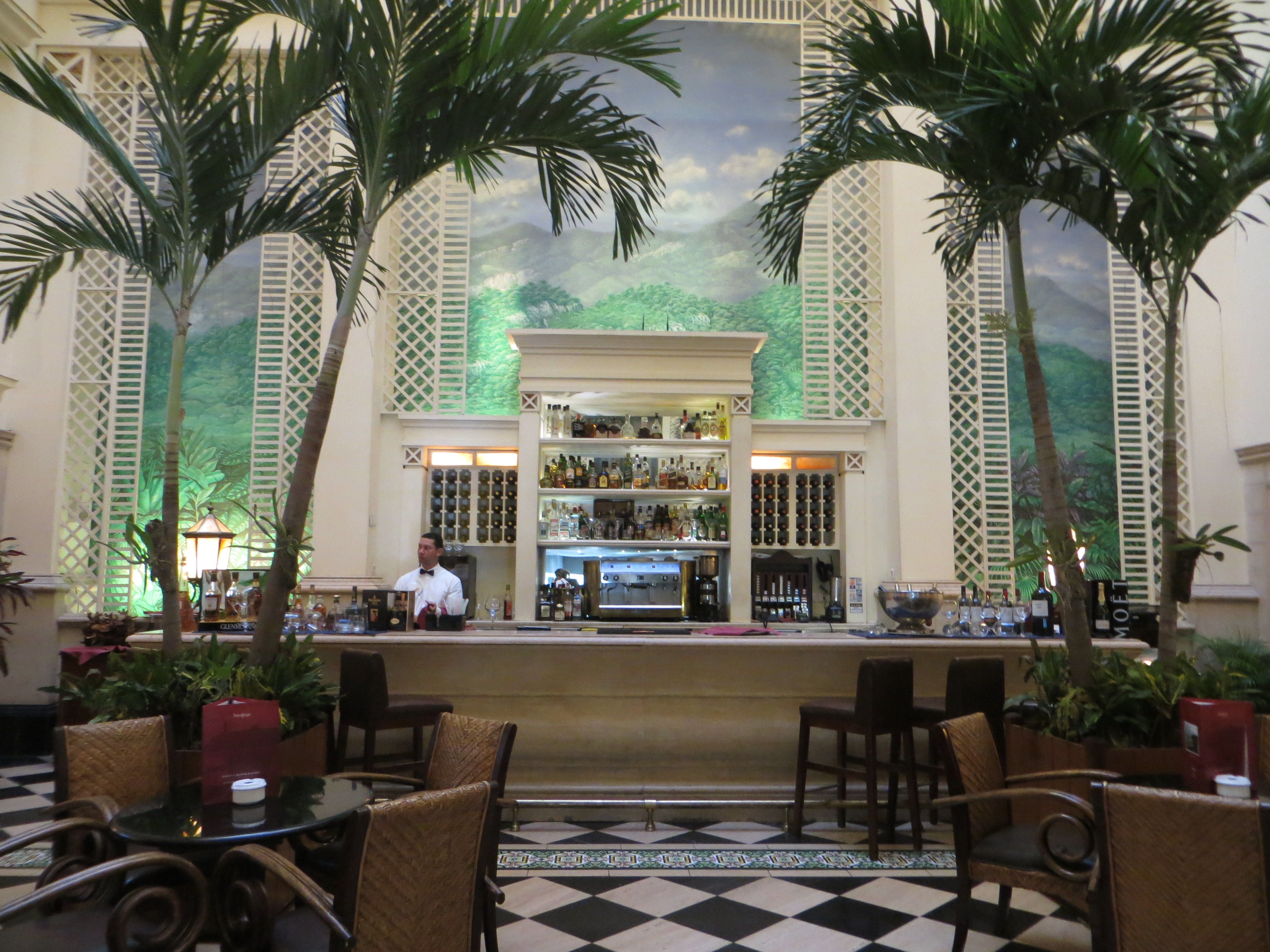
We checked in to the Saratoga Hotel
Cuba 2 308

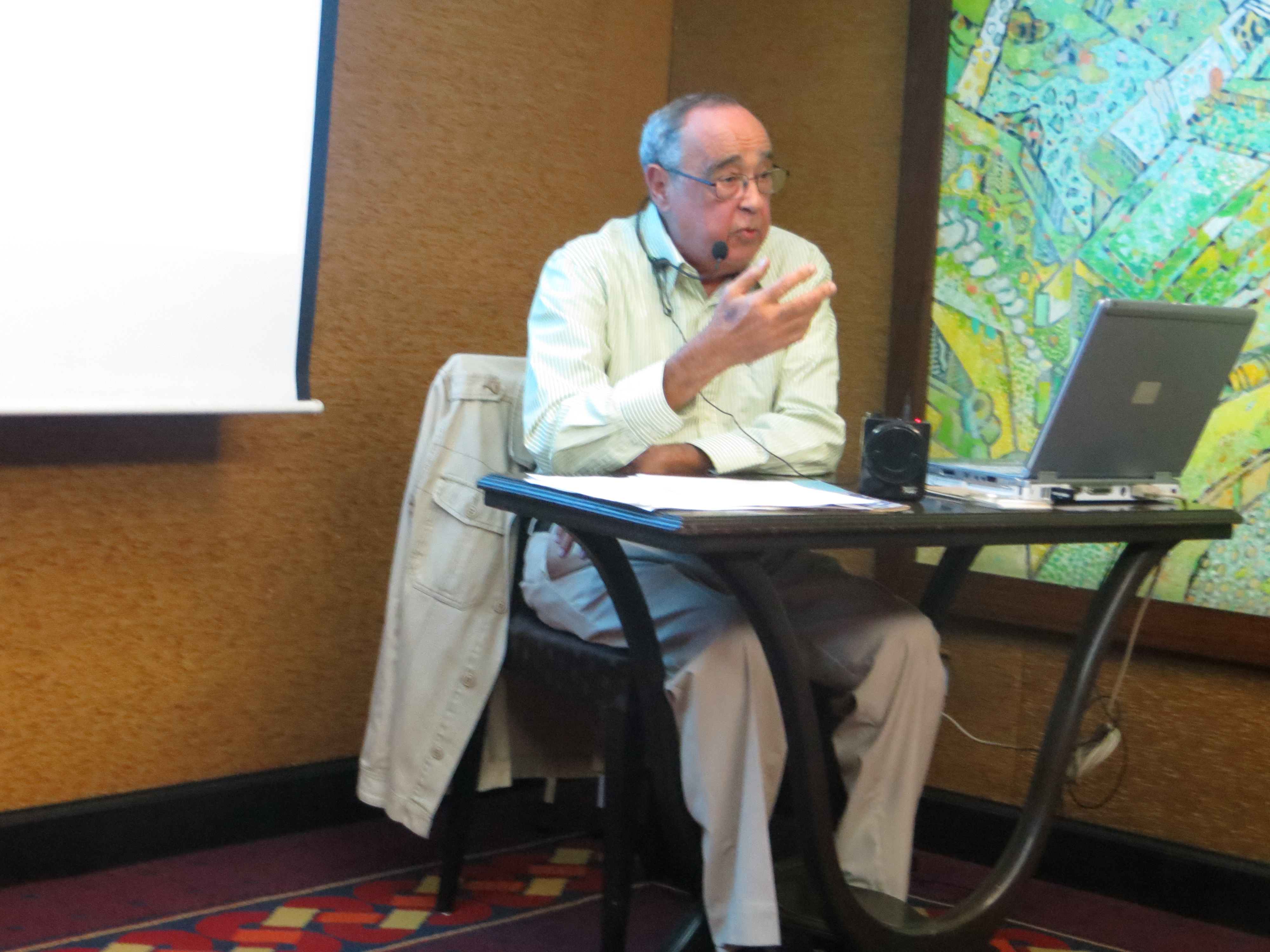
for lunch and began the first in our series of lectures. Pepe, the former deputy minister of foreign affairs, gave us an introductory lecture on Cuba’s current economic and political reality and joined us afterwards for dinner at El Aljibe, a State-run restaurant.
Cuba 2 016Cuba 2 024

Sunday, January 19: HAVANA

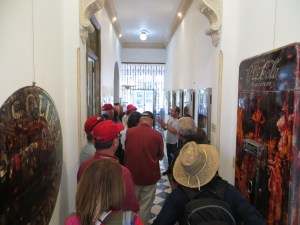
Our first full day in Havana started with a lecture from architectural historian Miguel Coyula

Cuba 2 026

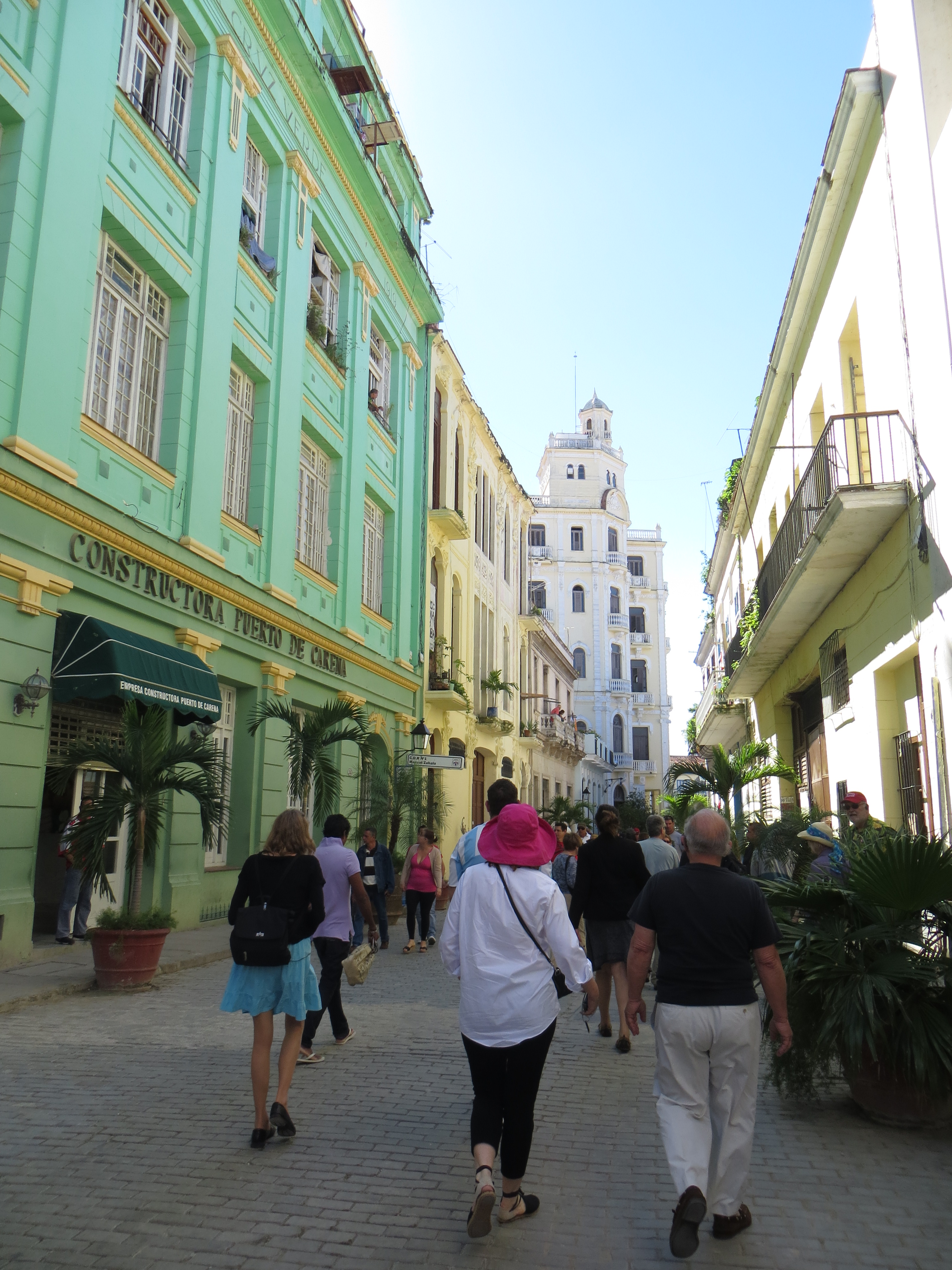
and continued with a walking tour of Old Havana.
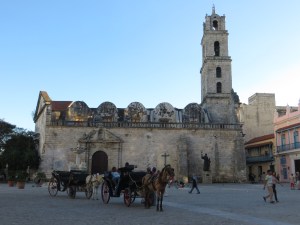
Cuba 2 319

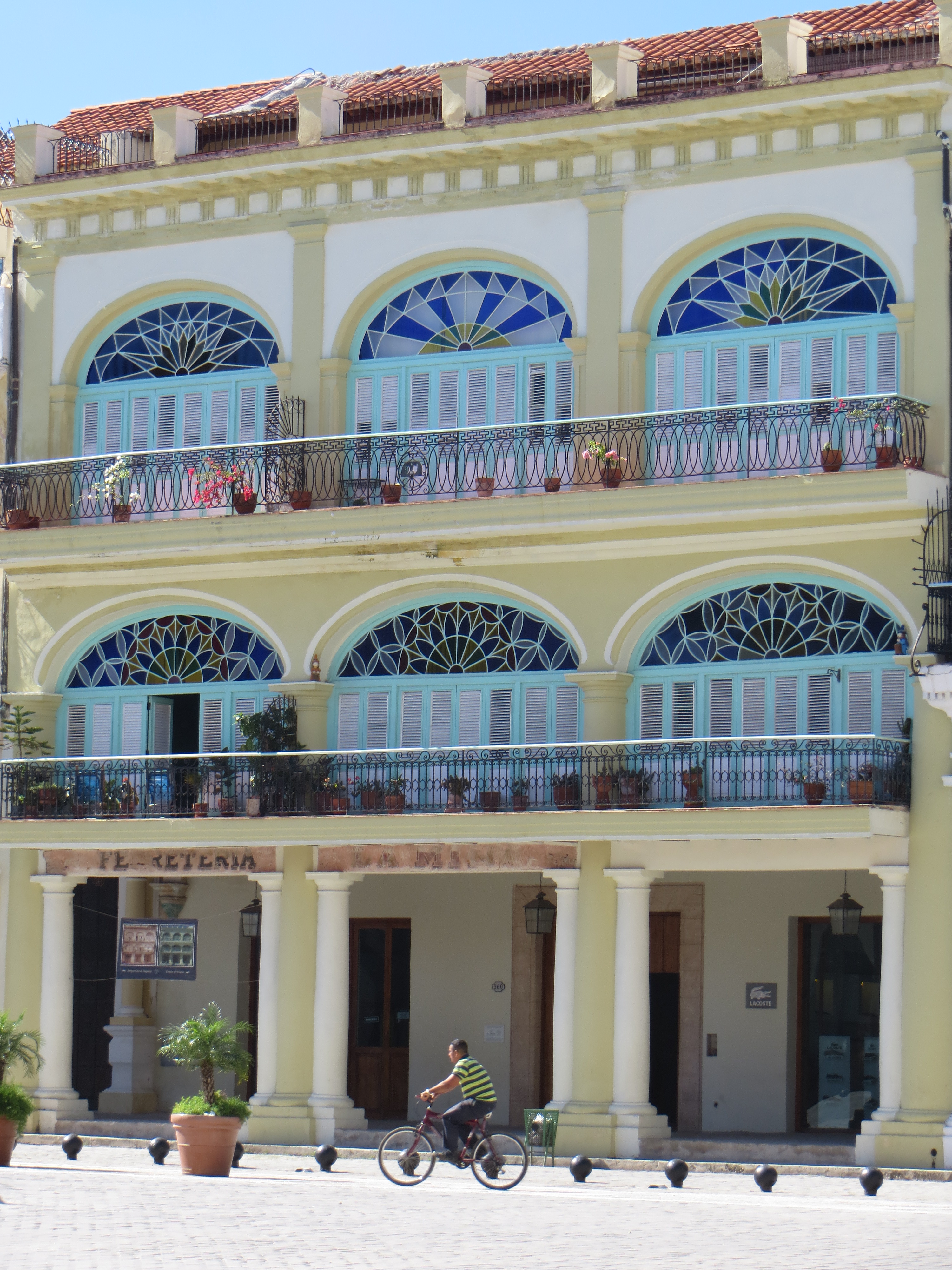
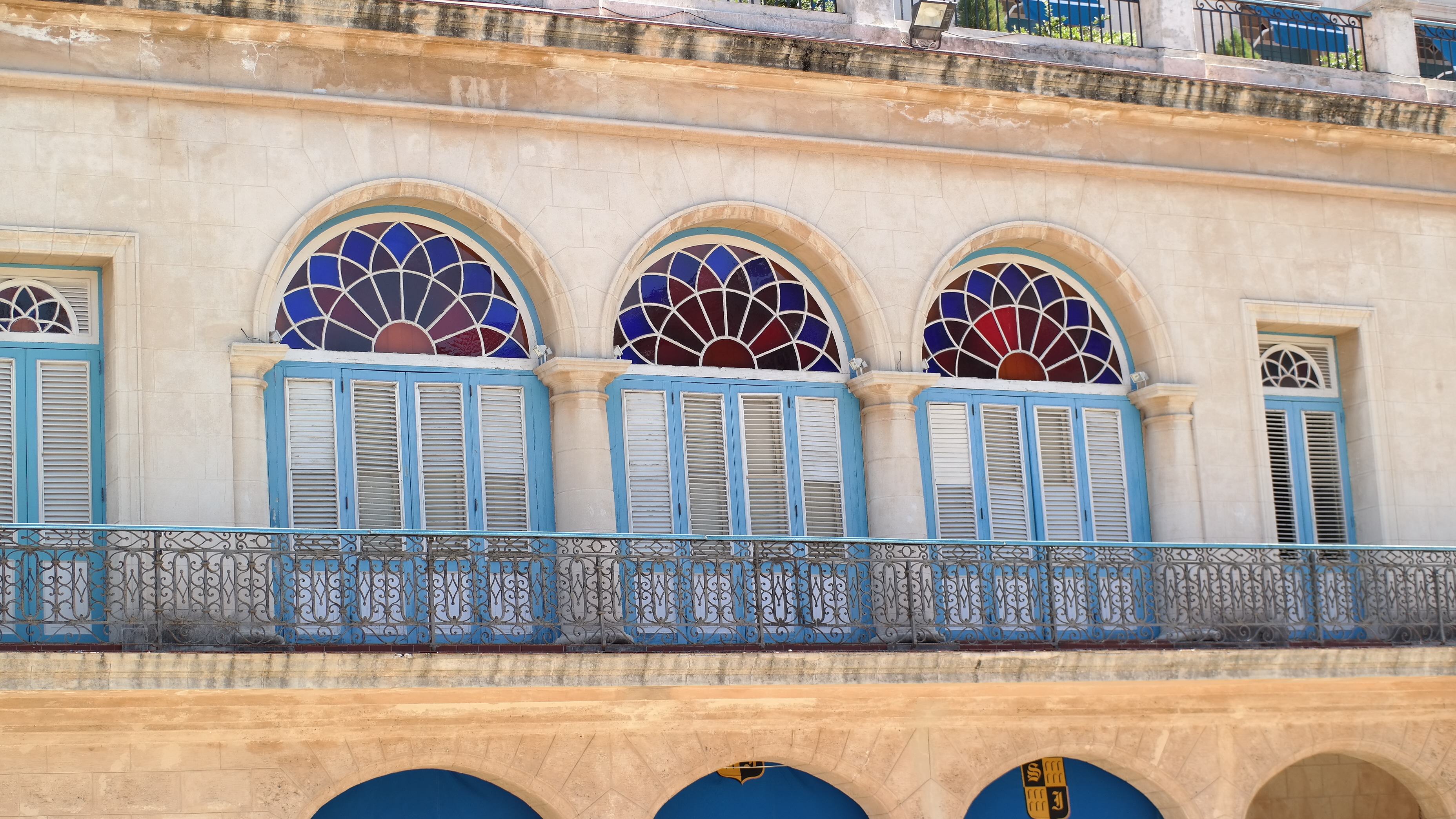
It was during Miguel’s talk that we learned about “fan lights”, arches filled with stained glass, which we saw all over the city.
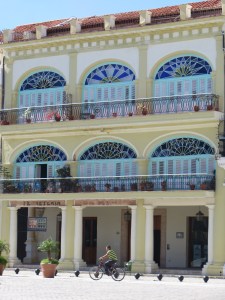
Cuba 2 068

After learning why Miguel considers Havana a little piece of Europe in the Caribbean,

Cuba 2 061

our tour concluded with lunch near the cathedral. Moneda Cubana was our first visit to a paladar, a restaurant in a private home that operates with the special permission of the Cuban government.

Cuba 2 106

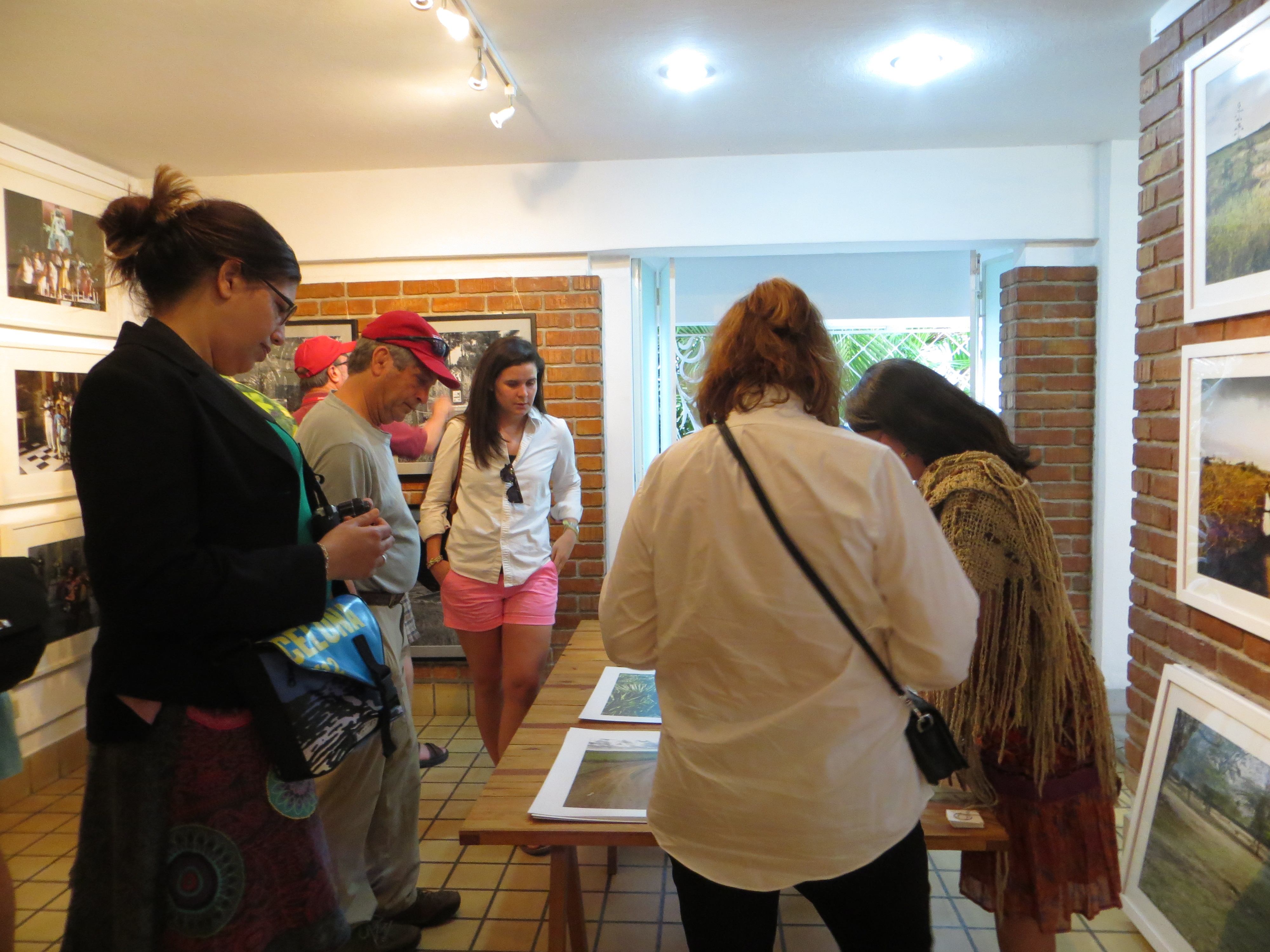
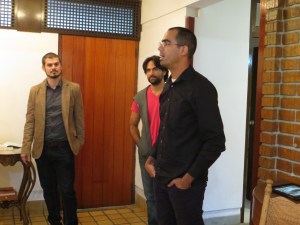
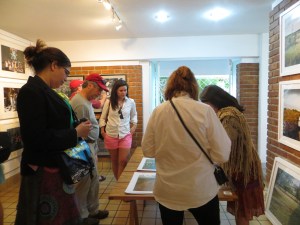
In the afternoon we visited the homes and studios of some of Havana’s leading artists. The arts have long presented Cubans with an opportunity to cautiously express their views on society, and we had fascinating conversations with Maria, Frank, Adrian, Alex,
Cuba 2 123Cuba 2 125

and Kdir.

Cuba 2 134

In the evening, most of our group took the opportunity to listen to and dance with the famous Buena Vista Social Club!

Cuba 2 160

Monday, January 20: HAVANA                                              

Our morning lecture on this day was by Maria Antonia Fernandez Mtinez who discussed rural and urban agriculture in Cuba.

We continued to the small, hilltop village of San Francisco de Paula to see Finca La Vigía, the house where author Ernest Hemingway lived for 20 years
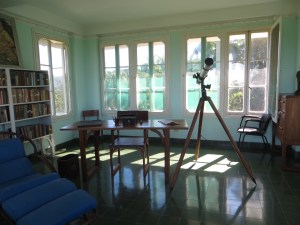
Cuba 2 195

and saw, on the grounds, his fishing boat Pilar.

Cuba 2 227

On our way back to Havana, we stopped for a brief visit to the village of Cojímar, the setting for The Old Man and the Sea.

Cuba 2 258

We stopped on the drive back to Havana for lunch at a paladar, Doña Carmela, before returning to the hotel.

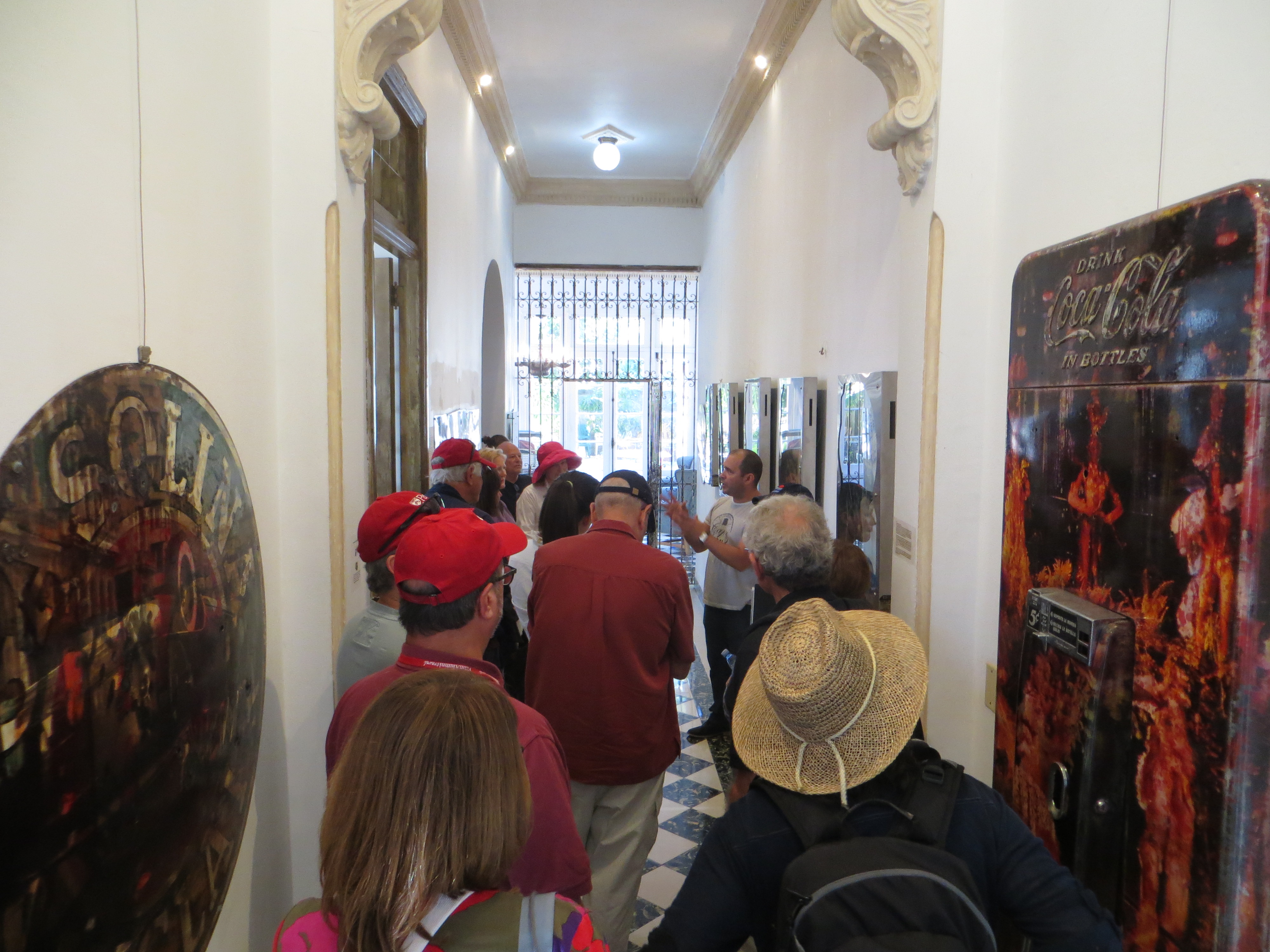
Rounding out a busy day was a private, after-hours tour of the Ceramics Museum,

Cuba 2 351

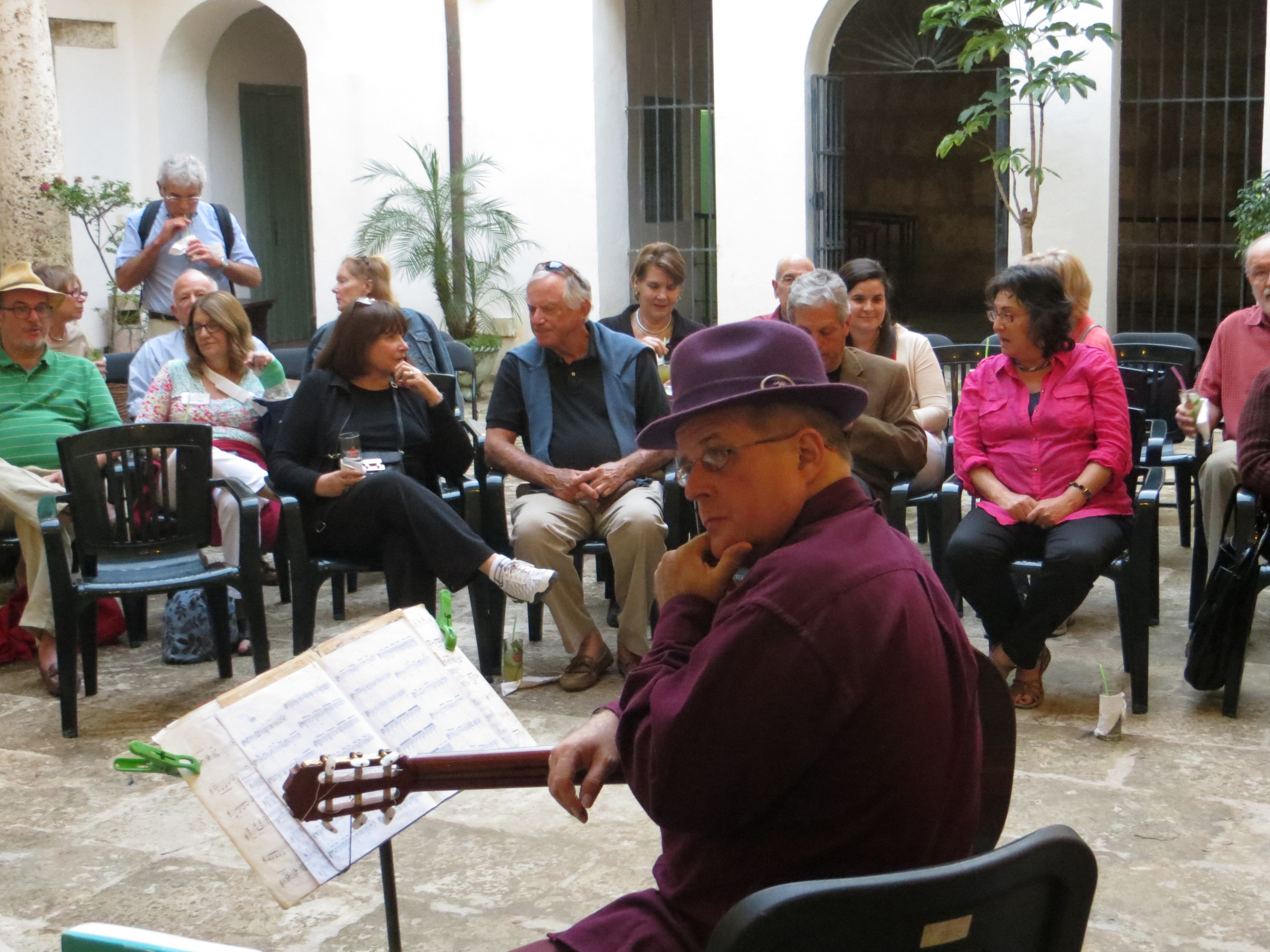
an incredible private classical guitar concert by Luis Manuel Molina, and dinner at a nearby restaurant, San Felipe.
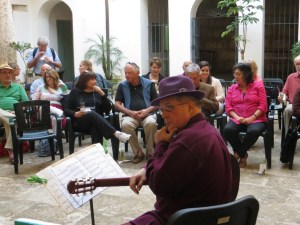
Cuba 2 359

Tuesday, January 21: HAVANA

Our wonderful faculty host Gwendolyn DuBois Shaw was our lecturer today!
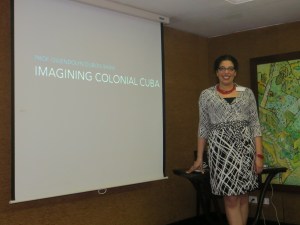
Cuba 2 446

After learning about art depicting Colonial Cuba, we journeyed to the Museum of the Revolution, which vividly describes Cuba’s history from Colonial times through the winning of independence to the revolution.

Cuba 2 475

With a bit of free time afterwards, some guests paid a visit to the Hotel Nacional, a historic hotel once frequented by famous actors, artists, athletes, writers, and mobsters.

Cuba 2 504

Later that evening we visited the Ludwig Foundation for the Arts for a presentation on Cuban Art.
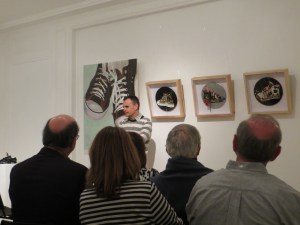
Cuba 2 512

The Foundation President hosted a cocktail reception and homemade buffet dinner on the penthouse terrace, and we dined with young Cuban artists.

Wednesday, January 22: HAVANA / MATANZAS / VARADERO

Time to hit the road to see more of the country! Departing for Matanzas, we stopped en route at the Bacunayagua Bridge, the highest in Cuba, with beautiful, panoramic views of the nearby valley.

Cuba 2 522

Upon arrival in Matanzas, we toured the Castle of San Severino, which included rooms exhibiting Santeria (an Afro-Cuban religious tradition) and slavery as part of UNESCO’s project “The Route of the Slave.”

Cuba 2 548

We continued to the homes/studios of two artists, Daylene, a photographer, and Borodino, a painter,

Cuba 2 593

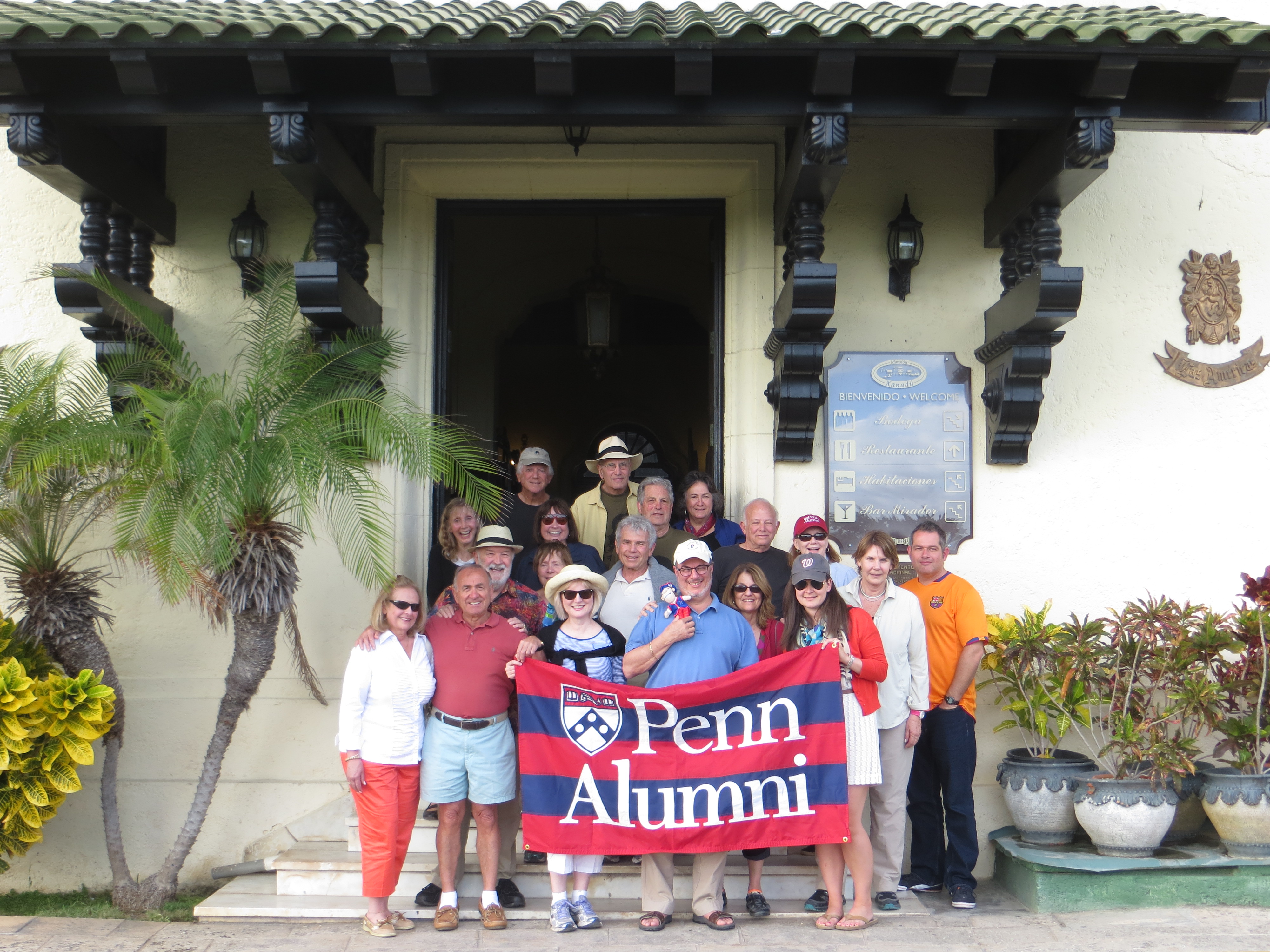
before enjoying lunch at the beautifully restored Xanadu, the former Dupont Mansion built in the 1930s.
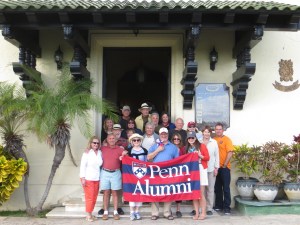
Cuba 2 621

Finally, we arrived in Varadero to rest for a night before more sightseeing in Matanzas.

Cuba 2 685

Thursday, January 23: VARADERO / MATANZAS / HAVANA

Making our way back to Havana, we stopped at the Pharmacy Museum in Matanzas
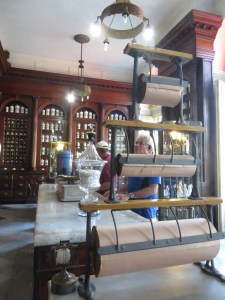
Cuba 2 767

and attended a private, a capella choir concert.

Cuba 2 738

A visit to Ediciones Vigia, where handmade books are created, followed

Cuba 2 815

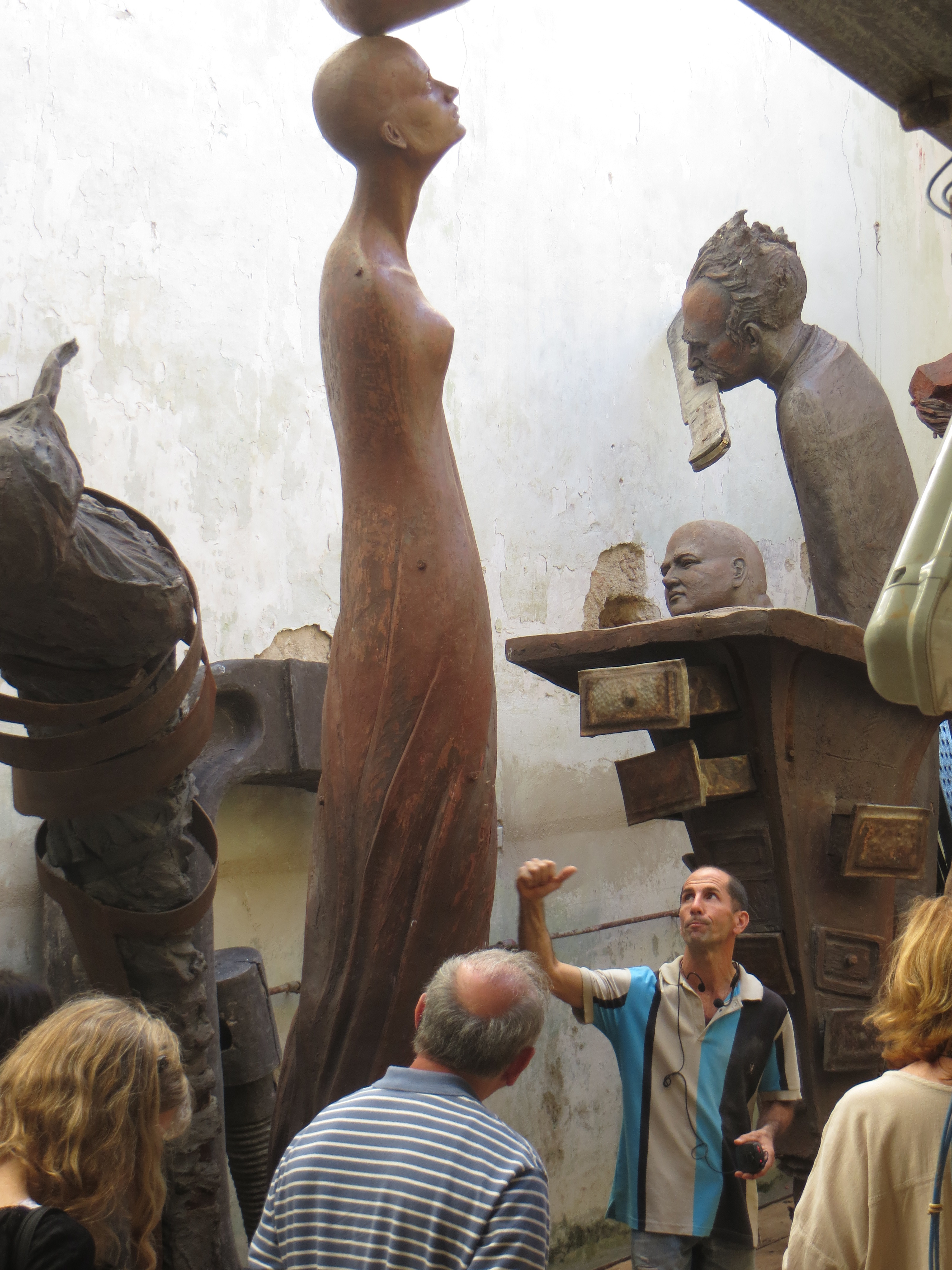
and preceded a stop at the studio of local sculptor Osmany Betencourt aka Lolo.
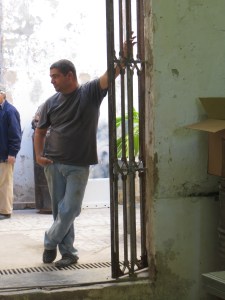
Cuba 2 830 Cuba 2 833 Cuba 2 836

Gwendolyn DuBois Shaw led a talk about the Havana Bienal on the bus ride back to Havana.

Despite being tired from traveling, some passengers visited the Tropicana at night!

Friday, January 24: HAVANA

Our last day in Havana came quickly but also brought one of the highlights of our trip — attending an informal rehearsal of the Contemporary Dance Company of Cuba at the Teatro Nacional.
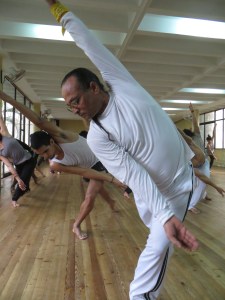
Cuba 2 893

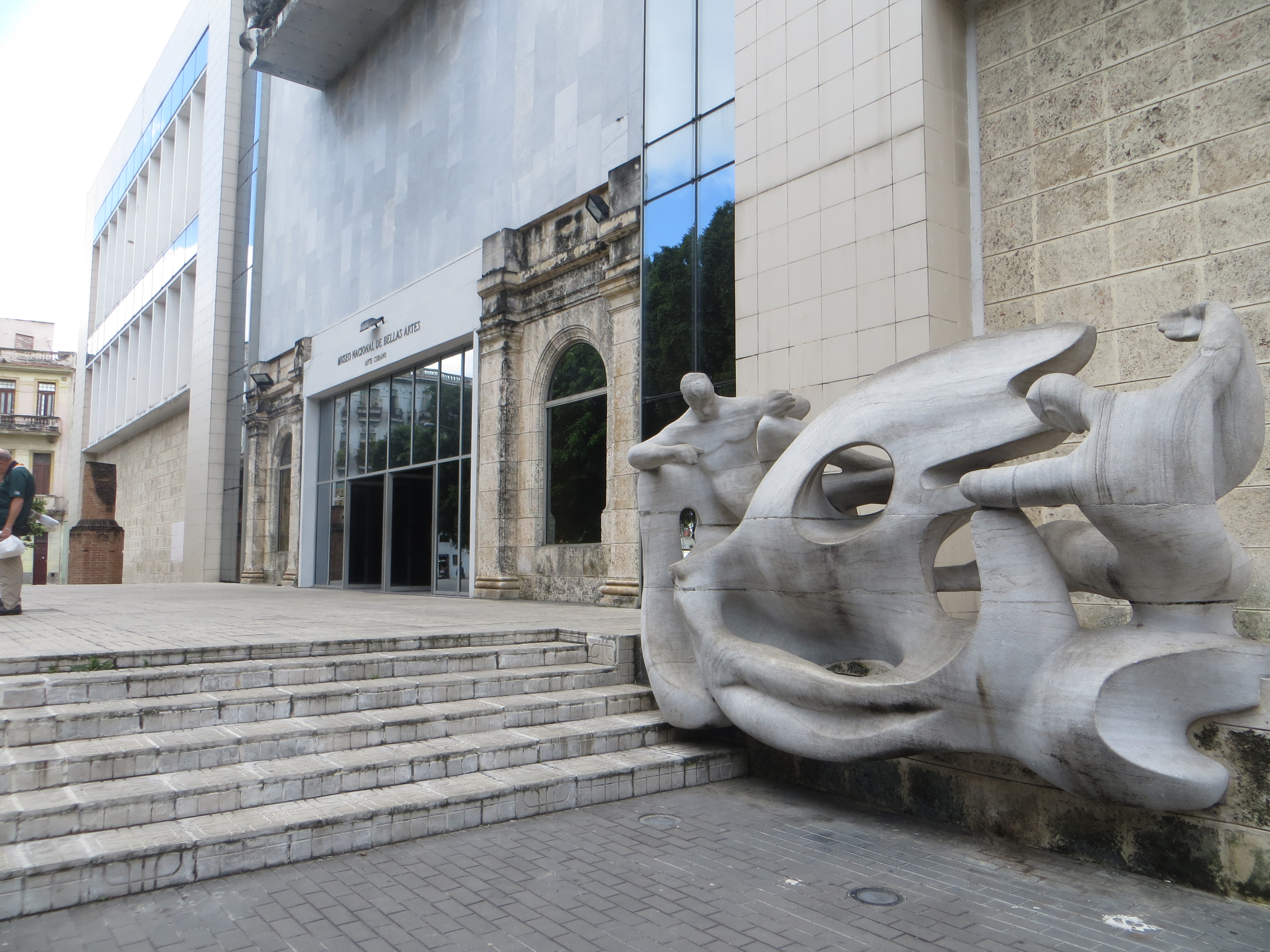
We spent the remainder of the morning at the National Museum of Fine Arts with a curatorial tour focusing on its Cuban art collection.
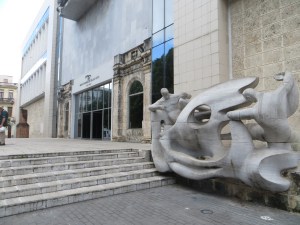
Cuba 2 931

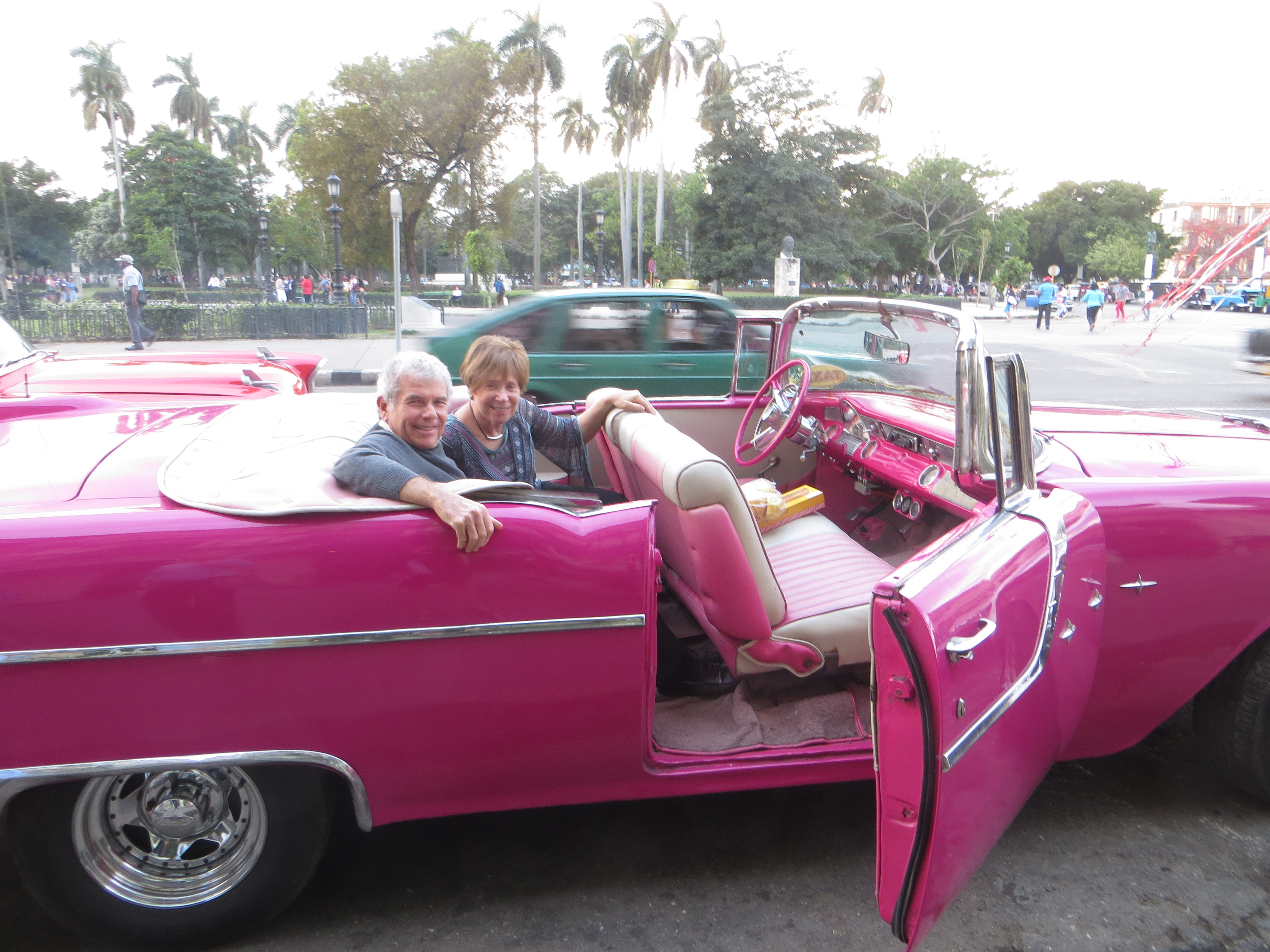
In the late afternoon, we drove by classic car
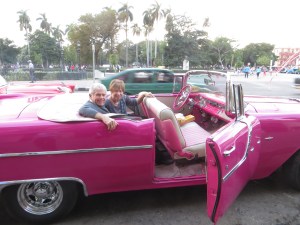
Cuba 2 938

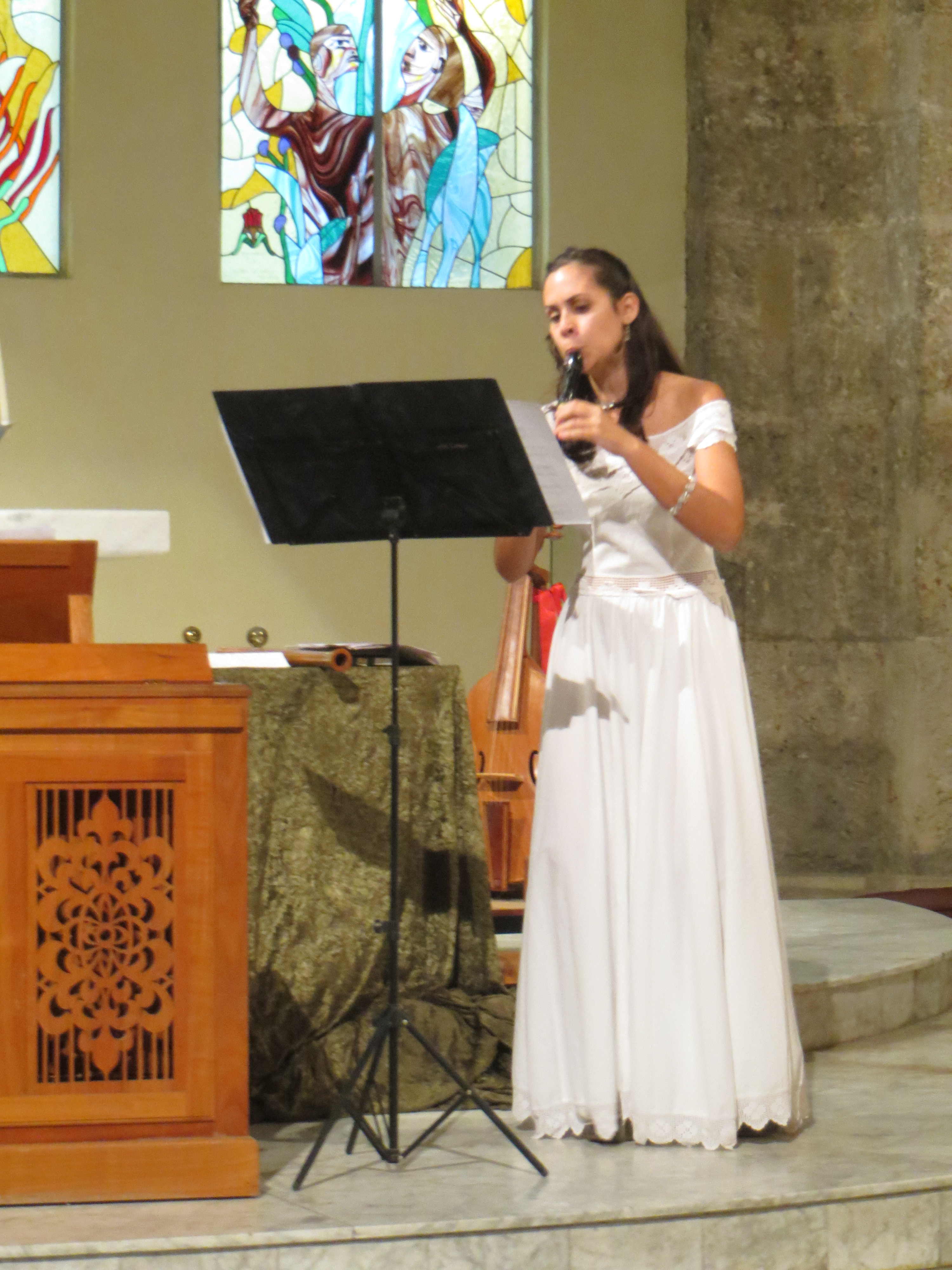
to attend a private concert by Ars Longa
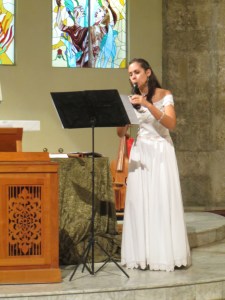
Cuba 2 965

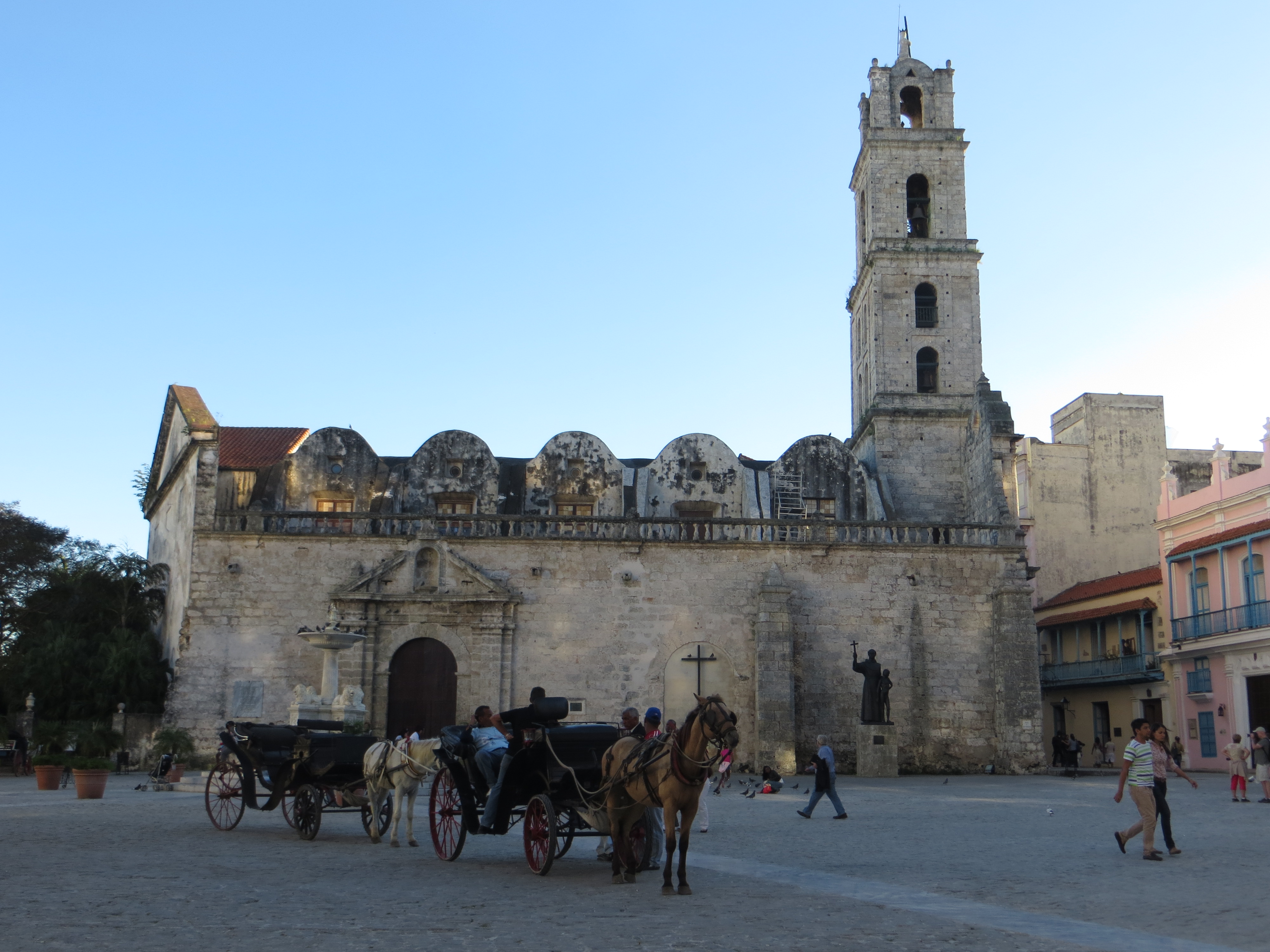
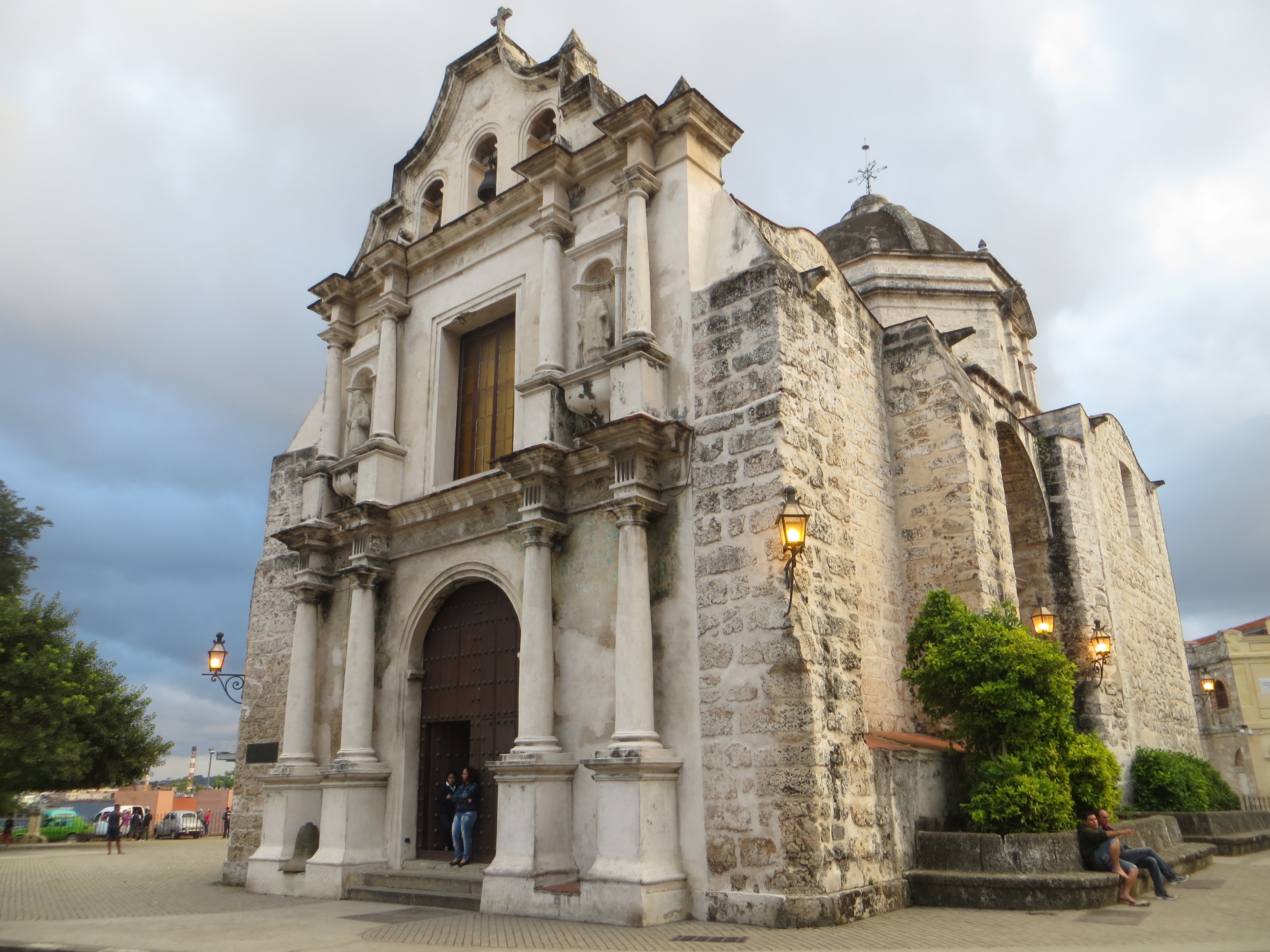
at the Church of San Francisco de Paula
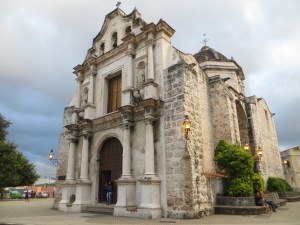
Cuba 2 955

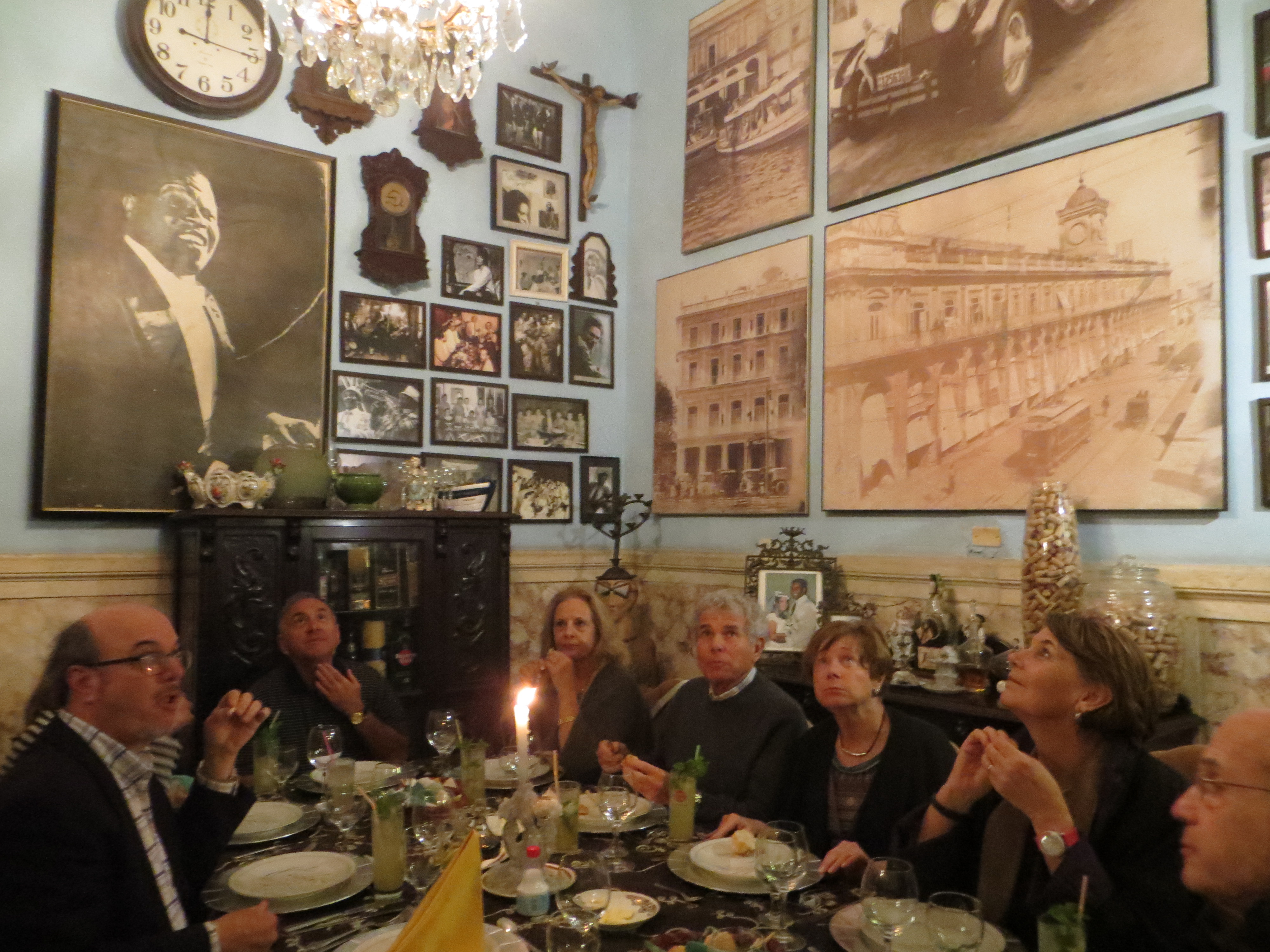
before our farewell dinner at another popular paladar, San Cristobal.

Cuba 2 966

Saturday, January 25: HAVANA / MIAMI

We bade farewell to our fabulous tour guide, tour director, architects, artists, museum directors, students, and each other and departed for home.

Our time in Cuba was spectacular! If you would like to experience it yourself, e-mail Emilie LaRosa (emiliek@upenn.edu) to be placed on the priority reservation list for our next departure, February 14-21, 2015 with Professor Sharon Ravitch.

Leave a comment

Filed under Alyssa D., Penn Alumni Travel, Travel

And The Winners Are…

Author: Janell Wiseley

The fourth annual Penn Alumni Travel photo contest has come to a close. The votes are in and the winners have been notified!

The contest was open to all participants who have taken a Penn Alumni Travel trip. Photos were judged on creativity and quality, as well as relevance to the specific category.  All photos were judged by Alumni Relations staff, Penn Alumni Travel faculty hosts, and our 2013 passengers.

You can view all photo contest submissions here.

Penn Alumni would like to congratulate the following winners

Grand Prize Winner &1st Place in the Culture Category: Women Dying Alpaca Wool, Sacred Valley, Peru by Barbara Holland, L’86

Grand Prize Winner &1st Place in the Culture Category: Women Dying Alpaca Wool, Sacred Valley, Peru by Barbara Holland, L’86

1st Place People Category: Two Gentlemen of Trinidad, Cuba by Barry Keller, C’60

1st Place People Category: Two Gentlemen of Trinidad, Cuba by Barry Keller, C’60

1st Place Places Category: Machu Picchu just before Close by Margaux Viola

1st Place Places Category: Machu Picchu just before Close by Margaux Viola

1st Place Nature Category: Zebras in Tanzania by Sydnee Alenier, Penn Spouse

1st Place Nature Category: Zebras in Tanzania by Sydnee Alenier, Penn Spouse

Leave a comment

Filed under Alumni Programming, Alumnni Education, Awards, Janell W., Penn Alumni Travel, Photos, Travel, Uncategorized

Penn Alumni Travel: Cuba 2

Author: Professor Gwendolyn DuBois Shaw, Department of Art History

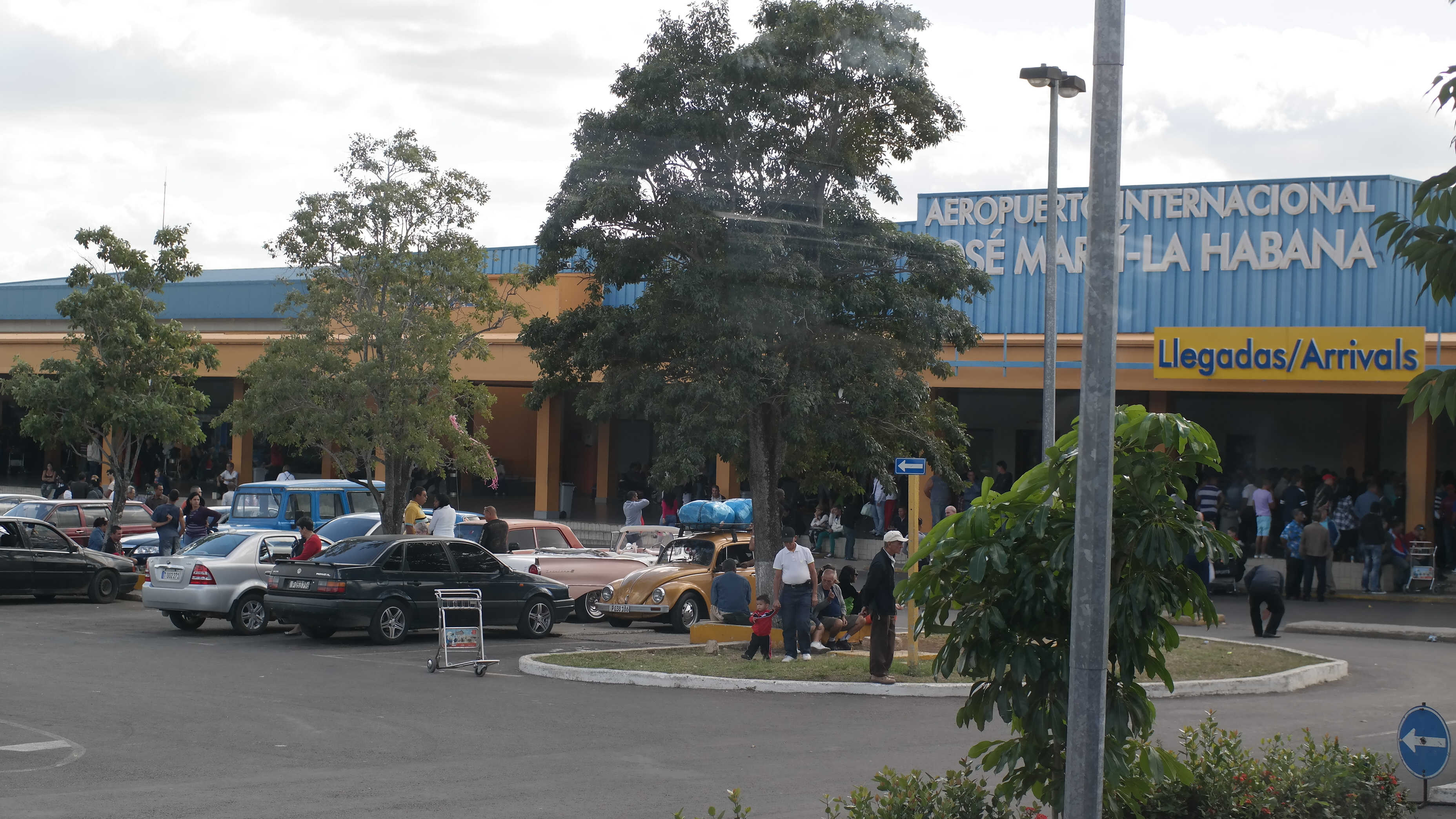
From the moment that our plane landed at José Marti Airport in Havana I knew that this Penn Alumni Travel trip would be very different from ones that I had accompanied previously to places such as France, Spain, Argentina, and Chile.  After having successfully passed through immigration and while waiting for our luggage, my husband and I were waylaid as a young women in an official brown uniform began to interview him about his reasons for traveling to Cuba.  She wanted to know what he planned to do while there and what things he had brought with him.  The questions were not particularly invasive, but they did seem to be endless.  As he submitted to this plodding interrogation in the middle of the baggage area, we waited and waited for our suitcases to come off the carousel.

The José Marti Airport in Havana

The José Marti Airport in Havana

After about 20 minutes, the airplane’s cargo began to slowly emerge from the behind the black rubber flaps of the handling area and onto conveyor.  Typical of many flights that I have taken to Latin America and the Caribbean, they included a large number of items that were swathed in the bright blue plastic wrap on offer at most international airports as cheap protection against both spillage and curious fingers.  In this case, rather than swaddling mostly soft-sided suitcases and duffels that are not easily locked, the plastic also covered all sorts of odd-shaped packages.   Some of these had funny protrusions that I soon began to recognize as canned food and other grocery items.  This piqued my interest and the novelty of it quickly distracted me from the banal questions with which the official was peppering my husband.  I began to look a little harder at the things that my fellow travelers were bringing into Cuba from Miami.

While we waited for our luggage to emerge, I saw several doors, a 60-inch television, countless boxes, and many enormous suitcases drop down on the conveyor. Most of the items that had once been wrapped tightly in the blue plastic had now been cut open so that the curiosity of the Cuban officials — or perhaps the United States officials back in Miami — could be satisfied that their contents were permissible.  As remarkable as this display of highly eclectic consumer activity was to me, it soon made sense when we arrived at our hotel in Central Havana and began to explore the immediate neighborhood.  There were only a few shops and the ones that we ventured into hardly had anything for sale on their shelves.

A shop in Havana

A shop in Havana

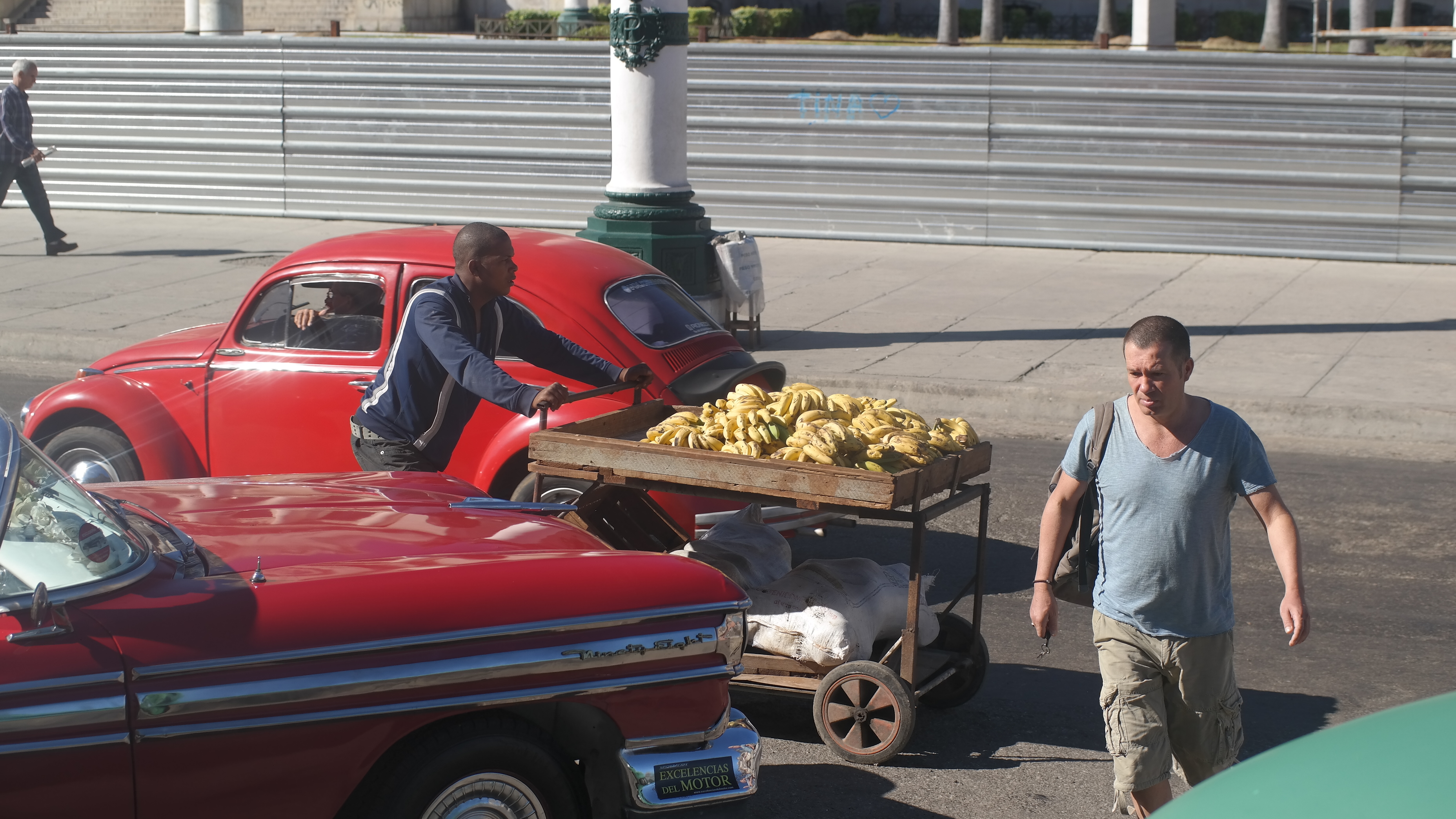
Street commerce

Street commerce

In the weeks leading up to our trip, I had asked friends and colleagues who had been to Cuba in the past few years about how much money they recommended I bring on the trip.  I was curious about this due to the financial restrictions that travelers from the United States encounter.  Under the current embargo, the Cuban government is not permitted to do any business with US banks — ATMs and credit cards issued by US banks will not work there — so one must bring cash in hand when traveling to Cuba. In addition to the query about money, I also asked people what sorts of things they had brought home.  They all remarked that they had purchased very little as there simply was not very much to buy, regardless of whether or not the items were “permitted” under the embargo (more on this farther down).  I did not fully understand what they meant until I saw the many, many empty shelves in the Havana shops. It was then that I began to understand the impact of the US embargo, what the Cubans call el bloqueo or the blockade, which not only makes everyday life incredible difficult for the average Cuban.  Unless Cubans have access to international travel and foreign currency, it is nearly impossible for them to buy many of the simple things that they need, such as the doors and canned food that I saw sticking out of those blue plastic wrapped packages at the airport.

Blockade sign outside Havana

Blockade sign outside Havana

One of the highlights of the trip for me was a guided walking tour of the UNESCO World Heritage site centered in Old Havana.  There we saw the city’s incredible colonial architecture, which dates back to the 1500s and is currently being restored by Habaguanex.  A national company run by the Cuban government, Habaguanex uses the profits from a group of hotels that it runs in Old Havana and Central Havana to fund the restoration and reconstruction of various buildings in the historically significant parts of the metropolitan area.  Prior to receiving the UNESCO designation and the accompanying funds it provided, many of the buildings in this part of the city were disintegrating into the barely functional ruins that today characterize much of the once-spectacular Cuban architectural landscape.

Detail of Old Havana architecture.

Detail of Old Havana architecture.

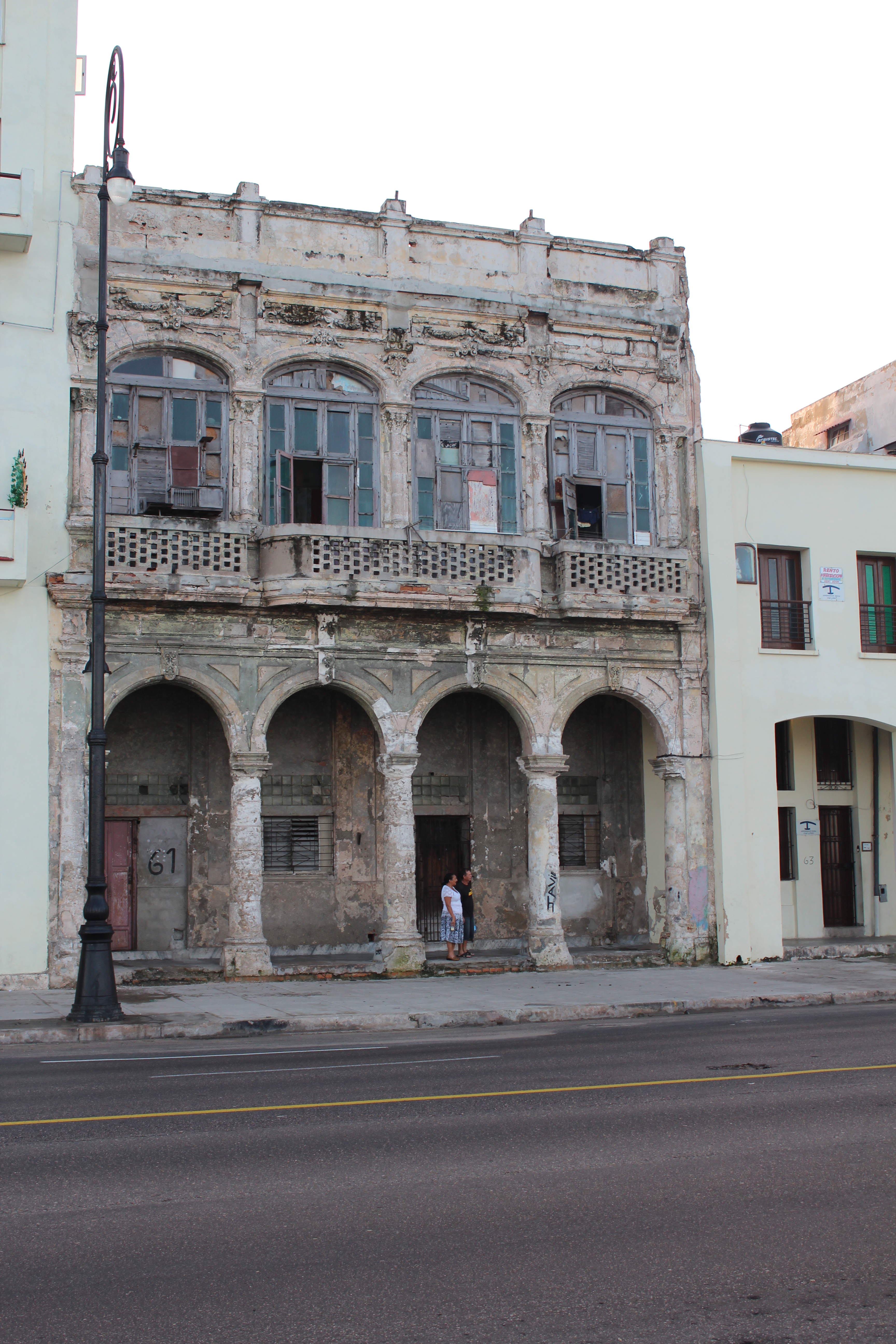
The key element in the spiraling disintegration of Cuban architecture, which began following the Revolution over 50 years ago, has been the arcane rules governing property in the communist state. The communist real estate laws that govern multi-family dwellings, which include most of the three and four storey apartment buildings in Havana, seem to make little practical sense (to me at least).  Under Cuban law, families are responsible for the upkeep of their own apartments, but nobody (except for the State, perhaps) is responsible for the upkeep of the building.  Therefore, unlike with co-ops or condominiums in the US, there are no superintendents on duty and little that goes wrong in the common areas, with the façades or the exteriors of buildings, is repaired.  While this is the situation throughout the island, its toll has been particularly acute in Havana, where an average of 3 buildings collapse each day.  This terrible situation makes the recent intervention of UNESCO both timely and welcome to both those who live there and to those of us who visit.  Since its founding in 1994, Habaguanex has facilitated the restoration of Old Havana using a two-pronged approach: 1) it trains youth in traditional construction and decoration techniques that have all but disappeared from practice, and 2) the renovations create a desirable tourist area, which in turn enables the process of restoration to proceed through the production of much-needed funds.  A win-win situation.

Buildings disintegrating

Buildings disintegrating

On the Malecon in Havana.

On the Malecon in Havana.

On our last night, after a week in Cuba, I began to repack my suitcases, neither of them were as large or unwieldy as the strange things I had seen coming off the belt when we arrived.  I had only a few books bought at the National Gallery, a couple of vintage posters from the used book market, and some CDs recorded by musical groups we had heard.  Unlike my experiences on other trips, where I sometimes have had to purchase an extra bag for my purchases (for example the Paris to Normandy cruise I took with Penn Alumni Travel in June of 2013 where a new summer wardrobe and several bottles of aged Calvados were acquired) this time it was pretty easy to fit these things in.  Such “informational materials” are the only items that one is permitted to legally bring back to the United States, and as the faculty host I was “playing it safe,” having resisted the lure of the myriad Che Guevara t-shirts and Cuban flag-adorned aprons and bric-a-brac.

At a contemporary dance workshop in Havana

At a contemporary dance workshop in Havana

Cuba is simply not the place to visit if you want to go shopping — Bermuda or the Caymans are the places for deals on Swiss watches and designer sunglasses.  However, if you are interested art, music, dance, and architecture, then Cuba is a revelation.  Thanks to the experts at Academic Arrangements Abroad, who organized our trip on behalf of Penn Alumni Travel, during our week in Cuba we experienced the very best of these things that the island had to offer.  I will leave it to Alyssa D’Alconzo, Director of Alumni Travel and Education at Penn, who also traveled on my departure to discuss more of the amazing activities we experienced. (Look for Alyssa’s blog on March 27th.)  Now, less than a month later, I am actively making plans to return to Cuba soon (perhaps with some Penn Art History students in tow) and see more of this complex and marvelous country.

Penn alumni and friends at the Havana cathedral.

Penn alumni and friends at the Havana cathedral.

[Interested in travel to Cuba? Penn Alumni Travel will be returning February 14-21, 2015. Email Emilie C. K. LaRosa at emiliek@upenn.edu to be added to a priority reservation list.]

Leave a comment

Filed under Faculty perspective, Penn Alumni Travel, Travel

Penn Alumni Travel: The South Pacific

Author: Lance Donaldson-Evans, Professor Emeritus of Romance Languages

I grew up just a block from the South Pacific in Newcastle, Australia, and so when I learned that Penn Alumni Travel was looking for a faculty host for a Crystal Cruises voyage from Papeete to Auckland, I was quick to volunteer and very grateful to be accepted.  As I pondered the itinerary, I realized that we would be following in the wake of many famous navigators, but particularly men like Captain James Cook (no relation to the famous, but now defunct, Cooks Travel Agency), Louis-Antoine de Bougainville (who had a flower, and an island that was to become an important battleground in World War II named after him) and Jean-François de La Pérouse (who, among other things, gave his name to a suburb of Sydney).  I decided this was a perfect way to combine pleasure with history and that the two talks I was to give the group would be on these 18th century sailors.

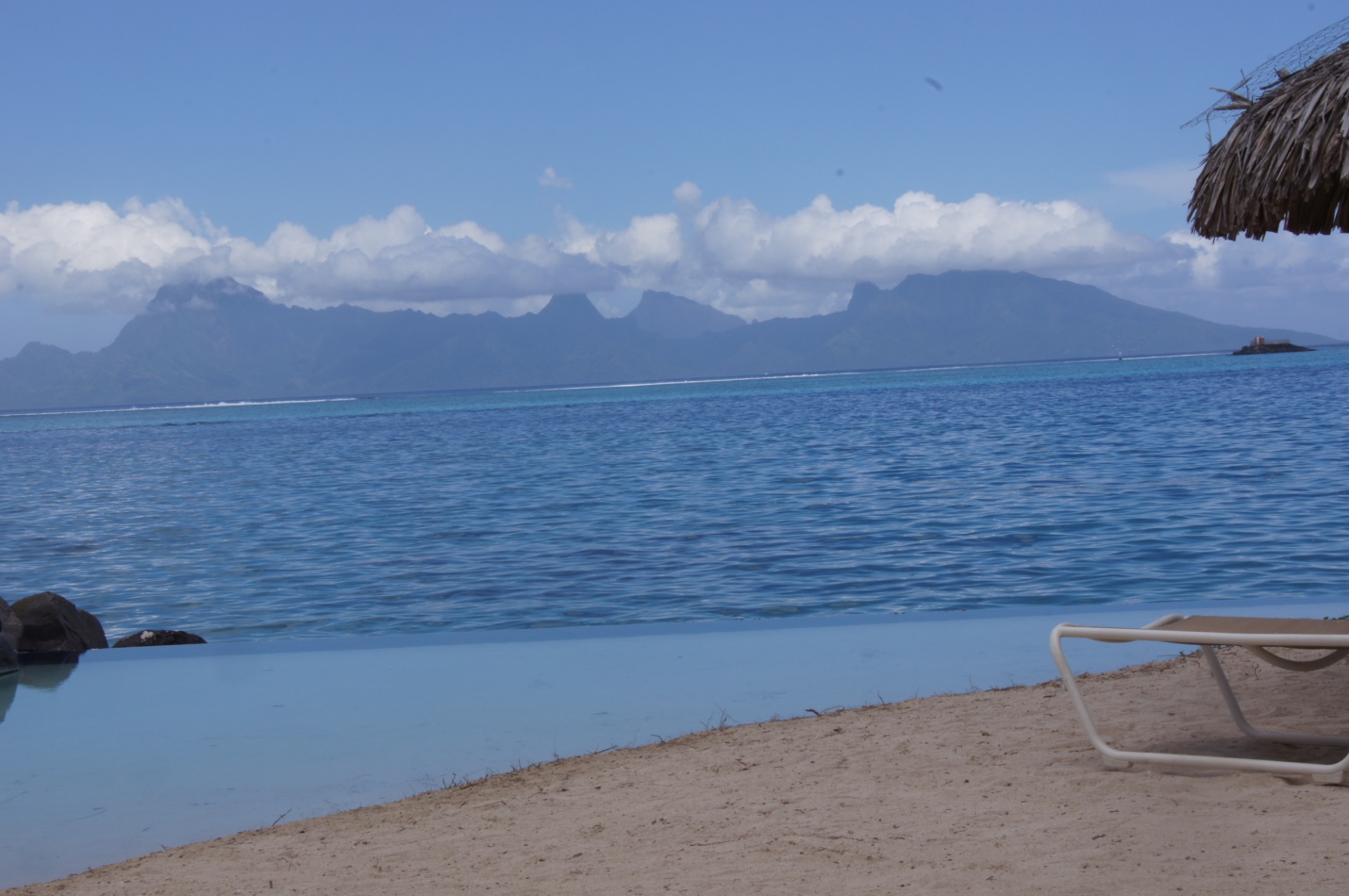
We arrived at Papeete Airport early (6:10 AM) on the morning of January 20, somewhat bleary-eyed after 8 and a half hours of sometimes bumpy flying over the Pacific from Los Angeles.  It was quite hot and humid (most of the year Tahiti has a much more pleasant climate, but this was the middle of the Tahitian summer) and we were directed to the Intercontinental Hotel where a refreshing buffet of all sorts of French pastries and tropical fruits awaited us.  We were able to enjoy the facilities of the hotel until 11:30 when a bus arrived to transport us to the ship.  The view from the hotel grounds was idyllic, with the deep blue waters of the Pacific stretching across to the beautiful island of Moorea.

photo 1

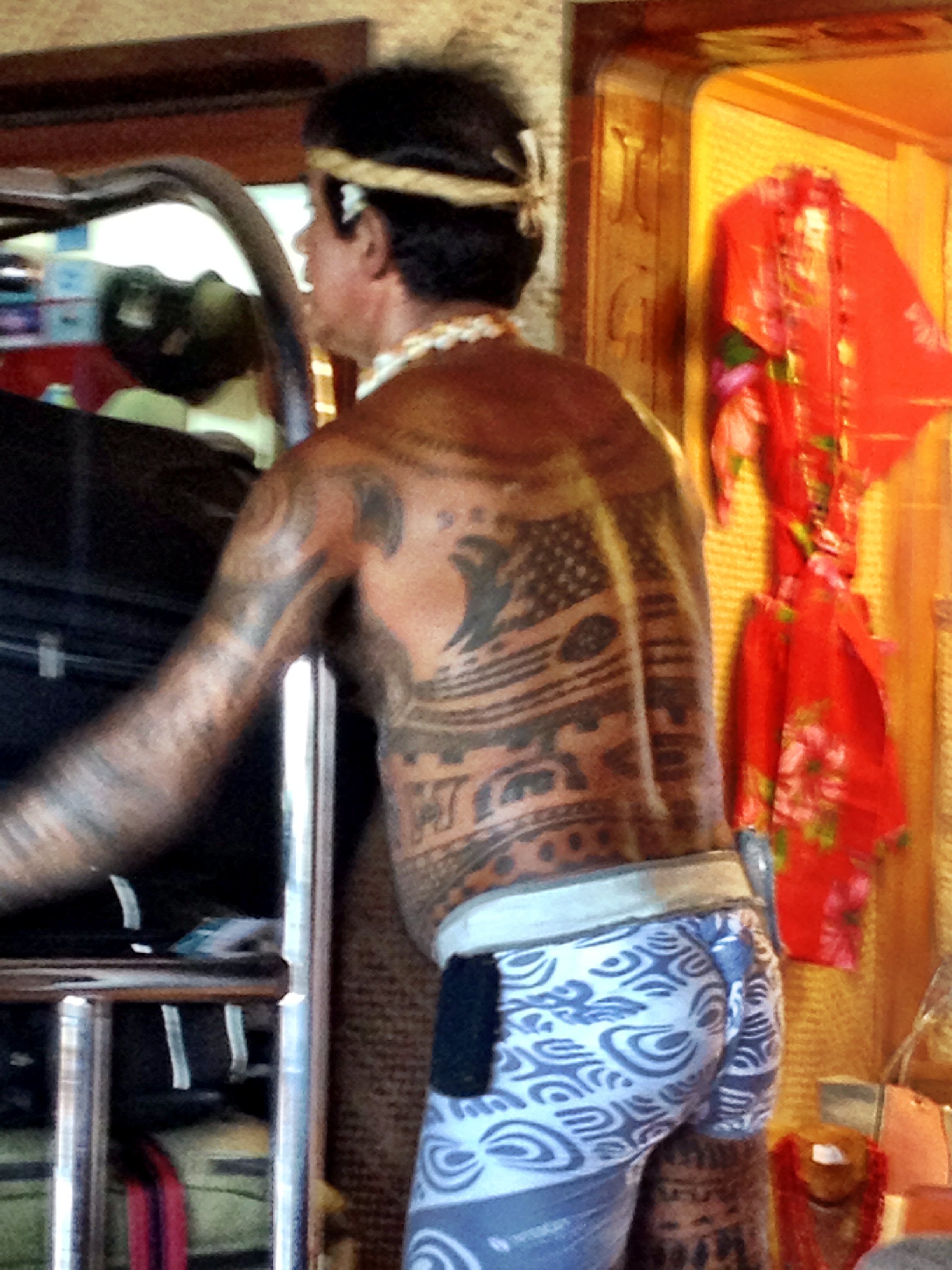
The hotel was a bustling place and we were impressed with the attire of some of the staff.  If we wonder where the current fad for tattoos comes from, no need to look beyond Polynesia:

036

We arrived at the ship where a delicious lunch was served in the dining room, and later in the afternoon we were reunited with our luggage in our cabins.  At least, almost all of us were.  One unfortunate couple discovered that their bags had not been transferred in time and had to wait until the ship docked in Bora Bora next day to recover theirs. (These are the challenges of travel!)

That evening we met our AHI host, a very efficient and witty Brit by the name of John Powell (after seeing him in action one wondered if he were not a descendant of Baden Powell, founder of the Boy Scouts!). AHI is an educational tour operator that works with Penn Alumni Travel to provide enlightening and well-organized tours. We also met alums from Wisconsin, Michigan and members of the Smithsonian Institution at an AHI cocktail reception in the beautiful Palm Court Lounge on deck 11 with a wrap-around view over the Crystal Symphony’s bow.  My wife Mary and I had chosen the “dinner by reservation” option, rather than a set table, in the hope we would be able to join people in the Penn group on a rotation basis.  However, as Crystal cruises has an extremely loyal following and as many passengers had been on the ship since Valparaiso and were continuing on to Sydney, there was very little flexibility in dining room seating and we ended up at a table for two (fortunately, even after 45 years of marriage, we still have plenty to say to each other).

Next day, we anchored off the beautiful island of Bora Bora where we had opted for a snorkel tour with stingrays and sharks (small reef sharks, not great whites).  This was very pleasant and we had the backdrop of Bora Bora, which we circumnavigated after our encounter with the aforementioned sea creatures on our way back to the ship.

005

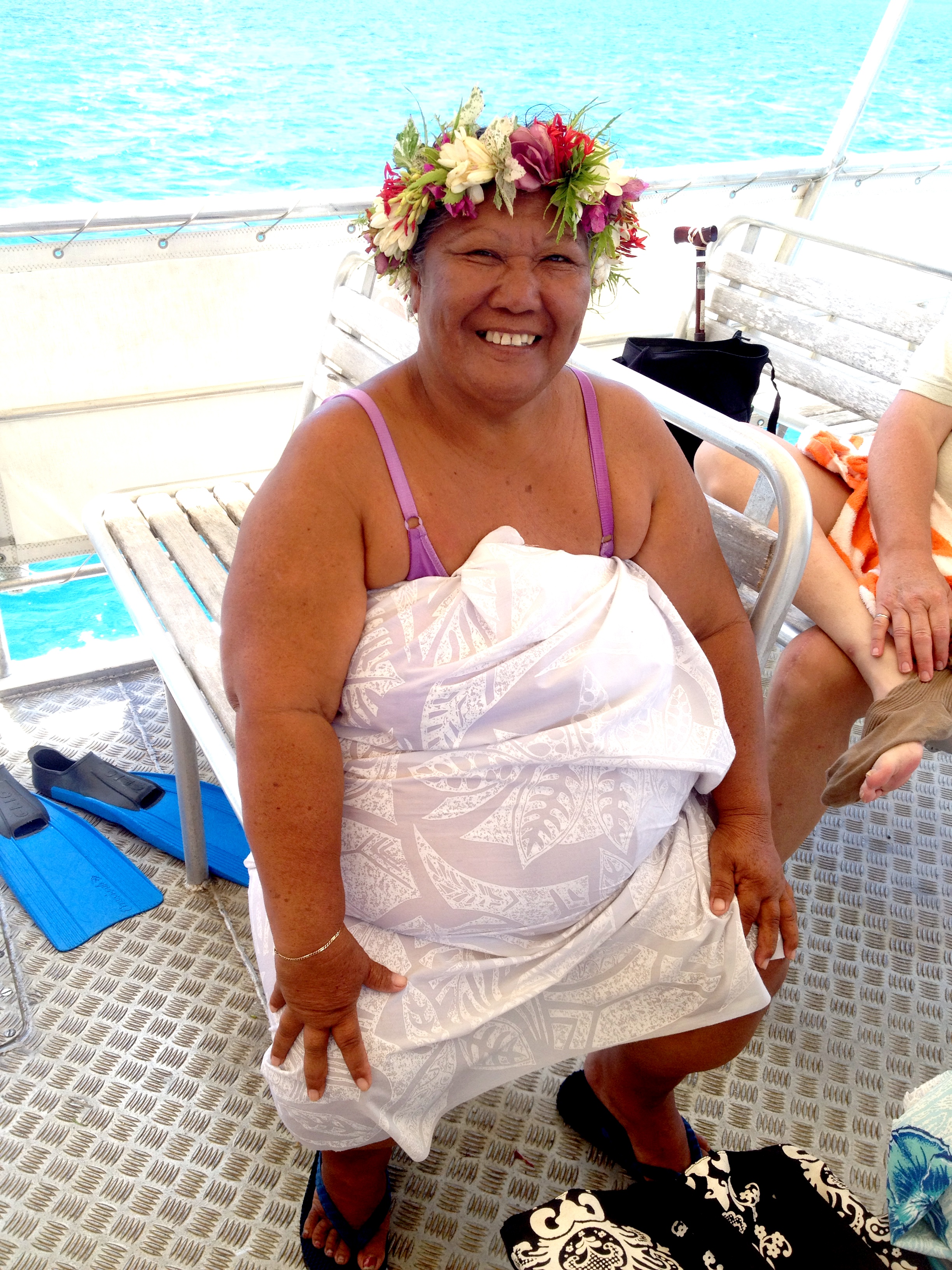
On our excursion, we had, as one of our guides, a native of Bora Bora, who reminded us of the character Bloody Mary in “South Pacific,” laugh included:

003

After the morning excursion and some shopping for black pearls in the sleepy town of Vaitape, we were tendered back to the ship for a late dinner and then off to bed, to be rocked to sleep by the (still) gentle waves of the Pacific.

Next day was a day at sea and was when my first talk was scheduled.  Mercifully the seas were slight and the lecturer (yours truly) had no problems maintaining his balance on the stage of the Hollywood Theater (as close as he’ll ever get to Hollywood, except as a tourist!) as he talked about the perils, challenges and some pleasures of maritime exploration in the 18th century in the Pacific.  As jetlag hadn’t quite been conquered, some members of the group retired to their cabins for a siesta before coming to the 5:30 PM reception organized just for the Penn group in the Palm Court Lounge.

SONY DSC

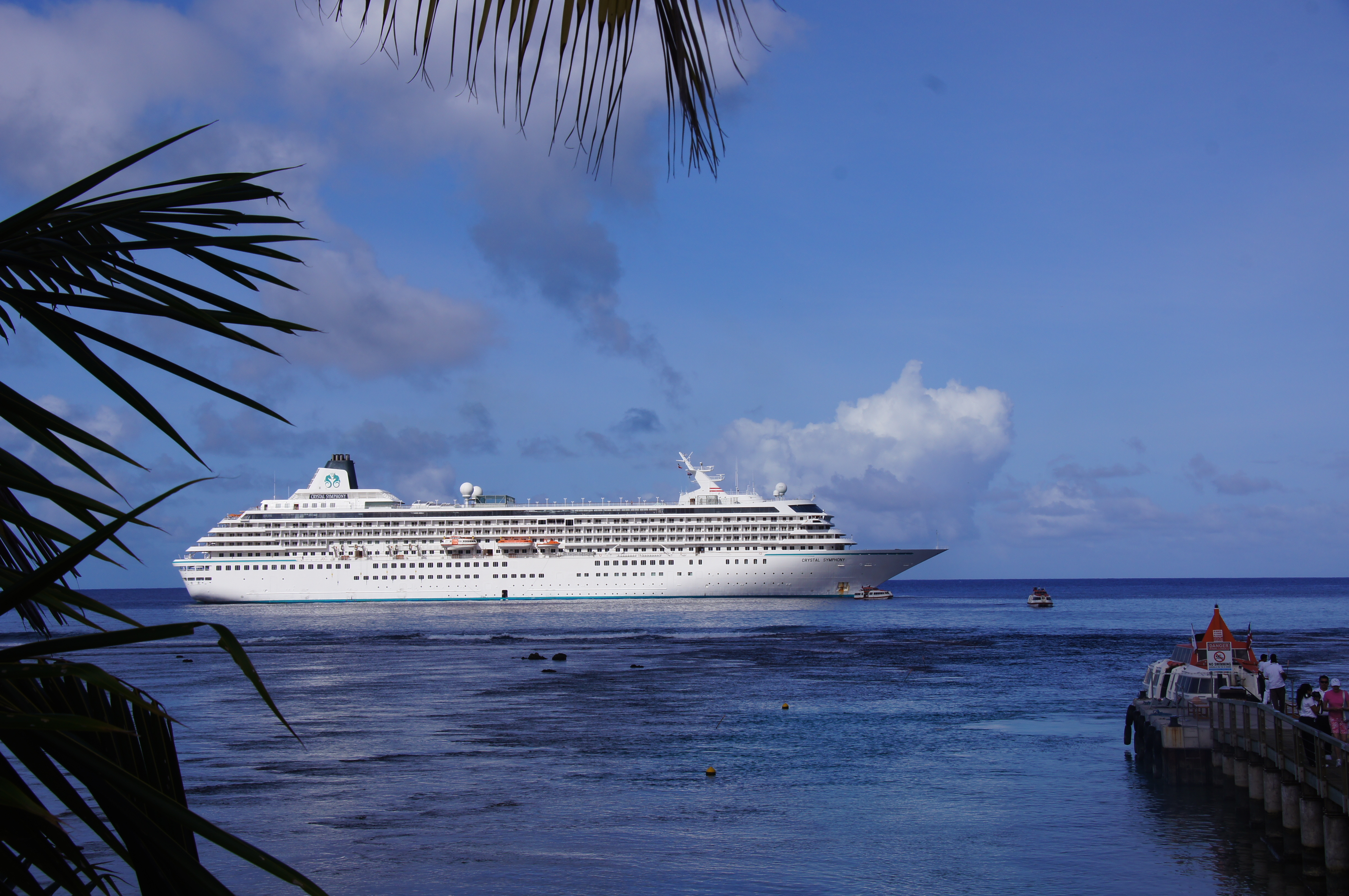
Next day we anchored off Rarotonga in the Cook Islands (yes named after that Cook, even though he never actually set foot on them).

SONY DSC

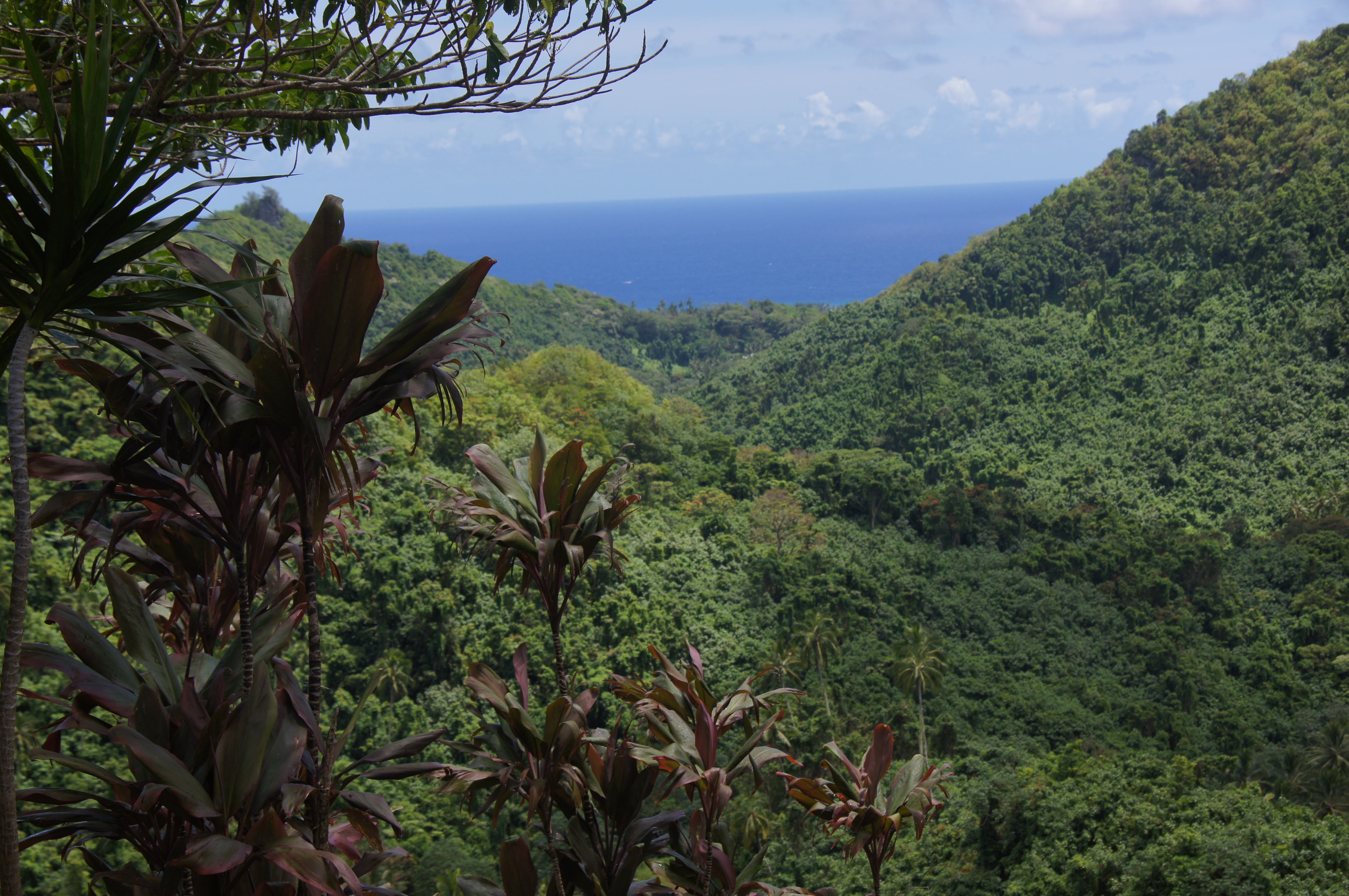
Some of us took a 4-wheel drive excursion up into the hills in the center of this relatively small island.  We motored passed picturesque farms and houses, some of which had family graves (encased in concrete) in their front yards (legal in the Cook Islands) and visited a waterfall and some sacred sites.  Then a precipitous climb to a lookout from where we had a birds-eye view right down to the incredibly blue Pacific:

SONY DSC

While less spectacular than French Polynesia, the Cook Islands have their own tropical beauty and the Cook Islanders are particularly friendly.

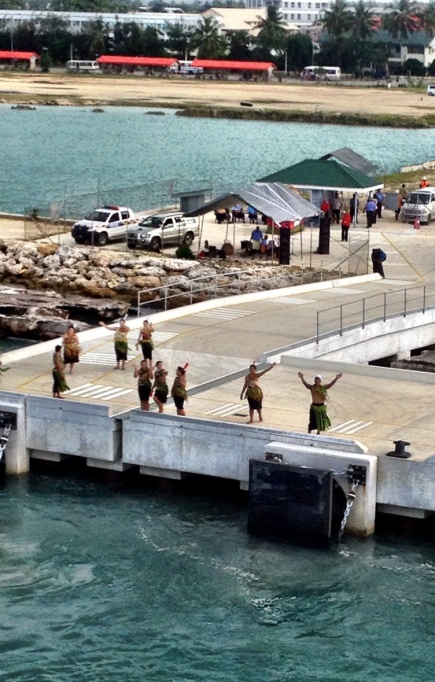
Next day was a day at sea as we sailed for Tonga, an independent kingdom near the International Date Line. Those of us who had signed up for a tour of Tonga had received a message that we should not expect it to be up to the standard of a normal tour, as tourism was still in its infancy in the kingdom.  Surprisingly, instead of having to tender passengers to shore as had been the case in Bora Bora and Rarotonga,  the ship was able to dock at a wharf on this low island (very flat with no hills to speak of), and we had a splendid view of the Victorian era royal palace, which overlooks the harbor:

039

We saw the blowhole, which gave a modest performance;  flying foxes (large bats that are not nocturnal) and which had colonized a number of fruit trees; and a dance show, which was extremely modest in both dress and movement, compared with the rather raunchy dances in other parts of Polynesia.  One suspects that the missionaries who arrived in the 19th century had done their work perhaps too well! The highlight of our day however was the wonderful sailaway sendoff we were given as we cast off from the pier.  The police band gave us a concert and a group of dancers, swayed gracefully, as they sang the tear-jerking Maori farewell.  Quite memorable and unique.

photo 2

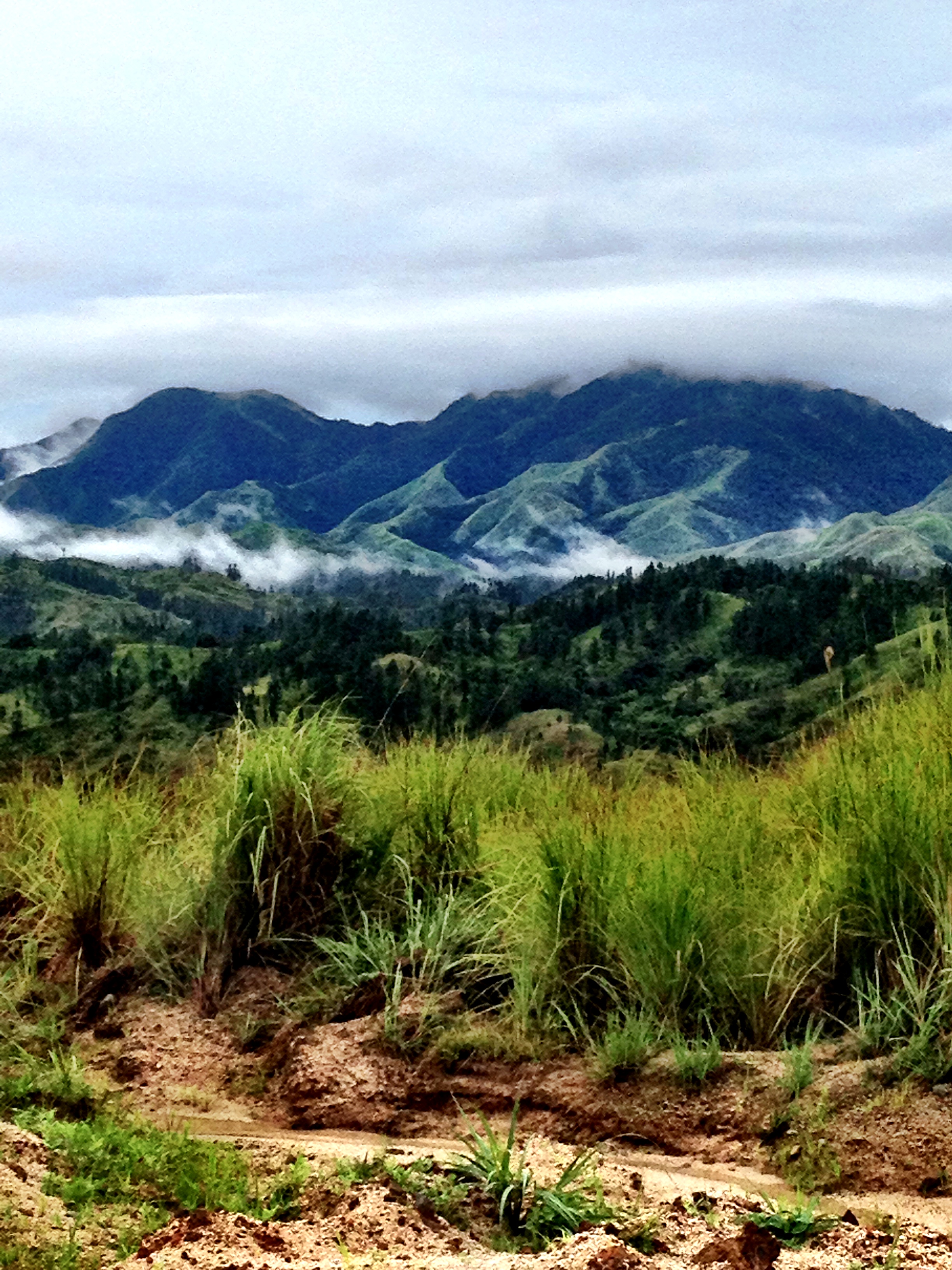
Our next port of call was Lautoka, Fiji, but en route, we heard the first of three fascinating talks on astronomy and the latest theories on the universe by Carolyn Petersen, the lecturer with the Smithsonian group.  On our sea days, there was a great deal of activity on board, and three other lecturers (engaged by the cruise line) gave talks open to all the ship’s passengers, while, because of space constraints, our lectures were only open to the members of the AHI contingent.  In some ways, our days at sea were even busier than those in port.  Lautoka is on the island of Viti Levu, the largest of the Fijian Islands and by far the largest island we visited before arriving in New Zealand.  Here we encountered our first real rain so far, apart from a few passing sprinkles on Rarotonga.  Some had chosen the four-wheel drive adventure that would take us up into the highlands and to a typical Fijian village.  This was one of the best excursions we have ever done.  We were comfortably transported in air-conditioned Toyota land cruisers up some very rough roads leading up into the hills, from where we had a beautiful view of the interior of this lush island.

023

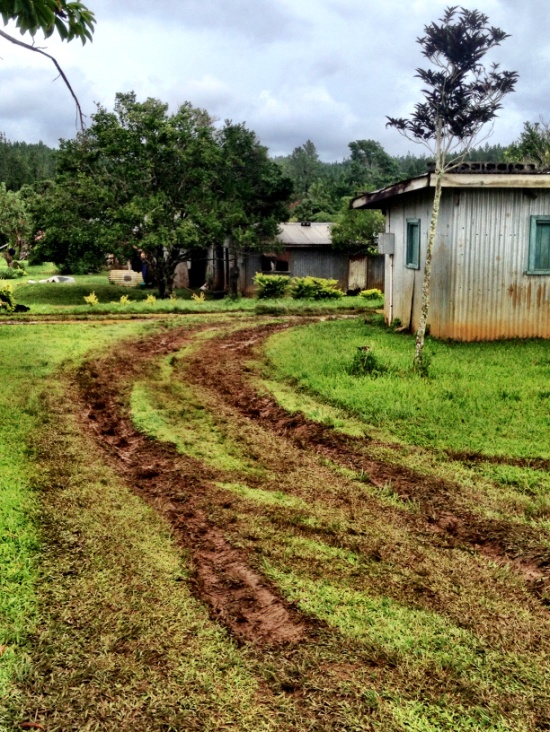
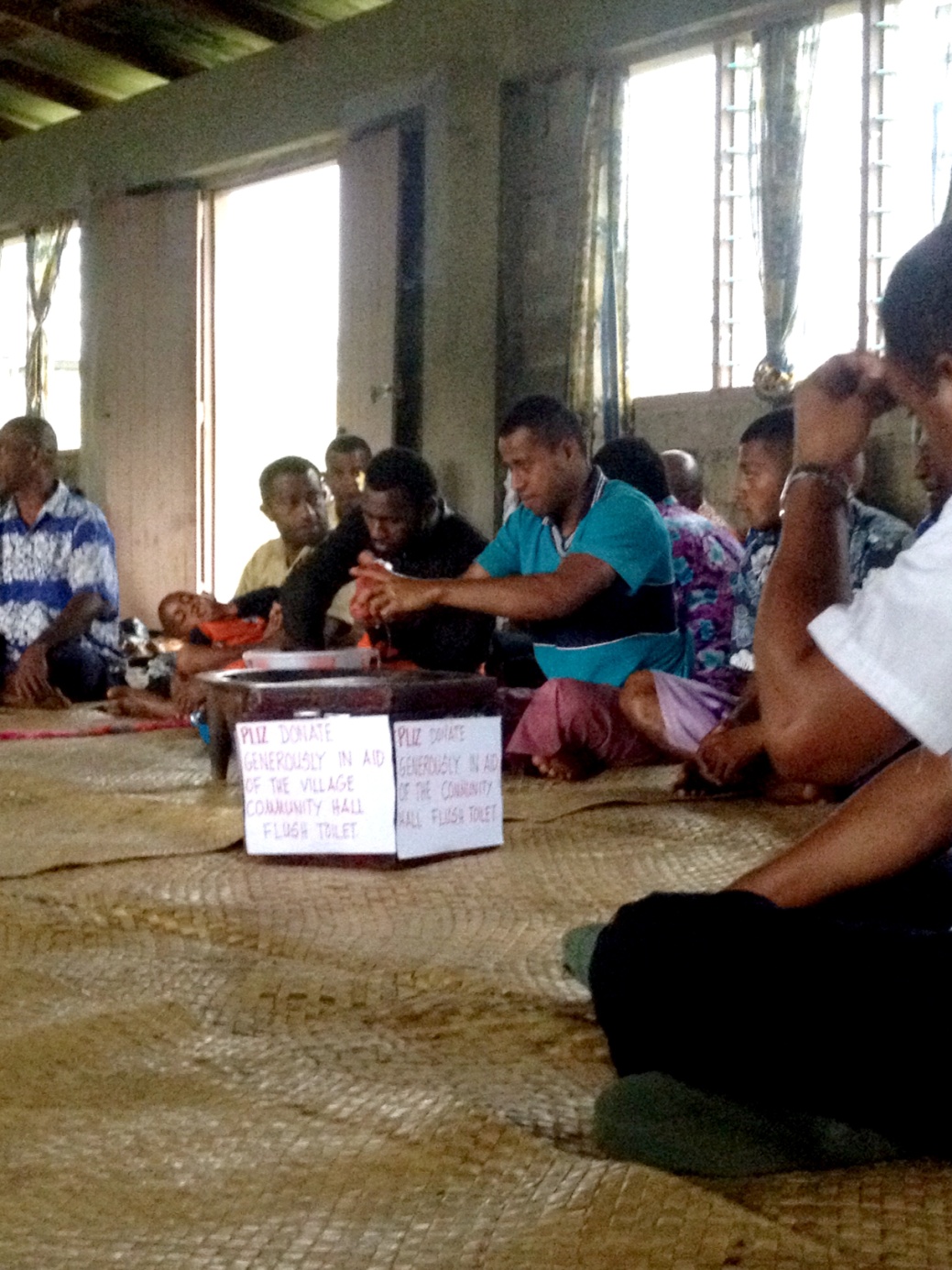
We then visited a village in the highlands, where we saw the church, the equivalent of the court house (where miscreants were punished) and the community hall, where we participated in a kava ceremony, some of us drinking from a coconut shell the numbing liquid of the kava tree, which had been prepared before our eyes to the accompaniment of songs and chants.

photo 3

photo 4

The village buildings were fairly rudimentary, and the communal toilet seemed to be no exception:

006

However imagine our surprise, when, on opening the door, we found a fully operational flush toilet!

On our return to the ship we visited an orchid farm and a house which had been in the hands of the same Scottish-Fijian family since the mid-19th century.  By this time the rain was coming down in torrents, but it had been a wonderful excursion and we returned to Crystal Symphony delighted with our adventure.

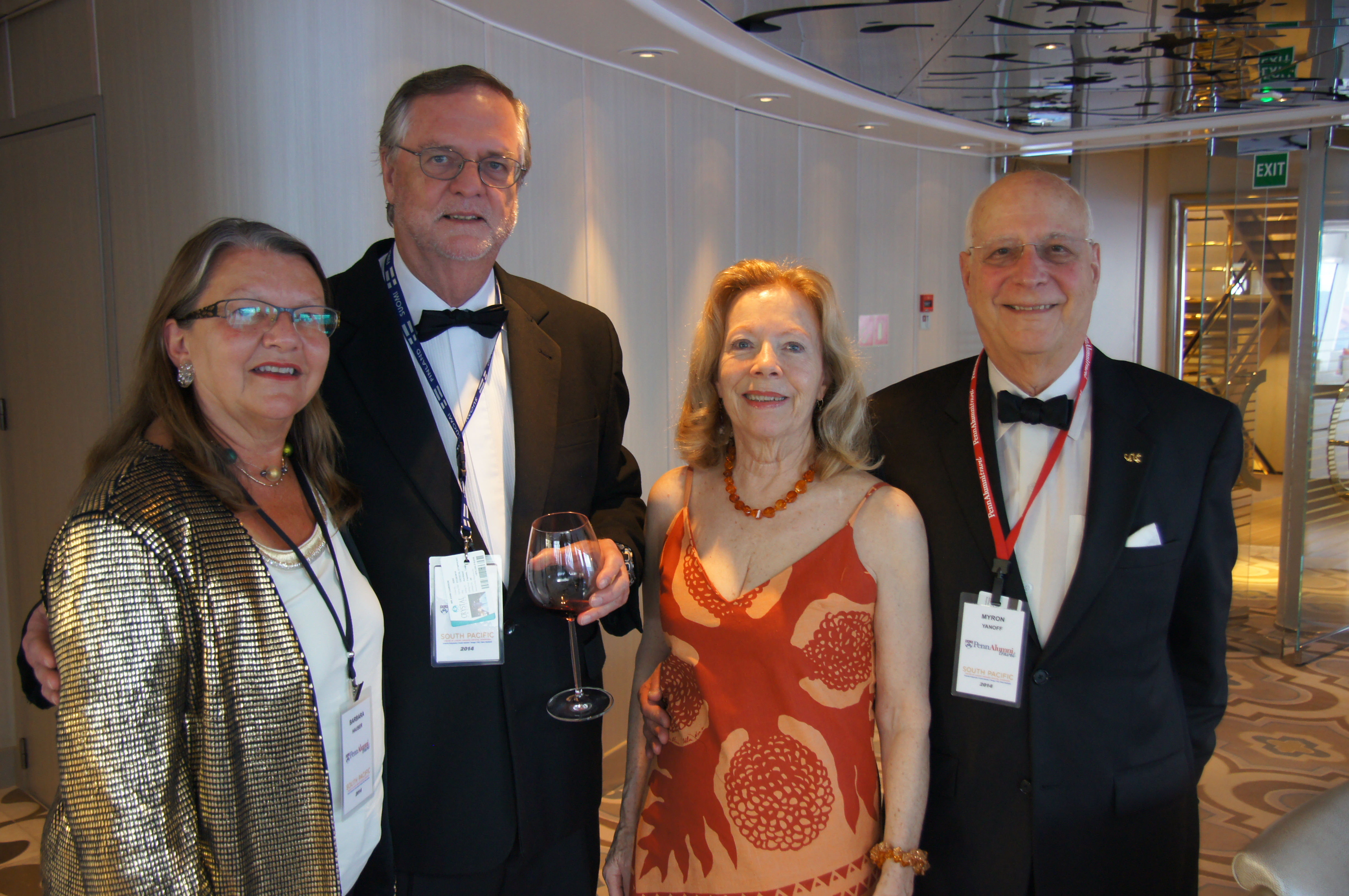
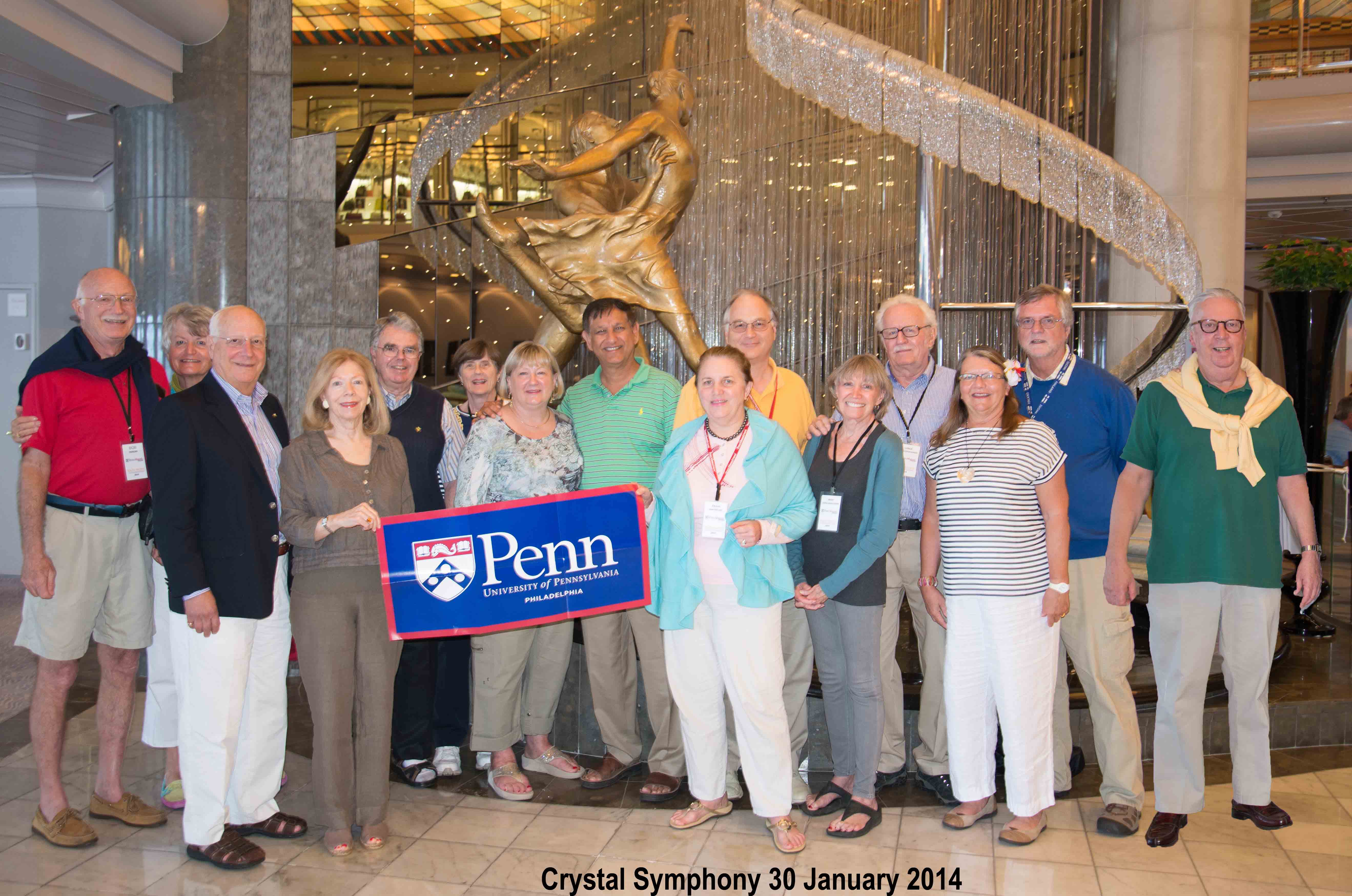
During the last two days at sea on our way to Auckland, the Pacific showed us that it was not always true to its name.  We had about 36 hours of continuous rough seas (18 feet according to the captain) as we punched into 35 knot headwinds.  On the first of these days we had lunch for the Penn group in the Crystal dining room, fortunately low enough in the ship so that the ship’s movement wasn’t too disturbing, and after this we had the one group photo we managed to take:

024

We had another late afternoon reception for the entire AHI group in the Palm Court Lounge, but the ship was pitching so enthusiastically that only about half of the group came and those that did had to remain seated.  The captain even cancelled the Formal Dress that was supposed to be the dress code for that evening, replacing it with Resort Casual, and banned the wearing of high heels to avoid possible accidents!

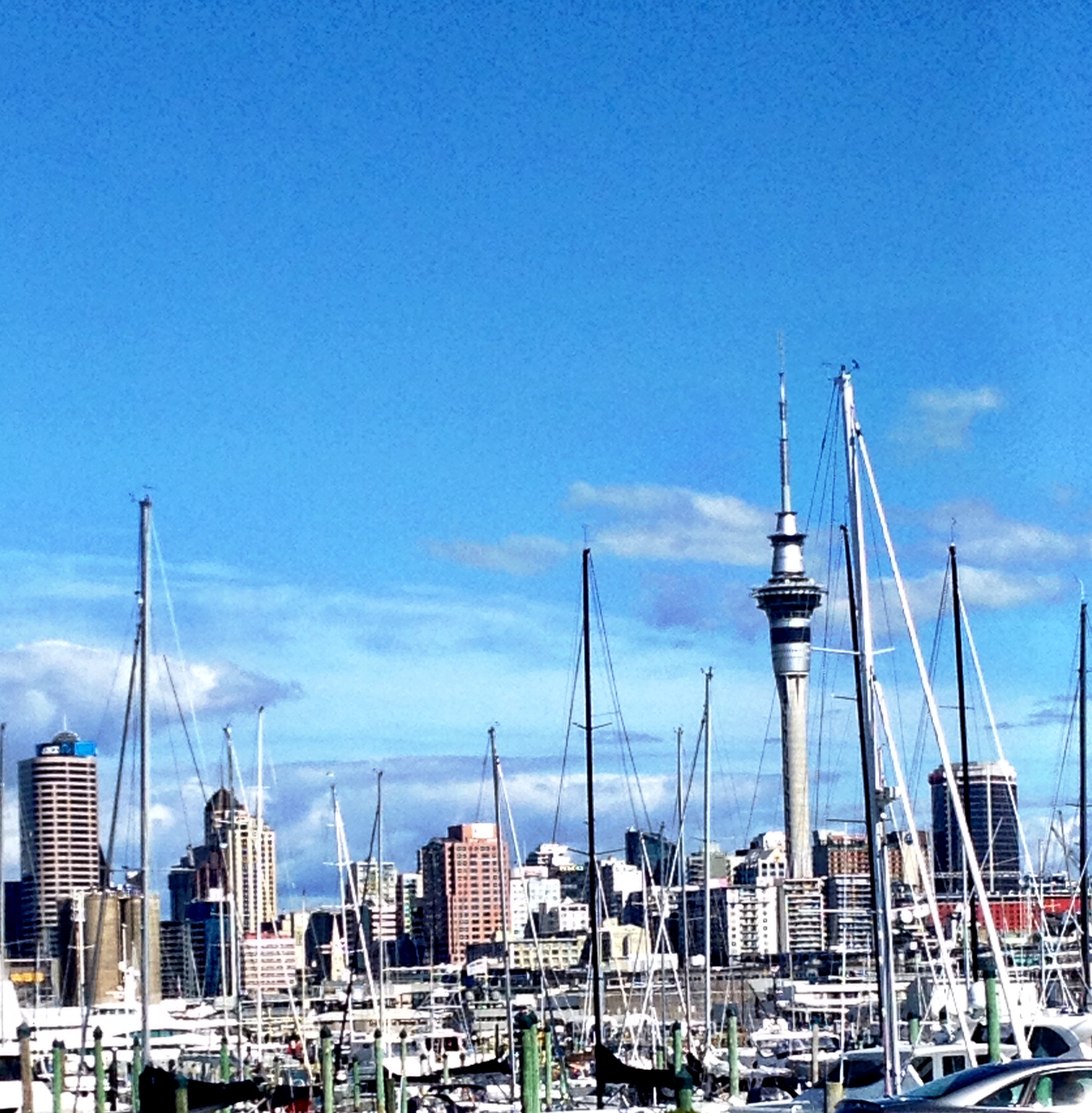
We arrived 4 hours late (the delay caused by the weather) in Auckland. We overnighted here in superb weather.  The largest city in New Zealand, with a population of over 1 million, Auckland is known as the City of Sails, since sailing is a passion for its inhabitants thanks to its climate and proximity to the water.  It is no wonder this small island nation has played such a prominent role in America’s Cup competitions.  The view of Auckland below shows one of its many marinas, which are adjacent to downtown and the Sky Tower, one of the tallest structures in the Southern Hemisphere.

002

After enjoying the perfect weather on Saturday and Sunday, we were transferred to the airport on Sunday afternoon for our various long flights back to the States.  A number of people in the group opted to go on an extension to Queenstown, an important and beautiful tourist destination in the heart of the spectacular South Island.  A few stayed on to rent a car and explore the North Island.  The rest of us headed back to the winter of 2014 after our two weeks in the South Pacific.  Penn Alumni Travel could not have picked a better way to have some respite from this Mother of All Winters.  It was a truly delightful experience.

Leave a comment

Filed under Faculty perspective, Penn Alumni Travel, Travel

Penn Alumni Travel: Cuba Part 1

Author: Emilie C. K. LaRosa

This year Penn Alumni Travel went somewhere we haven’t gone to in over a decade: Cuba. Cuba has long been off the travel menu for most United States citizens, but, in 2011, certain groups could again travel to Cuba under a specific “people-to-people” license from the U.S. Treasury Department’s Office of Foreign Assets Control. Penn Alumni Travel received its People to People license last summer, and immediately over 40 Penn alumni and friends signed up to join one of two Cuba departures last month.

Penn Alumni and friends on the first Cuba departure. We’re excited to visit Hemingway’s Cuban retreat.

Penn Alumni and friends on the first Cuba departure. We’re excited to visit Hemingway’s Cuban retreat.

Traveling on a People to People itinerary is a little different from your typical overseas trip. Every day must be filled with meaningful exchanges with the Cuban locals. This means most hours between 9 a.m. and 5 p.m. are filled with visits to museums, artists’ studios, and other local places of interest. We also had lectures with historians, experts in Cuban agriculture, and representatives from the Cuban National Center for Sex Education, and even visited the Cuban Rap Agency. After a lively discussion at the rap agency, we were treated to an impromptu performance.

Conversations in a graphic art studio in Cienfuegos, Cuba.

Conversations in a graphic art studio in Cienfuegos, Cuba.

Here we met with the Cuban Rap Agency in Havana.

Here we met with the Cuban Rap Agency in Havana.

Luckily our alumni are used to a full schedule filled with educational offerings, and they took the busy schedule in stride. One of my favorite moments of the trip was the private classical guitar concert in the Ceramics Museum of Havana. After a tour from the museum director, we all filtered into the museum’s beautiful interior courtyard and listened while classical guitarist Luis Manuel Molina played several songs. From the first note, it was clear Molina was a world-class musician, and he was playing just for us! Truly a superb ending to a busy day.

Luis Manuel Molina plays classical guitar for Penn Alumni Travel.

Luis Manuel Molina plays classical guitar for Penn Alumni Travel.

My second favorite moment? The farewell dinner in a Havana paladar (a restaurant run out of a family home). Not only was the food delicious and the ambiance unique, but by the end of the meal song had broken out, and we ended the trip with a hearty rendition of “The Red and the Blue” and “Drink a Highball.”

I’ll leave this blog entry here. As I mentioned, we had two Cuba departures each with a faculty and a staff host, and so you can expect three more Cuba blog entries after mine. But Cuba is such a unique and interesting destination that 100 blog entries would not do it justice. Enjoy the rest of the tour!

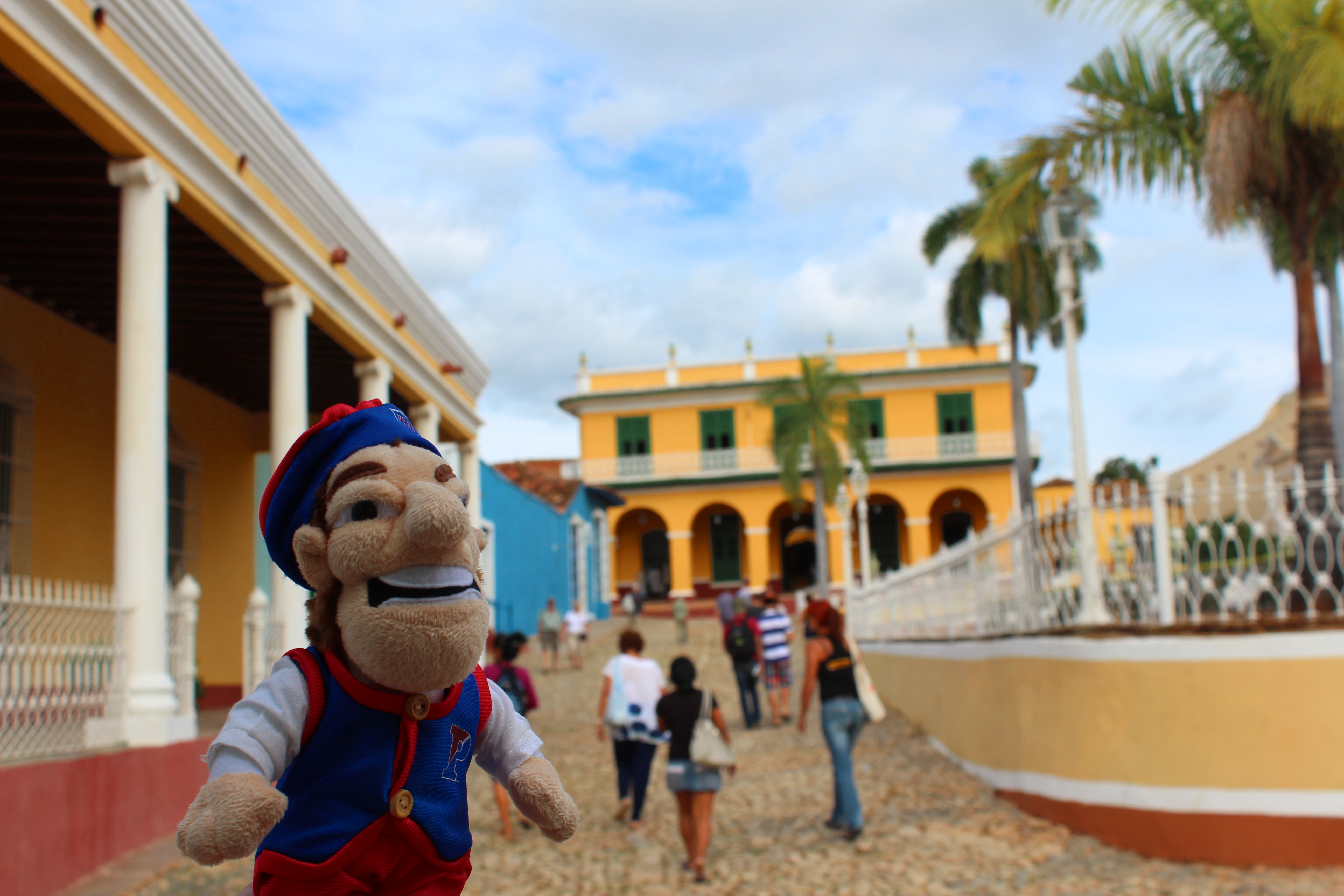
The Quaker in Trinidad. He loved all the bold colors!

The Quaker in Trinidad. He loved all the bold colors!

[Penn Alumni Travel will be returning to Cuba in 2015. Please email Emilie C. K. LaRosa at emiliek@upenn.edu to be added to a priority reservation list.]


Leave a comment

Filed under Emilie, Penn Alumni Travel, Travel

“We will find a way or we will make one!”

Author: Lisa Ellen Niver, C’89

Do you ever wonder how you will make your dreams come true? I find inspiration from the gate at the University: We will find a way or we will make one. In December 2012 on the beach in India, I said I think we should have a contest on our website, We Said Go Travel. George said, “Great! Let’s start in January and end on February 14.” Immediately I had several objections. I could not possibly be ready so fast to run a writing contest.
We were in Konark, India at the Sand Art Festival near the UNESCO Sun Temple. I was musing that 30 years ago when the festival began, someone probably said: “Sand Art Festival! You must be nuts!” But here we were, thirty years later and it was a large festival with many international sand artists!

In January 2014, we began our fourth travel-writing contest. (Travel Writing Contest: http://www.wesaidgotravel.com/writing-contest)

Over the course of 2013, over five hundred writers from over fifty countries entered our contest. It was truly fantastic! I love all the stories and getting to email with people from all over our planet. We hope you will choose to join us by sharing a story or reading one from someone else! We did our first live announcement of the winners for our contest on google hangout on air.

WSGT gratitude 2013 google hangout (2)

Watch the hangout:

http://www.youtube.com/watch?v=dZF2DixFNiI

See the winners:

http://www.wesaidgotravel.com/gratitude-travel-writing-contest-winners-2013

We had some technical issues and had to link one judge in by skype but it worked. We found a way to make it work! I learned many life lessons at the University of Pennsylvania but the message from the gate always rings in my head: “We will find a way or we will make one!”

I remember the contest really took off when I wrote to our friend, Richard Bangs from the PBS Travel Show, “Adventure with Purpose,” who offered to be a judge.  Sometimes all you need to do is offer to participate: by joining in a contest, being the judge or simply showing up. I was honored in October 2013 to share our travel knowledge in a webinar for the University of Pennsylvania Alumni Travel. George and I talked about our journey for 27 days in Myanmar (Burma). We were invited to participate and we said YES!

http://pennalumni.adobeconnect.com/p3dzcr7cmmk/

I hope that you make your resolutions for 2014 come true by taking a first step! I would love to hear about your progress.


Leave a comment

Filed under Alumni Perspective, Alumni Profile, Guest blogger, Lisa Ellen Niver, Penn Alumni Travel, Travel

Penn Alumni Travel Photo Contest

Author: Emilie C. K. LaRosa

Penn Alumni Travel is hosting our 4th annual photo contest. If you’ve traveled with us in the past, you are eligible to enter a travel photo by FEBRUARY 28, 2014. Winners receive an Amazon Kindle or $300 trip credit.

Photos are judged in four categories: People, Places, Culture, and Nature. To learn more about the contest or to submit a picture, click here.

Our winners from 2013 were:

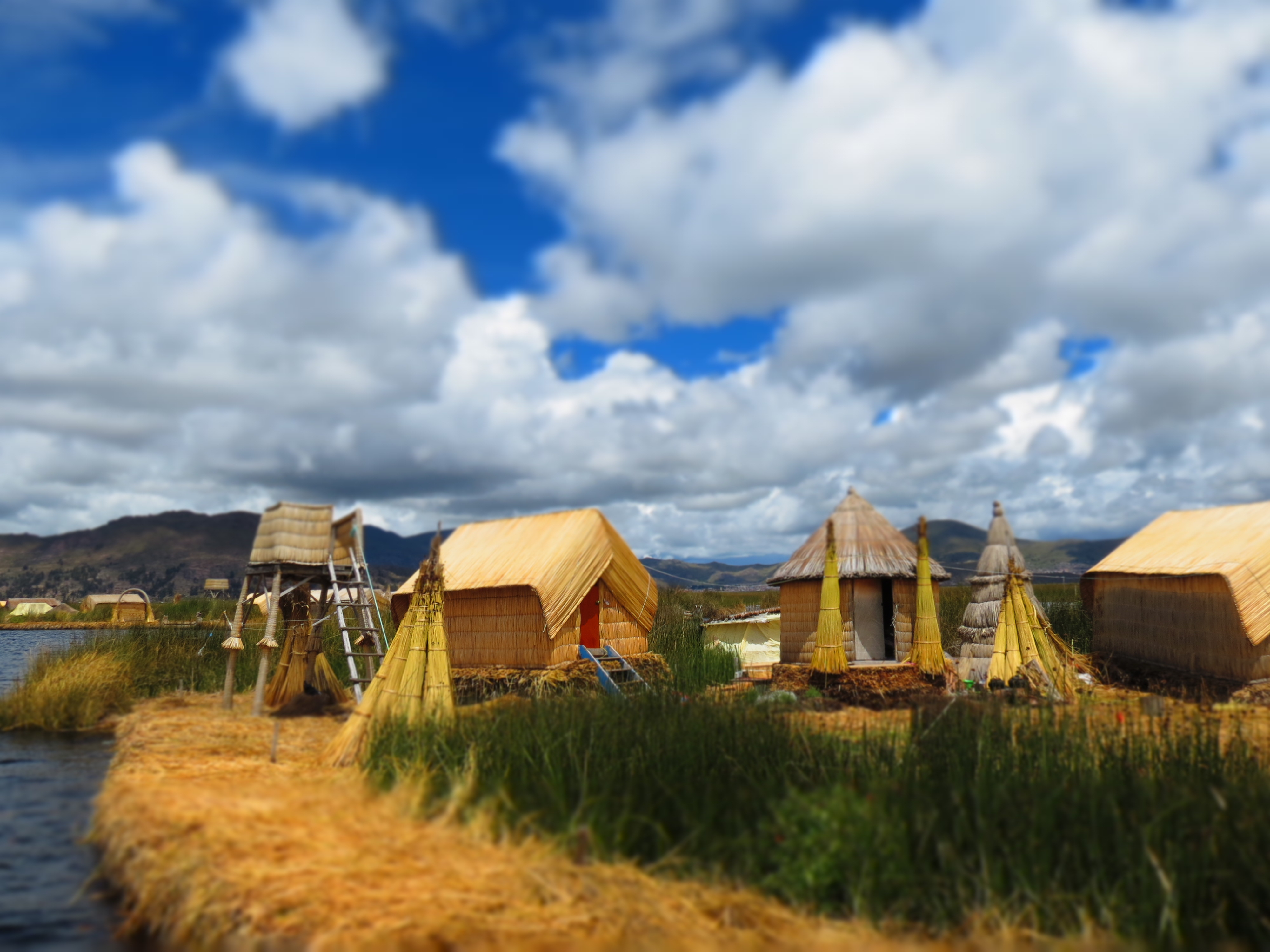
Grand Prize Winner and First Place, Places Category: “Reed House-Uros Islands,” by Amy Converse

Grand Prize Winner and First Place, Places Category: “Reed House-Uros Islands,” by Amy Converse

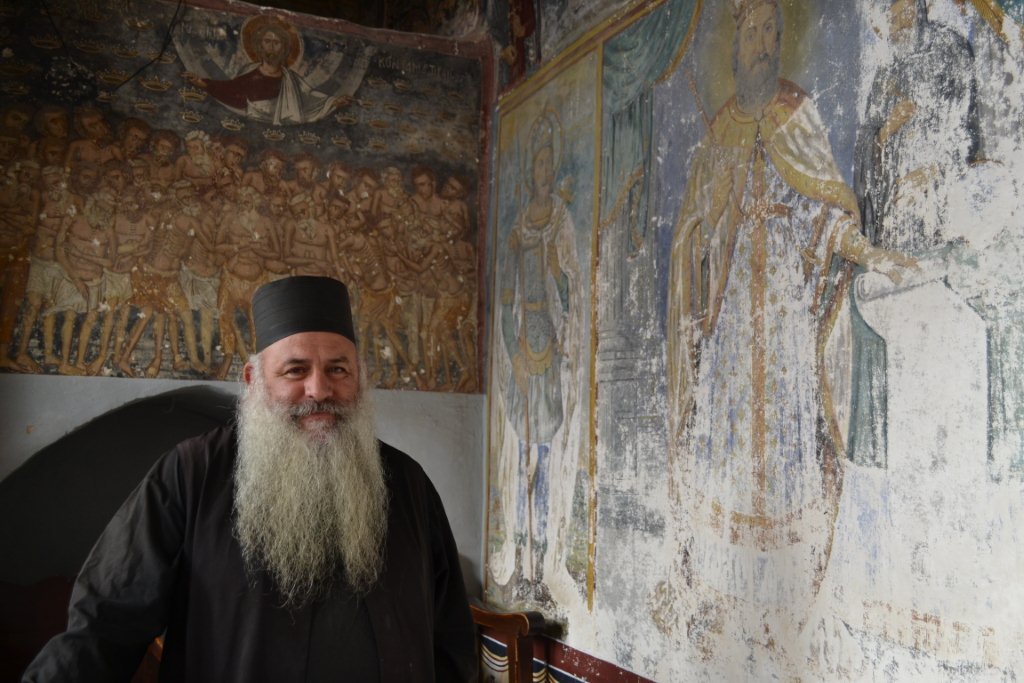
First Place People Category: “Father at Monastery of St. John,” by Robin Love

First Place People Category: “Father at Monastery of St. John,” by Robin Love

First Place Culture Category: “Street Musician-Havana,” by Arthur Brown

First Place Culture Category: “Street Musician-Havana,” by Arthur Brown

First Place Nature Category: “Orchids of Machu Picchu,” by Alex Converse

First Place Nature Category: “Orchids of Machu Picchu,” by Alex Converse

And this isn’t the first time we’ve posted about the photo contest. Check out our other photo contest blogs below!

Announcing the 3rd annual photo contest winners.

Announcing the 2nd annual photo contest winners.

The FIRST annual photo contest entries.


Leave a comment

Filed under Emilie, Penn Alumni Travel, Travel

Penn Alumni Travel: Machu Picchu to the Galapagos 1

Author: Professor Peter Dodson, Dept. of Earth and Environmental Sciences

This November 16-30, I led a Penn Alumni Travel trip with 14 Penn alumni and friends. Four of us went on a pre-trip excursion to the Amazon, leaving from Iquitos, northeastern Peru, the largest city in the world accessible neither by road or by rail. Here the highway is the mighty Amazon itself and its tributaries. We stayed at Ceiba Tops Ecological Lodge and reveled in the treasures of the rainforest–the colorful birds and insects, the inquisitive tapir, the riotous tropical plants. We also visited two indigenous villages, one of which still maintains its pre-colonial lifestyle.

089

Back to Lima, we met the full contingent of Alumni Travelers along with our Odyssey guide for Peru, Marco Ayala. Marco was friendly, knowledgeable and witty, a great companion who anticipated our every need and was on top of every situation. After a quiet morning we spent the afternoon exploring a bit of Lima, including early Spanish churches in the city center and a visit to the splendid Larco Museum of pre-Columbian art. This was our introduction to the pre-European history of Peru. The following morning was an early departure from the hotel for our one-hour flight to Cuzco in the Andes, the capital city of the Incas.

Cuzco, the capital city of the Incas.

Cuzco, the capital city of the Incas.

Here we met our local guide, Anna Marie, who is highly knowledgeable about all things Incan. As Cuzco is 11,000 feet above sea level, it is deemed wise to begin the visit in the Sacred Valley of the Incas, which is a mere 9,000 feet high. The beautiful Casa Andina served as our base for two days as we explored the Sacred Valley and saw many Incan walls and terraces. The Incas were master engineers and stone masons, and we witnessed their impact throughout the landscape.

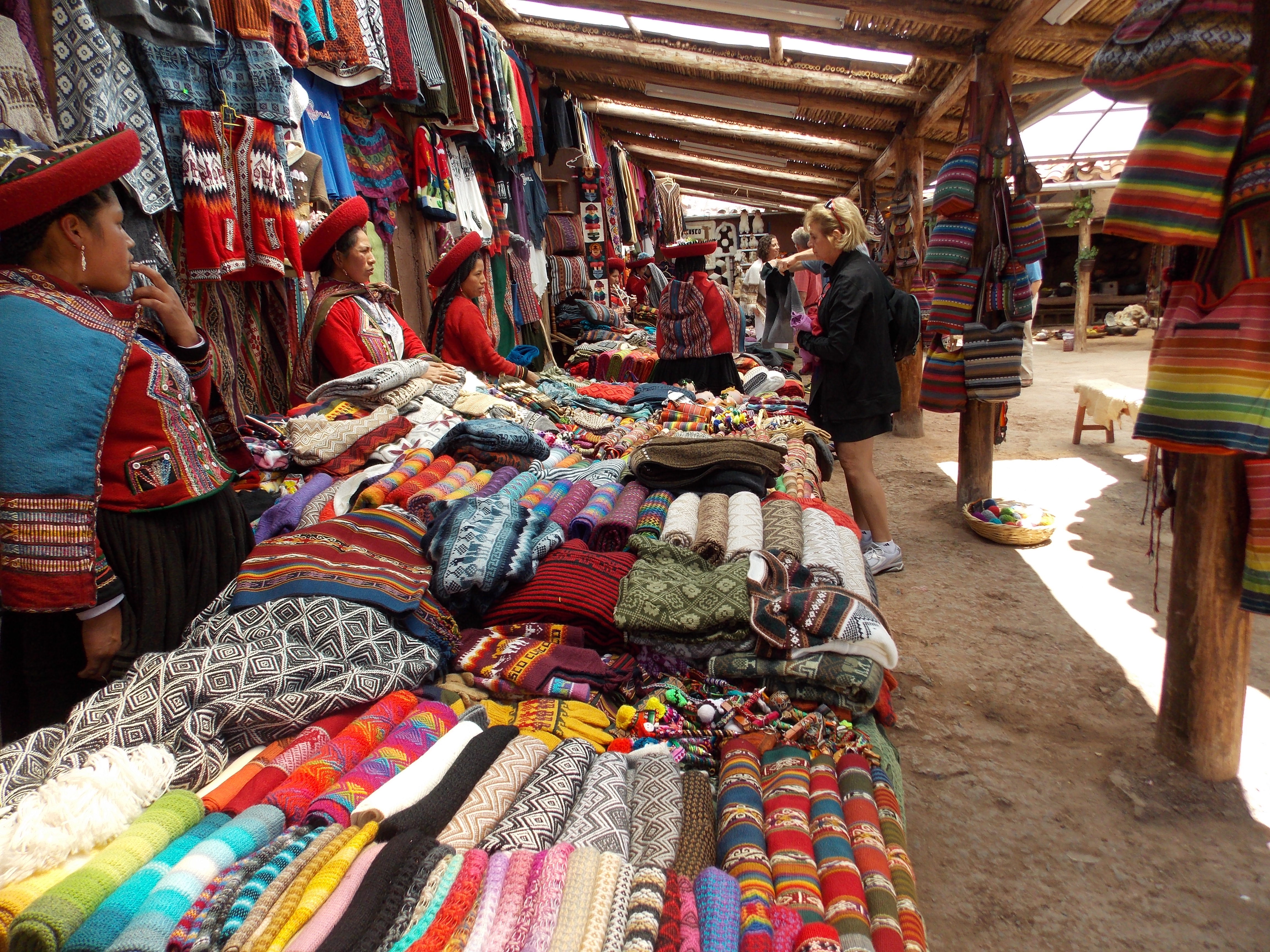
Llama and alpaca woolen blankets.

Llama and alpaca woolen blankets.

We also viewed current agricultural practices as the land was being prepared for planting of corn, potatoes and other crops as the rainy season was soon to begin in December. We could see in plots side-by-side a field plowed by hand with a team of oxen and a field plowed by modern John Deere tractor. We visited a village where native women spun llama and alpaca fleece into wool, dyed it brilliant natural colors, then wrought the wool into beautiful native consumer goods. A highlight was a visit to the Incan fortress of Ollantaytambo on the Urubamba River.

A field plowed by a team of oxen.

A field plowed by a team of oxen.

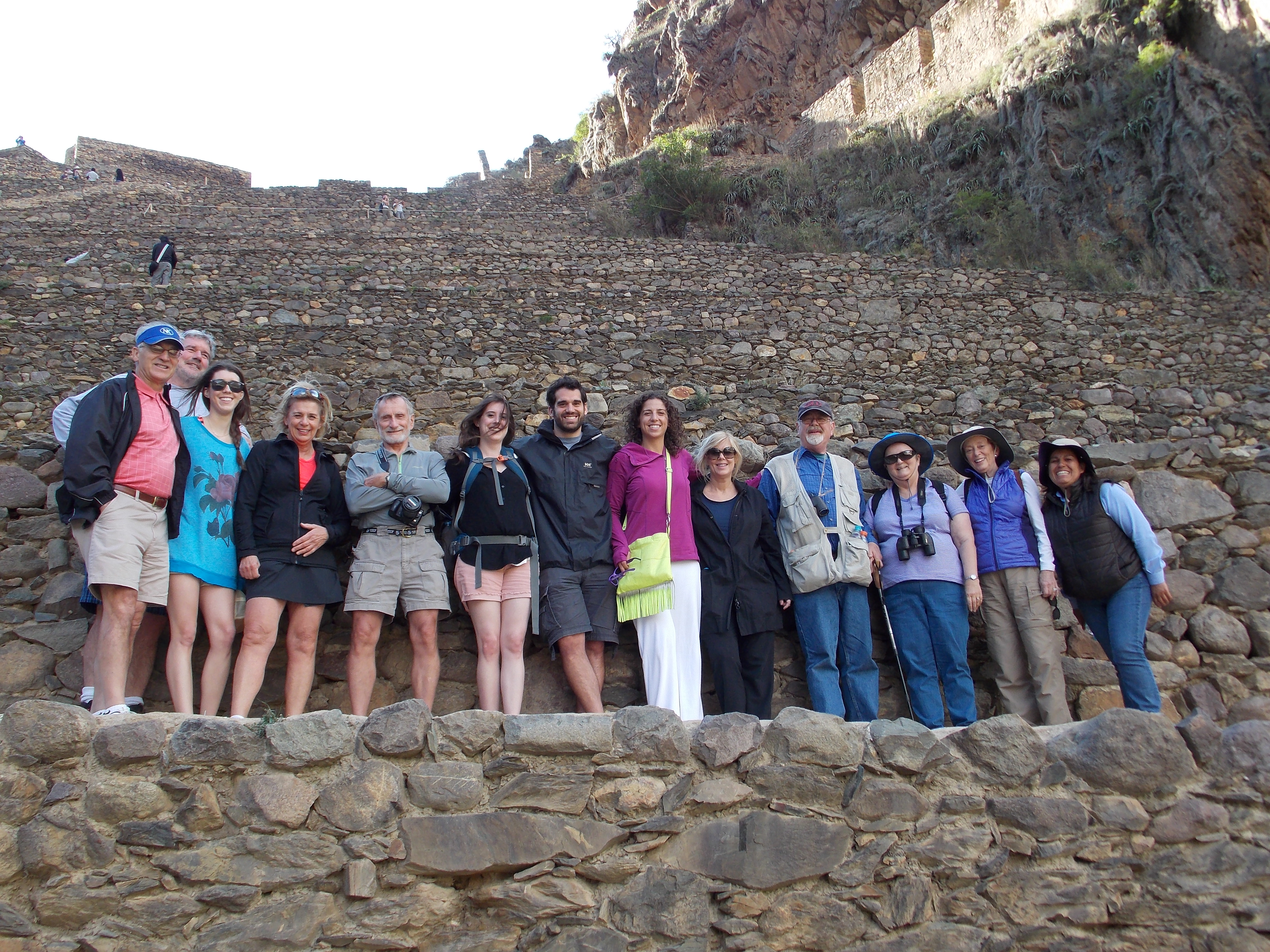
The Penn group at Ollantaytambo.

The Penn group at Ollantaytambo.

The next day we took the train down the Sacred Valley as the Urubamba River dropped 2000 feet into tropical cloud forest to Aquas Calientes. Then we took the most breathtaking imaginable bus ride up through 13 switchbacks on shear side of the mountain to arrive at Machu Picchu Ecological Lodge, where we spent the night. This exquisite boutique hotel is the only guest accommodation on site. We had the privilege of tranquil time at the site without the press of crowds. We had two guided tours of the vast and stunning site, which is truly a city in the clouds — its shear cliffs remind me of a Yosemite in the tropics. The intrepid among us even participated in a rather taxing climb of Wayna Picchu, the smaller mountain that overlooks the back of the site.

Hiking Machu Picchu.

Hiking Machu Picchu.

Penn alumni in the Andes!

Penn alumni in the Andes!

Machu Picchu is everything that I had imagined and more. As Anna Marie made clear, the Incans showed every bit of the skill of the Egyptians in moving large blocks and fitting them together flawlessly without mortar. They also understood water perfectly. A significant overnight rain failed to make any impact on the site. Reluctantly we descended the mountain and took the train back to Cuzco. We stayed in a truly original hotel, El Monasterio, a Franciscan monastery whose construction began in 1595. The guest rooms were palatial and the hospitality exquisite — as close to five star as I am ever likely to experience.

The impressive engineering skills of the Incas on display.

The impressive engineering skills of the Incas on display.

El Monasterio courtyard.

El Monasterio courtyard.

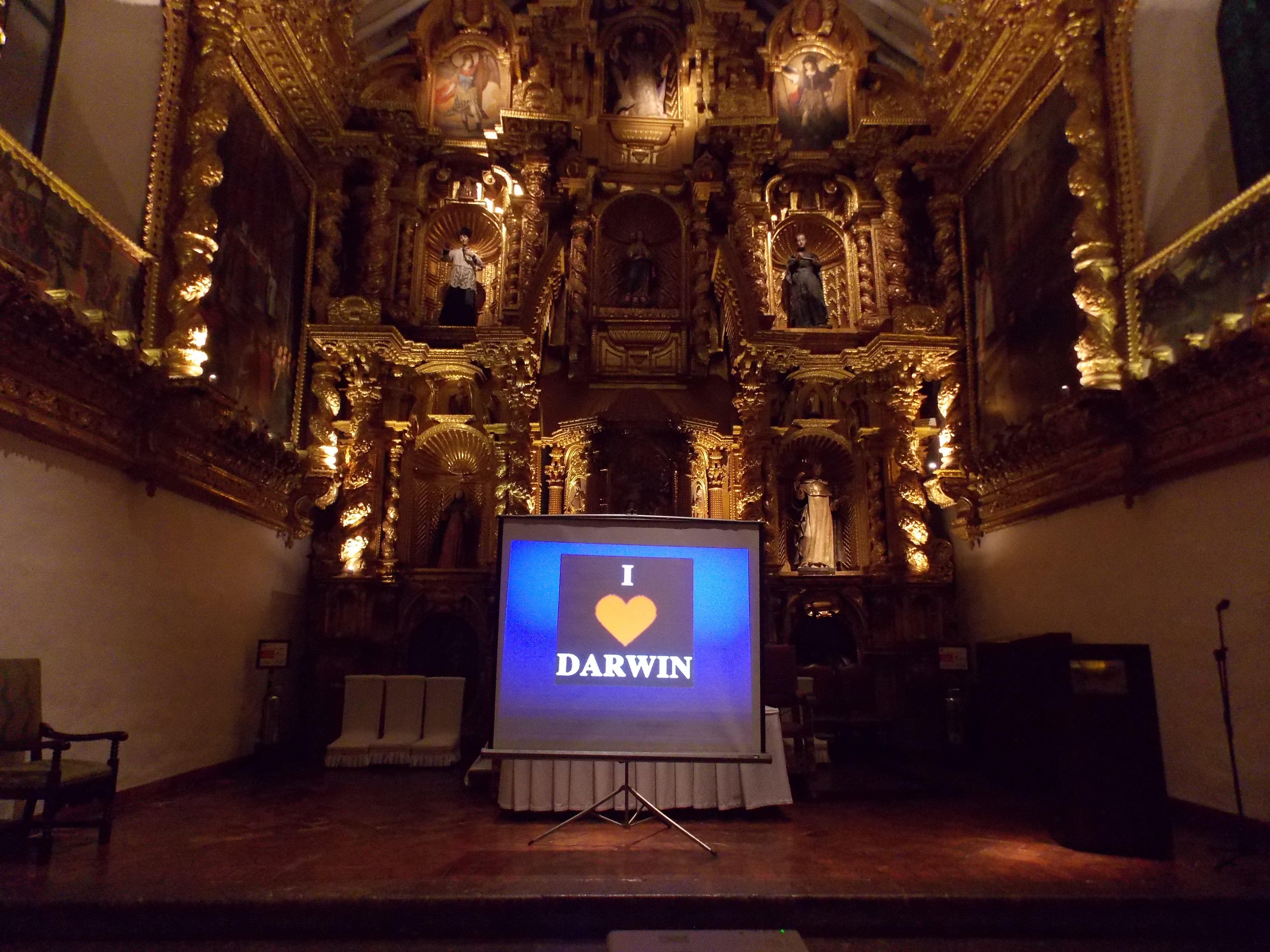
My first talk took place in a gorgeous ornate high ceilinged chapel–and oh, sweet irony–it was my Darwin talk! Some think Darwin and Christianity are incompatible, but I know differently. After exploring Cuzco, we said good bye to Marco and flew on to Quito via Lima, and were greeted by our Odyssey guide for Ecuador, Roberto Peralta. Roberto too was excellent, helpful, solicitous, knowledgeable, cheerful, and proud of is country.

Darwin in the baroque chapel at El Monasterio.

Darwin in the baroque chapel at El Monasterio.

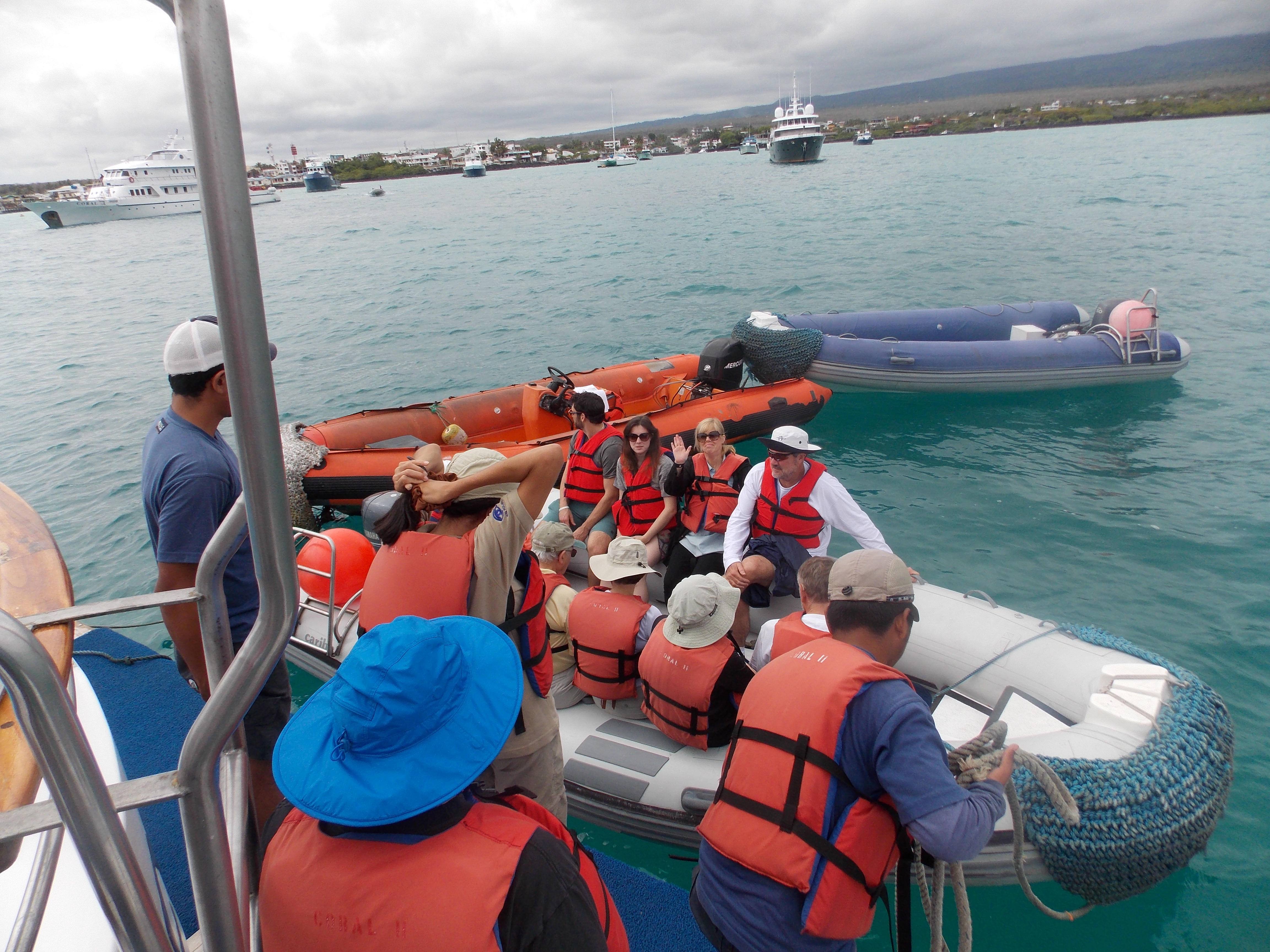
We flew on to the Galapagos via Guayaquil, Ecuador’s largest city. At Baltra Airport we were met by our local naturalist, the high-spirited Dora Ulloa. We rode by bus from the airport, ferried across a canal (where the air was alive with seabirds flying to and fro), and southward across Santa Cruz Island towards Puerto Ayora, the largest town in the Galapagos. In about 20 minutes we found ourselves in surprisingly lush vegetation at an altitude of about 2500 feet. Soon we were down at sea level again in Puerto Ayora. Here at the town dock we were met by two zodiac inflatable boats, locally called pangas, and whisked out to the Coral II, our beautiful 110 foot boat that was to be our home for the next three days.

Off on the zodiacs!

Off on the zodiacs!

We were met by the uniformed crew with the “Galapagos Greeting,” a firm forearm-to-forearm embrace that facilitates safe transfer from panga to ship or panga to shore. We settled into our staterooms, enjoyed a nice lunch, and then went ashore with Dora and Roberto to visit the tortoise breeding facility of the Darwin Research Center. Here we saw many Galapagos tortoises of varying sizes and shapes, many destined to be returned to their native islands. We also saw Darwin’s finches and mockingbirds moving about. Later we returned to the Coral II, enjoyed an excellent dinner and eventually repaired to our cabins.

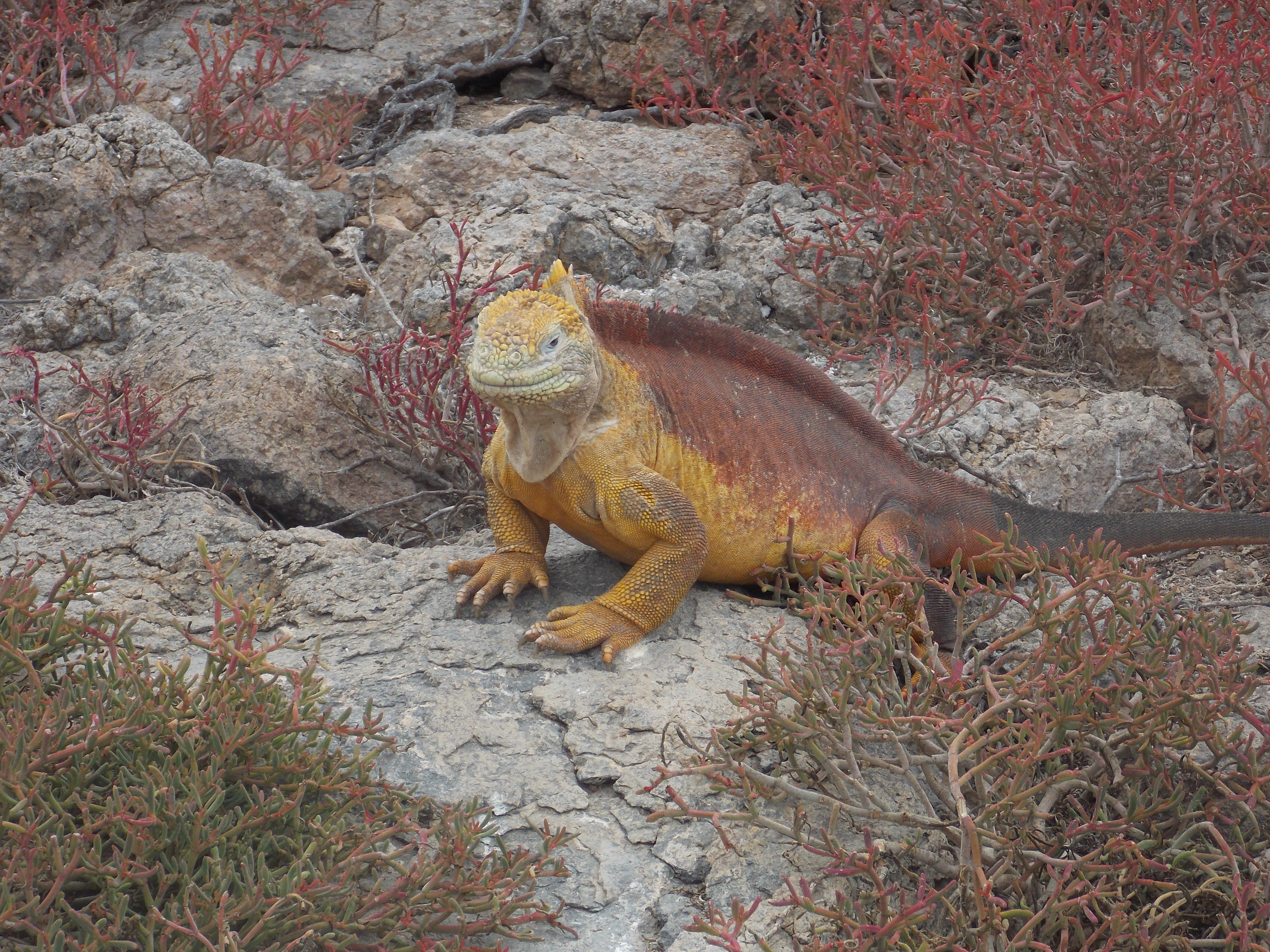
The ship sailed during the night, and walking with a cup of coffee during breakfast was a challenging. Shortly later we anchored near a tranquil lagoon, and our first shore excursion was highly rewarding. We were greeted on the beach by welcoming sea lions, Sally Lightfoot crabs and land iguanas. Later we snorkeled in the lagoon, swimming over a white-tipped reef shark and a green sea turtle, and we observed shoals of colorful reef fishes. In the afternoon we landed on beautiful South Plaza Island, whose rocky shores were guarded by sea lions and whose air space was thick with sea birds, including boobies, petrels, shearwaters, gulls and pelicans.

Sea lions on the shore.

Sea lions on the shore.

A land iguana.

A land iguana.

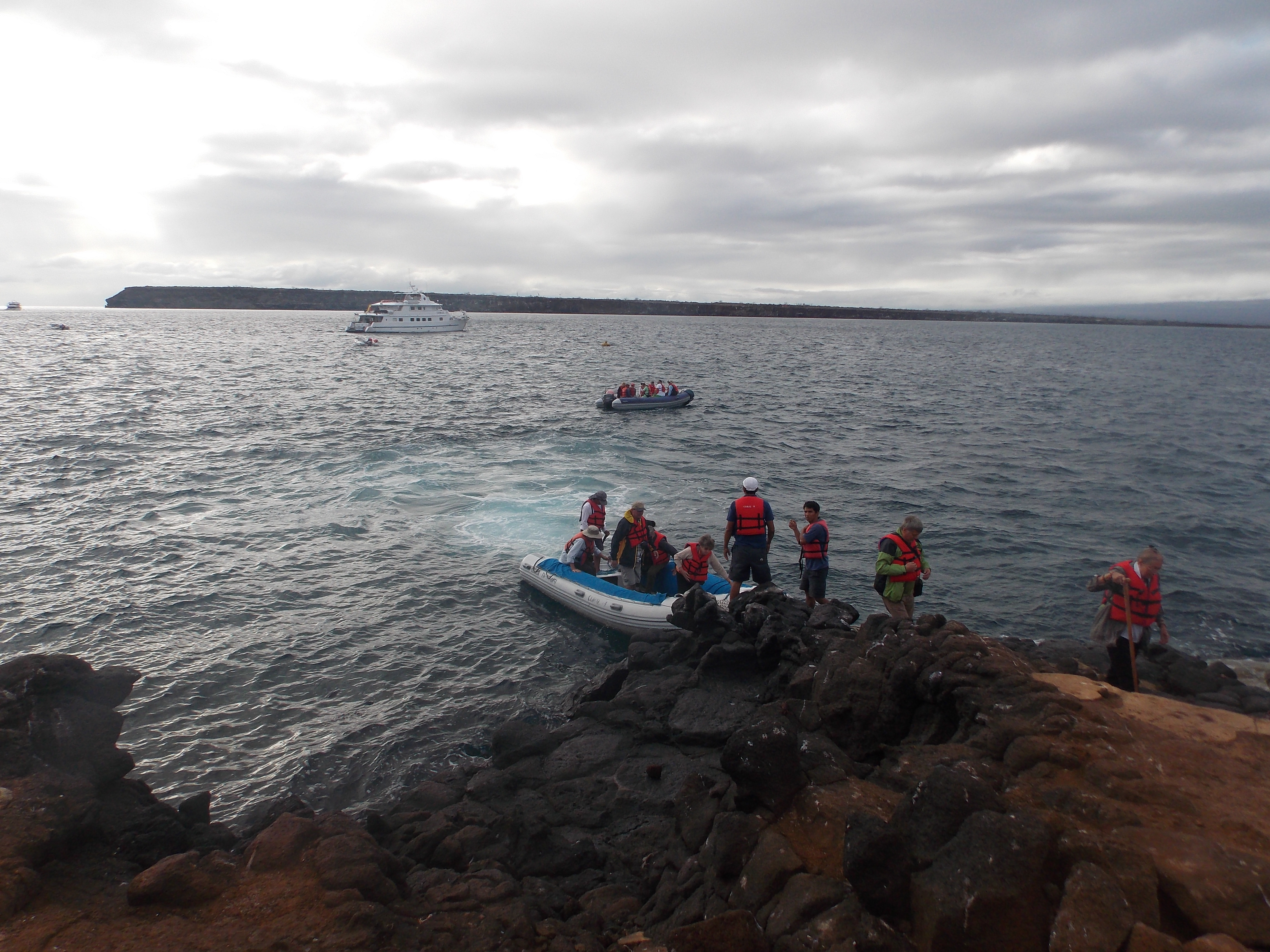
Transferring from the Coral II to one of the islands.

Transferring from the Coral II to one of the islands.

The following day we toured a boobie and frigate bird rookery on North Seymour Island. In the afternoon we walked a sandy beach, saw a flamingo, and snorkeled along the reef off the beach. Finally we made a long crossing to San Cristobal, visited the Galapagos Interpretive Center, and regretfully returned to Quito. Good things still remained. We spent a day at Antisana Preserve along volcano alley where we viewed 19,000 foot snow-covered volcanic cones (Antisana, Cotopaxi) and majestic Andean condors from a distance.
A lone flamingo.

A lone flamingo.

Our final day involved historic churches in Quito, a trip to the Middle of the Earth — the Equator where we stood with one foot in the Southern Hemisphere and the other foot in the Northern Hemisphere. We ate lunch at the elegant and dramatic El Crater on the very rim of an ancient caldera with Ecuadorian cloud forest falling away beneath our feet.

And so it ended. What a splendid trip filled with natural and cultural wonders. Penn Alumni Travel is absolutely first class all the way. It is an absolutely worry-free way to travel and learn about other cultures and habitats. There is something for everyone everyday. It was thoroughly enjoyable and I recommend it wholeheartedly.

[To learn more about Penn Alumni Travel and our 2014 schedule, click here.]

1 Comment

Filed under Faculty perspective, Penn Alumni Travel, Travel

Behind the Scenes: Travel Destinations 2015

By: Alyssa D’Alconzo, Ed.D. GED’04, GRD ’11

On a snowy day earlier this month,

Snowy College Hall

so snowy it was hard to see the Button in front of Van Pelt,

Snowy Button

the Penn Alumni Travel team cozied up inside Sweeten House

Snowy Sweeten

with cappuccinos and lattes to set our travel destination list for 2015. (Yes, 2015! We have begun booking for 2014 and the full schedule is available at http://www.alumni.upenn.edu/travel/trips.html)

photo 1

With all of the fabulous places to visit in the world, how did we determine where we’ll send our Penn alumni travelers and faculty hosts?

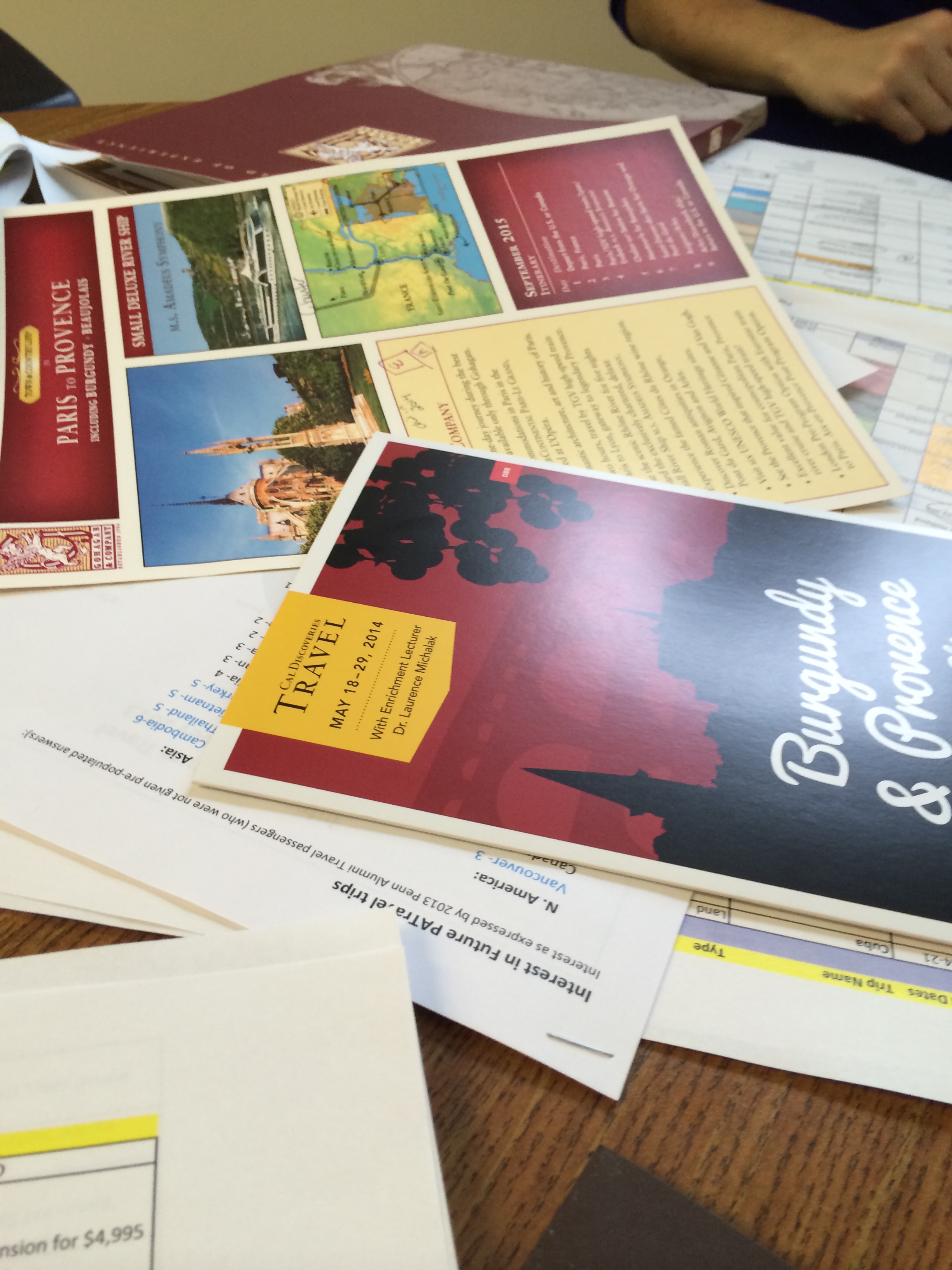
First, we gathered data. Throughout the fall semester we met with vendors to learn what new and exciting tours they’re offering. We also spent time poring over the feedback and insights we received from previous trips and our annual travel survey. Emilie created every chart and graph imaginable to help us better understand where Penn alumni and friends want to visit, when, for how long, and how!  For example, for 2015, we received a lot of interest in Italy and France, fall travel for 7-10 days, and land-based tours.

photo 2

Next we consulted available offerings to put together an interest list that covered all parts of the world, differed in lengths of trips, and offered land-based, ocean cruise, and river cruise options. We also routinely consulted the maps that hang in our offices to trace potential itineraries.

photo 3

And, of course, we thought about the expertise of our faculty hosts! Their full participation on tours, sharing lectures and expertise, is a big part of what makes Penn Alumni Travel trips so special.

After sleeping on our selections – and a bit more discussion – we think we’ve done it! We’ve created a destinations list sure to engage the most seasoned traveler, and we can’t wait to share it with you. To be one of the first to know when our 2015 schedule is released, join us on Facebook!

Leave a comment

Filed under Alyssa D., Penn Alumni Travel, Travel