Category Archives: Locust Walk Talk

Locust Walk Talk: Regional Club Member Meet Up

Author: Casey Ryan, C’95

Alumni Weekend is frenetic, hectic, crazy and frantic for us as staff.  We spend our hours running from College Hall to Hamilton Village (Superblock) and then off to the Stouffer College House in order to staff a board meeting, check in attendees at a panel discussion, or manage registration for one of our hundreds of our events.  We are in a constant state of flux.  It’s important though, because if we’re frenzied behind the scenes, then we know that everything is being accomplished to make sure that our alumni have an amazing time over the weekend  And the adrenaline does us all good.

I think you can see me darting from one location to the next in the background.

However, one of my favorite times during the weekend is the Penn Alumni Regional Club Member Meet Up.  It’s an hour out of our busy schedule to take some time to visit with our incredible volunteers:  club presidents, club leaders, club members, Interview Program Chairs and interviewer.  It’s so valuable to have the opportunity to see folks for a nice chat in person.

Campus is always so nicely done up.

While the event is primarily for our volunteers to network and meet their peers from next door or from around the world – last year, I was privy to Club members from Shanghai and Interview Program volunteers from Cherry Hill having a riveting conversation – this event is a break in the day to see our alumni friends, welcome them back to campus , and to thank them for all the hard work they’ve done for Penn.

So, if you are Interview Program chair, an interviewer, a club leader or member, you are welcome to join the Penn Alumni Regional Club staff for the Meet Up, which will be held on Saturday, May 11 in the Class of 1953 Lounge at E. Craig Sweeten Alumni House (3533 Locust Walk) from 3 to 4 PM.

.

Leave a comment

Filed under Alumni Perspective, Alumni Weekend, Casey R., Locust Walk Talk

Locust Walk Talk: What Penn’s Taught Me After Graduation

Author: Casey Ryan, C’95

Today, I’m going to take a more personal direction on my entry.  Ten years ago I started Philadelphia’s gay (but inclusive) rugby club – the Philadelphia Gryphons

An opportunity to start an amateur team from scratch was starting me in the face and I jumped in full of passion.  Looking back, I realize that working at Penn and launching a team worked mutually to teach me a lot.

It was January 24, 2003 and I was supposed to meet a friend out that night but they had to cancel when a flat tire ruined his plans.  Luckily for me, I had made it out to the bar before getting the call.  (I might be a social, friendly person, but I actually hate those moments when I’m solo in social places.  Yes, somehow, eventually, I start to chat with someone or someone chats with me, but those minutes beforehand are painful).
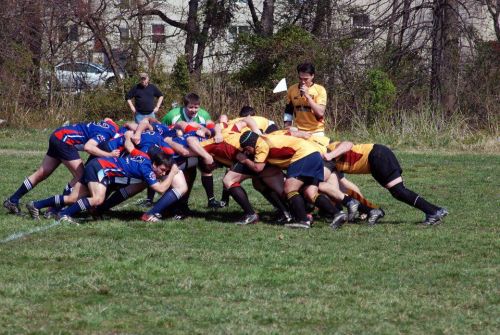
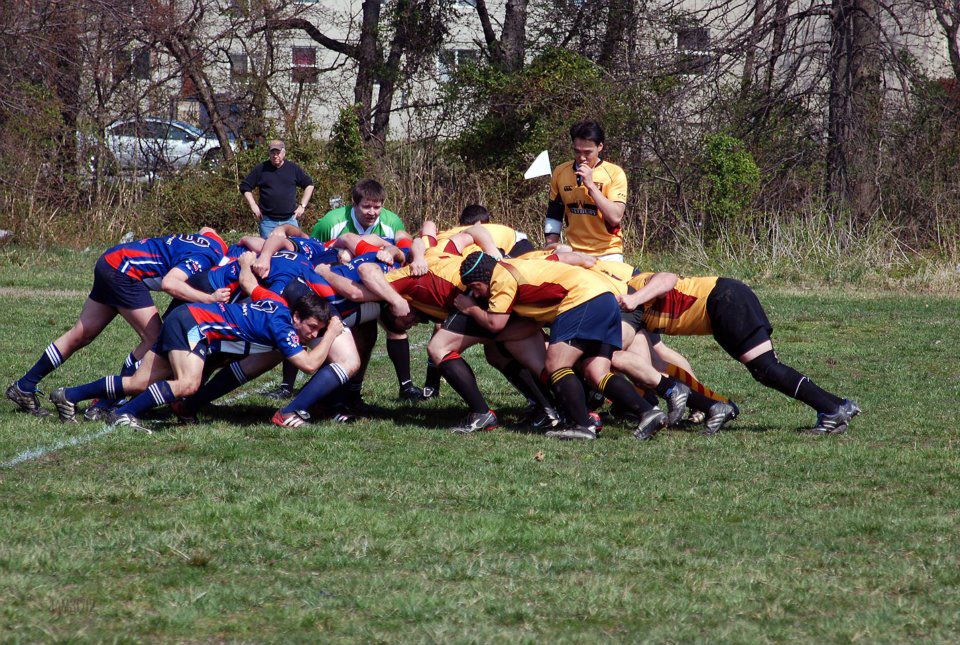
 A scrum is one of the ways to pull a ball in play – akin to lining up at the line of scrimmage in American Football.

A scrum is one of the ways to pull a ball in play – akin to lining up at the line of scrimmage in American football.

In the middle of those painful minutes, I noticed a dozen men in a variety of rugby jerseys, drinking, chatting and being gregarious.  Wanting to overcome that wee bit of anxiety that I was feeling, I asked one of the jerseyed men, “Is this all about rugby? I noticed your jerseys.”  I was directed to a fellow with a sign in sheet.  That man, Lars, explained that the Washington Renegades and New York Gotham Knights had planned to come to Philadelphia to encourage the formation of a gay rugby team.  Later, I eventually found out that one of the reasons they were creating excitement for gay rugby was to honor their memory of their teammate, Mark Bingham, who died in United Flight 83 on September 11, 2001.  He lived a bicoastal life and had found so much enjoyment in playing for the San Francisco Fog, that he helped New York start its team.

I was excited. I never played football since my parents thought that it was too violent.  So as a 30-year old, I could make my own decisions, right?  Yet, I was aware of rugby as the most popular sport in Irish and British culture due to my own background as an Irish-American. Plus, I had played soccer and missed the camaraderie on being on a team sport.  This was what could fill a need that I didn’t know I had until I wrote my name down on the contact list that night.
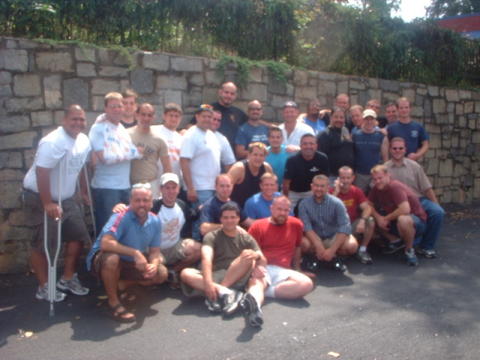
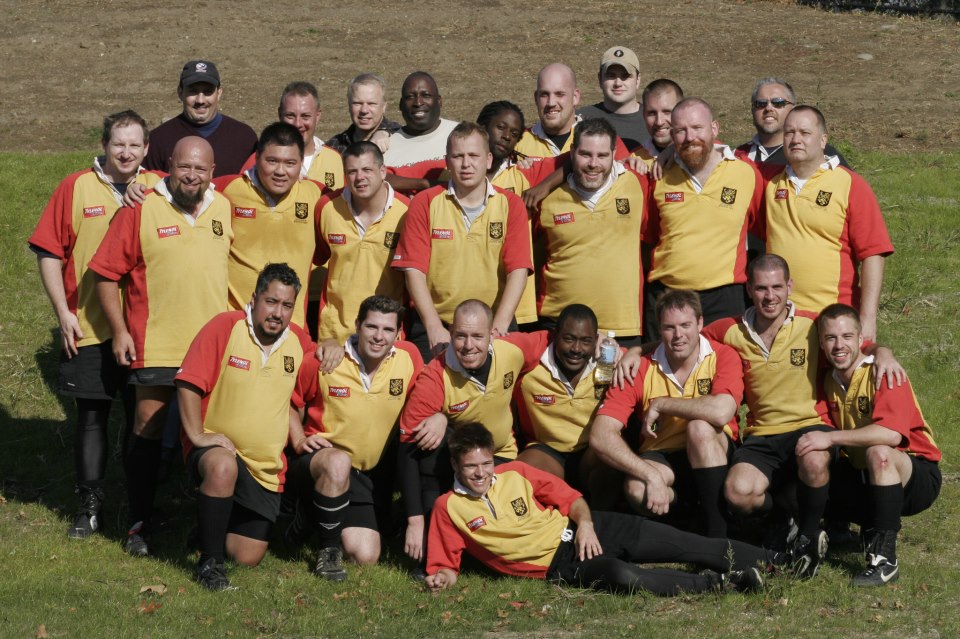
The team photo after a long weekend of playing rugby in Atlanta with Cochetti, C’06, Cruz, C’97, CGS’04, GEX’12 , Ryan, C’95 and Weinstein, G’09.

The team photo after a long weekend of playing rugby in Atlanta with Cochetti, C’06, Cruz, C’97, CGS’04, GEX’12 , Ryan, C’95 and Weinstein, G’09.

Within the week after the initial sign up, I received an e-mail from Lars putting all of us interested folks in touch with each other. Replies started to fly out, “It was great to meet all of you” and “I can’t wait to start to play.”  I knew time was of the essence.  Penn’s adopted adage aut inveniam viam aut faciam (we will find a way or make one) rang through my head; if I wanted to play rugby and I needed to make a team…I sent out a reply all e-mail inviting all to meet at Fadó to talk rugby.

That e-mail got some great responses and one of who was a Wharton PhD candidate, Sam C., W’97, GEN’01, G’03, GRW’04, to be accurate, who traveled between New York and Philadelphia who offered to be captain for the first year until the team got on its feet.  As our newly elected captain, he invited John McMullen, who had coached Penn’s Men Rugby Club in 2000, to serve as our team’s first and current coach.

A lineout is another of the ways to pull a ball in play – akin to a throw in soccer.

A lineout is another of the ways to pull a ball in play – akin to a throw in soccer.

Named President by acclamation, I saw our first goal for the team as recruitment; there are 15 players on a side in a rugby match and to successfully scrimmage we were going to need at least 30 men.  Like our Regional Clubs, the Gryphons held membership drives – going to the places where our target audience would be, reaching out to them and explaining the excitement of rugby.  Soon after we launched those efforts, Joe Cruz, C’97, CGS’04, GEX’12, Phil Cochetti, C’06, Chris Hatfield, CGS’02, and Dave Weinstein, G’09, joined our team. In six-month’s time, we were able to play our first match and that solidified us as a cohesive group.  Behind the scenes, the club worked to join the Eastern Pennsylvania Rugby Union (EPRU), our local branch of USA Rugby – the governing body for rugby in the States.  To prepare for recognition by the EPRU, I took a crash course in 501(c)(3) and (c )(7) status and drafting by-laws from my fellow rugby-players whose day jobs were that of lawyer to help me draft our documents.  I use this invaluable information from this exercise to help support my Regional Club volunteers to this day.

By 2004, we had recruited a strong team, including a new Penn player, Joe S., L’04, we had tax exempt status to help earn funds, and we set out to play in the Bingham Cup in London, the biennial international, non-professional, gay rugby tournament started in 2002. This was the vulcanizing events for our young team, traveling to rugby’s birth country to play in the spirit of friendship, sportsmanship and inclusiveness and subsequently winning the Bingham Bowl (quite literately a bowl from the cupboard of the Esher Rugby Club’s Clubhouse.) It was simply amazing.

Obligatory Team shot whilst in London, with Ryan, C’95 and Weinstein, G’09.

Obligatory team shot whilst in London, with Ryan, C’95 and Weinstein, G’09.

The team continued on. I stepped down from the Presidency after an amazing two years.  (Another post-graduation Penn thing I’ve learned, term limits for volunteers are a good thing.)  Yet I was still engaged with the board. I would volunteer for events and continue to play. Yet there comes a time when life asks you to move on and I last played my last match in March 2008. I decided to retire from the team that I was thrilled to see come to fruition; work and family obligations were pulling me away from the game and team I loved.  I managed to stay in touch and go to our home pitch in Southwest Philadelphia to watch a match when the Gryphons were playing at home and I wasn’t working the weekend for Penn.

I always felt a warm reception when I was able to make it to these matches.  Some original players still played and would wave hi when they saw me during their warm ups. I had befriended some of the newer folks and they would welcome me over to the team’s camp to watch the match with the club.  I still was a Gryphon.

That’s yours truly running with the ball.

That’s yours truly running with the ball.

However, I wasn’t going to be allowed to remain a passive member of the club. At the beginning of this year, the current President, Phil Cochetti, reached out to me and dove straight to the point, “I have a big favor to ask and I can’t let you say no.”

“Okay, Phil,” I said, bracing myself.

“I need to ask you to chair our Anniversary Committee. You started this team 10 years and we need to celebrate this milestone.  Plus with all your work in Alumni Relations, you are the only person I can think of to do with me and two other volunteers.”

If anything, Phil is very adept in using brevity to be extremely persuasive, so he had himself a chair. The 10th Anniversary Party is happening at the end of this month.   Over the last four months, I have been relying on my skills in outreach that my class reunion committee volunteers used in order reengage our former players and to encourage them to meet the current team.  The committee has been e-mailing, calling, Face-booking, texting and tweeting to reconnect all members of the team.  I stole a page from Classes and Reunions’ suggestion book and spearheaded an Alumni Day at our Spring season home opening, which served as a pre-reunion event for our Anniversary.

The Gryphons Alumni gathering after the match, “The Third Half” named such since a 80 minute rugby match is played in two halves with Cochetti, C’06 and Ryan, C’95.

The Gryphons Alumni gathering after the match, “The Third Half” named such since a 80 minute rugby match is played in two halves with Cochetti, C’06 and Ryan, C’95.

Due to my days as a staff writer in Wharton External Affairs, I have been inspired to write equally persuasive joint letters from Phil and me to our players, supports and alumni.

“So this Anniversary gala will be a celebration of the work and dedication of the team over the last ten years from our beginnings to our future which you are an integral part of – we will highlight our history, thank our outstanding volunteers and celebrate the devotion of our current players – all of this will culminate in an official public announcement about what will be a once-in-a-lifetime event for team.  We want you there to join in this excitement.

We call our former players and supporters alumni and invite them to remain active in the day to day life of the team.  Like at Penn – probably because so many of us when to Penn – being a Gryphons is a lifelong relationship with the Club as being a Penn Alumnus starts when you enter campus as a freshman.

Another team photo circa 2005.

Another team photo circa 2005.

In returning back to the club, I have met our newest generation of Gryphons – a group of gentlemen committed to our LGBTA community – where the A standing for our straight allies – and playing rugby to the best of their abilities. In our ranks are several Penn students and a recent alumnus, Femi Fadugba, G’12, Tony Solitro, GR’14, Eddie Goodwin, GR’14, Eric Wong, GR’16 and Hank Bink, GR’16. The Gryphons are seasoned and new to the sport, gay and straight, team players and former solo sports enthusiasts. They are the embodiment of that martial quote from Shakespeare’s Henry V, “We few, we happy few, we band of brothers. For he today that sheds his blood with me shall be my brother.”

This is a great reward for all of us involved. For me, personally, I thank the mutual benefit of work and my extracurricular life where I can share skills I hone, the knowledge I learn and the relationships I build between the two so simply. To paraphrase Mr. Franklin, that lesson (that I’ve been taught) is indeed the great aim of my post-Penn learning.

1 Comment

Filed under Alumni Perspective, Casey R., Locust Walk Talk

Locust Walk Talk: Houston and the Behind the Scenes of How We Travel

Author: Casey Ryan, C’95

Traffic was horrible from the airport, the I-610 loop was under construction and it was going to take longer than the 29 minutes that the web predicted it would take for us to get from the airport to our hotel.  I took advantage of the time with Rob to discuss the plan for event.

The event was going to be in the home of a Penn alumnus.  The timing of the event was 7:00pm to 9:00pm.  In my introduction, I’ll mention your time at Cornell, UC Santa Barbara, UCLA, Caltech, and the University of Arizona since Penn alumni like to know where their professors when to school. It would be no problem for me to take you into town in order to meet up with an old friend.

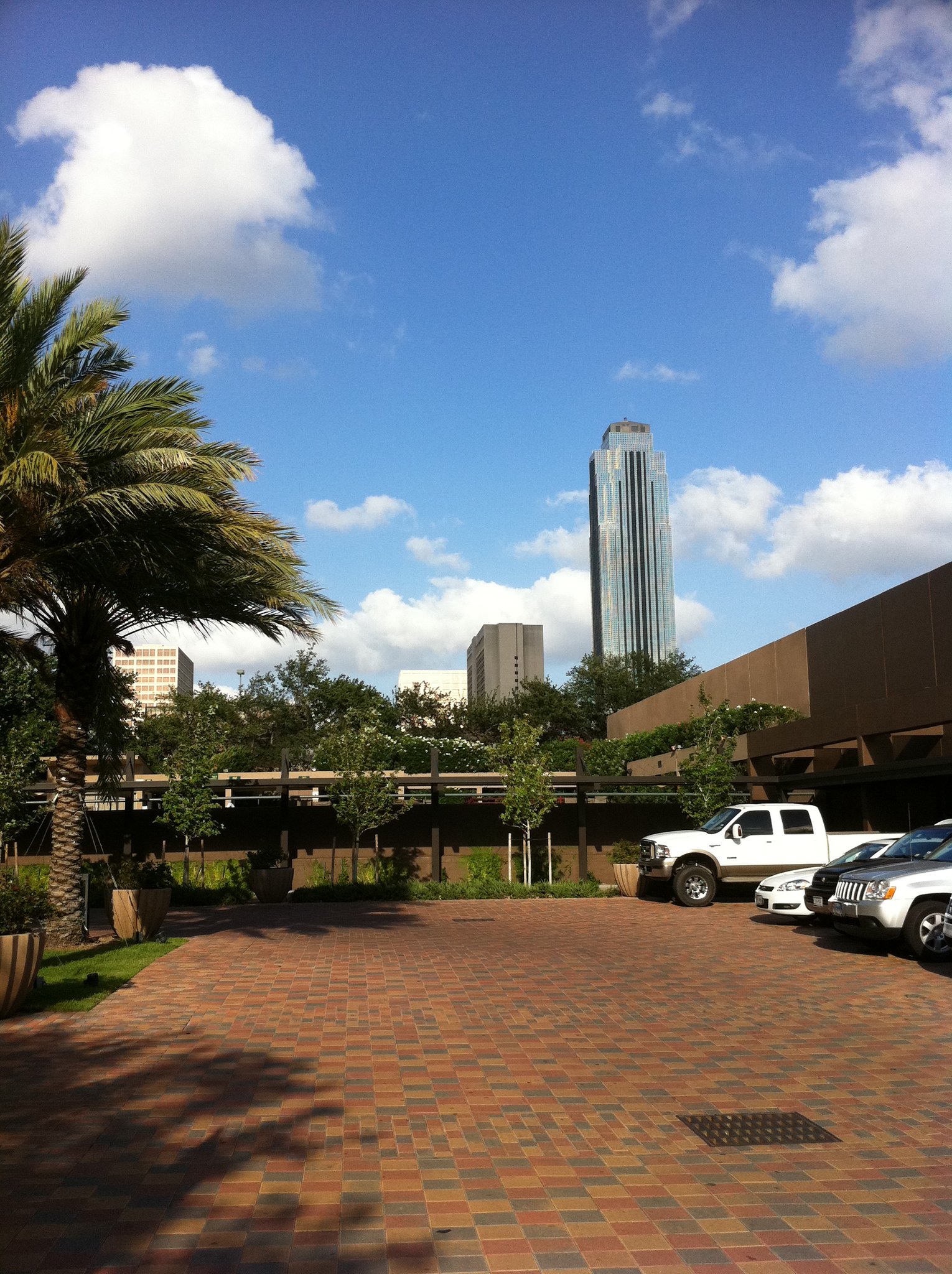
The view of Houston from Westheimer Road.

The view of Houston from Westheimer Road.

We’re only four years apart in age, so we also chatted about the similarities and differences between our Ivy League educations. We dove into our motivations for choosing the schools that we did.  We concluded that our two almae matres offered many of the same opportunities which were set against the most opposite of backdrops.

*******

Earlier, I recognized Rob and tried to get his attention before boarding the plane. However, the procedure was a little hectic and I lost my chance.  Luckily, when we landed, I was able to get off the plane quickly enough to wait for him and introduce myself.

“Excuse me.  Professor Kurzban?”  I asked.

“Yes?”

“Hello, I’m Casey Ryan from Alumni Relations.”

“Oh, great. You’re going to be taking me to tonight’s event?”

“Yes, I am.”

“Good. Oh, by the way, just call me Rob” he said and after a beat, “And how did you know who I was?”

“I Googled you. Your vitae had your picture attached.”

Over 45 Penn Alumni listening to Rob.

Over 45 Penn Alumni listening to Rob.

We have a hectic job of coordinating travel plans, hotel rooms, and taxis for our professors.  While we cultivate a great rapport with faculty via e-mail, we sometimes don’t get the opportunity to meet them in person until we both arrive at the airport even though we all work on the same campus.

The minor awkward moment of finally meeting Rob, in this case, quickly melted away into a conversation that ranged from our high school and college experiences to the culture of Washington D.C. these days, to his area of expertise (evolutionary psychiatry), to cities that he visits often for potential future events with our clubs. We had over an hour in the car and miles of access road closures to get acquainted before arriving at our hotel.

Rob wrapping up, revisiting his Walt Whitman quote.

Rob wrapping up, revisiting his Walt Whitman quote.

At our appointed time, we headed over to the Greater Uptown house to help set up. Our hosts Wayne and Therese warmly invited us in as Berkely, the Club President, and Stephanie, a Club Board Member, were placing the finishing touches–including name tags and a thoughtful “Welcome to Texas” goodie bag.  We tested the setup of the room for good acoustics and found power sources for the laptop and projector.  When we finished getting everything ready for the event, we clinked wine classes in another quick toast to the fine state of Texas.  By 6:50 PM, Penn Alumni had arrived and were mingling – all obviously excited for Rob’s talk about the research in his book, Why Everyone (Else) is a Hypocrite: Evolution and the Modular Mind.

Rob started his chat with a quote from Walt Whitman to illustrate the point of his discussion. “Do I contradict myself? Very well, then I contradict myself, I am large, I contain multitudes.”  To compliment Rob’s talk, I started tweeting @CaseyJamesR.

CaseyJamesR: Kurzban in #Houston discusses evolutionary psychology with @Pennalumni

CaseyJamesR: “Evolution is a very competitive process,” Rob Kurzban in #Houston with @Pennalumni

CaseyJamesR: “Self-esteem is not a major predictor or cause of almost anything'” Kurzban in #Houston with @Pennalumni

Alumni mingling and chatting about the presentation.

Alumni mingling and chatting about the presentation.

Unfortunately, I was only able to post three tweets during the night since other event duties kept me busy throughout his lecture. However, I was able to glean what evolutionary psychology posits: our mind has many different modules, specialized units designed by the process of evolution by natural selection.  The metaphor Rob used to explain modularity was that our mind is similar to a smart phone in that it has many apps that work to process numerous and unrelated tasks (n.b. Rob  clearly stated that he wasn’t saying that the mind is just like a smart phone, but the comparison helps to convey the variety of functions represented in a collection of individual modules).

These modules focus on many different aspects of our social lives, such as finding a mate, evaluating self-preservation and making moral assessments. Usually they work together seamlessly. However, there are times that modules produce contradictory beliefs. This contradiction leads to an outcome that would be hypocritical.

Rob was able to share many colorful examples of the contradictory results, ranging from minor outcomes like not looking both ways to cross the street to scandals that have rocked many political careers.  In the end, the alumni of Houston were engaged with Rob’s work and the Q&A session extended for over an hour.  At  the conclusion of the event, we thanked the Penn Club of Houston and the Greens for their Texas-sized hospitality.

And of course, no trip to Texas would be quite complete with the requisite bar-be-que!

And of course, no trip to Texas would be quite complete with the requisite bar-be-que!

Leave a comment

Filed under Alumni Perspective, Alumni Programming, Casey R., Locust Walk Talk

Locust Walk Talk: Martin Luther King Day

Author: Casey Ryan, C’95

The first national King holiday was observed in 1986, eighteen years after Dr. King’s death.  By 1988, Pennsylvania Secretary of Labor and Industry Harris Wofford, and his executive assistant, Todd Bernstein realized in the two years since the national observance started, it was becoming for millions just another day off. To address the lack of commitment and understanding of Dr. Kings lifetime of service to others, these two men decided to organize a day of service- a day with the theme, “A Day On not A Day Off.”

Dr. King, delivering his famous “I Have a Dream” speech. Photo courtesy of Wikipedia.

At Penn, the African American Resource Center (AARC) hosts Dr. Martin Luther King, Jr. Symposium for Social Change. Starting on January 12 and extending through February 1, there are presentations, discussions, service events and more scheduled for the Penn community.

Two highlights of the Symposium were 12th Annual Reverend Dr. Martin Luther King, Jr. Lecture in Social Justice and Monday’s Day of Service.

John Legend, C ’99, (né Stephens) returned to Penn to give the Lecture in Social Justice at Irvine Auditorium as part of the University’s annual MKL commemorations on January 16. Joining him was Camille Charles, director of the Center for Africana Studies and professor of sociology at Penn.

Charles opened the conversation by asking Legend to recall his journey to Penn. He spoke about his early childhood in Springfield, OH, his travels to Penn and going to college at the precocious age of 16. He shared a humorous anecdote about whether he would finish his last year at Penn or join to Lauryn Hill’s tour – Lauryn chose someone else to play piano and he finished Penn.  This story highlighted the difficult journey of breaking into the music business.

Legend also shared accounts of launching the Show Me Campaign which works to end the cycle of poverty in the United States and around the world. Impressively, he also sits on the boards of the Education Equality Project, Teach for America and the Harlem Village Academics.

All photos by Steve Mincola.

John Legend (Photos by Steve Mincola.)

On Monday’s Day of Service, there were several community events:

  • Children’s Banner Painting: to paint commemorative posters and banners while listening to stories and songs about Dr. King’s life.
  • Helping Hands at Houston Hall: to create personal gifts that will be donated to West Philadelphia area shelters, homes, hospitals and charities.
  • MLK Mentoring Project: to mentor students from the Upward Bound Program, featuring volunteers from the Penn chapter of the National Association of Black Social Workers, BGAPSA, and interns from the Christian Association.
  • Philadelphia Reads: Literacy Project: to create books on tape to promote literacy for Philadelphia youth.
  • Community Beautification Projects: to clean, paint and organize at Martha Washington Elementary School, Sayer High School, Sayre Recreation Center, and the Community Education Center in West Philadelphia.

Though Dr. King’s birthday was January 15, there is over a week of MLK Symposium for Social Change events which are open to the Penn community should you find yourself on campus.  For more information, you can visit the AARC’s Dr. Martin Luther King, Jr. Symposium for Social Change calendar.

Leave a comment

Filed under Campus Life, Casey R., Locust Walk Talk

Locust Walk Talk: Hurricane Sandy

Author: Casey Ryan, C’95

I had planned to share with you a story about a trip to Boston for the Penn To You event, Taking a Personal Approach to Cancer: Penn Medicine’s Leading-Edge Discoveries And What it Could Mean for You and Your Family. The discussion would have showcased The Perelman School of Medicine and featured numerous distinguished faculty. This research was featured in the The New York Times this week if you are interested in learning more.  However ,we had to cancel the program due to the impending arrival of the now-called Superstorm Sandy.

As we are in the middle of the holiday season, I’d like to remind you that there are still many affected by the storm’s aftermath and here are some stories which highlight what Penn and Penn alumni have done to disseminate the reality of the destruction and the means to improve the situation.

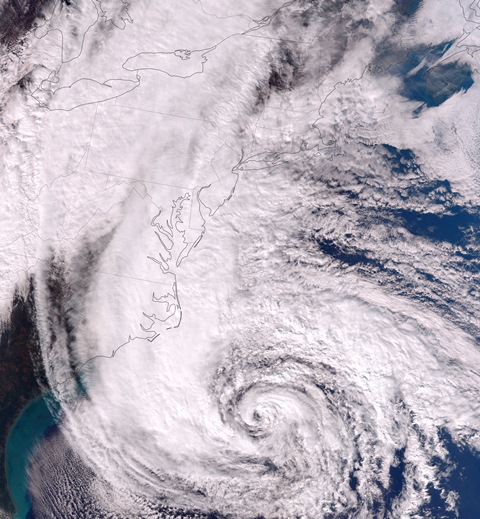
The immense size of Hurricane Sandy, feature the cold front heading toward the storm (picture courtesy of Wikipedia).

The immense size of Hurricane Sandy, feature the cold front heading toward the storm (picture courtesy of Wikipedia).

However, I was pleased to see that Penn was covering the storm closely and giving updates and commentary throughout and after the crisis.

In Sandy’s Costly Aftermath from the Knowledge@Wharton site, Howard Kunreuther, co-director of Wharton’s Risk Management and Decision Processes Center, uses one word to describe Sandy, “horrendous.”  He continues, saying that “it’s the worst of the century because of a combination of factors – its incredible reach along the East coast, its incredible damage to New York City and Long Island and the incredible amount of flooding along the New Jersey coast, including Atlantic City.” Talking about the financial impact of the storm along, Kunreuther has heard that cost of the story could reach as high as $50 billion citing that risk of business interruption could be very severe if it takes a long time for some companies to start functioning again and would likely lead to this gigantic price tag.

From Penn’s Center for High Impact Philanthropy’s blog entry, Hurricane Sandy: How Can I Help?, one learns that  the best help would-be philanthropists can provide is cash donations to first responder nonprofits, not product donations.  The simple reason is that cash allows these nonprofits to get what is needed faster and more cost-effectively and to respond flexibly as needs change.

Lastly, from Penn News’ Helping Those Impacted by Hurricane Sandy, the University acknowledges that many of our neighbors in New Jersey and New York continue to struggle in the aftermath of Hurricane Sandy. To assist,  the University of Pennsylvania’s faculty, staff, and students have undertaken a number of efforts to support the victims of this terrible natural disaster. That means there are several organizations actively supporting those whose lives have been upended by the storm and are accepting donations from those who want to help, including The American Red Cross Disaster Relief Fund and The Robin Hood Relief Fund.

In this season of giving, I urge you to remember those who could use a little more help this year.

Leave a comment

Filed under Alumni Perspective, Casey R., Locust Walk Talk

Locust Walk Talk: A Tale of Two Cities – Dick Polman and the Election

Author: Casey Ryan, C’95

As Dickens’s tale of London and Paris was set along a backdrop of political upheaval, our tour with Dick Polman was set against the political grumblings in the US.  With only a few weeks before the election and sandwiching the last president debate, Dick visited the UK and France to meet with our Penn alumni and friends to talk about who would win the election.

“Who Will Win… & Why?”

You’ll have to take this with a grain of salt since I’m reporting after the election, but I do have over 60 alumni and friends in the UK and France who will vouch for me. Dick analyzed the first two debates (and by Paris the third) and concluded that this upcoming election has many very similar characteristics to Bush W’s re-election against Kerry: a match up with an incumbent President with lowering approval ratings against a Massachusetts politician who is portrayed as an elitist and as out of touch with the American public.  Therefore he was willing to make the prediction that Obama would win, but he wouldn’t win the popular vote with as large of a margin as the first time.

Dick focused his discussion about the importance of the swing states.  The candidates’ battle for Ohio, Colorado, Virginia and even New Hampshire was telling about the newer nature of campaigning. In contract, Nixon campaigned in all states when he ran and now for our two candidates of 2012 it was all an all-out assault on Colorado, Florida, Iowa, Nevada, New Hampshire, North Carolina, Ohio, Virginia and Wisconsin.

Penn Alumni enjoying cocktails before the discussion.

The meat of the conversation was the questions from the audience.  While I was at the events, I tried, in 140 characters or less, to tweet some of the questions and some pictures from the evening to share with the Penn Alumni world at large.

If you are interested in getting updates from events that I attended, please feel free to follow me at www.twitter.com/CaseyJamesR.  While I was running the logistics for the event, I was able to send off a few tweets about the conversation.  Please note that my commentary in italics are from my recollection and only represent my memory of the event and not necessarily that actual comments of Dick Polman.

The Shard (a.k.a. the London Bridge Tower)

London:

Oct 22, 7:51pm: In #London with @Pennalumni in the UK for Dick Polman talking about the presidential race ow.ly/i/1337b #GOP #DEM

Oct 22, 8:22pm: Question to Dick Polman from @Pennalumni Would the #GOP position on #immigration make #Texas & #Arizona go Purple? #DEM

(DP addressed that the urban centers in Texas and Arizona definitely vote Democratic but they are small population centers relative to the exurbs and rural areas)

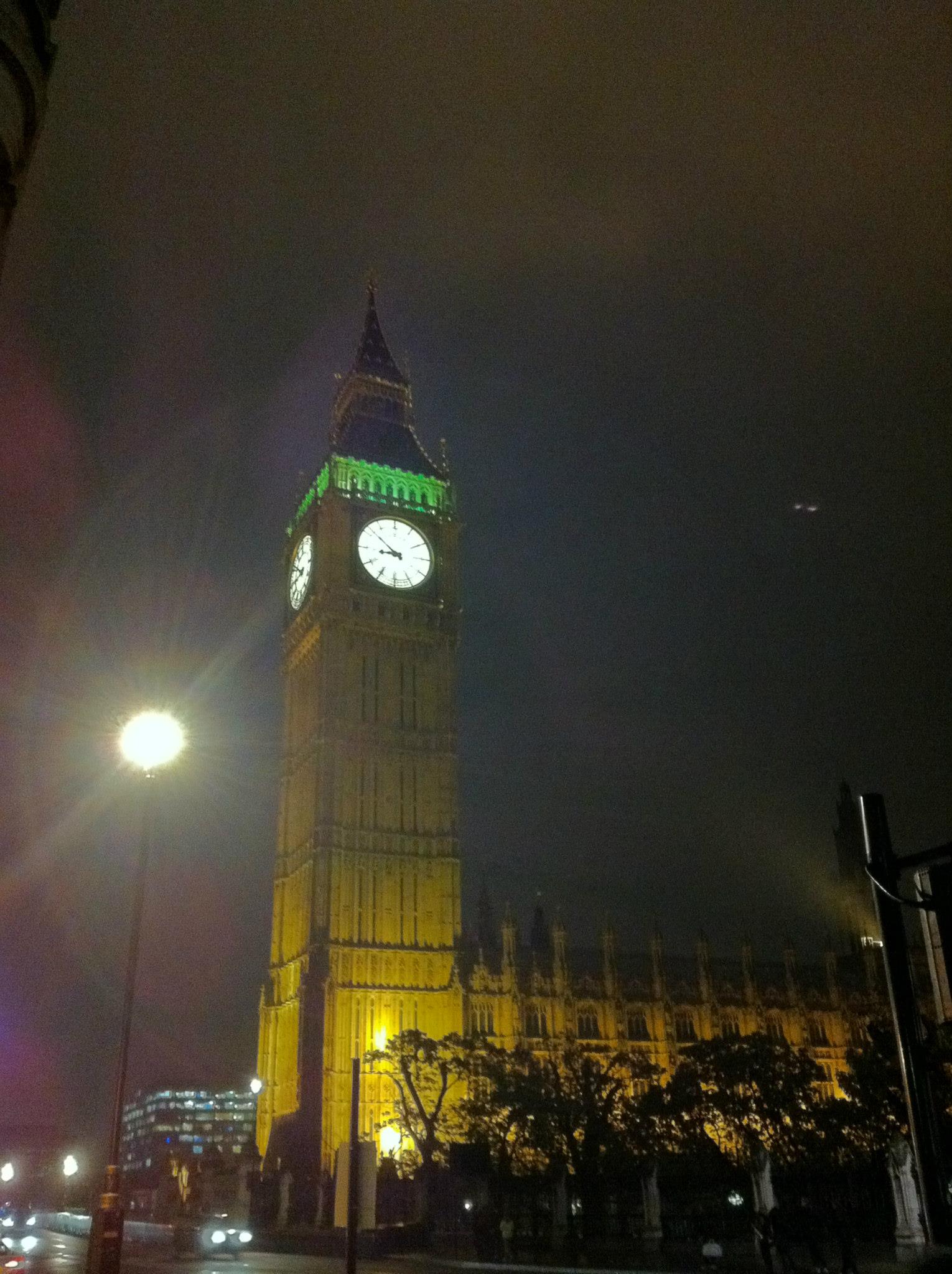
Parliament at night

Oct 22, 8:50pm: Question to Dick Polman from @Pennalumni Since you like to predict; who will win in 2016? (DP says Obama in 2012) #GOP #DEM

(DP declined to make a prediction that far in advance, but offered to return to Europe in 4 years to answer that question.)

Oct 22, 8:36pm: Question to Dick Polman from @Pennalumni Will issues like abortion & healthcare still be on the table in 2016? #GOP #DEM

(DP believes that the policies on abortion and healthcare will not be charged by Congress in the future, so they may still be used as part of the political platform but they will not really be effectively altered in the next few years.)

The Palais du Tokyo in the 16e arrondissement

Paris:

Oct 23, 6:57pm: reminds those @Pennalumni in London and Paris (and beyond) to visit Dick Polman’s blog whyy.org/polman

Oct 23, 7:04pm: In #Paris with @Pennalumni & Polman explains why incumbents don’t do well in their 1st debate. It’s their day job #GOP #DEM

Oct 23, 7:36pm: Question to Dick Polman from @Pennalumni What are #GOP voters in CA & #DEM voters in TX do due to the Electoral College?

(DP shared with the crowd the many movements that have tried to abolish the Electoral College, but in short many of the small states (in terms of population) wouldn’t favor losing their 3 votes and those movements probably will never pass.)

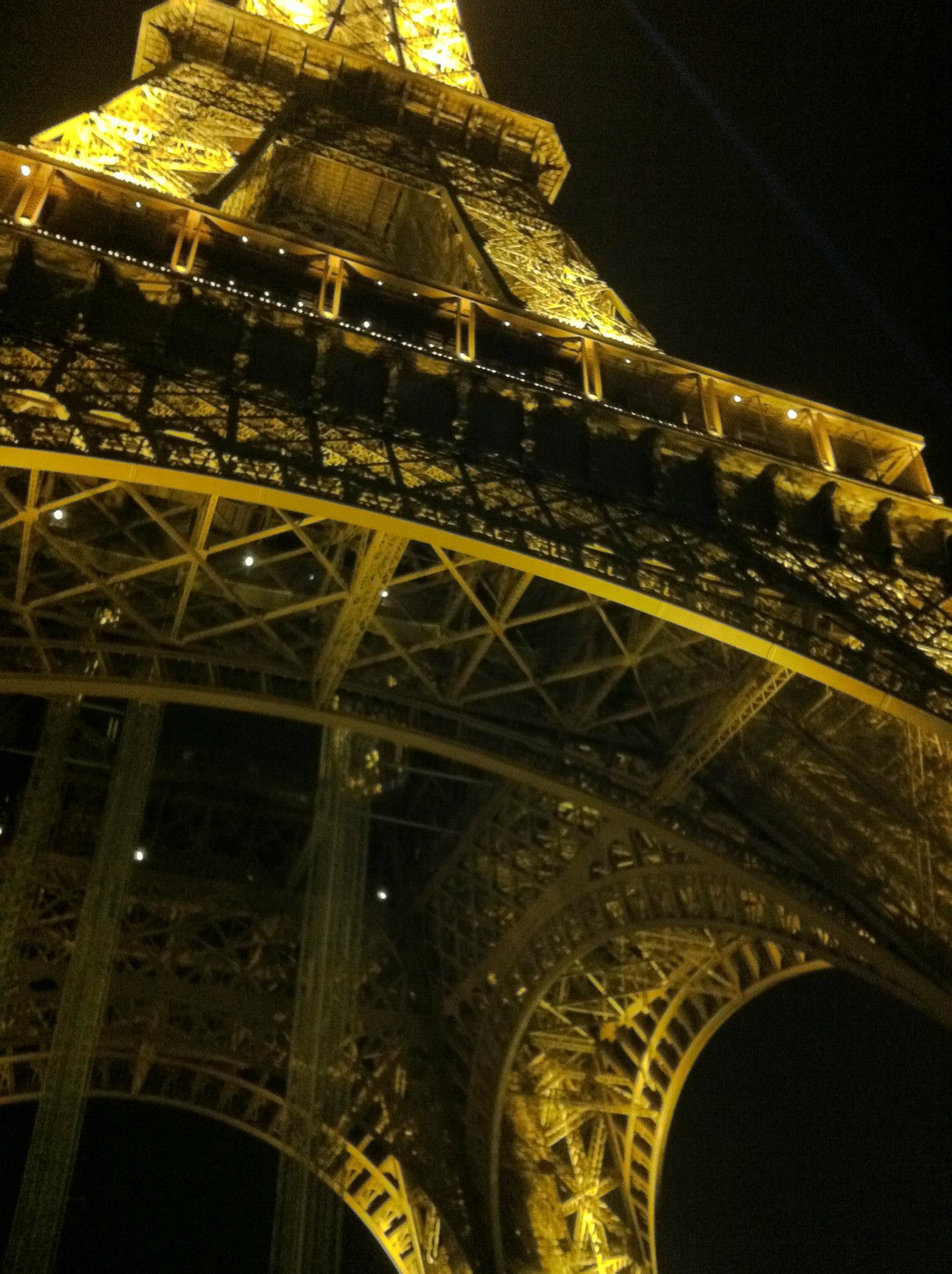
A detail of la Tour Eiffel at night

Oct 23, 7:42pm: Question to Dick Polman from @Pennalumni With the debates over what’s the game changer in the 2 weeks until the election? #GOP #DEM

(DP couldn’t specify what any game changer would be, but anything could come up and shadow the election.)

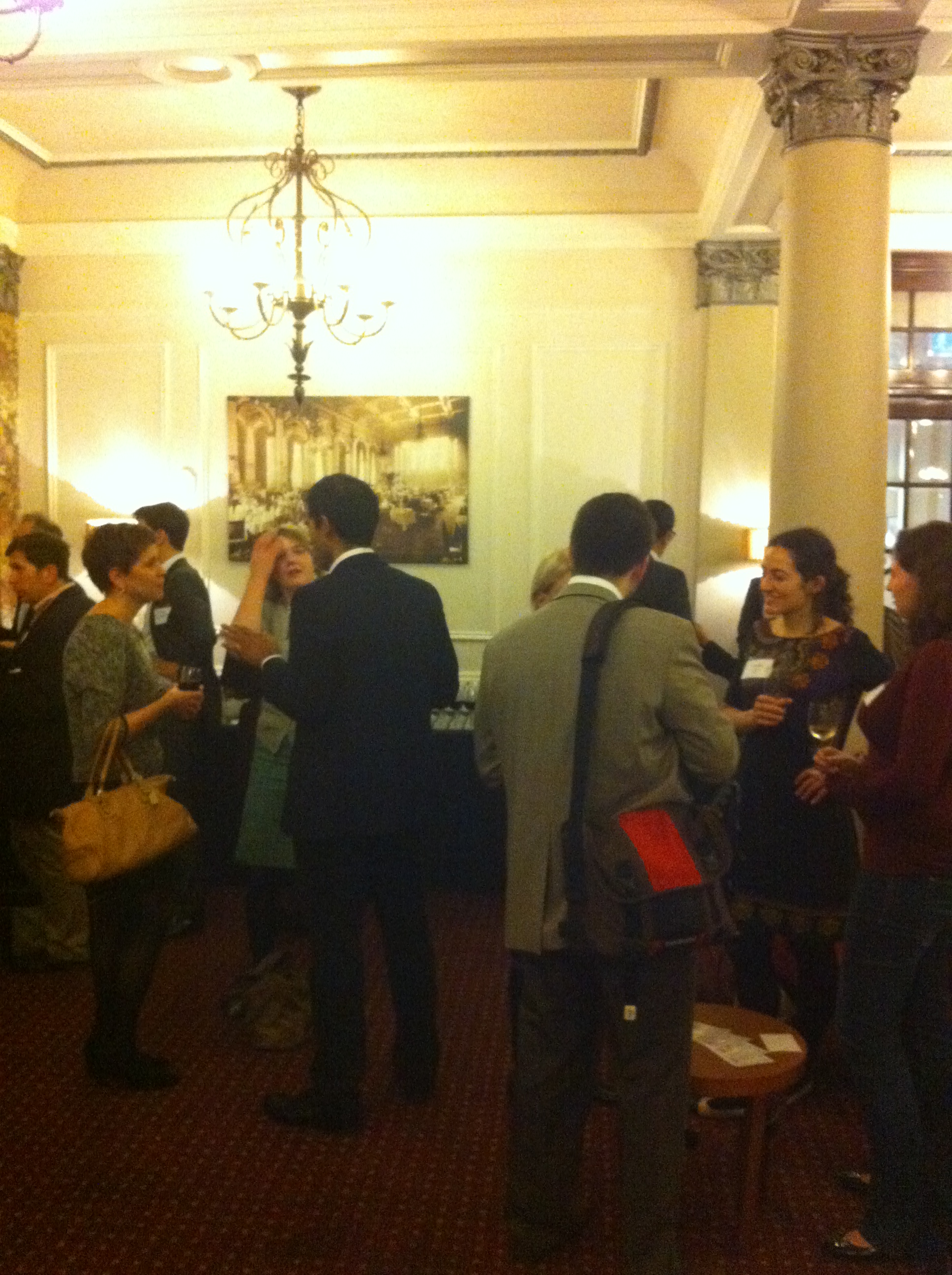
In the few hours that I had free, I was able to get some shots of London and Paris to add to this entry for your viewing pleasure.

Leave a comment

Filed under Casey R., Locust Walk Talk

Locust Walk Talk: Never Far Away from Penn

Author: Casey Ryan, C’95

I was on vacation this September, going to Scotland and Wales, with my parents.  The idea of the trip started to form soon after my vacation with them to Ireland last year.  By June, my parents had purchased their flights into the UK via Manchester, and I sent my deposit along for the hotel rooms. Then, I needed to get my tickets to Europe.  I was planning to cash in some United Miles for the trip – all using the least amount of miles and dollar for airport and landing taxes – and I put together a trip from Newark to Manchester via Stockholm and a return trip from Dublin to Philadelphia via Boston.  I needed to buy a flight from Manchester to Dublin separately. In the end, I had one funky itinerary. However, in total, my tickets cost about $130 in fees and 60,000 frequent flyer miles. That’s the beauty of travel – what you lose in succinctness, you gain in adventure.

The ship, Vasa, in the Vasamuseet – Stockholm, Sweden.

Two weeks before my trip, an invitation to an event in Greece triggers an e-mail from Athenian alumna who has relocated to Stockholm.  She wanted to know how to start a club. Since I had a long layover at Aranda, I thought that I should at least meet her while I was in transit  (you never take a vacation from alumni relations; you just don’t answer e-mails as quickly).

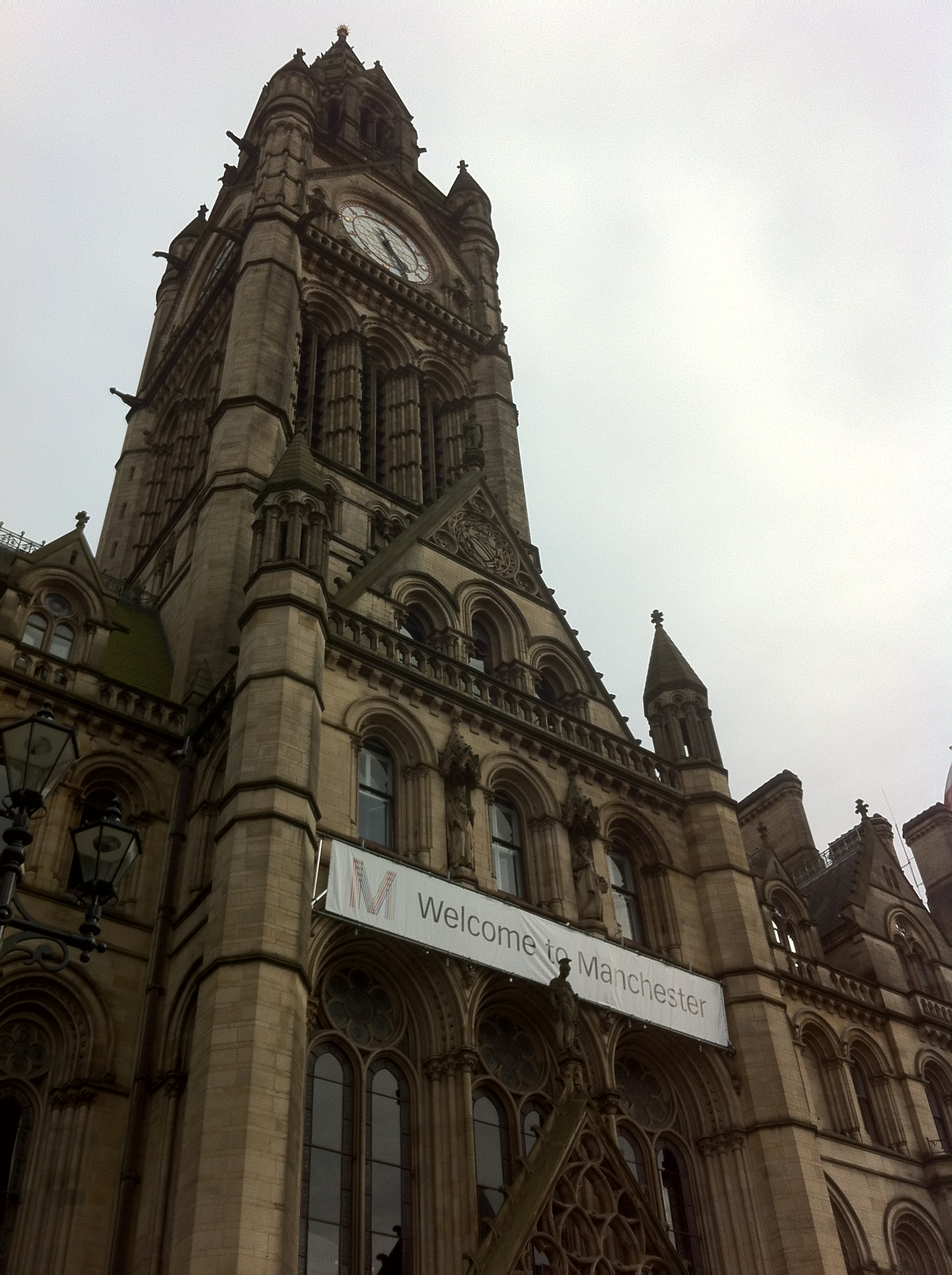
Manchester City Hall – Manchester, England.

We had a lovely breakfast meeting, taking in the Swedish cinnamon rolls, kanelbullar, with coffee. We talked about the over 100 alumni in Sweden and over 50 in the greater Stockholm metropolitan area. We shared ideas about how to reach out to them and what might be of interest to the regional Penn alumni. I gave Stephanie a bag of Penn goodies to sample with her follow alumni in the city when she had her first gathering. We also talked about the Olympics, since I had mentioned that I wanted to see the Stadium from the 1912 Games.  She suggested where to go to see some of the very Swedish sites.  I ended up choosing the Vasamuseet, the Stadion and the Stadshus, and Stephanie walked me down to the Vasa Museum for an impromptu tour.

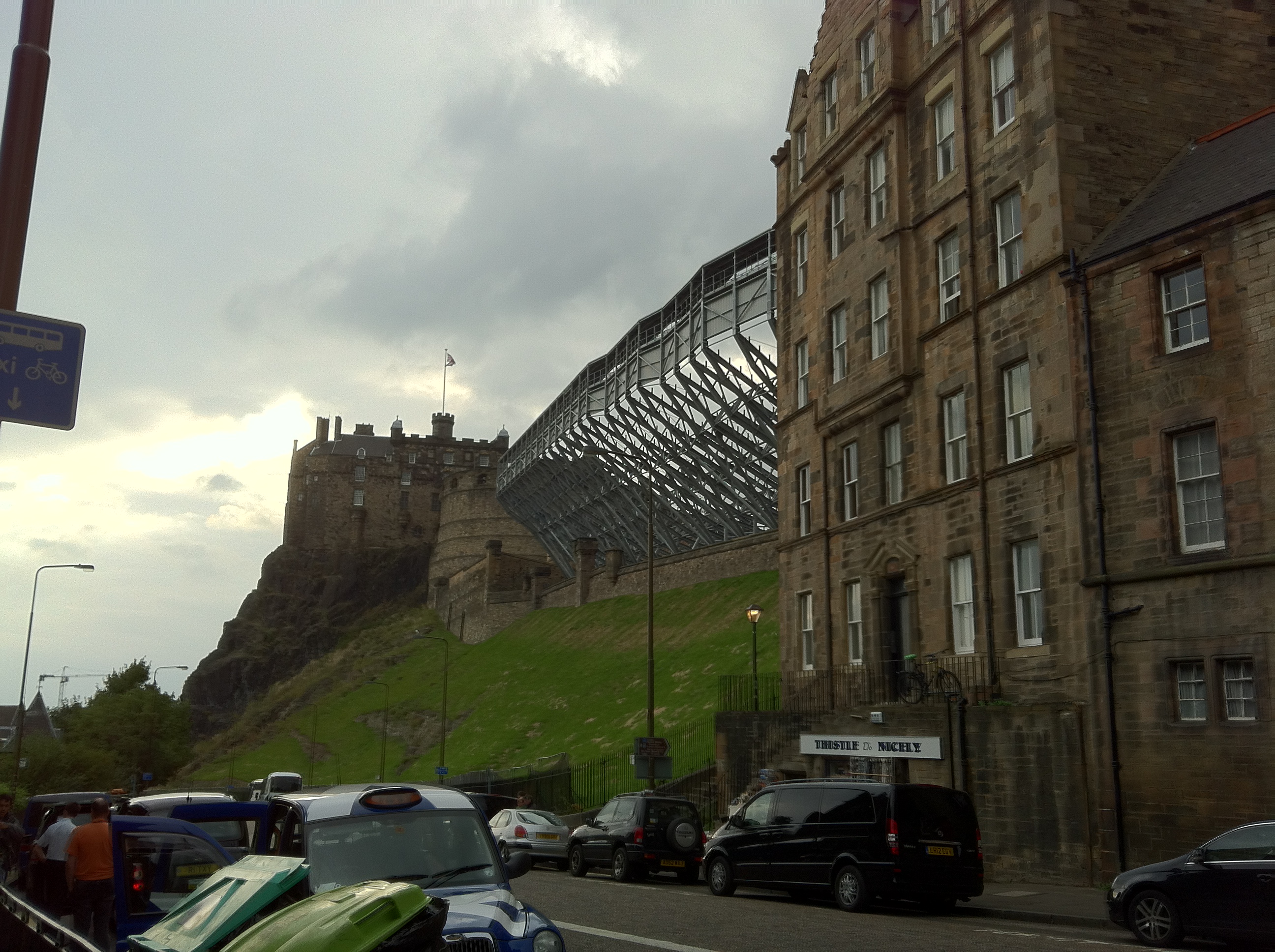
Edinburgh Castle, prepped for the Tattoo which ended a few day prior – Edinburgh, Scotland.

After Sweden, my itinerary took me to Manchester, Edinburgh, Inverness and Glasgow.  I visited the Manchester Art Gallery, the Royal Mile, Loch Ness – looking for Nessie, Urquhart Castle and the Lighthouse.  On my second morning in Glasgow, I join my parents for a Scottish Breakfast – complete with haggis.  I wore a Penn shirt and I didn’t realize it until one of our fellow diners asked if any of us were connected to Penn. For those who don’t know, my brother and I went to Penn undergraduate and my mother took classes and works for the Health System.  So, we all proudly owned up to being a Penn family (my dad chimed in that he was proud to sign the checks for my tuition).

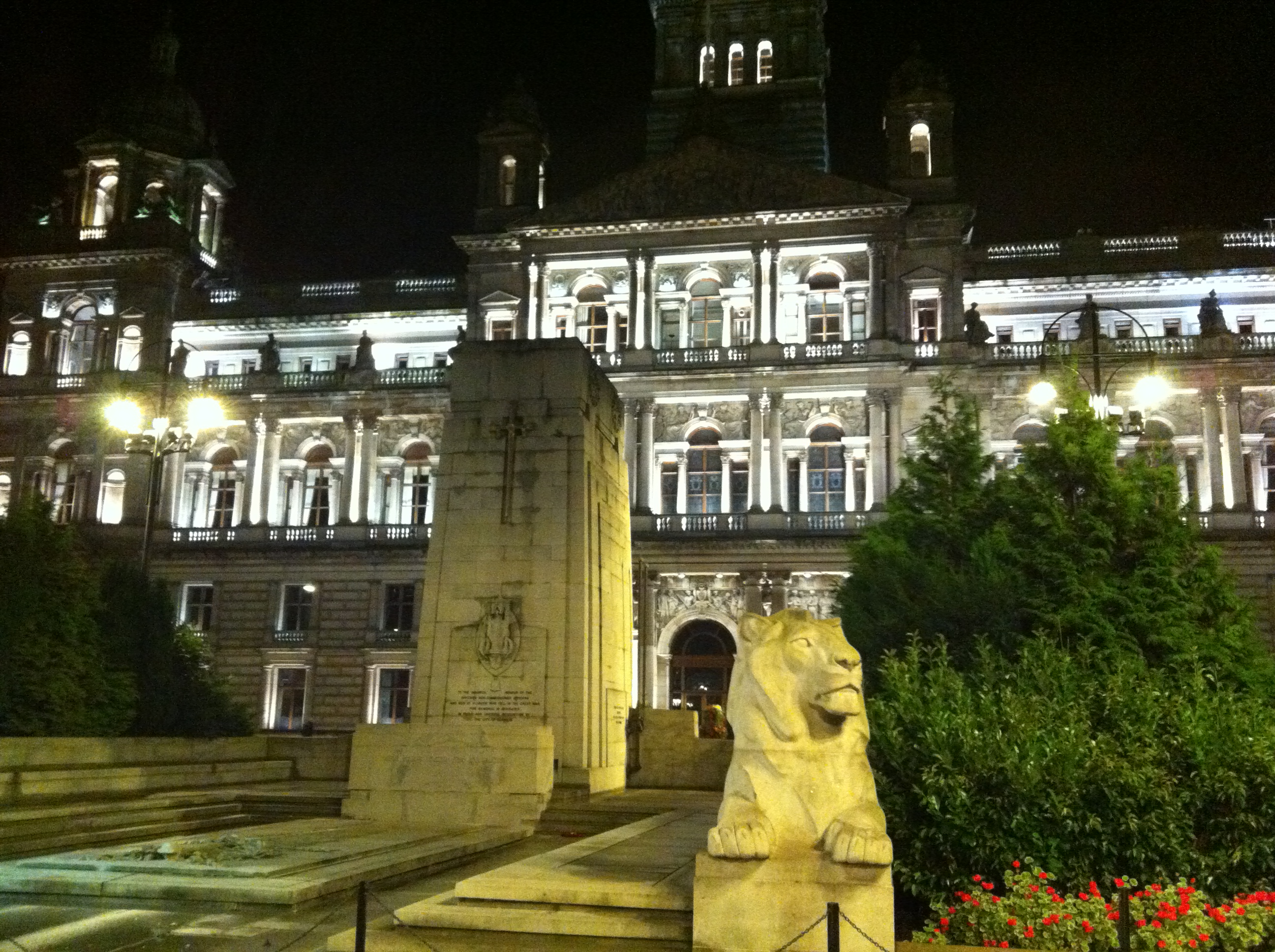
The Glasgow Cenotaph and City Chambers at night – Glasgow, Scotland.

Maureen had just been in Philadelphia about two weeks prior dropping off her daughter for her first year at Penn – living in Harrison College House.  She was excited for her daughter and was looking forward to getting engaged in all that Penn has to offer parents.  In finding out that Maureen lives in Phoenix, I gave her my business card and let her know that there is a Penn and Wharton Club of Arizona located in Phoenix that welcomes the parents of Penn students.  As I said, you never take a vacation from alumni relations.

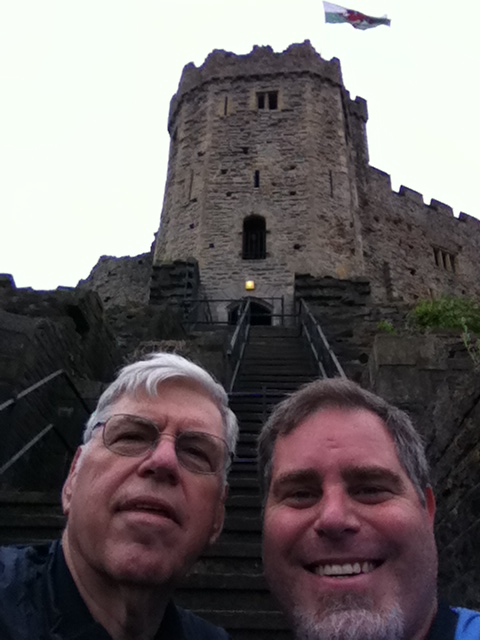
My dad and I in front of the Norman fortifications within the grounds of Cardiff Castle – Cardiff, Wales.

My trip continued via England into Wales, with stops in Llandudno, Cardiff, then back to Manchester and finally Dublin.  After a busy trip, I landed in Boston and walked into Logan. There, I met up with Melissa Wu, C’99, member of the Penn Alumni Regional Club Advisory Board.  We had found each other through Foursquare and Twitter. We spent just a few moments catching up before I had to run and change terminals for my trip back to Philadelphia.  We bid farewell, promising to reconnect at Homecoming.

Monument of Light (a. k. a. Spire of Dublin) as seen from Mary Street Shopping area – Dublin, Ireland.

Exhausted, I poured myself into my seat on the airplane and relived the fantastic trip in my mind – noting how many amazing Penn people I met along the way.

The dusk sky at Logan Airport – Boston, MA.

1 Comment

Filed under Alumni Perspective, Casey R., Locust Walk Talk

Locust Walk Talk: Book Club

Author: Casey Ryan, C’95

As a member of the Class of 1995, I am part of the inaugural Penn Reading Project (PRP) class. During the summer of 1991, I received a book in mail from Penn and I put it aside to save as the reading for my flight to San Francisco for our “last family vacation” before I left for college.  After settling into my seat for the transcontinental flight, I opened the envelope which revealed The Bacchae by Euripides.

Image

This Greek tragedy, based on the mythological story of King Pentheus of Thebes and his mother Agauë, whom god Dionysus punished for their refusal to worship him, was to be our class’s first shared educational experience in college.  This common experience did, in fact, resonate with us.  We incorporated the Greek theme into our 15th reunion party.

Image

The Class of 95’s Greek Bacchanalia 15th reunion

Now in its 21st year, the PRP returned to its roots with Doubt: A Parable by John Patrick Shanley as this year’s book.  Since 2007, The Penn Reading Project has been incorporated as part of the larger Academic Theme of the year.  This initiative is sponsored by the Provost’s office to develop a series of year-long events around a theme chosen by faculty, staff and students.  This year’s theme is the Year of Proof, which charges us to investigate how we know that what we know is true and discover our search for proof.

Image

As a nice professional development exercise, we in Sweeten attended our own private PRP discussion group at lunch.  Several of us on staff have read Doubt and eagerly talked about the play framed within the structure of the students’ PRP discussions which are facilitated by a faculty or staff member.  Our own Lisa Vaccarelli, C’02, GED’10, Director, Alumni Education, Alumni Travel & Career Networking, moderated our talk – pushing us to address both absolute proof and the varying degrees of doubt with working in tandem can either distort or illuminate the truth.

Lisa provided us with some questions in advance:

•             Did you like any of the characters in the play? If so, did your personal feelings for this character change in the course of the story?  Why?

•             Did you identify with any character in the film? If so, with whom and why? If not, why not?

•             Father Flynn said, “The truth makes for a bad sermon. It tends to be confusing and have no clear conclusion.” What do you think he meant by this? Do you agree with him?

•             Sister Aloysius remarked to Sister James, “In the pursuit of wrongdoing, one steps away from God.” What do you think she meant by this? Do you agree?

As well as creating questions on the fly:

•             In reference to the opening sermon, how is doubt isolating?  Unifying?

•             Who are the moral guardian’s in our society?

•             The subtitle for the play is “Doubt: A parable”.  How is the play a parable?

The conversation was heated and passionate; it encouraged about twenty of us to analyze and articulate our own beliefs on the actions in the play. It was invigorating to have such an exchange among a group of well-read colleagues.

Hopefully, this little exercise in our office may inspire you to seek out the current and former PRP books to add to your reading list. Or, if you are a class, club, diversity alliance leader or alumni volunteer, feel free to work with us in Alumni Relations to vet the ideas of how you can host a small book club and discussion group event for your fellow alumni on your own.

1 Comment

Filed under Casey R., Locust Walk Talk, Uncategorized

Locust Walk Talk: Dartmouth College

Author: Casey Ryan, C’95

I’m going to take a different angle for Locust Walk Talk this week and share with you what we Alumni Relations professionals do to hone our craft. Annually, the Alumni Relations groups of the 8 Ivy League Universities as well as MIT and Stanford gather for the Ivy Plus Alumni Relations Conference, or Ivy+ for short.  This year, the conference was hosted by Dartmouth College.

Baker Library, quintessential Dartmouth

Nestled in the town of Hanover, NH, Dartmouth College sits as an idyllic institution of higher education. So perfect is the image, Dwight D. Eisenhower in 1953 said “this is what a college is supposed to look like.” It is quite charming and, if Penn didn’t exist, I would agree with Eisenhower (for the record, I think that Brown, Cornell, Columbia, Harvard, MIT, Princeton, Stanford and Yale are all what college is supposed to look like.)

Dartmouth Hall, the original college building

The Dartmouth Alumni Relations staff dazzled us with their school pride and shared with us their traditions like the Dartmouth Outing Club First-Year Trips, the Salty Dog Rag, the Winter Carnival, and Homecoming.  From D-Term to Animal House, from Sophomore Summer to Occom Pond, we were taken on a crash course of all that is Dartmouth.  By the end, several of us were seeing green – Dartmouth Green.

Christine Tempesta, Director, Strategic Initiatives, delivering her TEDx-style speech (note the ice sculpture of a beaver – MIT’s mascot)

Each of us found our specific conference track – focused on our area of expertise, including Affinity Groups and Shared Interest Groups; Alumni Education and Travel; Classes and Reunions; Clubs and Regional Associations; Marketing, Communications and Technology; Student and Young Alumni Programs; and Volunteer Management and Alumni Boards.  In these sessions, we discussed best practices and shared success stories that we can hopefully adapt at our home University. The intent is that when we return to our campus, we follow up and continue the conversations started at Ivy+.

Vijay addressing the Ivy+ crowd

Outside of our tracks of expertise, we had daily plenary sessions. Two of these featured Christopher Trimble, adjunct professor of Business Administration and Vijay Govindarajan, the Earl C. Daum 1924 Professor of International Business, Tuck School of Business at Dartmouth College – the authors of The Other Side of Innovation.  During Ivy+, their discussions were based on our pre-conference reading (a.k.a. homework), How Stella Saved The Farm: A Wild and Woolly Tale About Making Innovation Happen, a fable based on their business best-seller. The discussions revolved around how to change the way we think about the planning for the future (where will the firm be in 20 years and what products or services will being the firm there) and addressing the need of mutual respect for the business’s production engine and its innovation team (both of which will be in conflict with each other).

The Tower Room, in Baker Library – the statue is a tribute to the original mission of the College

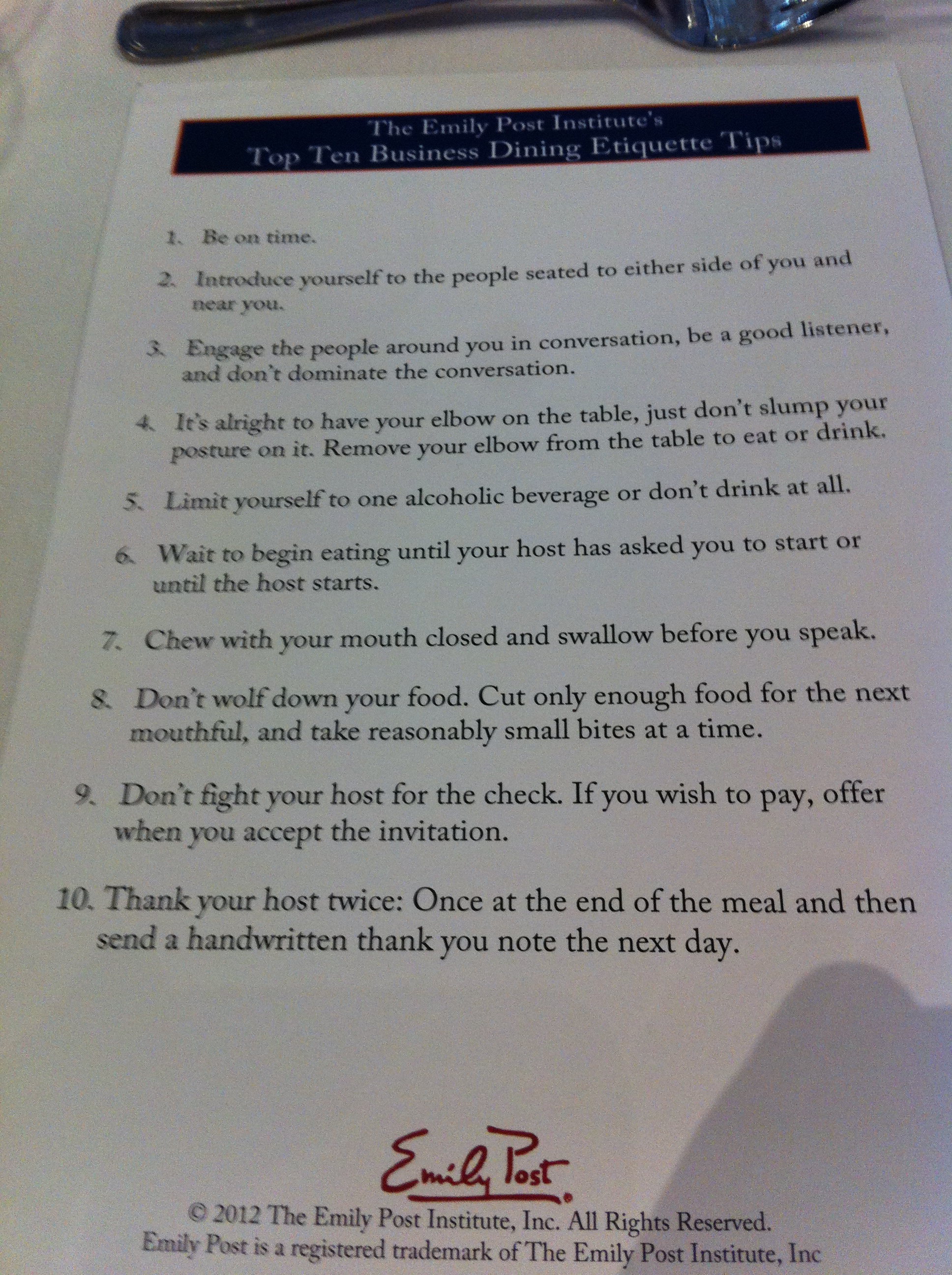
The other plenary discussion was from fellow Pennsylvanian, Peter Post, C’72, Director, The Emily Post Institute who discussed the etiquette of tough situations.  Peter annually comes to Dartmouth during their sophomore summer for a lunch which pairs the current sophomore class (the Class of 2015) with the matching 50th reunion class (the Class of 1965). The lunch is a wonderful opportunity for the two classes to make connections and discover each others class, while learning (or refreshing) their table etiquette. For us, though, Peter focused on what the contemporary meaning of etiquette is while being true to his great-grandmother’s mission: etiquette is the relationship between two people that is respectful, considerate, and based in honest. In remembering these three tenets, Peter assured us that we would have proper etiquette in the business world. He finished his talk with some role play to manage some of the most challenging interactions in today’s social world.

The Steam Tunnel Tour ( (picture from the Ivy+ Facebook page)

We talked shop, but we had fun too. On Wednesday, we had the options of a tour of the Hood Museum of Art for the show – Nature Transformed: Edward Burynsky’s Vermont Quarry Photographs in Context, a walking tour of campus led by Dartmouth sophomores or underground steam tunnel tour.  On Thursday, we had a Dr. Seuss-themed Oh, the Places You’ll Go! excursion (Theodor Seuss Geisel is a Dartmouth Class of 1925 alumnus), which mirrored the Dartmouth Outing Club First-Year Trips, to the Connecticut River for either canoeing or kayaking, to King Arthur Flour Store and Bakery, to Simon Pearce – glassblowing and pottery studio, to a guided hike along the Connecticut, to the Hood Museum for the presentation “Ancient Art, New Media: Bringing the Past to Life,” or to the Harpoon Brewery. I opted for Harpoon.

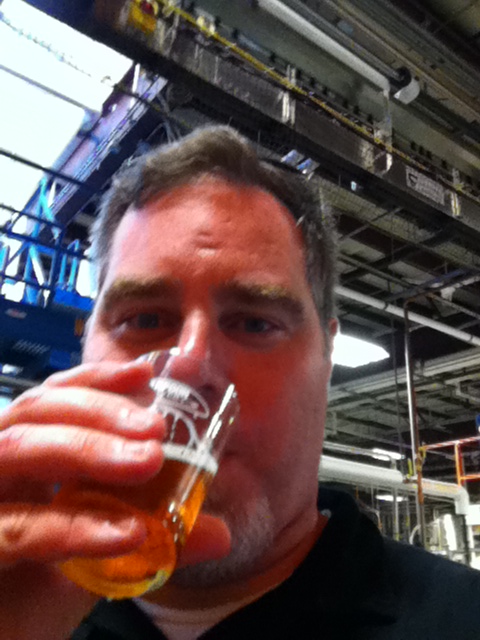
I am enjoying my excursion

At the end of the three days, the conference ended with a handful of TEDx-styled talks from our peers, including our own Elise Betz. They were charming, informative, evocative and emotional.  The motivational chats moved the audience and summarized the amazing experience of getting to spend 3 days with our Ivy+ peers, sharing our skills, brainstorming ideas and meeting such impressive people who love their alma mater! Ending on a high note, we announced that Penn would be hosting Ivy+ in 2013. It’s a lot of work, but we’re looking forward to it.

For your information, Peter Post’s guidelines for good business etiquette

1 Comment

Filed under Casey R., Ivy+, Locust Walk Talk

Locust Walk Talk: “…Our Land, Glorious and Free!”

Author: Casey Ryan, C’95

My latest travels for Penn took me north to the wonderful city of Toronto for an event with Dean Furda in Admissions.  In conjunction with the Admissions Office’s “Introduction To Penn” program, the Penn and Wharton Club of Toronto had an event for their alumni to meet the Undergraduate Dean of Admissions.  As always, Eric Furda is a fantastic speaker and our alumni love to get the opportunity to hear from and speak with him.  However, the quiet star of the events was the location of the event.

Toronto, from the air.

As Penn moves forward on its own green initiatives, it was a pleasure to host an event at such an environmentally-aware locale – Evergreen Brick Works in the Don Valley, just east of Cabbagetown in Toronto. This dynamic green space started as collection of deteriorating buildings which originally formed the site of the Don Valley Brick Works, one of Canada’s pre-eminent brickyards, from its founding in 1889 to the 1980’s. Throughout its active years, more than 43 million bricks a year were manufactured for use in the construction of homes and buildings across Canada, including many of Toronto’s most prominent buildings like Old City Hall.

In the 1980s, the site was acquired for public use due to its geography – in the lower Don River Valley – and its heritage – a historic site in the growth of Canada.  However the environmental impact that the Brick Works had on its surroundings was severe.  Brick making takes a heavy toll on the land, air and residents.  Toxins and pollutants had seeped into the soil and muddled the water supply.  The City of Toronto and the Toronto and Region Conservation Authority were responsible for the restoration and raised around $6 million to improve on the conditions in the quarry to share it with Torontonian as park and natural area.

CN Tower and Toronto, from the concrete parking lot.

Major work was done to contain the sites contaminations as well as freeing up soil and green area that we’re spared by pollution.  The current parking lot was constructed from concrete in order to contain contaminated subsurface soils and groundwater, which was a by-product of the industrial process of brick making. The nature of the parking lot prevents rainwater from infiltrating and becoming groundwater which would release the contaminants and it removes any human exposure to toxins.  On the other hand, area like the quarry were not affected by the contaminants and this area of the grounds was transformed into the gardens, green spaces and trails that are the hallmark of this venture.

This is has nothing to do with the story, but it’s one of Toronto’s best museums, the Royal Ontario Museum, and I wanted to give it a plug.

Today, the Evergreen Brick Works engages visitors through interactive workshops, community festivals and weekly farmers markets. In 2010, Evergreen Brick Works was named one of the top 10 geotourism destinations in the world by National Geographic.

Leave a comment

Filed under Alumni Perspective, Casey R., Locust Walk Talk