Category Archives: Guest blogger

Penn Serves LA – One on One Outreach

Filling the Most Basic of Our Needs, The Neighborly Way: Penn Serves One on One Outreach

by Leanne Huebner, W’90

“Am I in the right place?” thought more than one volunteer as the Penn Serves LA volunteers approach the home on 119th street in South Central Los Angeles at a Penn Serves LA summer event on late Sunday afternoon. Children were outside playing; the street was lined with modest but well-kept houses.

The answer was affirmative. That day, our group of seventeen Penn alumni and family members were arriving to serve One on One Outreach, a 501(c)3 nonprofit started in the heart of South Central by one of its own residents, Ashly Plourde– at his local residence. Each month, Mr. Plourde freely offers his driveway for the food assembling and delivery service for low-income families he started back in 1998.

Noticing that several of his fellow South Central neighbors were finding it hard to afford food, Mr. Plourde, now 63, started offering ground beef and rice he purchased to his neighbors at no charge. When he saw how quickly everyone appreciated the good deed, he decided to expand the effort on a more regular basis. He would find the cheapest deals on food he could afford, stock up and give it away at various community locations.

Today, the grassroots effort has grown into a regular monthly door-to-door outreach offering a large box of groceries per household, still entirely free, to the low-income, food insecure neighbors that live within just a few blocks of the assembly point.

More than a box, it’s a solution

Over 16 percent of Americans, or nearly 17 million people, suffer from food insecurity – a statistic which has been tracked by the U.S. Department of Agriculture since 1995. Food insecurity, which is defined in ranges from very low to high by the USDA, occurs when citizens lack access to food, either due to limited food availability in their neighborhood stores, or lack of money to purchase available food. The problem can cause disrupted eating patterns and reduced food intake – many skip meals or do not eat for several days.

Today, more than 47.8 million Americans – or 1 in 7 Americans — receive food stamps through participation in the Supplemental Nutrition Assistance Program. Due to poor economic conditions, rising poverty rates, and expanded qualifications, participation has increased 70% since 2007.

The average monthly food stamp benefit per person in California is $149.05. However, according to the USDA Food Plan, which is tracked monthly, it costs over $235 a month to feed an adult male on a “low-cost” plan. The differential is the gap that One on One hopes to fill for the local families. In fact, the group chooses its delivery dates toward the end of the month, as food stamps are delivered on the first of the month are often depleted by month’s end, leaving many struggling.
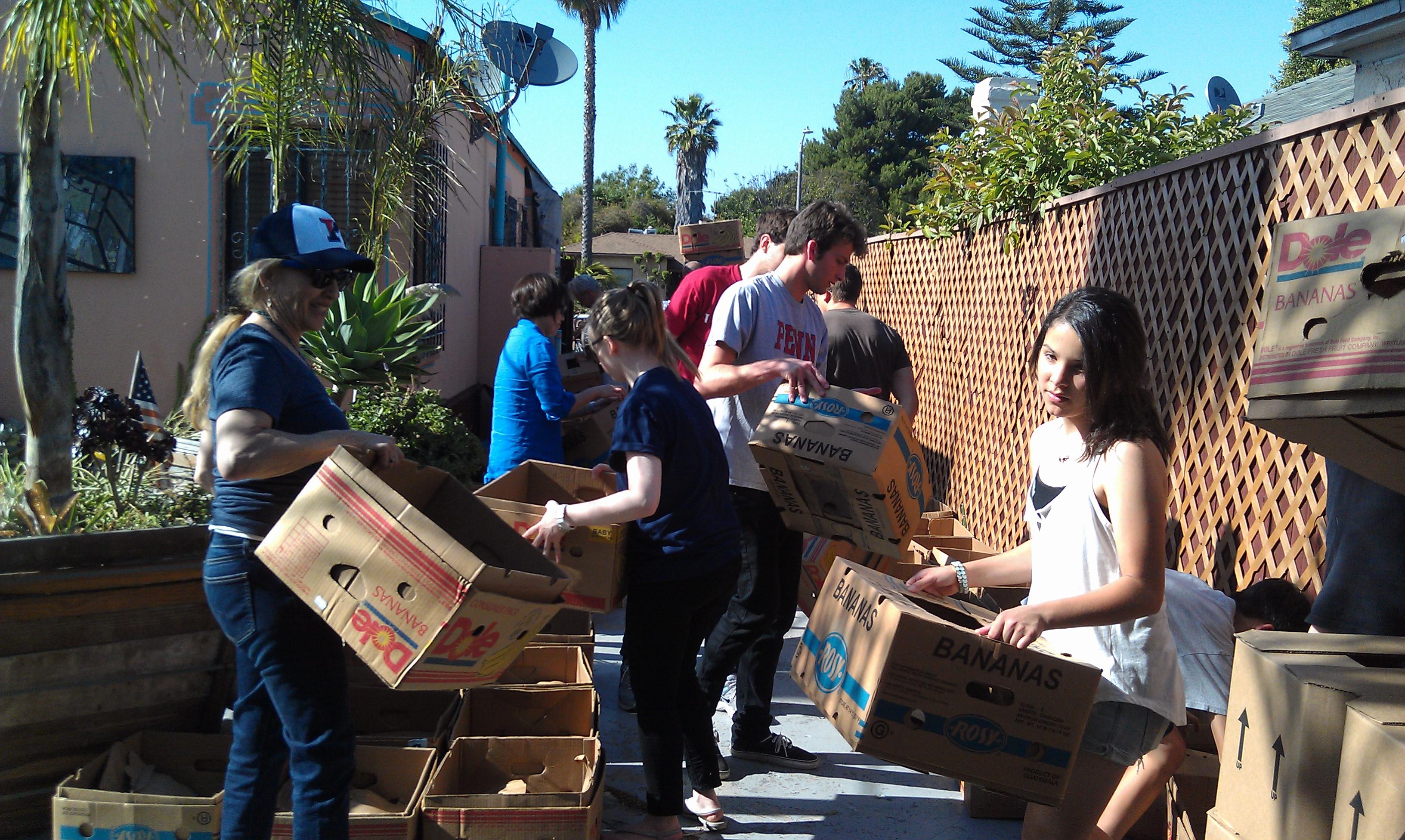
Penn Serves LA one to One June 2013 photo 1

Jane Gutman(far left), Penn Serves Co-Director and Founder, gets to work filling the boxes with fellow Penn alumni

Penn Serves LA One to One June 2013 photo 2

Our youngest volunteers, children of local Penn alumni, fill the boxes in the act of serving others as well.


Our Assembly Line Gets Boxes Filled Quickly

Our group works to fill 168 large boxes with purchased and donated supplies. The finished product resembles what one might carry out from their local Vons (a supermarket here in southern California) trip –and includes bran flakes, granola bars, toilet paper, potatoes, onions, potatoes, bleach, AJAX, bologna, eggs among other items. These groceries would cost a minimum of $50 if purchased separately. The group packs two pickup trucks five boxes high. With many hands, we finish phase one within an hour.

Before we start our delivery walk, one woman and her son sheepishly walk toward the truck to request her box. Ashly recognizes the woman as a regular. First needy family served.

Next, Ashly and fellow board member Michael Schwartz speak about One to One’s mission and its accomplishments. It is clear from their words this work comes from a special place in each volunteers’ heart (in fact, the group is 100% volunteer run). Mr. Plourde explains why he started this effort, and it becomes obvious this man possesses deep compassion of the suffering of others. Mr. Schwartz, who has been involved more than 13 years, talked about how the group is structured and seeks its funding. Currently, One to One relies generous donations from 99 Cents Store and individual donations to provide the boxes and its contents.
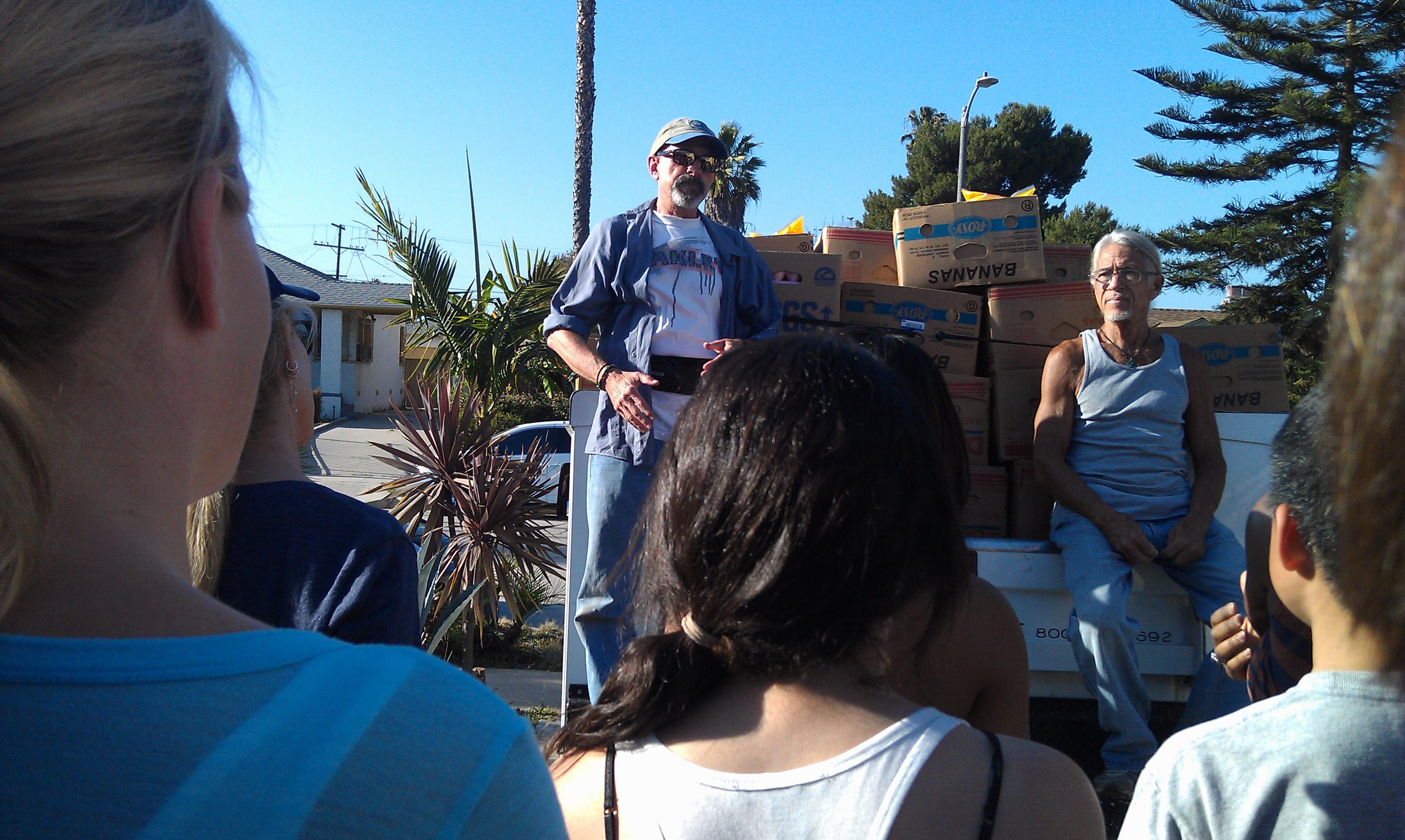
Penn Serves LA One to One June 2013 photo 3

One-to-One Board Member Michael Schwartz speaks about mission and structure of One on One Outreach. Ashly Plourde, the group’s founder and President, is on the right sitting on the filled truck.

A neighborly-like Delivery

To deliver, Ashly and Michael slowly drive the two packed pickup trucks down the street to the houses just a few blocks away. The sweet suburban-like street where we assembled the boxes quickly turns into a stretch of dilapidated apartment buildings with between 4 to 20 units on a busy urban street. The experienced volunteers know the buildings well – from the folks in each unit to who owns each building– and their guidance is invaluable.

We are instructed to make sure we follow one another closely to ascertain as many families as possible receive a box. No apartment should be skipped; however if they aren’t home, we are instructed to move onto the next home as each box needs to be handed to a resident. The buildings are pre-determined and some apartments that contain more than eight residents in the apartment might regularly receive a second box. Each house holds a story but there’s no time to learn them – our mission is to deliver quickly and not meander. We get a quick peak inside apartment after apartment – some filled with obvious despair.

One grateful recipient walked to the top of her stairs, and exchanges a glance with Ashly. Ashly shot back a quick wave full of deep understanding and mutual respect. No spoken word was needed for the interchange – they understood the significance of the need this group is filling – that most basic need of all, food.

That’s how it played out at many deliveries – a nod of thanks here, a gesture here, and a simple thank you. It was a kind gesture any neighbor might offer another, but it happens here in Los Angeles.

“I just love that man and what he does,” shares one lady who just received her monthly box.

Most every door and window we approach was gated and barred, our reminder of the tough neighborhood we are serving. Most folks seemed suspect of who was pounding on their doors, peeking through pulled curtains. Some hear us call out “One on One Outreach”, the doors opened freely and quickly. The need the group is filling clearly exists, as demonstrated by the dozens of people approaching the truck asking for a box.

Penn Serves LA One to One June 2013 photo 4

Our Penn Serves Group, includes two current Penn students, several alumni and their children, is ready to deliver

“We truly appreciate the Penn Serves volunteers lending their help today and hope to see many return in the future, ” shares Michael.

With such an impactful opportunity of direct service that likelihood seems quite high that our Penn alums will be back to lend our manpower to those in need in South Central Los Angeles.

If you are interested in learning more about helping with One on One, please contact Michael at drzini@verizon.net.

If you are interested in more Penn Serves LA events or to get involved, please contact us at pennservesla@gmail.com.

JOIN US!

Penn Serves LA is excited to announce our final three events for 2013! Mark your calendars and contact us at pennservesla@gmail.com for more information or just be on our mailing list for future events.

We look forward to serving with you, Quaker style.

Sincerely,

Jane Gutman, CW’73

Leanne Huebner, W’90

Denise Winner, W’83

UPCOMING EVENTS

August 24th, 10 a.m. to 1 p.m. — HELP RESTORE A PARK – Restoration Day at Ken M. Harbor Regional Park, Lake Mocado (Harbor City) – Join us for environmental cleanup and nature exploration. Learn about the local habitat, wildlife, conservation and environmental challenges impacting our community from a leading Southern California bird expert and past President of the Southern California Audubon Society.  Alumni children welcome with their parents. Click here to register.

September 28th, 10 a.m. to 2 p.m. — IMPROVE A CHARTER SCHOOL – L.A. Leadership Academy (Lincoln Heights)– Make a difference at this Lincoln Height’s charter K-12 school. This high school serves over 95% students qualifying for free and reduced lunch and is dedicated to teaching leadership. Roll up your sleeves and paint classrooms alongside these students. Alumni children over 10 are invited to join with parents. Light lunch will be provided. Click here to register.

November 17th, 10 a.m. to 1 p.m. — SHOW APPRECIATION TO THE TROOPS — American Red Cross (Santa Monica)— Join us to learn more about the impact of American Red Cross and write letters to our heroes to extend our appreciation to the Armed forces during the holiday season. Every holiday season, the Red Cross sends a “touch of home” to American men and women serving our country. All ages welcome. Click here to register.

About Penn Serves LA – Started in 2012, Penn Serves offers a way for direct community service for local Penn alumni and their children to serve Los Angeles’ most needy populations. We partner with established nonprofits and grassroots organizations for one-time volunteer opportunities. So far, we’ve served meals to the homeless, delivered food to low income families, planned activities with immigrant children, and so much more.
2 Comments

Filed under Alumni Perspective, Alumni Programming, Guest blogger, Los Angeles, Penn Serves LA, Photos, Volunteering, West Coast Regional Office

Penn Alumni Travel: Southwest National Parks

Author: Howard S. Freedlander, C‘67

A first-time trip to the Southwest National Parks with Penn Alumni Travel scored an A+ for my wife Liz and me. We came away, like so many others, simply awed by the natural wonders that daily greeted us and our group of 24 fellow travelers.

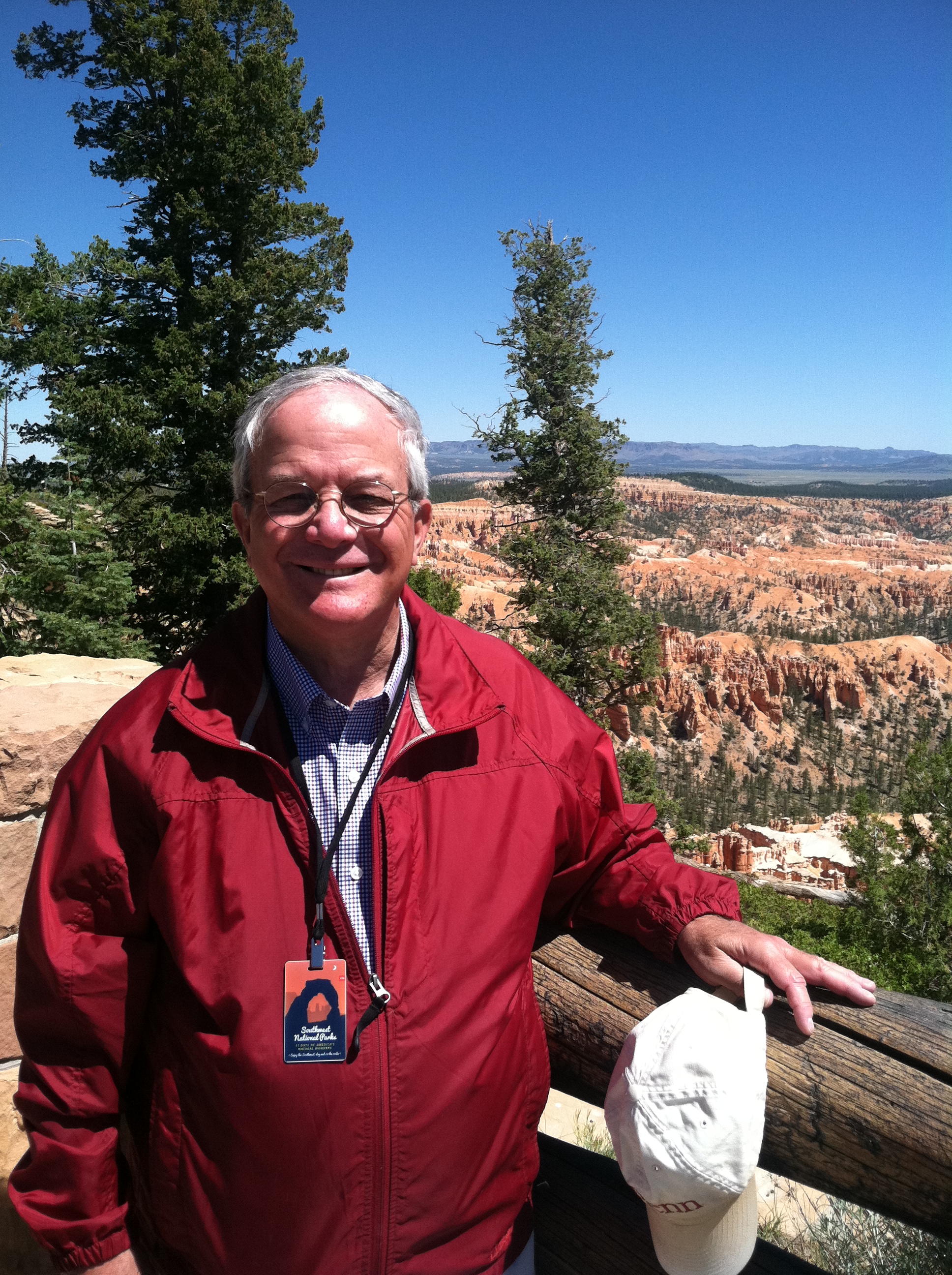
Portrait of the Author on his tour of the Southwest National Parks

Portrait of the Author on his tour of the Southwest National Parks

The sights and vantage points were overpowering at times—beginning with the incredible Grand Canyon and ending with the scenic, people-friendly Zion National Park. Liz and I discovered quickly that nothing we saw and experienced had any reference point to anything we knew on the East Coast. Certainly not the flat, waterway-dominated Eastern Shore of Maryland, where we live.

Never having gone on an organized tour, we were very impressed with Orbridge, the Seattle-based tour operator mainly serving alumni groups. I was amused when Derek Lundgren, the tour director, deliberately commented about Penn versus Penn State—and the wide difference between the two, as quickly asserted by me; he got the reaction he wanted. He was superb in communicating clearly and often with our group as we traveled from one site to another on a comfortable bus (or “coach” in tour talk).

My impressions, dutifully chronicled daily, provided a focus for me as I observed our nation’s truly incredible national parks, formed and re-reformed over millions of years. Suffice it to say that the force of nature left an indelible mark, enabling me to understand the need to preserve these natural wonders as best as humans can. Credit must go to Orbridge’s Amy Sheppard, assistant tour director, a constant source of geological, flora and fauna information during our nine days in the parks.

We started our adventure from Las Vegas, NV. Apart from the logistical necessity of using Las Vegas as a starting and end point, I think the artificial, hedonistic quality of this gambling mecca provided a start contrast to the solid realness of the Grand Canyon. See the awful before the awesome? Maybe. Standing at Lake Powell Point at sunset, we could marvel at the mélange of colors on the rock formations. If you let your imagination go wild, you could see natural mansions, chimneys and sculptures.

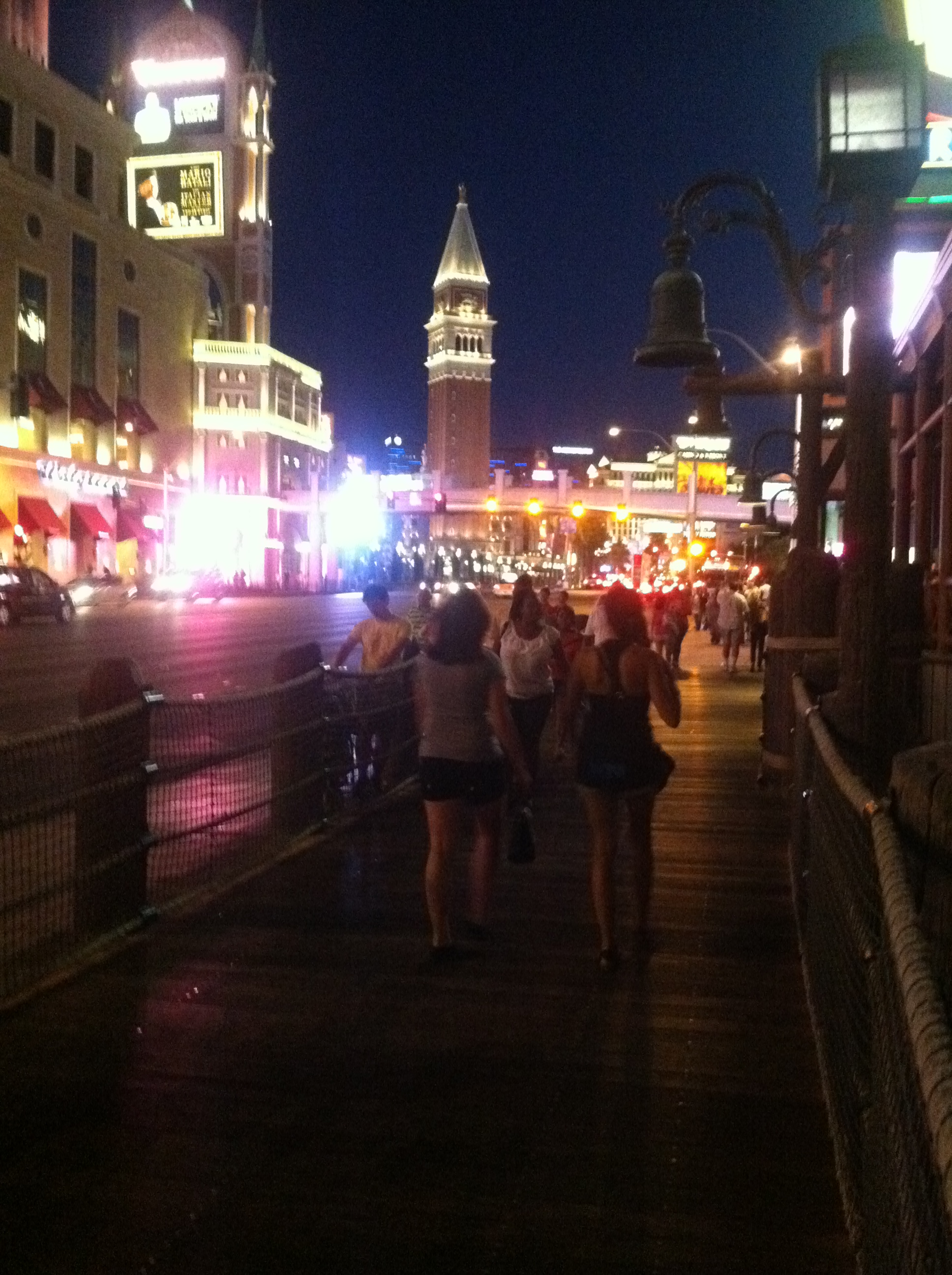
The Las Vegas Strip

The Las Vegas Strip

One of my favorite activities was rafting down the calm, soothing Colorado River, embarking from the Glen Canyon Dam. It seemed unreal to view the red-tinted sandstone walls, ranging in height from 700 to 1,400 feet, wondering about slowly tumbling rock. Construction of the dam in the 1960s was controversial then and still is; while interrupting the normal flow of the Colorado River, it also provides absolutely essential water to Phoenix, AZ and San Diego, CA. The tension between human needs and environmental purity is ever-present, in the West and the East.

The Grand Canyon

The Grand Canyon

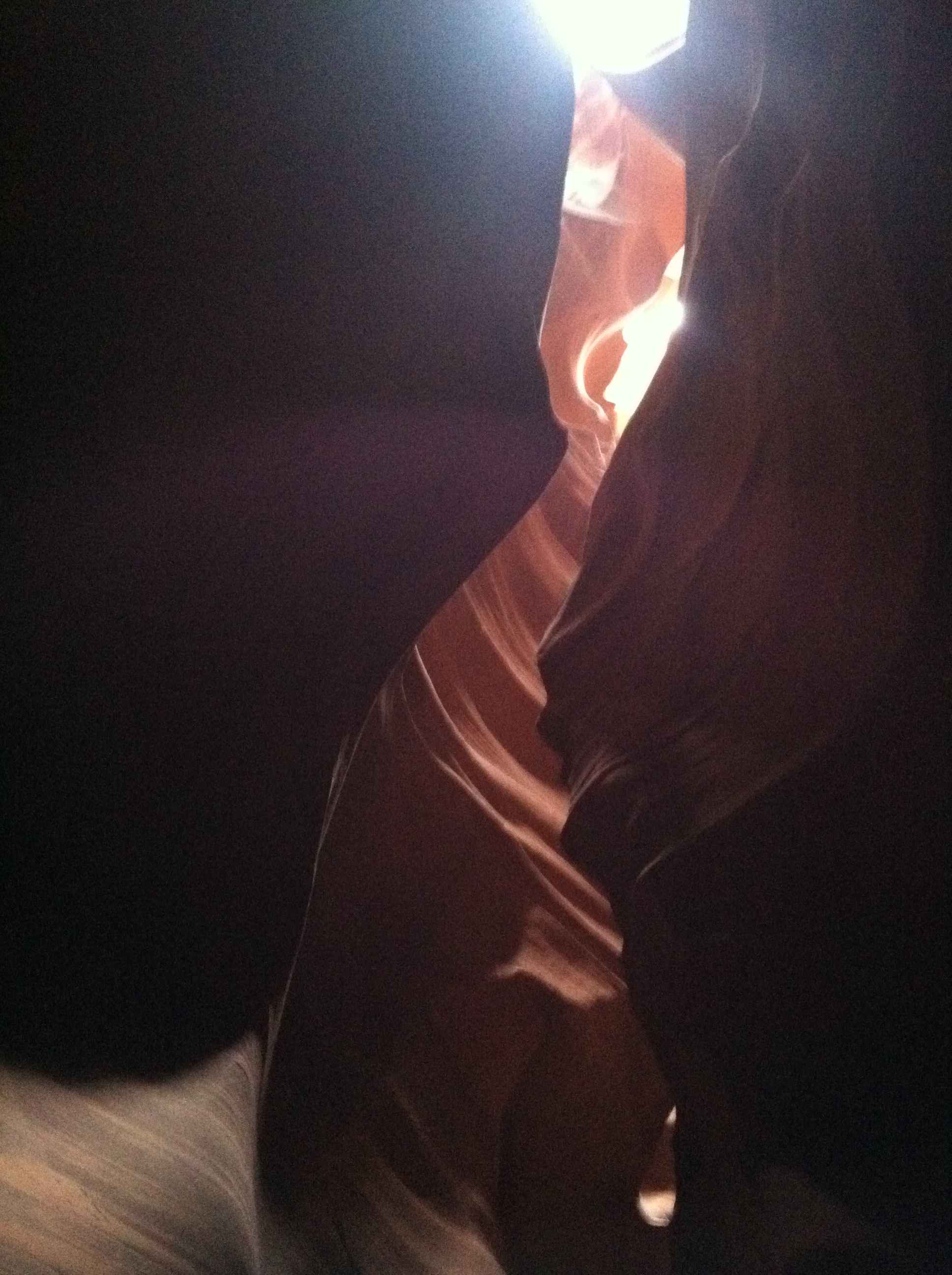
Time spent on the Navajo Reservation, visiting the striking Antelope Canyon Slot, the Navajo National Monument and Monument Valley (scene of several John Ford-produced movies featuring the iconic John Wayne), left me wanting to know more about the Navajo culture. Talks by two Navajo Native Americans, a woman and man, prompted me to think about the third-world nature of the living conditions of the reservation. We learned about the tension between the young and the old, the former seeking more economic development on the reservation and the latter determined to preserve the native culture.

Antelope Slot Canyon

Antelope Slot Canyon

In visiting Arches National Park in Utah, I became more aware of the changing environmental terrain as we continued on our Canyonlands tour. Viewing the arches, I realized that years of erosion may demolish the arches we saw, while creating others. I also was struck by the impact of tourism on this part of the United States—I counted three, maybe four tour buses. Yes, we too were “bus” people.

As we learned repeatedly, the Colorado River has played a major role in the area’s geological history, slicing through an uplifted plateau and changing the landscape over millions of years through its power and the sediment it carries. The influence of the Colorado River and its ecological balance, affected by dams, cannot be overstated. Like the Chesapeake Bay in our part of the country, it seems to be the throbbing heartbeat of the West.

My favorite resting place was the Red Cliffs Lodge in Moab, UT. It was just so comfortable and welcoming, offering wonderful views of the cliffs and river.

Our last two stops on our intensive tour were Bryce National Park and Zion National Park. Derek said he saved the best for the last. Perhaps he was right. The fractured cliffs at Bryce were magnificent, offering incomparable views and vantage points for us shutterbugs. The canyon, actually an amphitheater, was wondrous in its carved formations, reminiscent of China’s terra-cotta soldiers.

Bryce National Park

Bryce National Park

Nothing we had seen so far prepared us for Zion National Park, not because of its beauty and grandeur but instead because of its accessibility and people-friendly nature. You had to adjust your expectations and appreciate the slowly moving Virgin River, the wet cliffs and its hanging gardens and the serene walkway along the river. There were no “oohs and ahs” in Zion—simply an opportunity to sample and touch a national park.

Did I say anything about the weather? It was wonderful. And when it was hot, it was not excessively so.

Did I say anything about the group members? They were fun and funny, intelligent and inquisitive. And these well-traveled members seemed to have a similar motivation: after seeing the world, it was time to see a fascinating part of the United States.

Also—I can’t help myself—I discovered two Penn alumni, Marjorie Kitchell, class of 1964, and Dr. Art Brown, class of 1966. Marjorie joined the tour as a Case Western Law School alumna, while Art joined it through Temple, which his wife Debby attended. Another tour member, Dr. Ed Miller, did his internship and residency at the Penn Medical Center. And Liz and Robert Barone were the proud parents of a Penn 1998 graduate.

At our farewell dinner in Las Vegas, Marjorie Kitchell spoke eloquently about democracy and the openness of state and federal parks to all people, regardless of their economic status. She talked not only about the American but foreign visitors as well to the parks which we visited, able to enjoy the vistas and grandeur of the Southwest National Parks.

Marjorie’s message was compelling.

[Penn Alumni Travel will be visiting northern National Parks in 2014–Yellowstone, the Grand Tetons, and Mount Rushmore, among others. To view information about this tour or any of our 2014 destinations, click here. All photos in this blog were taken by Howard Freedlander.]

Leave a comment

Filed under Alumni Perspective, Guest blogger, Penn Alumni Travel, Travel

The Power of Alumni

Author: Stacey Deutsch Shoer, C’89

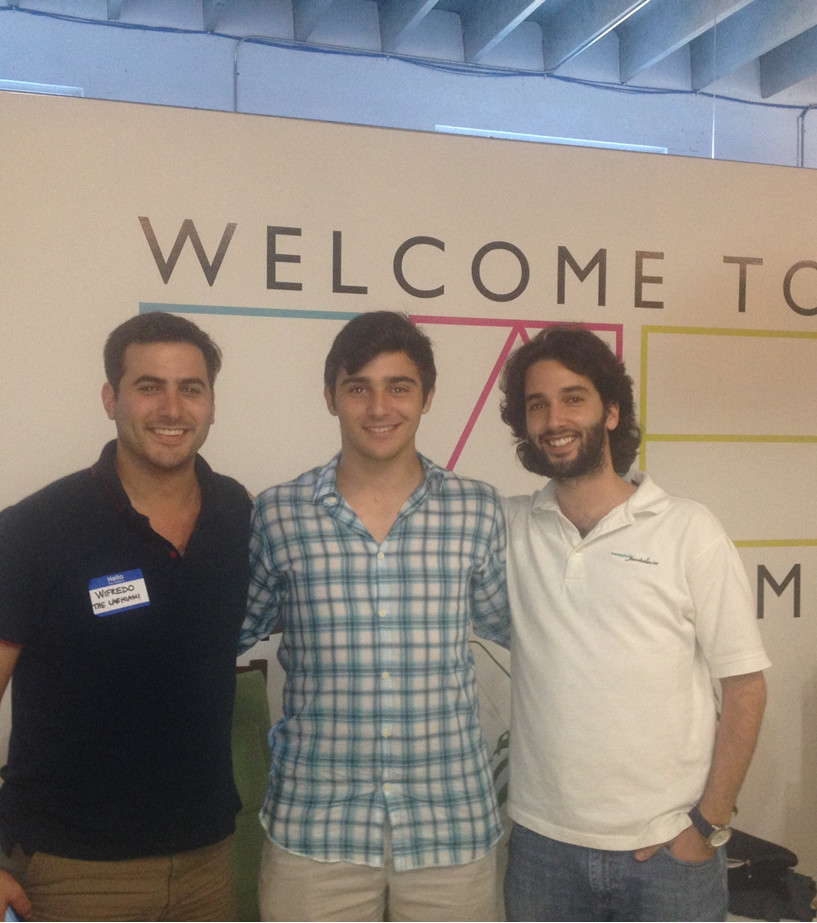
I have been the Chair of the Miami Alumni Interview Program for the last six years or so. Last year, two new volunteers joined our group. As I met them to discuss the interview process, we discovered that we had all attended the same high school.

When Danny Lafuente , C’10, and Wilfredo Fernandez, C’09, met in middle school at Ransom Everglades School in Coconut Grove, Florida, they could not have imagined that within a few years of graduating from Penn they would have a start up- The LAB Miami.

A number of both Penn and Ransom alumni sit on the LAB’s advisory board, and also serve as the main investors, in addition to the support from the John S. and James L. Knight Foundation, led by Alberto Ibarguen, L’74. The Penn investors include Faquiry Diaz Cala, W ’97.

“The LAB Miami is a 10,000 square foot collaborative space for innovative entrepreneurs in Miami’s Wynwood Art District. The LAB Miami is a startup focused on providing an interactive space to learn, act, build, and create under the guidance of experienced mentors combined with an educational curriculum to foster collective inspiration and entrepreneurship ecosystem,” states one such investor.

In the photo from left to right: Wilfredo Fernandez, Mack Shoer, and Danny Lafuente.

In the photo from left to right: Wilfredo Fernandez, Mack Shoer, and Danny Lafuente.

According to a press release, “The campus is seeding a diversified mix of tenants that include tech start ups, programmers, designers, investors, serial entrepreneurs, non profits, artists, and academics to create a dynamic environment.”

Co-founder Fernandez says, “We are building a platform for innovation exchange, a place to learn from the best, act on your inspiration and build great companies.”

The LAB space has been used for Penn Alumni Club sponsored events, board meetings, and hosts a weekly farmers market which is part of the Youth LEAD Miami program, run buy fellow Penn alumna Erin Healy, C’00, who is also an alumni interviewer.

The possibilities are endless. Lafuente and Fernandez expanded to include an intern program that follows the same model of innovation exchange, learning, mentoring, and inspiring. Naturally, many of their interns are from Ransom Everglades School, including my son Mack, who will be a high school senior this fall as well as summer interns who are currently Penn undergrads.

The power of alumni is amazing as the friends use both their high school and college relationships to find investors and mentors for this hot new start up. As my son and his high school buddies work as summer interns, they are also finding a collective inspiration.

1 Comment

Filed under Guest blogger, Interview Program

Four Critical Happenings in My Penn Life

Author: George Rieder, WH’53

I. It was at the Freshman Orientation Camp when famed Rusty Callow, Penn’s legendary Crew Coach, spoke around an evening campfire. Wearing his varsity sweater, he told a story about a commercial developer who asked his builder son-in-law to construct a high quality residential house. Nothing but the best craftsmanship and materials would suffice. Midway in the construction process, the son-in-law started cutting corners and allowing important details to slip. When the house was finished, his father-in-law proudly announced the home was his free and clear. In effect, the young man had to live with what he had created.

Coach Callow encouraged us to think deeply about what we were creating in our college experience:

* Building on a firm foundation with a sense of where we were going;

* Thinking seriously of the framework or structure of our campus experience.

* Recognizing that disciplined study and action allowed for no seemingly easy shortcuts.

* Viewing this Penn experience as part of a journey where we would associate with and learn from a diverse array of students and faculty.

One message rang in my ear and stayed with me over the years: “If it is to be, it is up to me.”

II. “Dr. Bob” Gerhardt was the Lutheran Church pastor at the Christian Association. Along with Dana Howe, the renowned Philadelphia settlement house leader, Dr. Bob planted a few words that have stuck over the years. One evening as we were leaving the C.A., he looked up and pointed at a star. “That one’s for you, George. Never forget it.” He went on to say:

Just like that star, I was never alone.

* Remember that in giving is the greatest getting. Generosity counts in life.

* Seek to determine your unique strengths and purpose in life. Be conscious of surprises as your real education here evolves.

*  Be thankful that discovery is unending as long as you use it to make a difference in this world,

III. He was a quiet, understated, brilliant giant. He was a distinguished Professor of English and President of the University of Pennsylvania.  Clearly, Dr. George William McClellean encouraged the heart in his teaching and life. It was Hey Day 1953 when unbeknownst to me he had invited my parents to the awards ceremonies. Dr. McClelland knew I was privileged to be recognized. After the ceremonies, he sought out my parents saying , “You must be proud of your son.” My mother was in tears when she told me of Dr. McClelland’s generous act of kindness. My instant responses were:

* I was so proud of my parents who loved me, raised me to be a good citizen, saved for my education, and were adored by my fraternity brothers and friends.

* I was so thankful for the professors and others teachers who opened new worlds of learning for me.

* I was fortunate to have classmates, fraternity brothers, teammates, and coaches,Mask & Wig, Kite & Key partners, and fellow Friars who supported me. I felt thoroughly engaged in a rich and rewarding four years on campus because of them.

* In retrospect, they were part of developing my managerial and leadership styles, of valuing people’s ideas no matter their job title or education, of listening to people before leading them, of establishing authentic relationships.

IV. Suzanne “Sue” Copeland, CW ’53, and I met on a blind date in our junior year. Music, more specifically Mask & Wig, was our common interest. Though quite different in personality types (Sue is a private, introverted person and I an outgoing, extroverted type), we shared some sturdy values—love of family and country, honesty, loyalty, and doing the right thing.  Her wry sense of humor offset my penchant for telling lengthy stories. We laughed a lot, sang and danced a lot, enjoyed the company of neat friends a lot. Our love never stopped growing for 56 years of married life. Sue was my anchor, a devoted wife and mother, a saint in caring for terminally ill parents, generous in giving her time to community activities. Her literary talents often helped me clean up my articles and prepared speeches. What’s more, my Sue made me feel whole.

And, it all began at the University of Pennsylvania. Every time I sing “Any Distance between Us” from the 1952 Here’s Howe! Mask & Wig Show, I think of her—and smile.

George (on the far left) and his friend at their 60th reunion for the  Class of 1953 this past Alumni Weekend.

George (on the right) and his friend catch up at their 60th reunion for the Class of 1953 this past Alumni Weekend.

1 Comment

Filed under Alumni Perspective, Guest blogger

Memories of Penn: Guest Blogger

Author: Jay Hansen, W’85

I met Craig during our freshman year at Penn. I lived at Hill House and Craig felt “exiled” to live at Kings Court English House. Craig had a friend, Diane, from high school who lived near me in Hill House. Diane introduced all of us. As I recall, Craig had a difficult roommate situation his freshman year. He used to complain about it all the time. Luckily for Craig and us, Craig has mellowed since those days in the early 1980s as the world was starting to change.

We are very excited to have Craig come to speak to the Penn and Wharton Alumni Association of Michigan on May 21, 2013. In his role as the chief financial and administrative officer of Penn (reporting to President Gutmann), Craig will have some unique insights into what is happening at Penn now and what has changed since we graduated or last visited campus, a glimpse into some of the challenges and complexities involved in running one of the world’s premier institutions of higher learning, as well as a preview of some of master plans for the future of the campus. In addition, Craig will talk about ties between the ground-breaking community revitalization work that Penn did with West Philly and the direct ties it has with similar work being done here in the Midtown area of Detroit.

It is truly an honor to have Craig take the time to come speak to us and we are really looking forward to it.

A photo drawing of the new plans for Hill Field starting in  2014, courtesy of Penn Facilities and Real Estate services.

A photo drawing of the new plans for Hill Field starting in 2014, courtesy of Penn Facilities and Real Estate services.

Leave a comment

Filed under Alumni Perspective, Campus Life, Clubs, Guest blogger, Memories of Penn, Penn Clubs

Penn Serves LA: Finding our Inner Artists at Inner-City Arts

Inner City photo 1 v2

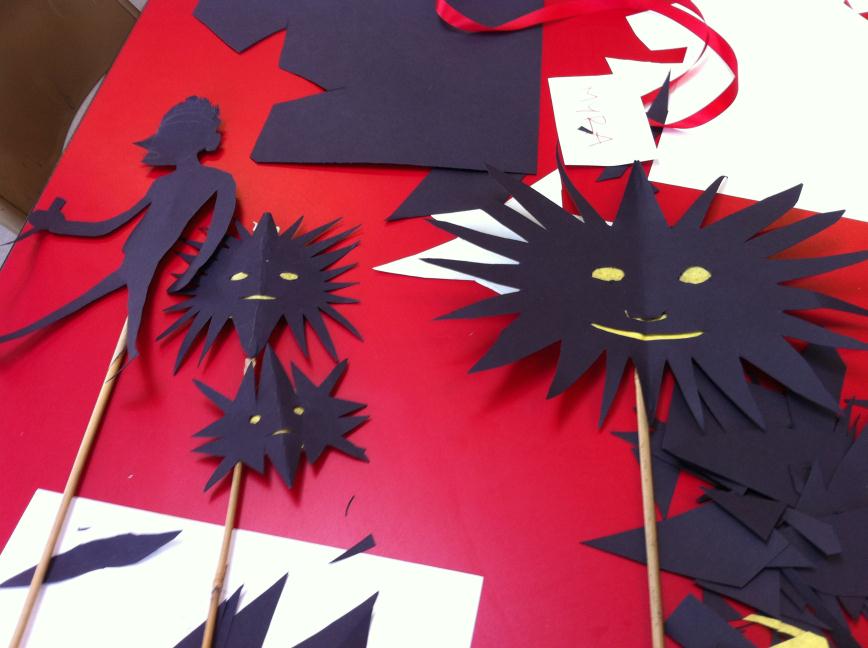
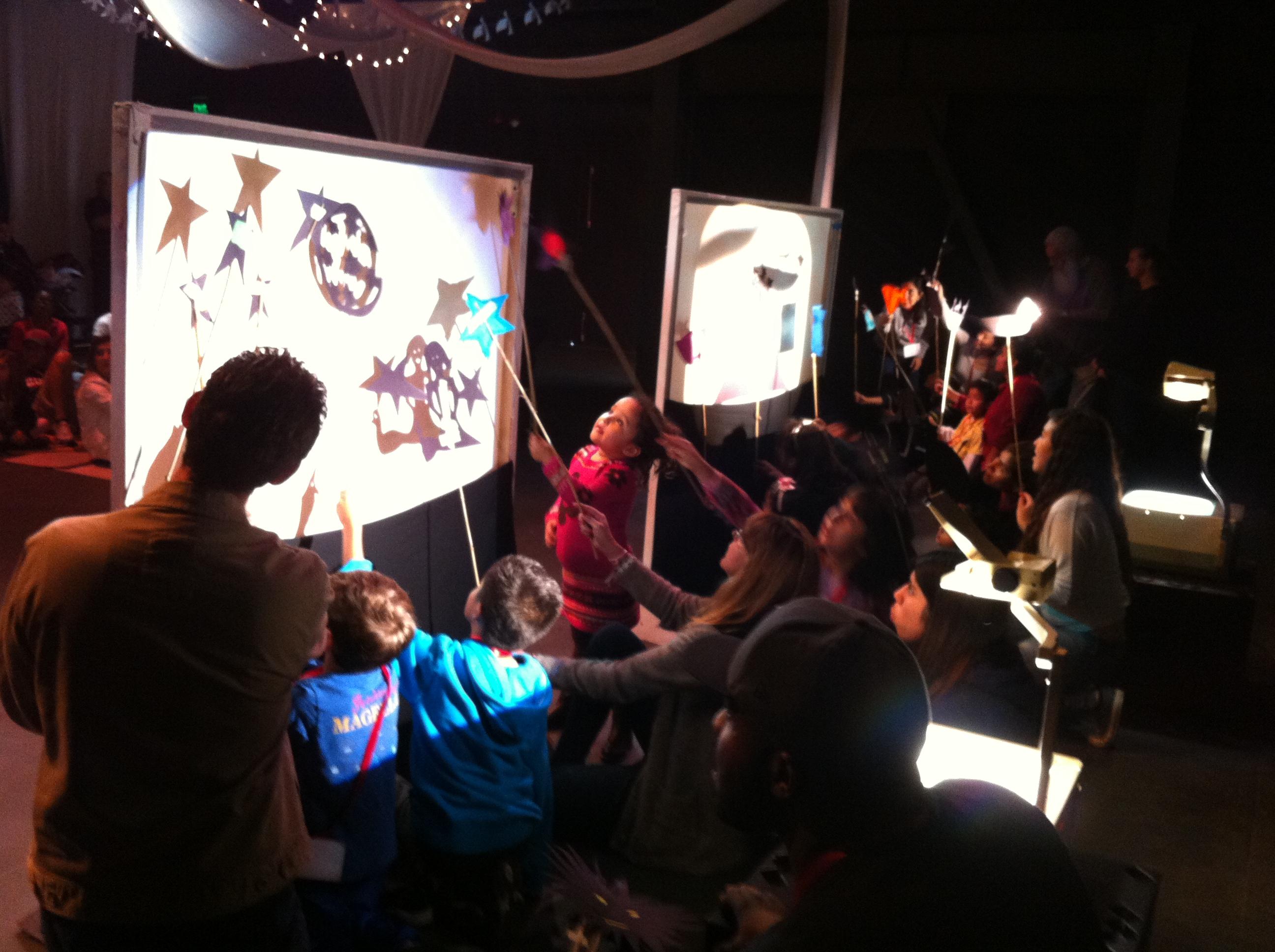
More than 70 local Penn alumni and family members turned out in force on the last Saturday in January to work alongside the children of Commonwealth Avenue Elementary School at Penn Serves LA’s third “sold out” community service event. Volunteers and children were asked to make their own shadow puppets and perform in a show featuring storytelling and world music. Famous children stories from around the world were acted out by the participants. Using black paper cardstock paper, tissue paper, and bamboo rods, volunteers were taught the ancient art form of shadow puppets. The first use of shadow puppets were believed to have been 2,000 years ago in China to entertain the Emperor Wu of the Han Dynasty.

The event was held at Inner-City Arts, a nonprofit art center located in the heart of downtown Los Angeles. Inner-City Arts helps underserved children and teens engage in a process of self-discovery through art. The center serves at-risk youth from all over Los Angeles to give the opportunity for arts education both in their schools and at the center.

The award-winning contemporary building, designed by Michael Maltzan and Nancy Goslee Power, provides an inviting, open, and free environment for safe exploration, creativity, designing, growing and learning.

Inner-City Arts Campus in Downtown Los Angeles

Inner-City Arts Campus in Downtown Los Angeles

“We are so thrilled to expose Penn alumni to Inner-City Arts,” shares Denise Winner, W’83, one of Penn Serves LA directors. “For future events we would love to get more alumni to nominate their favorite nonprofits who could use a group of dedicated volunteers for a day event.”

“We founded this group to give our time to needy communities and to expose them to the talent that Penn alumni can offer their organizations. Serving together as alumni is just an added plus,” shares Leanne Huebner, another Penn Serves LA director. “Our hope is that some participants volunteer more often with the selected nonprofits if they so desire.”

Penn Serves LA’s fourth event, on Saturday, March 9th, is already SOLD OUT. The group is volunteering to renovate a home for a family in need through Habitat for Humanity. The event is being co-sponsored by the Southern California Regional Advisory Board (SCRAB), Wharton Club of Southern California, and PennClubLA.

Children enjoy the excitement of their work displayed.

Children enjoy the excitement of their work displayed.

Families, Children and Alumni show off their puppets.

Families, Children and Alumni show off their puppets.

Are you active in community service? Want to get your favorite nonprofit involved? If you have a nonprofit in mind for a future Penn Serves LA event, let us know. Our initiative provides alumni with the unique opportunity to showcase their favorite charitable organization. Send us an email at pennservesla@gmail.com with your name and Penn affiliation, the organization you would like us to serve, why you got involved and how Penn Serves might help.

 Penn Serves LA is an initiative to encourage Penn alumni, parents and family across all schools and all years to come together and serve those in need through established nonprofits working in underserved communities. Children and spouses of alumni and parents of current students are also invited to participate (please check age requirements). Penn Serves LA is regularly scheduling service events throughout the year. You can read about our first event at Turning Point Shelter in Santa Monica, and our second event at the Midnight Mission. Penn Serves LA is working in partnership with PennClubLA, Wharton Club of Southern California, and SCRAB.

4 Comments

Filed under Alumni Perspective, Alumni Programming, Clubs, Events, GAN, Guest blogger, Los Angeles, Penn Clubs, Penn Serves LA, Photos, Volunteering, West Coast Regional Office

Penn Serves LA: The Midnight Mission

One Volunteer’s Perspective from Inside the Kitchen Looking Out and Up:  Penn Serves LA: the Midnight Mission

By Leanne Huebner, W’90

Frankly speaking, I was quite unsure what to expect as we approached the Skid Row address of the Midnight Mission for our second Penn Serves LA Event. My ten-year old son John and I joined 15 other local Los Angeles Penn alumni at the Mission to serve lunch to the homeless. Penn Serves is a new initiative to encourage various Los Angeles alumni to serve together in community service activities at established local nonprofits. The downtown-based Midnight Mission is the longest continuously operating nonprofit in Los Angeles serving the homeless. While I knew it would be an interesting experience, little did I know how much I would observe in just a few short hours.

Justin Gordon, W’05, Snehit Neenakri, GEN’09, Terry Baris, C’84, Irene Park, C’05, Christopher Regan, Trisha Fowler, C’89, Cheryl Miller, Ian Davis, Alexa Ebner, Elizabeth Kopple, C’94, WG’99, Denise Winner, W’83, Leanne Huebner, W’90, John Huebner and more all serve.

Our team was first greeted by an articulate, middle-aged man named Ryan, who would serve as our tour guide. Ryan first showed us the outdoor courtyard (no larger than 40 feet by 80 feet), where more than 100 homeless sleep each night literally head to toe. Some individuals have been sleeping there consistently since the courtyard’s opening in 2005. Our guide shared that some homeless are steadfastly resistant to accepting help of any kind and how it is an accomplishment in itself just to get the homeless to sleep in this enclosed courtyard with its heated lamps and security. Ryan understood the mentality of this population as he then shares details of his own recent stint with homelessness as a heroin addict. Thanks to the Mission and its programs, he is now on his way to living a clean, healthy life and hopefully reconnecting with his 6-year old daughter.

Ryan informs us of the root causes of homelessness. Of the 51,000 homeless in L.A. County, the Mission has found that roughly one third of them suffer from mostly-untreated mental health problems, while another third have abused alcohol or drugs. The final third have simply fallen on hard economic times. Centers like the Mission look to help in any way it can serve this population. Currently, the Midnight Mission is serving about 90,000 meals a month, its highest rate since the Great Depression.

Next stop was the Multipurpose Room where approximately 200 people sat on metal folding chairs with eyes pinned on two 30’ inch television screens. Minus the sound of the TVs, you could hear a pin drop but I discounted that observation as a huge interest in the particular program. We then pass by their small barber shop where volunteer beauticians regularly offer free haircuts and their small library where the homeless can feel comfortable checking out books. Next, we visit their gym where the residents of the Mission are required to participate in physical education regularly. Here, residents play league basketball against corporate teams and the L.A.P.D.

After the tour, we head off to work, as the lines were forming outside for entrance. We are told to expect to serve 700-800 meals over the next hour or so. The sheer amount of meals served is always larger at the end of the month, because many of the homeless’ SSI and disability payments would have been depleted by now. Ryan shares that 64% of the homeless whom qualify for government assistance do not actually receive it.

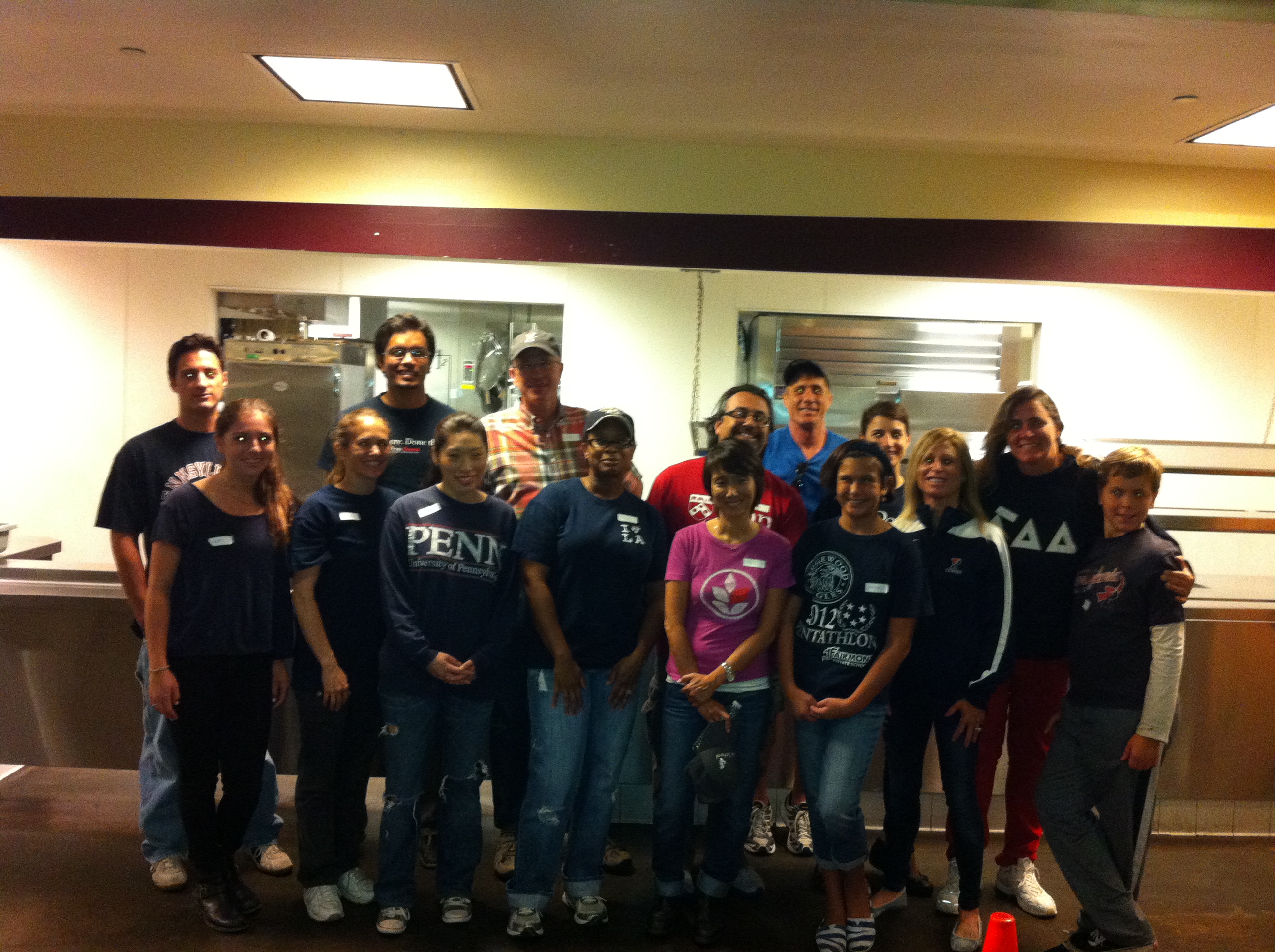
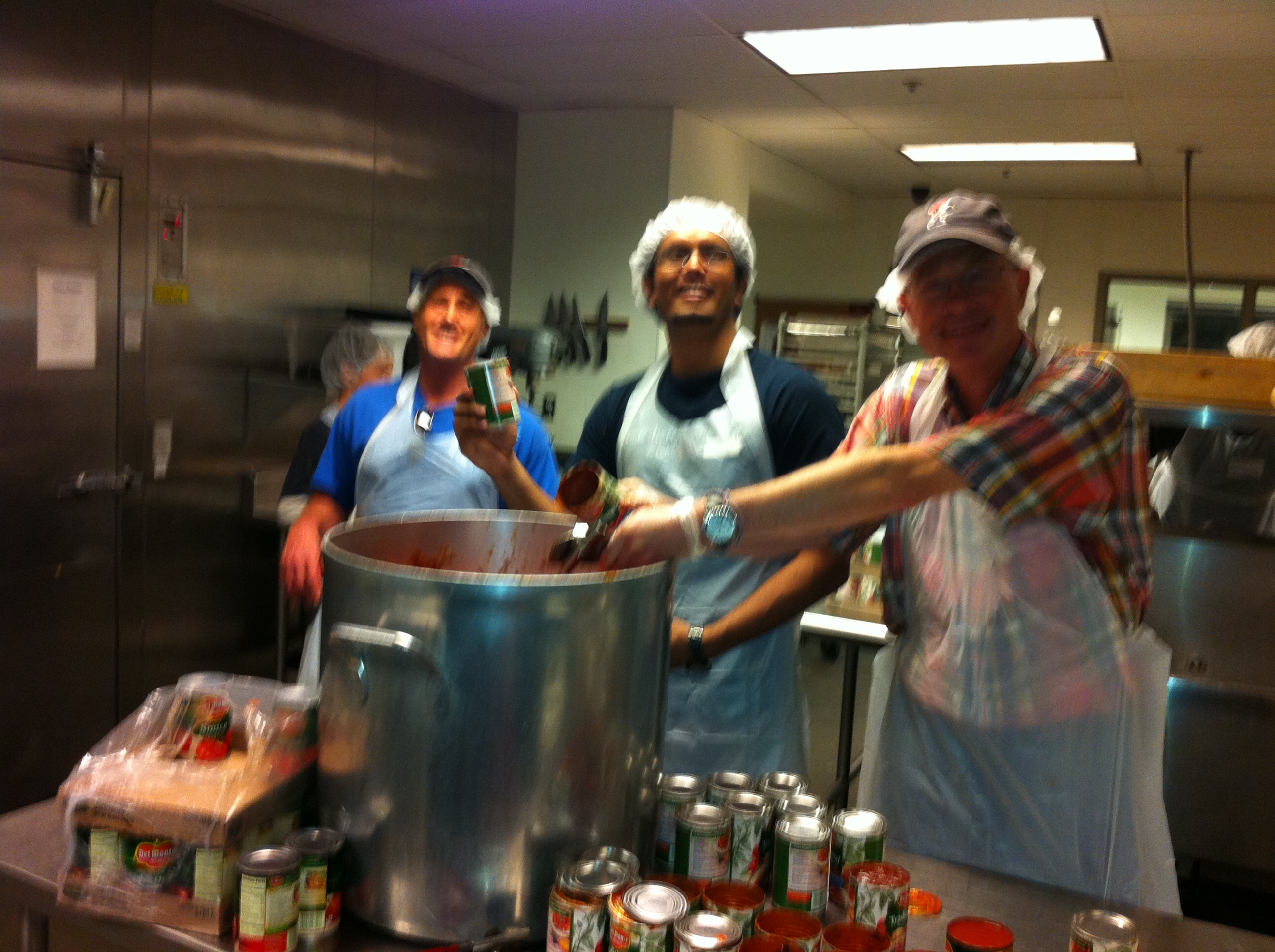
Ian Davis, Snehit Neenakri, and Christopher Regan preparing tomato sauce.

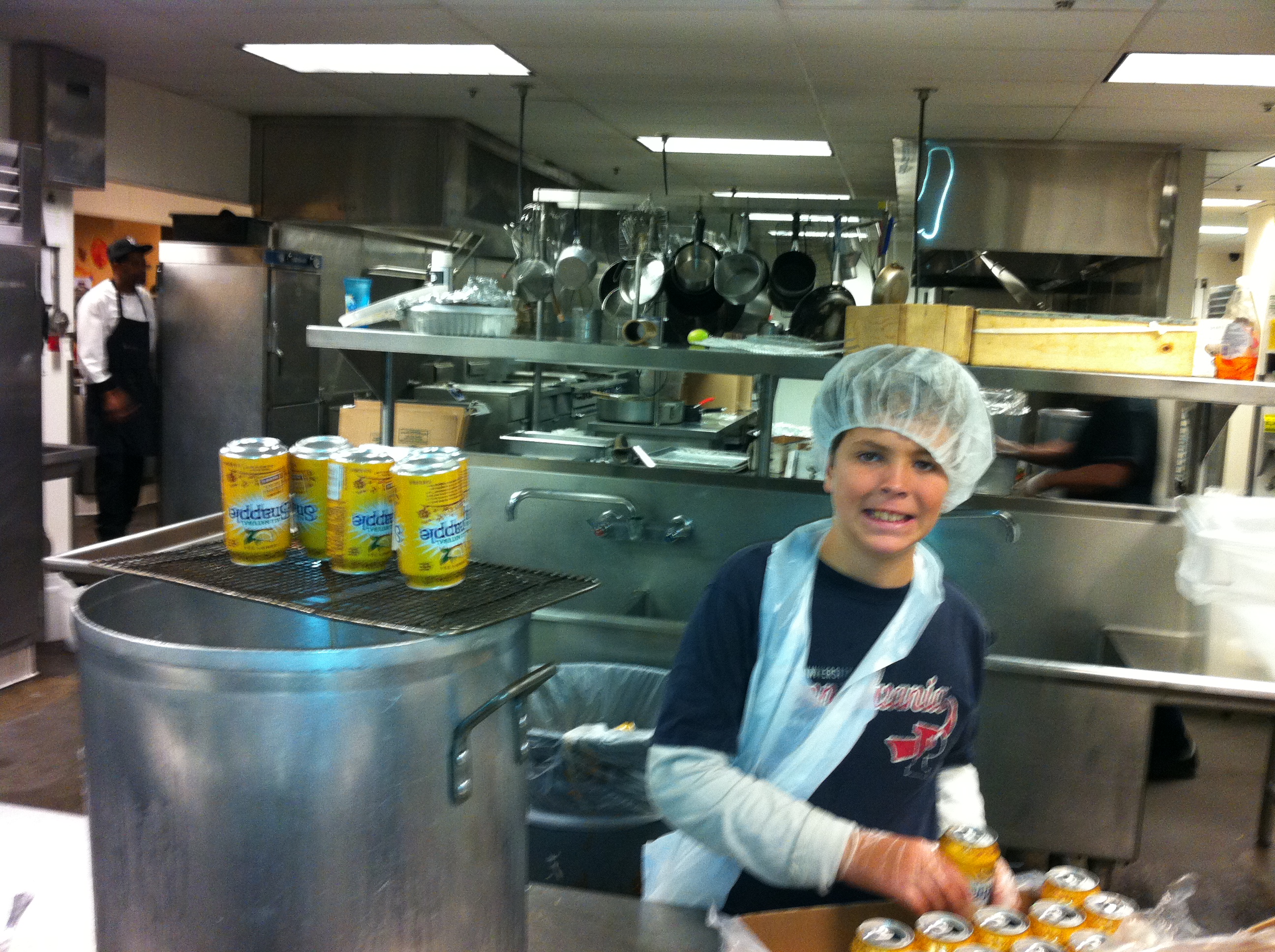
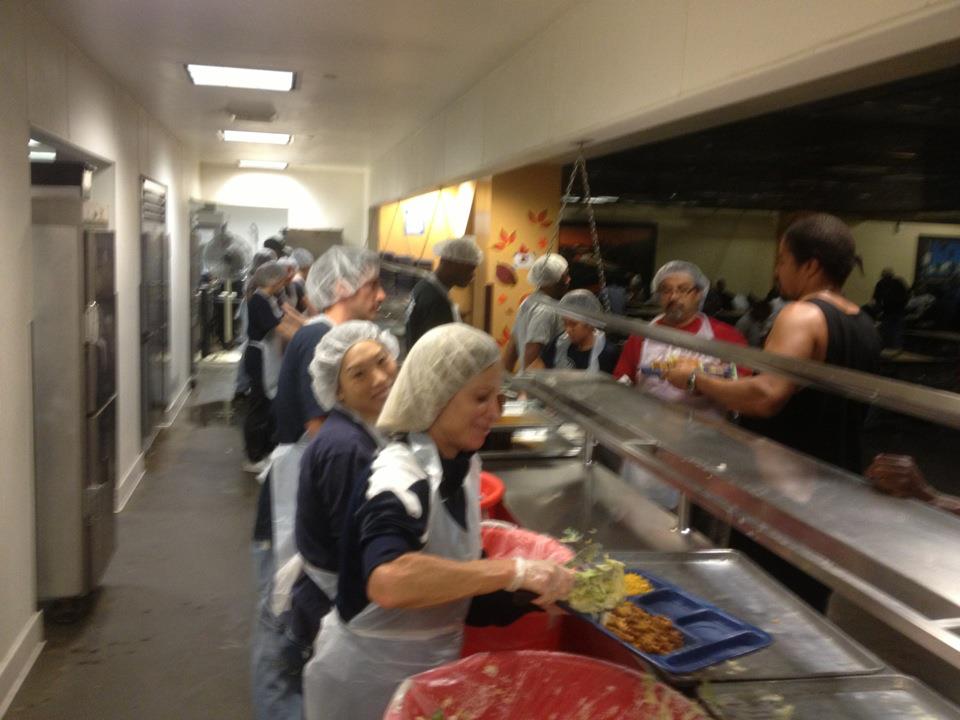
Penn alumni, now costumed in hair nets, latex gloves and aprons, head off to man the cafeteria line for an inviting meal of beef macaroni, corn, salad, yogurt, and bread. My son John and I head with a few other alumni inside the kitchen to open up hundreds of tomato sauce and Snapple cans. John finds his nitch dumping Snapple in a large pot next to another kitchen helper, who later compliments him for working hard.

10-year old John Huebner finds his job.

Restless, I meandered over to check out the front line. The line for food was long, straight and orderly with at least 100 people waiting every time I peeked. Several would re-enter the line for seconds and thirds. My normally cheery self just wanted to smile at each to offer a bit of joy but very few would even make the eye contact to accept the warm gesture. Only one in ten actually even spoke, one volunteer calculated. Several just pointed and grunted to where they wanted the food placed. The room was somber.

The lunch line staffed by Penn Alumni.

Shifting from kitchen to the line, I again noticed more lack of talking and interacting as the homeless stood in line, gathered their food and poured over their free meal. How could a few hundred people be in a room “enjoying” a meal with little to no conversation? I was comparing the noise level to that of my sons’ school cafeteria – which is quite loud despite being half this room’s size. The lack of conversation and camaraderie reflected the fact that these people are in survival and existence mode; perhaps they just didn’t want to connect even with each other. The streets are tough places to live; I suspect there are many social norms that would differ greatly from mainstream society. Perhaps, silence is one of those norms. Why draw attention to yourself when, according to one study, nearly 43% of homeless suffer from physical attacks using a weapon?

My personal highlight was interacting with a team with the men working inside the kitchen. Each kitchen helper was currently living in the Mission and this job was part of their path out of homelessness. Midnight Mission has a 12-step program to self-sufficiency, and I could feel the power of the program working right there at that moment. These kitchen workers were noticeably happier, with the value of having work for their hands that day. We joked over the hamburger sliders donated from a “fancy restaurant” as we contemplated why they called them “sliders” in the first place. One worker shared how he looked forward to finishing the program and hoped to find a job in food service. The head kitchen worker joked that he wanted to be in our photos and how he wants us to come back again.   In the brief time I was there, all of these residents were respectful, hardworking, and very appropriately funny. You could tell they enjoyed each other’s company and were grateful for the extra hands from us.

As part of their contract with the Mission, each resident agrees to be clean of drugs and alcohol, work at the Mission, and complete the 12-step program. When appropriate, some even pay a $200 rent in apartments at the Mission as residents prepare for the outside world. “Let’s make no bones about it.  This program is rehab. It is not fancy Hollywood-like or Malibu-beautiful, but that is what it is. And this is the last stop for these guys,” shares Ryan, “They either make it or they don’t.”

The stark difference between the men preparing the food (all formerly homeless) and those on the other receiving line was quite remarkable and noteworthy to me. From my novice eye, the difference seemed to be the hope for the future and the knowledge they now were on the path made possible by the privately-funded Mission. Perhaps the difference also was the fact that inside the kitchen the men had purpose – soup to stir in large vats, large metal trays to wash, plastic cups to fill and extra napkins to find. By the time lunch was finished and the alums prepared to leave, the kitchen staff was already planning and talking about the dinner responsibilities.

My fellow volunteers and I shared that we couldn’t help but thinking our own problems paled in comparison to those of the individuals we fed and met that day. The average stay inside Midnight Mission is 18 months, whereby approximately two men graduate each week, or roughly 100 men a year. Seeing the difference between those within the kitchen and those accepting the food demonstrated to me the power of intervention programming. The Mission is and has always been funded 100% by private foundations and individuals. If only we had more Midnight Missions in the world.

Thank you to all the Penn Serves volunteers for the Midnight Mission. We hope you will serve again for the next event. Thank you to Denise Winner for arranging our group’s participation at Midnight Mission for Penn Serves LA.  Contact pennservesla@gmail.com for future events or if you want to get more involved. 

To read the post about the first Penn Serves LA event, at Turning Point Shelter in Santa Monica, click here.

5 Comments

Filed under Alumni Perspective, Alumni Programming, Clubs, GAN, Guest blogger, Penn Clubs, Photos, Volunteering, West Coast Regional Office

Trade Secrets of The Quaker

Author: Andrea Amiel, C’87

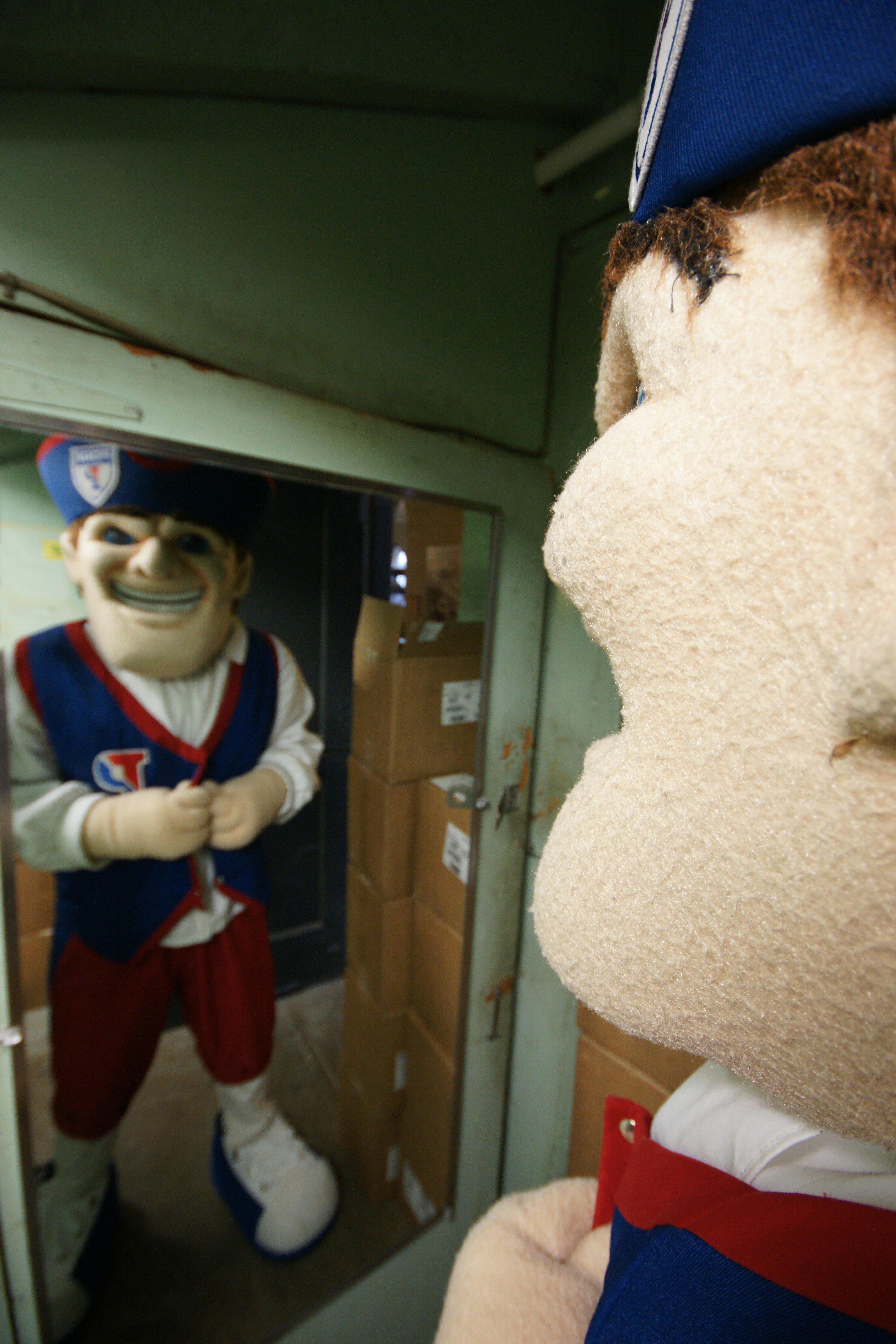
“Rob” is a 20-year-old sophomore from upstate New York who represents Penn as our beloved mascot, the Quaker.  Recently, he agreed to let me in on a few trade secrets in preparation of promoting our Class of 1987 reunion this year during Alumni Weekend, May 11-14, 2012. I hope you enjoy reading this as much as I enjoyed meeting him!

Why did you want to try out to be the Quaker?

I’m not really sure why I was interested. Perhaps it was the idea of getting in free for front row seats at all the basketball games or maybe it was the idea of hanging out with all the cheerleaders after the game. Thinking back, I probably figured that even if it didn’t work out, it’d make a good story, so I went for it and signed up.

When you got to Penn, how did you find out about the mascot tryouts…or did they find you?

I didn’t join until November of my freshman year. The idea of being a mascot never really crossed my mind before that.  This year, it was a bit different. We actively recruited during New Student Orientation, handed out fliers, and set up a booth at the fall clubbing fair. Oftentimes, all you have to do is ask and people are willing to give it a shot. This past year, we had three tryout and we took them all. It ended up that one of them dropped.

What are the prerequisites for being the Quaker?  You mentioned height…

Height is important: 5’10”-6’ in order to maintain similarity. Weight is much less important because the suit looks the same on just about everyone.

I would also say hygiene is important. We tend to switch at halves. We share the same head, so when one member is sick, we’re all at risk and as to the clothes, although it’s less than pleasant, if you’re the second halve mascot, you’re getting a wet suit.

FYI – There is 1 head and 2 sets of clothes. They get cleaned every to every other wearing.

What did the Quaker tryout entail?  

I’ll give you my experience and the experience for the new guys:

For me- I was joining at a time when they really needed help. There was only one Quaker at the time and accordingly they were, for lack of a better term, desperate. My tryout went something like this:

Dave (Quaker at the time): Get in the suit.

Me: Okay.

Dave:  Now, walk like the Quaker:

Me : (attempting to walk like a Quaker) Is this right?

Dave: No. Do it like this (proceeds to show me).

Me: (again attempting to walk like a Quaker) Right?

Dave: No, try again.

Me: (attempting)

Dave:  No! (Shows me one more time). You’ve got one more shot.

Me (attempting)…

Dave: Ugh, well, you’ll figure it out eventually Now, get out there.

(Clearly, I wasn’t a natural).

For the incoming mascots this year it was much less about having raw talent and much more about gauging interest and size height.

What training did you receive for what you are supposed to do at games?

I got the nod that I was picked, and was thrown right into my first game. Any of the stylistic things I picked up (how to interact with crowds, dance etc.), I learned on the job or by meeting and watching other mascots. This past January, I had the opportunity to go to cheer nationals in Walt Disney World and I was able to watch and learn from the best.

Were you given a list of rules or regulations? Any you can share? 

Initially, I was given three rules and I’ll explain the relevance of each one.

Do not talk in the suit. It’s important that the mascot maintain a cartoon-like character and talking it humanizes the mascot and takes a lot of the fun away.

Do not be seen in public with the suit. That means no parties in the suit, or leisurely strolls for attention, and always change in private. The Quaker is one of the main images and representations of the University of Pennsylvania and accordingly, any action that I do in the suit is a reflection of the University as a whole. It would be a shame to dishonor this place, so it is imperative that when in the suit, we try to act respectfully.

Don’t advertise that I am the mascot. While the different mascot identities aren’t kept perfectly secret, we’re still hidden enough from the public that 99% of people have no idea who we are. It’s important that our lives outside of the suit don’t interfere with the University’s image. For example, I’m in a fraternity, but that doesn’t mean that Quaker is a frat brother.

This past year, a few additional rules were added because we earned a complaint from the NCAA: No mooning crowds in the suit (Princeton got us in trouble for that one).  No more ripping the head of other school’s respective mascots, even if it’s just a stuffed animal that we’re attacking.

The Quaker went from being a person wearing makeup and a wig, to a full costume with a mask. Why?  

The transition from an open-faced costume to a fully enclosed suit was both advantageous for the University’s image and for the student body. First, the full suit made it possible for Penn to maintain consistency year in and year out, because it no longer was graduating the “face” of the university, which of course would happen every four years.  Having an open-faced suit created a level of risk because the image and reputation of the current student mascot reflected on the university.

The other issue was that an open-faced mascot only allowed for one individual to be the mascot and accordingly, everyone would have to put up with his time constraints. Additionally, it prevented females and minorities from having the opportunity to become the mascot, because on some level, the mascot image had to remain consistent.

To emphasize my point, three years ago, the main mascot was female. Right now, we have four people serving as The Quaker. It’s a diverse set of mascots, representing the Caucasian, Black, Indian, and LGBT communities.

Where does the Quaker show up – aside from sporting events?  Are there events or occasions that require the Quaker’s attendance?

You never know where he’ll show up. Sometimes he’ll make surprise visits to Van Pelt, to weddings, to a ton of alumni events, Penn Previews, 5Ks, openings of buildings, Philly Phanatic’s Birthday party, and even some corporate events.

How do you pick which of the Quakers works at a particular event? Doesn’t everyone want the big-time events?

Events get assigned in the following order:

Everyone checks their schedule to see who is open. If multiple Quakers have openings, it will be decided on a first-come, first-serve basis. If it is a big event, the most senior Quakers make the call.

Are you paid for being the Quaker, or is it a volunteer position? 

The Quaker is actually a member of the cheer team and accordingly, is a registered NCAA division I athlete.  Because of that status, the mascot cannot be paid.

Where is the costume stored? 

The Quaker Den is located in the Old Box Office in the Palestra. The room is decorated with old trophies, Penn flags, headless tigers, and general Penn paraphernalia. There is also a 4’ by 4’ section of the historical Palestra floor where we change in front of a mirror.

Why don’t we ever see the Quaker walking around campus? 

A few reasons. Generally, the suit is stored in the Palestra in order to make it easy for one of the Quakers to find the suit.  It takes 10-15 minutes to put on the suit and it has to be done in secrecy/private. The suit costs about $5,000 and accordingly, any unnecessary wear is viewed as exactly that. It’s not the most comfortable to hang around it.  It generates a lot of attention. When you’re in the suit you’re a celebrity, so it’s kind of like saying, why don’t we see celebrities around campus more?

Are you allowed to borrow the Quaker costume for private events, like a party or something? 

The Quaker is only allowed to be used for University-affiliated, sponsored, or supported events. Because we represent the University, it would be inappropriate for the Quaker to be a frat party, for example.

Have you ever gotten harassed as the Quaker, or had a hard time?

For some reason, I’ve had really bad luck at lacrosse games. Walking around the concourse of Franklin Field I’ve had a couple kids shoulder-check me into the wall. Walking through the stands, I can remember one event in particular, where a teenage girl refused to let go of my glove for an entire hour, so I was of stuck next to her until she let go of my glove and I could get away.

I made the mistake of taking the Quaker out to Spring Fling last year. I ended up having to literally run away from a group of girls in the Quad who were adamant about removing my head. Soon after, I had a group of males approach me from behind, pick me up and drop me.

At the St. Joe’s game this year, I was harassing the opponent crowd when the Hawk swooped in, bumped me, and tried to start a fight. Fortunately, the ref ended that before it really had a chance to begin though.

So, yes, sometimes, it gets a little tricky.

Any funny stories or great anecdotes that you can share?

It’s common for me to find myself in some pretty unique situations while in the suit. Last October, I received an email from a psychiatrist asking me if I’d be willing to work with this child (of a Penn alum) who had a phobia of costumed characters. Next thing I knew, I was sitting on a bench outside of Starbucks on Chestnut and 34th, dressed up in the suit, with a terrified child — and when I say terrified, I mean terrified, staring me down from 50 feet away. Over the course of the next hour, the patient worked her way toward me, overcame her fear, and ended up posing for a picture with me.

Before my first football game, I was told that I needed to practice running the flag, leading the football team onto the field. Well, to say the least, I dismissed the idea of practicing running- I mean how difficult is it to run, granted even in the mascot suit it’s not all that complicated?  It’s the same motion, just bigger steps, right? I should have practiced, because when it came time, I made it three quarters of the way down the field, lost my balance, did a short weave, and collapsed. When I looked up, I was completely surrounded by a herd of giant football players.  I just closed my eyes hoping that I would make it out alive. After somehow surviving the stampede, I walked off the field. I don’t think I ever appreciated my anonymous status as much as I did then.

What’s the worst part about being the Quaker? The best part?

As to the worst: the worst part is our schedule. We never know when we’ll get a last minute email to attend an event and often times it’s challenging to balance the schedule with the academic load, but that’s why we have four athletes instead of just one.

The best part is what I’ll call the “VIP Privilege.”  We get into all sporting events for free and we have what is essentially an all-access pass. It’s completely acceptable and oftentimes encouraged for the mascot to walk up and kiss our beloved President, Amy Gutmann, and it’s equally as acceptable to walk onto the floor during time-outs and give the players high-fives. I’m certain that almost nobody else is afforded those opportunities.

3 Comments

Filed under Alumni Perspective, Alumni Weekend, Guest blogger, Reunions, Traditions

Class of 1981 First Annual Community Service Project – The Philadelphia Mural Arts Program

Author: Leslie B. Posnock, C’81

Our group of dedicated volunteers!

We expected a good time – after all, we were with old friends and family, giving back to the Philadelphia that nurtured and entertained us more than 30 years ago. But, the Class of 1981’s First Annual Community Service project – in partnership with the Philadelphia Mural Arts Program, wowed us from beginning to end.

Perhaps our first clue was the bright sunshine, when the forecast called for rain. Or the brightly colored trolley we boarded as a group.  Every day, Philadelphia residents are amazed by the more than 3,500 dynamic, larger-than-life images that grace the city’s neighborhoods and have earned international acclaim as the largest outdoor art gallery in the world.  Now it was our turn to explore this important and beautiful project.

Lots of familiar faces from the Class of 1981 joined us – Dale (Borenstein) Bell and Allan Bell, Debbie (Margulies) Buchwald , Lisa (Higgs) Dutton, Rhea (Schwartz) Finkelstein and Eddie Finkelstein, Caryn Feuer Liss, Jeffrey Lonoff, Leslie Posnock, and Wendy Sardinsky. Other Penn alums included Jon Liss (Class of 1976), Karen (Friedman) Lang (Penn Med 1990), Brittany Bell (Class of 2011), David Fine (Class of 2011), and future grad Brandon Bell (Class of 2014). Old friends, new friends, spouses and children shared soft pretzels and took in the sights.

Our tour took us through neighborhoods blighted by poverty, but brightened and made hopeful by the enormous, intricately detailed murals created by the talented and dedicated people of the Mural Arts Program, along with volunteers and professional artists. Among the highlights of our tour was “Holding Grandmother’s Quilt,” depicting a grandmother and her three grandchildren, which spans two walls in the West Philadelphia neighborhood of Mantua. A former empty lot – a haven for drug dealers and junkies – now a community garden – lay between them.

“Common Threads,” a mural located at Broad and Spring Garden Streets, conceived as a celebration of Philadelphia’s youth, astounded us with its sheer size and artistry.

“Shadow of a Church,” located at 22nd and Walnut Street, formerly an empty wall abutting a service station, amazed us with its realistic depiction of a church – no longer there – reflected in the windows of a (nonexistent) brick office building.

We passed murals celebrating history, vocations and organizations. We passed murals depicting sunflowers and celebrities. We passed murals painted by children who had seen too much fear and sadness, but who dared to dream of a better tomorrow. We saw murals which depicted the everyday struggles of the people who live in their neighborhoods. Each mural brought a burst of color and light to the walls it graced.

Mid-tour, we grabbed paintbrushes, joined the Mural Arts Program staff in their studio, learned the innovative process for creating these installations, and had a blast painting a mural called “Finding the Light Within,” which seeks to bring awareness to suicide prevention. The project, slated for completion this summer, will be installed near Penn’s campus at Horizon House (120 South 30th Street). Each of us pledged to attend the opening ceremony.
After a tasty detour at the E. Craig Sweeten Alumni House for snacks and drinks, we headed to the Palestra and cheered our Quakers as they convincingly beat Yale, 68 – 47, in the final home game of the Penn basketball season.

We hope you’ll join us in March of 2013 for our Second Annual Community Service Project. If you would like to help plan our next event, please contact Caryn Feuer Liss, 215-888-9598, carynfl@aol.com, or Leslie Posnock, 732-895-0814, lposnock@schwartzposnock.com.

Leave a comment

Filed under Alumni Perspective, Alumni Programming, Guest blogger, Philadelphia, The Arts, The Arts at Penn, Volunteering

Penn and Wharton Club of Arizona Celebrate Ben’s Birthday

Author: Laura Solie, W’08

In January, forty Penn Alumni from the Wharton Club of Arizona gathered to celebrate the birth of Ben Franklin. The event, an annual tradition within Penn and the Wharton Club of Arizona, brought together alumni both young and old to cheer the birth of Penn’s founder.

After mingling around the catered food and sparkling conversation with friends, our Penn President reined us in for official introductions. As we went around the room introducing ourselves by name, school, graduation yard, and quick life updates, several things became apparent.

First, our experiences after graduation were incredibly diverse.  From creating a thirty-year career as a surgeon after studying art history to flitting around the country trying to make it in the hotel industry, our Penn education led us to success in many different directions.

Second, each and every one of us had an unique Penn story to share. Our older alumni recalled the days of Locust Walk when it was a road, while the younger folk dwelt on somewhat hazy memories of Spring Fling.

Third, and what stood out to me the most, was that someone named Candice Bergen had attended Penn and many people recalled knowing her as a student. Once her name was mentioned, the stories flowed. “She was, in fact, my roommate freshman year,” one alumna fondly remembered.

“Oh, of course! Candice Bergen! I have watched all of her movies,” shared another excitedly.

I found myself wondering who the heck this person was, and why I wasn’t more up-to-date on our Penn celebrities. After references to movies that were released way before my time (The Hunting Party??), I quickly searched for her name on my iPhone. “Oh!” I exclaimed after a moment. “The crazy mom in Sweet Home Alabama and on TV as Murphy Brown! She went to Penn? Awesome!”

And with that, I left another Penn event with pride for our accomplishments and the great feeling of being part of a special group–a group, as I now know, that includes a very famous celebrity.

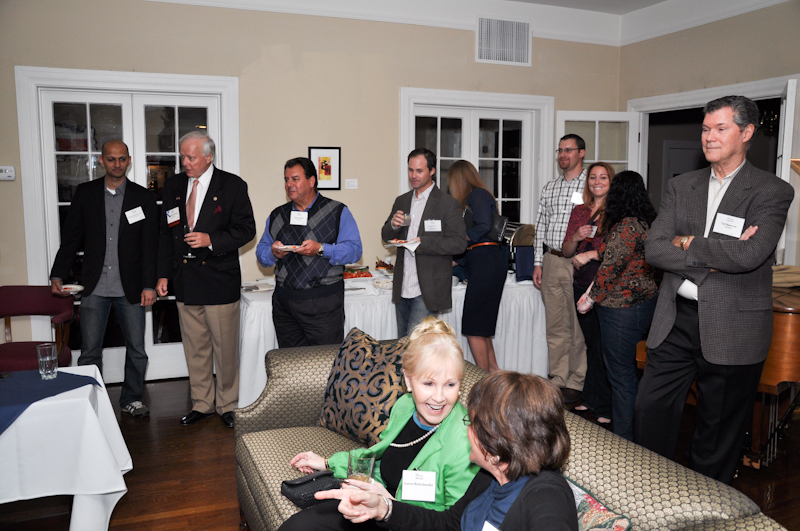
Penn alumni enjoying conversation and recounting tales of a famous alumna.

For more information about other Penn & Wharton Club of AZ activities, visit the club website here.

1 Comment

Filed under Clubs, GAN, Guest blogger, Historical, Memories of Penn, Penn Clubs