Category Archives: Travel

Sketches of Spain – Penn Alumni Travel 2012

Author: Gwendolyn DuBois Shaw, Associate Professor of American Art, Faculty Host

It was a rainy day in October when our airplane touched down at Aeroport del Prat on the outskirts of Barcelona.  From the first moments in the baggage claim, when our Penn Alumni Travel luggage straps identified me and my husband John as fellow voyagers on the Sketches of Spain, 2012, we were surrounded by new friends from the family of Penn alums – friends that I have come to know and appreciate during the past four years that I have been accompanying these trips as a faculty host.  Our choice to travel off of the standard itinerary meant that we were not met at the airport by the tour director, Nani Gonzalo-Vargas, but thankfully, those magical luggage straps meant that we soon connected with another Penn couple in the same situation and were able to share a cab together into Barcelona.

Our new friends were on their third or fourth alumni trip and, like us, were traveling independently so that they could add a few extra days on at the end and visit a few cities that were not on the itinerary.  As the four of us discovered toward the end of the trip, and the gathering force of Hurricane Sandy began to threaten our easy return to the East Coast of the United States, this was both a good and a bad decision to have made.  But more on that later.
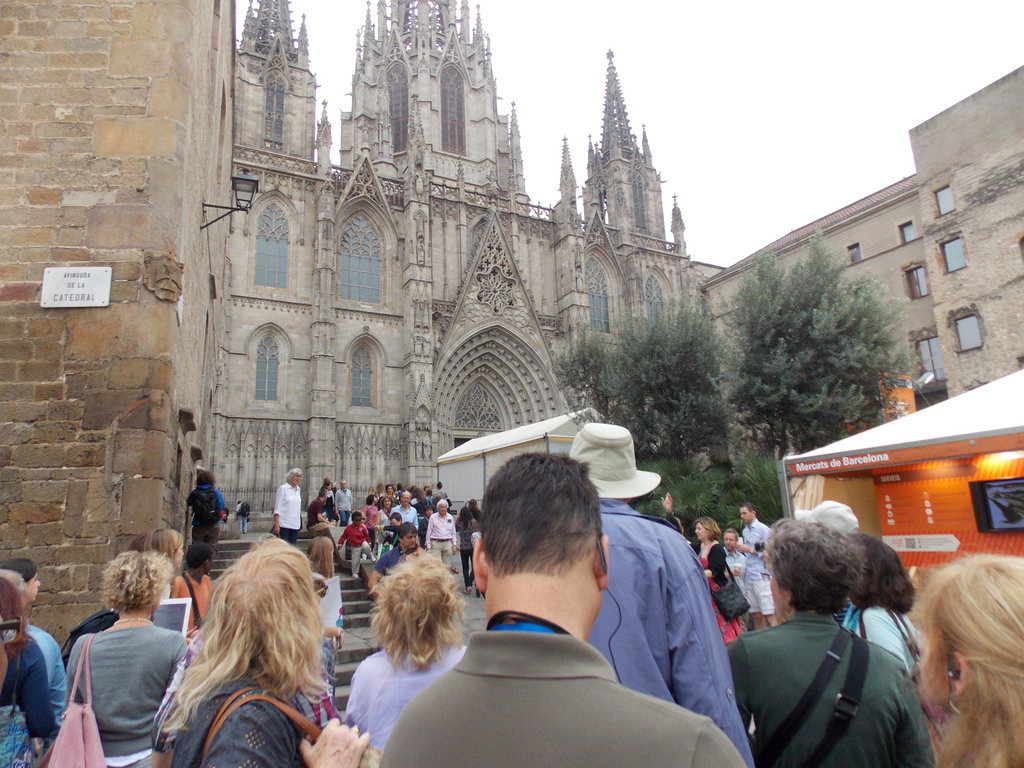
The Group at the Cathedral of Barcelona in the Medieval Quarter

The Group at the Cathedral of Barcelona in the Medieval Quarter. View all my pictures here.

Once at the Hotel Cristal, we met up with Nani, the tour director, and the other members of the group.  We were sharing the trip with members of the Rutgers and University of Maryland alumni associations, several of whom had made couples or family trips by bringing friends or siblings. After a day of recovery spent strolling the shopping districts of the nearby Rambla and eating marvelous food at La Boqueria, the largest and most dazzling of the many markets that characterize the sophisticated culinary world of the Catalunya region that Barcelona dominates, we adjusted to the time difference and were ready for the delightful and educational tours that make Penn Alumni Travel so special.

Our local tour guide in Barcelona was Santi, short for Santiago, a specialist in the rich architectural heritage of the city. We traveled with him by bus to the Olympic Park, the waterfront Athlete’s Village, and the absolutely stunning Cathedral of the Sagrada Familia and the Park Guell, both designed by the renowned art nouveau architect Antonio Gaudí.  At the Park Guell we learned about the innovative techniques of glass and ceramic mosaic used by Gaudí and his workmen.  While there I was able to talk our whole group into posing for a picture!  Say, “Queso!”
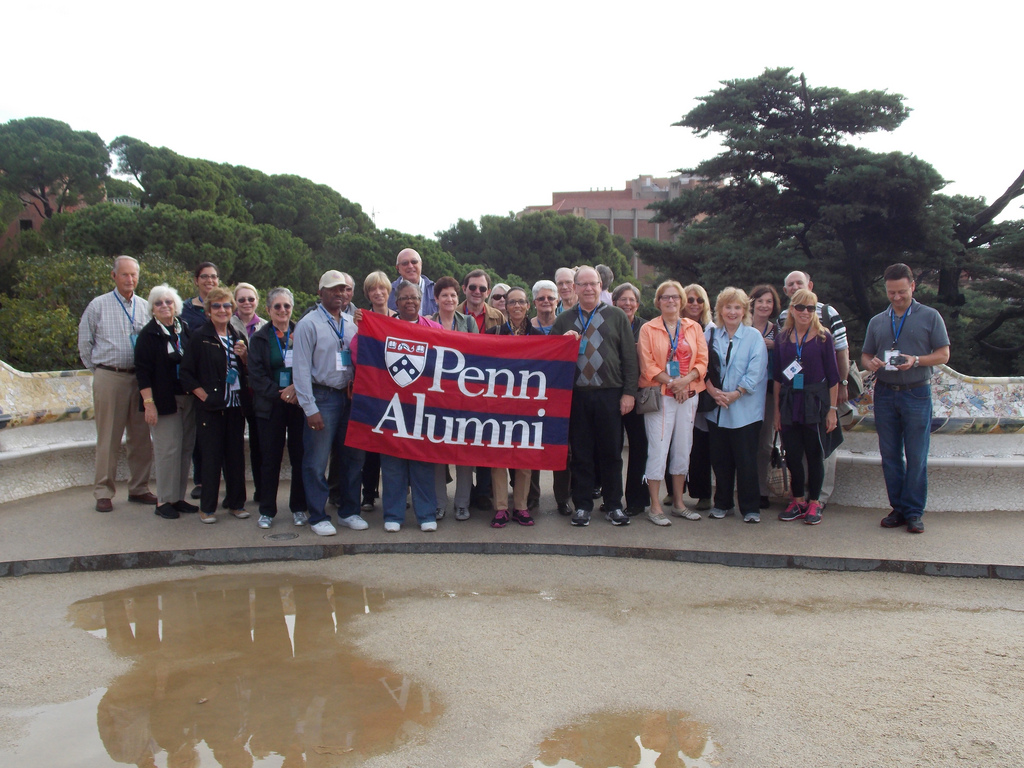
The Group at Park Guell

The Group at Park Guell.

Later that day, Santi guided us through the complex architectural program of the Sagrada Familia, a vast and breath-taking cathedral that was begun over one hundred years ago and is still under construction. While waiting for our entry time to be called, we were fortunate to see the building of a human castle, a community activity in which groups of Catalans compete to see who can successfully build and deconstruct the tallest human tower!  This was a really a remarkable undertaking to witness, and I enjoyed seeing the little children, whose job it is to stand steady atop the shoulders of their older compatriots, prepare themselves by strapping on protective head gear and wrapping their waists in the characteristic scarves that are used as grappling tools when climbing atop the stacked bodies!

Here is a link to the video of the Castle Competition.

Our last night in Barcelona we had a beautiful and exceptionally tasty group dinner across the street from another Gaudí building, Casa Battló on the fashionable Passeig de Gràcia.  That night the elegant art nouveau building was the site of an elaborate series of digital video projections that caused the façade of the structure to appear to come to life!  The narrative of the projection involved the animation of the dragon motif that Gaudí integrated into the building’s program, an homage to Barcelona’s patron saint George, who is known for his heroic feat of slaying a dragon.  It was remarkable to witness this contemporary artistic transformation of a cultural landmark into an evening’s entertainment for both residents of the dynamic city and tourists alike.

Here is a link to the video of the Casa Battlo animation.
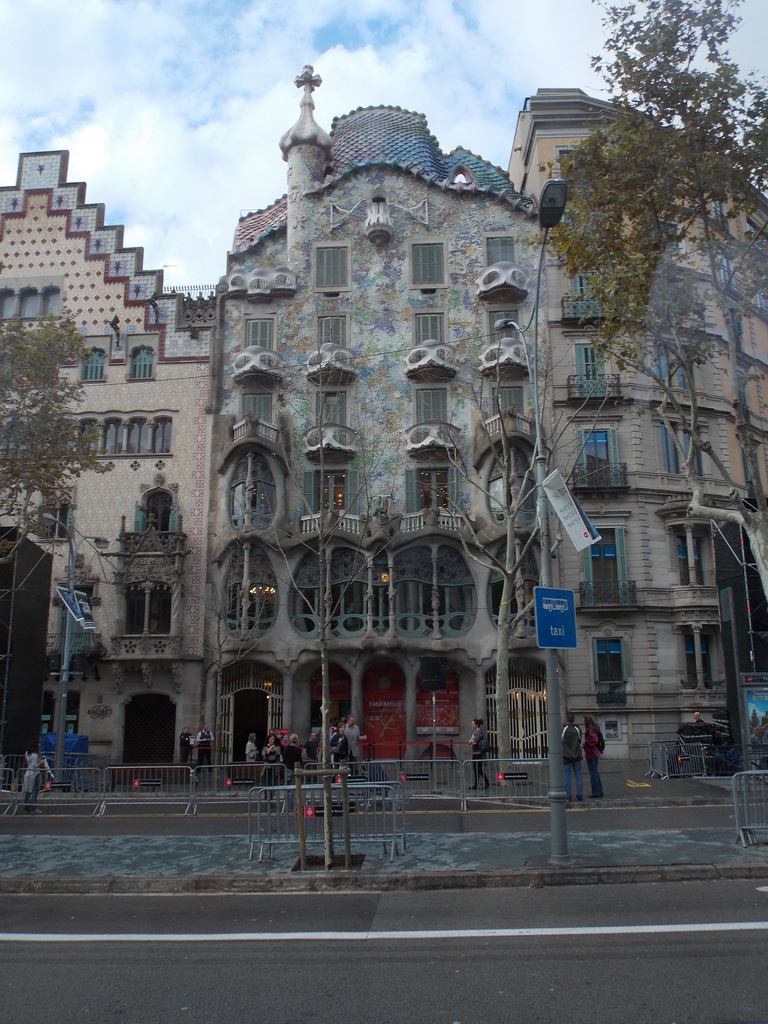
Casa Battlo during the day

Casa Battlo during the day.

The following day, we departed Barcelona and Catalunya for the north of Spain and our visit to the Basque Country.  After a short plane ride we found ourselves in the charming seaside town of San Sebastián.  That day, we had (hands down) the best group meal of the trip at an unassuming little pintxos bar in that city’s old quarter.  Pintxos are small bites of food, similar to tapas, that are typically served on little wooden skewers that pierce their centers, thereby giving them their common name (pintxo being Basque for spike).  Over the course of two hours, we feasted on succulent lamb, incredibly fresh seafood harvested from the region’s cold Atlantic waters, and fragrant cheeses made in the grassy hillsides to the east, washing it all down with bottomless glasses of refreshing local wines.
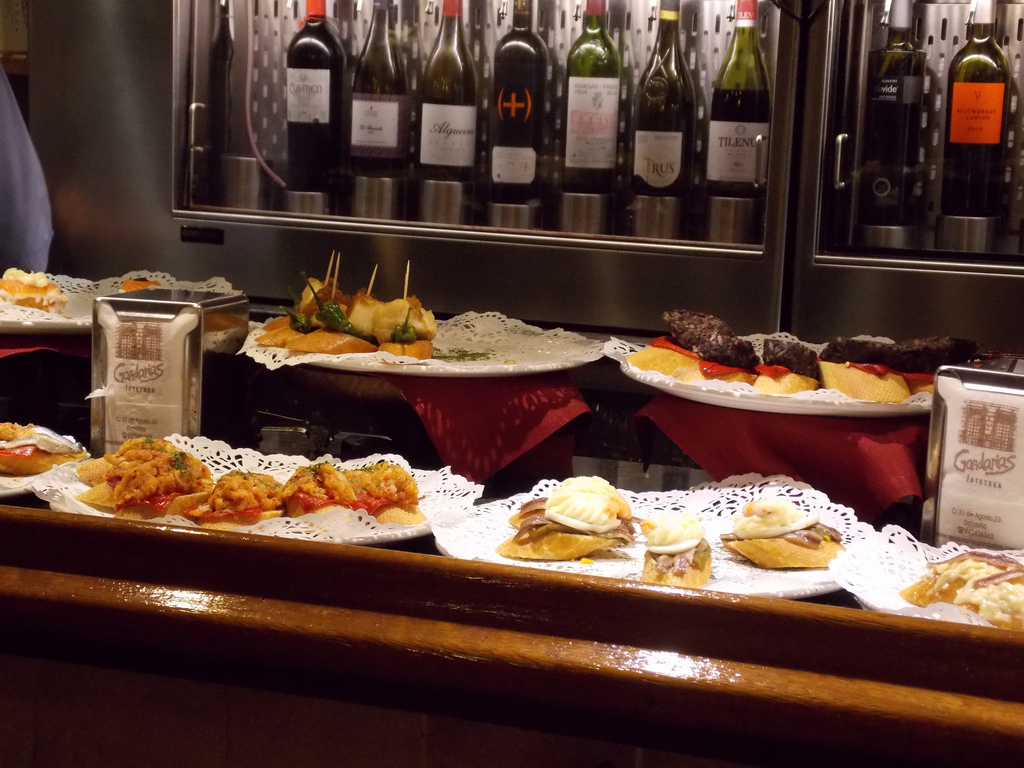
Pintxos in San Sebastian

Pintxos in San Sebastian.

After lunch, the group dispersed, and my husband and I chose to stroll through the city and enjoy the vibrant street life, watching Basque families chatting with their friends and neighbors as their children played in the numerous squares and parks that characterize this close-knit community of about 200,000.  That night we learned a great deal more about the region and its remarkable history from a local specialist who told us about the history of the Basque language (one of the oldest and most unique in Europe) and the difficulties that this culturally and linguistically distinct group of people have historically had with their ambitious neighbors.  It was especially affecting to learn of the fascist persecution of the Basque when during the 1930s General Franco attempted to dominate them through a program of genocidal bombing.  Following the lecture we were joined for dinner by a dozen English-speaking residents of San Sebastián who ranged in age from about 15 to 50.  This was a real treat as it allowed members of our group to better understand the cultural differences and similarities between not only the Basque and other Spaniards, but with ourselves as well. Zorragarri! (“Wonderful” in Basque).

While in San Sebastián and the Basque Country, we also visited the Guggenheim Museum in the industrial hub of Bilbao and the small city of Pamplona.  Certainly, the works of modern and contemporary art that were on view in Frank Gehry’s masterpiece of museum design were impressive, but I was most charmed by the narrow medieval streets of Pamplona. Best known to Americans as the site of the Festival of San Fermín and the running of the bulls through the streets to the arena, Pamplona is also a stop on the Camino de Santiago, which runs across the north of Spain to the pilgrimage site of Santiago de Compostela.  While strolling the streets here we encountered many pilgrims with their heavy rucksacks and walking sticks, all walking toward their final goal of reaching the resting place of the bones of Saint James.  That afternoon we had lunch at the Café Iruña, a favorite restaurant for the author Ernest Hemingway, who first made the city known to Americans in his 1926 novel The Sun Also Rises.  With its tin ceiling and brocade wall paper, the Iruña is an incredible time capsule back to the 1920s and the days when bullfighting was a bit nearer to the heart and soul of Spanish culture.
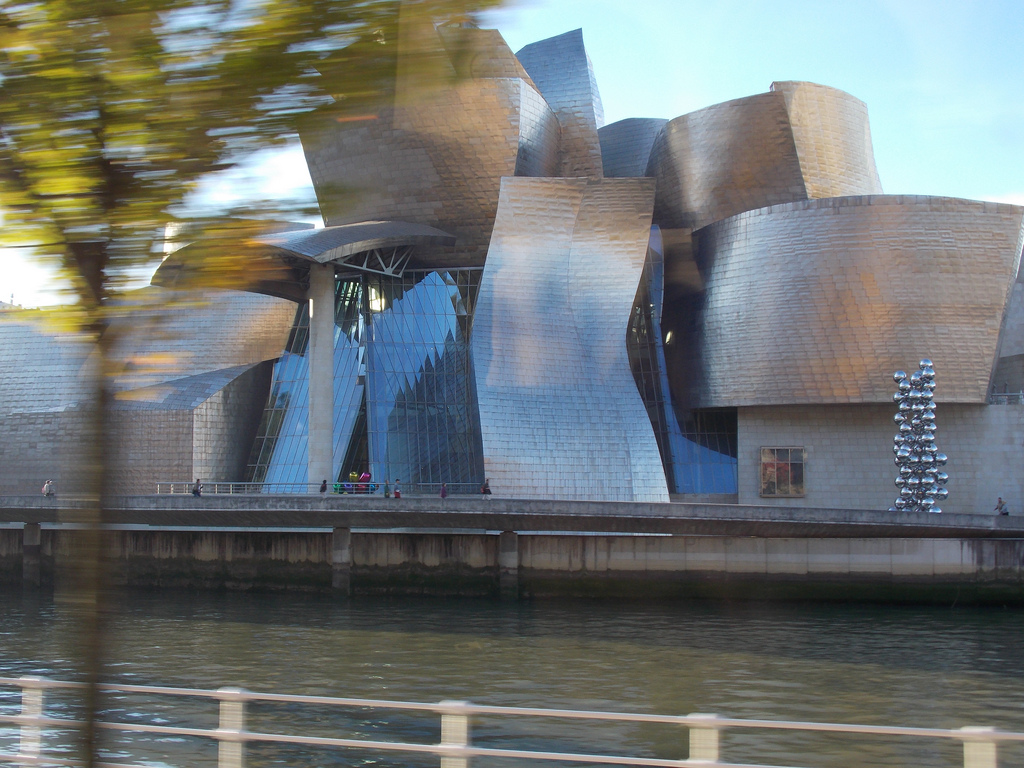
The Guggenheim, Bilbao

The Guggenheim, Bilbao

City Hall in Pamplona

City Hall in Pamplona

We departed the Basque Country by bus, stopping briefly in Burgos, where we toured the great Gothic Cathedral that is the resting place of the medieval warrior El Cid and his wife Doña Jimena.  At the end of the day we arrived in the Spanish capital of Madrid and checked into the Hotel Wellington, a truly gracious English hotel where many of us were given unbelievably large junior suites!  What a treat and what a nice way to close out our travels through Spain: in its largest and most impressive city.  Here we see a group of Quakers posing before the famous sculpture of Don Quixote and Sancho Panza!

Quakers with Don Quixote and Sancho Panza in Madrid

Quakers with Don Quixote and Sancho Panza in Madrid.

While in Madrid, our tour director Nani served as our local guide and gave us both a highly informative lecture on modern Spain as well as an absolutely stunning tour of the treasures of that country’s most important museum, the Prado.  As a professional art historian, I often find typical docent tours in museums to be a little less than stimulating as many of them choose to focus on the biography of the artist or the story that is depicted in the painting. Because this information often mirrors the didactic materials that are found on the wall labels, I don’t usually find that such tours give me much new information.  But Nani’s tour was a real stand out in that she really encouraged the members of our group to look closely at the paintings and appreciate the skill and technique of each of the artists.  She also placed each of the works in a historical context of their own and in relation to each other, Spanish art history, and Western art history as a whole.  It was really marvelous and I learned so much!  Brava y muchas gracias, Nani!

The view of Toledo.

The view of Toledo.

The second to last day on the itinerary found us in nearby Toledo, where we visited the Cathedral and the Jewish Quarter.  For many members of the group (including myself), who come from Jewish backgrounds, this was one of the most spiritually affecting parts of the trip as we walked narrow medieval streets and toured the old Sinagoga del  Transito, where our Sephardic ancestors had not lived and worshipped openly since the Inquisition.  Founded in 1356 and used as a temple for less than two hundred years, this remarkable building bears the visual confluences of the region with both Hebrew and Arabic inscriptions as well as a massive Mudéjar paneled ceiling.

As our trip came to a close, many of us began to worry about making a safe return to United States as the international news was now dominated by reports of the gathering force of Hurricane Sandy, which was due to make landfall on Tuesday – the very day on which my own flight was booked to return to Philadelphia!  The majority of the group was able to return home on Sunday as planned, but those of us who had made other arrangements were a bit more up in the air (so to speak) with our travel plans.  Thankfully, the folks at Penn Alumni Travel and Alumni Holidays International worked around the clock to make sure that everyone who needed to be was rebooked and felt comfortable with their new itineraries.  It was really comforting to know that we were not alone in making our new arrangements and that we had professional travel specialists on our side – a very different feeling than working with the interchangeable and often harried airline representatives on one’s own!

A night view of the Alhambra in Granada.

A night view of the Alhambra in Granada.

Because my planned flight on Tuesday was no longer an option, I was rebooked for Friday morning.  This was a change in plans for which I found no sympathy from friends or colleagues!  Being “stuck” in Madrid due to inclement weather is very different on the scale of travel inconveniences than being stranded in Charlotte or some other domestic location!  Needless to say, my husband and I took advantage of this extra time in Spain and visited a few other cities that had not been on the tour.  Purchasing a special SpainPass rail ticket, we went south to the Andalusia region of Spain, traveling first to the breath-taking Alhambra in Granada, then to the gorgeous city of Seville (known for its vibrant night life and flamenco culture), before ending up on the whitewashed streets of Cordoba, where we toured the Great Mosque and visited the once-forgotten, pre-expulsion synagogue in the old Jewish Quarter.  This final encounter with the architectural remnants of Sephardic culture in Spain was emotionally overwhelming for me: being both a cathartic and an inspiring way to close out my adventure in Spain.  My mother’s family is of both Ashkenazi and Sephardic origins, but we know far more about our ancestors who came from Central and Eastern Europe than we do those who once lived on the Iberian Peninsula.  Seeing these once vibrant spaces with their moorish-inflected Mujédar architecture gave me fresh insight into that past and sparked new interest in trying to recover this important part of who I am and where my people come from.

The interior of the synagogue in Cordoba.

The interior of the synagogue in Cordoba.

When I was finally able to return to the United States, I spent several days dealing with downed trees on our property and rescheduling missed appointments.  Ultimately, however, I was thankful for the extra days in Spain the storm had given me and for another fantastic trip with Penn Alumni Travel!

[Interested in traveling with fellow Penn alumni? Visit our website to learn more about our program and to browse upcoming trips. You can view all of Gwendolyn’s pictures here].

1 Comment

Filed under Faculty perspective, Penn Alumni Travel, Travel

Shofar, So good

Author: Nicole Maloy, W’95

I never expected to see Israel. It was a place I hoped I might one day see, but such a trip was nothing I foresaw actually happening, let alone any time soon. Enter my colleague, Emilie, who works with the Penn Alumni Travel program. She came to my office door one afternoon with a smile on her face, and a glossy brochure in her hands. It read, “Israel: Land of Cultural Treasures.” Turns out the program needed a staff host, and that host would be me, if I was interested. If. Ha. Prudence dictated that I should reflect on it overnight. But as soon as she left, I looked at my new brochure, then skyward and said, “We both know I’m going, right?”

My time in Israel, just weeks ago, was by turns educational and surreal. I visited the Temple Mount. I walked among Roman ruins. I planted a tree. I toured a kibbutz. I heard a blessing in Hebrew and drank a toast upon entering the city of Jerusalem. I entered what remains of the synagogue in Capernaum where Jesus taught, just steps from where Peter lived. I heard a man trying out a shofar at the market. I stood atop Masada, and understood why it had been chosen as a fortress. I drew in a fishing net on a boat in the Sea of Galilee. Side note – I caught three fish! Woo! Of course we let them swim away – I think I heard one of them shouting, “FREEDOOOOOOOOOOOOOM” as it leapt from the net back into the water.

Below are just a few scenes from a trip, and a land, that I will never, ever forget.

This is an ancient theater in Caesarea.

This is an ancient theater in Caesarea.

My stage debut. Thank you, Judea!

My stage debut. Thank you, Judea!

Pardon the windy hair situation – just note that the camel is looking directly into my camera.

Pardon the windy hair situation – just note that the camel is looking directly into my camera.

Original mosaic floor of an ancient synagogue in the city of Beit Alpha.

Original mosaic floor of an ancient synagogue in the city of Beit Alpha.

Closeup of some of the decoration on the church built over the remains of Peter’s house in Capernaum. Check out the fish.

Closeup of some of the decoration on the church built over the remains of Peter’s house in Capernaum. Check out the fish.

At the Temple Mount, in front of the Dome of the Rock.

At the Temple Mount, in front of the Dome of the Rock.

Planting a tree as part of Israel’s reforestation effort. I named this one Ben Franklin.

Planting a tree as part of Israel’s reforestation effort. I named this one Ben Franklin.

Adorable baby ibex greets us at the Ramon Crater.

Adorable baby ibex greets us at the Ramon Crater.

Reception in Jerusalem with the regional Penn alumni club!

Reception in Jerusalem with the regional Penn alumni club!

At the Israel Museum – below this dome are the Dead Sea Scrolls.

At the Israel Museum – below this dome are the Dead Sea Scrolls.

Move over, Indiana Jones! Penn alumni step into the country of Jordan to visit the beautiful, ancient stone city of Petra.

Move over, Indiana Jones! Penn alumni step into the country of Jordan to visit the beautiful, ancient stone city of Petra.

I couldn’t have said it better myself.

I couldn’t have said it better myself.

Interested in taking a trip with Penn Alumni Travel? Check out their new website here.

2 Comments

Filed under Alumni Perspective, Alumni Programming, Nicole M., Penn Alumni Travel, Travel

Penn Alumni Travel: Greece and Turkey

Author: Emilie Kretschmar

Blue was the theme on my latest tour with Penn Alumni Travel: Island Life in Ancient Greece and Turkey. Have you ever sailed the Mediterranean and Aegean Seas? If so, this will sound familiar to you- endless blue water rising to meet an equally infinite blue sky, blue waves lapping against fishing boats painted a bright azure, and blue doors and rooftops dotting the island landscape.

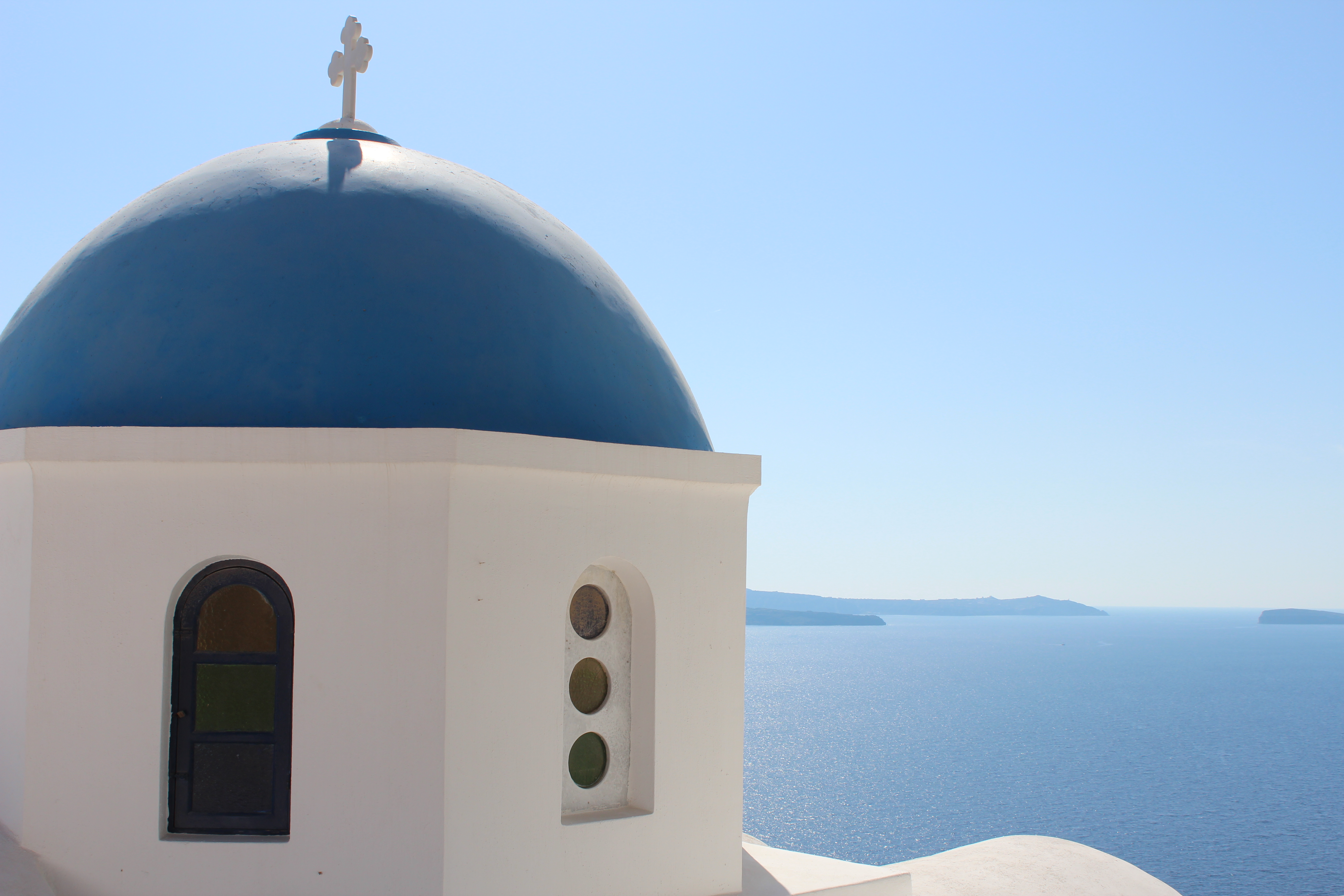
Blue, blue, and more blue. A view from the Island of Santorini.

Blue is the color du jour in the Greek Islands and our Penn Alumni fit right in with their new Penn gear: (dark) blue hats from Penn Alumni Travel. We set sail from Athens on a beautiful 200-passenger French ship complete with its own French pastry chef. Our first stop was Delos, the mythical birthplace of Apollo and Artemis, followed by the island of Mykonos with its iconic windmills.

Penn alumni enjoy our tour of the ancient ruins at Delos, a UNESCO World Heritage site.

Santorini was a highlight for many of the boat’s passengers. Santorini’s fantastic landscape was formed after a volcanic eruption destroyed the earliest settlements on a formerly single island, and created the current geological caldera. Five islands of varying sizes now encircle a calm lagoon. The postcard views of whitewashed buildings hugging a steep cliff that many of us know and love are just as spectacular in person.

The town of Oia on the Island of Santorini.

Rhodes and Patmos were the next islands on our agenda. Patmos was a pleasure. Large cruise ships never visit this quiet island, and so we felt like we had the place to ourselves. After a visit to the Greek Orthodox Monastery of St. John, said to be the site of St. John the Apostle’s revelations, we had the afternoon to relax and explore the main village of Skala.

Peaceful Patmos

The end of the cruise brought us to the west coast of Turkey. Since my return to the States, I have come to find that many people do not realize how beautiful and modern this country is and how friendly and helpful its inhabitants are. It is one of my favorite destinations, and this visit did not disappoint. Our stops in Turkey included the ancient Greek and Roman city of Ephesus and the archaeological dig of Troy.

Ruins at Ephesus, one of the most complete Roman cities remaining in the world.

Visually, this trip was spectacular. These pictures are just a taste of the many pictures I took while in Greece and Turkey. You can visit the entire photo album here. But the trip was also intellectually satisfying. Each island supplied us with knowledgeable guides, and we were treated to special evening lectures from University professors aboard our ship. I was also lucky to spend the week with 10 amazing Penn alumni and friends. Each person brought his or her own interesting viewpoint to our dinnertime discussions, and we had fun recapping favorite sites-seen and towns-explored. I learned just as much from our alumni as I did the Greek and Turkish guides.

My mother leaves me with this message nearly every time I see her, and I think it’s a fitting message to leave my fellow passengers: be well, do good work, and keep in touch! (10 points if you can tell me where that sentence comes from!)

*If this post inspired you to book a trip with Penn Alumni Travel, visit our 2013 schedule here (we are headed back to the Greek Islands in October 2013). Follow us on Facebook by November 9th and you will be entered to win a Kindle Fire!

2 Comments

Filed under Emilie, Penn Alumni Travel, Travel

Penn Alumni Travel: The Danube River and Habsburg Empire

Author: André Dombrowski, Assistant Professor of Art History

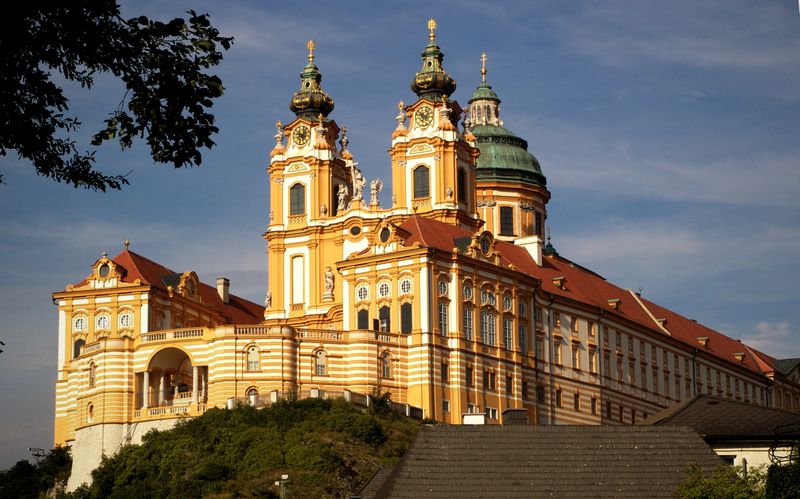
The Habsburg Empire once stretched over immense territories in Central Europe. The Danube was its major waterway, and there is perhaps no better means to see the beauty of the former Habsburg lands than from the slow-moving perspective of a luxury cruise ship. Traveling at a leisurely pace up this majestic river means passing the larger cities like Budapest, Bratislava, and Vienna as well as spectacularly situated sites like the Benedictine abbey of Melk in the pretty Wachau Valley.

Melk Abbey

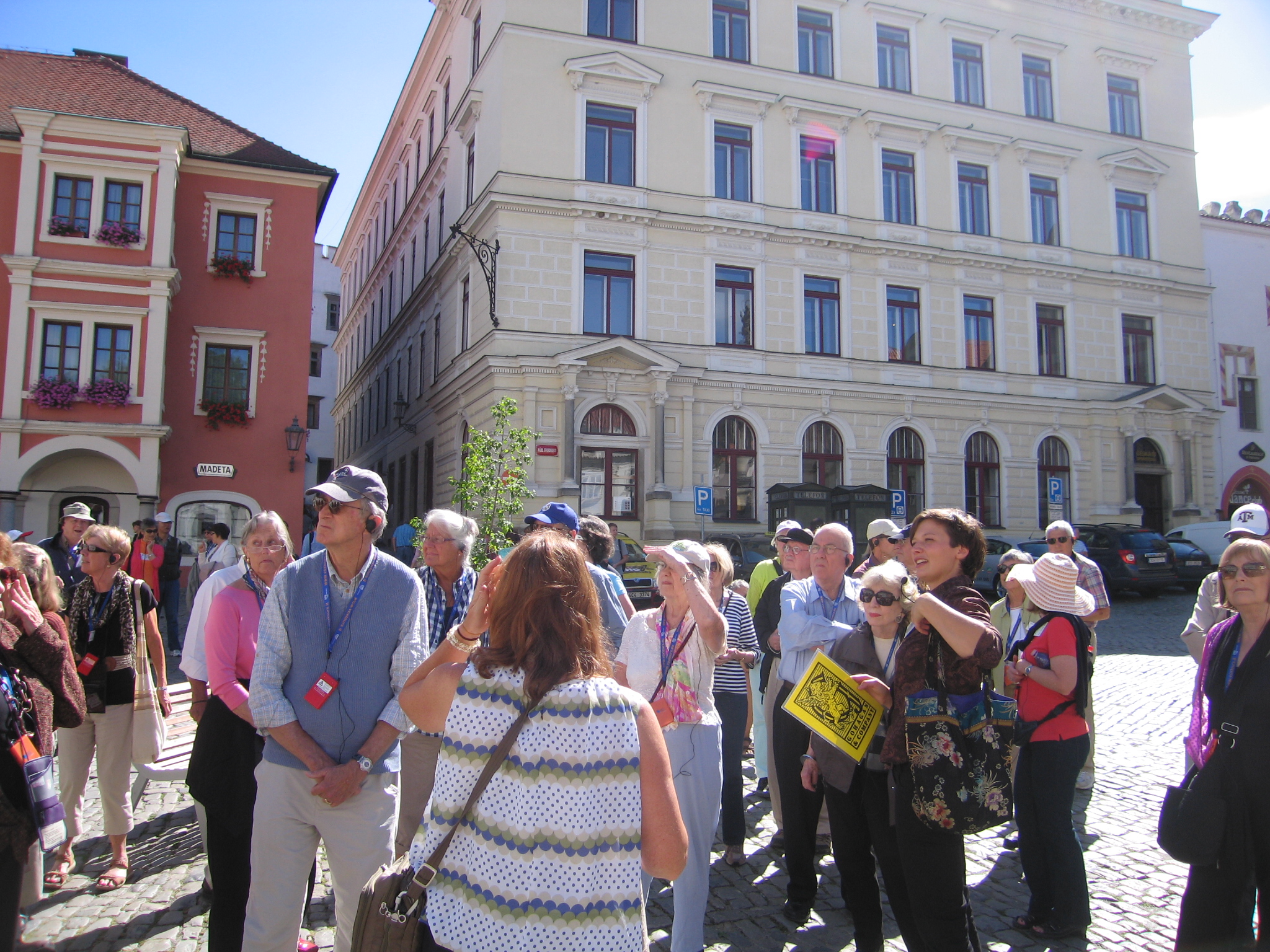
I had the pleasure of joining such a trip as faculty host this September, accompanying 22 Penn alumni. Our 14-day trip took us through six Central European countries—Hungary, Slovakia, Austria, Germany, the Czech Republic, and Poland—one as beautiful and interesting as the other. We visited eleven UNESCO World Heritage sites, saw some of the best-preserved historic city centers anywhere in the world (Český Krumlov, Prague, and Kraków), visited many of the best art museums in the world (like the Kunsthistorisches Museum in Vienna), and toured one of the most beautiful baroque structures ever built (Melk).

Walking tour of Český Krumlov in the Czech Republic

After a day of delays due to the Lufthansa strikes, I arrived in Budapest just before the ship took off for Slovakia. I was greeted warmly by our excellent tour hosts Lydian, Danuta, and Jacques (later joined by Will), and soon met my fellow Penn passengers. They came from all walks of life, with distinguished careers in many fields after degrees from Wharton, the Medical School, and the College. Some still live in and around Philadelphia or in Pennsylvania, but others came from further afield, from Savannah or Albuquerque. Everybody bonded quickly.

On my second day on the ship—moving quietly along the Danube—we had a Penn reception followed by a Penn dinner. We toured again together as a group during the bus ride from Passau to Prague and saw that beautiful city together guided by our expert local guides. Many other meals and conversations were shared while we often jumped up from our seats marveling at the lock we were just in, a famous site emerging into view, or a birthday cake being carried into the restaurant accompanied by much singing and clapping.

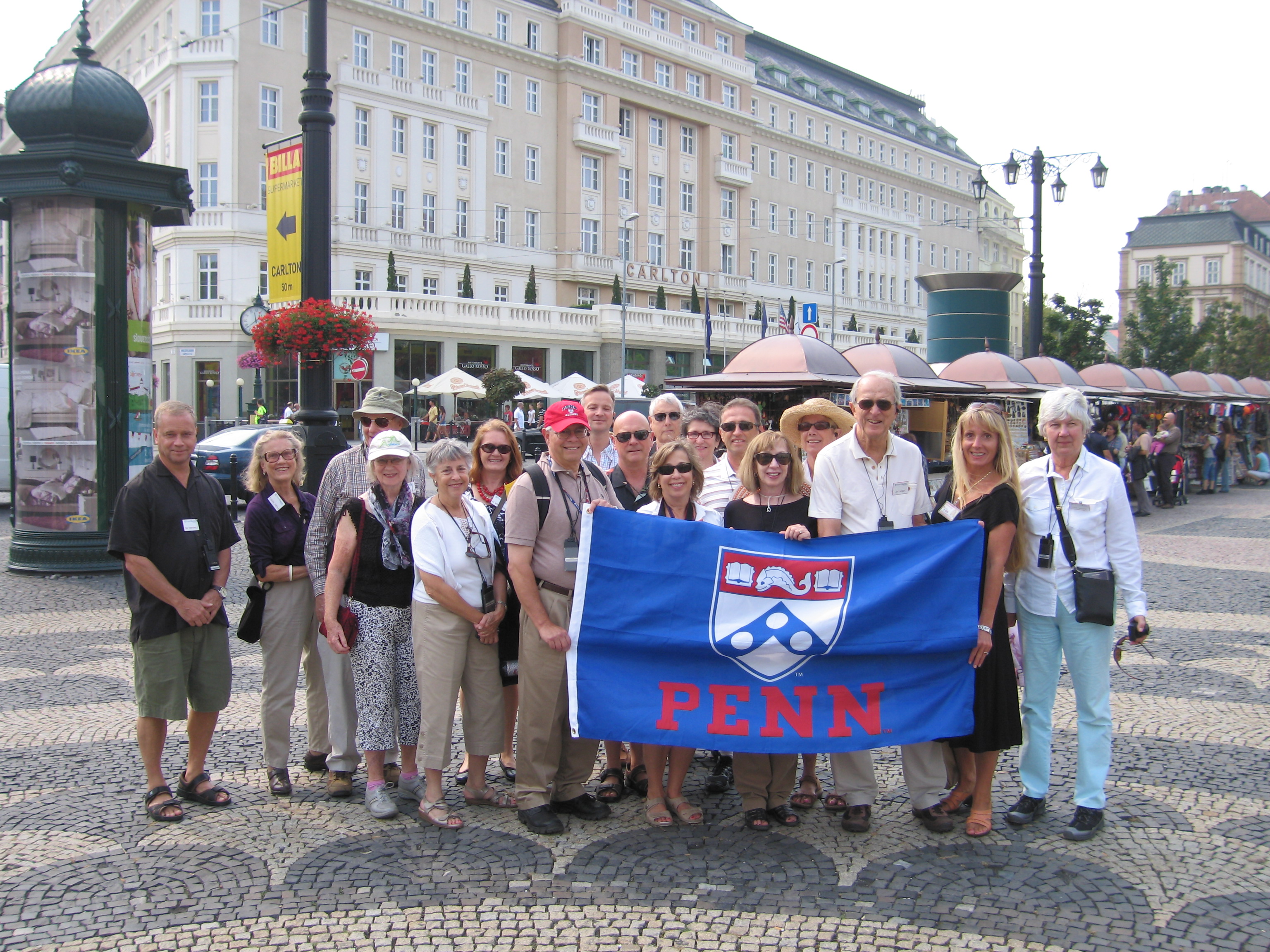
Penn alumni in Bratislava, Slovakia

Penn alumni on deck of the M.S. Amadeus Brilliant at Melk Abbey (in background)

What stood out for me among this extraordinary range of sites and events? I had lived in Vienna for a semester some fifteen years ago, and it was great to see the city again, and anew, together with other Penn guests. Melk was certainly a highlight—such an utterly stunning site—built to impress and bolster ecclesiastical power and cultural prestige, then and now. Prague and Kraków are both among the most beautiful cities I know. Prague especially charms with its nighttime gaslights and true historic feeling, so seamlessly blending all architectural styles into such a coherent and undisturbed whole. Our last day was the only day of continued rain, fitting weather for a visit to the Auschwitz-Birkenau concentration camp outside Kraków where silence befell all of us at the sight of the unthinkable Nazi cruelties committed there.

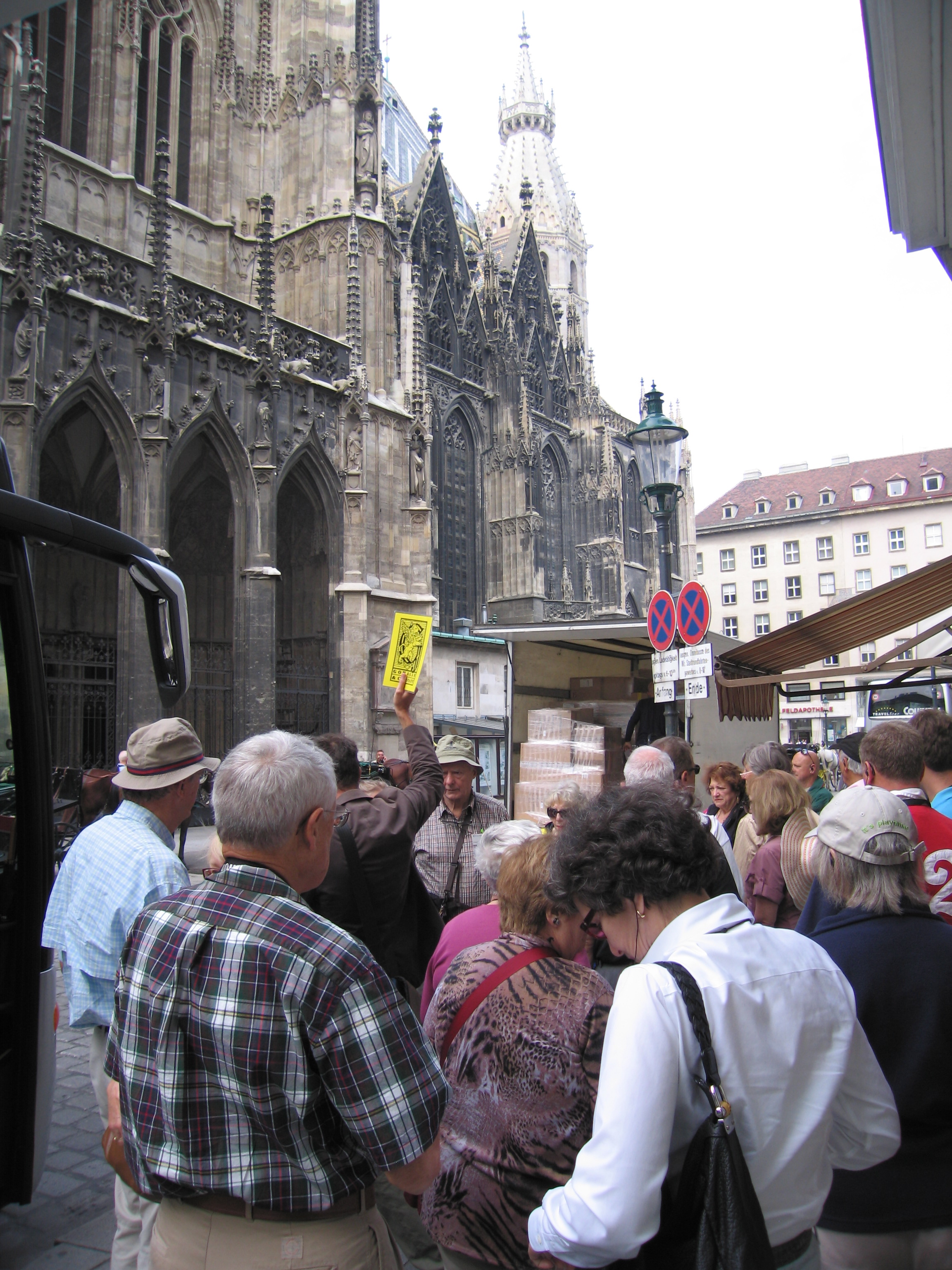
Vienna city center, at St. Stephen’s Dome

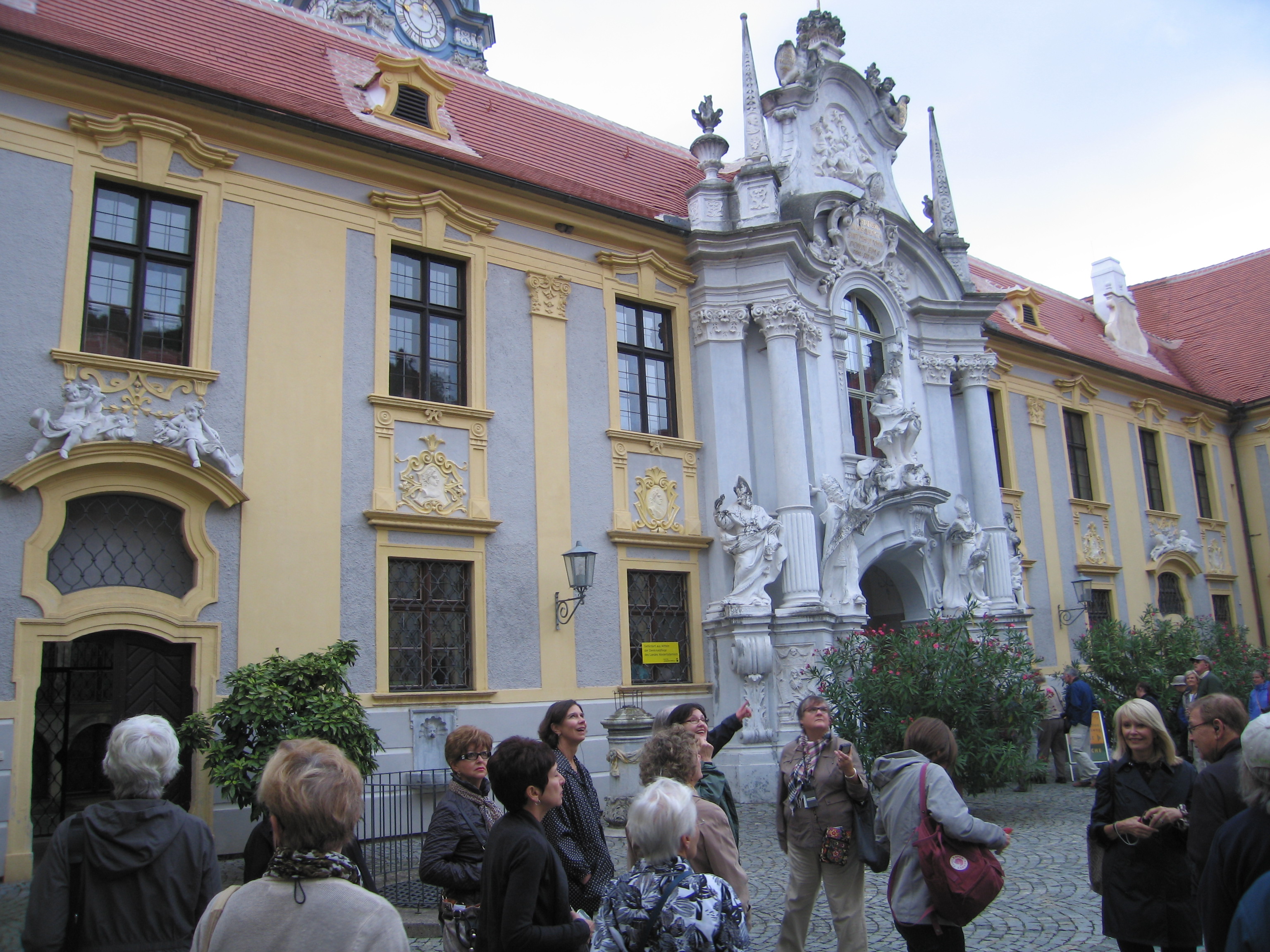
Dürnstein walking tour

At Auschwitz-Birkenau

I loved sharing my knowledge of the area, gave one lecture on Baroque architecture in Austria as an introduction to our visit to Melk and one on Vienna’s Ringstrasse and early Viennese Modernism, a special favorite of mine. We later toured some turn-of-the century art and architecture in Prague, including the Mucha-Museum and the Cubist House (ending with drinks in the 1912 upstairs Grand Café Orient!), which was great fun as well. Until we meet again (perhaps on another Penn Alumni travel trip?), please stay in touch.

On Bratislava’s Primate Square

*If this post inspired you to take a trip with Penn Alumni Travel, click here to visit our 2013 trip schedule. A 2013 trip along the Danube with Penn host, Stephen Lehmann, is scheduled for late September 2013. Follow us on Facebook and Twitter for all the latest travel news and tips.

1 Comment

Filed under Faculty perspective, Penn Alumni Travel, Travel

Travel Webinar: The Arts and Culture of Spain

Author: Emilie Kretschmar

Penn Alumni Travel is hosting a travel webinar this Thursday on the art and culture of Spain. Join us on September 20th at 11 a.m. for a look at Spanish art and culture hosted by Professor of Art History, Gwendolyn Dubois Shaw. For more details or to register, click here.

Next month, Professor Shaw will lead a group of Penn alumni and friends through Spain. The tour will stop in Barcelona, Bilbao, Pamplona, Toledo, and Madrid. Penn alumni will explore these beautiful and vibrant cities in the company of fellow alumni and their faculty host. Whether you’re traveling to Spain or just curious about travel to Spain, Thursday’s webinar is a great opportunity to learn more about the country and to ask questions about its arts and culture. General travel questions are also welcome.

Barcelona, Spain

If you’re interested in learning more about Penn Alumni Travel, click here for more information about our e-newsletter, to review the 2013 schedule, and to see pictures from past trips.

Leave a comment

Filed under Alumnni Education, Emilie, Penn Alumni Travel, Travel, Uncategorized

My First Five Months

Author: Emilie Kretschmar

Typically, my blog posts are about the latest Penn Alumni Travel trip or our fantastic newly-released 2013 travel schedule. But this month, we’re between travel trips, and so I’ve decided instead to write about my first five months at the Sweeten Alumni House (not to worry travel fans. Look for an upcoming post about Italy and the Danube)!

I began this position in Penn Alumni Relations in April, and each month has brought about new and interesting alumni events and traditions. We are lucky to work in a building that’s centrally located–just across from College Hall and next to the Van Pelt-Dietrich Library. Here, alumni relations staff can really stay connected to the University and all of the great things that happen on campus. With my trusty camera phone, I’ve captured a few highlights from my first five months at Penn.

APRIL
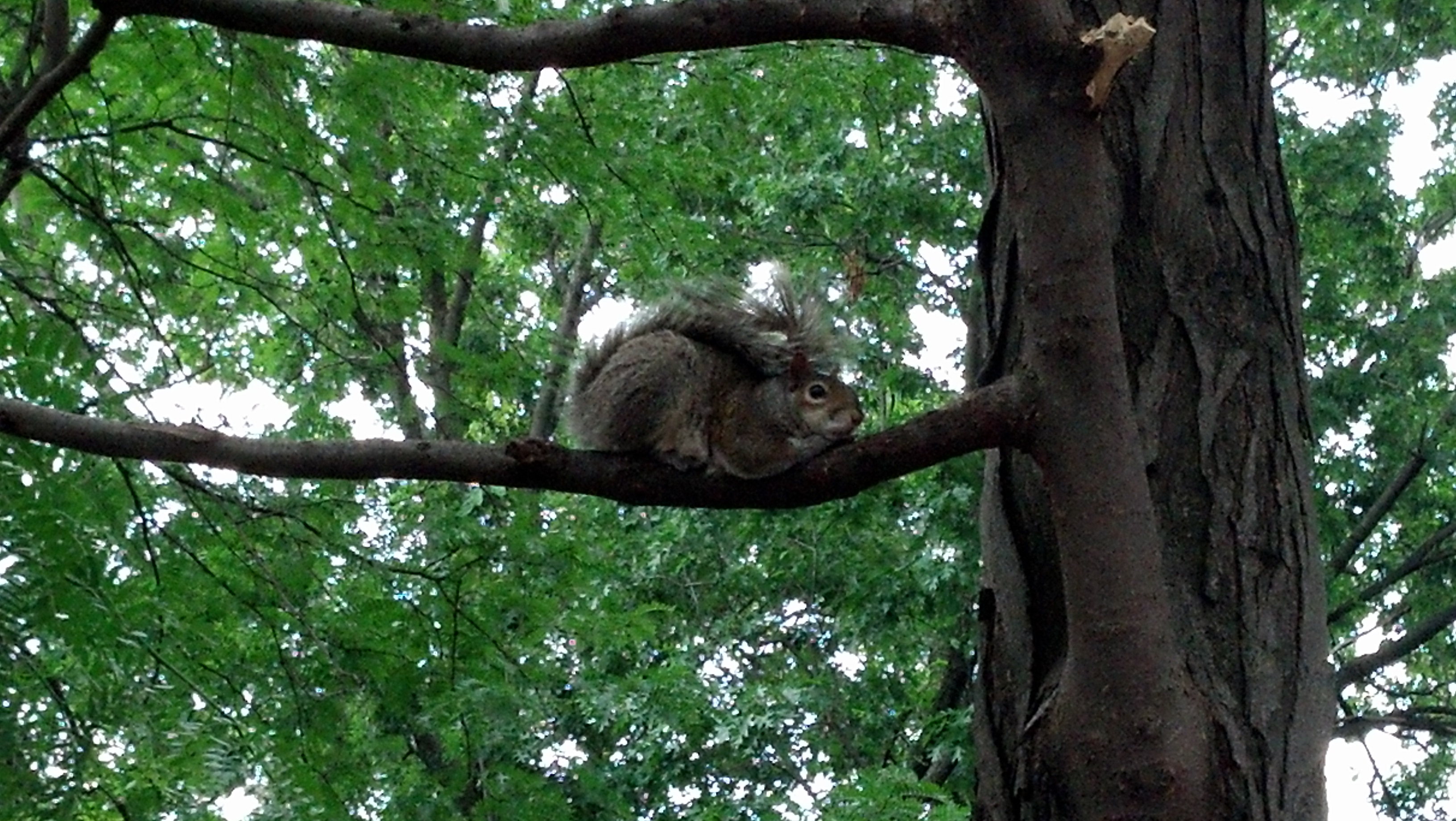
My first month at Penn and the hungry squirrels are already waiting to take my lunch. I captured this one as he was eyeing me from above on the patio behind Sweeten.

Hungry Squirrel

MAY
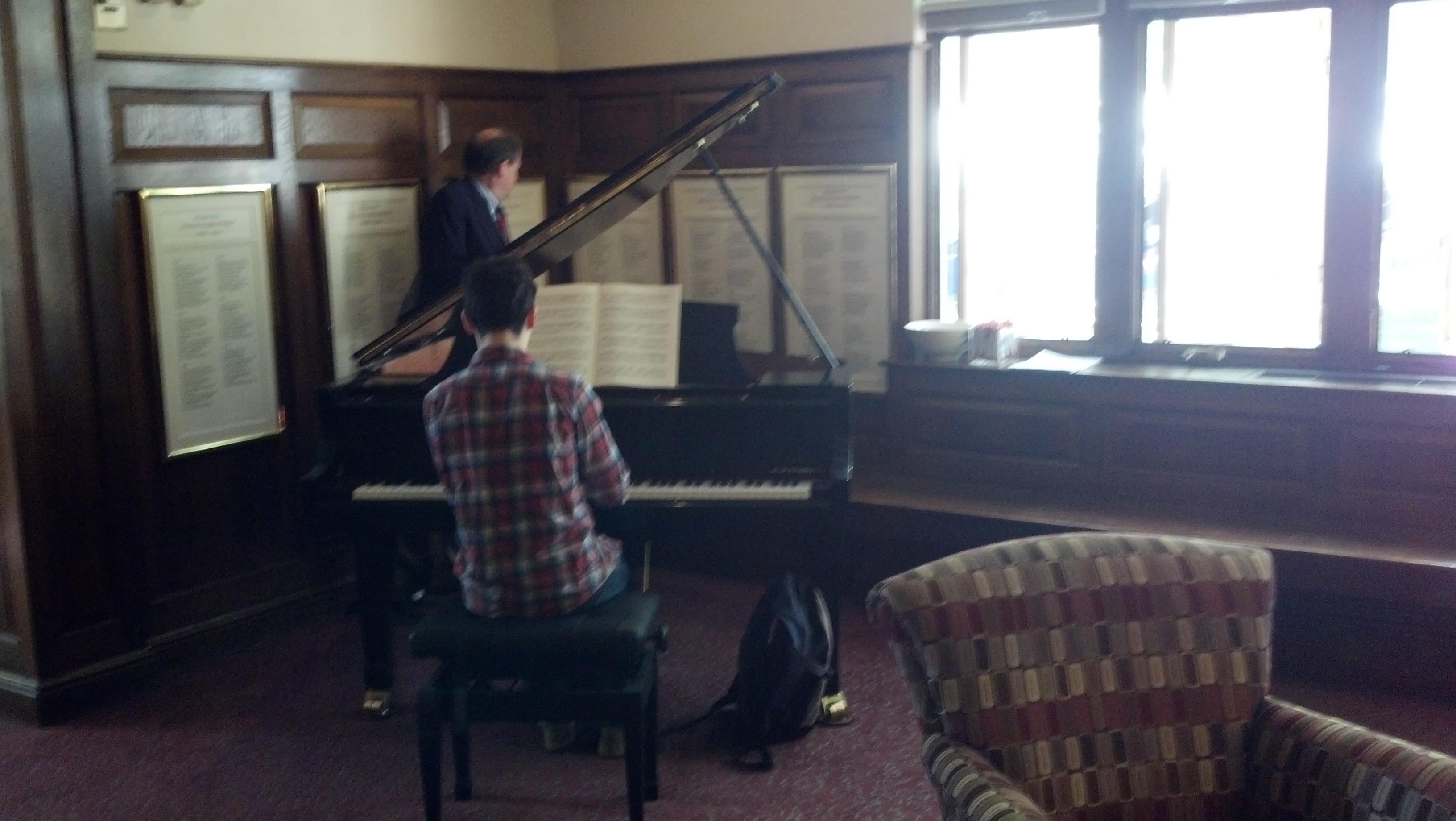
Alumni Weekend! I was quickly pulled into the festivities surrounding Alumni Weekend and Commencement. The campus was alive with graduating students and thousands of Penn alumni. If you’ve never attended a reunion weekend at Penn, you should consider coming next year (May 10-13, 2013). It’s a great time to see the campus, visit old friends, and learn about the many programs and opportunities that the university extends to alumni.

An alumnus plays the Sweeten Alumni House piano.

Time for food! A chef works hard to get hundreds of hamburgers ready for the class picnics.

JUNE
With most students and alumni away this summer, several staff members had time to attend the Ivy+ Alumni Relations Conference at Dartmouth. Each year, the eight Ivy League Universities plus MIT and Stanford gather for this conference to share expertise, tips, and resources (for more on Ivy+, visit Casey Ryan’s blog post here). The conference rotates locations each year, and Penn will be next year’s host. I spent my time at the conference meeting other alumni travel directors and getting insider’s tips on how to run an exceptional alumni travel program.

Dartmouth’s beautiful Rauner Special Collections Library. Do you see the Cat in the Hat peaking from inside the closed stacks?

JULY
In July, I hosted my first alumni tour. I spent 10 days with 16 wonderful alumni and friends in Tanzania. We visited four national parks and saw countless African animals. Look for another African safari in 2013 to Tanzania and Kenya.

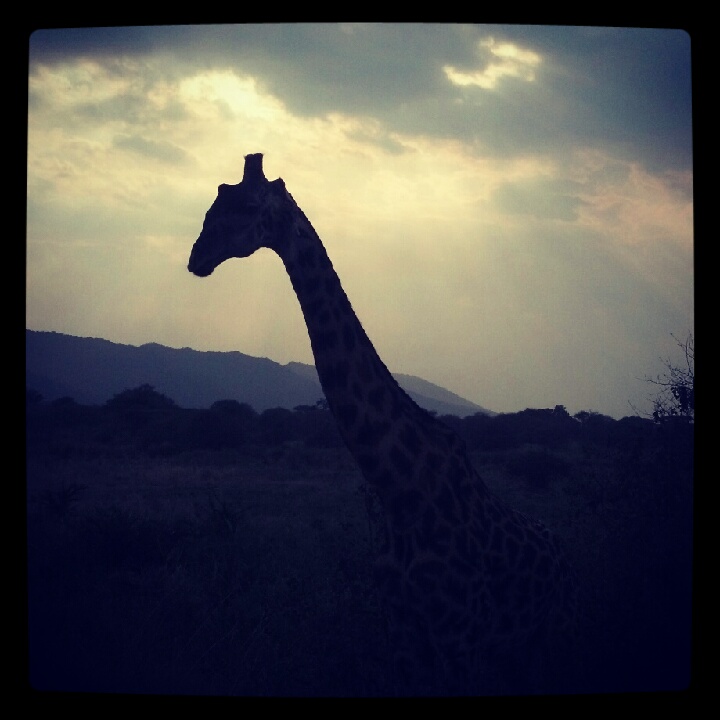
Serengeti Giraffe

Ngorongoro Crater lion

AUGUST
In my fifth month at Penn, I began a new workout routine: a 3 mile run from Sweeten to my South Philadelphia home. Along the way, I ran across (literally and figuratively) some of the beautiful Philadelphia landmarks that surround Penn’s campus.

The South Street Bridge at dusk. Did you know that the bridge lights up at night?

So there you have it! My first five months as a Penn employee. I look forward to the new things these next five months will bring. When you finish reading this, take a minute and share with us those things that caught your attention when you first visited Penn—as a student, employee, faculty member, or native Philadelphian. There’s plenty of space in the comment section below!

2 Comments

Filed under Campus Life, Emilie, Penn Alumni Travel, Penn in the Summer, Travel, Uncategorized

Baltic Dispatches Part 2

By: Emilie Kretschmar on behalf of Art Caplan, Emmanuel and Robert Hart Director of the Center for Bioethics

It is always exciting when a Penn Alumni travel trip returns to the States- at least for those of us back in the office. Looking at pictures, talking to the faculty host, hearing from happy alumni… these are all things I look forward to when a Penn Alumni Travel trip returns.

If you are a frequent visitor to the Frankly Penn blog, you may remember a recent post by Art Caplan, Emmanuel and Robert Hart Director of the Center for Bioethics. Art was our faculty host on the June alumni cruise through the Baltic Sea. His post, direct from the cruise boat itself, gave us a taste of the fantastic journey our Penn Alumni travelers were enjoying. Now, back in the States, Art recaps his journey for us:

 The voyage to the Baltics proved to be a charmed one.  Almost no rain for ten days in a region not known for sunshine.  A ship captain and crew who were entertaining, informed and very responsive to the passengers.  A group of alumni from Penn and nearly a dozen other American and Canadian universities who were friendly, enthusiastic, inquisitive and apparently lacking in a need for very much sleep.

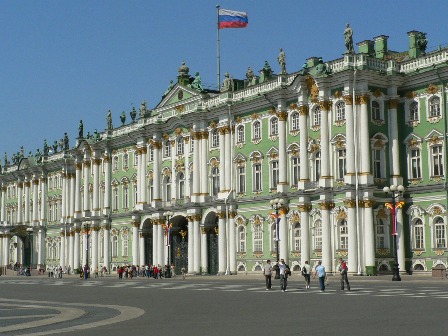
The Hermitage in St. Petersburg

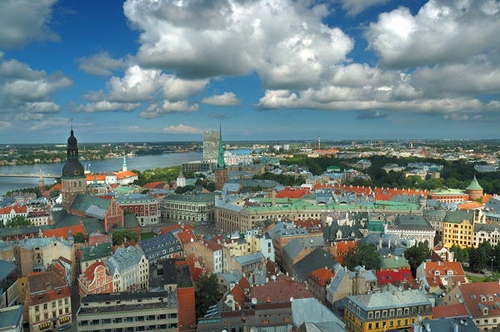
I thought that the highlights of the trip were the Hermitage in St. Petersburg–a world class museum on a par with the Louvre but still staggering to see; Riga, Latvia a small city of architectural wonders whose architects had a real sense of playfulness, the fjords of Norway and the chance to hear international figures like Lech Walesa and Mikhail Gorbachev.  I don’t think of myself as a cruise person but this trip took my wife and I and our Penn alumni friends to a series of places that we would not otherwise have been likely to visit in a very comfortable mode of travel.  There was as much or as little socializing as you cared to engage in and as much or as little walking and touring as you chose to do.   If you get the chance, I would urge a visit to this part of the world by boat.  Seafaring built the cities of the Baltic, and an alumni cruise is surely the best way to visit them.

The charming city of Riga, Latvia

If Art’s recount of the Baltic Sea cruise has inspired you to take your own trip, check out our newly released 2013 Penn Alumni Travel calendar. We hope to see you on a future Penn Alumni Travel trip!

1 Comment

Filed under Emilie, Faculty perspective, Penn Alumni Travel, Travel

Alumna Abroad

Author: Lisa Ellen Niver, C’89

During my years at Penn, I meandered the liberal arts curriculum. I took classes in all different disciplines. My dad, who went to Penn Dental, told me, “There is always time to specialize. Learn about a lot of different things. If you are a biochem major and then go to Medical School your world will be narrower. Use this time to expand your world.” He did not realize at the time how many continents my travels would include.

My husband, George and I, left July 2012 for our second year journey in South East Asia. In 2008, we left for a year, unsure about what would happen. Over the next eleven months, we visited twelve countries. I came home sixty pounds lighter and engaged!

In June 2010, I started our blog, WeSaidGoTravel, on our way to a summer in Sri Lanka and the Maldives. Well-intentioned friends cautioned, “If you only post once a week, you will never get anywhere.” I said, “I am nowhere now,” and started the blog anyway. At the end of July 2012, our site was listed in the TOP 25 Travel Blogs on Technorati.com! In early August, we joined Empire Ave. We were a top 15 Fledgling and are now a top 15 Greenhorn. Are you on the AVE? Send me your ticker! http://www.empireavenue.com/WESAIDGOTRAV
Our site is growing, by leaps and bounds with over 175,000 views since mid June 2012.

So far, our trip this year has been great. We are busy in Gili Meno, Lombok, Indonesia snorkeling with turtles, and watching dolphins jump and spin at sunset. The Penn motto, “We will find a way or we will make one,” has become our call to arms.

Leave a comment

Filed under Alumni Perspective, Lisa Ellen Niver, Travel

Rocky Mountain National Park

Author: Stephanie Yee, C’o8

As a West Coast native, I love being surrounded by mountains. Even though I am a self-proclaimed “city girl,” there’s something special about being 11,000 feet above sea level surrounded by mountains as far as you can see. I recently visited the Rocky Mountain National Park for the first time. The trip reminded me how important it is to take a break from city life to enjoy and appreciate nature. If you are interested in visiting some National Parks this year, you are in luck. The Penn Alumni Travel Program is hosting a Southwest National Parks tour in May 2013. This tour does not include Rocky Mountain National Park since it is not in the Southwest, but you will visit Grand Canyon National Park, Arches National Park, Canyonlands National Park, Dead Horse Point State Park, Bryce Canyon National Park, and Zion National Park. Sign up today!

Leave a comment

Filed under Alumni Perspective, Penn Alumni Travel, Travel

Penn Alumni Travel: A Serengeti Safari

Author: Emilie Kretschmar

There are few things more fascinating than watching a pride of lions attempt to take down a water buffalo while in the company of remarkable Penn alumni. In July, I headed off to Tanzania to host an African wildlife safari. I was in good company; we had 17 passengers and graduates from the School of Arts & Sciences, Nursing, Medicine, Veterinary Medicine, and the Wharton School. Quite the mix of interests and careers!

After a layover in Amsterdam, we arrived in Arusha, the fourth largest city in Tanzania. There, we met our wonderful and knowledgeable guides: Allan, Salim, and Godson.

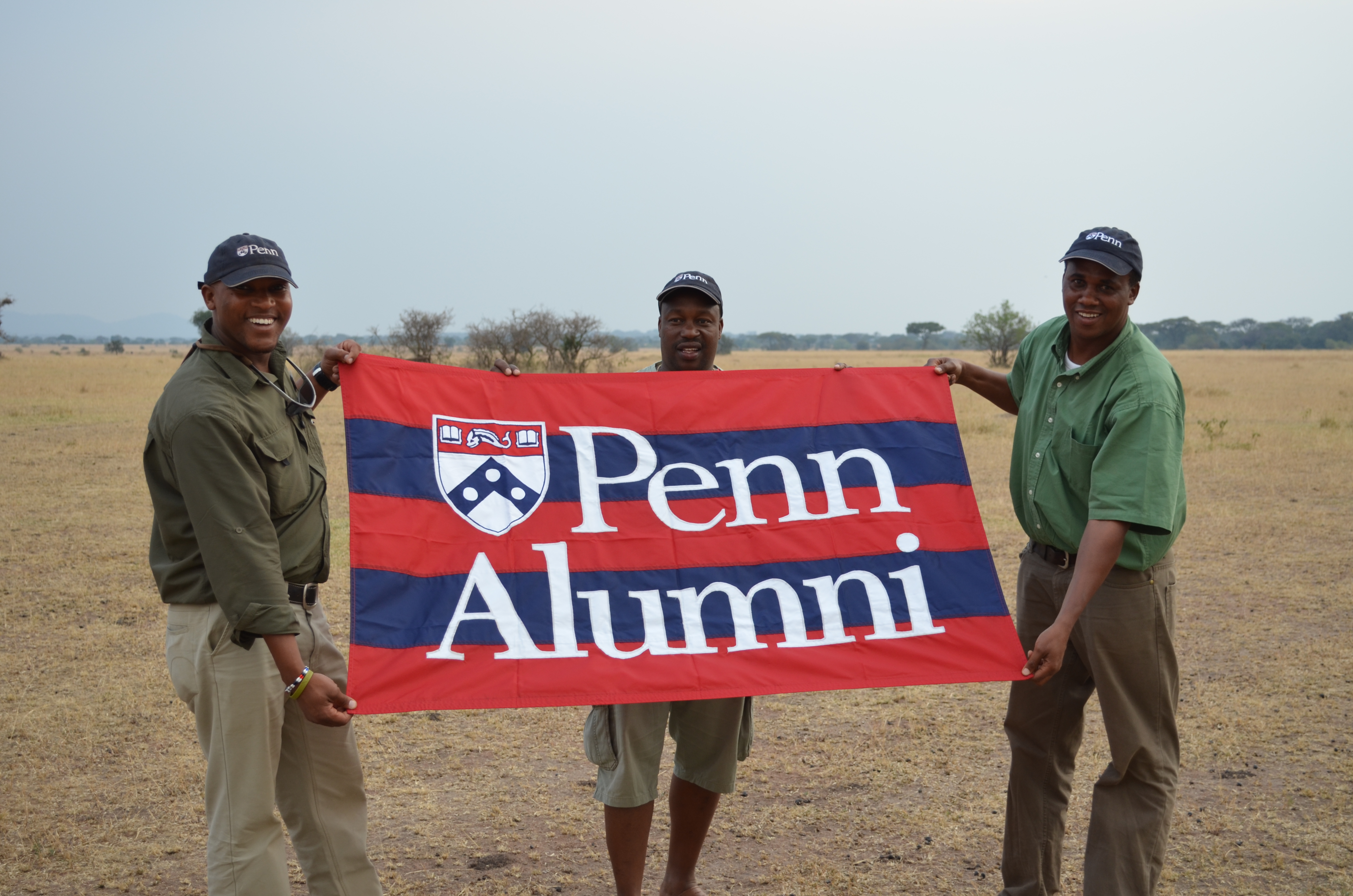
The guides show their Red and Blue spirit.

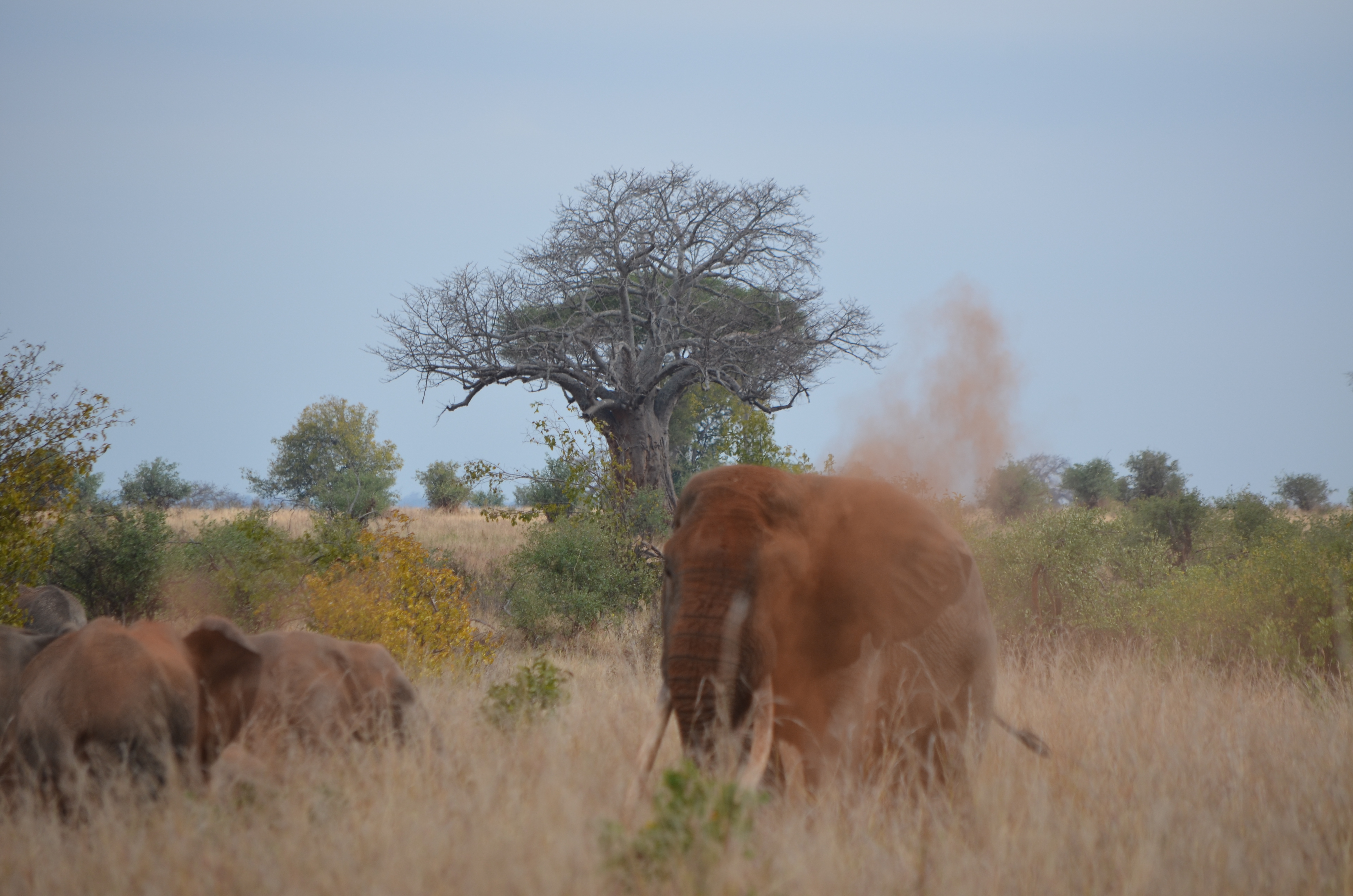
On our first morning in Arusha, the guides met our group with three Land Rovers specially equipped with cut-out rooftops which are perfect for jumping up and taking wildlife pictures or scoping out the scenery with binoculars. Tarangire National Park was our first stop. Tarangire is known for its wonderful diversity of wildlife, its famous baobab trees, and its large elephant herds. It didn’t take us long before we spotted an elephant.

This was our first elephant sighting. He stands next to a baobab tree.

Before we knew it, there were elephants everywhere. Elephant herds with babies and juveniles came into view around every corner. In fact, when the guides had to fix a flat tire on the second Tarangire day (poor Allan and Salim!), we were surrounded by 20 or more elephants throwing red dust upon their backs.

A large elephant throws red dirt onto her back.

A trip highlight was the Ngorongoro Crater, Earth’s largest unbroken caldera. It was created when the land collapsed after a volcanic eruption. Ngorongoro is known for its high density of carnivores and is the only place in East Africa where one can easily observe a natural population of black rhino. Although we did not see a black rhino, we were able to watch the aforementioned a pride of lions stalk a herd of buffalo.

We got a good view of the lions as they crept towards the buffalo. Apparently, safari jeeps pose no threat to this pride.

This lion backs off after the bulls begin to charge.

Our final destination was the Serengeti National Park. The Serengeti is home to the greatest concentration of large mammals on Earth. We were following the migratory herds of wildebeest, zebra, and gazelle as they roamed for grass and water. Due to drought, most of the large herds had already made their way north to Kenya, but there was still plenty of wildlife to see.

Waiting for a giraffe to cross the road.

Zebras staring at me which they were oft to do.

After a week and a half of game-watching, it was time to head back to Arusha. Instead of traveling the 10 hours it would take by car, we grabbed a plane at the Serengeti International Airport.

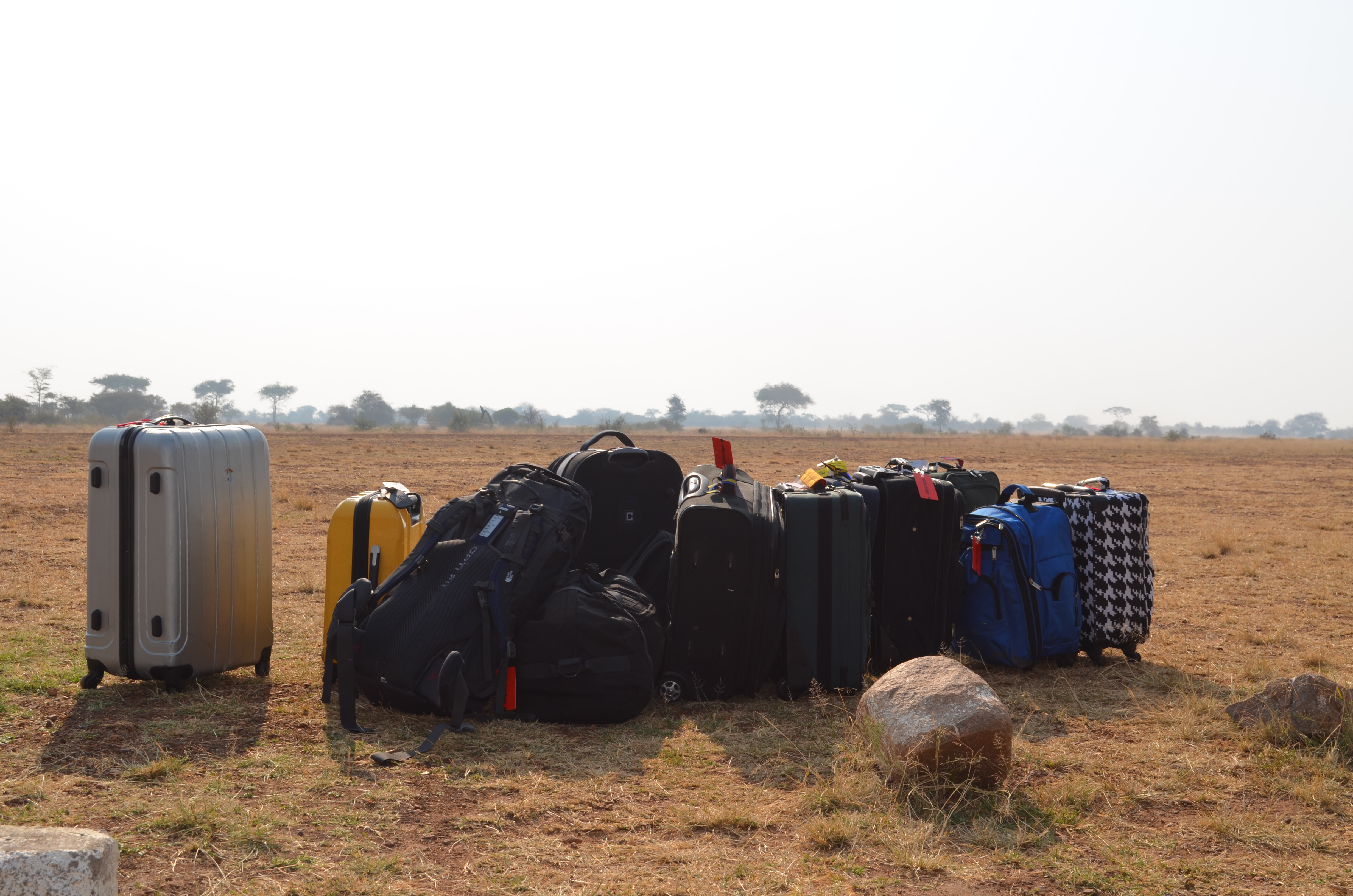
Terminal 1 at the Serengeti International Airport. Zebras and wildebeest are common sights on the runway.

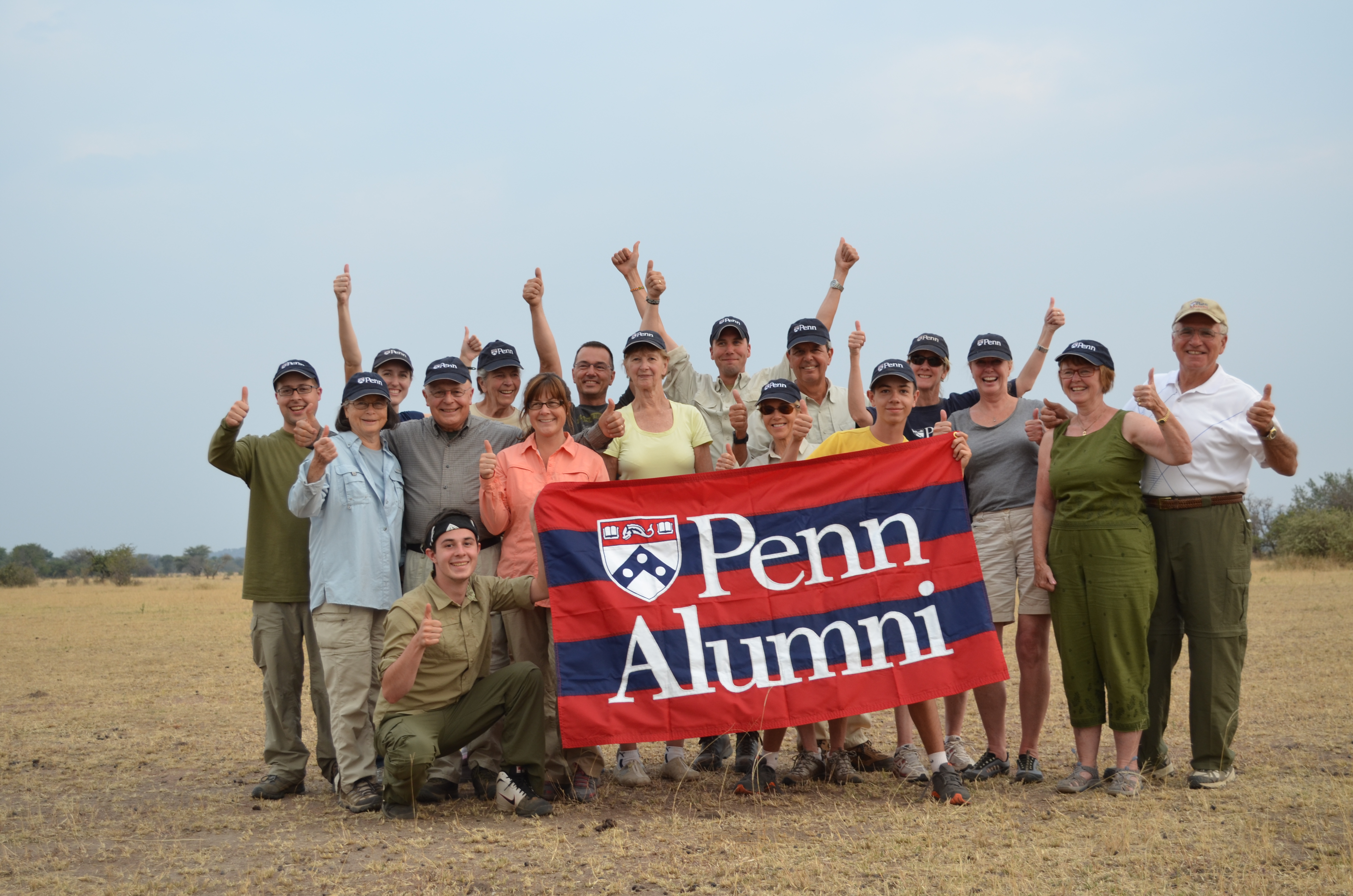
The trip was wonderful. The animals were incredible, the guides were friendly and insightful, and the alumni passengers were the best companions a host could hope for. Traveling is always an adventure, but it was particularly wonderful to share it with a group of interesting and intellectual people. I would say we all gave this trip 17 thumbs up!

Penn Alumni in the Serengeti National Park.

You can see more pictures from this trip and other Penn Alumni Travel trips here. If this blog inspired you to take your own Penn Alumni Travel trip, our new 2013 schedule is up here.

1 Comment

Filed under Emilie, Penn Alumni Travel, Travel