Category Archives: Alumni Perspective

Making History…Living History

Author: Lisa Vaccarelli, C’02

It’s easy to take for granted the amount of history that surrounds you at a place like Penn – especially when you spend so much of your time on campus that it begins to feel like your second home.  For example, my office building – the Sweeten Alumni House – originally housed the Delta Tau Delta Fraternity.  It was in the mid 1960’s after a fire – allegedly set off at a holiday party when a fraternity brother fell asleep with his cigarette too close to a crepe paper snowman – took the life of at least one young party-goer that the building eventually fell into the hands of the alumni association.  And yes, there are plenty of rumors about the ghost of said party-goer haunting the 2nd floor ladies room.  However, on a daily basis, one gets caught up in emails and phone calls and meetings and quickly forgets all of this.

Ironically, it was a recent trip off-campus that reminded me about Penn’s historical context.  Last week, as a previous blogger mentioned, the entire Alumni Relations staff headed down to 310 S. Quincy Street for a day long staff retreat at the Mask and Wig Clubhouse.  Most Penn alumni and friends are very familiar with the all male comedic theater troupe, the University’s oldest student group founded in 1888.

Mask and Wig Grill room circa 2010

Not as many, I would suspect, have had the chance to visit the group’s clubhouse, acquired in 1894 as a gathering place and rehearsal hall.  As per the Mask and Wig website:

Prominent Philadelphia architect Wilson Eyre was commissioned to convert the building, which had previously served as a church, a dissecting room, and a stable. He hired the young Maxfield Parrish, who would later become one of the greatest illustrators of the twentieth century, to decorate the interior.

Indeed, it is hard not to appreciate this history when you walk into the Mask and Wig Clubhouse.  The Grille Room – a wood-paneled bar/lounge on the first floor – is decorated with caricatures of members; a tradition that continues today, with the second century of members’ caricatures continued upstairs at the entrance to the theater.  Next to each member’s caricature is a peg for their personal mug, which they alone can take down and use when present.  Despite recent renovations to provide facilities for handicap accessibility, including an elevator, as well as air conditioning, the Clubhouse retains its authentic, historic atmosphere.

Mask and Wig Grille Room circa 1910

Next time you come to campus, I encourage you to take a moment to stop and take a moment to take in the history that surrounds you.  Maybe even read one of the plaques on those statues you’ve whisked past dozens of times before on your way to class or a reunion party.

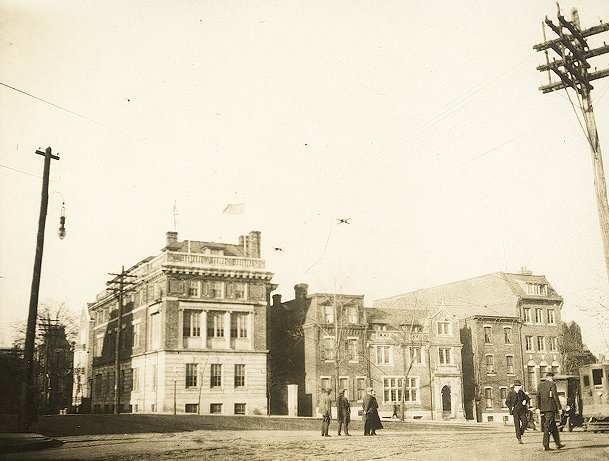
Woodland Walk (aka Locust Walk) circa 1915

Leave a comment

Filed under Alumni Perspective, Campus Life, Historical, Making History, Memories of Penn

Still in Love with Penn

Author: Nicole Oddo, C’05

Like most of you, I love my time at Penn.  Yes, “love,” not “loved.” While I graduated in 2005, Penn is still a part of my every day experience.  I hope to share a bit from an enamored alumna’s perspective from the beginning.

I remember getting involved in the summer of 2005 with the Penn and Wharton Club of Arizona.  I simply wrote an email that said:

July 19, 2005 ~10 AM

“I look forward to meeting alumni in Phoenix and would be interesting in helping out.”

In turn, I received a friendly response from the webmaster.  Here’s his follow up email:

July 19, 2005 ~8:30 PM

“As it turns out, the timing of your e-mail was quite fortuitous — as you are a recent graduate, you probably fall into the category of  young Alumni, and it came up in the meeting that we are in need of a Young Alumni Coordinator… Based on the enthusiasm of your e-mail, we’d love to have you assume this post.”

Fast forward to today, and I find myself going into my second year as the President of the Penn Alumni Club of Philadelphia.  And I love it.  Sure, like everyone else, my professional life is demanding and there are not enough hours in the day to get everything done.  However, the rewards for being involved are seemingly endless.

I have been to private art exhibits, had dinners with professors, attended baseball games, met some of the most interesting people at events ranging from galas to cocktail parties, had behind the scenes access to restaurants like Lacroix, and celebrated Ben Franklin’s birthday in style.  I’ve planned First September events in three cities and am truly looking forward to our Philadelphia 2011 party at Yards.

I can’t believe it’s been six years since I graduated and started my lifelong role as an alumna.  It’s easy to get involved – wherever you are. Check out the regional clubs here or feel free to email me (especially if you are in the Philadelphia area).

Don’t wait to begin your alumni experience!

Leave a comment

Filed under Alumni Perspective, Alumni Programming, Clubs, GAN, Nicole O., Penn Clubs

My Top Penn List: “Do Over”

Author: Casey Ryan, C’95

Working in academia, I have so many opportunities for education, whether it’s taking a class, listening on a guest lecture, or visiting one of the many museums on campus.  The one thing I can’t do is revamp my undergraduate career.  Recently, while checking out the 2011-2012 course register for potential graduate level classes, I found myself wishing that some of the currently-offered undergraduate classes were available when I was a student.  Here are the 10 elective courses I would have liked to have taken if I could get a “do over” (some descriptions have been edited for length).

10.          LING051 (Linguistics) Proto-Indo-European LanguageNoyer.

Most of the languages now spoken in Europe, along with some languages of Iran, India, and central Asia, are thought to be descended from a single language known as Proto-Indo-European, spoken at least six thousand years ago. Speakers of Proto-Indo-European eventually populated Europe in the Bronze Age, and their societies formed the basis of the classical civilizations of Greece and Rome, as well as of the Celtic, Germanic and Slavic speaking peoples. Students will learn the basis of reconstructing a language and explore the culture and society of the Proto-Indo-Europeans and their immediate descendants. In addition, we will examine the pseudo-scientific basis of the myth of Aryan supremacy, and study the contributions of archaeological findings in determining the “homeland” of the Indo-Europeans.

9.            ENG 019 (English) History of the English Language.

This course traces the history of the English language through English literary history, from Anglo-Saxon England to 21st-century America. We will consider the relationship between different language systems (e.g., syntax, morphology, orthography, grammar) and the relation of those systems to the literature of different historical periods. We will also consider the social and political events influencing language change, such as the introduction of Christianity, the Norman Conquest, the printing press, colonialism, educational policies, and mass media.

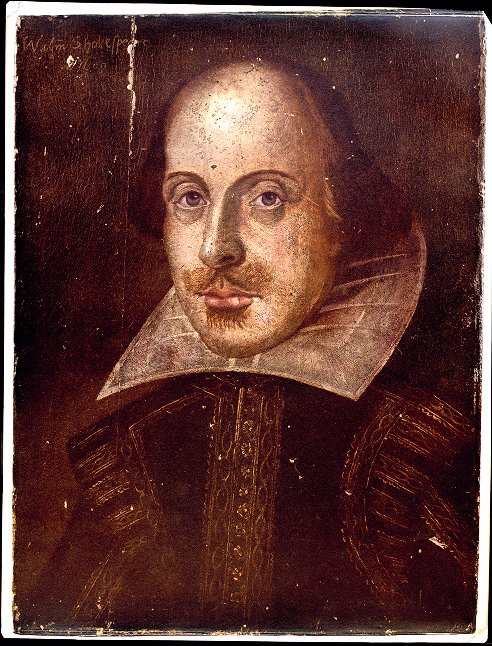
Image courtesy of the Furness Theatrical Image Collection

8.            HIST 050 (History) England and the British Isles to 1707. Todd.

The subject of this course is the history of the British Isles from the Roman Conquest in 43AD to the creation of the United Kingdom in 1707. Between these two dates the various societies and cultures in the British Isles were brought into the orbit of the Roman Empire, converted to Latin Christianity, and developed distinctive cultures and strong ties with the Continent. From the twelfth century on, the kingdom of England began to exert its power over Wales, Ireland, and Scotland. The Anglo-Norman continental empire of the Plantagenet dynasty also played a large part in shaping the English monarchy, as did the playing out of the Hundred Years War, the internal divisions in fifteenth-century English society, and the rise of the Tudor-Stuart dynasty.

7.            PHIL018 (Philosophy) The Idea of Nationalism. Steinberg.

Nationalism is one of, if not, the major geo-political forces of the past two hundred years. Its continuing power has been amply demonstrated by recent events in Eastern Europe and the Soviet Union. This course will focus on the conceptual and theoretical issues raised by competing notions of nationalism, rather than on its history or expression in particular cultures.

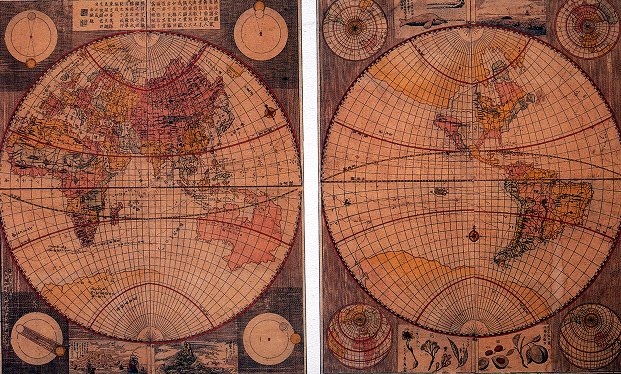
Image courtesy of the Fine Arts Library Image Collection

6.            URBS012 (Urban Studies) The History and Politics of Space. Schneider.

How do we understand the places in which we live? What is the relationship between workplace and home, downtown and suburb, inner city and gated communities, department store and mall, row house and ranch house? How are our lives defined by place? The city is a social and a spatial system, and its organization both reflects and reproduces social categories of race, class, and gender. The current city is also the product of past decisions about where to locate communities and how to allocate resources. Through reading sociological, historical, theoretical, and primary texts, through studying maps and photographs, and through your ethnographic explorations, we will explore the presence of the past in the city around us, the evolution of different kinds of urban and suburban places, and the encoding of wealth and power as well as inequality and poverty in the urban landscape.

5.            IPD509 (Integrated Product Design) Needfinding.

Needfinding is an approach that puts people and their needs at the center of product development and business strategy creation. Over 90% of new products introduced into the marketplace fail. A good portion of these failures are due to lack of understanding of end consumers and their needs. Designers and engineers need tools and techniques to get beyond what people can explicitly state and determine their implicit needs. In this class students will gain a tool set from which to develop their own approaches to conducting researching for design: learning how to think about other people, about culture, and about new perspectives. They will also learn tactical skills: how to define research questions, how to conduct observations and interviews, how to interpret results, how to synthesize them into fodder for design, and how to communicate their findings in a way that is compelling and actionable for designers, marketers, and business strategists.

4.            GSWS240 (Gender, Sexuality & Women’s Studies; Cross listed HIST240) Gender and Athletics. Miller.

Have women started to “play hardball” on a “level playing field” in the American sporting culture? From the commercial successes of the WNBA and World Cup Soccer to new studies that document the positive effects of athletics on girls’ self-esteem, women finally seem to be turning the American obsession with sports to their own advantage. This course will examine how physical fitness and organized athletics for men and women have both reflected and helped to create norms of masculinity and femininity over the past one hundred and fifty years.
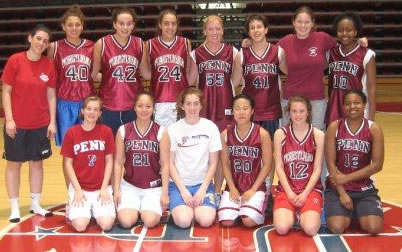
Image courtesy of the of Women's Club Basketball Team

3.            PSCI135. (Political Science; Cross Listed GAFL135 – Government Administration and HSOC -135 – Health and Societies) The Politics of Food. Summers.

This academically based community service seminar will explore the politics and institutions that have shaped – and continue to shape – food production and consumption. Students will use the readings, their community service, and ongoing “food events” at Penn to analyze the politics of food in many arenas: from farms, kitchens, supermarkets, schools, and communities of faith to corporations, research institutions, the media and international trade.

2.            MUSC014. (Music) Songwriting in the 20th Century. (M) Weesner.

This course will alternate between an analytical approach and a critical approach to the study of a wide range of songs composed throughout the 20th century. We will study musical techniques such as melody, harmony, form, rhythm, instrumentation, style, and text-setting. We will also pose far-ranging questions, such as, what makes a song a song? What makes a song a good song? What is the difference between an art song and a pop song? This course will occasionally focus on specific composers, such as Cole Porter, Charles Ives, John Harbison, and Liz Phair, and will also consider the musical ramifications of collaboration, covers and re-makes.

1.            ANTH 230 (Anthropology; Cross listed ANTH633) Forensic AnthropologyMonge.

This course will investigate and discuss the various techniques of analysis that biological anthropologists can apply to forensic cases. Topics include human osteology, the recovery of bodies, the analysis of life history, the reconstruction of causes of death, and various case studies where anthropologists have contributed significantly to solving forensic cases. Discussions will include the limitations of forensic anthropology and the application of DNA recovery to skeletal/mummified materials.
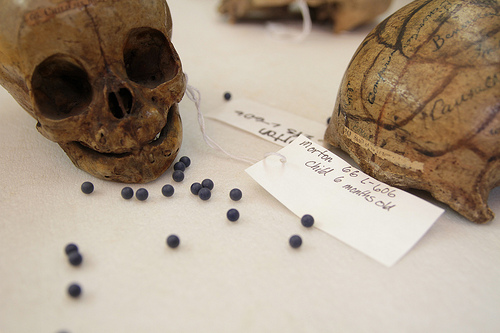
Image courtesy of the of Penn Museum Blog

I encourage you to wax nostalgic and peruse the course register, maybe your favorite class is still being taught by your favorite professor or you might find a course that inspires you to go out and learn more.

1 Comment

Filed under Academics, Alumni Perspective, Campus Life, Casey R., Top Ten

La Casa Latina Receives Largest Donation in History

Author: Cecilia Ramirez, C’05, SP2’10

If you graduated before 1998, you may not be familiar with La Casa Latina: The Center for Hispanic Excellence, the University of Pennsylvania’s only cultural resource center focused on Latino students and interests. To many Latino Penn alumni, however, we remember La Casa Latina fondly; a source of food, a group of shoulders to cry on, a great spot for naps, a team of life coaches, a designated homework (and procrastination) hub and, of course, a home away from home while at Penn. Being one of these former (and current) residents of this special casita, I was especially delighted to hear that an alumna recognized the vital importance of this center and made a generous donation. The Association of Latino Alumni will be featuring this story in its upcoming newsletter but I wanted to give you a sneak peak at the big news here:

Johnny Irizarry, Director of La Casa Latina

This past spring, The Center for Hispanic Excellence received a gift commitment of $20,000, its largest donation in history! Ruth Colp-Haber C’81, WG’85 (pictured below) is the generous donor and decided to contribute because of her strong connection to the Latino community and after an inspiring visit to La Casa.  Ruth explains her motivation:

I feel forever indebted to Penn for many reasons but perhaps the most important was mastering Spanish after studying abroad in Seville, Spain during my junior year.  These language skills enabled my husband and I to go to Colombia, South America to adopt our daughter, Carly.  Everyone in Colombia was impressed with my Spanish banter and my desire to raise a bilingual daughter.  Both Carly and I are now fluent Spanish speakers.

Ruth Colp-Haber, C’81, WG’85 and her family

I love the Spanish language, culture and people and wanted to do something to help promote these causes at Penn while also assisting deserving students.  Thus, a gift to La Casa Latina seemed very worthwhile.  Now that my daughter is 14 years old, I look forward with excitement to the possibility of her attending Penn and spending time with the wonderful students at La Casa Latina.

Johnny Irizarry, the Director of La Casa Latina expresses his excitement over this announcement, “The students, staff and advisory board members of La Casa Latina are extremely honored by the generous investment made by Ms. Ruth Colp-Haber in support of our programs and services. It is inspiring to receive such a donation from a Penn Alumna. It affirms the value of our role in furthering the University’s commitment to diversity.”

This is truly a historic donation and it cannot stop there! I hope Ruth’s generosity will inspire even more people to give towards such a remarkable place like La Casa.

Congratulations, La Casa Latina!

Leave a comment

Filed under Alumni Perspective, Cecilia R., Multicultural Outreach

Save 2nd Base: 2011 Penn Co-Rec Summer Softball CHAMPIONS!

Author: Stephanie Yee, C’08

I love Penn in the summer because the campus is green and quiet, and the food truck lines are not as long (except maybe at Magic Carpet). Another great Penn summer tradition is co-rec intramural summer softball. Departments around Penn put together softball teams, and the teams are divided into two leagues (National League and American League – just like in MLB). Teams in the same league play each other during the regular season, and then there are play-offs. The winner of each league advances to the Championship Game, which is played on Franklin Field.

After a few years in the summer softball community, you start to recognize some familiar names. For example, Penn Chem Isotopes (Chemistry Department) and Museum Rocks (Penn Museum) have been around for years. My all-time favorite name is the Home RN’s (School of Nursing). Team Captain Troy Majnerick changes the name of his softball team every year, so the big reveal is always exciting. One year we were Dwight’s Army of Champions (The Office, anyone?), and last year we were Habitual Line Steppers. This year, Troy’s softball team, Save 2nd Base, had two great things going for them. First, they were defending champions. Second, they were playing for a great cause. Save 2nd Base is a breast cancer apparel company whose proceeds fund breast cancer research, education, and awareness programs through the Kelly Rooney Foundation.

Save 2nd Base team members donated $1 to the charity for every game they won during the regular season. They went 10-0 this year, so that’s $10 per team member in addition to the $550 they raised as hosts of Socially Conscious Philadelphia’s July event. At the end of the season, the team had collected close to $1,000 for breast cancer awareness and research. AND they won the championship game! AGAIN! These players are true champions.

Save 2nd Base: 2011 Penn Co-Rec Summer Softball CHAMPIONS!

Anyone with a PennCard can play summer softball, so I encourage all Penn staff, graduate students, and undergraduate students who are on campus during the summer to find a team to join. It’s great fun, and you meet Penn people from all over the university. Save 2nd Base lives for summer softball, and I can see why. They are two-time champions now. CONGRATS!

2 Comments

Filed under Alumni Perspective, Stephanie Y., Volunteering

Hidden Gems

Author: Lynn Carroll, C’93

Can you guess where on campus this photo was taken? It’s my favorite place on campus for peace, quiet, and a bit of perspective—and no, it’s not near the Bio Pond!

This is the Class of 1957 Geology Garden, located just south of Hayden Hall near 33rd Street and Smith Walk. When you have about 10 minutes, call the “Discover Penn” audio tour at 215-525-1562 and enter 11#. You will hear Dr. Hermann Pfefferkorn, Professor of Earth and Environmental Science, describe the geology of each and every boulder in the garden, the oldest of which—gneiss and serpentinite—are an estimated 1 billion years old.

More about Discover Penn …And a bit about Dr. Pfefferkorn.

Leave a comment

Filed under Alumni Perspective, Campus Life, Lynn Carroll, The Arts

Down (to) the Shore

Author:  Nicole C. Maloy, W’95

The first time I heard someone speak of “going down the shore,” I imagined a map of a shoreline on a wall, with an animated stick figure starting at one point on the shore and traveling downward. Going down the shore sounded like a process. I would eventually learn that it is a destination; the word “to” is implied. To non-natives of this area, “down the shore” translates as “to the beach.” It sounds like “downa shore.” No relation to Dinah Shore. She’s from Tennessee.

I never once explored the Jersey Shore when I was a Penn student. To be fair, my spring semester weekends were spent at track meets, and my summers were generally spent in Ohio. Still, what a shame not to take advantage of Philadelphia’s relative proximity to the ocean! It’s only an hour to Ocean City, where I took my first surfing lesson  a few years ago.

Yes, surfing. Who knew there was surfing anywhere around here? Not I. And, let’s face it, it’s not Hawaii, by any stretch. But for a total beginner like me, Jersey-sized waves were just fine; the Hawaii Five-0 theme song would be in my head either way. And Jersey’s a heck of a lot closer to home. And I bet they don’t serve funnel cake at the Banzai Pipeline in Oahu. Sign me up for a trip to the Jersey Shore! Ahem – downa shore.

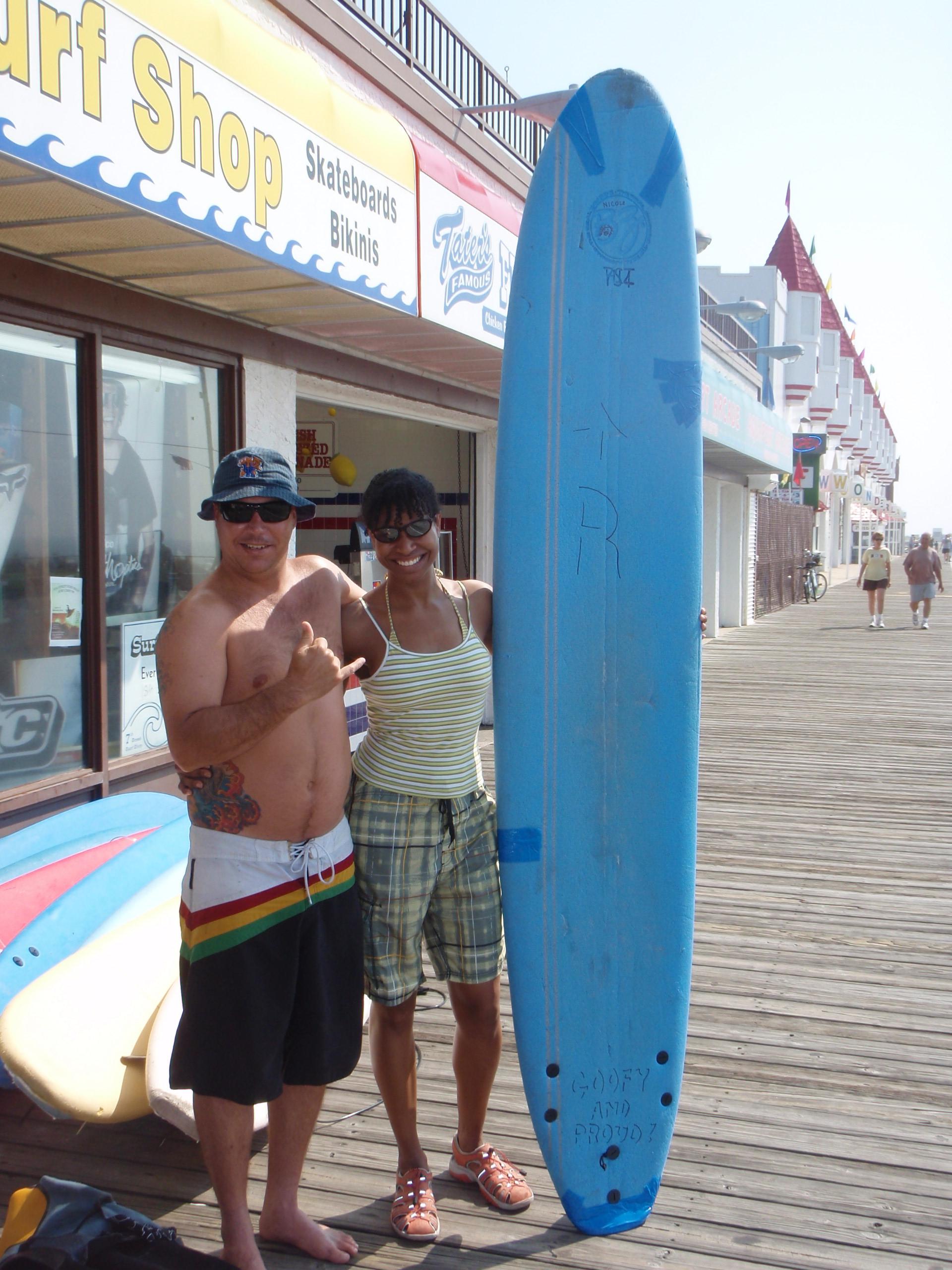
With the legendary Matt, who teaches at 7th Street Surf Shop in Ocean City, NJ. He is hilarious.

Turns out I’m a “goofy foot” surfer. Somehow this seemed fitting. This actually means I lead with my right foot, where most lead with their left (those boring souls would be “regular foot”). My high jump takeoff foot was my right when most others used their left, so at least I’m consistent.

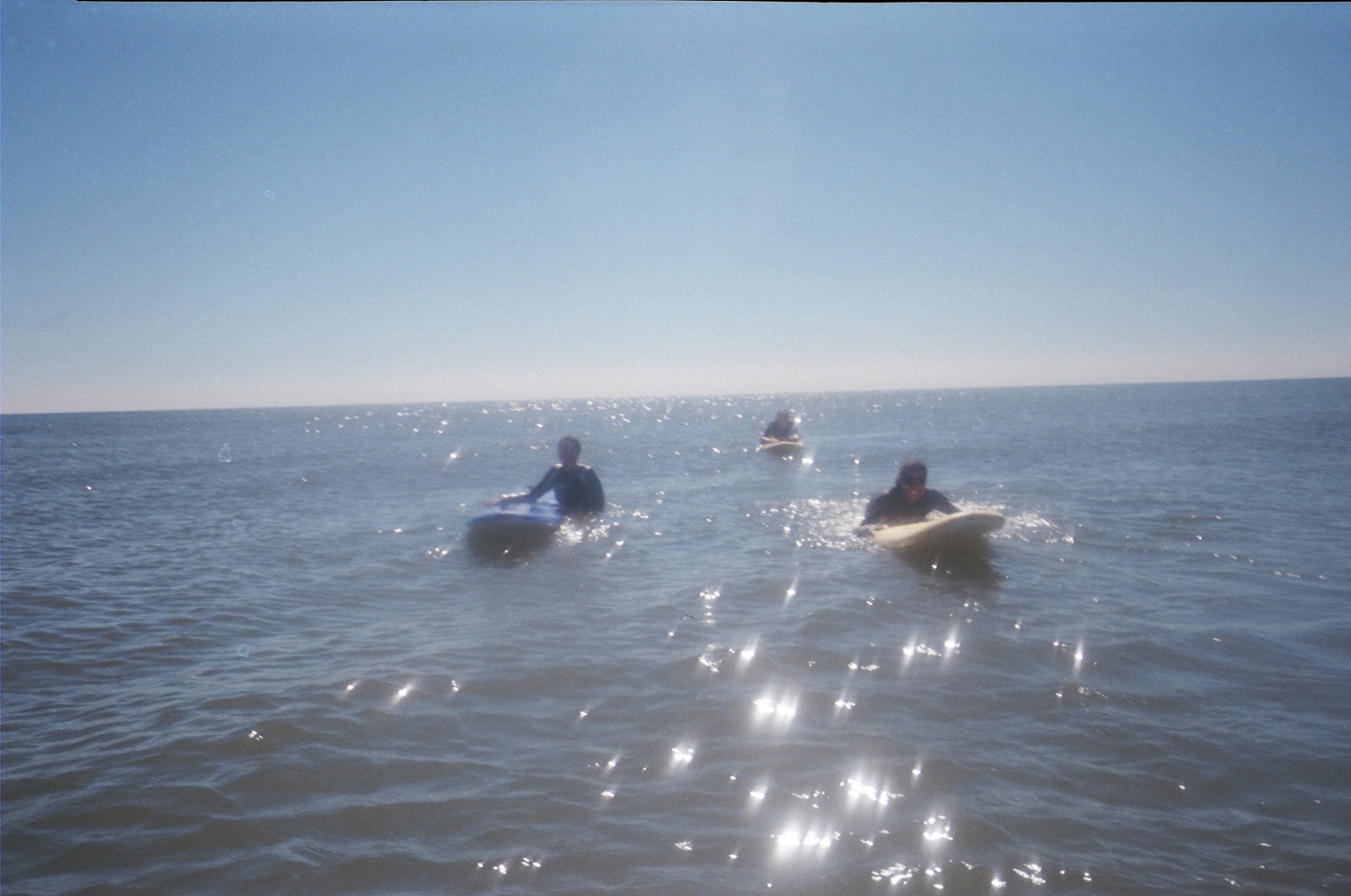
Paddling out for the first time, before I even tried to pop up on my first wave – right foot forward – I knew I would return. I have always loved the water, and frolicking in the waves on a sunny day is standard-issue fun, but this was different. Going past the waves, getting away from the crowds, anticipating the ride back in and, most of all, just being out in the water felt pretty amazing. Didn’t taste so amazing, but that’s part of the deal.

It intrigues me that you have to fight the waves to get away from land for the express purpose of collaborating with them to get you back. There’s a life lesson in there somewhere. For the record, there are real waves, and real surfers, at the Jersey Shore. If your timing is right, you’ll get to see some pretty impressive moves. And you know what? The view is even better from the water, on a board. If you can stand, if you can swim, if you can get downa shore, then you can take a surfing lesson. So…do it!

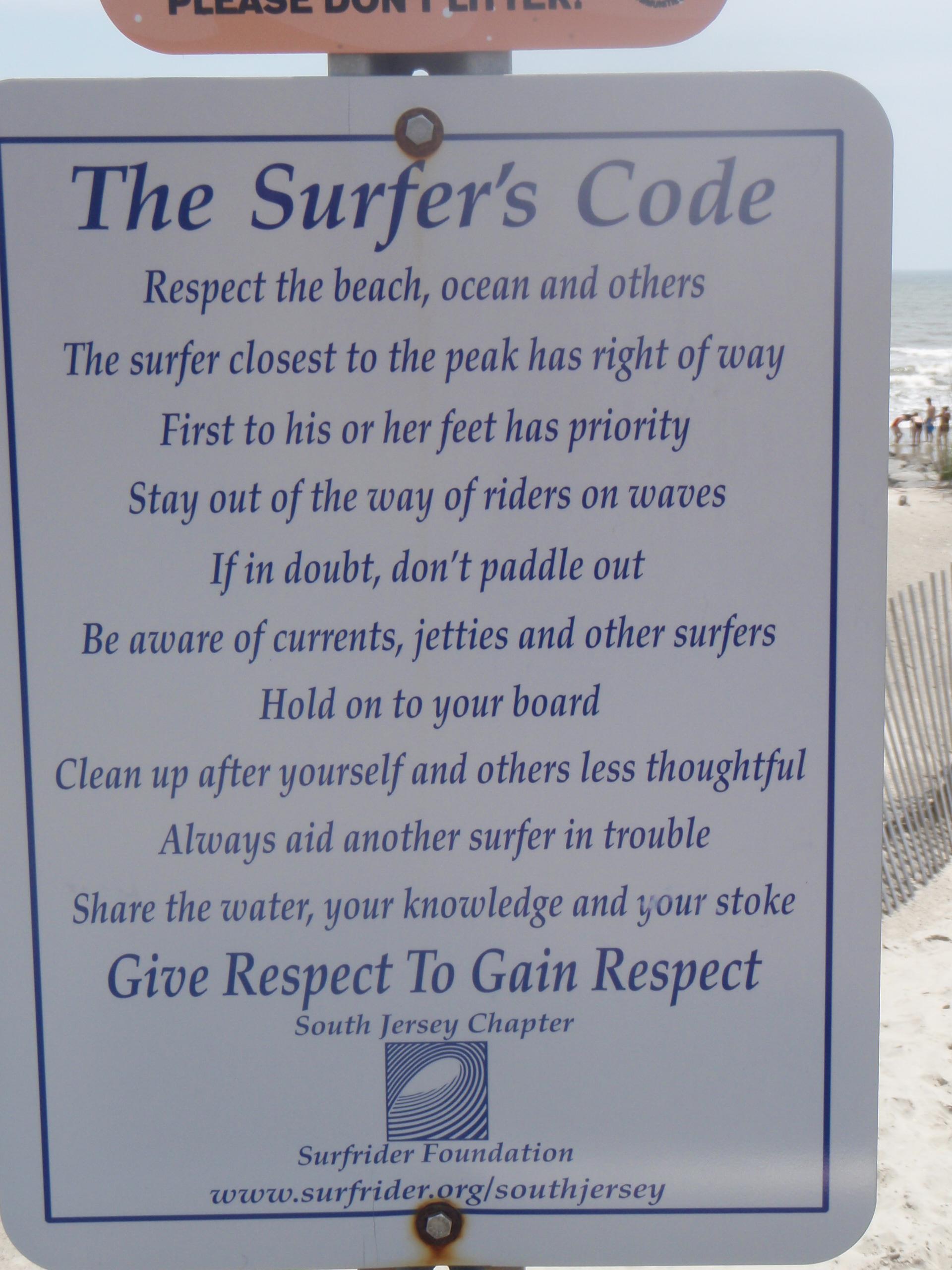
You pass this on the way to the water. Duly noted.

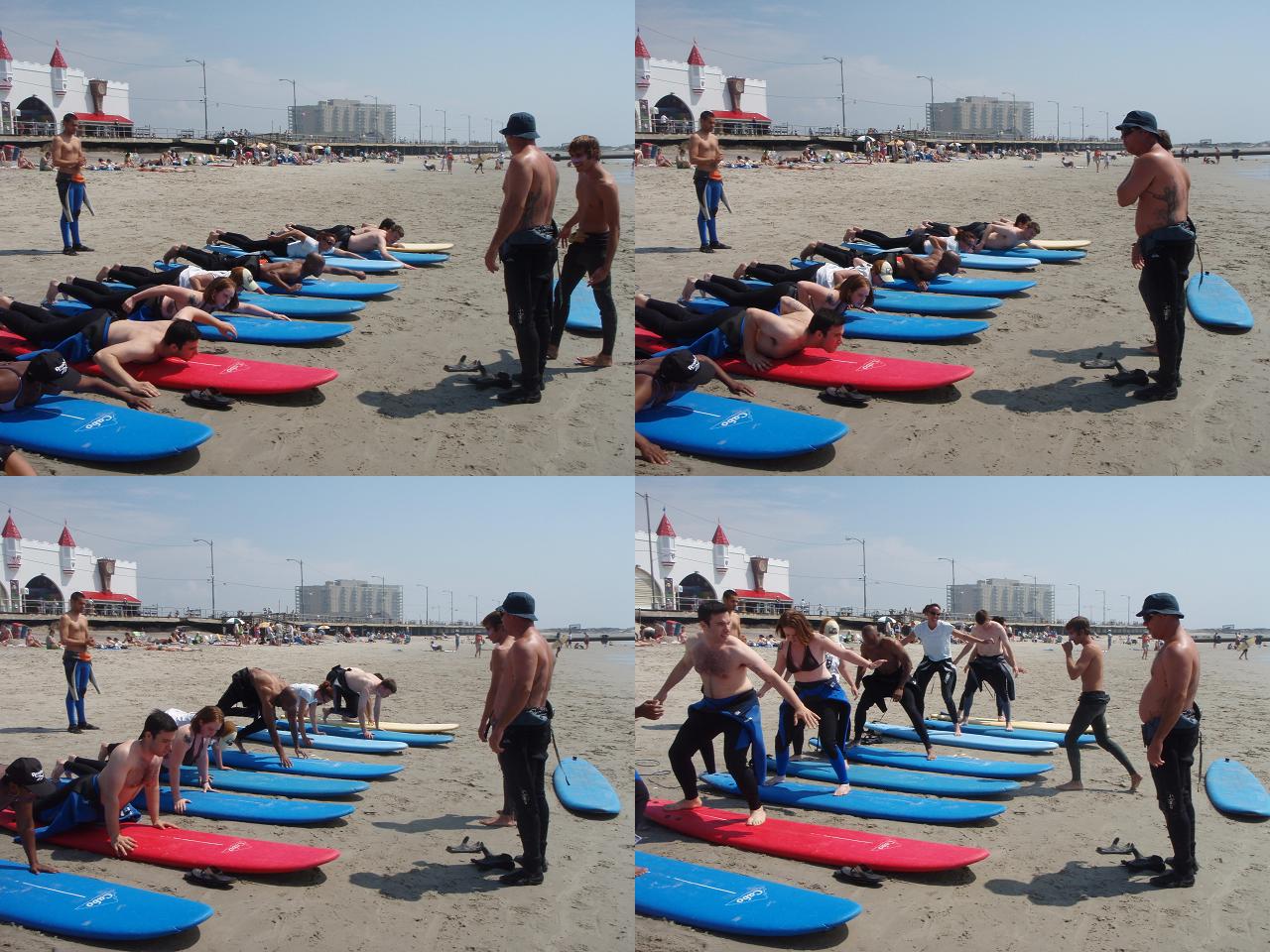
The sign said I had to “share my stoke,” so I have since organized several trips for others who want to learn to surf. Here, Matt is teaching the sequence of movements these people are about to try out in the water.

And they’re off!

Heading out on a different morning with friends and rented boards.

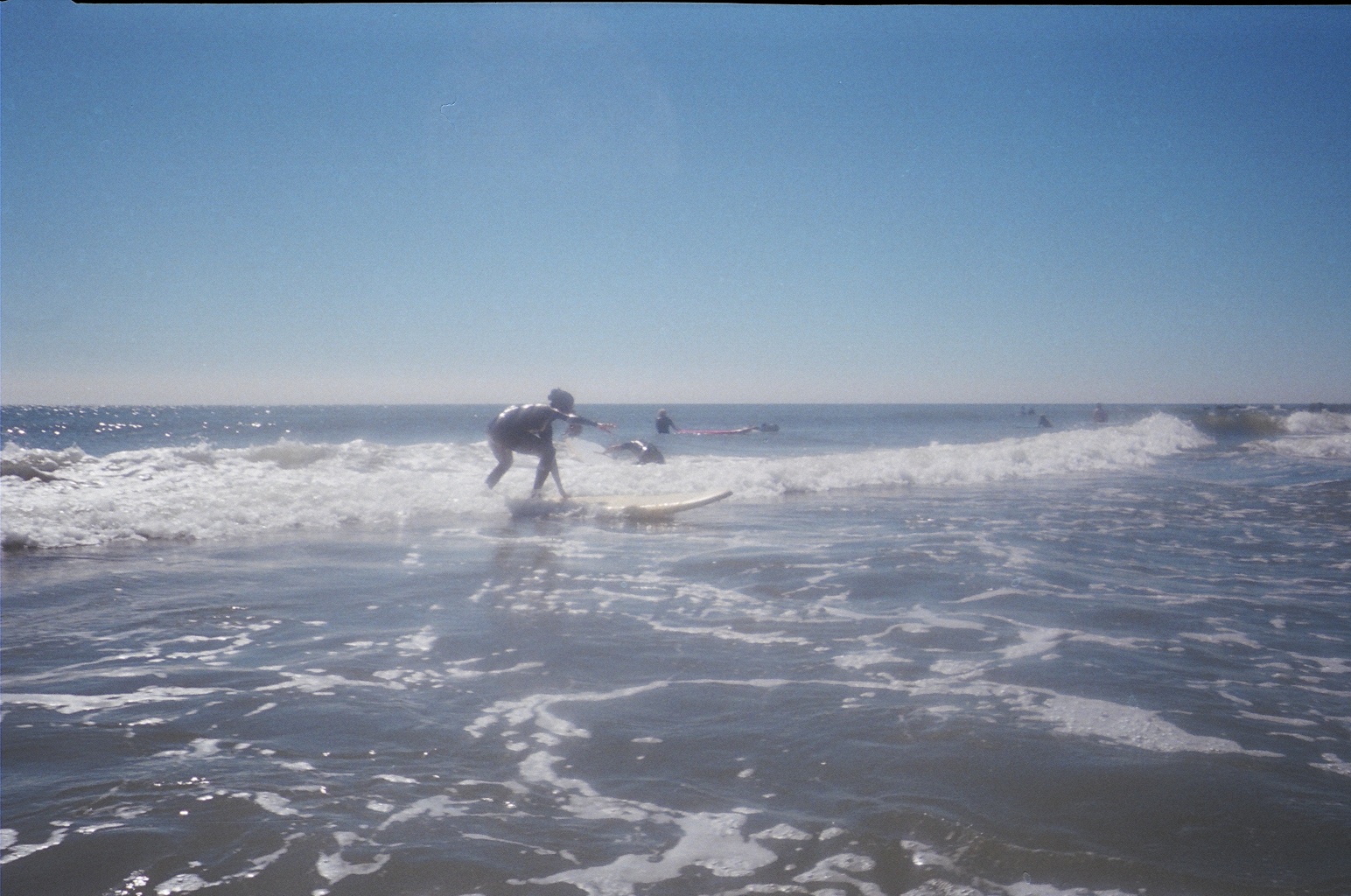
By the time this photo was taken whatever I was riding was nothing but foam. But I was still on the board, baby! Woo!

After a somewhat less successful attempt, yet still smiling. If this is life downa shore, sign me up!

On a beautiful day like this, even *waiting* for a wave is fun. Life is good when you’re floating on a surfboard, hanging out with friends. You gotta try this sometime.

1 Comment

Filed under Alumni Perspective, Nicole M., Uncategorized

Noticing King Solomon

Author: Bart M.

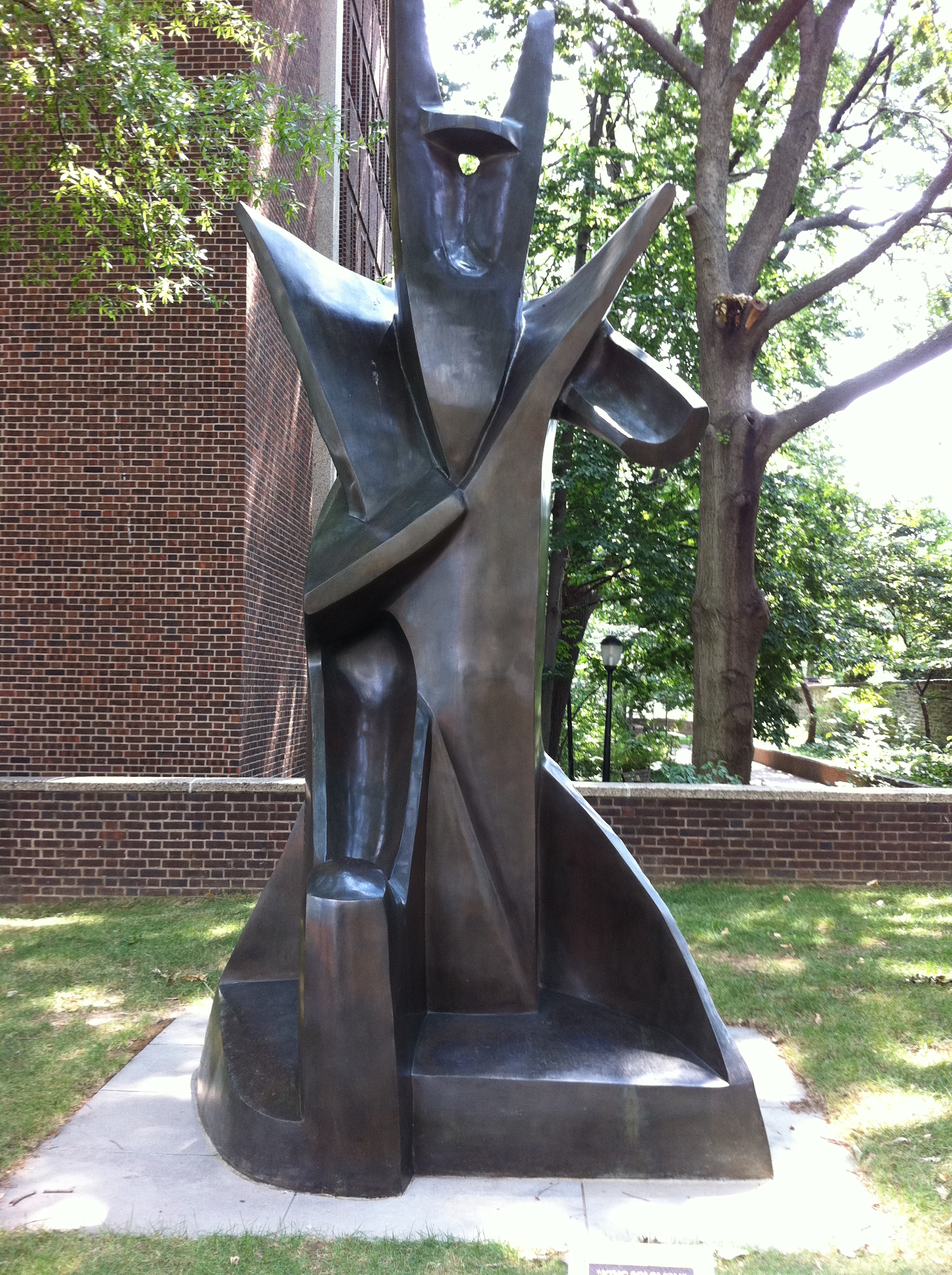
Even though he is fourteen feet tall, I have walked past King Solomon for years and years and barely noticed him. He’s been standing there quietly since my sophomore year at Penn. Until today, I never gavehim much more than a quick glance. This afternoon, I spent an extra minute admiring King Solomon and then I looked him up on Penn’s website to see what his story is.

Truly one of the coolest pieces of art at Penn, the bronze statue King Solomon (1963) was sculpted by Alexander Archipenko and it keeps watch on 36th Street between Locust Walk and Walnut Street (across from the old Hillel and what is now the new Annenberg Public Policy Center). King Solomon  was given to Penn in honor of the inauguration of President Judith Rodin on October 21, 1994 by Mr. and Mrs. Jeffrey H. Loria .

Check out how the cubist shape and form of Solomon mimics/compliments the tree behind it. Not intentional, I’m sure, but cool nonetheless.

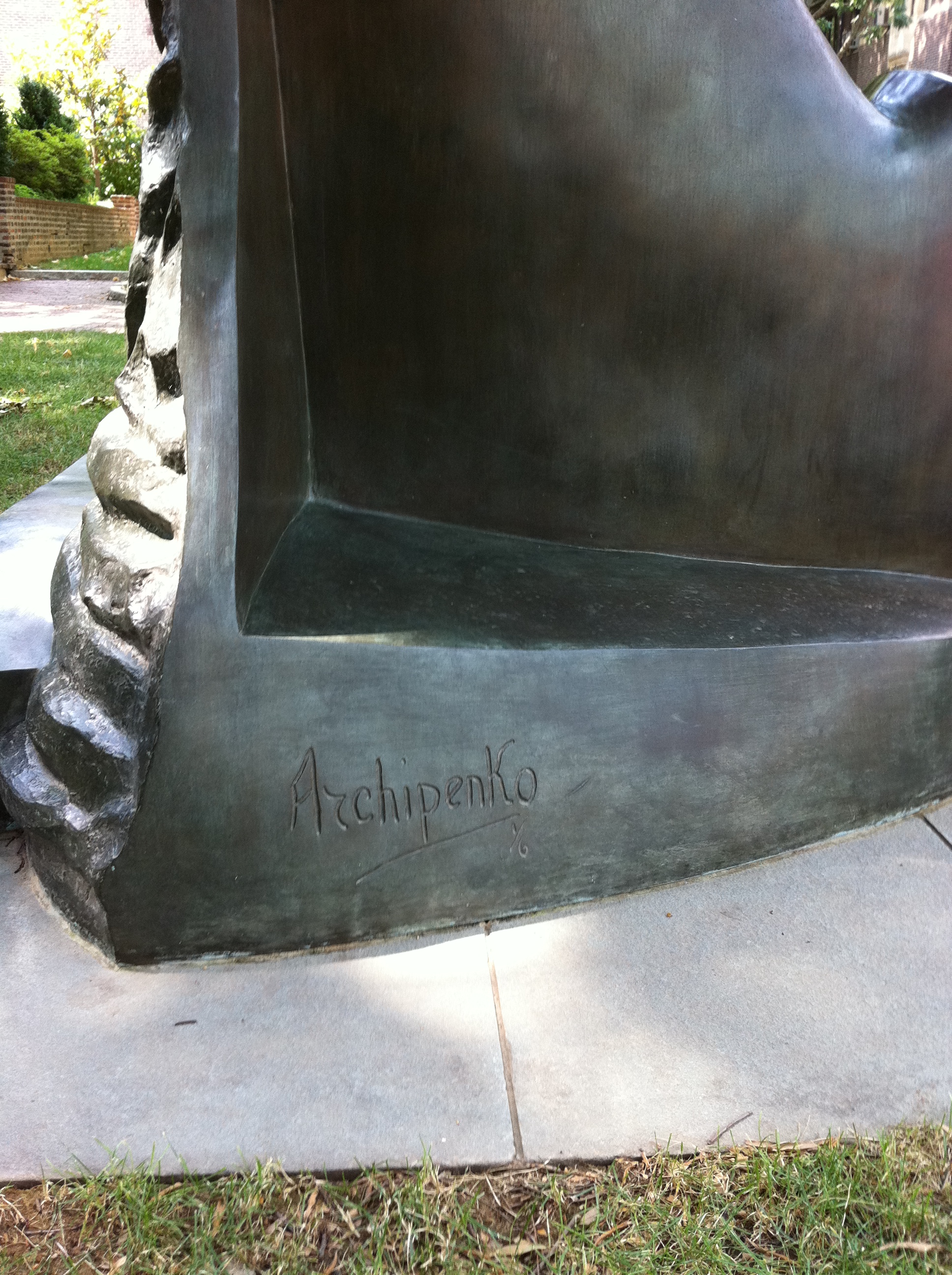
Notice Archipenko’s signature on the left side.

And the plaque at Solomon’s feet:

And here is a view from behind Solomon – something most people have never taken the time to see. The juxtaposition of smooth and rough texture is pretty remarkable. And for a reference point, that is the new Annenberg Public Policy Center just across 36th Street.

And something else I just learned: Archipenko did not normally work on a monumental scale. But shortly before his death in 1964, he completed a 4-foot King Solomon designed for enlargement. Instructions were left with his widow, who supervised the casting of a 14.5-foot, 1.5-ton version in 1968. This is the Solomon that stands on 36th Street. Archipenko’s original plan was for Solomon to be over sixty feet tall.

1 Comment

Filed under Alumni Perspective, Bart M., Fine Art, Historical, The Arts

Eating and Scooping Ice Cream for a Great Cause

Author: Stephanie Yee, C’08

This past Saturday, I scooped 15 gallons of ice cream at the 13th annual “all-you-can-eat” ice cream Super Scooper event.

Event Banner

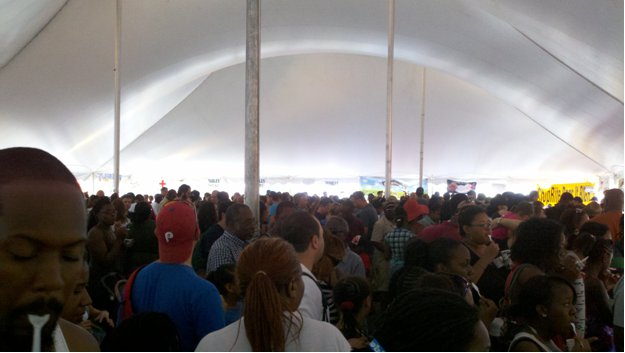
Each year during the 4th of July weekend, the Joshua Kahan Fund hosts its annual event at Penn’s Landing. 100% of the net proceeds go towards pediatric leukemia research and annual pediatric prom at The Children’s Hospital of Philadelphia. For a $7.00 donation, you get a spoon and admission into a large tent filled with many different ice cream stations. You can go to as many stations as you wish and taste as much ice cream as you want. The event runs 12-5pm each day, and you can stay for as long as you want. Can anything be better? Ben & Jerry’s, Häagen-Dazs, Bassett’s, Friendly’s, Jack & Jill, Turkey Hill, Breyer’s, water ice, and more. You name it, and it was there. Talk about a childhood dream come true.

Right Side of the Tent

My group arrived at the tent at 10AM. Our shift was 10:30AM-3PM, but we arrived early to find a good parking spot. We checked in at the volunteer table, received our free t-shirt, free hat, and shiny blue volunteer wristband. At 11AM, the volunteers were gathered together for a quick speech, group photo, and free lunch (yep, they fed us, too – so nice!) We learned that the Joshua Kahan Fund had already raised over $900,000 for CHOP, and they expected to pass $1,000,000 that weekend! After lunch, we washed out hands, put on our gloves, and then the chaos began.
I was stationed at the Jack & Jill table with two other Penn alumni. We scooped strawberry ice cream for three hours straight. We saw excited kids, tired kids, and kids screaming of brain freeze and tummy aches. We saw adults there by themselves, adults chaperoning their kids, and adults chaperoning other people’s kids. We also saw adults acting like kids. It was all-you-can-eat ice cream – what do you expect?

The Crowd

After our shift was over, I tried a vanilla sundae ice cream, black cherry ice cream, and black raspberry ice cream. After that, I was ice-creamed out. Today, I heard from the event organizers that they passed their $1,000,000 mark this weekend. Hurrah for volunteer work, hurrah for ice cream, and hurrah for Penn Alumni!

Half of the Penn Alumni Club of Philadelphia members who volunteered at the Super Scooper event standing in front of Turkey Hill ice cream and a Turkey Hill cow

3 Comments

Filed under Alumni Perspective, Campus Life, Stephanie Y.

Homecoming 2011: Penn to Celebrate 40 Years of Black History at Penn

Author: Cecilia Ramirez, C’05, Sp2’10

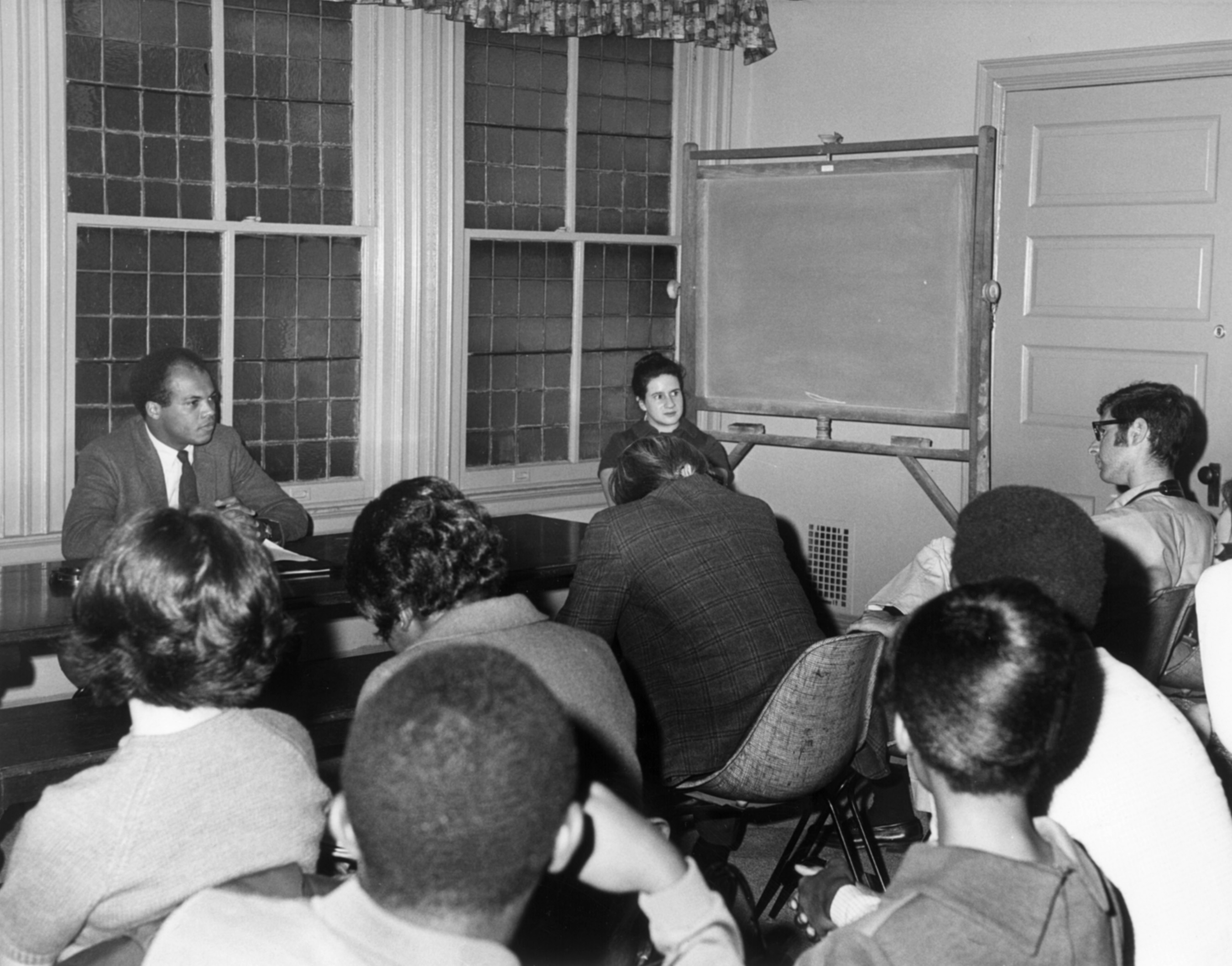
John Wideman, C’63, Hon’86, first director of the Afro-American Studies Program. October 24, 1968

In 1971, the University of Pennsylvania welcomed its first academic program focused on studies of the African diaspora, the Afro-American Studies program. The program was led by its first director, John Wideman (C’63 Hon’86), a member in the English Department and the second black tenured faculty member in Penn’s history. Dr. Wideman, tasked with a difficult challenge, laid the foundation to successfully develop a much-needed academic program without any trained faculty members and few available courses.

Forty years later, the program, now known as the Center for Africana Studies (CFAS- through a merger with the Center for the Study of Black Literature and Culture), has flourished tremendously and now boasts over 50 affiliated faculty members and over 80 courses offerings for undergraduate and graduate students. CFAS also sponsors several co-curricular programs including: the Artist- and Scholar-in-Residence Programs, The Reverend Dr. Martin Luther King, Jr. Lecture in Social Justice, The Africana Media Project, The Honorable A. Leon Higginbotham, Jr. Memorial Lecture, The annual Race and Sports program, and Brave Testimony: A Celebration of Poetry of the African Diaspora.

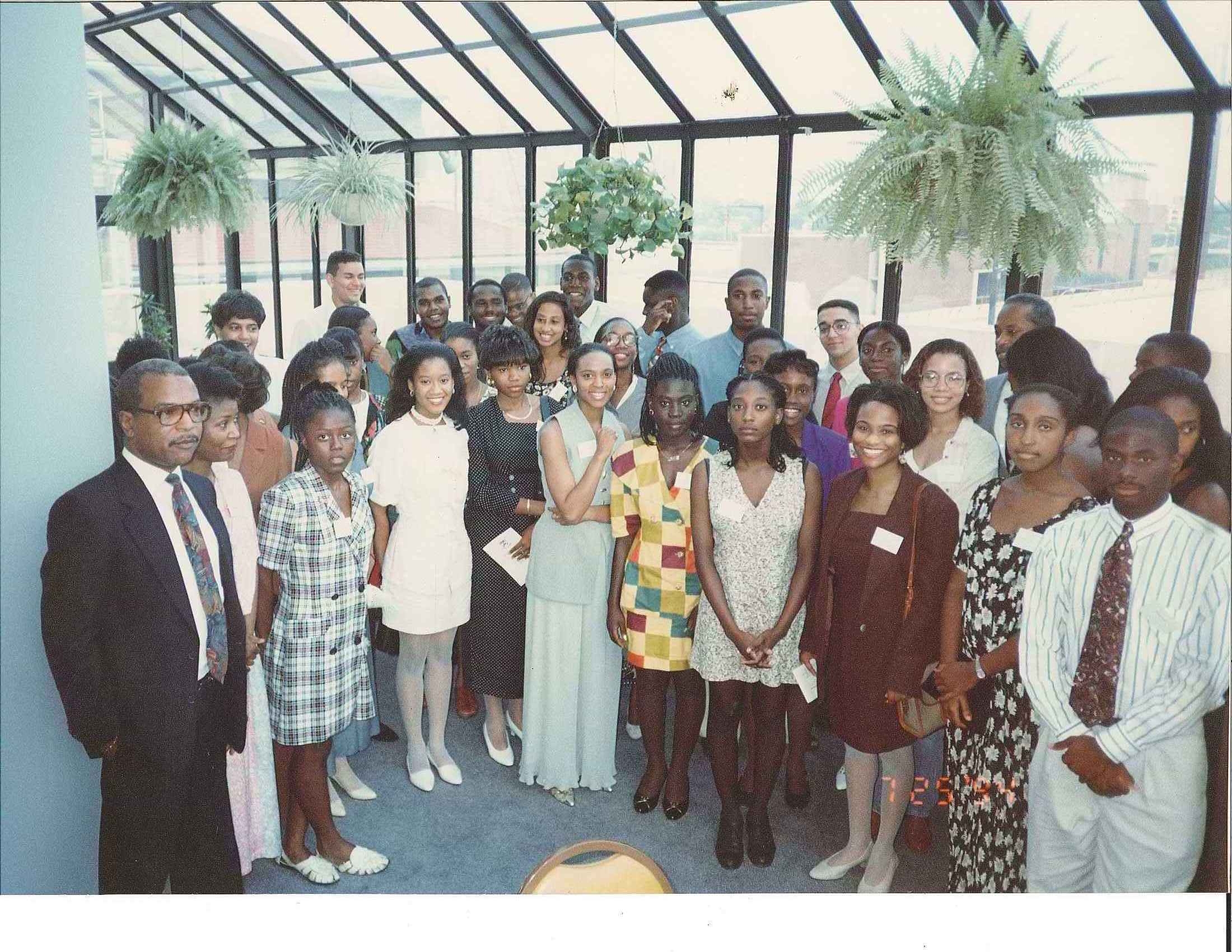
Africana Studies Summer Institute for Pre-Freshmen, 1994

Dr. Camille Z. Charles is the current Director of The Center for Africana Studies, the Chair of Penn’s Faculty Senate, Professor of Sociology and Education and the Edmund J. and Louise W. Kahn Term Professor in Social Sciences. When speaking of this historic milestone, Dr. Charles explains, “These anniversaries are truly milestones in Penn’s history. I am proud to help ensure that a once overlooked field of study has remained an integral part of the academy for forty years and continues to shape the educational experiences of all Penn students.”

This fall, the University will celebrate the 40th anniversary of the founding of Afro-American Studies at Penn and the 25th anniversary of the Center for Africana Studies Summer Institute for Pre-Freshmen, the first and, to date, only summer program of its kind and in the Ivy League.

On November 5, 2011 (Save the Date!) during Homecoming Weekend , the Black Alumni Society will join the Center for Africana Studies in a day-long series of programs and events in celebration of this milestone and in honor of Black History at Penn. The program series will include a brunch featuring the Black Alumni Society’s annual Honoring Leaving Legends program, a faculty and alumni panel, a reunion for past Summer Institute alumni and Afro-American or Africana Studies majors and minors as well as other exciting events and special guests. All alumni are invited to attend any of these historic events. For details, to RSVP, and to get involved please visit: The Center for Africana Studies Homepage or contact Michelle Houston at: mhoust@sas.upenn.edu.

Happy birthday, Africana Studies!

Leave a comment

Filed under Academics, Alumni Perspective, Alumni Programming, Cecilia R., Historical, Homecoming Weekend featuring arts and culture, Multicultural Outreach