Yearly Archives: 2014

How Penn’s Research Inspires

By Robin Tauber Plonsker, C’86

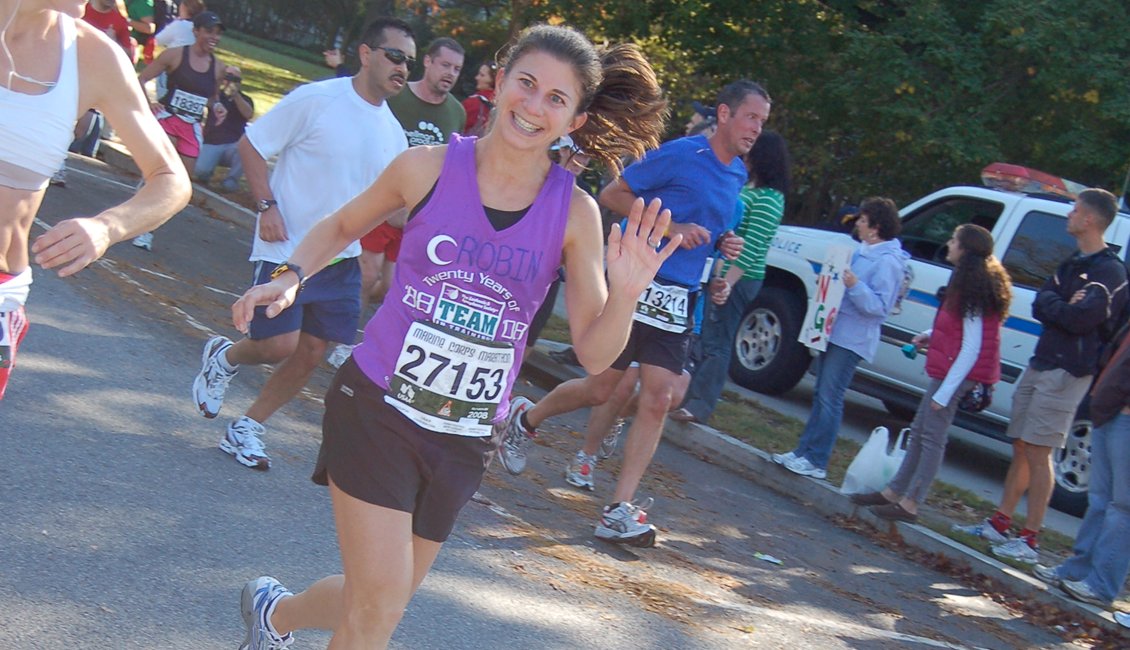
On April 21, I will be running the Boston Marathon as a member of The Leukemia & Lymphoma Society’s Team in Training (TNT). This will be my first time running the Boston Marathon (something I’ve always aspired to do), but not my first time running for TNT. I have been a supporter of The Leukemia & Lymphoma Society ever since my husband Ted’s lymphoma diagnosis. Ted has been cancer-free eight years now, but my involvement with The Leukemia & Lymphoma Society has only grown. I started as a volunteer, have run several marathons for TNT, and am now an employee, thrilled to be working to support a mission so personally meaningful to me. It also gives me a chance to see firsthand the amazing breakthroughs being made right now in blood cancer research–research that The Leukemia & Lymphoma Society is funding.

In fact, one of the most exciting research breakthroughs is happening right here at Penn. A team led by Carl June, MD, has developed a new treatment for leukemia that involves genetically engineering patients’ own immune cells to seek out, target and kill cancer cells. This new therapy has been tested in leukemia patients for whom all other treatments had failed. The results of the study have been nothing short of astounding, with the majority of patients–including children with the most common form of childhood cancer–achieving complete remission. This is research that The Leukemia & Lymphoma Society recognized as promising and worthy of support as far back as 1992, long before it achieved the success it is having today. In fact, The Leukemia & Lymphoma Society has committed $20 million to this research over these past 12 years, including a current $6 million grant.

robin

This remarkable new treatment developed at Penn is now being tested in other types of blood cancers and is a bright ray of hope for those battling these diseases. But there is more work to be done. There are more than a million Americans living with leukemia, lymphoma or myeloma. Many are still desperately in need of cures. I am running the Boston Marathon to help raise the funds needed to find those cures. If you would like to help by making a donation to The Leukemia & Lymphoma Society, please click on this link to my fundraising page:
http://wch.lls.llsevent.org/rplonsker

Every donation helps accelerate finding cures for blood cancer patients. On their behalf and mine, thank you.

Leave a comment

Filed under Guest blogger

Have you registered yet?

Alumni Weekend will be here before you know it! Make sure to register today.

blogAW14_Banner


The countdown is on – 8 weeks to go!

Leave a comment

Filed under Uncategorized

Penn Traditions: The Good, The Bad, and THE RED & THE BLUE!

Author: Nicole Svonavec GEd ‘09

Every college student takes part in traditions on their campus as part of a unifying undergraduate experience.  I’ve attended and worked at several colleges so far, and Penn’s traditions stand out for their uniqueness, mass appeal, and staying power.  Experiences like Hey Day, Spring Fling, and taking a photo with your boo at the LOVE statue, have stood the test of time.  Creative Class Boards, Penn Traditions students, and other student leaders are forming new traditions (shout out to Holifest!) every year.

On the other hand, some traditions have faded into history.  And let’s be real, I’m feeling okay about that.  While I love reminiscing with our Old Guard alumni about retired traditions from their Penn days, I see a few good reasons to keep these in the archives:

“The Bowl Fight”

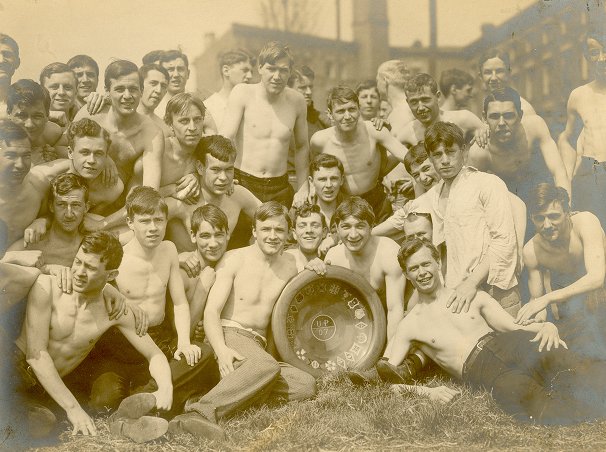
Although these strapping young lads look quite happy in the photo (from 1905), The Bowl Fight stands as one of Penn’s most historic, but also most sketchy traditions.  I’m not sure which one of these students was elected to be shoved INSIDE that bowl by his peers, but I would cry seeing our fabulous freshmen and sophomore duking-it-out on College Green in present-day.  Final verdict: This tradition is one of Penn’s best (craziest) stories, but a happily retired one.

Photo courtesy of Collections of the University Archives and Records Center

Photo courtesy of Collections of the University Archives and Records Center

“The Poster Fight”

(Note how many of these old traditions include the word “fight.”  Thankfully the advent of Pottruck Gymnasium seems to have given students a more productive outlet for their pent-up energy).  1905 was a busy year for traditions, and The Poster Fight stands as another fine example of class rivalries at their best/most intense.  The poster below (located in Sweeten Alumni House – come visit!) shows how “no blow was too low” when asserting your eminence over other classes.  Hopefully they all hugged it out at the end of the day.

poster fight3

“Kissing the Boot”
Everyone loves a good freshman rite-of-passage, but the 1940s-50s tradition of kissing Ben Franklin’s boot outside of Weightman Hall strikes me as a bit unsanitary.  Good thing freshman carried this out in early fall, because kissing a metal boot in the winter seems like it could cause the same nightmare as getting your tongue stuck to the flagpole in elementary school (Note: this did NOT happen to me, whew).

Photo and facts courtesy of Collections of the University Archives and Records Center

Photo and facts courtesy of Collections of the University Archives and Records Center

The Penn Traditions program is currently working on a new event (to launch in fall 2014) aiming to teach current students about some of these hilarious/spirited/dangerous traditions of the past.  If you took part in a really fun tradition on campus during your time at Penn, email svonavec@upenn.edu so we can include it in our event!

*Thanks to the Penn Archives and Under the Button for inspiring this post!

Leave a comment

Filed under Alumni Perspective, Campus Life, Historical, Memories of Penn, Nicole S., Traditions, Uncategorized, yPenn

Q&A with Mark Alan Hughes, Penn Design Professor and Coursera Instructor

Author: Lauren Owens, Associate Director Open Learning

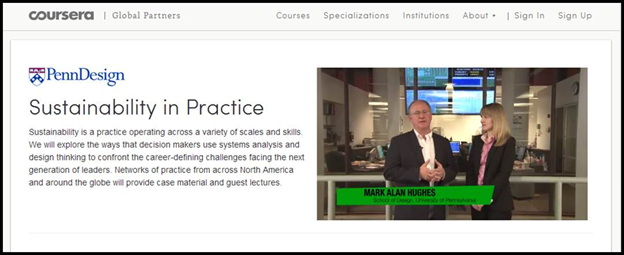
Mark Alan Hughes and Leslie Billhymer have created“Sustainability in Practice,” a massive open online course (MOOC) that begins on September 15th. I sat down with Mark Alan Hughes to learn about the course development process from the instructor’s perspective.

owens1

Lauren Owens: Let’s begin with the basics. What made you want to teach a MOOC?

Mark Alan Hughes: It was a number of factors. First, I wasn’t in the first mover generation. I knew who was doing it before I knew what it was, and that indicated how cool and timely the Coursera thing was. Second, it was clear the university was committed to engaging with faculty from as many schools as possible, so when Dean Taylor enthusiastically proposed it to the Design faculty, that was another signal. And third, after learning more about the platform, it was abundantly clear it was the next big thing, and experimentation [on the platform] was not only allowed but encouraged.

I think a lot of that encouragement reflects Penn’s Open Learning Initiative at least as much as Coursera. Every time we would lob an idea about a different kind of content or video, you were always so encouraging and enthusiastic it led us to invent as much as we could.

LO: That’s great to hear. Please share a little bit about your course – what makes it different?

MH: There are many courses that talk about sustainability, what is it, where does it come from, but Leslie and I call our course “Sustainability in Practice” because we’re fascinated by the traction sustainability clearly has in the real world of government and private enterprise as an organizing device for decision making and management. We use practice and practitioners to present a series of ideas about sustainability, rather than vice versa.

LO: What kinds of surprises did you encounter while creating the course?

MH: The production and the post-production have taken more time than I expected. Partly that is because we are trying to use some presentation technology that hadn’t been used before by Penn, and it’s a labor-intensive approach.  A more pleasant surprise has been the ease of recruiting guests for panel discussions. There’s a lot of buzz off-campus about online learning as well. Thirdly, I’m surprised how much I miss students in front of me, and it makes me realize just how conversational and Socratic my teaching style has become over the years. The Coursera experience has made me eager to be in the classroom with my Penn students.

LO: Do you have any tips for instructors who are considering teaching on Coursera?

MH: Coursera forces an instructor to think about the preparation and interests and circumstances of students in a way that students registering for your class on campus need not happen. So for the first time in decades I was thinking about who my students were going to be, because they weren’t going to be Penn students. That makes you rethink the level of the teaching. It reminds me of writing my weekly opinion column for the Philadelphia Daily News, which I did for about six years. Writing a weekly column for a major metropolitan tabloid newspaper was, for me, like holding the world’s largest Urban Studies seminar each week. It reminds me a little bit of that. Coursera is more organized and pedagogical, but at the same time it has that open enrollment that makes it more like reading a newspaper than taking a traditional course.

LO: We receive a lot of questions about recording videos, do you have any advice for those who might be camera shy?

MH: It seems to work best precisely when you are the same as you are in your classroom. So for people who spend a fair amount of time conveying material in the classroom, in lecture, the transition should actually be pretty easy. If it’s not working you probably want to modify your content more than your style. Then the trick becomes remembering that there are students on the other side of the camera. If you can do that, you’re going to be okay.

LO: Last but not least, how did you get Mayor Nutter to make a cameo in your promo video?

MH: I called him up. I was his Chief Policy Adviser and Director of Sustainability. He was happy to do it.

To see the promo video and learn more about Sustainability in Practice on Coursera, click here. For more information on Penn’s Open Learning Initiative, please see our website.

Leave a comment

Filed under Academics, Alumni Programming, Alumnni Education, Lauren O, Uncategorized

Where in the World

Author: Carolyn Grace, C’16

Spring Break is slowly winding down for us Penn students, though I can’t say I’m entirely heartbroken.  While many of my friends spent the past week vacating in warmer climates, I stayed right here in good old Philadelphia, which wasn’t so bad until the Ides of March kicked in.  (Kudos to anyone who got the reference in that last link!)

I’m not that discouraged, though.  My time to travel will be here before I know it!  It was only a few weeks ago that I recieved my acceptance into the Columbia in Paris program through Penn Abroad 🙂  This September, I’ll be going back to France to study abroad for the entire Fall 2014 semester.

My acceptance e-mail.  I'm going to Paris!

My acceptance e-mail. I’m going to Paris!

I’m extremely excited about the immersion experience this program offers.  I’ll be taking classes at both Reid Hall (the institution designed specifically for study abroad students) and a Parisian university.  There are so many in the city, and I get to choose where I want to enroll!  I also have the opportunity to live with a host family, which I did this past summer in Tours, France with the Penn-in-Tours summer abroad program.

What I am most excited for, however, is the opportunity to live in Paris (skip to 1:45) for the semester.  I visited the city for three days during the Penn-in-Tours program.  I can only imagine what it’s going to be like living there for three months!

Staying with the Pixar theme :)

Staying with the Pixar theme!

I have my first abroad meeting when school is back in session.  It seems like such a long way off, and I certainly don’t want to rush the rest of this semester.  I can’t deny, though, that the sooner I’m back on a wine and cheese diet, the happier I’ll be 🙂  Vive la France !

Leave a comment

Filed under Academics, Campus Life, Carolyn G., Photos, Student Perspective, Travel, Uncategorized, Video, Videos

My how you’ve grown!

By: Jason S.

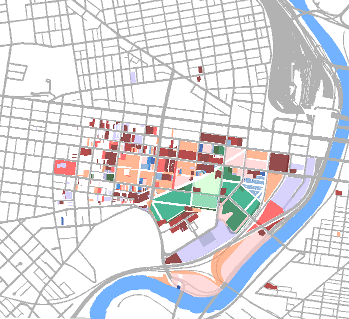
For being a mere 254 years young, Penn is a pretty big place and continues to grow each day. While this interactive map provided by University Archives might not be the most comprehensive (no street names, no Penn Park), it still provides a very interesting glimpse at the university’s expansion since moving to West Philly in the late 19th century. Want to compare land acquired in the early aughts to that of 1870? Click away, my friend.

Leave a comment

Filed under Uncategorized

It’s Cold Outside!

By Kiera Reilly, C’93  @kierareilly

I work in Penn’s Los Angeles office, and I always enjoy returning to campus for some seasonal weather. When I was back on campus the last week in February for campus meetings and the annual Penn Alumni board retreat, I was treated to a real winter blast.

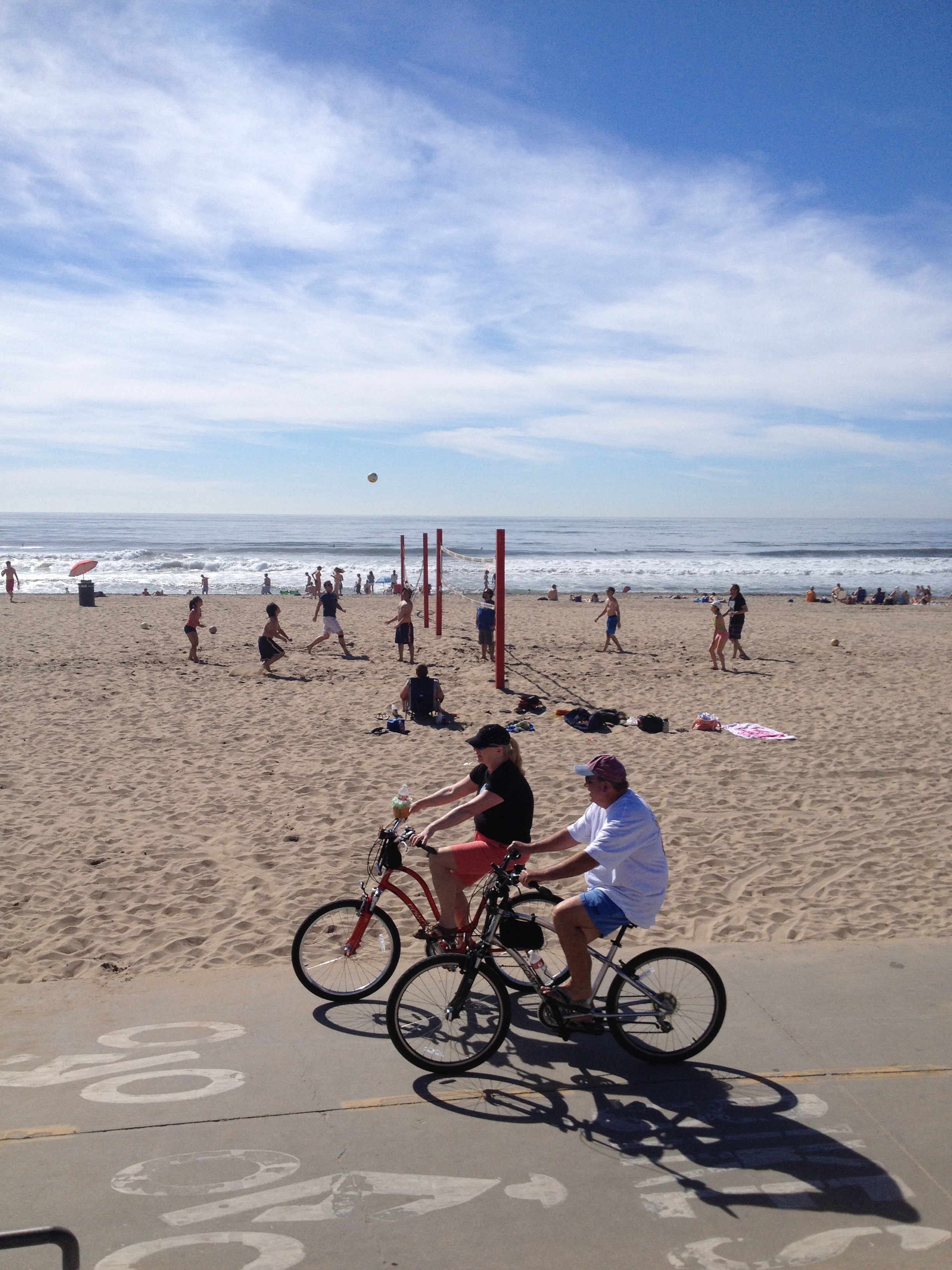
I left this in Los Angeles….

Sunny and warm in California (Manhattan Beach, CA)

Sunny and warm in California (Manhattan Beach, CA)

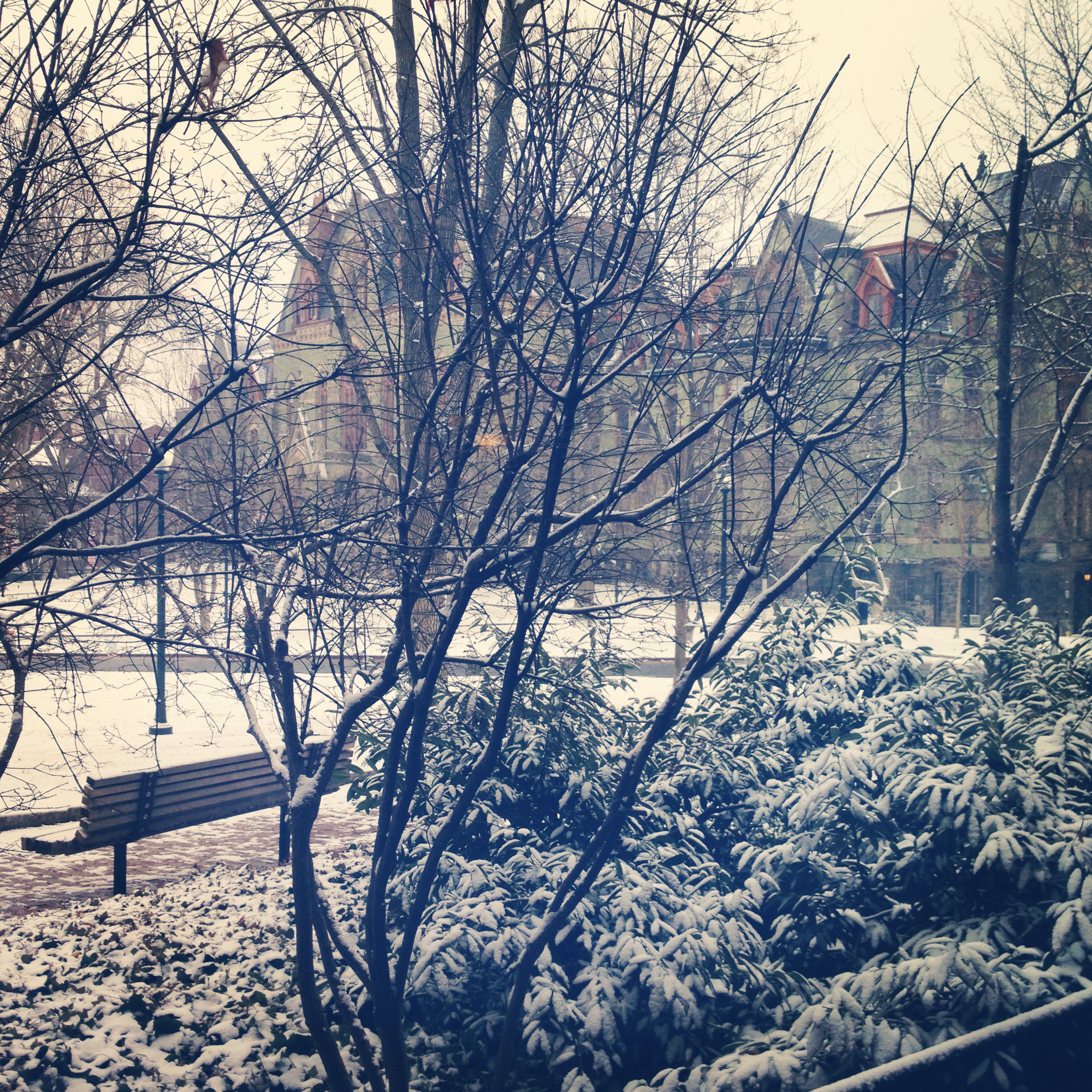
And arrived for a week of cold weather and some snow!

Snow falling as seen from my temporary office in the Sweeten Alumni House

Snow falling as seen from my temporary office in the Sweeten Alumni House

My Sweeten House colleagues were less than excited to see more snow given the harsh winter this year, but I couldn’t have been more thrilled. I even enjoyed bundling up in all my winter clothes that I never get to wear in Los Angeles, especially on Friday, when the temperatures were in the teens.

Cold temperatures!

Cold temperatures!

Bundled up in a sweater, a down jacket, a hat, a scarf and gloves! Brrr!

Bundled up in a sweater, a down jacket, a hat, a scarf and gloves! Brrr!

College Green looking magical in the snow.

College Green looking magical in the snow.

The next time I’m on campus, for Alumni Weekend, campus will be lush and green and in bloom for spring.


1 Comment

Filed under Kiera R., Photos, View from Sweeten, West Coast Regional Office

The More Things Change, The More They Stay The Same

Author: Liz Pinnie

Yesterday a friend from Admissions stopped by the Interview Program Office for a cup of coffee during his break from sitting in committee (yes, it’s that time of year!).  As he melted into a chair and took a slug of his coffee, we started to chat about his impressions on reading hundreds upon hundreds of interviews.

What has recently struck J. about interview reports is the ability of interviewers- of all Penn class years and schools- to touch upon those certain qualities that makes Penn Penn, and a Quaker a Quaker.  Interviews took place via skype, phone, and in person conversation all over the world this year- from Dubai to Detroit, from Slovakia to Santa Monica- from alumni ranging in age from 22 to 85.

In 64 years, there have been a few changes at Penn- a transition from typewriters to computers to tablets, the conversion from Penn-specific building to community oriented growth in West Philadelphia, the evolution from weekly letters home to dorm hall phone calls to texts, the creation of Locust Walk as a pedestrian thoroughfare, the full integration of women to the University, and growth through eight different Presidents (among a few other changes- The Arch, anyone!?).

However, what we’re seeing from interview reports is that the more things change, the more they stay the same.  Throughout Penn’s past, a passion for activity both inside and outside of the classroom has remained, along with a desire for growth in knowledge, a hunger for integration, and excitement for innovation.

Over 12,000 of your fellow alumni are discovering students with these indelible Penn qualities from all over the world through interviews- if you’d like to help, join the Interview Program by clicking here, and share with us what you think makes a Quaker a Quaker.


Leave a comment

Filed under Campus Life, Historical, Interview Program, Liz P., Memories of Penn, Uncategorized, Volunteering

Penn Alumni Travel: Cuba 2

Author: Professor Gwendolyn DuBois Shaw, Department of Art History

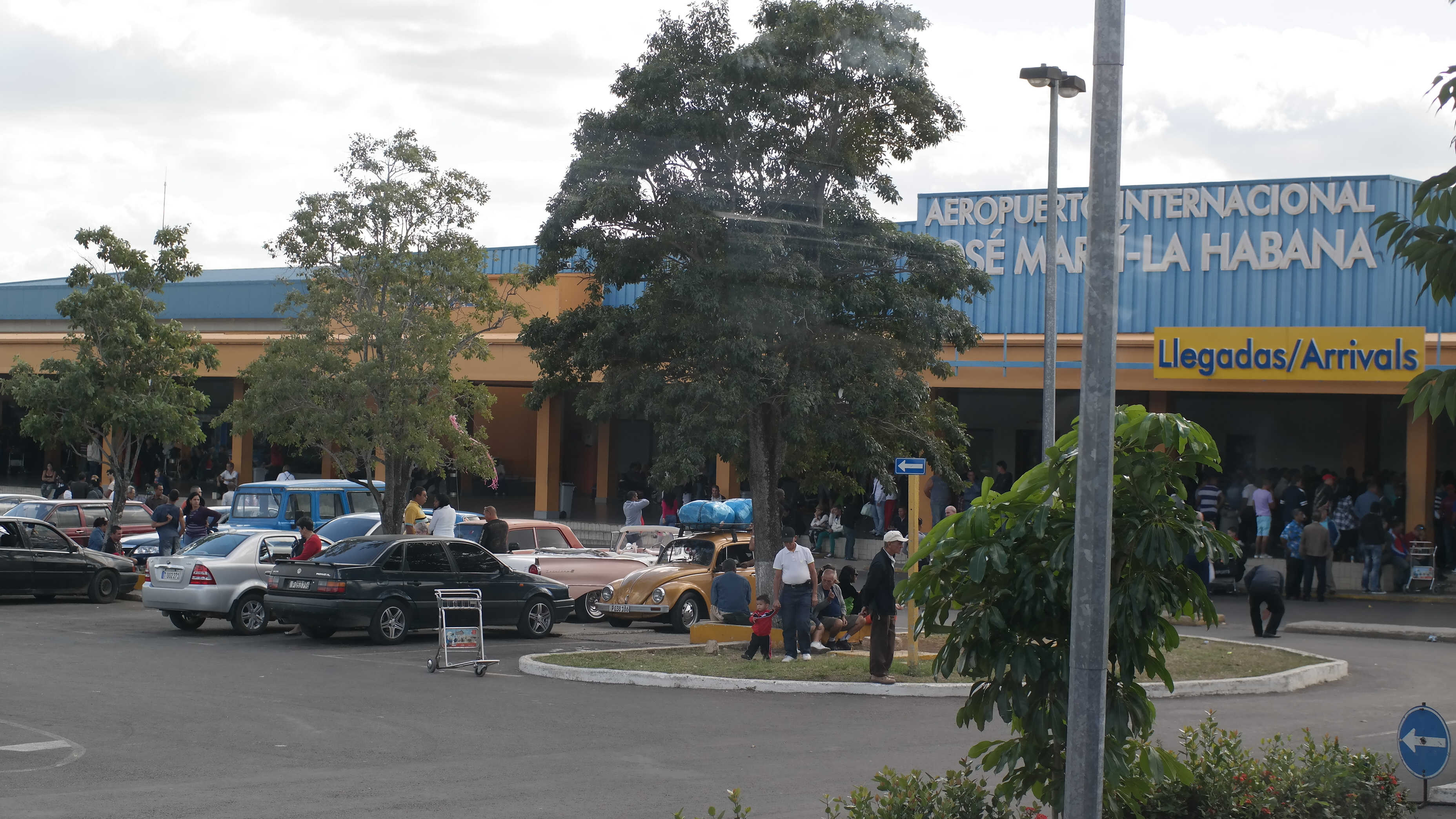
From the moment that our plane landed at José Marti Airport in Havana I knew that this Penn Alumni Travel trip would be very different from ones that I had accompanied previously to places such as France, Spain, Argentina, and Chile.  After having successfully passed through immigration and while waiting for our luggage, my husband and I were waylaid as a young women in an official brown uniform began to interview him about his reasons for traveling to Cuba.  She wanted to know what he planned to do while there and what things he had brought with him.  The questions were not particularly invasive, but they did seem to be endless.  As he submitted to this plodding interrogation in the middle of the baggage area, we waited and waited for our suitcases to come off the carousel.

The José Marti Airport in Havana

The José Marti Airport in Havana

After about 20 minutes, the airplane’s cargo began to slowly emerge from the behind the black rubber flaps of the handling area and onto conveyor.  Typical of many flights that I have taken to Latin America and the Caribbean, they included a large number of items that were swathed in the bright blue plastic wrap on offer at most international airports as cheap protection against both spillage and curious fingers.  In this case, rather than swaddling mostly soft-sided suitcases and duffels that are not easily locked, the plastic also covered all sorts of odd-shaped packages.   Some of these had funny protrusions that I soon began to recognize as canned food and other grocery items.  This piqued my interest and the novelty of it quickly distracted me from the banal questions with which the official was peppering my husband.  I began to look a little harder at the things that my fellow travelers were bringing into Cuba from Miami.

While we waited for our luggage to emerge, I saw several doors, a 60-inch television, countless boxes, and many enormous suitcases drop down on the conveyor. Most of the items that had once been wrapped tightly in the blue plastic had now been cut open so that the curiosity of the Cuban officials — or perhaps the United States officials back in Miami — could be satisfied that their contents were permissible.  As remarkable as this display of highly eclectic consumer activity was to me, it soon made sense when we arrived at our hotel in Central Havana and began to explore the immediate neighborhood.  There were only a few shops and the ones that we ventured into hardly had anything for sale on their shelves.

A shop in Havana

A shop in Havana

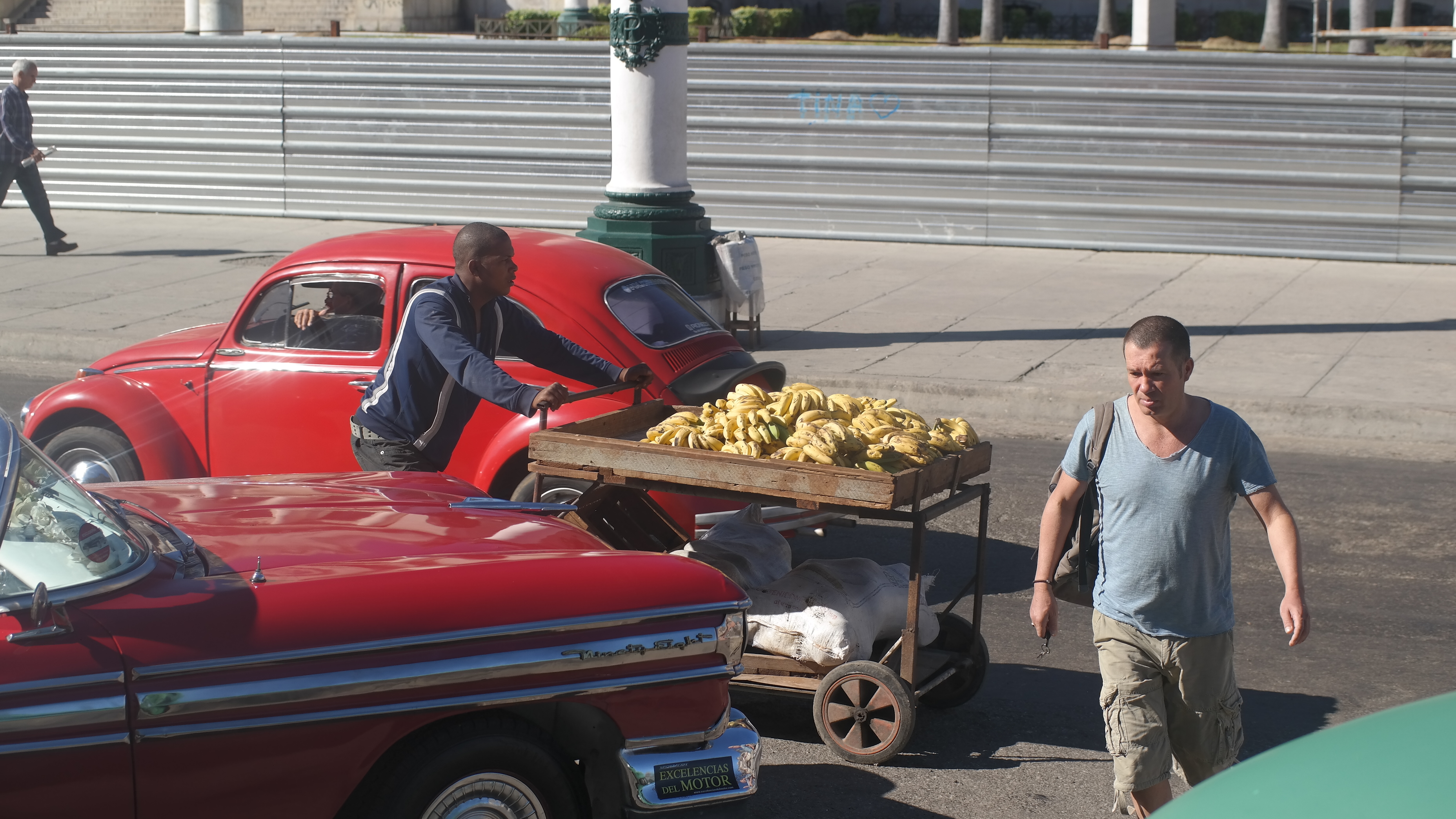
Street commerce

Street commerce

In the weeks leading up to our trip, I had asked friends and colleagues who had been to Cuba in the past few years about how much money they recommended I bring on the trip.  I was curious about this due to the financial restrictions that travelers from the United States encounter.  Under the current embargo, the Cuban government is not permitted to do any business with US banks — ATMs and credit cards issued by US banks will not work there — so one must bring cash in hand when traveling to Cuba. In addition to the query about money, I also asked people what sorts of things they had brought home.  They all remarked that they had purchased very little as there simply was not very much to buy, regardless of whether or not the items were “permitted” under the embargo (more on this farther down).  I did not fully understand what they meant until I saw the many, many empty shelves in the Havana shops. It was then that I began to understand the impact of the US embargo, what the Cubans call el bloqueo or the blockade, which not only makes everyday life incredible difficult for the average Cuban.  Unless Cubans have access to international travel and foreign currency, it is nearly impossible for them to buy many of the simple things that they need, such as the doors and canned food that I saw sticking out of those blue plastic wrapped packages at the airport.
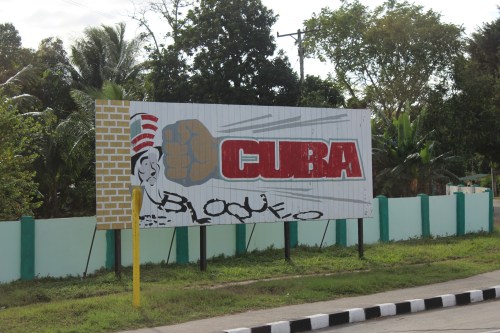
Blockade sign outside Havana

Blockade sign outside Havana

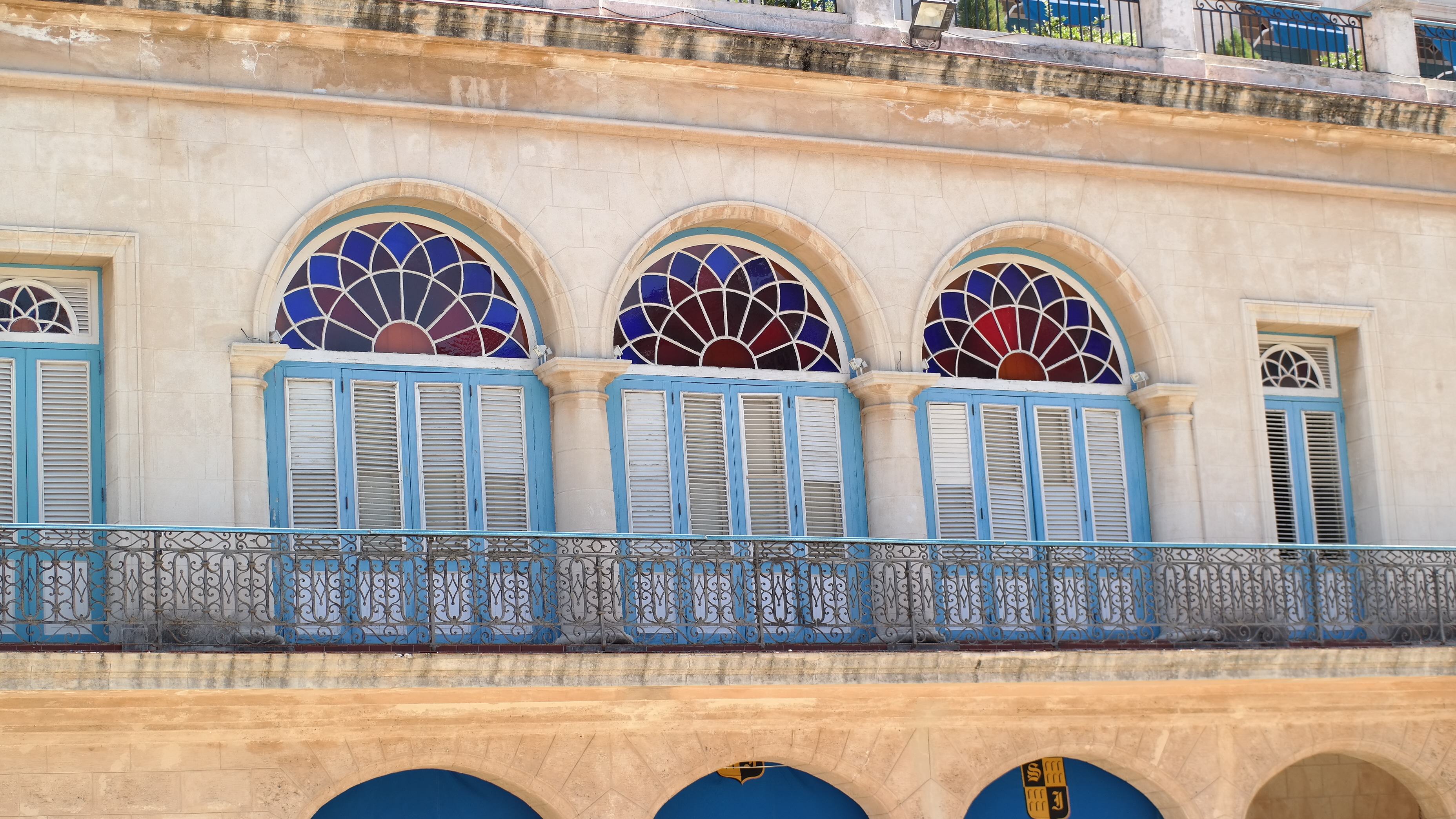
One of the highlights of the trip for me was a guided walking tour of the UNESCO World Heritage site centered in Old Havana.  There we saw the city’s incredible colonial architecture, which dates back to the 1500s and is currently being restored by Habaguanex.  A national company run by the Cuban government, Habaguanex uses the profits from a group of hotels that it runs in Old Havana and Central Havana to fund the restoration and reconstruction of various buildings in the historically significant parts of the metropolitan area.  Prior to receiving the UNESCO designation and the accompanying funds it provided, many of the buildings in this part of the city were disintegrating into the barely functional ruins that today characterize much of the once-spectacular Cuban architectural landscape.
Detail of Old Havana architecture.

Detail of Old Havana architecture.

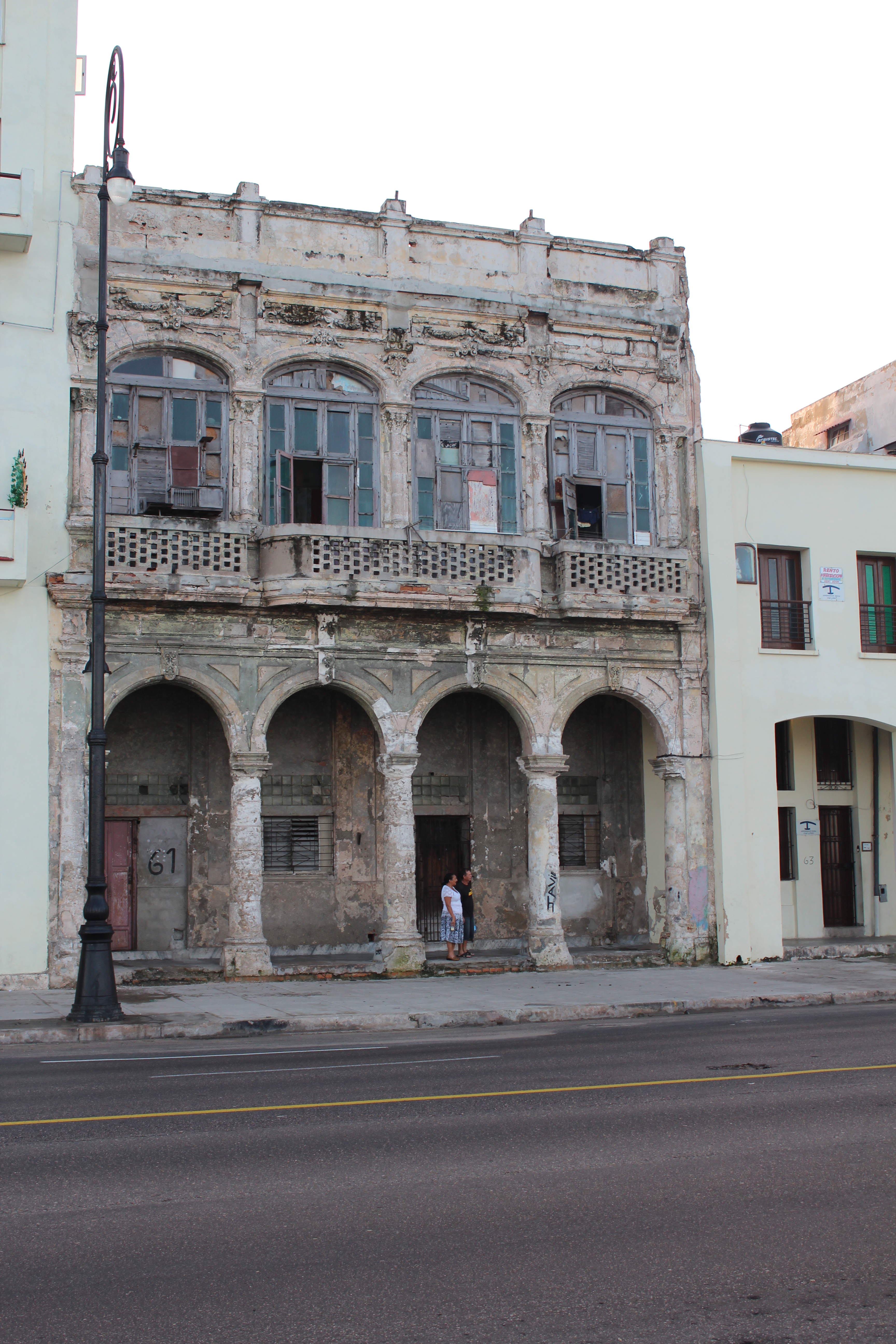
The key element in the spiraling disintegration of Cuban architecture, which began following the Revolution over 50 years ago, has been the arcane rules governing property in the communist state. The communist real estate laws that govern multi-family dwellings, which include most of the three and four storey apartment buildings in Havana, seem to make little practical sense (to me at least).  Under Cuban law, families are responsible for the upkeep of their own apartments, but nobody (except for the State, perhaps) is responsible for the upkeep of the building.  Therefore, unlike with co-ops or condominiums in the US, there are no superintendents on duty and little that goes wrong in the common areas, with the façades or the exteriors of buildings, is repaired.  While this is the situation throughout the island, its toll has been particularly acute in Havana, where an average of 3 buildings collapse each day.  This terrible situation makes the recent intervention of UNESCO both timely and welcome to both those who live there and to those of us who visit.  Since its founding in 1994, Habaguanex has facilitated the restoration of Old Havana using a two-pronged approach: 1) it trains youth in traditional construction and decoration techniques that have all but disappeared from practice, and 2) the renovations create a desirable tourist area, which in turn enables the process of restoration to proceed through the production of much-needed funds.  A win-win situation.

Buildings disintegrating
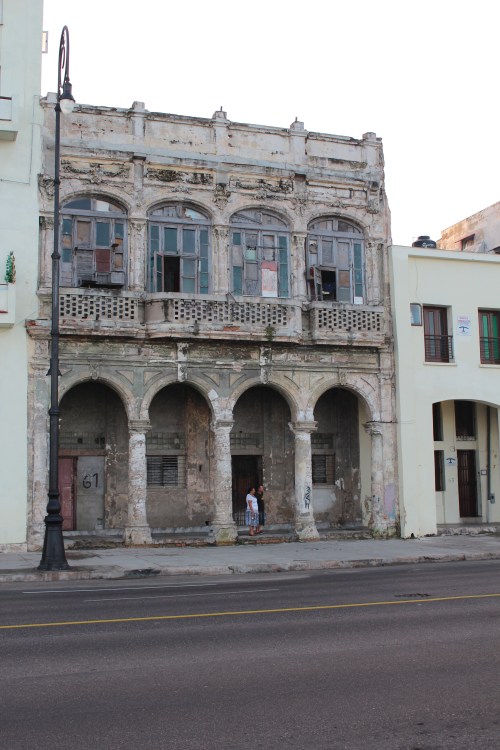
Buildings disintegrating

On the Malecon in Havana.

On the Malecon in Havana.

On our last night, after a week in Cuba, I began to repack my suitcases, neither of them were as large or unwieldy as the strange things I had seen coming off the belt when we arrived.  I had only a few books bought at the National Gallery, a couple of vintage posters from the used book market, and some CDs recorded by musical groups we had heard.  Unlike my experiences on other trips, where I sometimes have had to purchase an extra bag for my purchases (for example the Paris to Normandy cruise I took with Penn Alumni Travel in June of 2013 where a new summer wardrobe and several bottles of aged Calvados were acquired) this time it was pretty easy to fit these things in.  Such “informational materials” are the only items that one is permitted to legally bring back to the United States, and as the faculty host I was “playing it safe,” having resisted the lure of the myriad Che Guevara t-shirts and Cuban flag-adorned aprons and bric-a-brac.

At a contemporary dance workshop in Havana

At a contemporary dance workshop in Havana

Cuba is simply not the place to visit if you want to go shopping — Bermuda or the Caymans are the places for deals on Swiss watches and designer sunglasses.  However, if you are interested art, music, dance, and architecture, then Cuba is a revelation.  Thanks to the experts at Academic Arrangements Abroad, who organized our trip on behalf of Penn Alumni Travel, during our week in Cuba we experienced the very best of these things that the island had to offer.  I will leave it to Alyssa D’Alconzo, Director of Alumni Travel and Education at Penn, who also traveled on my departure to discuss more of the amazing activities we experienced. (Look for Alyssa’s blog on March 27th.)  Now, less than a month later, I am actively making plans to return to Cuba soon (perhaps with some Penn Art History students in tow) and see more of this complex and marvelous country.
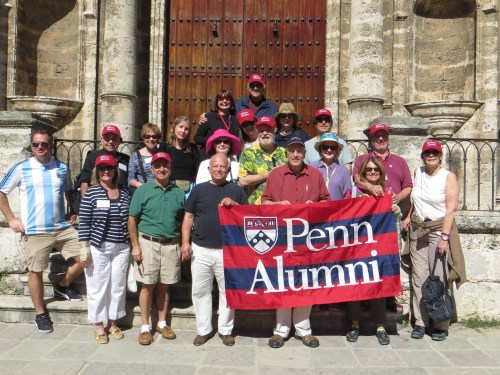
Penn alumni and friends at the Havana cathedral.

Penn alumni and friends at the Havana cathedral.

[Interested in travel to Cuba? Penn Alumni Travel will be returning February 14-21, 2015. Email Emilie C. K. LaRosa at emiliek@upenn.edu to be added to a priority reservation list.]

Leave a comment

Filed under Faculty perspective, Penn Alumni Travel, Travel

Open House

Author: Michelle Ho, ENG’14

Recently I was given the opportunity to be the student speaker at the Collaborative Classroom Open House.  The Collaborative Classroom is a new classroom on the first floor of Van Pelt Library, off the hallway leading to Weigle Information Commons.  From the way the classroom furniture is arranged to the cutting-edge technology in the room, the design of the Collaborative Classroom aims to facilitate active learning.  In the classroom, active learning can take the form of problem solving in teams, peer reviewing written work, or delving into a case study, among other activities.  To help facilitate these activities, students sit at round tables and face each other, instead of in rows where they face the professor.  Each table has its own dedicated projector system where students can plug their own laptop or tablet and display what they are working on.  The walls on the classroom also double as whiteboards and projection screens so you can annotate directly over what you are projecting.  This semester there are nine courses such as social policy and practice, geology, and writing seminar being held in the Collaborative Classroom.  Imagine how much more interactive writing seminar could be if you edited a piece by projecting it on the wall and having classmates take turn making edits by writing over it for the table to see.

OPENNed blog1

So how did I get to become involved with this?  Well, the Collaborative Classroom is actually a joint project between the Penn Libraries and the Student Committee on Undergraduate Education (the branch of Penn Student Government that I am a member of).  The idea for the Collaborative Classroom came from two previous SCUE Chairs, Scott Dzialo and Joyce Greenbaum.  Together, they envisioned that having a space like the Collaborative Classroom on campus would allow for SCUE initiatives such as problem solving learning (PSL) and the flipped classroom to be possible.  Unlike previous SCUE projects like building Penn Course Review, instituting Fall Break, and implementing pass/fail grading, there were physical roadblocks – in terms of finding and configuring space – in addition to administrative and policy roadblocks.

After meeting with people across campus, the construction for the classroom was made possible by two Penn alumni, Larry Bass (W’67) and Chuck MacDonald (W’81).  As one of the founding members of SCUE, the Bass family embraced the idea of the Collaborative Classroom and saw it as a way to commit to SCUE and the Penn Libraries.  The MacDonald family matched this gift and also made possible an Innovation Fund to support the classroom.  The Open House was a way to thank the donors and also show off the classroom to faculty and students.  As Mr. Bass and his family were able to attend the Open House, it was a fantastic opportunity for SCUE members to meet one of the founding members of our organization and get a front-row perspective about the history of our organization.  The generosity and input of the Bass family has shown that participation in any extracurricular opportunity at Penn doesn’t have to end with graduation.  At SCUE in particular, we have been inspired to start an Alumni Newsletter and plan alumni get-togethers.  Moving forward, we are excited to collaborate with the Library and also faculty members to develop more courses for the Collaborative Classroom.  Of course, we are also looking forward to working more with our alumni!

OPENNED blog2OPENNed blog3

Leave a comment

Filed under Academics, Alumni Programming, Campus Life, Michelle Ho, Student Perspective, Uncategorized