Category Archives: Campus Life

Falling for Fall

Author: Emily Siegel

I love fall. I love the changing colors and the crisp nights.  Not only that, but fall represents a new year of possibility.  Sure, technically the new year begins in January, but every September since I started kindergarten, the beginning of a school year has brought with it a tickling sense of possibility; the chance to start fresh.  First off, there’s the delight in new school supplies. Out with the worn-down crayons and colored pencils, and in with the pointy-sharp array of the latest trend in colors.  In anticipation, I practically spent all summer debating what design would my Trapper Keeper have this year… bunnies or hearts or horses!?!?!?  Oh, the possibilities!  SUCH. A. DILEMMA.   Most often, I picked horses.

And then, there’s also back to school shopping for clothes and imagining the first day of classes, showing up in a brand new outfit—new shoes, new haircut, new outlook. And the curiosity about my classes and schedule—what my teachers would be like, who I’d be sitting next to in English, if any of my friends would have lunch period with me.  Fall has always seemed like the time for the greatest potential. You don’t know exactly how the year will go, but the chance to start fresh feels like each September brings a new beginning.

One of the things I love most about working on a college campus is that this same anticipation is palatable at the start of every semester.  Right now, prospective students are flooding the campus, with wide-eyes as they learn about and explore the university, trying to picture what their life might look like if they end up studying at Penn.  The excitement in their eyes reminds me of my own college search as I explored different schools and pondered where I might spend those life-changing four years.

As current Penn students slowly trickle back to campus, you can sense their excitement about the upcoming year too – new classes, new friends, new opportunities. The feeling is infectious.

In fact, it’s so contagious that I found myself perusing Penn’s course catalog and dreaming about what class (or classes) I could take this year. Do I sign up for something practical and related to my career like “History of American Higher Education?” Or, do I refine my Spanish speaking-skills by taking “Advanced Conversation?” Or, do I choose something out-of-the-box like “Furniture Design” and learn how to make the ottoman that I’ve been searching for over the last year?  So many options!

I think it’s precisely this sense of the many possibilities that makes this season so exciting. I’d love to know how others are thinking and feeling about the back-to-school aura on campus.  What possibilities of the coming season are you most excited about? And, perhaps most importantly, what kind of Trapper Keeper did you choose?

2 Comments

Filed under Academics, Campus Life, Emily S.

Safety On-Campus

Author: Lex Ruby-Howe, C’07

With New Student Orientation (NSO) now just three weeks away, the campus is starting to busy with preparations for the hive of activities that welcome new and returning students to Penn’s academic and social life.

Last night, representatives from the hubs and centers across campus headed to Bodek Lounge to present their wares to the 100 or so pre-freshman program (PennCAP) students, in a hope to orient them to the soon-to-be-alive campus and all it has to offer.

While the excitement of joining their 2400 peers at NSO looms, some of those students will, after a summer of relative freedom, be stepping into a somewhat restrictive environment.

The City of Philadelphia has experienced several spontaneous, and somewhat destructive, flash mobs this summer, and is taking action to ebb the flow of youth to the streets. These mobs have seen hundreds of young folks taking to the streets, and in some instances causing damage to businesses and storefronts.

The Mayor’s Office is enforcing a pre-existing city-wide curfew. The curfew will be most heavily implemented (and policed) in Center City and University City. Details of the curfew can be found here –but minors under the age of 18 must be inside from 9 PM-6 AM every day, or accompanied by an adult 21 or over.

Mayor Nutter Presenting the New Curfew Plan

After a presentation by a detective from Penn’s Department of Public Safety at the resource fair last night, the PennCAP students became concerned they’d be stopped or face punishment when walking back from class each evening. Penn’s Divison of Public Safety is making sure any individuals under 18 who are Penn affiliated have as much information about the curfew as possible, and act responsibly if they are challenged. They are taking measures to ensure students always carry identification, and if stopped suggest the students mention their participation in the PennCAP program and should not face any problems.

The campus community should be glad that safety is of the utmost priority. The students will no doubt benefit from the actions the City of Philadelphia is taking to make sure our their 2400 undergraduate students peers are safe come September too.

City of Philadelphia Curfew Map

Leave a comment

Filed under Academics, Alumni Perspective, Campus Life, Lex. H., Philadelphia

Paradise Found

Author: Colin Hennessy

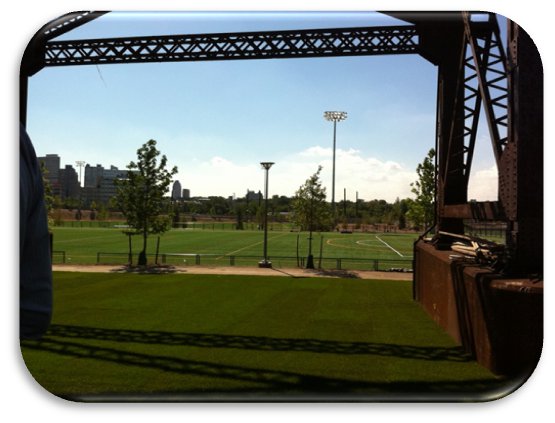
How does the song go? “Pave paradise and put up a parking lot?” Well, not at Penn. We took 24 acres of concrete and asphalt and transformed it into a vast urban park. New sporting fields and walking paths combine to create a lush oasis on the eastern boarder of campus, an oasis this Penn employee cannot wait to visit – regularly.
I had the opportunity to take a tour of the still-under-construction park today and was thrilled with what I saw and learned. In addition to the vast amounts of new green grass and over 500 expertly-selected trees (thanks to our friends at the Morris Arboretum), the park has been constructed with sustainability and green land use in mind. Subterranean rain water collection cisterns will feed irrigation for the freshly planted trees and grasses, while accessible paths and access bridges allow easy admission to all members of the Penn community.

When I last wrote about Penn Park in April, the ground was still cold and the progress seemed sluggish. However, following my tour today I am very excited about the massive park that is literally coming out of the ground just a few strides from my office.

I invite you to come back to campus when Penn Park is complete in September, and take part in this beautiful redevelopment project that was built, in large part, because of generous alumni support. You can play tennis, bike around the park, or simply sit and daydream in the grass while enjoying a view of the beautiful Center City skyline. I promise you that Penn Park not disappoint.

2 Comments

Filed under Campus Life, Colin H., Penn in the Summer, Penn Park

Making History…Living History

Author: Lisa Vaccarelli, C’02

It’s easy to take for granted the amount of history that surrounds you at a place like Penn – especially when you spend so much of your time on campus that it begins to feel like your second home.  For example, my office building – the Sweeten Alumni House – originally housed the Delta Tau Delta Fraternity.  It was in the mid 1960’s after a fire – allegedly set off at a holiday party when a fraternity brother fell asleep with his cigarette too close to a crepe paper snowman – took the life of at least one young party-goer that the building eventually fell into the hands of the alumni association.  And yes, there are plenty of rumors about the ghost of said party-goer haunting the 2nd floor ladies room.  However, on a daily basis, one gets caught up in emails and phone calls and meetings and quickly forgets all of this.

Ironically, it was a recent trip off-campus that reminded me about Penn’s historical context.  Last week, as a previous blogger mentioned, the entire Alumni Relations staff headed down to 310 S. Quincy Street for a day long staff retreat at the Mask and Wig Clubhouse.  Most Penn alumni and friends are very familiar with the all male comedic theater troupe, the University’s oldest student group founded in 1888.

Mask and Wig Grill room circa 2010

Not as many, I would suspect, have had the chance to visit the group’s clubhouse, acquired in 1894 as a gathering place and rehearsal hall.  As per the Mask and Wig website:

Prominent Philadelphia architect Wilson Eyre was commissioned to convert the building, which had previously served as a church, a dissecting room, and a stable. He hired the young Maxfield Parrish, who would later become one of the greatest illustrators of the twentieth century, to decorate the interior.

Indeed, it is hard not to appreciate this history when you walk into the Mask and Wig Clubhouse.  The Grille Room – a wood-paneled bar/lounge on the first floor – is decorated with caricatures of members; a tradition that continues today, with the second century of members’ caricatures continued upstairs at the entrance to the theater.  Next to each member’s caricature is a peg for their personal mug, which they alone can take down and use when present.  Despite recent renovations to provide facilities for handicap accessibility, including an elevator, as well as air conditioning, the Clubhouse retains its authentic, historic atmosphere.

Mask and Wig Grille Room circa 1910

Next time you come to campus, I encourage you to take a moment to stop and take a moment to take in the history that surrounds you.  Maybe even read one of the plaques on those statues you’ve whisked past dozens of times before on your way to class or a reunion party.

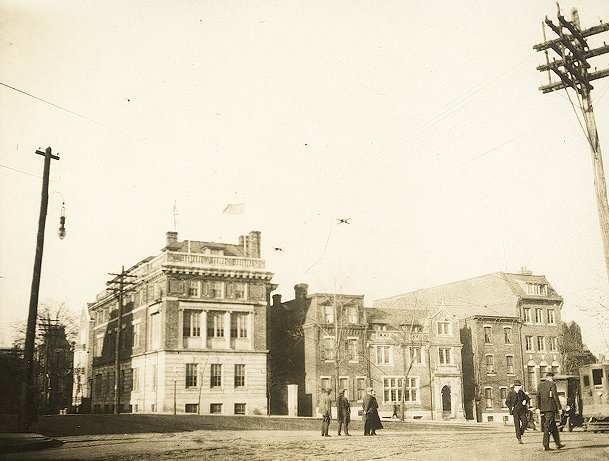
Woodland Walk (aka Locust Walk) circa 1915

Leave a comment

Filed under Alumni Perspective, Campus Life, Historical, Making History, Memories of Penn

My Top Penn List: “Do Over”

Author: Casey Ryan, C’95

Working in academia, I have so many opportunities for education, whether it’s taking a class, listening on a guest lecture, or visiting one of the many museums on campus.  The one thing I can’t do is revamp my undergraduate career.  Recently, while checking out the 2011-2012 course register for potential graduate level classes, I found myself wishing that some of the currently-offered undergraduate classes were available when I was a student.  Here are the 10 elective courses I would have liked to have taken if I could get a “do over” (some descriptions have been edited for length).

10.          LING051 (Linguistics) Proto-Indo-European LanguageNoyer.

Most of the languages now spoken in Europe, along with some languages of Iran, India, and central Asia, are thought to be descended from a single language known as Proto-Indo-European, spoken at least six thousand years ago. Speakers of Proto-Indo-European eventually populated Europe in the Bronze Age, and their societies formed the basis of the classical civilizations of Greece and Rome, as well as of the Celtic, Germanic and Slavic speaking peoples. Students will learn the basis of reconstructing a language and explore the culture and society of the Proto-Indo-Europeans and their immediate descendants. In addition, we will examine the pseudo-scientific basis of the myth of Aryan supremacy, and study the contributions of archaeological findings in determining the “homeland” of the Indo-Europeans.

9.            ENG 019 (English) History of the English Language.

This course traces the history of the English language through English literary history, from Anglo-Saxon England to 21st-century America. We will consider the relationship between different language systems (e.g., syntax, morphology, orthography, grammar) and the relation of those systems to the literature of different historical periods. We will also consider the social and political events influencing language change, such as the introduction of Christianity, the Norman Conquest, the printing press, colonialism, educational policies, and mass media.

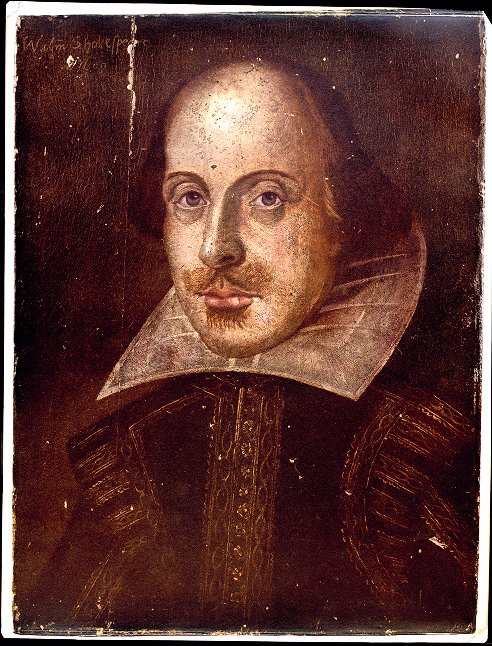
Image courtesy of the Furness Theatrical Image Collection

8.            HIST 050 (History) England and the British Isles to 1707. Todd.

The subject of this course is the history of the British Isles from the Roman Conquest in 43AD to the creation of the United Kingdom in 1707. Between these two dates the various societies and cultures in the British Isles were brought into the orbit of the Roman Empire, converted to Latin Christianity, and developed distinctive cultures and strong ties with the Continent. From the twelfth century on, the kingdom of England began to exert its power over Wales, Ireland, and Scotland. The Anglo-Norman continental empire of the Plantagenet dynasty also played a large part in shaping the English monarchy, as did the playing out of the Hundred Years War, the internal divisions in fifteenth-century English society, and the rise of the Tudor-Stuart dynasty.

7.            PHIL018 (Philosophy) The Idea of Nationalism. Steinberg.

Nationalism is one of, if not, the major geo-political forces of the past two hundred years. Its continuing power has been amply demonstrated by recent events in Eastern Europe and the Soviet Union. This course will focus on the conceptual and theoretical issues raised by competing notions of nationalism, rather than on its history or expression in particular cultures.

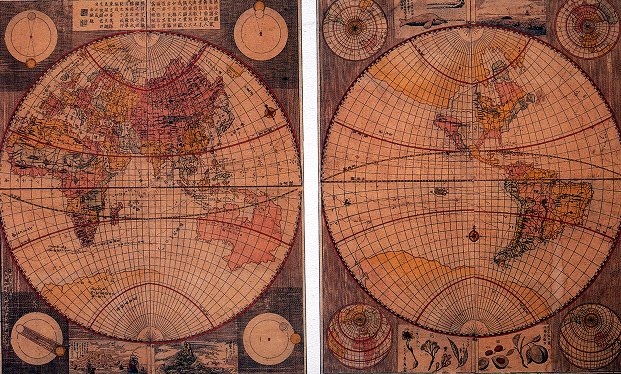
Image courtesy of the Fine Arts Library Image Collection

6.            URBS012 (Urban Studies) The History and Politics of Space. Schneider.

How do we understand the places in which we live? What is the relationship between workplace and home, downtown and suburb, inner city and gated communities, department store and mall, row house and ranch house? How are our lives defined by place? The city is a social and a spatial system, and its organization both reflects and reproduces social categories of race, class, and gender. The current city is also the product of past decisions about where to locate communities and how to allocate resources. Through reading sociological, historical, theoretical, and primary texts, through studying maps and photographs, and through your ethnographic explorations, we will explore the presence of the past in the city around us, the evolution of different kinds of urban and suburban places, and the encoding of wealth and power as well as inequality and poverty in the urban landscape.

5.            IPD509 (Integrated Product Design) Needfinding.

Needfinding is an approach that puts people and their needs at the center of product development and business strategy creation. Over 90% of new products introduced into the marketplace fail. A good portion of these failures are due to lack of understanding of end consumers and their needs. Designers and engineers need tools and techniques to get beyond what people can explicitly state and determine their implicit needs. In this class students will gain a tool set from which to develop their own approaches to conducting researching for design: learning how to think about other people, about culture, and about new perspectives. They will also learn tactical skills: how to define research questions, how to conduct observations and interviews, how to interpret results, how to synthesize them into fodder for design, and how to communicate their findings in a way that is compelling and actionable for designers, marketers, and business strategists.

4.            GSWS240 (Gender, Sexuality & Women’s Studies; Cross listed HIST240) Gender and Athletics. Miller.

Have women started to “play hardball” on a “level playing field” in the American sporting culture? From the commercial successes of the WNBA and World Cup Soccer to new studies that document the positive effects of athletics on girls’ self-esteem, women finally seem to be turning the American obsession with sports to their own advantage. This course will examine how physical fitness and organized athletics for men and women have both reflected and helped to create norms of masculinity and femininity over the past one hundred and fifty years.
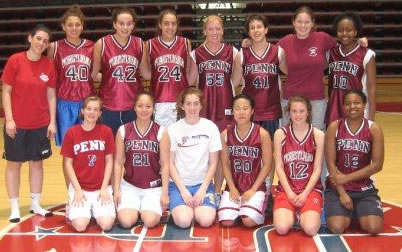
Image courtesy of the of Women's Club Basketball Team

3.            PSCI135. (Political Science; Cross Listed GAFL135 – Government Administration and HSOC -135 – Health and Societies) The Politics of Food. Summers.

This academically based community service seminar will explore the politics and institutions that have shaped – and continue to shape – food production and consumption. Students will use the readings, their community service, and ongoing “food events” at Penn to analyze the politics of food in many arenas: from farms, kitchens, supermarkets, schools, and communities of faith to corporations, research institutions, the media and international trade.

2.            MUSC014. (Music) Songwriting in the 20th Century. (M) Weesner.

This course will alternate between an analytical approach and a critical approach to the study of a wide range of songs composed throughout the 20th century. We will study musical techniques such as melody, harmony, form, rhythm, instrumentation, style, and text-setting. We will also pose far-ranging questions, such as, what makes a song a song? What makes a song a good song? What is the difference between an art song and a pop song? This course will occasionally focus on specific composers, such as Cole Porter, Charles Ives, John Harbison, and Liz Phair, and will also consider the musical ramifications of collaboration, covers and re-makes.

1.            ANTH 230 (Anthropology; Cross listed ANTH633) Forensic AnthropologyMonge.

This course will investigate and discuss the various techniques of analysis that biological anthropologists can apply to forensic cases. Topics include human osteology, the recovery of bodies, the analysis of life history, the reconstruction of causes of death, and various case studies where anthropologists have contributed significantly to solving forensic cases. Discussions will include the limitations of forensic anthropology and the application of DNA recovery to skeletal/mummified materials.
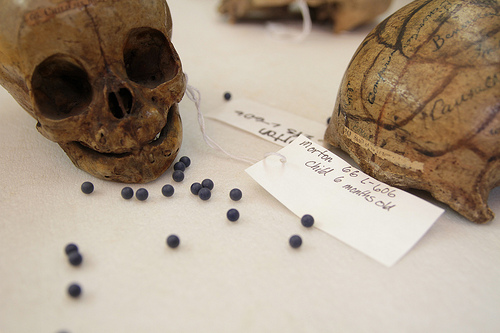
Image courtesy of the of Penn Museum Blog

I encourage you to wax nostalgic and peruse the course register, maybe your favorite class is still being taught by your favorite professor or you might find a course that inspires you to go out and learn more.

1 Comment

Filed under Academics, Alumni Perspective, Campus Life, Casey R., Top Ten

Big Dade on Campus (BDOC)

Author: Emily Siegel

Each year high school students flood the campus in the summer months to determine if Penn might be a good college fit for them.  As a top-notch research university it comes as no surprise the campus receives thousands of visitors each year, but it appears that Penn’s popularity knows no boundaries.  In a first for the University, Penn has officially garnered interest from the canine persuasion as well!

In a recent visit, Daedelus (“Dade” for short) dropped in to learn more about this great place.  Not wanting to discriminate based on fur; we gave him the royal treatment, showing him all that Penn has to offer!

So, we took him to where it all started – Ben Franklin.  He seemed quite impressed.

Dade and Ben are Friends

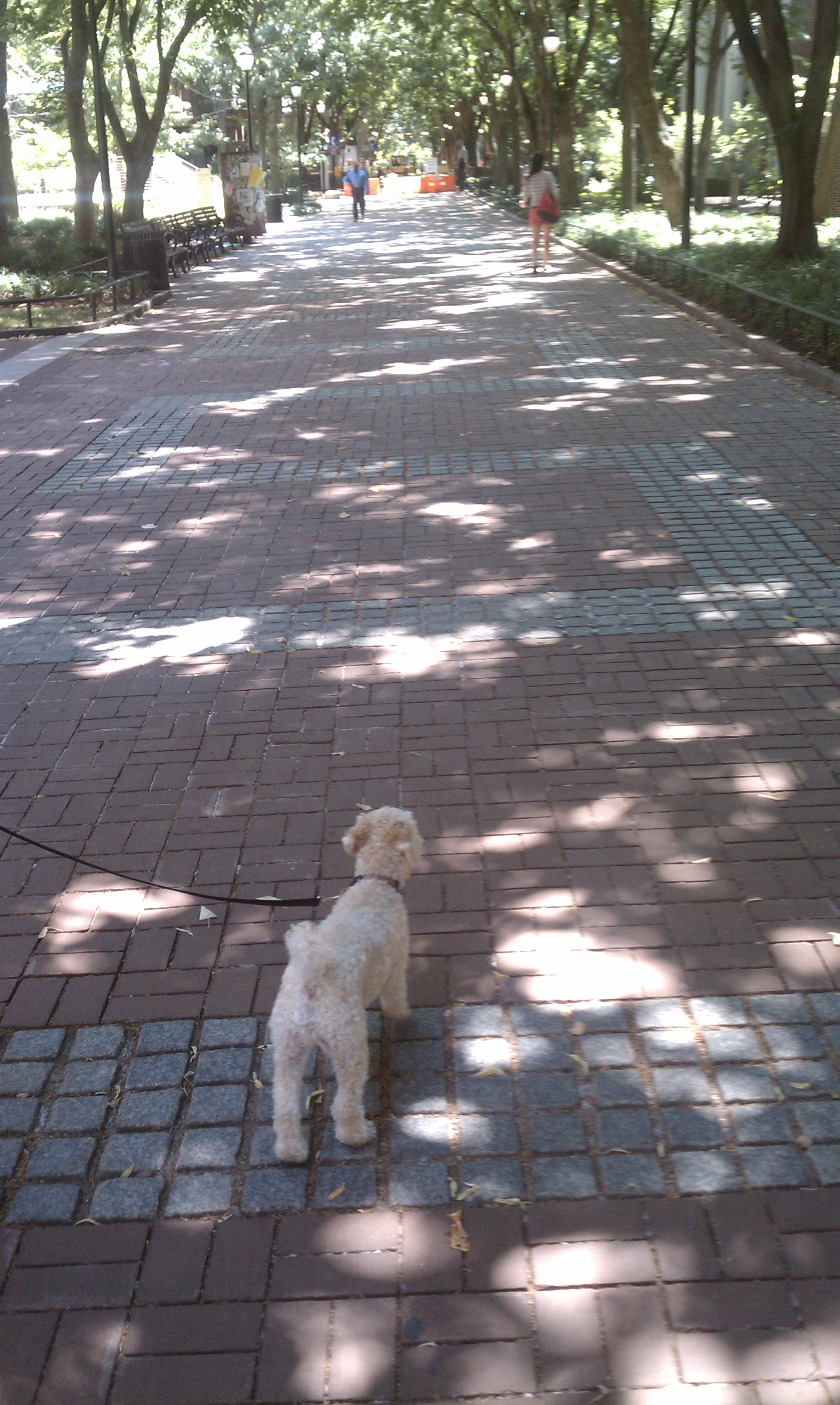
And any visit to Penn isn’t complete without a stroll down Locust Walk.

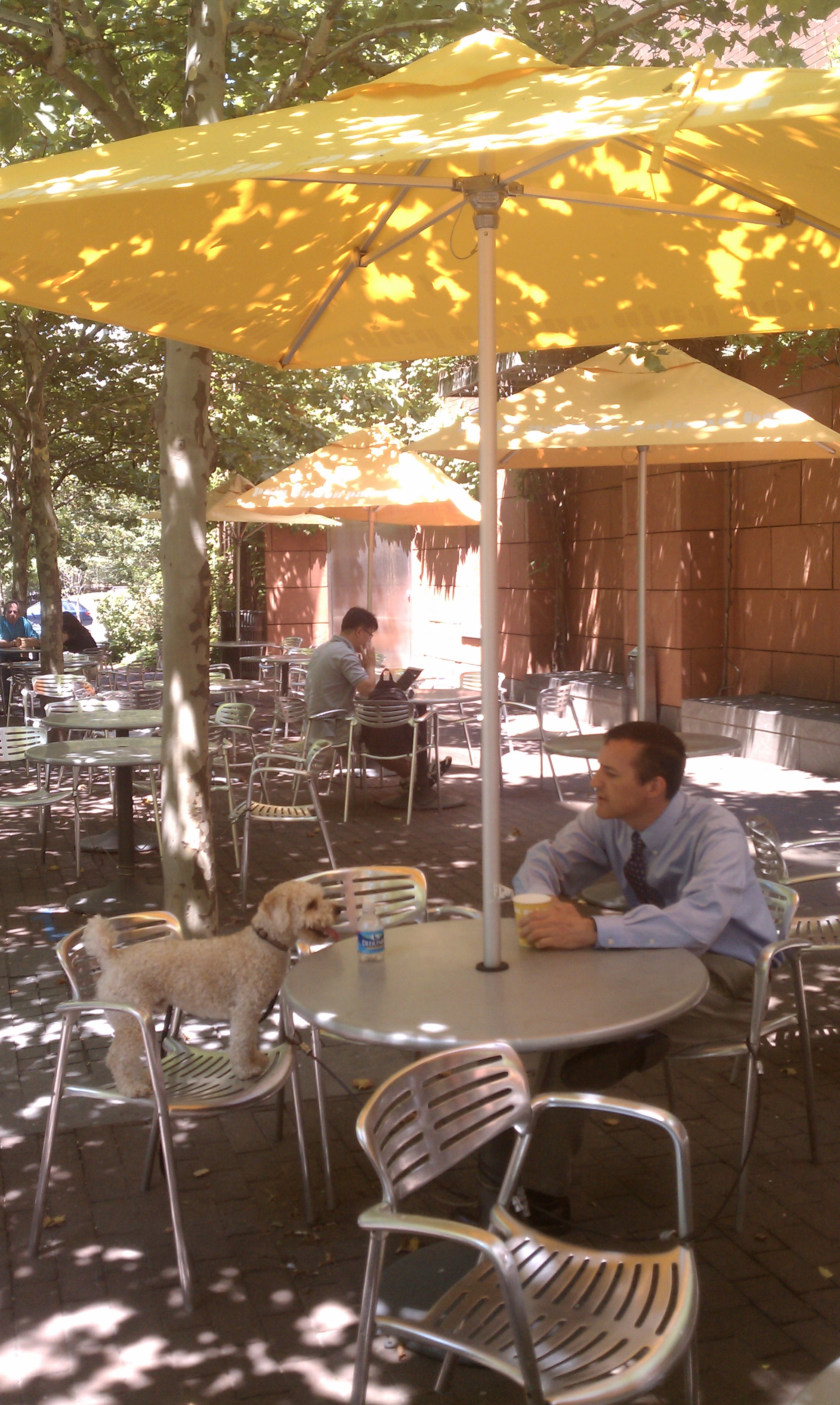
The sun-dappled Locust Walk

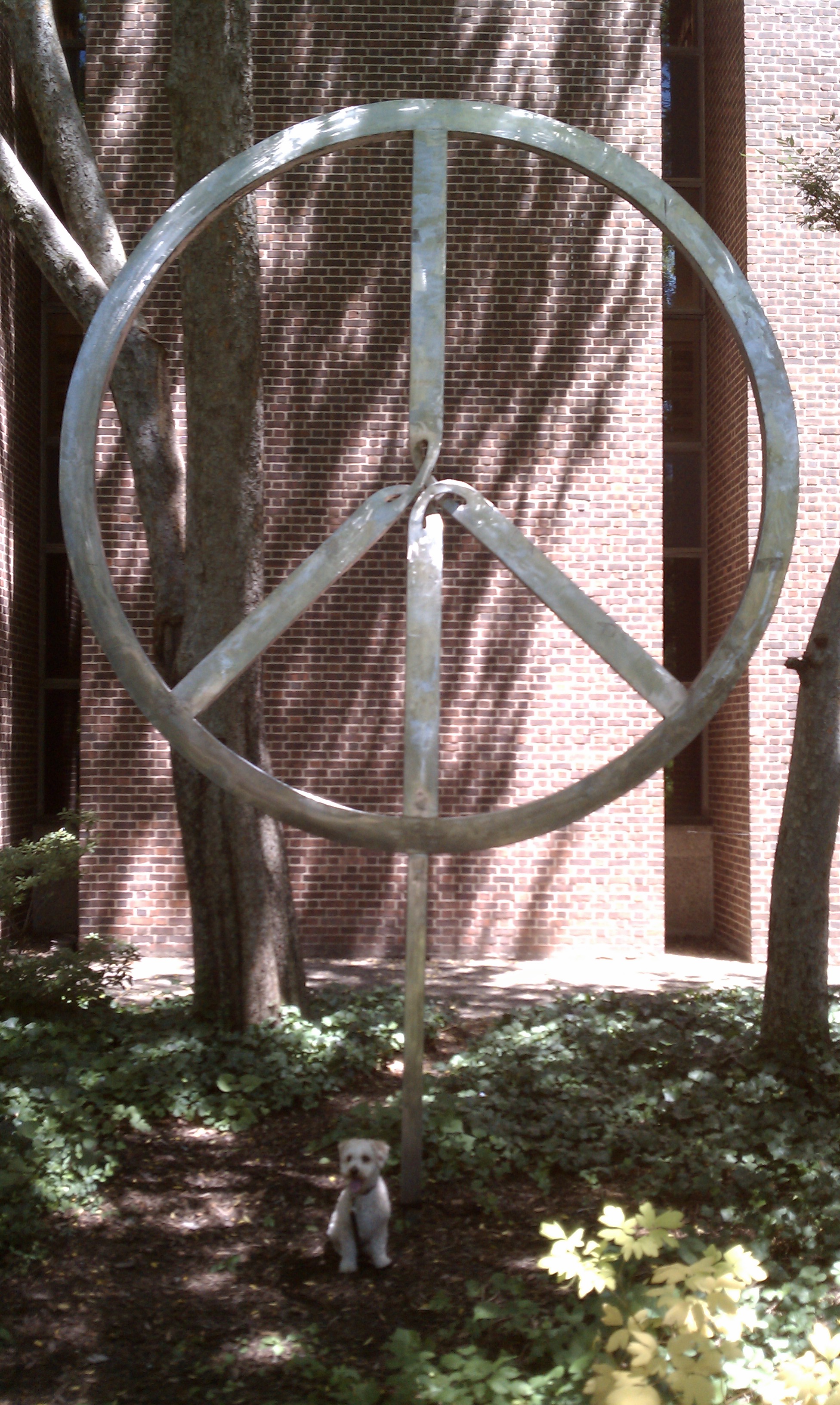
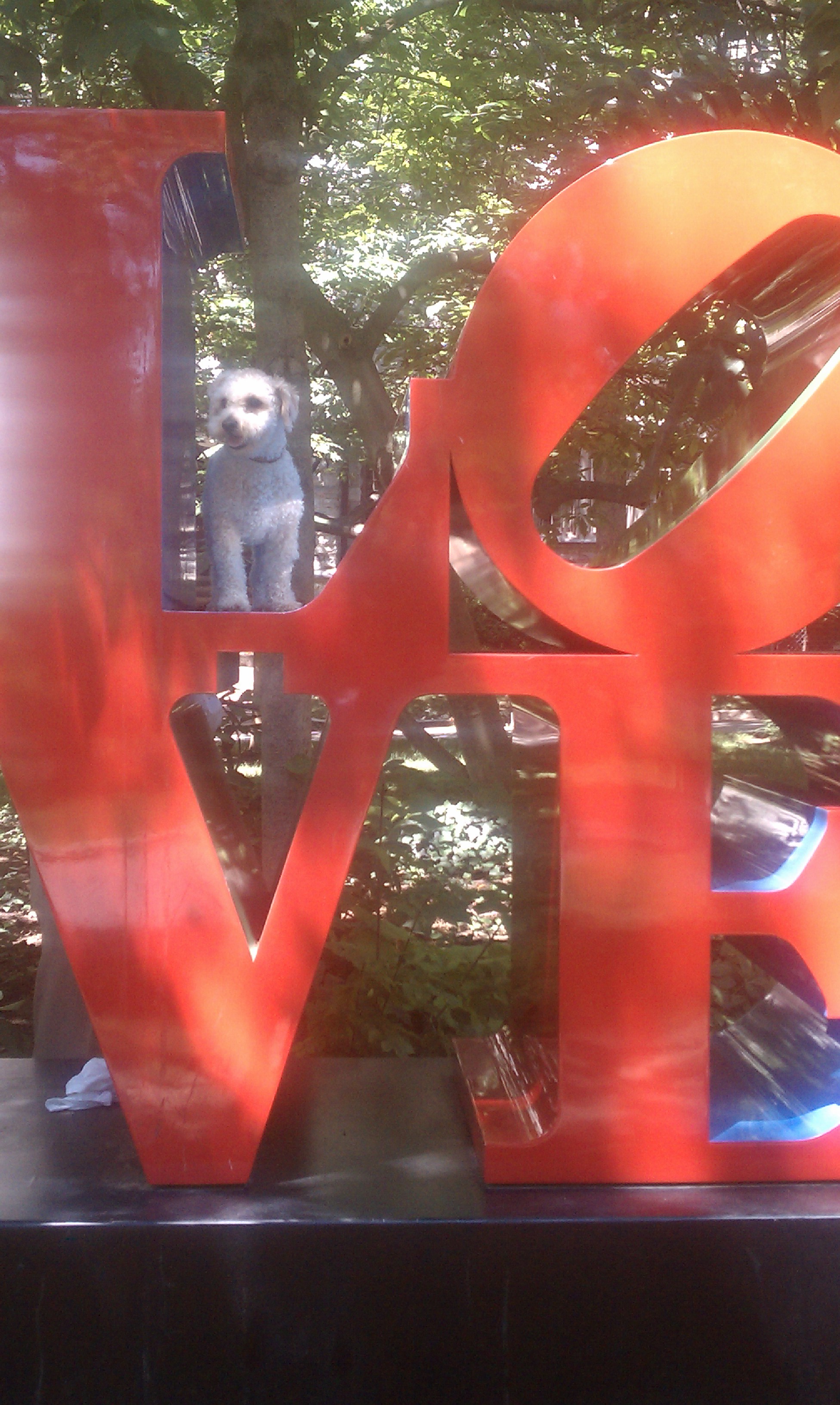
He loved all of the artwork on campus, especially the LOVE Statue and Peace Sign.

Totally Peaceful

In LOVE

He was particularly impressed by the architecture of the campus buildings, noting the Castle as one of his favorites.

The Castle and Dade


He marveled when told about Penn’s impressive alumni community.  He really thought it was cool that Charles Addams, the creator of The Addams Family, went to Penn too.   Although he admits he was a little hesitant about being walked by Morticia.

Addams Family

Being Walked by One of the Hands on The Gates


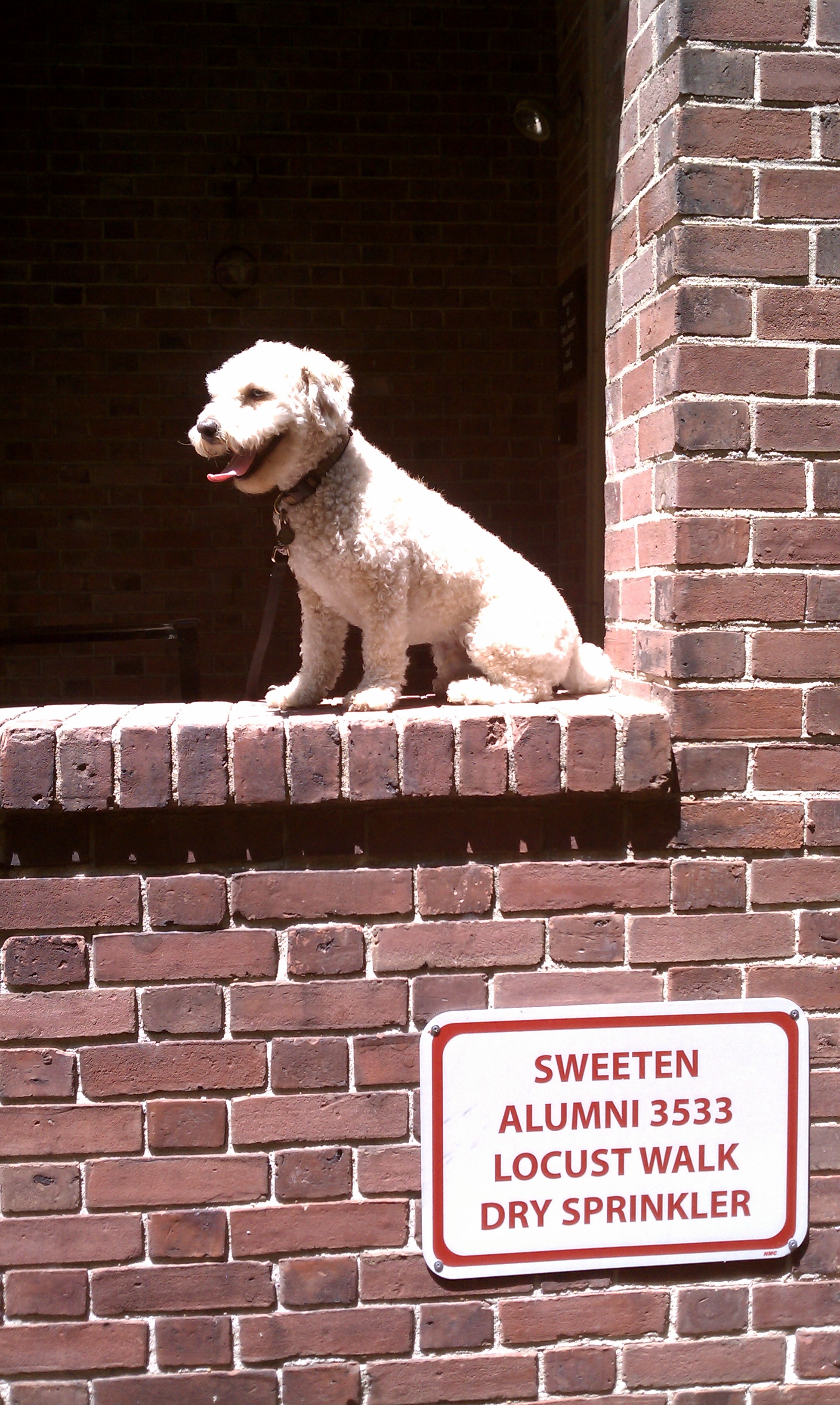
After all that walking, he needed a break.

Resting

After the tour, he had a chance to sit down with Steve  from PAARC and have all of his questions answered.

Dade and Steve Discuss Dade's Future at Penn

We think it’s fair to say he seemed to really appreciate the special attention he was given during his visit. And we loved having him!

4 Comments

Filed under Campus Life, Emily S.

Locust Walk Talk: The Penn Museum

Author: Casey Ryan, C’95

I love the University of Pennsylvania Museum of Archaeology and Anthropology.  One of my favorite reasons is its temporary exhibits.  I profoundly remember one exhibit, the “Track of the Rainbow Serpent: Australian Aboriginal Paintings of the Wolfe Creek Crater.”

In 2005, I was planning to travel to Australia and I was consuming anything I could about the country to be more informed.  I watched Rabbit Proof Fence and re-watched Muriel’s Wedding.  I read Neville Shute’s On the Beach and A Town Like Alice (a.k.a. The Legacy), Bill Bryson’s In a Sunburnt Country, Tim Winton’s Cloudstreet and even Colleen McCullough’s classic, The Thornbirds.  There was even an Animal Planet show that I stumbled upon and watched about a marsupial surrogacy program, which paired human volunteers with orphaned marsupial to recreate a pouch-like environment using book bags to help in there development and growth.  (What a tear jerker. If you don’t cry at folks trying to treat a sick wombat with an infection, you have no heart)! If it was Australia-related, I was there.

In the middle of my building excitement, I learned there was an exhibit of Aboriginal work at the Penn Museum. I was thrilled.  I searched on line for some articles to learn more about Aboriginal Art, and soon visited the Museum.

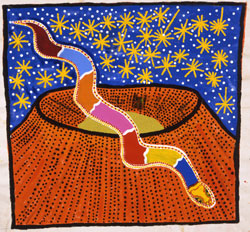
“Red Rock (Ngaimangaima)” by Daisy Kungah from Billiluna, 2002. Image courtesy of the University of Pennsylvania Museum of Archaeology and Anthropology

The culture of Aboriginal peoples is one of the world’s oldest continuous cultures, art traditions and belief system.  Though interpreted differently group by group, the creation story centers around the Rainbow Serpent, one of the important creative forces in the cosmology, and his travels to create existence during a mystical state called Dreamtiming that transcends time.

Image courtesy of Shreyans Bhansali, C’05, ENG’05

In particular, this exhibit is comprised of works from the Djaru Aboriginal people living by the Wolfe Creek Crater in Western Australia.  The story of a meteorite landing was interpreted as a star falling to Earth.  Wrapped around the light of the falling star is the Rainbow Serpent. The Serpent makes the hole in the new crater upon impact, then he continues to burrow and move underground and through the area to create waterways, landscape features. The Serpent’s movements and creation opened the land up for the Aboriginals’ First Ancestors to come and live.

The Djaru are stewards of this land and due to sacredness of the area custom prohibits them from directly discussing the story. Yet, through painting, using traditional techniques and colors, they can share the stories through art. The art is bold, using bright colors and traditional symbols for water, watering holes, stars and people.  Without speaking, these paintings tell the stories of the traditional way of life for the Djaru.

“Kandimalal (Wolfe Creek Crater) and the Rainbow Serpent” by Boxer Milner from Billiluna, 2000. Image courtesy of the University of Pennsylvania Museum of Archaeology and Anthropology

Thanks to the efforts of the Penn Museum, I had an Australian cultural experience that I wouldn’t have had anywhere in the world as I prepared for my trip.  I gained an appreciation for Aboriginal culture and I didn’t have to leave my figurative backyard to get it.

1 Comment

Filed under Campus Life, Casey R., Fine Art, Locust Walk Talk, Penn in the Summer, The Arts at Penn

Nerd Alert: Why I Love the Van Pelt-Dietrich Library

Author: Aimee LaBrie

I’ve had a library card ever since I was in kindergarten. My mom has always been a reader-of-novels and she passed this love on to me, starting with the Little House on the Prairie series. I can still remember the feeling I used to get when I would leave the library with half a dozen books in my backpack—giddy with the possibilities each book offered. Even if I didn’t read all of the books I borrowed (and I seldom did), I liked having all those choices—an adventure story about mice, a story about a misunderstood doll, a detective story where the kids were smarter than the adults.  As an adult, I still feel the same way about reading and about the library; almost like I’m getting away with something when I go inside and emerge with a stack of books; it seems too good to be true.

Here at Penn, you might think that the libraries on campus are very academic-focused, and it’s true that they have hundreds of scholarly texts and journals and numerous online resources. But they also have an excellent fiction section, a new books collection on the first floor of the Van Pelt-Dietrich library, and a substantial DVD collection that I’ve borrowed from numerous times (I just rented Philadelphia Story starring  Cary Grant and Katharine Hepburn a few weeks ago. Have you seen that film lately? If not, get it).

In addition, if the library doesn’t have the book you want, they will get it for you. For instance, I recently visited Gettysburg for the first time in my life, and someone mentioned the book Confederates in the Attic: Dispatches from the Unfinished Civil War, by Pulitzer Prize-winning author Tony Horwitz. When I got back to work that Monday, I found that though the library didn’t have the book available, they could secure it for me through inter-library loan. In two days time, I had the book in my hot little hands, borrowed directly from the Dartmouth Library. It was like magic. (Book synopsis: Civil War re-enactors are alive and kicking all throughout the South. For a fictionalized account of this crowd, I highly recommend Civilwarland in Bad Decline by George Saunders. It’s dark and twisty and very funny).

About a week ago, I read a  New York Times review of the recently published crime novel, A Death in Summer and thought how nice it would be to check it out from the library that very same day, though it seemed unlikely that the VPD Library would have it, since it was pretty much right off the presses.  I walked straight toward the new fiction, and voile! There it was on the top shelf of the collection, as if waiting for me. Again, magic.  I devoured the book over the weekend. It’s written by Benjamin Black, the pseudonym for Booker Prize winning writer, John Banville. You can read a review of the book here or learn more about Banville’s alter ego in the most recent issue of The New Yorker (book synposis: a rich man appears to have committed suicide. But did he??? His strange death is investigated by an alcoholic medical examiner and a detective who, along the way, encounter seduction, betrayal, a corrupt organization for boys, martinis, hundreds of cigarettes, and ponies.  Thumbs up).
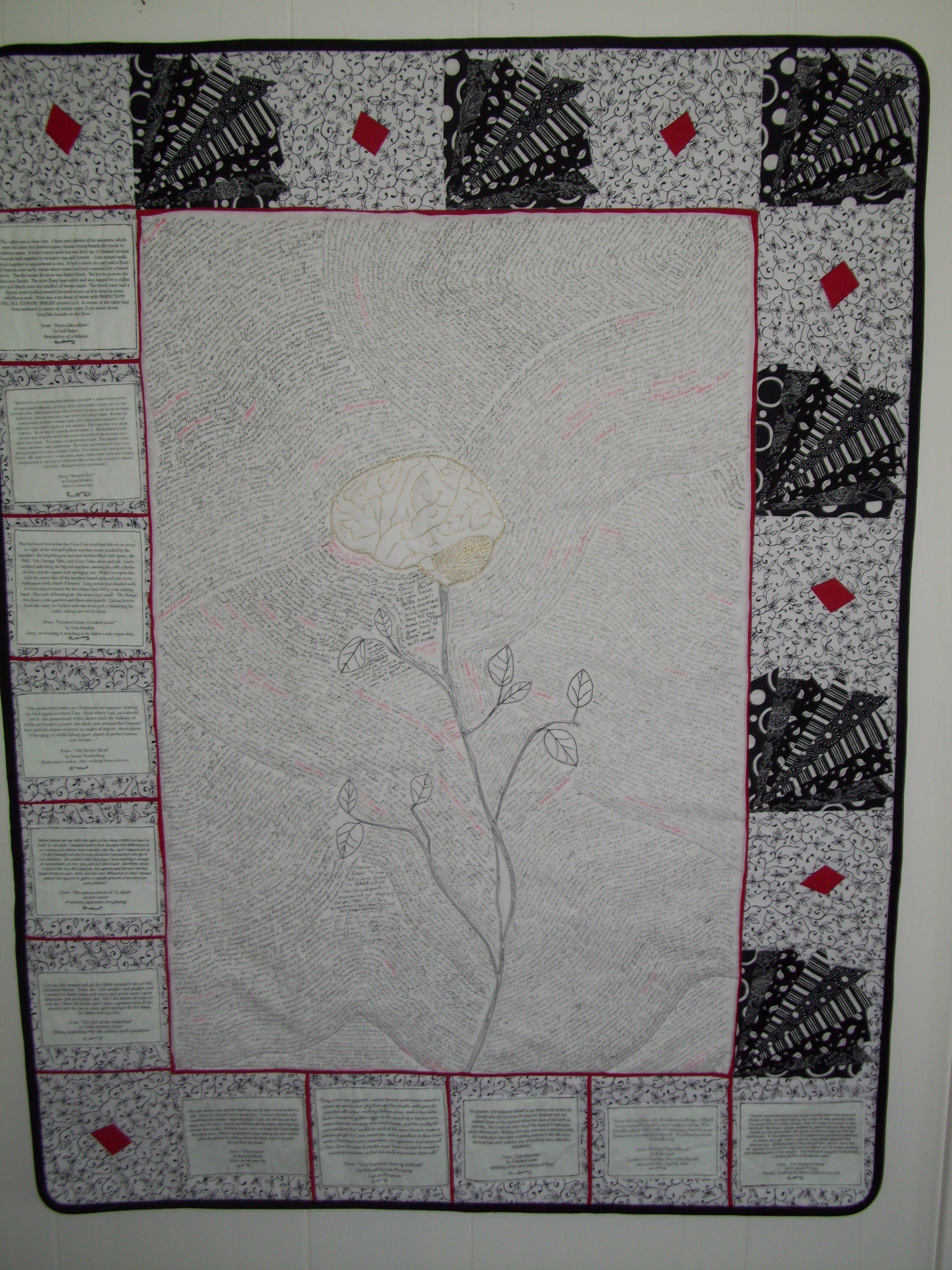
I don’t know what’s next on my reading list, but I am certain that when I do decide, I’ll only have to go a little ways down Locust Walk and into the library. It still feels exciting to me, to know that I can enter the library with nothing, and leave with my arms full of possibilities.

Just an aside, I have physical proof of how much my mom loves reading. This is a quilt that she recently made called “Book Brain.” If you look closely (by clicking on the photograph), you’ll see that the whole quilt is filled with hand-written quotes from her favorite books. She dedicated the quilt to me.

A Quilt about the Love of Reading

2 Comments

Filed under Aimee L., Campus Life, Library

Hidden Gems

Author: Lynn Carroll, C’93

Can you guess where on campus this photo was taken? It’s my favorite place on campus for peace, quiet, and a bit of perspective—and no, it’s not near the Bio Pond!

This is the Class of 1957 Geology Garden, located just south of Hayden Hall near 33rd Street and Smith Walk. When you have about 10 minutes, call the “Discover Penn” audio tour at 215-525-1562 and enter 11#. You will hear Dr. Hermann Pfefferkorn, Professor of Earth and Environmental Science, describe the geology of each and every boulder in the garden, the oldest of which—gneiss and serpentinite—are an estimated 1 billion years old.

More about Discover Penn …And a bit about Dr. Pfefferkorn.

Leave a comment

Filed under Alumni Perspective, Campus Life, Lynn Carroll, The Arts

Eating and Scooping Ice Cream for a Great Cause

Author: Stephanie Yee, C’08

This past Saturday, I scooped 15 gallons of ice cream at the 13th annual “all-you-can-eat” ice cream Super Scooper event.

Event Banner

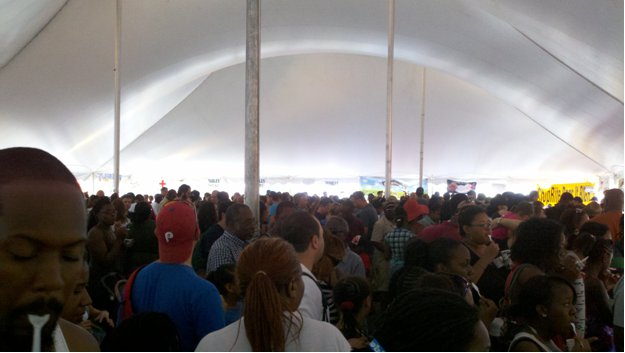
Each year during the 4th of July weekend, the Joshua Kahan Fund hosts its annual event at Penn’s Landing. 100% of the net proceeds go towards pediatric leukemia research and annual pediatric prom at The Children’s Hospital of Philadelphia. For a $7.00 donation, you get a spoon and admission into a large tent filled with many different ice cream stations. You can go to as many stations as you wish and taste as much ice cream as you want. The event runs 12-5pm each day, and you can stay for as long as you want. Can anything be better? Ben & Jerry’s, Häagen-Dazs, Bassett’s, Friendly’s, Jack & Jill, Turkey Hill, Breyer’s, water ice, and more. You name it, and it was there. Talk about a childhood dream come true.

Right Side of the Tent

My group arrived at the tent at 10AM. Our shift was 10:30AM-3PM, but we arrived early to find a good parking spot. We checked in at the volunteer table, received our free t-shirt, free hat, and shiny blue volunteer wristband. At 11AM, the volunteers were gathered together for a quick speech, group photo, and free lunch (yep, they fed us, too – so nice!) We learned that the Joshua Kahan Fund had already raised over $900,000 for CHOP, and they expected to pass $1,000,000 that weekend! After lunch, we washed out hands, put on our gloves, and then the chaos began.
I was stationed at the Jack & Jill table with two other Penn alumni. We scooped strawberry ice cream for three hours straight. We saw excited kids, tired kids, and kids screaming of brain freeze and tummy aches. We saw adults there by themselves, adults chaperoning their kids, and adults chaperoning other people’s kids. We also saw adults acting like kids. It was all-you-can-eat ice cream – what do you expect?

The Crowd

After our shift was over, I tried a vanilla sundae ice cream, black cherry ice cream, and black raspberry ice cream. After that, I was ice-creamed out. Today, I heard from the event organizers that they passed their $1,000,000 mark this weekend. Hurrah for volunteer work, hurrah for ice cream, and hurrah for Penn Alumni!

Half of the Penn Alumni Club of Philadelphia members who volunteered at the Super Scooper event standing in front of Turkey Hill ice cream and a Turkey Hill cow

3 Comments

Filed under Alumni Perspective, Campus Life, Stephanie Y.