Category Archives: Penn Alumni Travel

Penn Alumni Travel: MP to the Galapagos 2

Author: Professor Larry Silver, Department of Art History

This fabulous “trip of a lifetime” with Penn Alumni Travel really lived up to its billing, and its two parts were like completely new chapters, each totally absorbing and totally different from the other.

Our journey began in Lima, where our local Odysseys host showed us the colonial square and the adjoining narrow streets with their charming wooden balconies.  She also gave us an hour-long introduction to pre-Spanish art and culture in the private museum, Larco Herrera, which spanned the entirety of native cultures from ten centuries BCE to the 1532 Spanish conquest.  Among treasures that we saw there were fabulous weavings from the Paracas culture of the south coast of Peru and stunning portrait vases from the later Moche culture of the north coast.

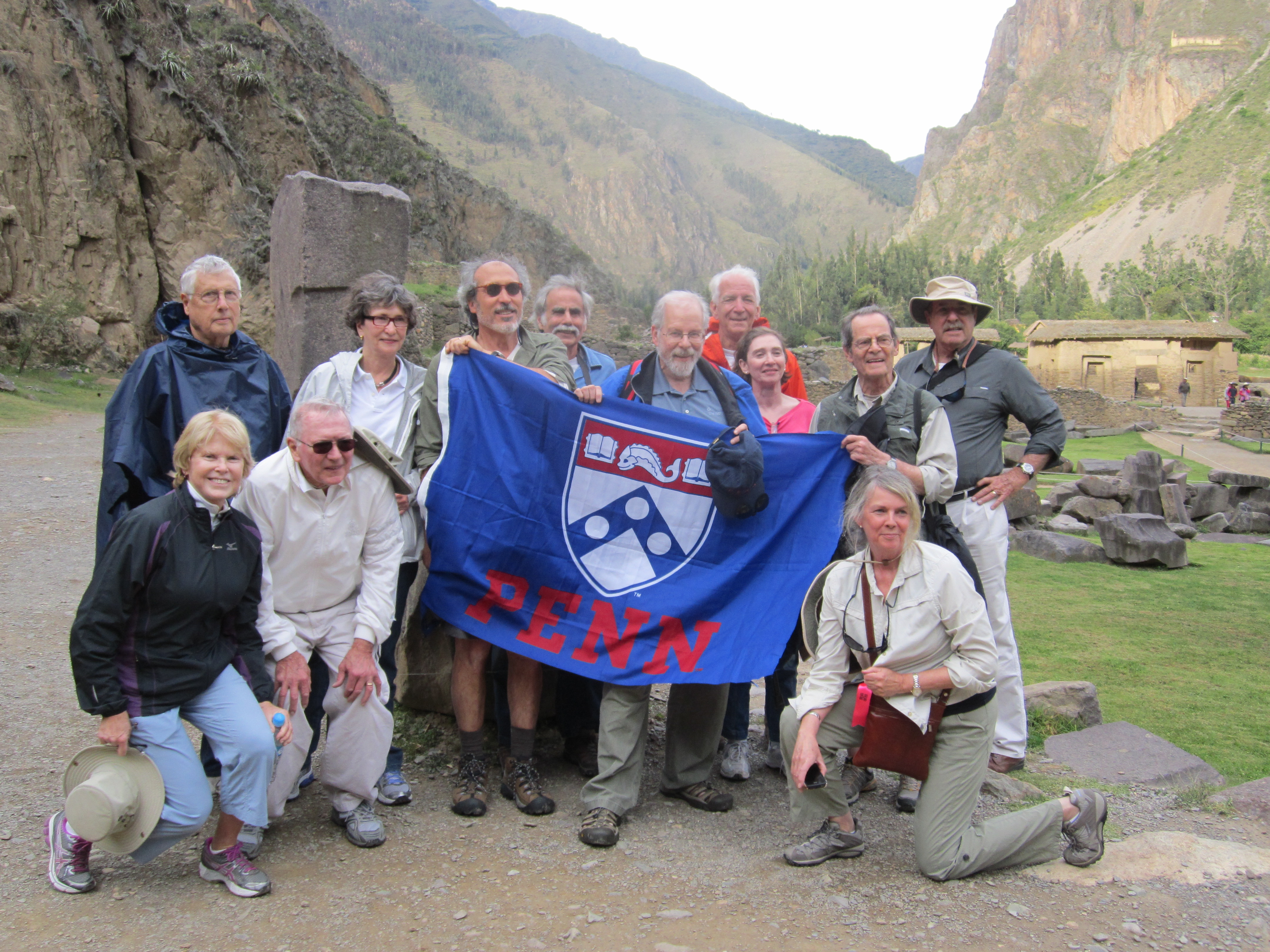
Larry Silver with alumni travelers in Peru.

Larry Silver with alumni travelers in Peru.

Soon we were winging our way to the highlands of the Incas, passing through Cuzco, their ancient capital, where we stopped to see the Koricancha, Temple of the Sun, before passing over high mountain passes into the Sacred Valley, watered by the river Urubamba.  Our next several days were spent in excursions all around the Sacred Valley, punctuated by views of sacred sites on the high plains (altiplano).  One highlight featured a morning with native weavers in Conchierro, who showed us not only their techniques but also the natural plants from which they made their dyes.  Some of us took home their exquisite traditional weavings.  In addition, one of the evenings in our Sacred Valley hotel featured (appropriately) a local shaman, whose blessings for the group in his native Quechua were translated by our regional guide and concluded with a ritual fire of the magical elements he had used in his incantations.  We had mixed reactions to the ceremony, but certainly whatever he invoked worked for the remainder of the trip, for we had remarkably trouble-free travels.

Traveling in the Sacred Valley.

Traveling in the Sacred Valley.

Learning from Peruvian weavers.

Learning from Peruvian weavers.

From Olaytatambo, a fortress town that resisted Spanish conquest (some of us hiked up to the peak of the citadel with its characteristic large, fitted Inca stone), we took one of the world’s great train rides down to Machu Picchu (still at over 8000 feet), but we noticed the greater tropical flora and birds as we descended.  Then came the climax at Machu Picchu, which sits in an overwhelming setting high above an oxbow bend of the River Urubamba on a saddle setting between two towering mountain peaks.  We there had the advantage of our great guide Julian to explain the history of the site as well as to itemize the original functions of the varied buildings, otherwise quite similar in form, except for distinctions in the stonework of their construction.

Astounding Machu Picchu.

Astounding Machu Picchu.

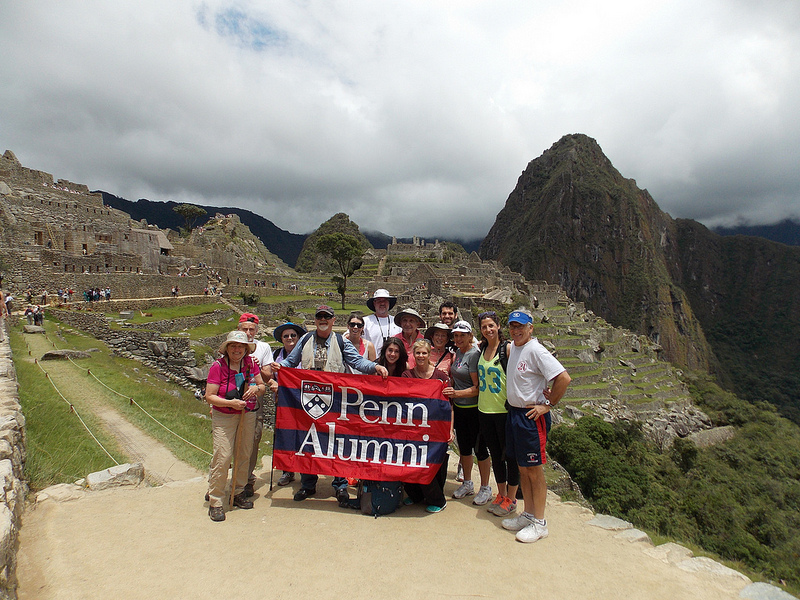
That location, the “Camp David” of the grand Inca Pachakuti in the later 15th century, was probably built in a mere decade but became a major shrine and outpost of the Inca even after the Spanish conquest; it was only rediscovered a century ago when an adventurer from Yale followed farmers’ tips and uncovered the place from its overgrowth.  Our two-day stay there took us over almost all of the remaining struc- tures, and we had the great advantage of a fabulous hotel location, just steps from the entrance gate, so some folks took good advantage of the early morning opening for extra activity with smaller crowds.  Some of us sat and contemplated the setting from above the ruins, while others hiked up to the segment where the Inca Trail descends finally to Machu Picchu itself.  Stunning views everywhere—and what was different from even the finest photos of the site is how its mountain peaks and gorges simply envelop the visitor in a breathtaking 3-D way no image can capture.

The view from above.

The view from above.

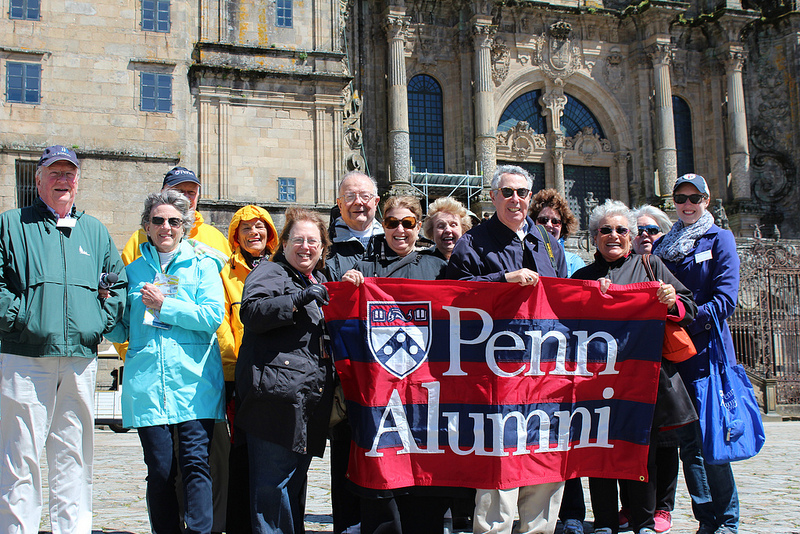
Penn alumni and friends stop for a photo-op.

Penn alumni and friends stop for a photo-op.

Our marvelous afternoon train ride all the way back to Cuzco included a fashion show, distracting to some but a shopping bonanza for others.   Cuzco itself is a splendid city, and our morning tour included visits to a few of the richly decorated main churches (the Spanish put in far too many churches for any short visit; they were determined to Christianize the Inca pagans, just as they built their Dominican church atop the splendid foundations of the Koricancha Sun Temple).  One of our rare bouts of wind and rain dampened the visit to the great citadel Sacsahuaman above the city, though it afforded yet another chance for a group photo and a sight of some of the most massive building stones this side of the pyramids of Egypt.  No wonder the Spanish dismantled all the building blocks that they could move; these were the inextinguishable markers of Inca engineering and power.

The group stops for another picture in front of the massive building stones.

The group stops for another picture in front of the massive building stones.

For some, the local host lunches that followed were another way to make real contact with the Peruvians, not to mention their most distinctive local dish, guinea pig.  Our Cuzco hotel, the Monasterio, was a fabulous base for free exploration of the city; its authentic colonial paintings in the main chapel and throughout the building provided a further opportunity for immersion in the religious life of the Spanish city. Almost all of us found memorable dining experiences on our own in the evening.

Logistics of leaving Peru for Ecuador occupied most of the next day, further complicated by the fact that the lovely, but largely empty, new airport of Quito has not yet been complemented by a proper roadway to get there.   We got to cross a deep gorge over a “temporary” bridge built for the oil industry, which is a major export of Ecuador out of its Amazonian basin.  Eventually, after a night in Quito, we flew to the Galapagos and met our lively naturalist Rial, plus the enigmatically named and hunky Victor Hugo.  They were our constant companions on and off the Coral I, a boat whose food was tasty, whose crew was experienced and friendly, and whose steadiness on the open ocean waters was a comforting way to visit the islands.  We grew pretty fond of the men who piloted our dinghy and the informed guides who found the full range of animals and then explained their ways to us.

The Galapagos Islands.

The Galapagos Islands.

What an amazing set of islands!  Stark, whether dry scrub or lava-covered, they hosted all of those amazing creatures we had come to see—and we were not disappointed.  Penguins not only leaped in clusters after schools of fish as we made our way along the coast in the rafts, but one of them entertained us at the stern one morning as he breakfasted among a cluster of sardines swimming in circles.  Some of us even saw penguins while snorkeling, one of the great delights of the Galapagos sojourn. Sea lions of several species were everywhere, on shore and in the water, also sometimes on view while snorkeling.  Pelicans might have been familiar, but to see them and the unfamiliar, rare blue-footed Boobies crash diving into the surf was an unforgettable spectacle.  We had a rare, calm view of a Galapagos Hawk in a tree, as well as other unfamiliar creatures, such as the Oyster-Catcher on her nest.  And who can forget the Frigate Birds, hovering like pterodactyls above the boat or following its wake, gliding gracefully above us.

Sea lions on shore.

Sea lions on shore.

Finding a pelican.

Finding a pelican.

Of course, the signature creatures of the Galapagos remains the giant Tortoise, and we saw slightly different versions on every island, not least at the Santa Cruz sanctuary on the last day, when a mudbath occupied as many as a dozen of the animals.  They were perhaps the only really shy animals we saw, pulling in and hissing when we had to share the same trail, but for the most part these placid reptiles relaxed and set a great example for travel mellowness.

Giant tortoises.

Giant tortoises.

No one who saw them, especially on Fernandina’s lava flows, will forget the Marine Iguana colony, and then later on Isabel (one of three different stops on that large island) we finally saw the yellow Land Iguana.  It was like a Jules Verne dinosaur movie to move amidst those creatures, seemingly without their having a care for us as threats—though their spit-like ejections of salt were anything but welcoming.  Even the major recent flows of lava, broken only occasionally by the intrusion of lava cactus, were a sight—really without comparison except at a few other places, such as the Big Island of Hawaii, were a spectacle to remember.  Victor Hugo gave a great talk on the boat about tectonic plates that move across the earth and about hot spots, such as the Galapagos or Hawaii, where the newest islands are on one end of the archipelago and the older, smaller, more verdant islands have drifted away, though still showing their calderas or their shield volcanoes.  We really got a great geology lesson in the Galapagos to complement our archaeology from Peru!

Plant life in the lava flows.

Plant life in the lava flows.

A final flight back to Quito resulted in a last-day tour of that capital.  We had a great morning, over-brief between sights and shopping, in the colonial city, whose gilded Jesuit church was a climax of opulent conversion technique, and we enjoyed the main square with its Franciscan church surrounded by jewelry, panama hats, local chocolate, and other goodies.  The morning ended with a most memorable view of the Ecuadorian President and the changing of the guard.  Afternoon outside the city showed a bit more of the volcanic uplands, not to mention a blustery final group shot straddling the Equator (plus a bi-hemispheric smooch photo).  And then LOTS of airport stays as we dispersed to our respective homes, armed with slides, new friends, and lots of memories.

Penn alumni and friends at the equator.

Penn alumni and friends at the equator.

This was an amazing combination of sights and sites, of archaeology and geology, not to mention zoology.  Odysseys took good care of us throughout, so that almost everything ran on time and without any cares on our part.  Their itinerary was diverse and well-planned.

Thanks to all who participated—good sports and hardy travelers who tried everything from climbing ancient steps to snorkeling in unglamorous wetsuits.  Penn can be proud of such a diverse and interesting, not to mention congenial, group of alumni (and groupies in some cases).  I hope that our paths will cross again soon, whether on another trip (with Penn Alumni Travel) or with continued personal contact.  Happy holidays to all—let’s share those great photos and email messages in the meantime and stay in touch!

[Join us as we visit the Galapagos again in 2014! Click here for more information.]

1 Comment

Filed under Faculty perspective, Penn Alumni Travel, Travel

Penn Alumni Travel Celebrates!

Author: Emilie C. K. LaRosa

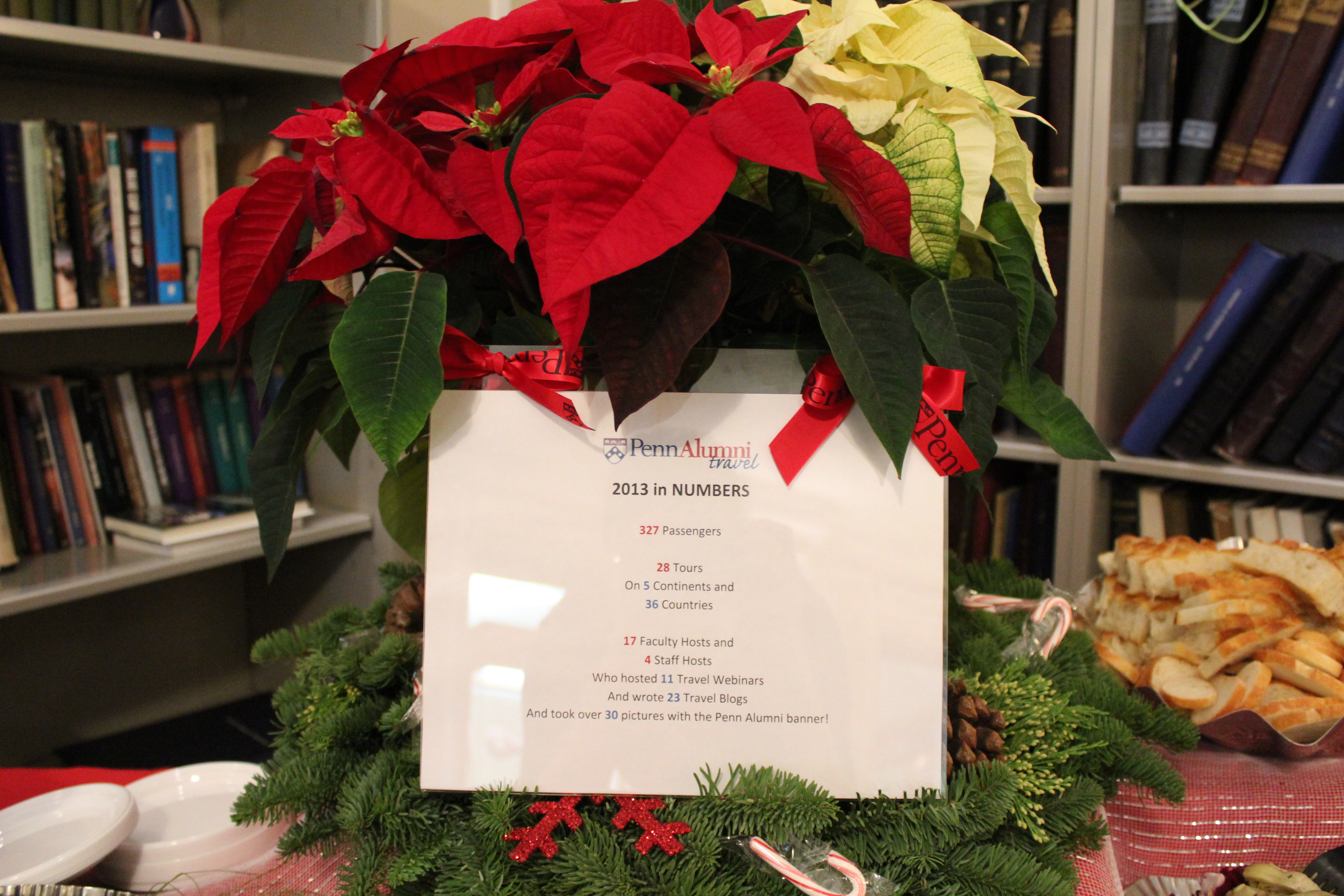
On December 11th Penn Alumni Travel celebrated another successful year of alumni tours with a staff and faculty host reception at the Sweeten Alumni House. There was much to toast. In 2013 we sent 327 alumni and friends on 28 trips to destinations across the world. Our alumni visited 5 continents and over 35 countries including: Italy, Greece, Turkey, Kenya, China, Croatia, Peru, Tahiti, Poland, and Vietnam.

A successful year of travel!

A successful year of travel!

To celebrate, we invited our faculty hosts to join the Alumni Relations staff for an afternoon of treats and hot cocoa.

Treats...

Treats…

And hot cocoa. Hot cider with cinnamon sticks was also included.

And hot cocoa. Hot cider with cinnamon sticks was also included.

It was a great opportunity to reconnect with past hosts, introduce alumni relations staff to Penn professors, and reminisce over a Penn Alumni Travel slideshow.

Penn Alumni Travel slideshow. Penn alumni took over 30 pictures with the Penn banner this year.

Penn Alumni Travel slideshow. Penn alumni took over 30 pictures with the Penn banner this year.

Happy Holidays from the Penn Alumni Travel team. We hope to see you on a future trip! And don’t forget- if you took a tour with us in 2013, enter our annual travel photo contest by February 28th for a chance at fantastic prizes. Click here for more information.

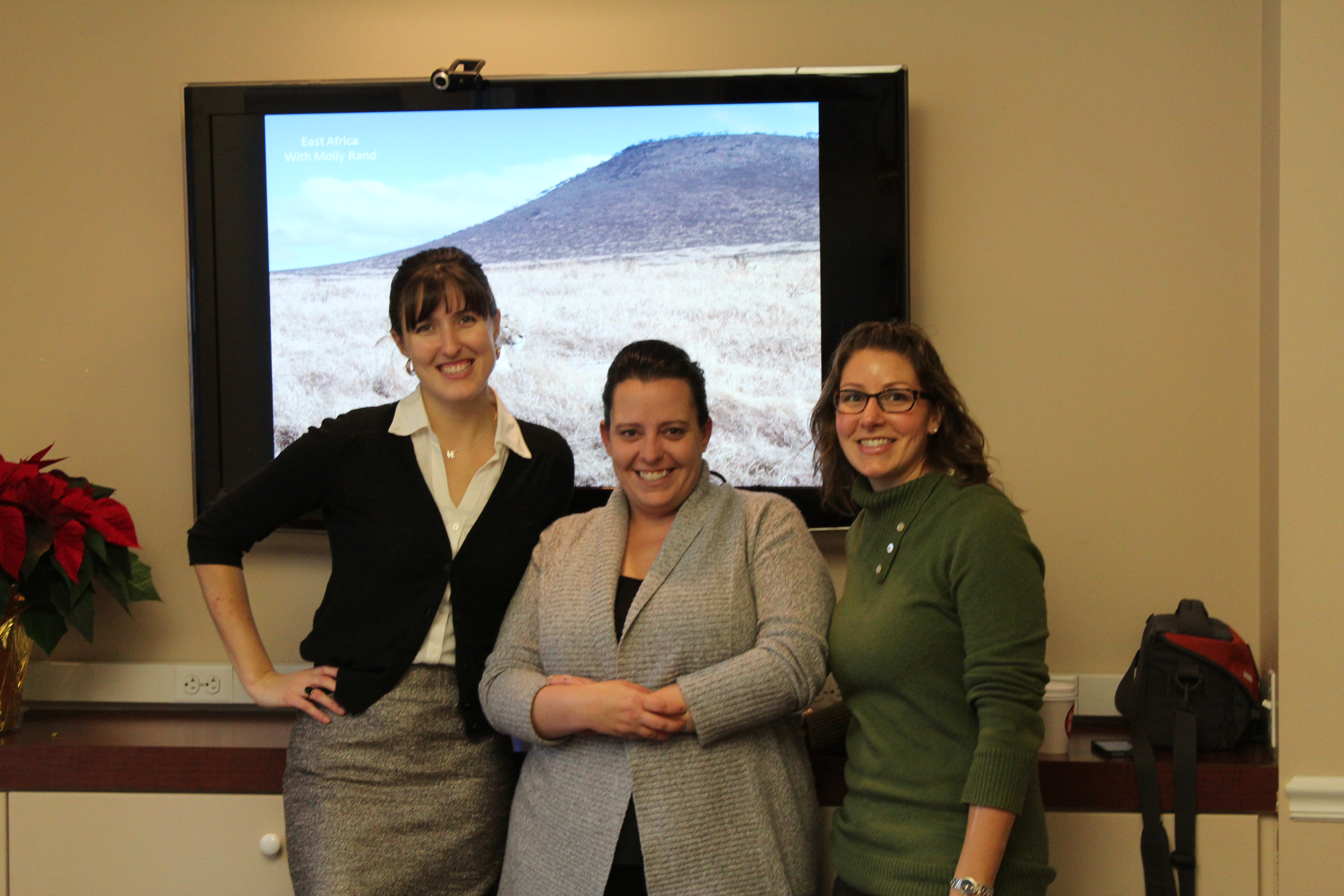
From left: Emilie LaRosa (me!), Janell Wiseley, and Alyssa D'Alconzo

From left: Emilie LaRosa (me!), Janell Wiseley, and Alyssa D’Alconzo

Leave a comment

Filed under Emilie, Penn Alumni Travel, Travel

2013 in Pictures

Author: Janell Wiseley


Penn Alumni Travel has shared many photos on Frankly Penn this year, but with 2013 drawing to a close thought I would share a couple more!    Enjoy 2013 in Pictures!

Wishing everyone Happy Holidays and a Safe and Healthy New Year!

Switzerland 2013

Switzerland 2013

Russia 2013

Russia 2013

Paris to Normandy 2013

Paris to Normandy 2013

Machu Picchu to the Galapagos 2013.  Departure 2

Machu Picchu to the Galapagos 2013. Departure 2

Villages & Vineyards of the Rhine, Mosel and Main Rivers 2013

Villages & Vineyards of the Rhine, Mosel and Main Rivers 2013

Moroccan Discovery 2013. Departure 2

Moroccan Discovery 2013. Departure 2

Machu Picchu to the Galapagos 2013.  Departure 1

Machu Picchu to the Galapagos 2013. Departure 1

Moroccan Discovery 2013.  Departure 1

Moroccan Discovery 2013. Departure 1

Italian Inspirations 2013

Italian Inspirations 2013

Waterways of Holland & Belgium 2013

Waterways of Holland & Belgium 2013

European Coastal Civilizations 2013

European Coastal Civilizations 2013

Treasures of East Africa 2013

Treasures of East Africa 2013

Symphony on the Blue Danube 2013

Symphony on the Blue Danube 2013

Dalmatian Coast 2013

Dalmatian Coast 2013

China 2013

China 2013

The Quaker resting on the Great Wall, China 2013

The Quaker resting on the Great Wall, China 2013


Leave a comment

Filed under Alumnni Education, Janell W., Penn Alumni Travel, Travel

Penn Alumni Travel: China 2013

Author: Emilie C. K. LaRosa

This fall I hosted a Penn Alumni Travel trip to China. 21 Penn alumni and friends made the long trek to Beijing where we were greeted by our tour director extraordinaire, Chen. Chen would be our tour director and guide for the next 13 days, and he did an outstanding job. He managed our itinerary, provided historical and cultural tidbits, and even got us in to see giant pandas after the Chongqing Zoo had closed.

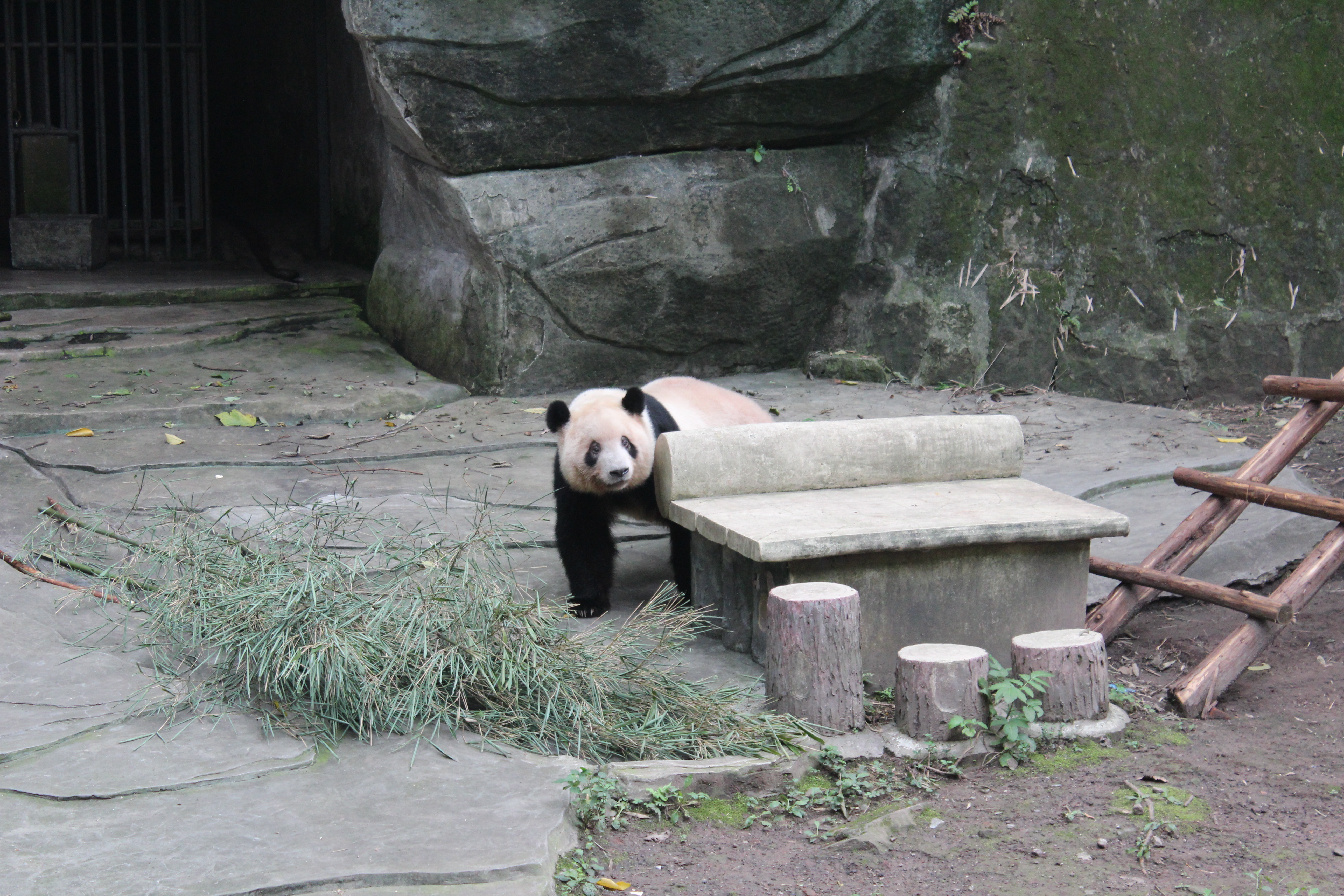
Everyone loves a good panda picture! At the Chongqing Zoo.

Everyone loves a good panda picture! At the Chongqing Zoo.

Chen with two Penn alumni (and proud Penn Parents!) in Shanghai: Daniel Behrend, WG’71 and Susan Behrend, Nu’80, GNu’86

Chen with two Penn alumni (and proud Penn Parents!) in Shanghai: Daniel Behrend, WG’71 and Susan Behrend, Nu’80, GNu’86

I had never been to China before, and, during that first shuttle ride from the airport to the hotel, I was immediately struck by two things: the seemingly endless construction and the insane traffic. Did you know that over 21 MILLION people live in Beijing? Between 2000 and 2010, the population in Beijing rose by 44%, and, judging by the amount of half-finished high rises and construction cranes in the city, it will continue to grow.  A lot. (Chen joked that the national bird of China is the crane.)

During our two weeks in China we visited the Great Wall, walked along the corridor of the Summer Palace, bumped along in rickshaws in the hutongs of Beijing, marveled at the Terra Cotta Warriors, floated down the Yangtze River through the Three Gorges, ate Chongqing hotpot, and walked along the cosmopolitan Bund in Shanghai. China is so vast, so foreign, and so culturally and historically rich that it is impossible to properly chronicle this tour in just one blog. And so I won’t! Instead, find a visual synopsis of this Penn Alumni Travel trip below.

As is always the case on our educational tours, the guides were superb, the itinerary rich (and busy!), and the company engaging and fun. Thanks to all the Penn alumni and friends who made this tour so exceptional through your conversation and company. I hope we meet again. And now a visual tour with Penn Alumni Travel:

A joint dinner with the Penn Beijing Club. Some of our travelers had Penn Beijing friends who joined us that night.

A joint dinner with the Penn Beijing Club. Some of our travelers had Penn Beijing friends who joined us that night.

A visit to China is not complete without a visit to the Great Wall. The Quaker scales the wall.

A visit to China is not complete without a visit to the Great Wall. The Quaker scales the wall.

An unusually clear day in Beijing provides the perfect photo-op at the Temple of Heaven.

An unusually clear day in Beijing provides the perfect photo-op at the Temple of Heaven.

Just a small sampling of the estimated 8,000 Terra Cotta Warriors underground- each with a face uniquely his own.

Just a small sampling of the estimated 8,000 Terra Cotta Warriors underground- each with a face uniquely his own.

A visit to the medieval wall in Xian.

A visit to the medieval wall in Xian.

Unbelievably beautiful gorges on the Yangtze River.

Unbelievably beautiful gorges on the Yangtze River.

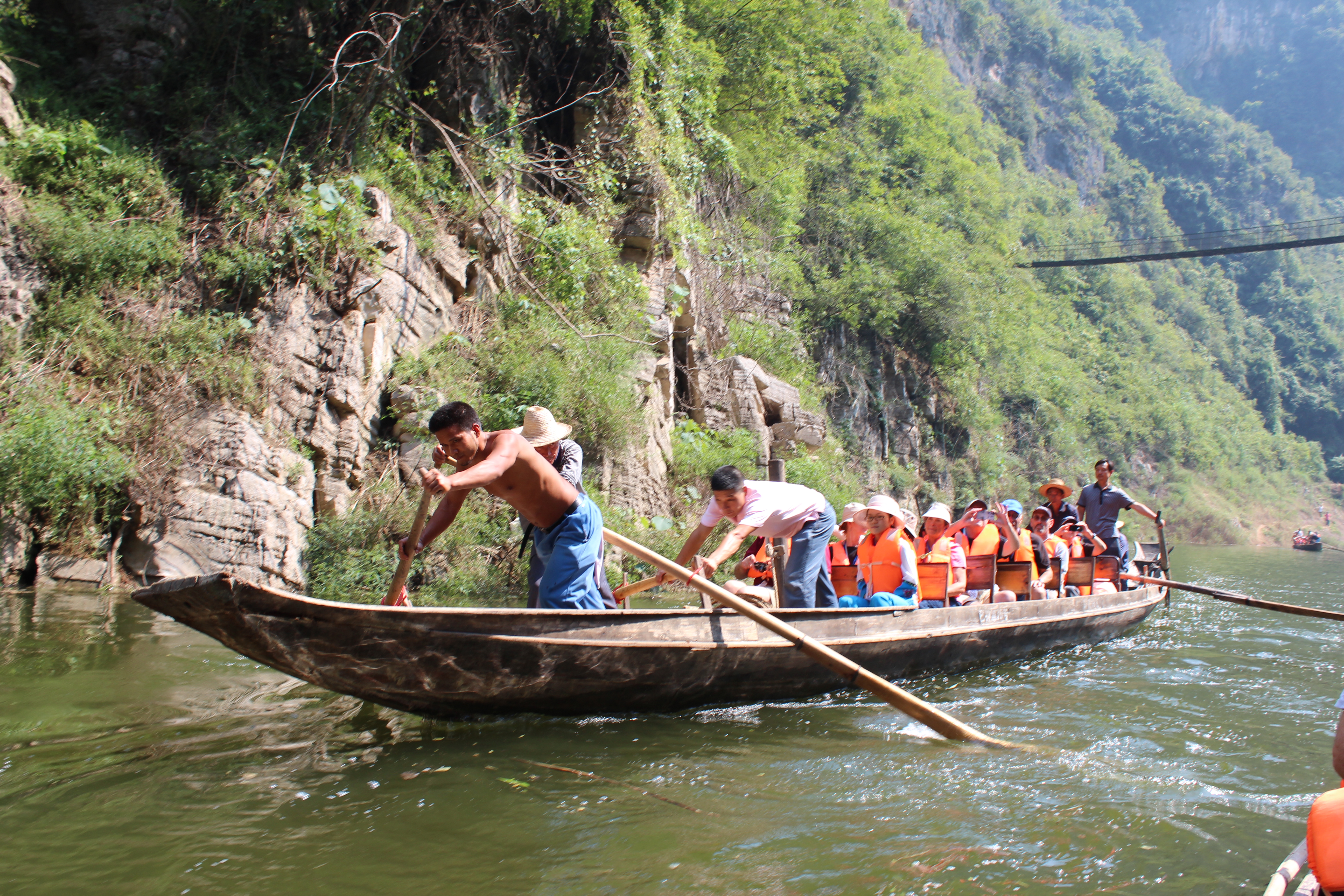
Our alumni brave the sampan for a closer look at one of the Lesser Gorges.

Our alumni brave the sampan for a closer look at one of the Lesser Gorges.

Cool cosmopolitan Shanghai. 20 years ago, these skyscrapers were nothing more than desolate swampland.

Cool cosmopolitan Shanghai. 20 years ago, these skyscrapers were nothing more than desolate swampland.

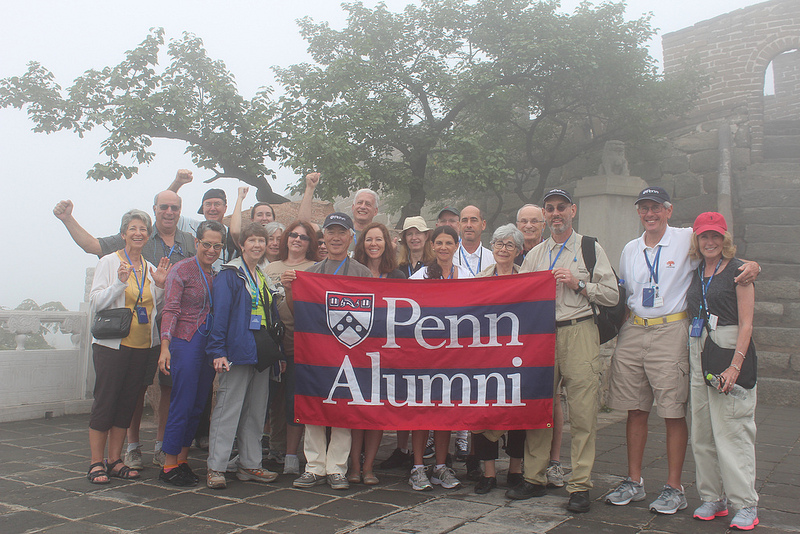
Our group at the Great Wall. What a fun bunch!

Our group at the Great Wall. What a fun bunch!

In closing, I should also mention that Penn not only has incredible resources here on campus for the study of China and the Chinese language (see the Penn Center for the Study of Contemporary China) but also recognizes the importance of on-the-ground relations with the People’s Republic of China. In fact, Wharton is moving forward with the Penn China Center in Beijing: a physical space that will allow our students and professors to build relationships with the local community, continue in-depth research, and bring together alumni, business leaders, students, and other partners. If you’re an alum looking to connect with fellow alumni in China, don’t forget we have robust alumni clubs in both Beijing and Shanghai.

If you’re interested in travel to Asia or would like more information about Penn Alumni Travel, visit our website here.

Leave a comment

Filed under Emilie, Penn Alumni Travel, Travel

Penn Alumni Travel: Morocco

Author: Professor Roger Allen, Arabic Language and Literature

[Professor Allen describes his experience as a first-time faculty host on a Penn Alumni Travel trip.]

DAY 1-2

After gathering at Kennedy Airport, we flew overnight by Royal Air Maroc to Casablanca Airport. Thanks to strong tail-winds, we arrived early (about 6.10 a.m. local time), but our guide, Muhammad Dahouac, was waiting outside the customs area when we all emerged. He welcomed us all to his country and took us out of the airport to what was to be our bus for the entire trip, along with its two wonderful adjuncts: Hasan, our driver–his driving skills a model of caution rarely found in Morocco; and (another) Hasan, his helper on everything from unloading suitcases to reversing into improbably small parking spaces. Once everybody and everything had been loaded, we set off for the drive to Morocco’s capital city of Rabat–about a two hour drive up the Casablanca-Rabat autoroute.  We stopped for a tea/coffee break on the way (as we were to do most days), and Muhammad begin to fill us in on details of our trip, contemporary Morocco, and the surrounding countryside we were passing.

When we entered the city of Rabat, we were driven to the Tour Hassan Hotel, a wonderful and luxurious facility in the center of the city. I personally took a stroll in the afternoon to refamiliarize myself with the city, but I think many people used the afternoon to get a little rest and sleep after the overnight journey.  In the evening we went to a famous restaurant, Dinarjat, in the old city (medina) where we got to know each other a bit better.  We were treated to some excellent Moroccan food and watched as the tea was poured for us in the traditional fashion. Making our way back to the bus through the alleyways of the old city, we were being gently introduced to the traditional layout of the Moroccan medina that we were to see later in several other cities.

DAY 3

The tour of the city of Rabat. It was raining (and I learn later that we were at the edge of a very large Mediterranean storm that dumped a year’s worth of rain on Sardinia in a single day, causing massive flooding). We started out at the Royal Palace, with its colorful guards standing by the gate. Moving on, we visited the Chellah, the lovely garden with its combination of ancient Roman remains and medieval Islamic buildings, including the tombs of some saints (and a veritable horde of cats beside a wishing pool).  As was to be the case everywhere we went, the tops of columns and other high spots were occupied by colonies of storks (and, in this particular case, egrets as well).  From the Chellah we proceeded to the tomb-complex of Muhammad V,  the first modern King of Morocco (and grandfather of the present king) who returned from exile in 1955 to rule post-independence Morocco (1956). The mausoleum contains the bodies of Muhammad V, his brother, and the late king, Hassan II (the father of Muhammad VI, the current monarch).

Taking a group photo in the Chellah gardens.

Taking a group photo in the Chellah gardens.

For lunch Muhammad, our wonderful guide, took us to a superb villa-restaurant, BAYT SBIHI, owned and operated by RADIA SBIHI, who welcomed us to her family home and not only fed us a superb meal, but also showed us round the house and displayed here incredible collection of jallabas.  The house, in Sale–the city opposite Rabat at the mouth of the Abu Riqraq River, commands wonderful views of Rabat, and, even in the rain, the vistas were marvelous. After this lunch we recrossed the river and went to look at the Oudaya, an old Amazigh fortress complex right at the mouth of the river.  Even though access to the ocean-front terrace was closed, we managed to persuade the guard to let us through.  We thus were able to look at both the river-mouth and the Atlantic Ocean. Descending the complex via its multiple alleyways, we came across a Gnaua singer plying his trade, and Muhammad joined him in playing the castanets for a short while. We then returned to the hotel.

Oudaya and the view of the river mouth into the Atlantic Ocean.

Oudaya and the view of the river mouth into the Atlantic Ocean.

At 5:30 that evening, we had the first of the four lectures that I had arranged.  It was an enormous privilege for me and the group that my guest was Ahmed Toufik, the Minister of Islamic Affairs and Endowment in the Moroccan government.  I have translated two of his novels, the second of which has only just appeared.  Ahmed and I took turns reading from the Arabic and English versions of the second novel (called MOON AND HENNA TREE in English), and following that Ahmed graciously answered questions.  With incredible generosity he then invited us all to dinner at a fabulous restaurant on the outskirts of Rabat, VILLA DES AMBASSADEURS, where he joined us for yet another incredible experience in Moroccan cuisine. So ended our first full day in Morocco.

Roger Allen with the Minister of Islamic Affairs, Ahmed Toufik.

Roger Allen with the Minister of Islamic Affairs, Ahmed Toufik.

DAY 4

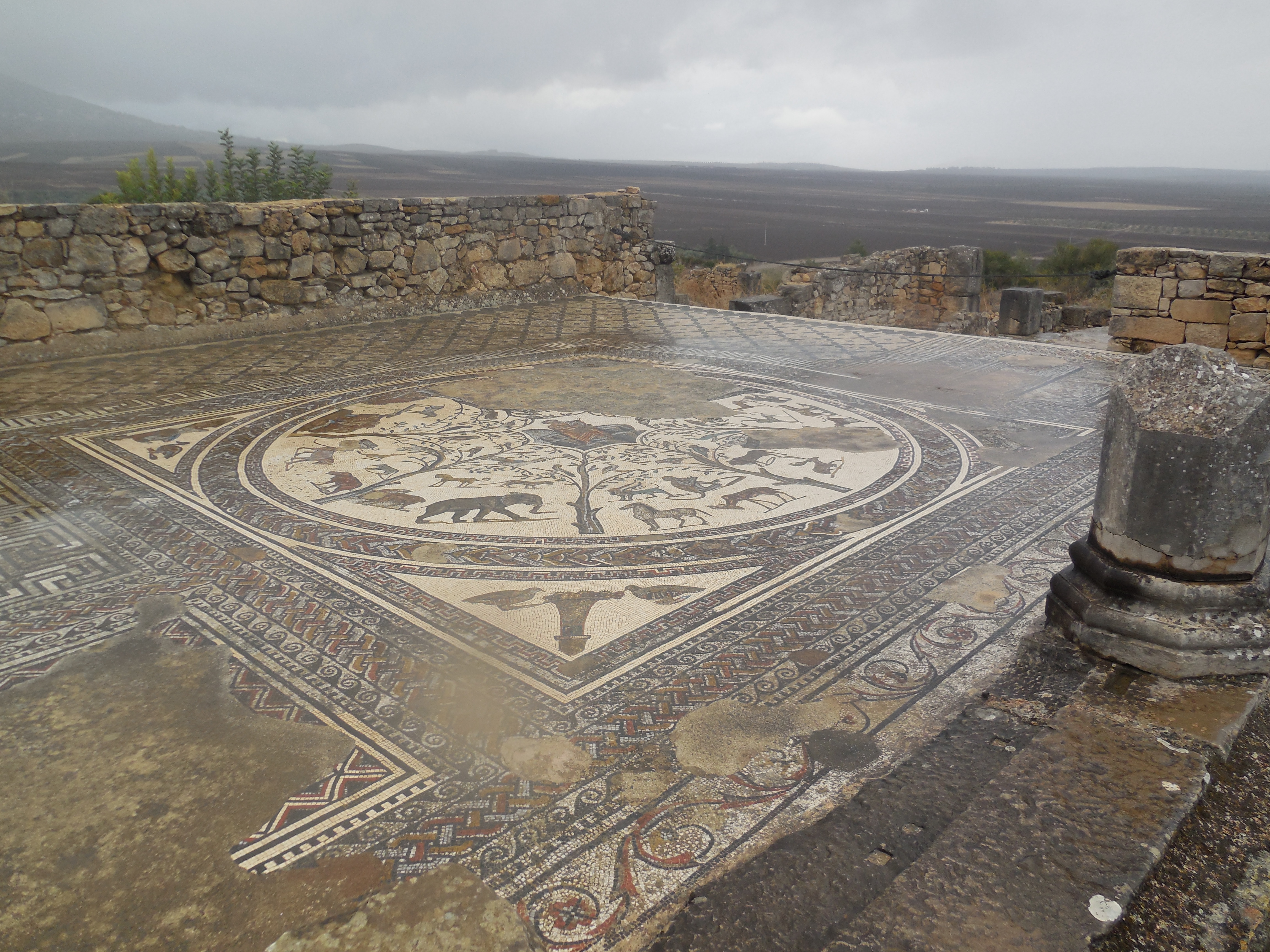
We left the Tour Hassan hotel in Rabat, and traveled by the autoroute, first to the city of Meknes, one of Morocco’s three traditional capitals, this one constructed due to the determination of the then ruler, Mawlay Ismail, to build a capital city of his own apart from Fez (removing much material from other sites in the process). Arriving in the city, we first looked at one of the ceremonial gates before traveling on to the huge granary, with its many storerooms and plentiful arches. Lunch was served as the Didi Palace Riad (yet another wonderful Moroccan meal), after which we visited a mausoleum before traveling on to the huge Roman site of Volubilis, where it was pouring with rain. In no way deterred however (semper fideles, as they say in Latin), we toured the site, admiring its lay-out and especially the fine quality of its mosaics. From there it was on to Fez itself, where we arrived at the Palais Jamai Hotel in the late afternoon.  Dinner that evening was in the hotel.

An example of the beautiful mosaics at Volubilis.

An example of the beautiful mosaics at Volubilis.

DAY 5

We spent the morning exploring the 9th century original city of Fez (Fez al-bali, as it is called)–later additions to the city being the so-called “modern Fez” (12-14th century), and the French-built 19th century city laid out in the Parisian style with broad boulevards. Descending into the medina by foot from our hotel, we learned to listen for the phrase “balak,” meaning “stand clear– a mule, donkey, and/or cart wish to get by.” Our first stop was to a wool-carding facility which also served as a food-market (especially fresh olives).  From there we meandered our way through the narrow streets, passing by emporia of every kind. We stopped at several important historical monuments: the Najjarin, the restored headquarters of the wood-carvers guild; the Attarin, a similar shrine connected to the perfumier’s trade, and the Qarawiyyin Mosque-Library complex, the world’s oldest institution of higher learning (founded 860) resulting from an endowment left to two women of Fez by their father which they devoted to constructing the exquisite mosque and library. At the end of the morning we visited a rug-cooperative run by women and were shown a number of truly beautiful rugs of various provenances. Several members of the group purchased examples of the exquisite craftsmanship.

The Attarin in Fez.

The Attarin in Fez.

Returning to the hotel for lunch, it was time for the second of our tour-lectures.  This time I had invited my friend, David Amster, the Director of ALIF (the Arabic Language institute in Fez), to come and talk to us about his ongoing efforts to preserve Fez and its buildings as more and more non-residents are buying up properties in the old city and “converting” them in various ways. As David informed us through various examples and anecdotes, he has been a tireless defender of the beauty of the city and its traditional houses and has scored several notable successes on the way. His presentation provoked a number of questions from the group, and David proceeded to answer them with both authority and humor.

Later in the afternoon we visited some sites in the “modern” city (12th-14th century, that is): the Fez Museum, housed in a lovely old palace with a luxuriant garden.  We then walked through the crowded “mellah” (the traditional Jewish quarter) and emerged on the far side to discover that a fire two days earlier had destroyed a complete market complex–the sight of the twisted ruins and the livelihoods lost was not a little sad.

Finally on this day, we drove to the Naji Factory where pottery is manufactured.  We were shown the various phases that go into the production of pottery-ware and then spent time in the factory store where most of us purchased some of the wonderful products that were on display.

That evening we went to one of Fez’s most famous restaurants, the Bleue Maison–and David Amster joined us. In a beautiful example of traditional architecture near the square called “Al-Bat’ha'” we were served another superb Moroccan dinner, accompanied by the music of two Gnaua performers.

DAY 6

At 9:30 we left the hotel in Fez and traveled outside the city.  Our first stop was at a town called Bahalil where Muhammad, our guide, took us through the winding streets of the town to visit a restored troglodyte residence–underground in order to remain cool during the heat of summer. There the owner, also named Muhammad and dubbed “the intelligent” (!), treated us to his routine, which included a lesson in the preparation and serving of mint-tea (a major characteristic of which is to gradually raise the teapot (or other pouring device) to a great height so as to aerate the liquid). Having tried this myself on several subsequent occasions, I can vouch for the fact that it is not as easy as it looks.

Muhammad pours mint tea from a great height.

Muhammad pours mint tea from a great height.

Walking back to the bus (and seeing a number of truly beautiful children who were obviously enjoying the sight of us), we moved on to the city of Sefrou, long recognized for the size and importance of its Jewish community. Here too we walked through the “mellah” and visited the synagogue which has been carefully restored.  We returned to the hotel for lunch, after which a number of members of our group accepted the invitation of our Fez guide, Ahmed, to return to the medina to make more purchases.  For my part, I “took to the waters,” indulging in a swim in the hotel’s heated outdoor pool.

DAY 7

This day involved a long trip to the south in order to reach our destination of Erfoud, close to the Sahara. Driving South from Fez we first stopped at the mountain town of Ifrane, a curious phenomenon for the Middle Atlas region in that it is modeled on the idea of a Swiss village, with red-colored roofs and ochre buildings, not to mention the English-speaking university of Al-Akhawayn (“the two brothers,” a co-operative project of the kings of Saudi Arabia and Morocco). After a cup of tea or coffee, it was on up the mountains until we encountered at one particular spot some of their denizens in the form of monkeys. After a delicious lunch of trout, it was on through a mountain gorge to Al-Rashidiyya, a French-built fortress and finally to Erfoud and the Shergui Hotel where we had dinner. After this day’s long drive, we were now firmly in the Moroccan South-East, close to the desert.

DAY 8

After breakfast, we drove through the town of Erfoud to the neighboring city of Rissani, where, after a brief stop at a ceremonial gateway, we headed for the Tomb of Mawlay Idris and the Ksar [enclosed quarter] of Abna’ Ibrahim, where we were welcomed by the current owner. We then went to a remarkable complex where fossilized rock was turned into beautiful pieces of art, cut, polished, and shaped into a variety of sizes and functions. Many purchases were made….

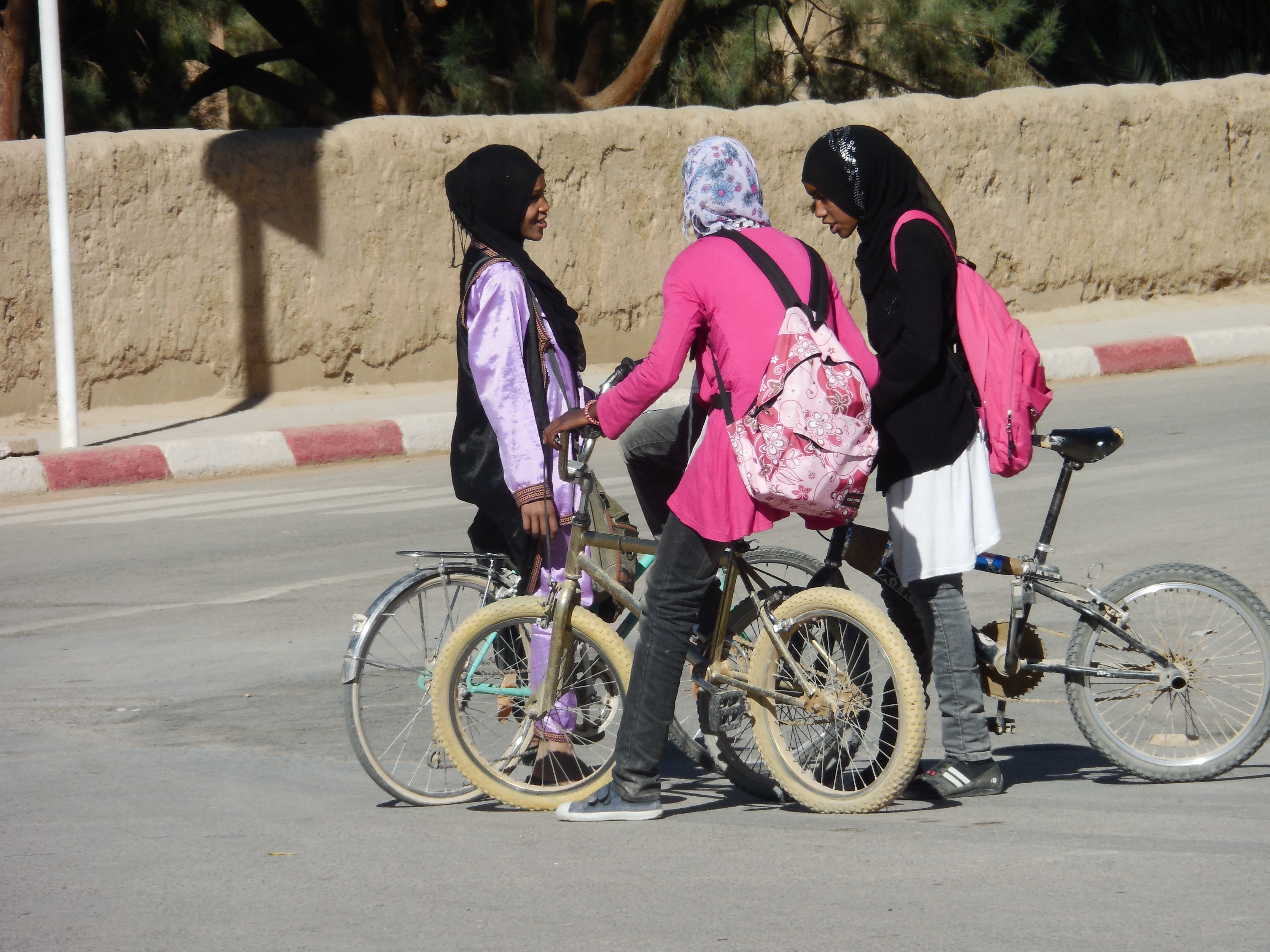
Girls in Rissani.

Girls in Rissani.

Back to the hotel for lunch, I proceeded to offer a lecture on the current state of the so-called “Middle East” (who says it’s “middle”?!) and some of the factors that should go into any attempt at understanding what is happening in the various sub-regions and what the primary motivations are.  We had a good question and answer session once I had finished my expatiations….

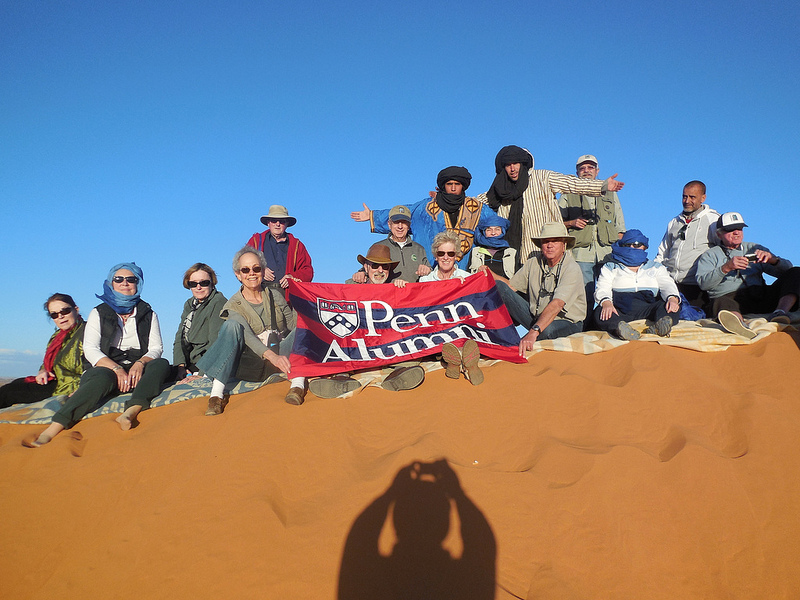
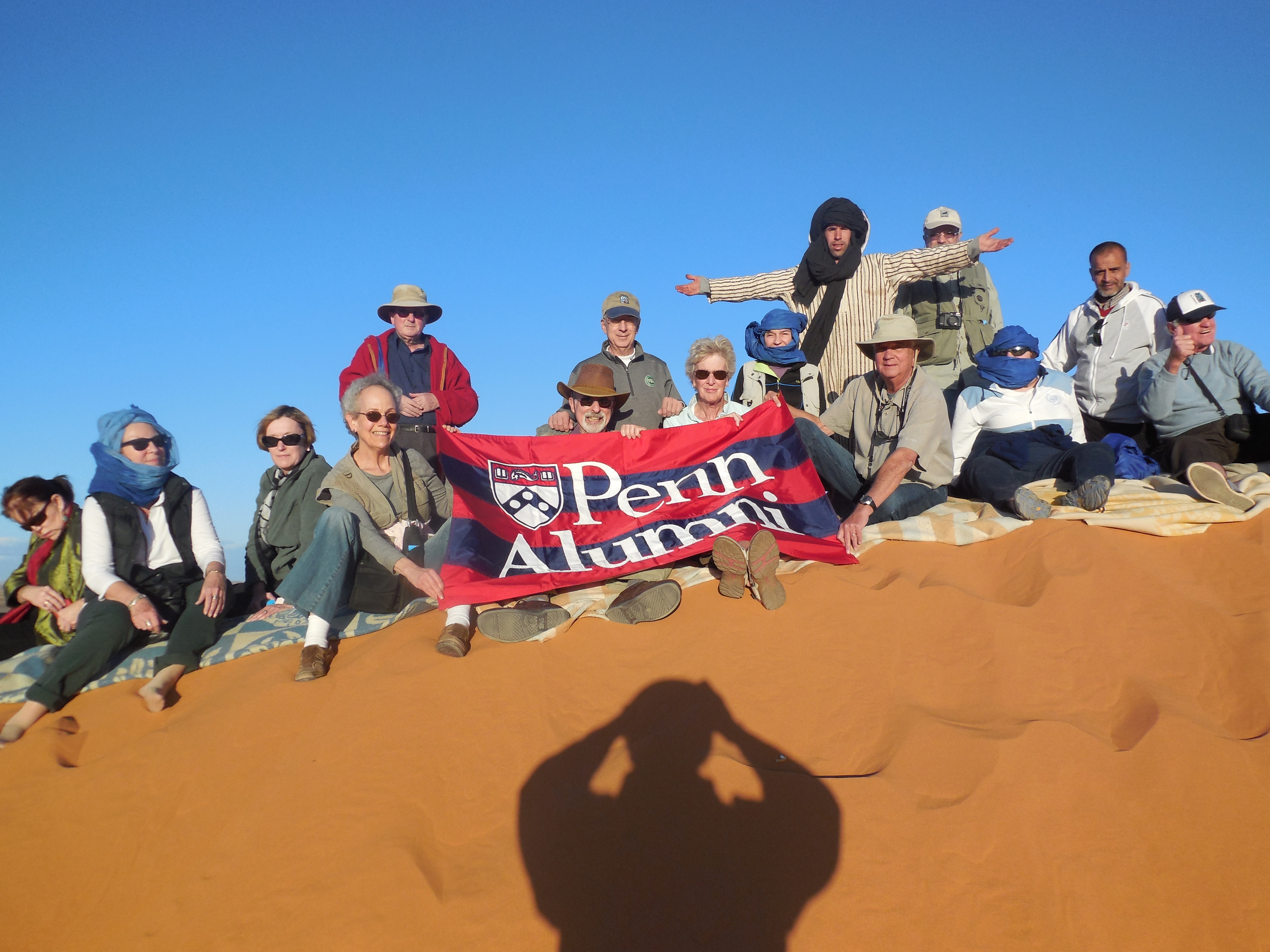
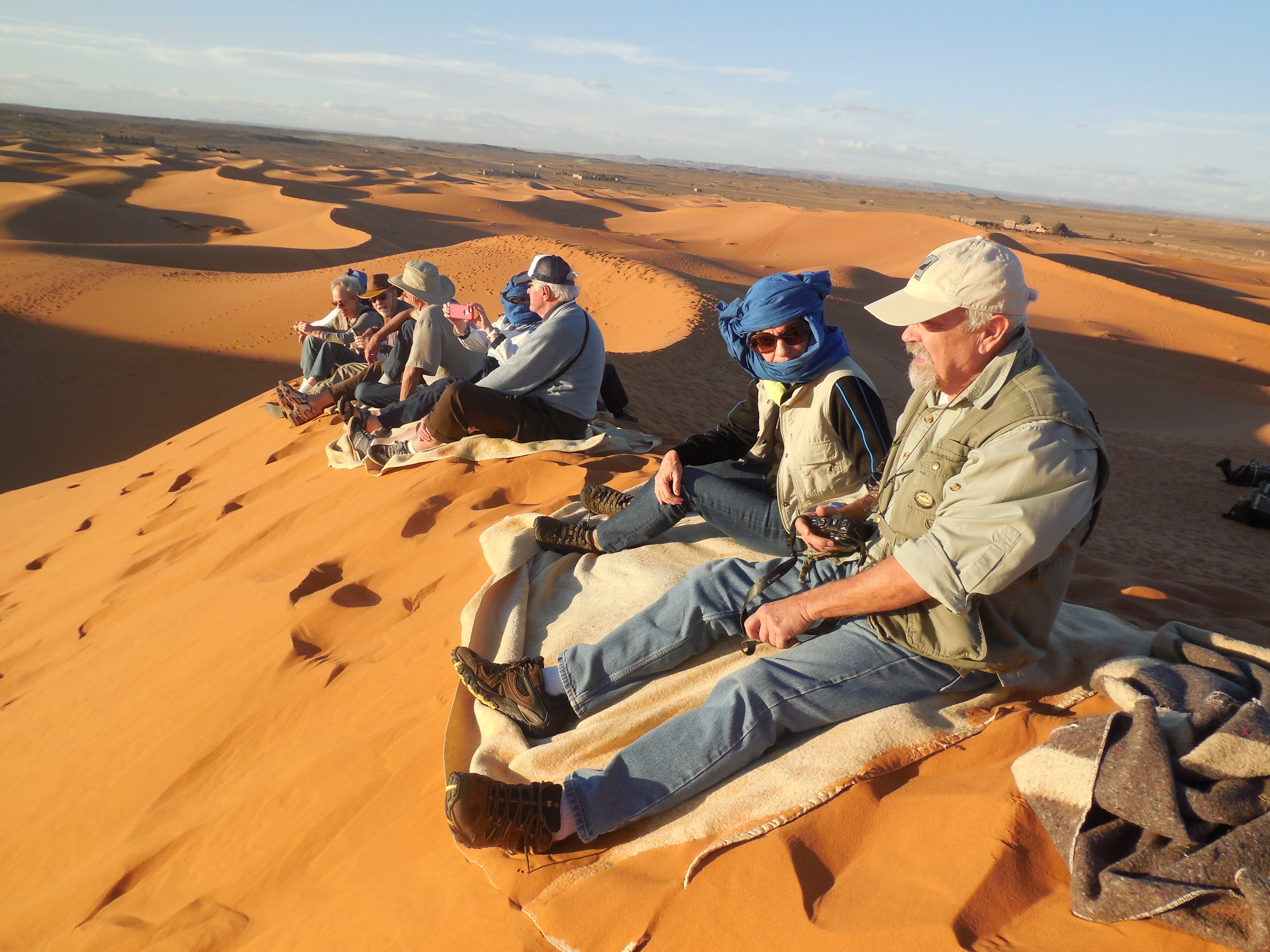
In the mid-afternoon we left the hotel for what is usually one of the highlights of this tour, a visit to the Merzouga sand-dunes and a camel (actually, a dromedary) ride. The entire group duly mounted their riding-beasts, and we set off in caravan formation–nose-to-tail–up an impressively huge set of dunes (some 400+ feet high).  I once again discovered why the camel/dromedary is known as “the ship of the desert”!  Once at the top (or nearly so), we sat on the edge of the dune and waited for sunset. The entire vista, the shadows cast against the dunes, and the gorgeous light, all were truly memorable. Once the sun had set, we made our way downwards as the sky turned to various shades of red and pink. Once again, dinner was at the hotel.

Penn alumni and friends at the top of the dune.

Penn alumni and friends at the top of the dune.

Waiting for the sun to set.

Waiting for the sun to set.

DAY 9

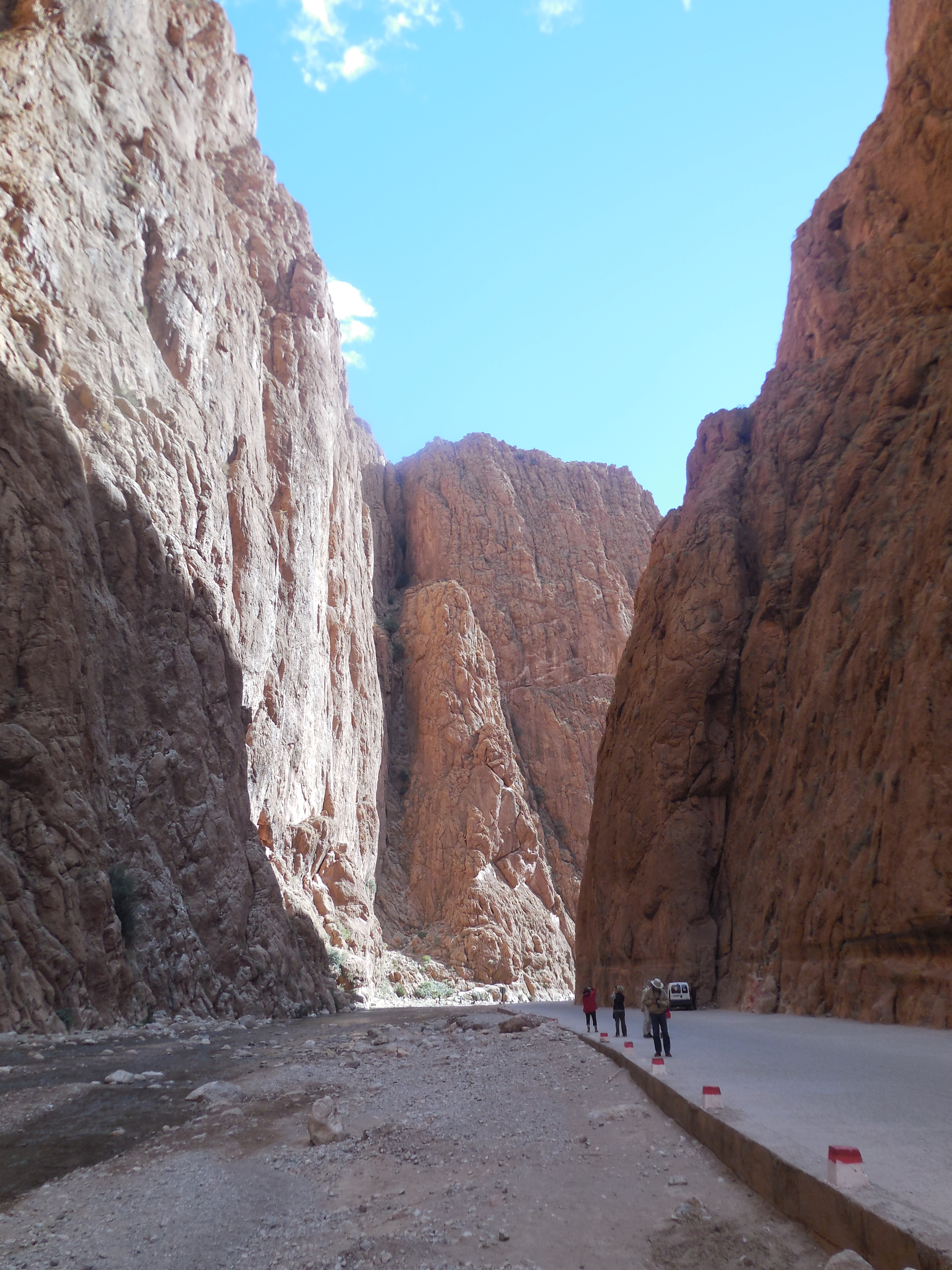
This was another day for a long-distance bus-ride. From Erfoud we traveled to the Tinchir oasis and then into the spectacular Todra Gorge with its narrow defile.  We had lunch at a restaurant named Chez Michelle (veal and creme brulée), after which we set out on the long drive to Ouarzazate via Qal`at Mgouna where we were able to purchase some of the primary local product, rose-water. We eventually reached the Berber Palace Hotel in Ouarzazate (the Moroccan version of Hollywood, we gathered) at about 6 p.m.

The Todra Gorge.

The Todra Gorge.

DAY 10

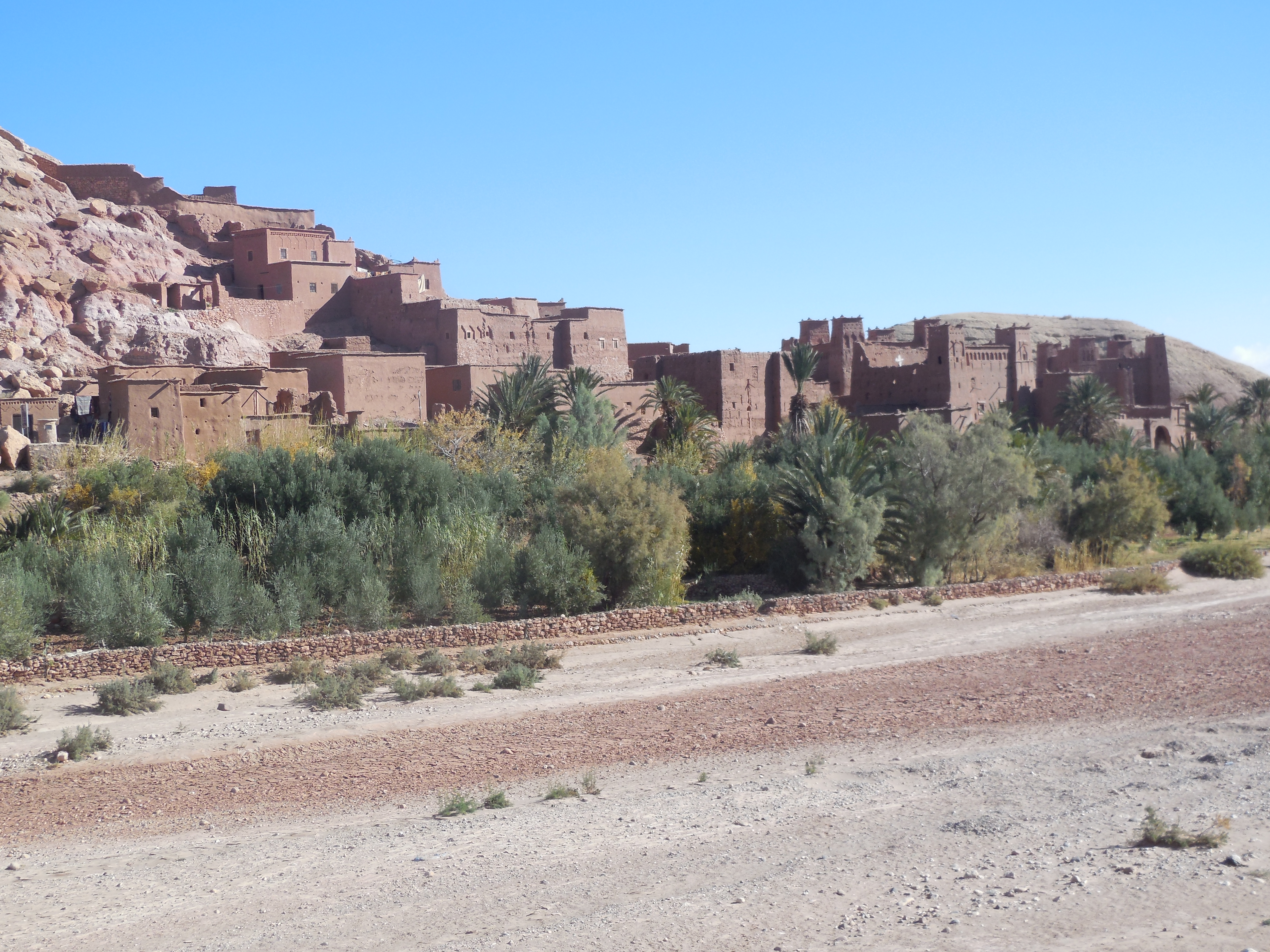
Leaving Ouarzazate at 9 a.m., we were on our way to Marrakesh.  Passing by another “kasbah” (Tifoultout), we reached the fabled “ksar” of Ait ben Hadou, situated in a lush oasis with a climb up to the top and spectacular views over the surrounding landscape. This afforded us the experience of a classic type of southern Moroccan Amazigh fortress-town, with winding alleyways (now crowded with stores of a wide variety), all enclosed within a firmly walled structure. We had lunch in a lovely restaurant that looked out directly on to the fortress-town.

Ait ben Hadou

Ait ben Hadou

After lunch we left on another long drive, this one over the remarkable road constructed by the French that traverses the N’Tichka Pass of the High Atlas Mountains; first up the mountain to the top at about 7,000 feet and then–inevitably–down again to arrive at Morocco’s most fabled city, Marrakesh (and yes, the emphasis is on the “rak” syllable–or, if you’re using Moroccan dialect, it’s something like “Mrrksh”!). The Sofitel Hotel turned out to be a luxurious hostelry, in the “posh” part of the city known as “Hivernage.”

DAY 11

We began our visit to Marrakesh with a stop at its most visible landmark, the Tower of the Kutubiyya complex in the center of the city. Following that we made our way through part of the old medina and arrived at the huge ruined complex of the Badi` Palace.  Climbing up to a second level, we found ourselves communing with an entire army of storks who were playing their usual games of “knock me off my perch, and I’ll knock you off yours”…. They had also perfected the art of standing on one leg, a useful posture for cocktail parties. Leaving that enormous complex we headed for another palace, this one more modern (19th century), the Bahiyya Palace, with its lovely garden and its series of beautiful mosaic-ed rooms leading to a large courtyard. Then it was back to the hotel for lunch, a buffet consumed in the warm sunshine.

The infamous storks.

The infamous storks.

In the afternoon we made our way into the truly labyrinthine medina, exploring its many, many craft sub-divisions and paying special visits to a wood-painter and a facility specializing in spices, medicines and perfumes. In the latter we were regaled with all kinds of traditional herbs, spices and medicaments; some of our group enjoyed neck-massages, and many people purchased cooking spices, aromatic plants, and other materials of all kinds. We then continued our meandering through the various segments of this huge bazaar, finally reaching the hub of Marrakesh’s cultural life, the world-famous Jma al-Fna Square, with its multitude of traditional performers–snake-charmers, fortune-tellers, monkey-trainers, and the like; not to mention the enormous array of food-sellers (including sheep- and goat-heads for those so inclined…).

Back at the hotel, I had discovered a white grand piano.  With the great Liberace in mind, I gave a short performance on it before we went out to a dinner at a restaurant where I had dined previously: Le Foundouk in the medina, where we all enjoyed a wonderful dinner for which we had readied ourselves by indulging in a fairly lengthy walk from the bus into the medina in order to get there.

DAY 12

On our second day in Marrakesh we set out by horse-drawn carriages to the Menara, the summer-resort built by the rulers as a way of escaping the intense summer heat.  Built by the side of an artificial lake it offers splendid vistas of the surrounding countryside (not to mention the Marrakesh Airport close by).  The lake itself contains some very large carp who lived up to their reputation as voracious eaters when Muhammad offered them some bread. From there it was on (by carriage again) to the Majorelle Gardens, a lovely enclosure that had originally been planned by the French artist, Jacques Majorelle, in the 1920s and was later taken over by Yves St. Laurent, the French fashion designer, who loved to spend time in the residence there. The complex also contains a wonderful Amazigh (Berber) Museum, full of spectacular examples of the arts and crafts of the indigenous people of the region.

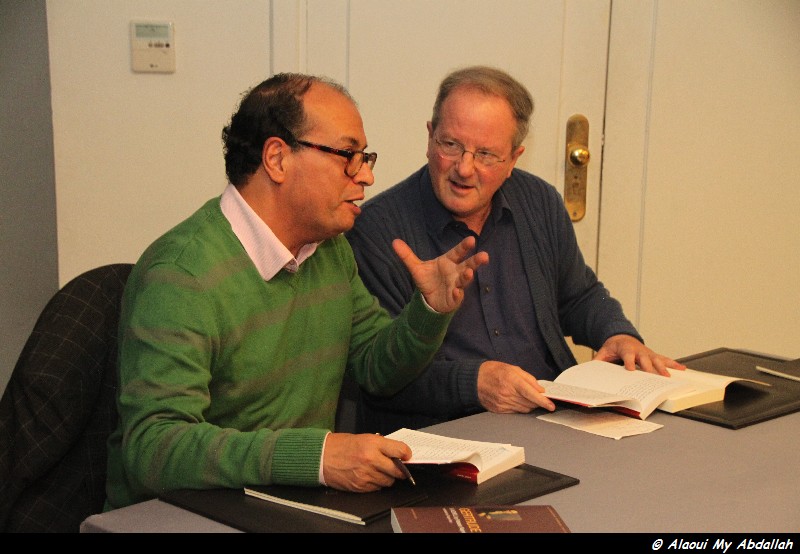
After returning to the hotel for lunch, the afternoon was open for further excursions into the medina in quest of items to purchase. At 5 p.m. the fourth and last of the tour’s lectures took place.  I had invited another Moroccan writer, Hassan Najmi, to come and do a joint reading with me of his novel, Gertrude, that I had recently translated (it is due out in January 2014).  Unlike the session in Rabat with Ahmed Toufik however, Najmi seems to have informed his colleagues in Marrakesh that he was coming and doing this reading, because just before 5 p.m. a large percentage of the literary establishment of Marrakesh showed up.  The session thus turned into what was for me a fascinating translational and trans-cultural experience, with readings in Arabic and English and follow-up questions from both segments of the audience in Arabic and English.

Roger Allen and Hassan Najmi conduct a joint reading of Gertrude.

Roger Allen and Hassan Najmi conduct a joint reading of Gertrude.

For our dinner Muhammad had arranged for us to visit another of Marrakesh’s most famous restaurants, Dar Moha, where we were treated to another virtuoso display of Moroccan cuisine.

DAY 13

And so from Marrakesh to Casablanca. This took us up the recently completed autoroute and into Morocco’s largest and most populous city–certainly modern in every way, but also industrial and noisy. While it may be celebrated as a result of the famous movie to which it gives its name, the present-day reality is far different (in fact, the movie itself is far more based on Tangier than on Casablanca).

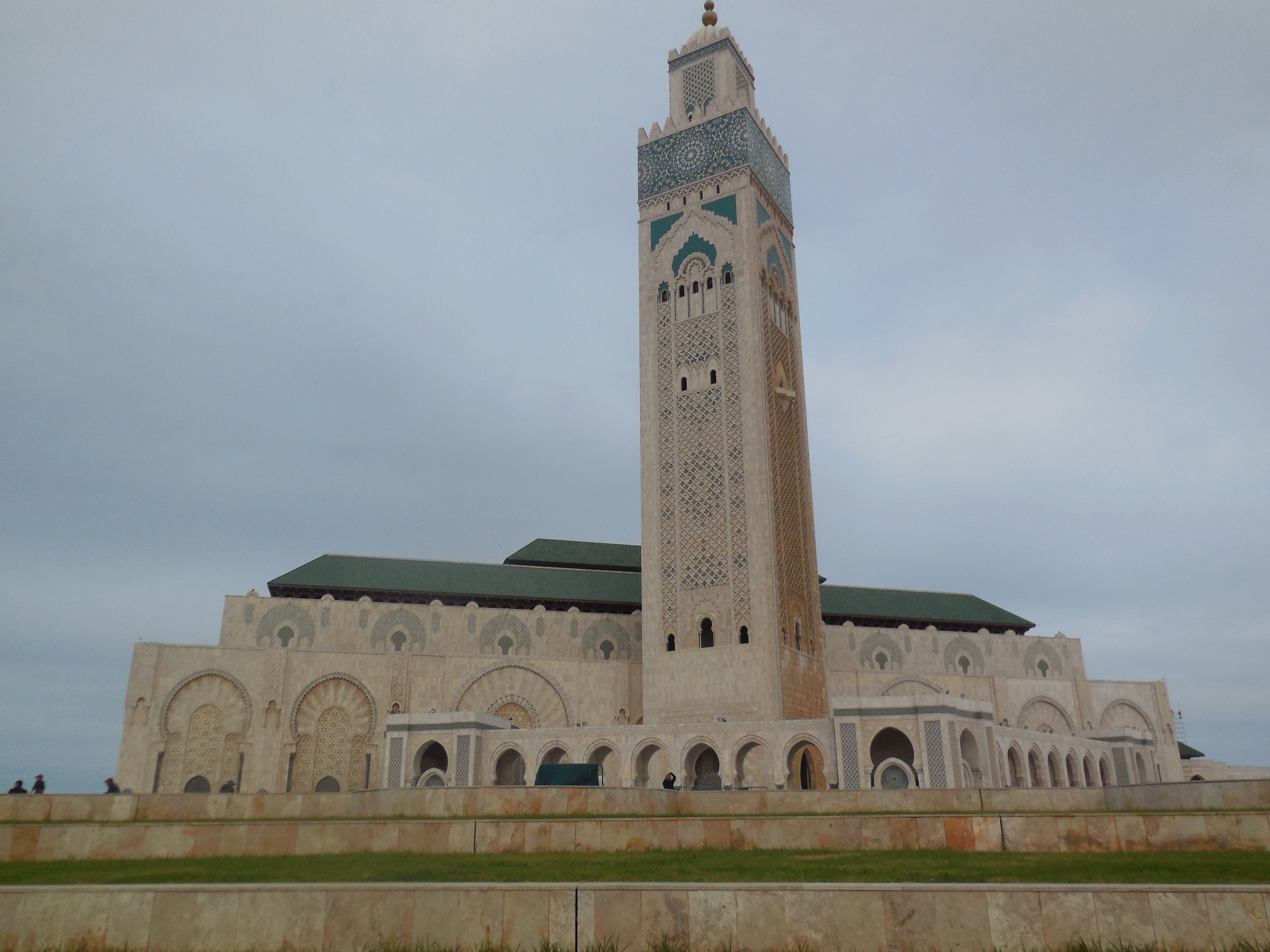
We headed first for the seaside, and had lunch at a restaurant overlooking the Atlantic Ocean. We then proceeded to the Hassan II Mosque, now the most famous and often visited site in the city, where we had been scheduled for a 2 p.m. visit. Let’s just say that opinions on this building and its esthetic pretensions will vary, but it certainly leaves an impression. The bus then took us to the so-called Habus Quarter, which the French constructed in an attempt to replicate the styles of pre-modern Morocco. Finally we made our way to the Kenzi Tower Hotel, a large building in the city center.

The Hassan II Mosque in Casablanca

The Hassan II Mosque in Casablanca

Our final dinner was held (on Thanksgiving Day!) in the appropriately named Rick’s Cafe.  Following caesar salad and a fish plate, we were offered a delicious cheesecake with fruits.  I took this occasion to express our group’s profound thanks to Muhammad, our guide and organizer.  This meal was just as wonderful as so many others that we had enjoyed during our visit.

DAY 14

We left the hotel for the airport at 8:30.  Since our plane did not take off until 12:30, I wondered at the length of time involved, but clearly Muhammad knew what was coming. While he was as helpful as he could possibly be before leaving us to our own devices, our experience at Casablanca Airport was probably the most negative aspect of our entire trip, but there was almost nothing that anyone could have done about it.  The level of security at this airport is taken to truly absurd levels: our baggage was scanned in order to get into the airport; every Moroccan traveler, it seemed, had an overweight bag that had to be opened and partially emptied; regular attempts at queue-barging were pre-empted in Arabic by yours truly; and there was a further security station in order to get into the passport-control. And…some 8 hours later we landed on time at Kennedy Airport and went our separate ways….

**************************

This was a truly wonderful trip; it was well organized, and it is difficult to find sufficient words to express our admiration for our Guide, Muhammad Dahouac, who is not only knowledgeable about Morocco and its history but also considerate and efficient. He was aided throughout the trip by two other wonderful Moroccans, our driver, Hasan, and his assistant, also called Hasan.

Beyond that, I have to say that the members of the group also contributed in a major way to the success of this tour. Many of them had already traveled widely, and everyone blended together and shared experiences in a way that made for some great conversations and a great deal of good humor.  Thus does the world go round….

And now I’m not “Neilie Dunn,” but fully done (and only those who were on the trip will know what that’s all about).

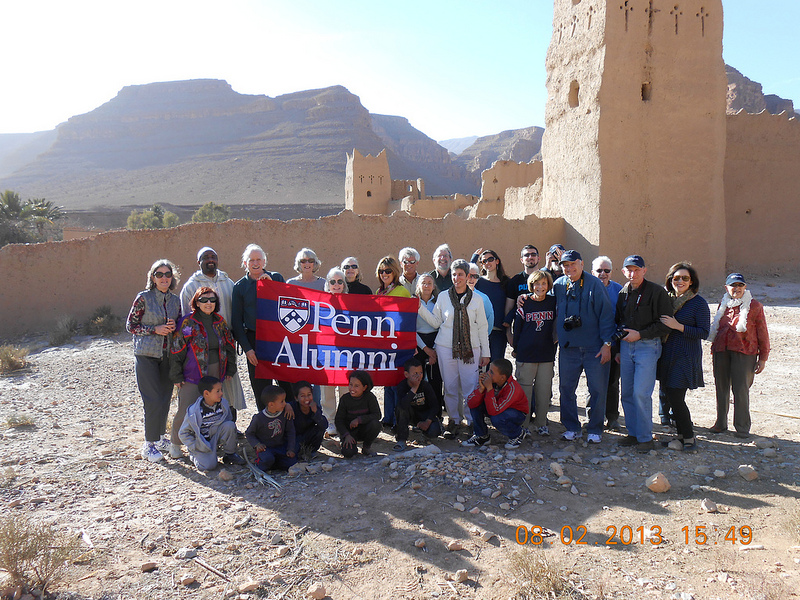
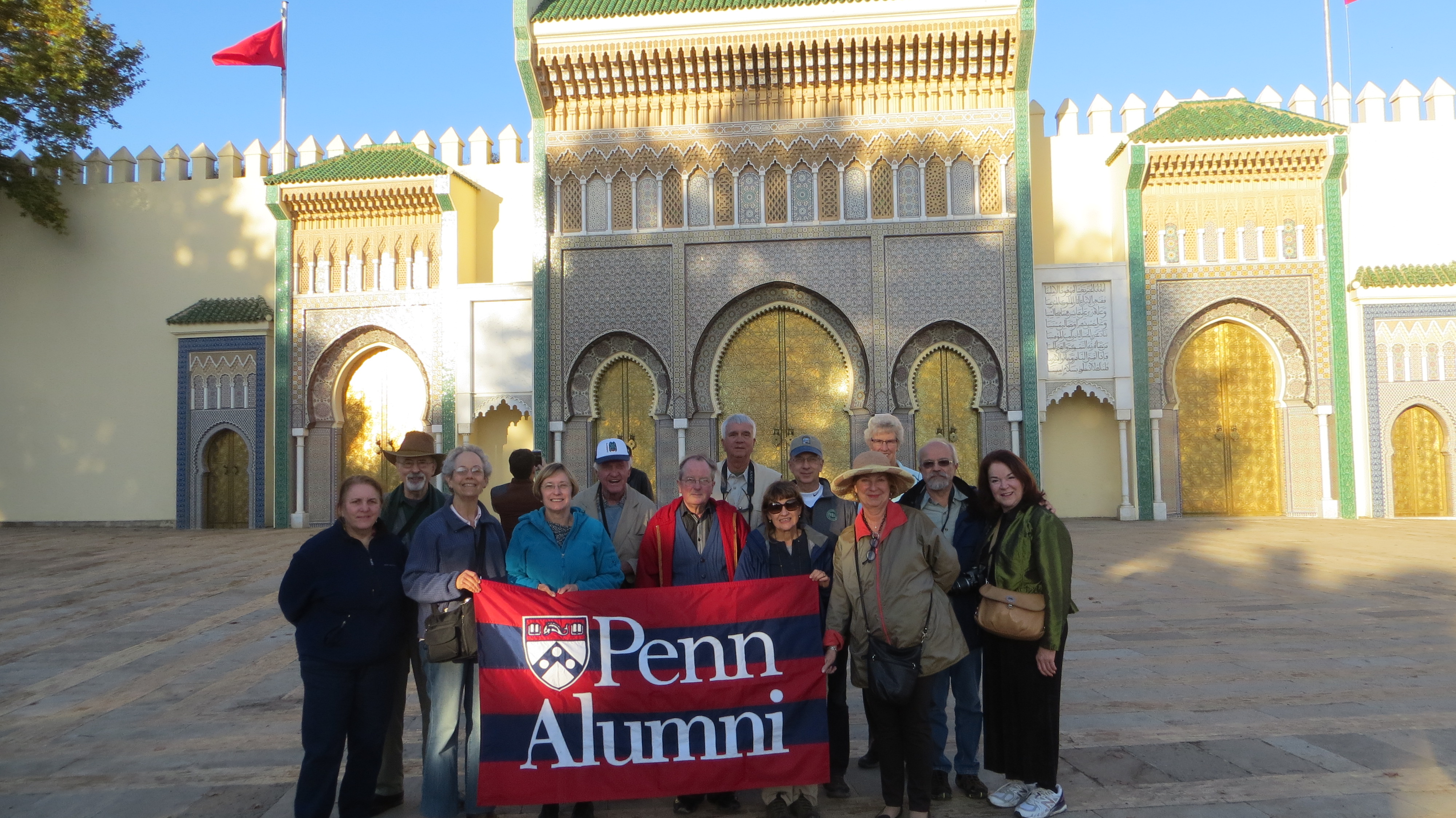
A final group shot at the Royal Palace in Fez. Photo from Susan Croll, CW’68, G’94 and Paul Monasevitch.

A final group shot at the Royal Palace in Fez. Photo from Susan Croll, CW’68, G’94 and Paul Monasevitch.

[If this blog inspired you to travel with Penn Alumni Travel, check out our 2014 schedule here.]

1 Comment

Filed under Faculty perspective, Penn Alumni Travel, Travel

Penn Alumni Travel: Apulia

 Author: Anita L. Allen, Vice Provost for Faculty and Henry R. Silverman Professor of Law

The first thing you learn when you arrive in Apulia, is that the region occupying the heel of the boot of Italy is called “Puglia” by the Italians.  Until recently, it was difficult to get to Puglia from major cities outside of Italy. Today the “undiscovered” region is well-served by two modern airports. The Penn Alumni Travel group for which I served as a faculty host, September 17-26, 2013, arrived at one of them, Bari Airport. Along with an affable alumni group from Brown University who would be our travel companions for the week, we boarded a comfortable motor coach.  The 45 minute trip to our hotel in Polignano a Mare was narrated by AHI Travel’s campus host Mick and a local guide, Daniella.  Mick, a British expatriate, was in charge of logistics.  Daniella, a vivacious licensed guide and native of Pulgia, won us over with her detailed knowledge of history  and culture, peppered with the wit and wisdom of her  nona, her grandmother.

001

Hotel Covi dei Saraceni in Polignano a Mare was dramatically situated atop a bluff overlooking the turquoise and cobalt sea. From the private balcony off my antique-filled room I had a clear view the statue of Polignano a Mare’s native son Dominico Mugdana, famous for the upbeat ballard Americans my age know as “Volare.” Every so often someone would arrive at the statue, snap a few photos and then and break out in song.

018

To enjoy Polignano a Mare in September, one mostly strolls the streets of the medieval heart of the town for the unique scenery—elaborate flower boxes, stunning views of the sea, weathered doorways and modest churches.  Several ristorante occupy caves built into the bluffs.  But there is amore  traditionally sited osteria, trattoria, gelato stand and cafe on virtually every block.   The streets were not crowded and neither were the town’s several gift shops.   Many of us shopped and ate only, but some of the hardy Penn alums descended to the beach and swam in the chilly ocean every day.

Our first big outing was to central Bari.   Bari is a gorgeous city with an  air of affluence.  An impressive castle, a city gate, and winding streets impress. A personal highlight for me  was  watching ordinary people sitting in their doorways  making pasta by hand and drying it in the open air on large mesh trays.  The women of Bari are known for their version of the Puglian speciality, pasta orriechete, “little ears”. I tested out my dusty Italian on the pasta makers.

034

My basic skills served me very well in Bari and throughout Puglia, where fewer people speak fluent English than in Milan or Rome.   The linguistic diversity of Puglia contributes to its authenticity and reflects its history as a meeting point of Middle Eastern, African and western civilizations.  Many dialects and languages are spoken in Puglia.  Some communities even speak a form of Greek.  The pasta makers were warm and welcoming, as were the fruit vendors, who invited our Penn Alumni group to sample freely from their stands in a universal language of big smiles and even bigger gestures.

We visited The Basilica di San Niccola in Bari at an opportune time. Dozens of Russian pilgrims, women  in brightly colored modesty attire, packed into the crypt where which the relics of Saint Nicholas are interred. Lovely chanting and song celebrated the Saint.   Daniella sat us down in the main nave to tell us about the design of the church and the  complex story of Saint Nick,  a generous cleric whose bones were brought to Italy for safe-keeping.

Southern Italy produces delicious table wines.  One of our best days began with a tour of Castel del    Monte and ended with a trip to a family winery.  From the famous, centuries-old castle we enjoyed panoramic views of a hilly national park planted with evergreen trees.

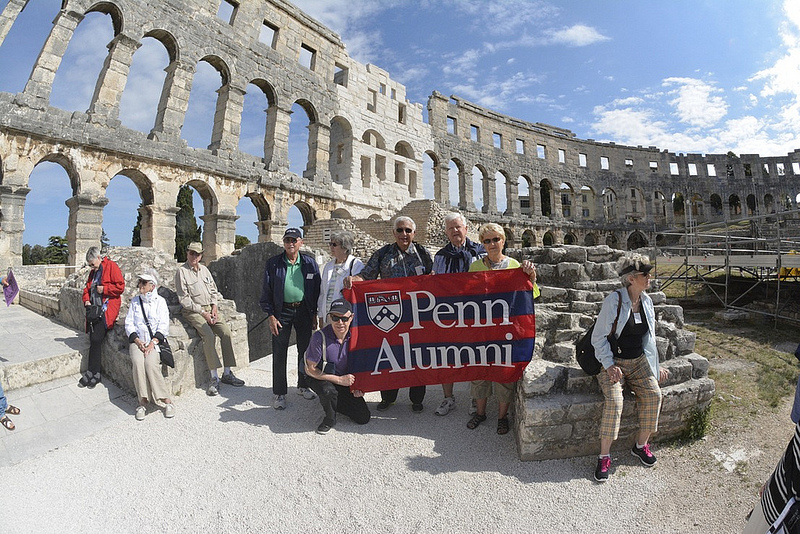
It was in the octagonal courtyard of this castle that the Penn Alums paused for a group photograph.

137

We left the castle grounds for a nearby vineyard and a wine tasting.  Then, at the vineyard, the proprietor first took us on a tour of his thoroughly modern wine production room  and fields where we  tasted  delicious cabernet sauvignon  grapes straight from the vine.  They were dark, small, seeded and warmed by the sun.  On a shaded porch we were treated to a lunch and wine.

On a trip to Puglia, Daniella insisted, the dish that combines mussels, potato and rice is a must taste and the town of  Lecce is a must see.  Lecce is sometimes called the Florence of southern Italy.    The comparison is not especially apt.  Lecce centro is sunny, uncongested and unpretentious. Its ornately carved stone religious and secular architecture is the handiwork of locals without world reputations.

071

And there is nothing akin to the Uffizi in Lecce.  Daniella urged us to appreciate Lecce on its own terms:  consider that artisans cut off from cosmopolitan northern Italy without marble or  money, hand-carved Baroque, Gothic and Byzantine style  ornamentation from local materials to  create their own masterpieces for their own  communities of fisherman, farmers and merchants.

079

After soaking up Lecce’s architecture and its Roman ruins I took a few minutes to shop for souvenirs.  I was delighted to discover that tarantism, the subject of one of the two special lectures I had prepared for the trip to Puglia, was manifest in Lecce in the form of spiders on tee-shirts and spider-embellished  tambourines.  Tarantism began as a tradition of poor men and women farm workers claiming to have been bitten by  spiders developing  psychological and neurological-like illnesses treated by pizzica music,  manic dance and the intercession St. Paul.  Of course, I was relieved to find no souvenirs registering the reality of the topic of my other lecture: the pollution, cancer  and labor problems plaguing  the town of Taranta attributed to the Ilva steel plant.

The unique towns of Alberobello and Ostuni were both on the agenda for our penultimate day of group travel.  Both towns are UNESCO World Heritage sites, and deservedly so.  Alberobello is famous for its Trulli houses .

170

171

179

The Truli neighborhoods of whitewashed rounded houses with tall domed grey slate roofs, look like  something from a fairy tale. Cruder, haphazard versions of Trulli dot the landscape of Puglia north to south in large numbers. But it is only in Alberobello that one finds the well-kept Trulli as the dominate style of domestic architecture.  We took some time before leaving Alberobello to visit the lace makers for which the town is also famous

139

Ostuni is an ancient town with roots in the stone ages built inside and atop sandstones caves, some natural, some carved by hand. For centuries families and their farm animals—goats, mules and chickens– lived inside these cave homes.  After the Christian era, dozens of churches were also built into the rock.    In the 1950s the Italian government found it necessary for public health reasons to relocated the families of Ostuni to  new  housing  on the outskirts of town.  Today, the cave dwellings can be leased from the government for homes and commercial purposes under strict conditions that require a balance of modernization (such as toilets and running water) and historic preservation.  Numerous bed and breakfasts have popped up in the town, and tourism is on the rise. We visited a typical larger Ostuni  family home, now a small  museum of an earlier era.  It consisted of two sleeping areas, a kitchen and two cellars for storing  tools and food.   We also visited four churches that that been converted into wine presses,  vestiges of Byznantine era religious frescos  faintly visible on a few walls.

Our final day of group travel began with a visit to the town of Trani. Once, a wealthy shipping portal to the Adriatic,  today the town  can be enjoyed for its manicured, tree-lined  seaside park;  for views of  a commanding castle repurposed as prison and now a fine arts center;  and  for an active Roman Catholic Cathedral where pilgrims and  Crusaders once rested.  Law alumni in our group took special note of Trani’s role in the development of European maritime law and of the contemporary Italian Court of Appeals which shares a piazza with the main Cathedral.  An historic Jewish Quarter of beautiful winding streets and a vacated synagogue led us to pause for serious reflection.   Control over cultural properties from the Quarter are still a subject of active debate between Trani authorities and Jews now living in the nearby  town of  Barletta.

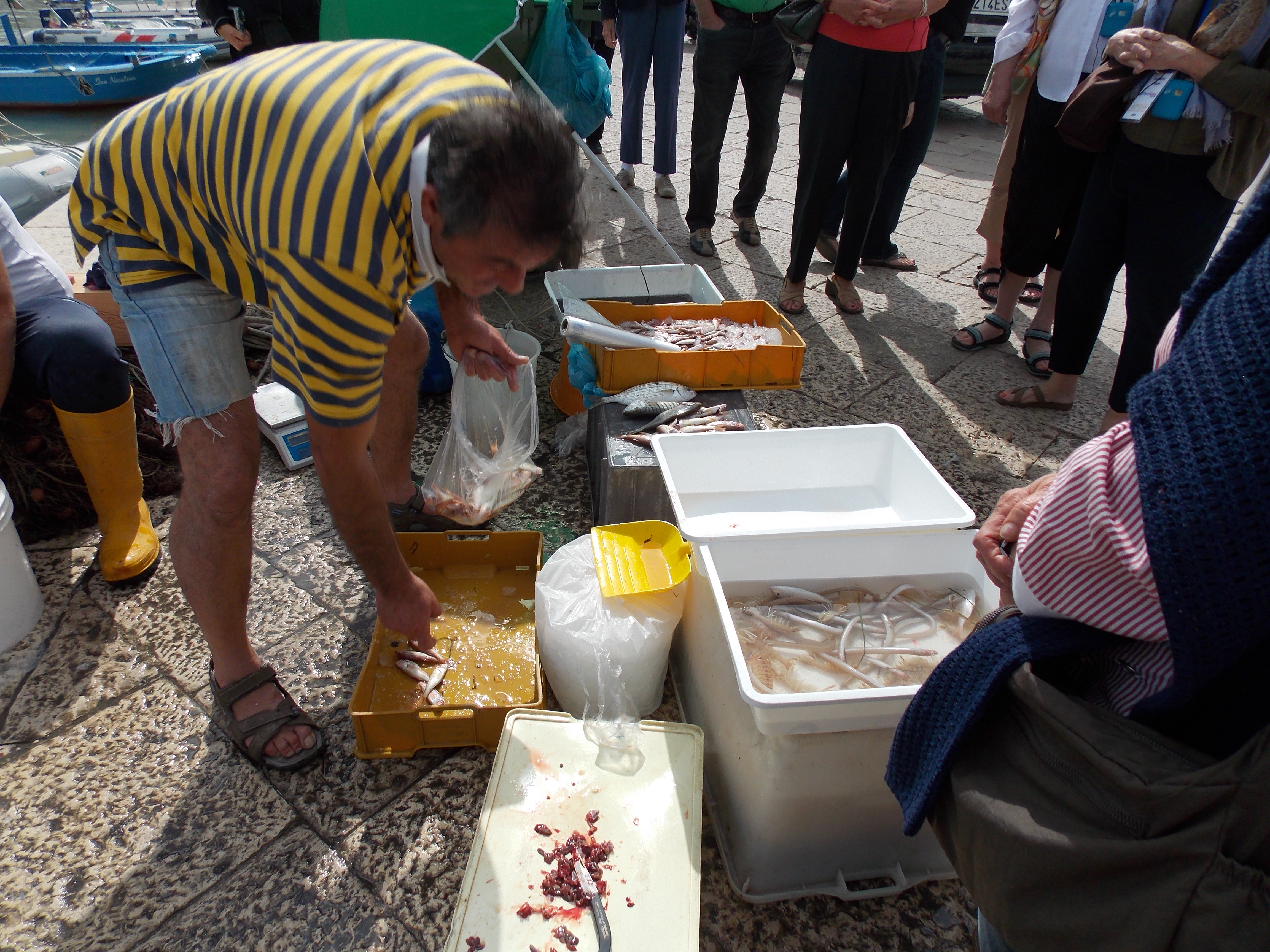
As we walked along a pier we stopped to chat with fisherman  selling unusual  fishes and  octopuses   to homemakers. We were startled to see how a baby octopus is prepared for market. The live creature was  flung repeatedly  against the bottom on the boat to kill and tenderize it,  then spun in a plastic tub of cold water to curl the tentacles into the shape preferred by local cooks.

196

197

Back on the motor coach we traveled only fifteen minutes from Trani to the small town of Bisceglie. There we were treated to a cold-pressed extra virgin oil tasting and a four-course al fresco lunch of regional specialities and rose wine.  Our host was the upscale oil mill “Galantino.” founded in 1926.  After a short video on the history of the Galantino mill in a cheerful subterranean cellar, our guide Massimo escorted us around to see how the mill’s completely natural prize-winning olive oils are produced.  We saw the weigh stations where each October to December truckloads of olives, black and green, shaken from ten thousand trees, are brought in from designated local groves for processing using age-old granite stone grinding techniques with a few high-tech flourishes to ensure hygiene and environmental integrity.  The gorgeous shaded patio under which we dined on dishes that included a fava bean and chicory paste and orriechete pasta, was surrounded by peach trees, grape vines and figs trees. The fruits of these plantings became our dessert along with fresh black cherry tarts, made from olive oil pastry (no butter!) and local cherries.

We were tired and sated when we returned to our hotel. But I headed out to attend an evening  mass celebrating  what happened to be the Feast Day of Padre  Pio, a sainted Capuchin friar associated with the Puglian town of Foggia.  Sickly all his life, Pio serves as the patron saint of people with seasonal depression and stress.  Pio is believed by the faithful to have received heavenly visions and the stigmata.  I enjoyed a moving worship service and was swept into a crowd as I emerged from the  chiesa.  About two hundred were there to process through the streets of Polignano , in the company of a  life-size statue of San Pio ornamented with sun flowers and electric lights. A brass band, a group of strong men bearing an enormous wooden  cross, and priests and young women carrying crucifixes on narrow poles were also part of the sacred parade. On the way back from the procession I ran into others from my  group and we wound up in a trattoria lingering over pizza con melanzana , branzio and insalta verde.

The last day of our journey to undiscovered Italy was totally free after a morning lecture on modern Italy. That evening we joined together for a final group dinner in the hotel to say our good byes and thank our most excellent hosts and guides.

[Interested in joining a Penn Alumni Travel trip? Check out our entire 2014 schedule here. Perhaps we’ll see you in Tuscany next October!]

Leave a comment

Filed under Faculty perspective, Penn Alumni Travel, Travel

Jambo!

Author: Molly Rand, GED’13


I recently had the amazing opportunity to serve as an Alumni Relations staff-host for the Penn Travel trip: Treasures of East Africa. During the trip, I was joined by an adventurous group of 10 alumni travelers. Together, we experienced what makes Africa, and East Africa in particular, such a unique and marvelous place.

Each day of the two-week trip was spent exploring the vast land of savannahs and diverse local cultures of Tanzania and Kenya. We captured sights and snapped photos of the incredible wildlife and surrounding landscape. We enjoyed a breathtaking sunset each evening and then awoke the next morning to catch it rise again.

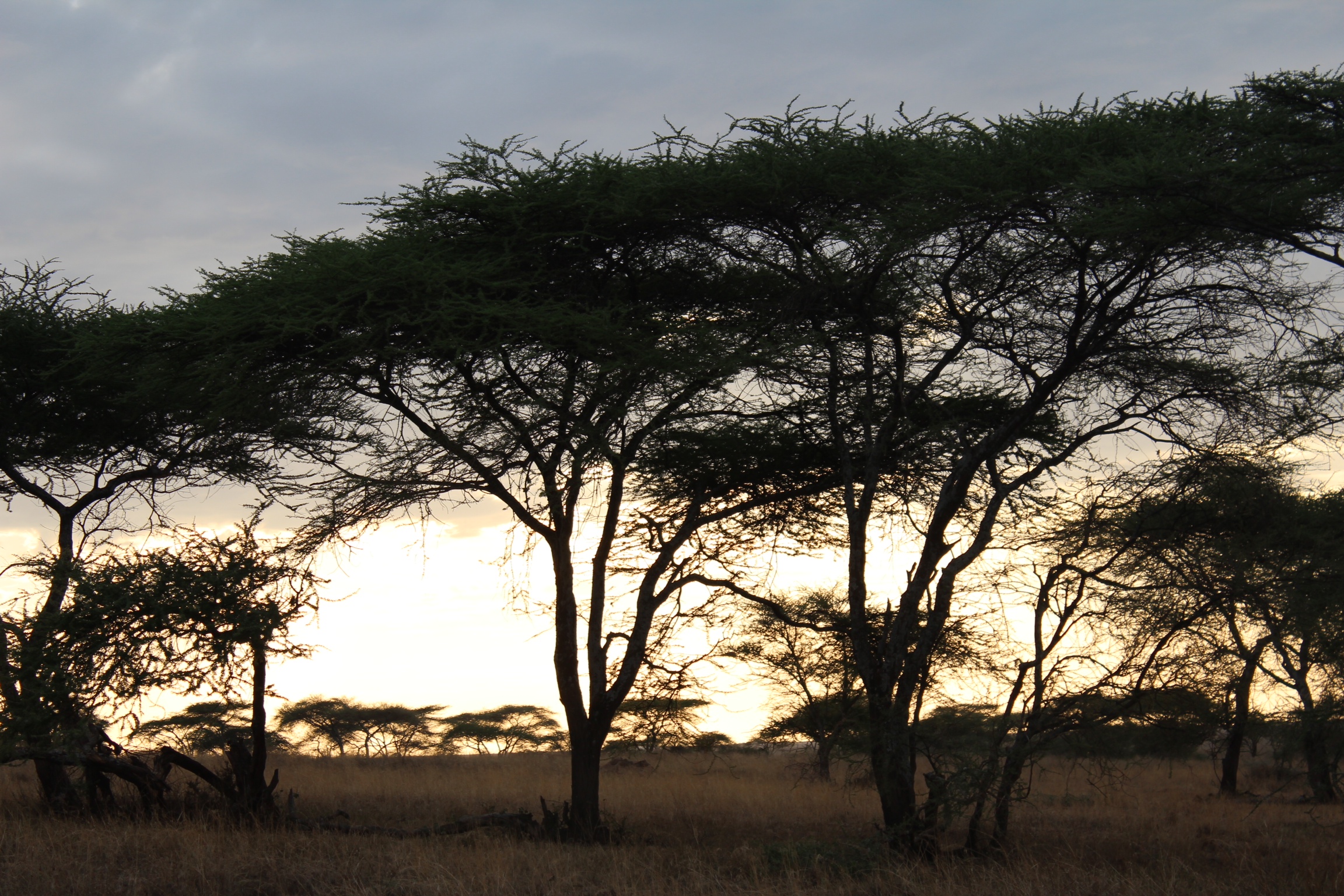
Masai Mara Sunset, Kenya

Masai Mara Sunset, Kenya

Serengeti Sunrise – Serengeti National Park, Tanzania

Serengeti Sunrise – Serengeti National Park, Tanzania


In some way, our group became a small family over the course of the trip, traveling together to take on the next adventure: to see or taste something new, to learn the next phrase for our Swahili vocabulary, and to experience another unknown treasure of East Africa.

We endured long hours and road trips in our safari vans where the bumpy and unsteady rides, or African massage as they call it, only helped bring us closer together. Our local drivers and guides quickly became our new best friends, sharing with us their vast knowledge and passion for the beautiful place they call home.


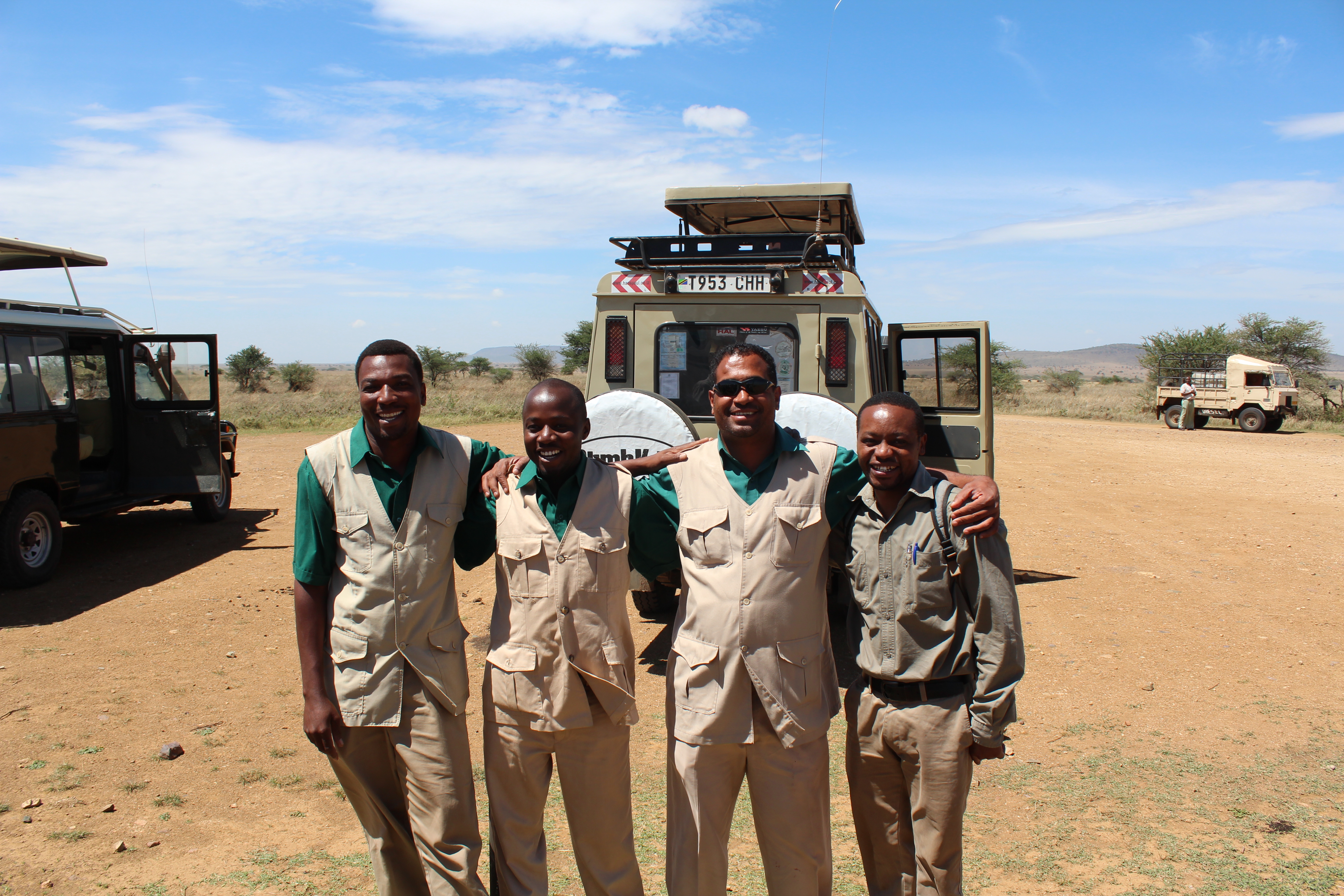
Our safari drivers (Left to Right: Wolfgang, Wilfred, Shafino) and Safari Director, Adam, in Tanzania

Our safari drivers (Left to Right: Wolfgang, Wilfred, Shafino) and Safari Director, Adam, in Tanzania.


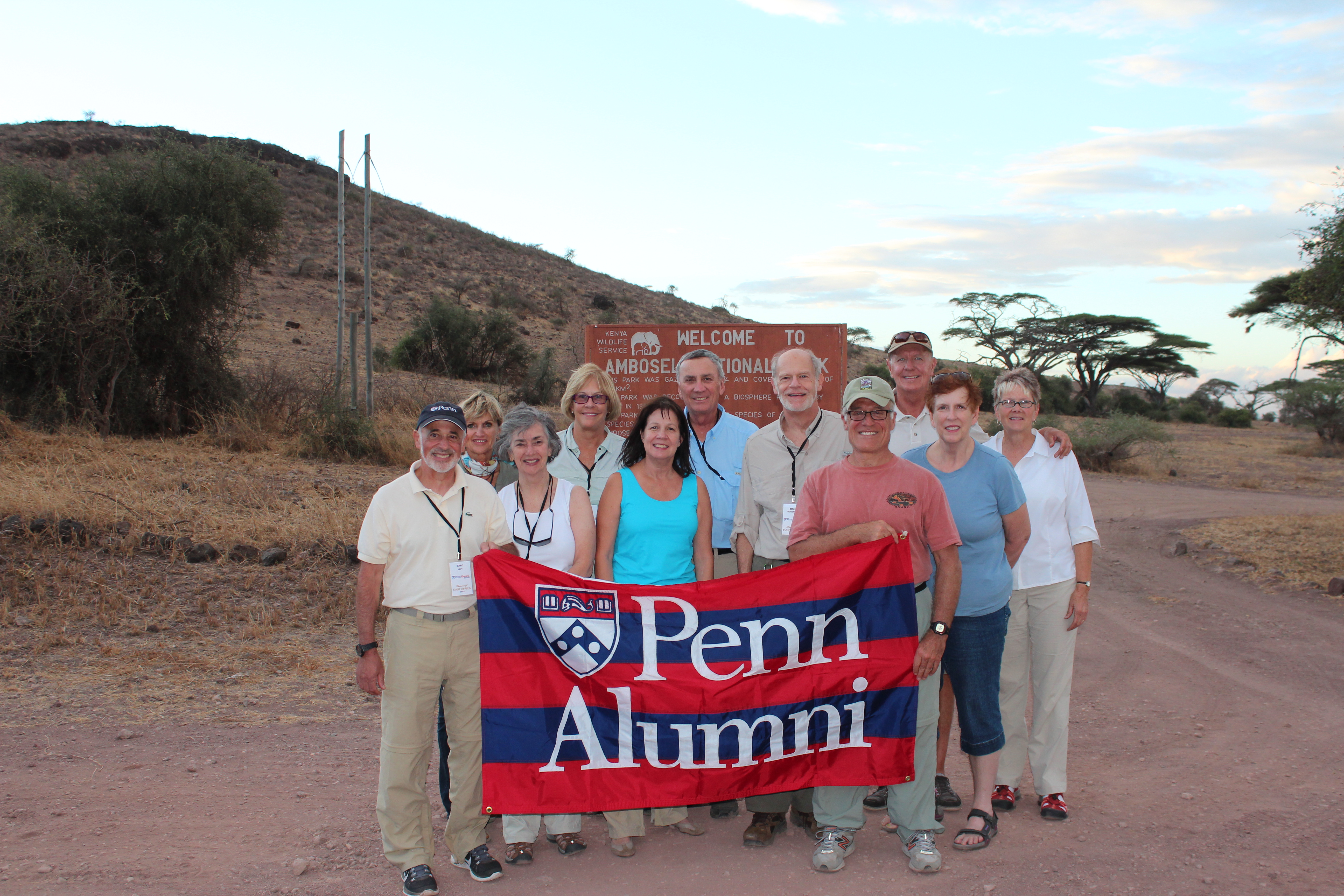
Our group’s first stop after crossing the border from Tanzania into Kenya: Amboseli National Park

Our group’s first stop after crossing the border from Tanzania into Kenya: Amboseli National Park.


Spotting a herd of elephants in front of Mt. Kiliminjaro

Spotting a herd of elephants in front of Mt. Kiliminjaro.


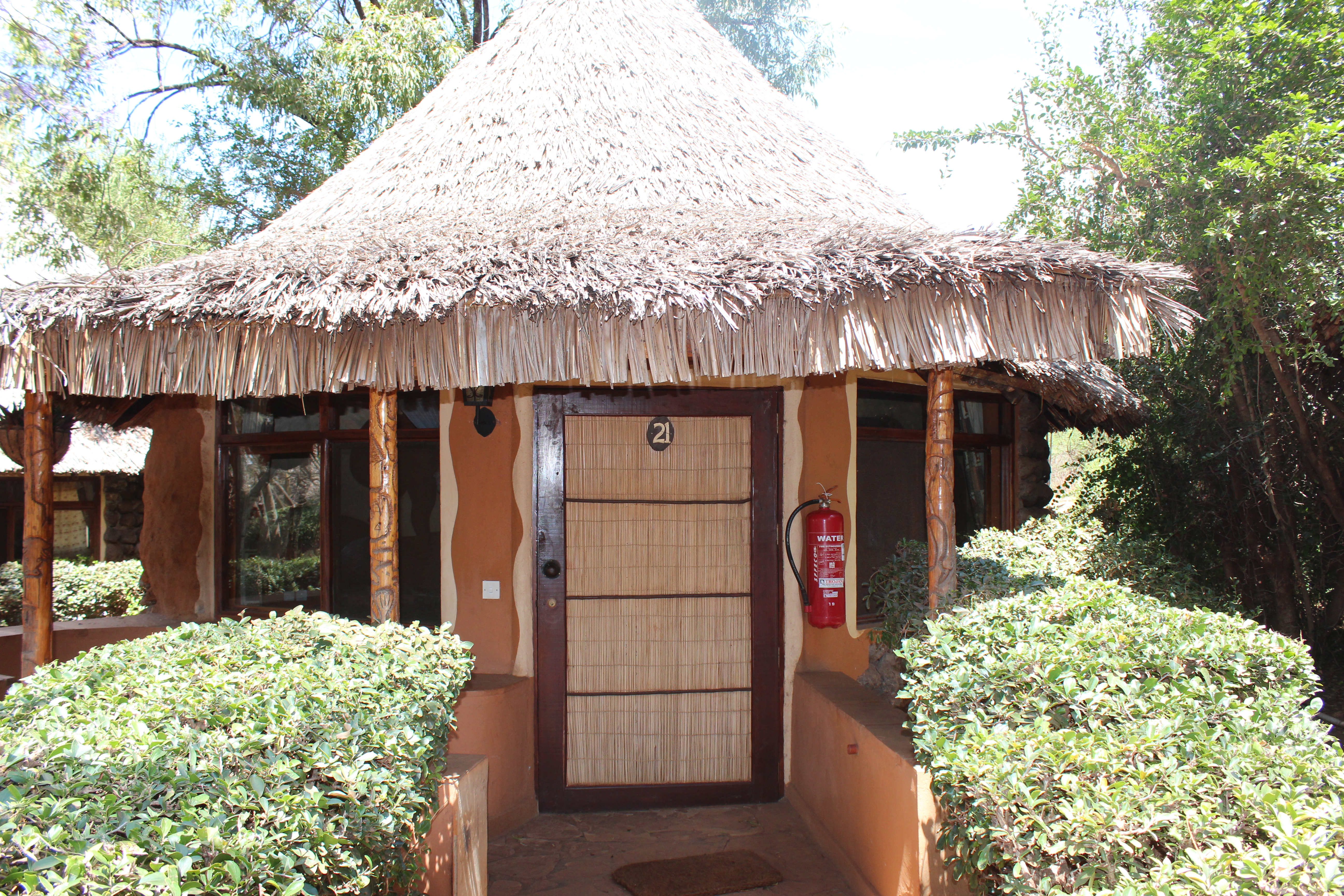
Room at the Amboseli Sopa Lodge, Kenya

Room at the Amboseli Sopa Lodge, Kenya


Before too long, I think we all became humbly aware of how different our daily lives were from the people we encountered. Yet despite those differences, the warm smiles and kind hearts of those who we met made us all feel right at home.

Photo from our visit to the Masai village kindergarten in Tanzania

Photo from our visit to the Masai village kindergarten in Tanzania.


The trip offered us a unique opportunity to immerse ourselves in a culture we only knew from a distance before this journey began. It challenged us to abandon our own perspectives and approach each interaction with a pure sense of curiosity and appreciation for the unfamiliar. As each day passed, we gained a more distinct awareness for the little things in life that really matter.

As for the other stuff, “hakuna matata” as the locals would say.


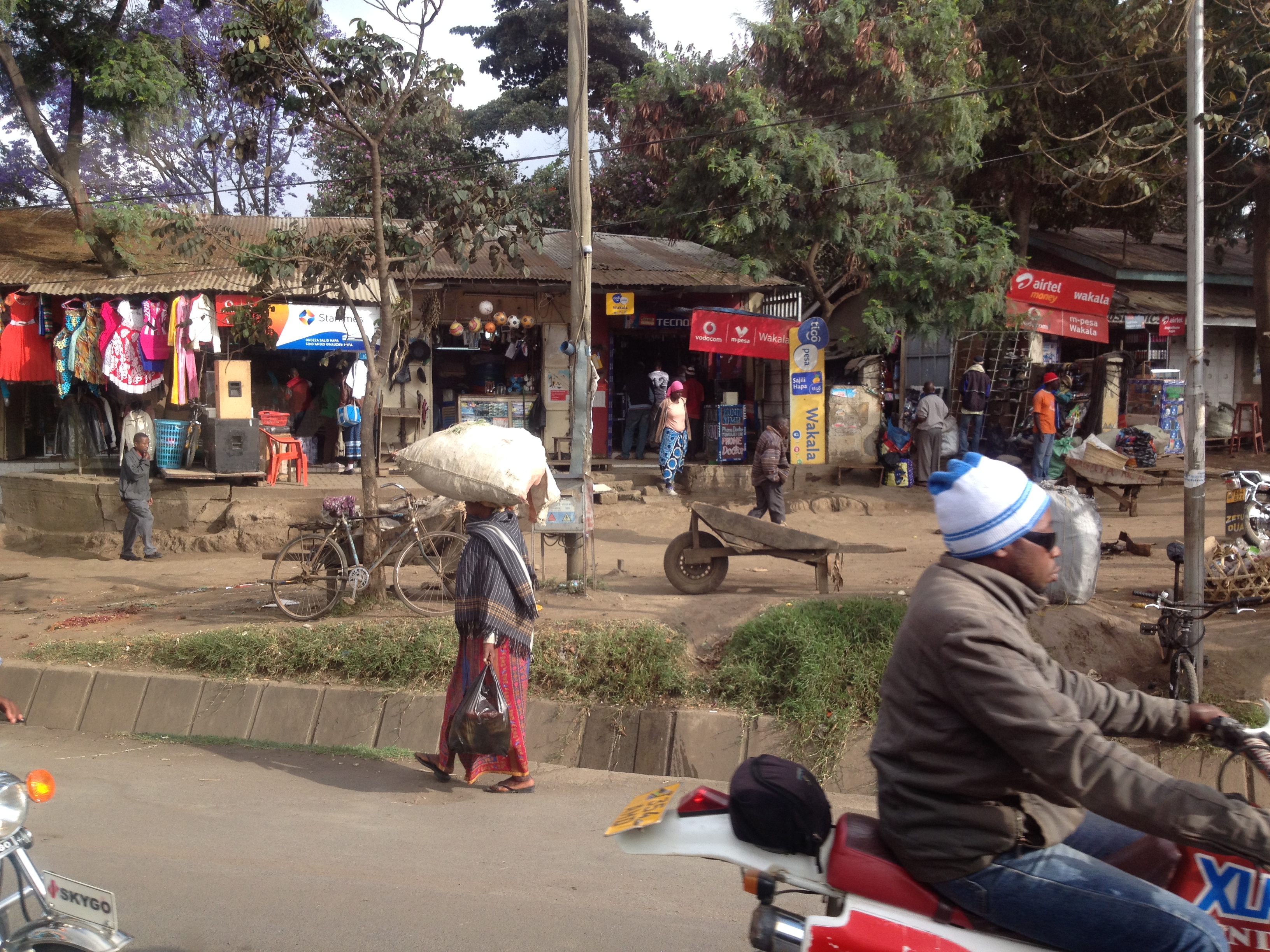
View as we drove through Arusha and surrounding villages in Tanzania

View as we drove through Arusha and surrounding villages in Tanzania.

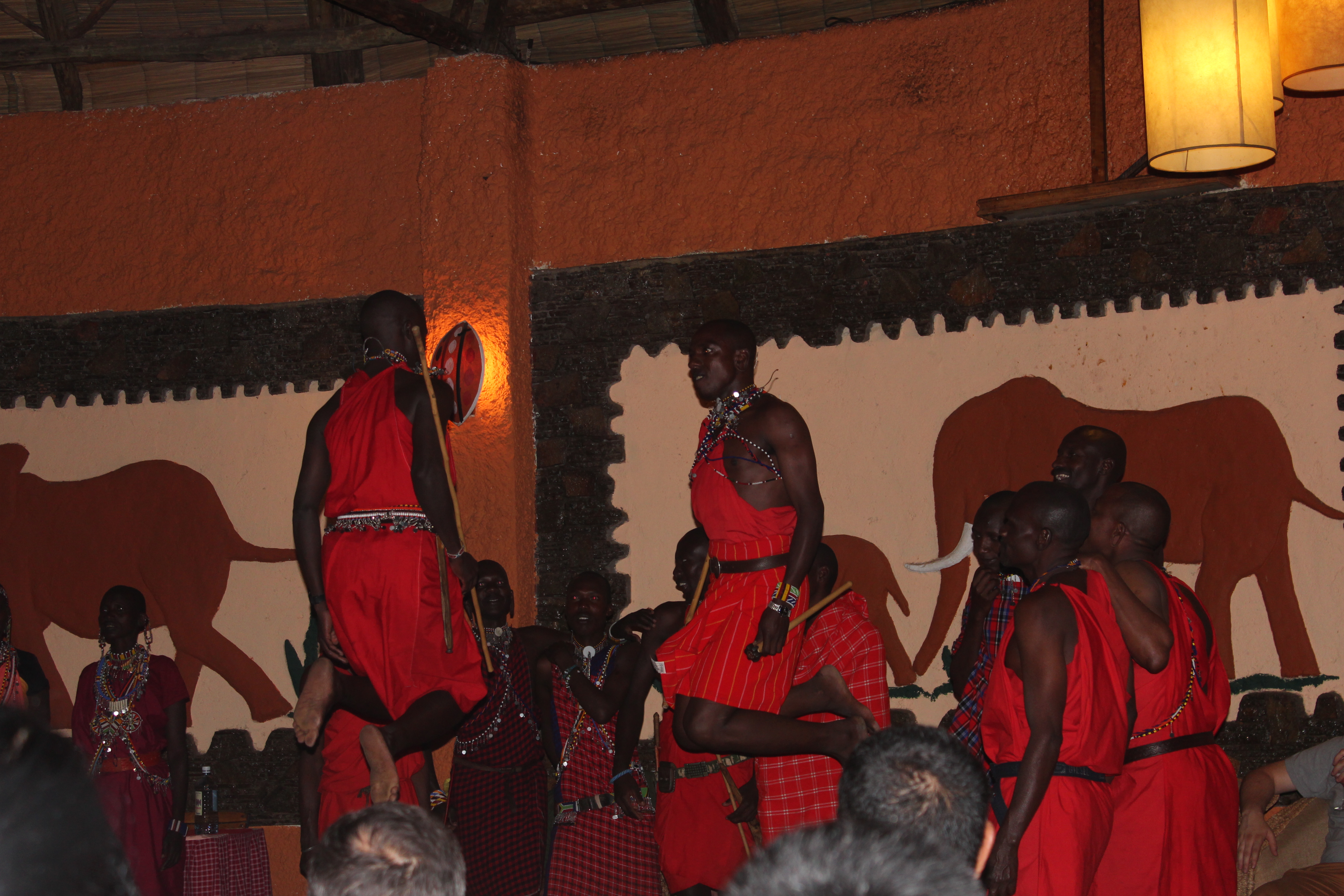
Traditional Masai jumping dance – a competitive jumping ritual men do to showcase their strength and agility to women in the tribe

Traditional Masai jumping dance – a competitive jumping ritual men do to showcase their strength and agility to women in the tribe.


At last, this would not be an accurate trip re-cap if I did not do my best to describe the unbelievable wildlife and conservation areas of Tanzania and Kenya. It is hard to truly comprehend how incredible it is to observe all of the animals until you are there, watching them run, eat, or sometimes even hunt, often only a mere 5 feet away. Our group was lucky to spot every single animal on the list – literally. We viewed all of the “Big 5” as well as the remaining four of the lineup to see what our guides noted as the “Big 9.” (Buffalo, Elephant, Leopard, Lion, Rhino, Cheetah, Giraffe, Zebra, and last but definitely not least, the Hippo).

At night, the lodge had security walk guests to their rooms after dinner, not because of any danger in the area caused by crime, but because of the animals nearby. At the Lake Naivasha Sopa Lodge in Tanzania, the hippos were notorious for coming onto the property at night. One evening, I asked a guard as he escorted me down the path, with his flashlight in hand, if the animals come up to the lodge because of all the people.

He responded very confidently, “No, no…they come close because this is their natural habitat. We are in their house.

His reaction made me realize even more the unique beauty of East Africa.


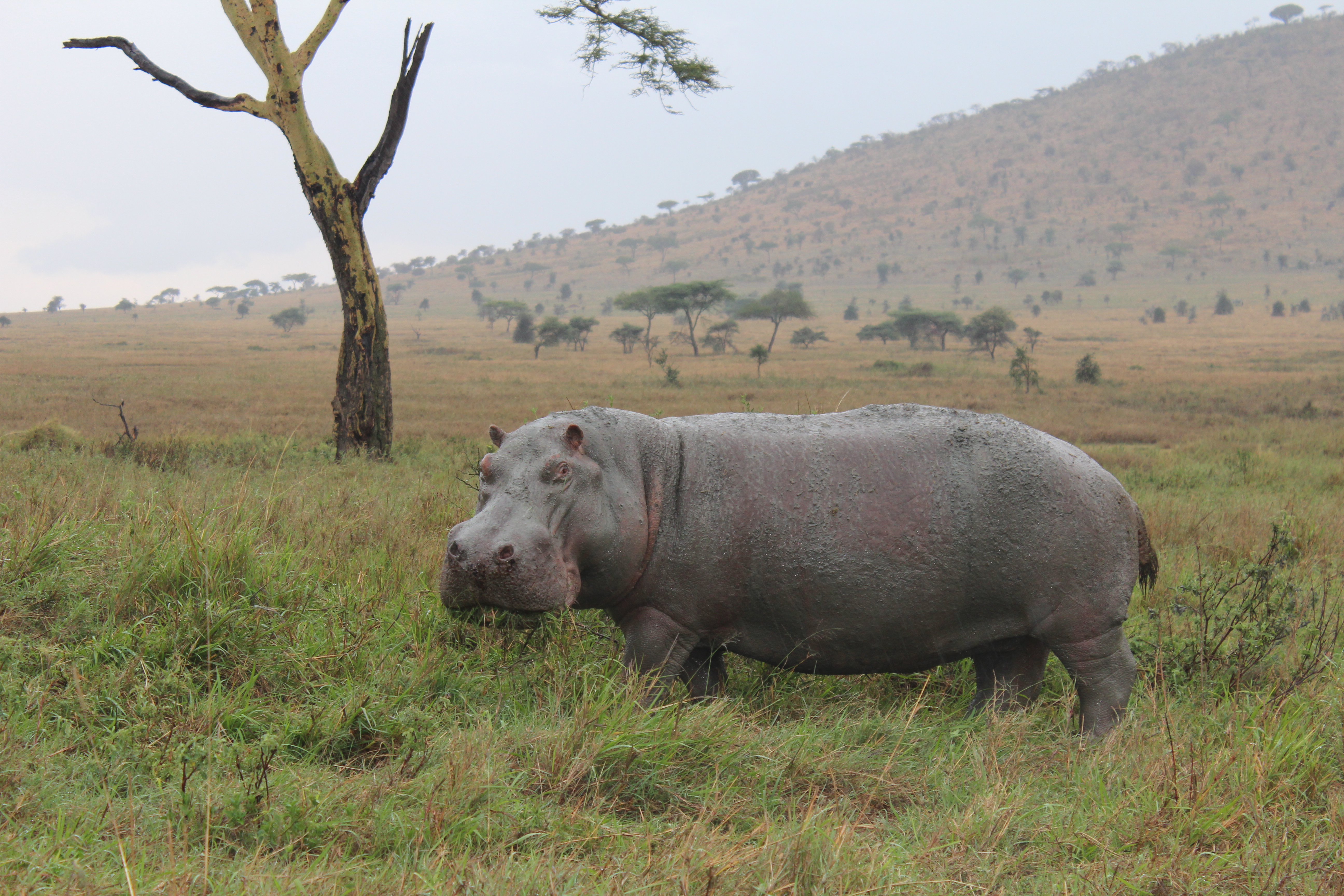
Hippo spotting in Serengeti National Park of Tanzania

Hippo spotting in Serengeti National Park of Tanzania.


Elephant crossing in front of Mt. Kilimanjaro, Kenya

Elephant crossing in front of Mt. Kilimanjaro, Kenya.

First lions of the trip in the Ngorongoro Crater in Tanzania

First lions of the trip in the Ngorongoro Crater in Tanzania.


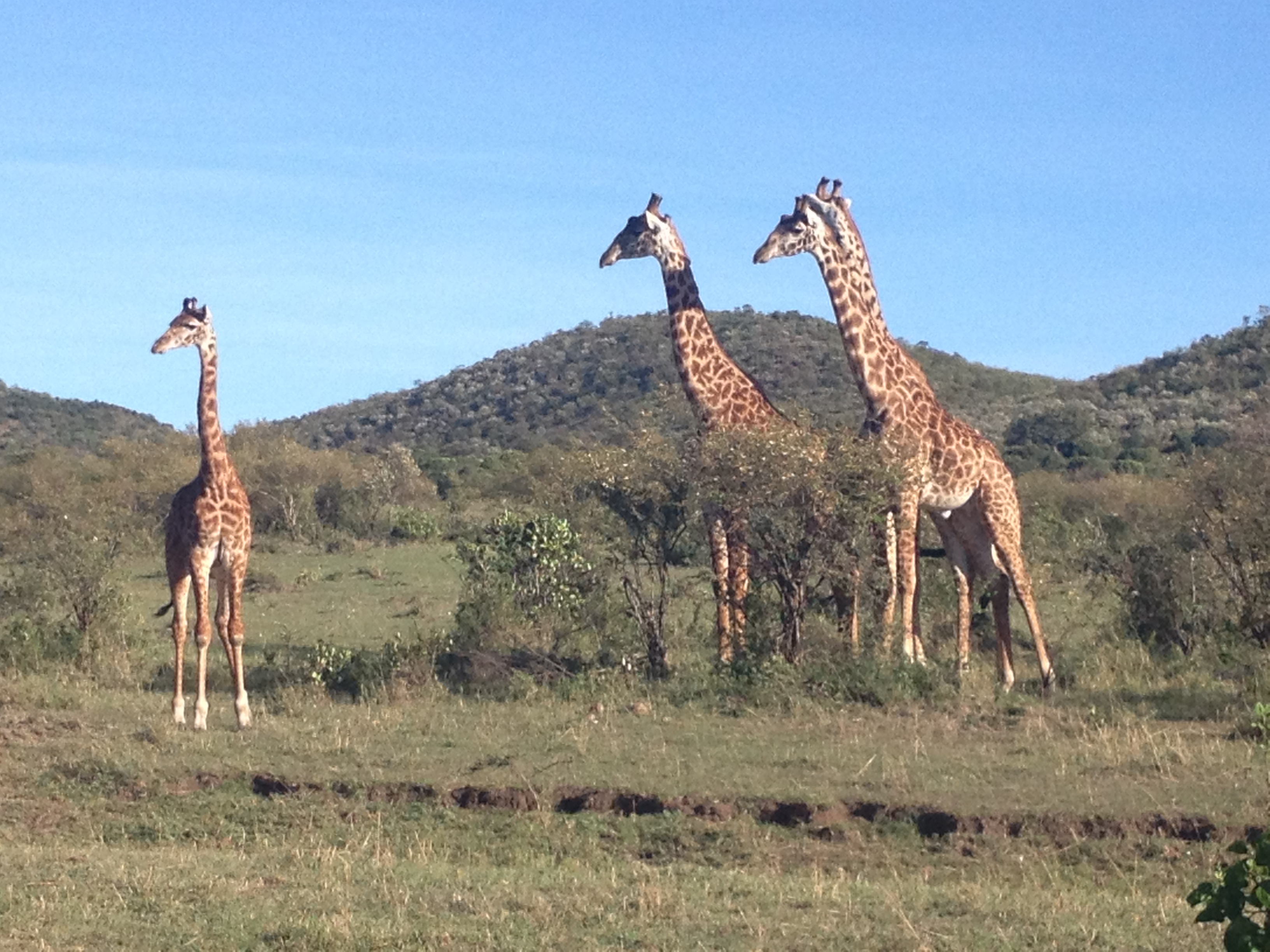
A group of giraffes is called a journey – we spotted these in the Masai Mara of Kenya

A group of giraffes is called a journey – we spotted these in the Masai Mara of Kenya.


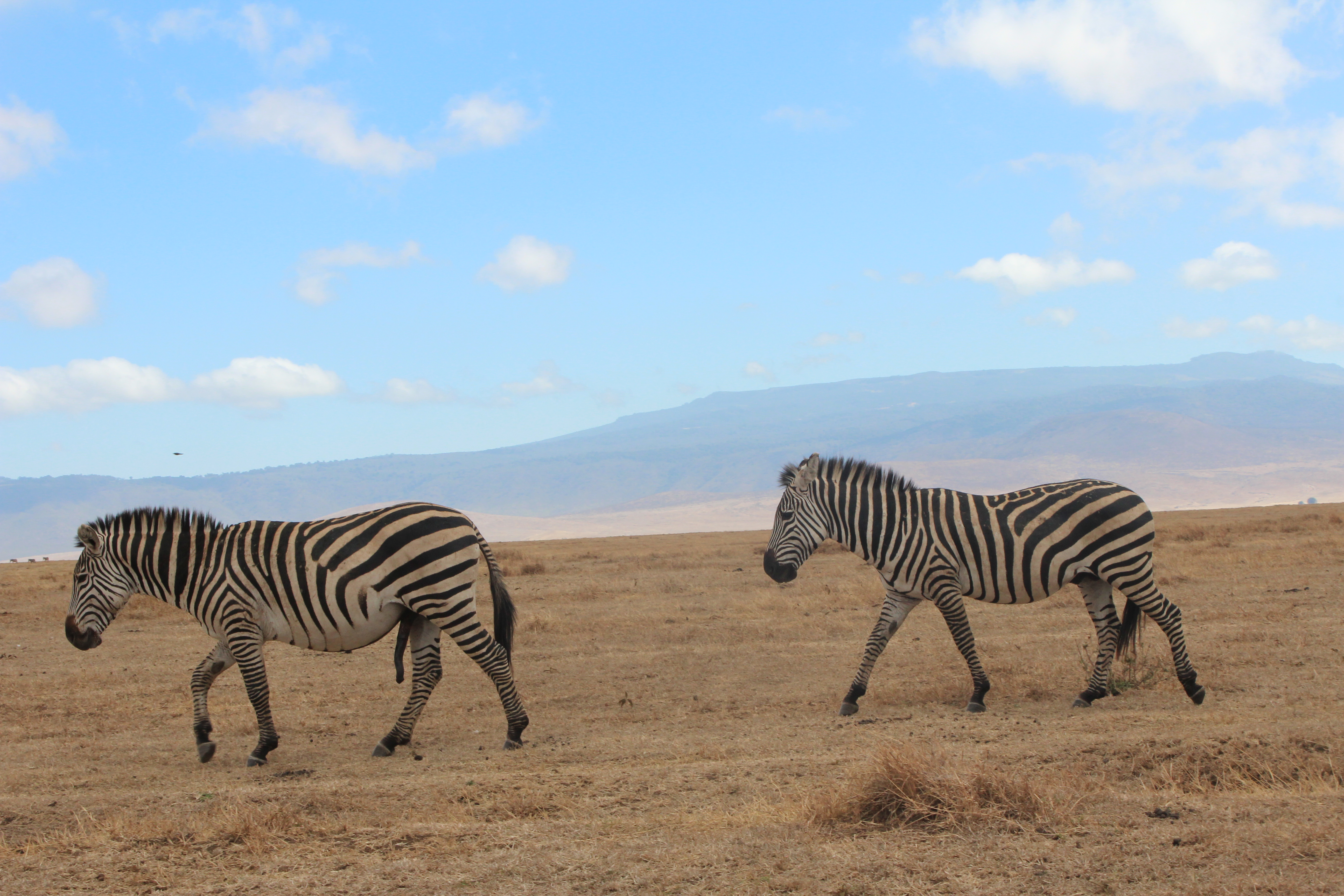
Our guides taught us that a group traveling together is called a dazzle.

Our guides taught us that a group traveling together is called a dazzle.

When someone asks me the classic post-travel question, I struggle to find an answer as to what was my favorite part of our East Africa experience. Every moment we spent in Tanzania and Kenya was memorable – whether we were observing a mother elephant protect her baby, visiting a Masai village, watching a lion hunt its prey, or having a conversation with one of our local guides.

The people of Tanzania and Kenya ask no favors of travelers except for one: “tell your friends and family about this place, let them know they should come too. And most of all, make sure to come back.

If I should ever get another opportunity to visit these countries again, I will be sure to let my new local friends know. In the meantime, make sure you add East Africa to your travel bucket list. I promise every single moment will be well worth it.

Preparing for our Penn reception at the beautiful Lake Naivasha Sopa Lodge

Preparing for our Penn reception at the beautiful Lake Naivasha Sopa Lodge.


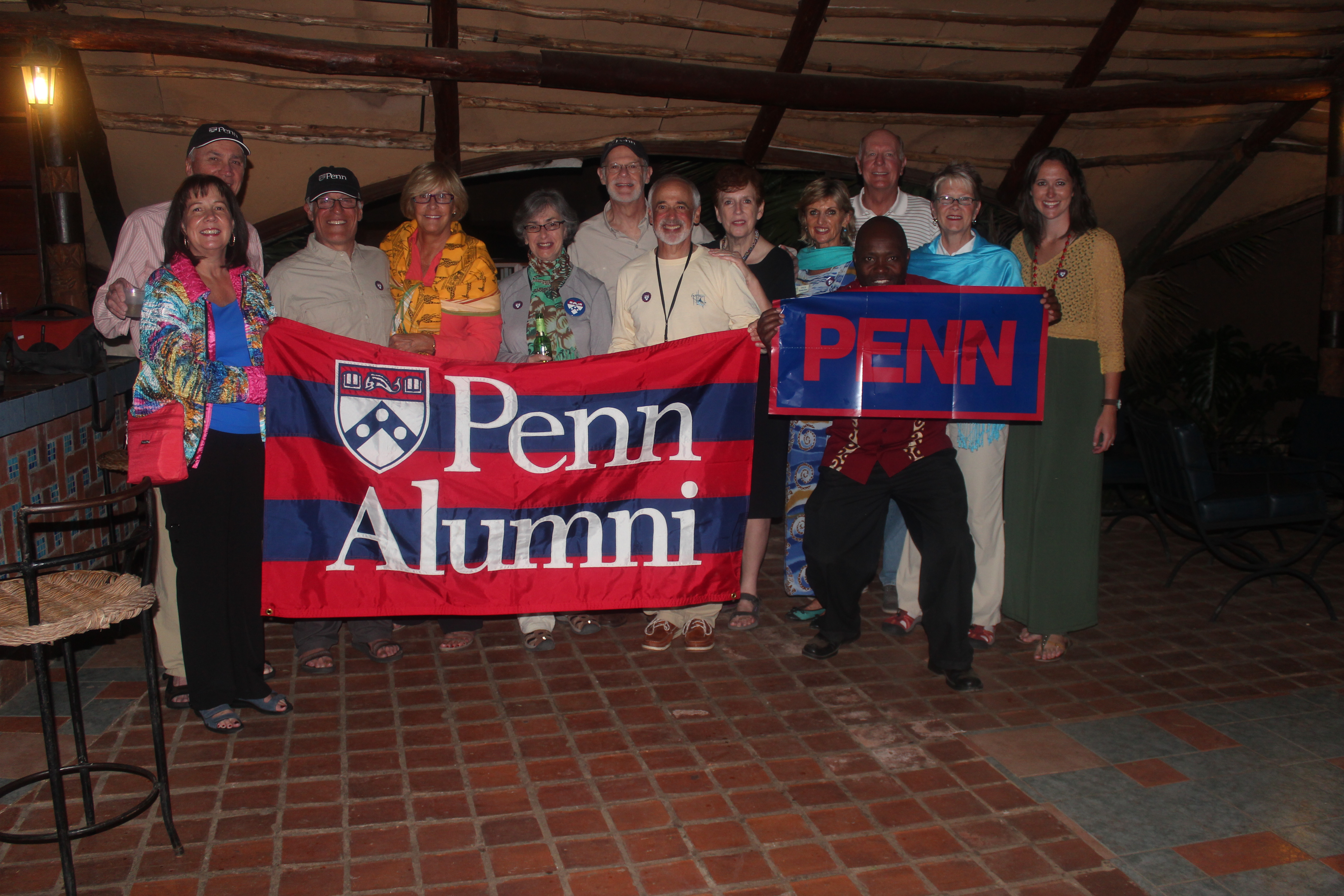
Our amazing group of Penn Alumni & Friends!

Our amazing group of Penn Alumni & Friends!


2 Comments

Filed under Alumni Perspective, Alumni Programming, Molly Rand, Penn Alumni Travel, Travel

Penn Alumni Travel: Music Diary along the Danube

Author: Stephen Lehmann, Humanities Bibliographer, Penn Libraries (retired)

The title of our Penn Alumni Travel cruise was “Symphony on the Blue Danube,” and although we heard no symphonies (at least no complete symphonies) and spent more days off than on the Danube (which is famously green), the trip was nothing if not true to its musical theme. Even the boat (“Amadeus Elegant”) was musical, with its three inside decks named after Haydn, Strauss, and Mozart.

The trip’s musical offerings began on our first evening on the boat, docked on the Danube at Budapest, with a delightful on-board performance by the Lugosi Band – clarinet, violin, cimbalom and dancers – playing a variety of Hungarian and Hungarian-Gypsy dances (including the ubiquitous “Csardas” composed by the Italian Vittorio Monti in 1906), as well as some Brahms Hungarian Dances. Four dancers accompanied the band. It was an altogether spirited evening, and the virtuosity of the instrumentalists – not only in their musicianship, but in the rhythmic clapping and slapping of legs and heels – was striking and impressive.  Audience participation was encouraged.

Karen Goldstein being a good sport.

Karen Goldstein being a good sport.

The first on-shore concert – an optional add-on – was given on Wednesday, October 2, in the Brahms-Saal of Vienna’s historic Musikverein building, just off the Ringstrasse.   The Brahms-Saal, which was inaugurated in 1870 by Clara Schumann, is the smaller of the two second-story halls under the Musikverein’s roof. It seats about 600, and is used mainly for recitals and chamber music. It was restored in 1992-93 to its original splendor: green walls, red pilasters, a lot of gold.  (Across a small landing is the Grosser Musikvereinsaal, home to the Vienna Philharmonic, and seating over 2,000.)

The Brahms-Saal of the Musikverein.

The Brahms-Saal of the Musikverein.

The program, performed by a small orchestra dressed in 18th-century costume, consisted largely of bits and pieces of works by Mozart – one movement each from the 40th and 41st Symphonies, two movements from the G-major Violin Concerto, arias from five of the operas, and the two chestnuts, Ronda alla turca and Eine kleine Nachtmusik. The concert concluded with Johann Strauss’s Blue Danube Waltz and Radetzky March.  (A few of our group managed to get tickets to the Vienna State Opera House, where they heard Rossini’s Barber of Seville, generating a certain amount of envy among the rest of us.)

The next day (Thursday, October 3), we were treated to a morning concert: the Mozart Ensemble, a string quartet, played a full program of Mozart, Dvorak and Haydn – all, with the exception of the Dvorak (a slow movement from his “American Quartet”), performed in their entirety (Mozart Quartet K. 157 and Divertimento K. 138 and Haydn Quartet op. 9, no. 6).  Again the venue, the “Sala Terrena” (“ground-level room”), was remarkable, both historically – it is the oldest concert hall in Vienna, and Mozart played there – and aesthetically, with its 18th-century, fresco-covered vaulted space in the Renaissance Venetian style. As it seats only seventy people, the performances were given in shifts, and we attended in two groups.

Sala Terrena

Sala Terrena

In the evening, still docked in Vienna, we were treated to another on-board concert, this time a small ensemble (two violins, cello, piano, soprano) performing light Viennese music from the 19th and early 20th centuries – Strauss waltzes and polkas, arias from Strauss and Lehar operettas, pieces by composers like Johann Schrammel and Karl Michael Zierer.  Introducing the music was a very tall Viennese, who spoke easily, informatively and in excellent English.

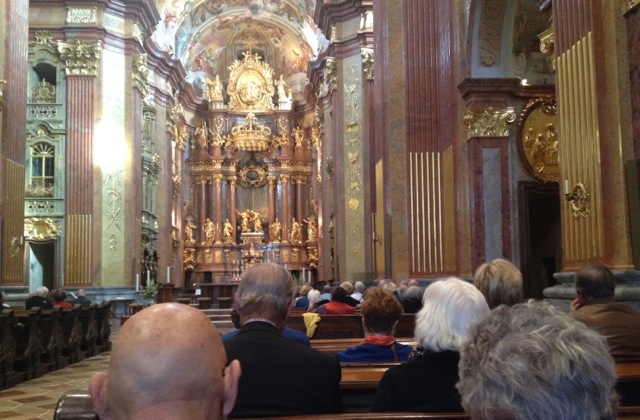
In the dead of night on October 3 the Amadeus Elegant slipped away from Vienna, and we awoke the next morning to find ourselves in the splendid Wachau Valley. After an early stop in medieval Dürnstein (no music), we proceeded to the magnificent early eighteenth century Benedictine abbey at Melk on the Danube’s south bank. There we heard a brief organ concert – the music was not identified, but the consensus was that it was Bach – performed by an 85-year old monk, who had been our guide’s music teacher.

The Biddles and the Blairs enjoying Melk’s organ.

The Biddles and the Blairs enjoying Melk’s organ.

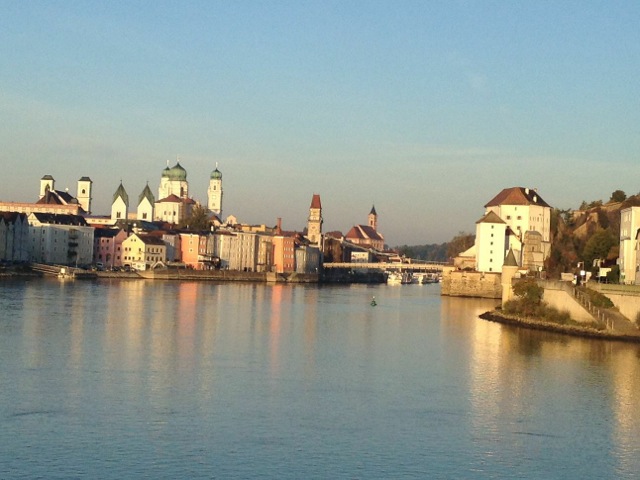
Early the following morning, October 5 (Saturday), we left Austria, sailing past Bavarian villages

Photo 5

and on into Passau.

Photo 6

The walking tour through Passau culminated in the baroque Cathedral of St. Stephen, a late 17th century structure whose organ is the fourth-largest organ and the largest cathedral organ in the world, with almost 18,000 pipes and over 200 registers. Before climbing up to her loft, the organist, Brigitte Furth, explained the workings of the Passau organ and the ways in which she would illustrate its various components and colors. The composers in her program were French (Louis James Alfred Lefébure-Wély, Jean Langlais) and German (Melchior Franck, Pachelbel, Bach). She ended with a piece by Langlais in which she sounded all five of the cathedral’s organs – each set of pipes coming from a different part of the building and ending together in a pew-shaking fortissississimo.

The only other music we heard that day came from the engines of the busses on the ride from Passau to Prague.

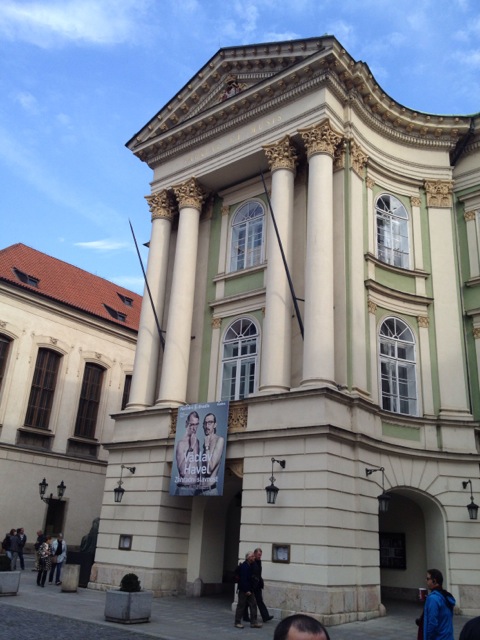
On our first day in Prague (Sunday, October 6), our guides took us to the beautiful, five-tier 18th-century Estate Theater, where Mozart’s Don Giovanni (1787) and La Clemenza di Tito (1891) were first performed.

Photo 7

In its foyer we heard a brief concert for woodwind quintet playing arrangements from Mozart operas and a piece by the Czech composer Frantisek Saver Dusek. But the highpoint was an impromptu rendition of the Czech national anthem by Vaclav Bechyni, the theater’s charming guide.

Dana Jolley, Linda Freeman, and, in reflection, Bill Koch listening to Vaclav Bechyni singing the Czech  national anthem.

Dana Jolley, Linda Freeman, and, in reflection, Bill Koch
listening to Vaclav Bechyni singing the Czech national anthem.

That evening a number of us went to a performance of Dvorak’s three act water-nymph opera Rusalka at the State Opera, built in 1888 as Prague’s German Theatre. The production was traditional, with English super-titles helpfully provided for those of us who can’t follow the Czech.

We heard our last concert in Prague on Monday morning, October 7, at the Lobkowicz Palace – part of the vast Prague Castle complex – under three enormous chandeliers in a small hall decorated with trompe l’œil columns and niches. The performance, by a string quartet, began with a rendition of Beethoven’s Ode to Joy but came to an abrupt halt when the first violinist suffered a snapped string. He returned quickly, but rather than picking up again with the Beethoven, the musicians proceeded to the Pachelbel Canon and then on through various transcriptions (movements from a Beethoven piano sonata, Dvorak’s New World Symphony, etc.), and concluded with Amazing Grace, Roy Orbison’s Pretty Woman, and some tango.

At the Lobkowicz Palace we were also able to see some of its amazingly rich collection of music manuscripts and first editions, including a score of the Messiah with Mozart’s alterations, the orginal orchestral parts of Beethoven’s Fourth Symphony (dedicated to the seventh Prince Lobkowicz), the first edition of Beethoven’s Eroica Symphony (re-dedicated to Prince Lobkowicz after the original dedicatee, Napoleon, declared himself Emperor) and a copy of Beethoven’s Op. 18 Quartets with corrections in his own hand.

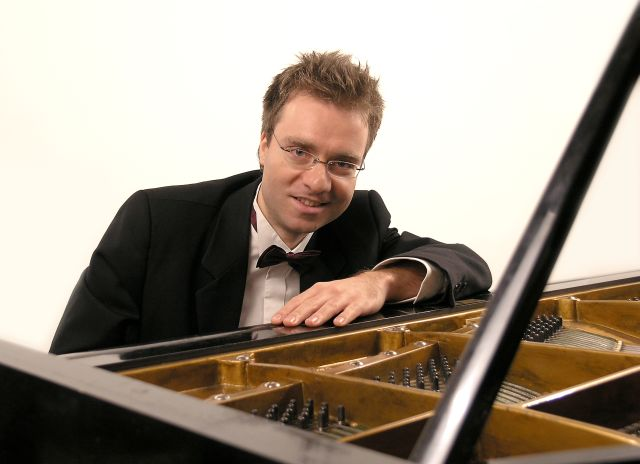
Finally, at our last stop – Cracow, Poland – we attended a private, all-Chopin recital at the city’s music conservatory on October 9 (Wednesday). Some from our group thought the pianist, Paweł Lubica, played harshly, but the acoustics didn’t help: the building had been constructed as an insurance company office, and the concert was held in a two-story former reception room with very hard surfaces.

Photo 9

Lubica played three waltzes and a sampling of other forms favored by Chopin (a Ballade, a Mazurka, a Prelude, a Nocturne, a Fantasie-Impromptu, and a Polonaise). My own favorite was the Nocturne (B major, op. 62, no. 1), and I was reminded of the pianist Rudolf Serkin’s observation that he wouldn’t play the Chopin nocturnes because they were too sad.

Sadness is a good segue to our journey’s end!  But sad only because it was such a great trip – the river, the sites, the people, the music. Thank you to everyone for helping to make it such a wonderful experience.

Proud Penn Alumni along on the Danube cruise.

Proud Penn Alumni along on the Danube cruise.

[Penn Alumni Travel is heading back to Vienna and Prague during the spring of 2014. History Professor (and seasoned traveler) Thomas Max Safley will be hosting this tour. If you’re interested in learning more about this trip or any of our 2014 tours, please click here.]

Leave a comment

Filed under Faculty perspective, Penn Alumni Travel, Travel

Penn Alumni Travel: Russia

Author: Professor Arthur Waldron, Lauder Professor of International Relations, Department of History

Any trip, according to the great travel writer Lawrence Durrell, “begins with a moment of panic.” I and my family certainly felt that “panic” repeatedly in the days before we finally locked the front door and set out to join Penn Alumni Travel’s “Waterways of Russia” tour of which I was to be the leader. We knew this was going to be something new and memorable, but were a little nervous as well.
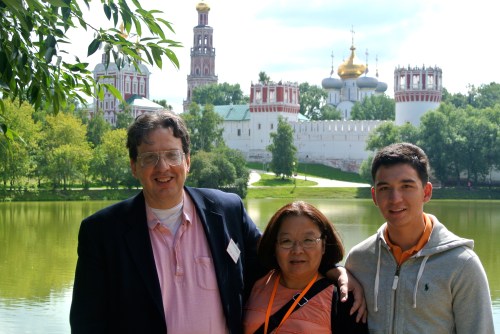
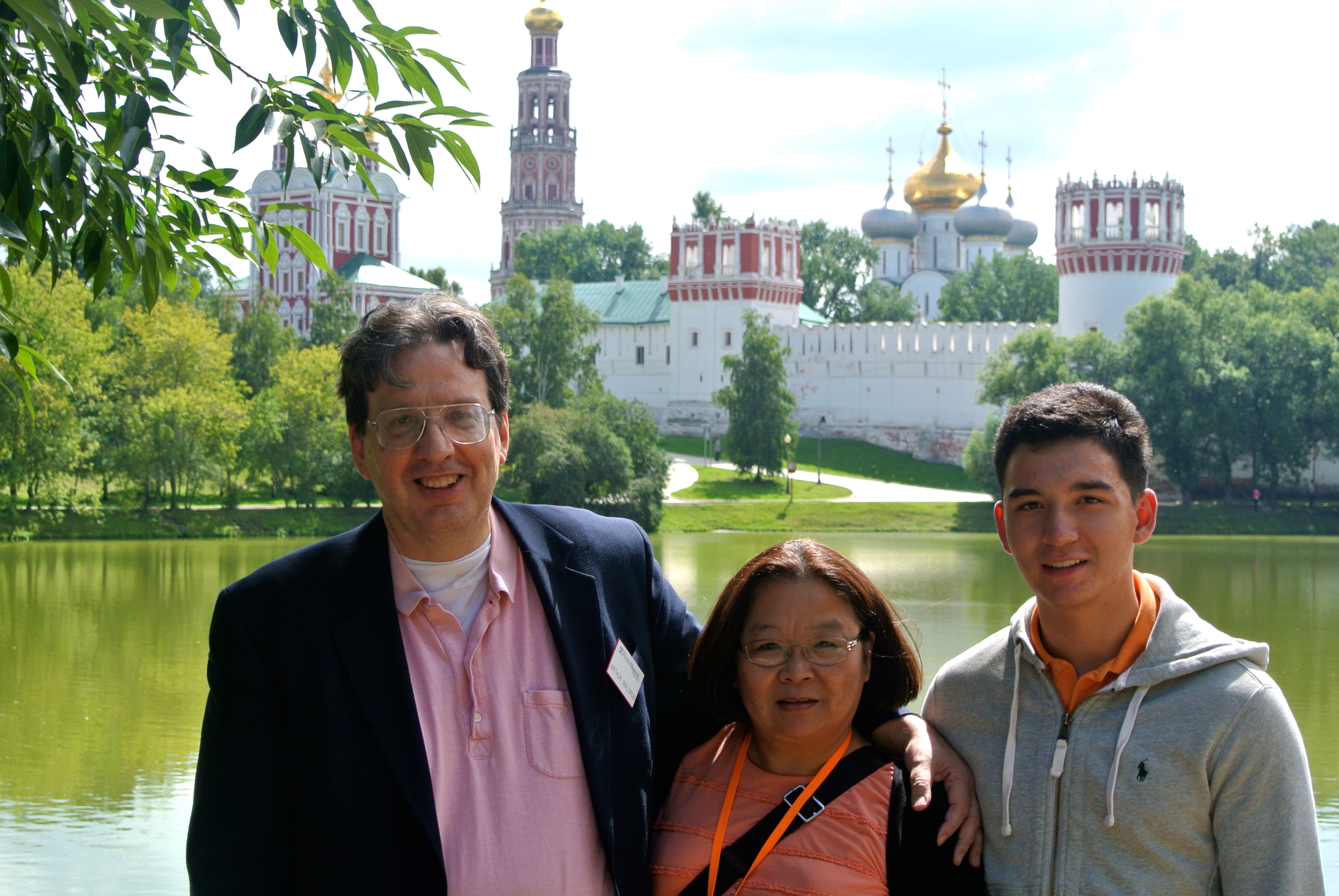
The Waldrons in Russia

The Waldron family in Moscow.

As soon as we boarded our flight our feeling of panic turned into excitement and anticipation. We flew from Philadelphia to Frankfurt where we changed to the Lufthansa flight to Moscow. No more than two minutes after we boarded our new flight, a cheerful lady in the row just in front of us turned and looked carefully at me, extended her hand to me and said “Hi.” Then, turning to her husband, the said: “It’s okay, it’s him.” She had recognized me from the brief welcoming video that the Penn Alumni Travel department had sent to the members of our group, which had introduced me—and immediately the trip became real. This couple had flown in one day from Los Angeles –more than six thousand miles—to Moscow, and others in the group had performed similar feats. Nearly all the flights that day were late arriving at Domodedovo, a somewhat upgraded but still Soviet vintage airport. Nevertheless we had people to meet all of them, and transport to the Marriot Avrora Hotel, a few blocks behind the Kremlin, which would be our headquarters for the two nights of an optional pre-cruise visit to Moscow for which many had signed up.

By breakfast the next day, our first formal meeting, we had met many of the fifteen Penn group members, who were almost alarmingly rested and energetic, ready to give everything to what was on offer.

The object of the trip was to cruise from Moscow, Russia’s present capital, to St. Petersburg, capital from 1712-1918. We would travel by boat, the efficient and very comfortable Volga Dream.  Embarking at the North River Terminal, built in 1937 on the Moscow River, some 393 feet above sea level, our voyage would arc from northeast and then to northwest over some 820 miles on the way to its final stopping point at the recent (1970) River Station of St. Petersburg on the Neva River, where the water is perhaps three feet above sea level. En route we would pass through eighteen locks and thirteen distinct but now connected rivers, reservoirs, or lakes.
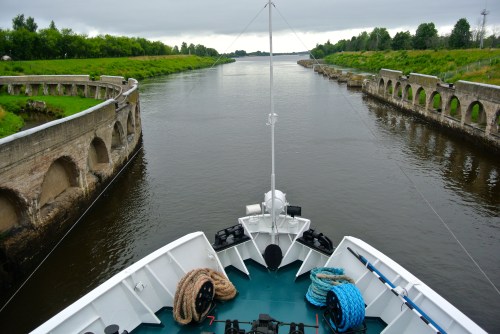
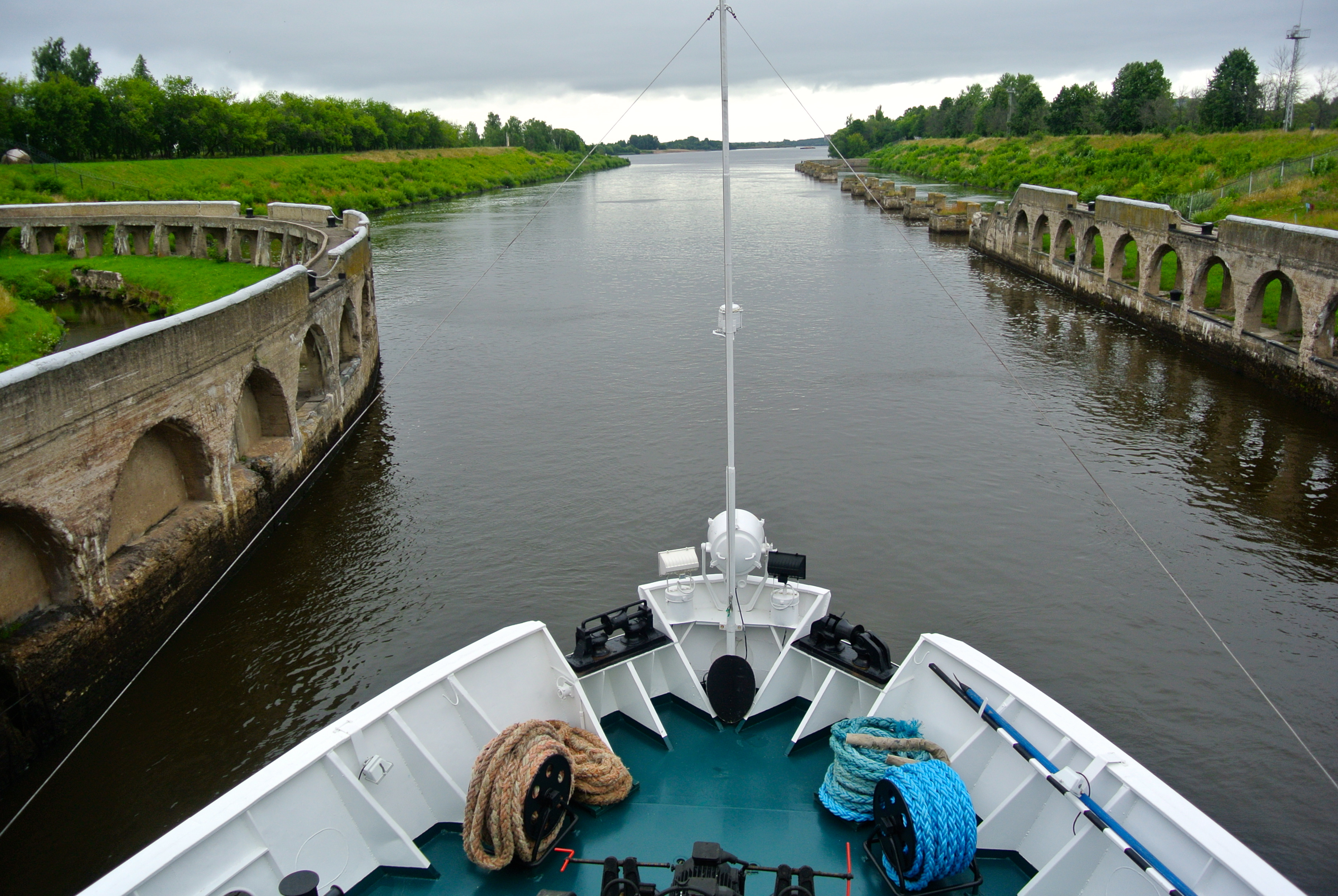
On the ship’s prow, traveling along the Russian waterways.

On the ship’s prow, traveling along the Russian waterways.

This voyage would take us far from the urban Russia familiar to most tourists, to what might be called “deep Russia.” This is the rural Russia of seemingly perfect villages, each up a grassy bank from the river, each with its onion-domed church, now beautifully restored, its one story wooden houses with their immaculate white curtains and often fussy fretwork decoration, its surrounding fields and sometimes muddy roads–all cradled in the seemingly primeval evergreen and birch forests—in all the sort of scene that in the Russians imagination must evoke “home,” even if it is never quite reached. It is also the land of remote but magnificent churches, monasteries, and other monuments, again best reached by water.

Here I should add as a caution that ours was a tourist route, albeit somewhat unusual, but in the business of entertaining foreigners, and that had we visited other places in Russia, particularly former Soviet industrial sites, such as the ore-mining centers of Magadan on the Sea of Okhotsk, worked by in the Stalinist period and after by slave labor, or Norilsk in the far north and even today closed to foreigners, our impressions might have been very different, though I doubt our cautiously upbeat tone would have been reversed.

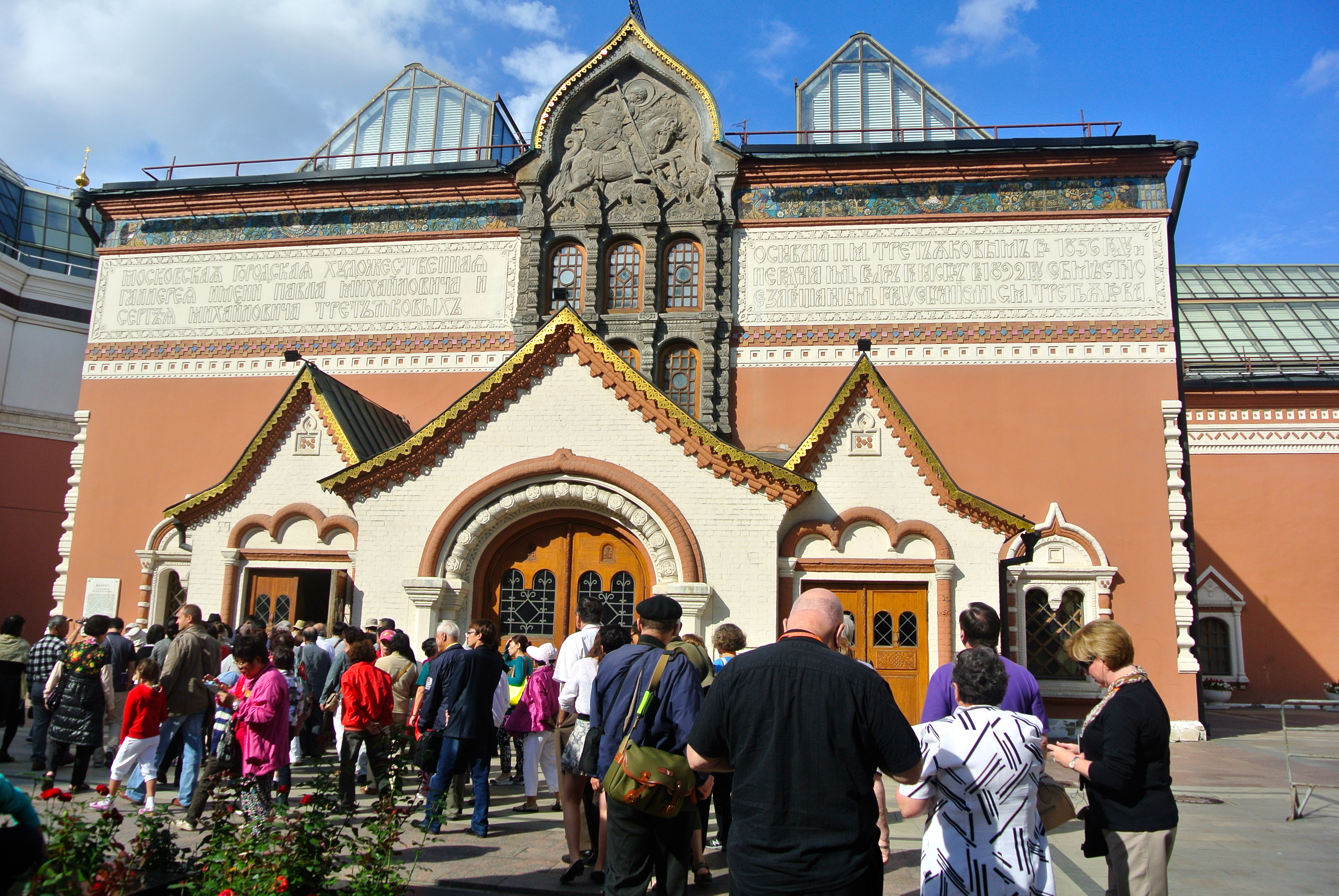
But first there were the two pre-embarkation days in Moscow. The first morning took us to the Tretyakov Gallery, the greatest treasure house of Russian art, assembled by a nineteenth century merchant.  It contains too many masterpieces to mention, but among the most memorable were huge canvases by the radical turn of the last century realist Ilya Repin,  portraits of the writers Chekhov, Dostoyevsky, and Tolstoy, as well as the great composer Mussorgsky. On the way out we passed through the Ikon gallery, which contained a precious mosaic from ancient Kiev, as well as several works of the celebrated Andrei Rublev.
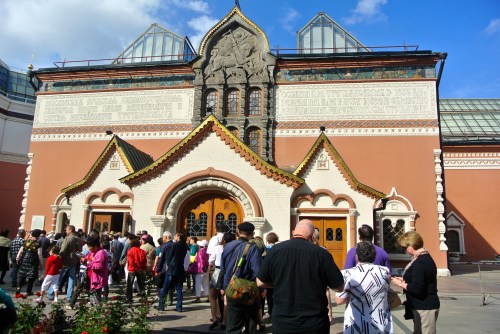
The Tretyakov Gallery in Moscow.

The Tretyakov Gallery in Moscow.

Somehow, in Moscow and elsewhere, we seemed to get the very best guides. I have been to Russia more than a few times, but never have I encountered such deeply knowledgeable experts.

We then had an afternoon “at leisure” which for some of our passengers meant visits to the other great art museums of Moscow, some crammed with masterpieces of early twentieth-century modern art.  Others wandered in Red Square, where owing to the north latitude the evenings are almost endless—the so-called “white nights,” when the Russians come out in force for pure enjoyment—or explored the side streets with their restaurants, antique shops, and one historic site after another.

The following day we visited the Novodevichy Convent, perhaps the classic of Russian baroque, brick red, with beautiful towers, gardens, and a lake.  Since its founding in the mid-sixteenth century, it has served political as well as religious purposes. It was a place of comfortable imprisonment for noble women, for example, the sister of Peter the Great, who had plotted against him. The Novodevichy cemetery contains the graves of many important Russians, ranging from Prokofiev and Shostakovich to the haunting memorial, with her young face beautifully sculpted, of Stalin’s tragic second wife, Nadezhda Alliluyeva, who shot herself, in despair, at the age of 31, to Khrushchev and Boris Yeltsin.
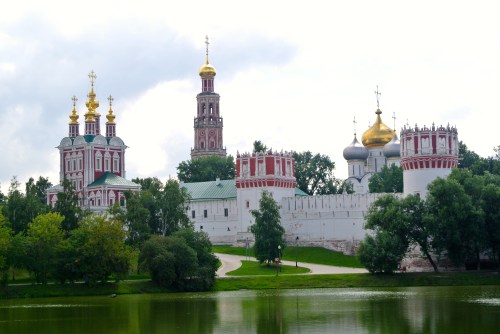
The very striking and beautiful Novodevichy Convent.

The very striking and beautiful Novodevichy Convent.

After this the “pre-tour” ended, we were transported directly by highway and then through an extensive park, to the somewhat distant, but remarkable, North River Terminal (a masterpiece of the Stalinist style, an oblong building decorated with a tracery of thin pillars and delicate balconies, all leading to a tower with a ruby-red star—now swathed with scaffolding for restoration), to embark on the Volga Dream. We were met by our Russian hosts with iced tea, and found our luggage already waiting for us in our well-appointed cabins. Our fifteen Penn alumni joined the rest of the tour, altogether ninety-six passengers, including groups from Columbia University, Johns Hopkins University, Mills College, and the National Trust for Historic Preservation. The passengers were uniformly impressive, resourceful, and (important on a cruise) faultlessly courteous to all.  Some were seasoned world travelers, others less experienced, and one was a lady who, because of her husband’s health condition, had never before held a passport or left home in her life. All were full of real interest in the trip, not to mention asked tough and perceptive questions.

The first evening began with the Captain’s Reception in the large and comfortable Neva Lounge, which was followed by a fine dinner at which we were seated by group, although later most of the time people sat where they wanted.  This first night on board, we slept in great comfort knowing that no fewer than fifty-five staff were there to look after us.

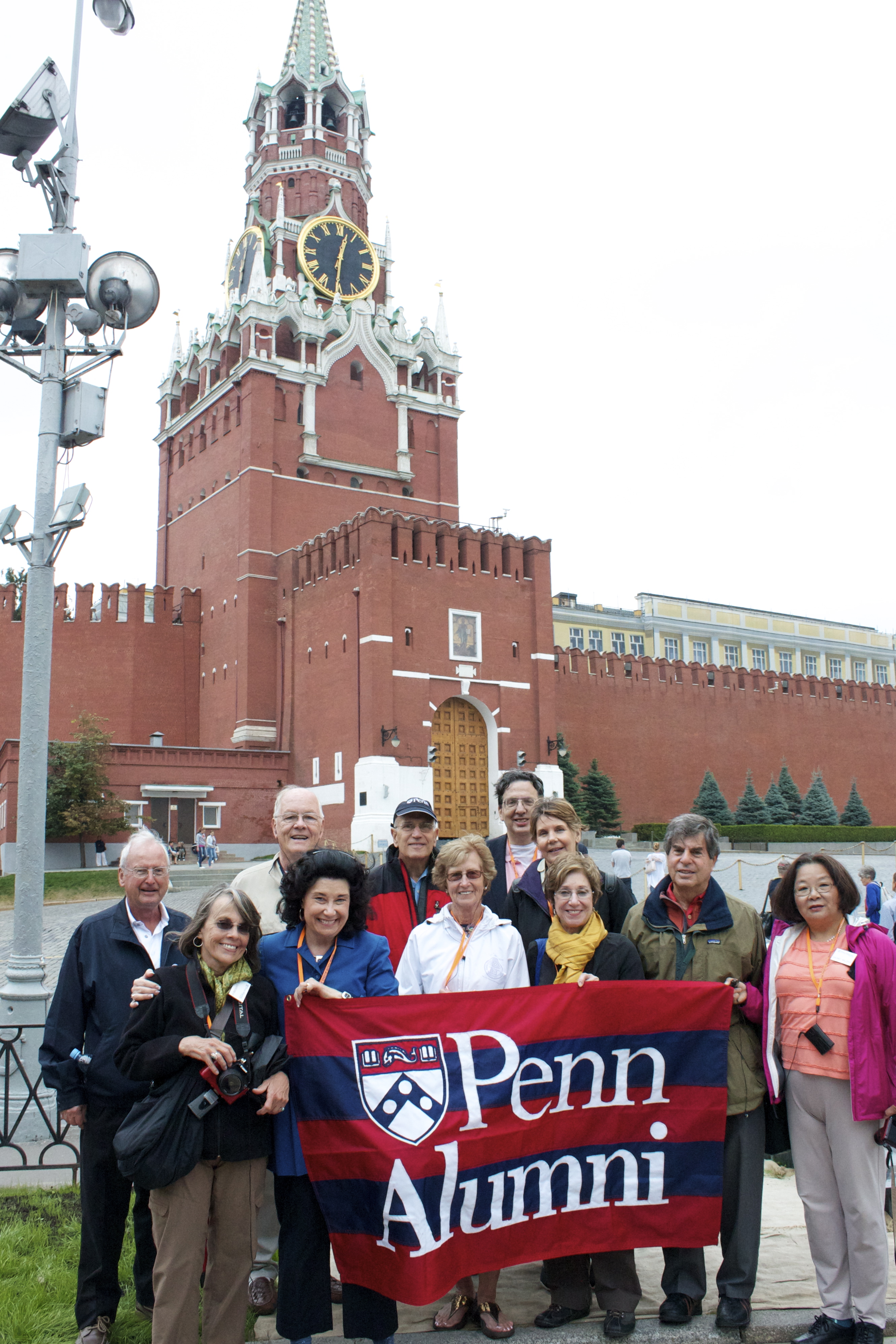
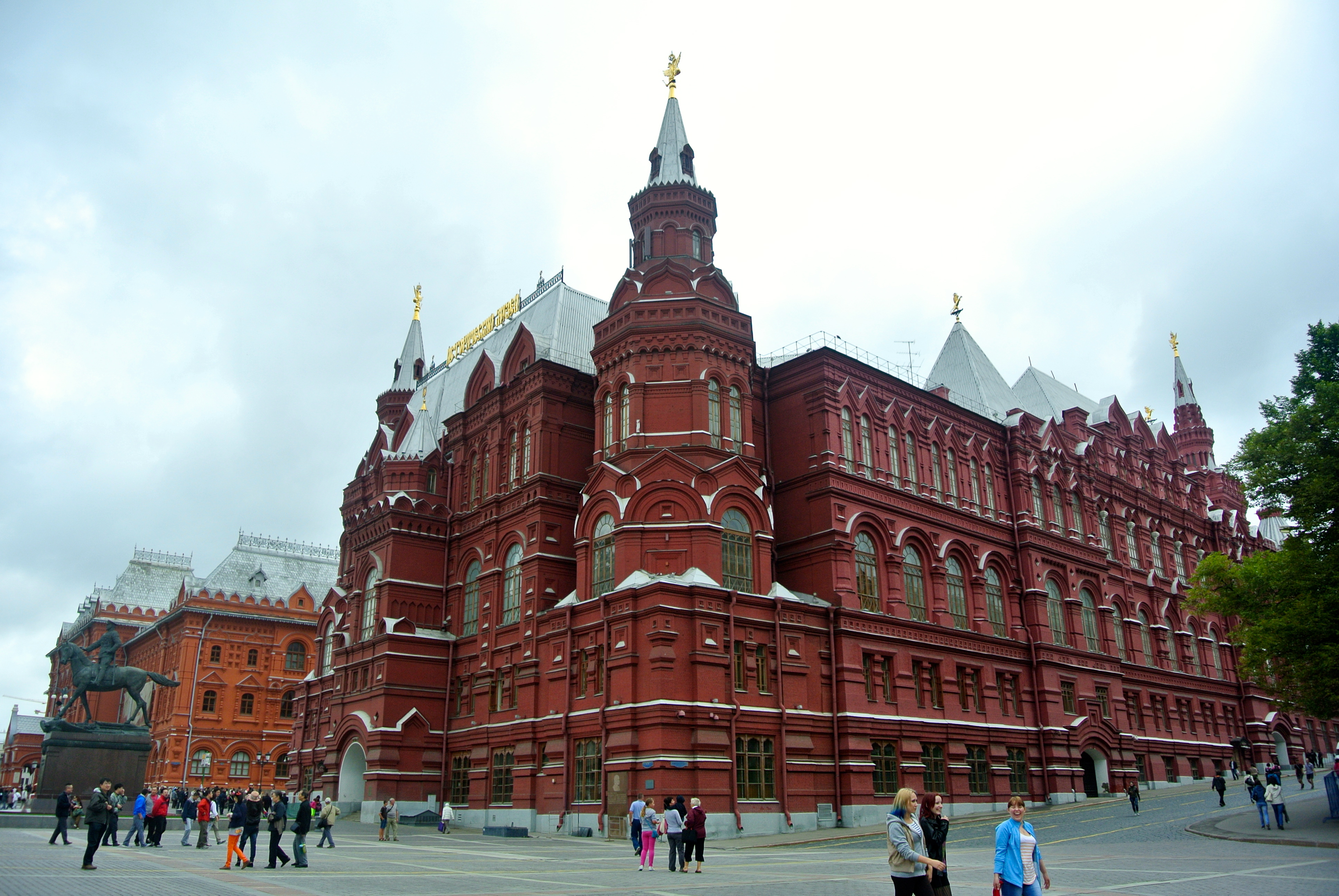
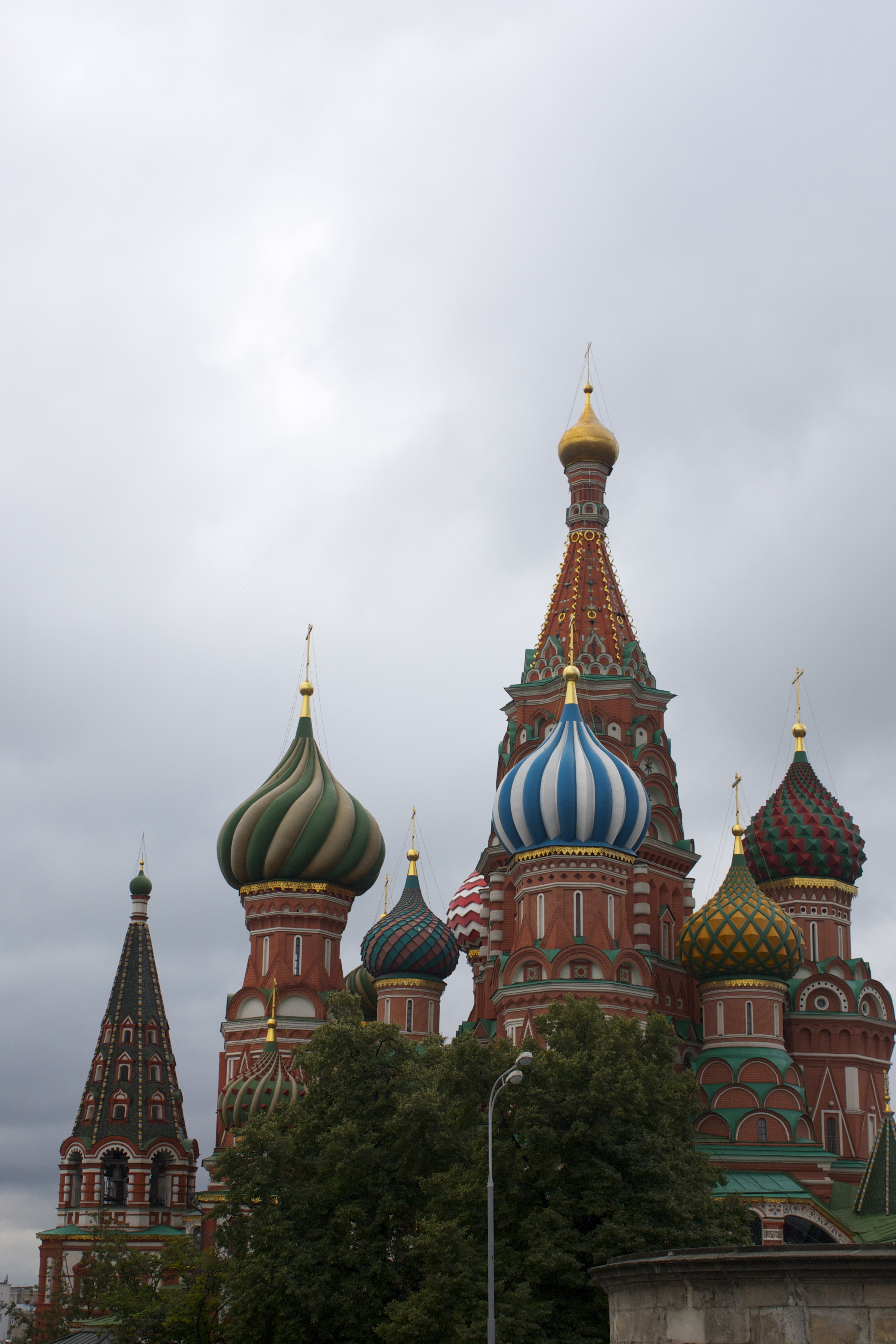
The next day was perhaps the busiest of the entire cruise: the Moscow city tour. It filled the full day and quite literally not a second was wasted. We started with Red Square (an old name: “Red” can mean “beautiful” in Russian). For decades it was chiefly known for the Lenin Mausoleum and burials around and in the Kremlin wall that forms its western boundary. Now we were told that Lenin, who was embalmed and displayed against his will (and over the protests of his wife whom Stalin menacingly dismissed saying “we can easily find some else to play the role of Lenin’s widow”), is to be buried, as was his wish, next to his mother in St. Petersburg, while the others—including Stalin—now buried nearby, and those in the Kremlin wall, will go to another cemetery, now under construction. Evergreens, already planted, will eventually mature to screen both the wall and the tomb from the square. The attention of the visitor will shift to St. Basil’s cathedral, with its multicolored, twisting onion domes—in front of which the Penn Alumni Banner was unfurled and a group photograph taken—and to the former GUM department store on the east side, now a collection of shops, boutiques, and restaurants.  Perhaps the best of these is “Stolovaya 57” up an escalator, a clean and affordable cafeteria offering every sort of Russian comfort food. Many group members ended up there. It is rated seventh out of more than five thousand places to eat in the capital.
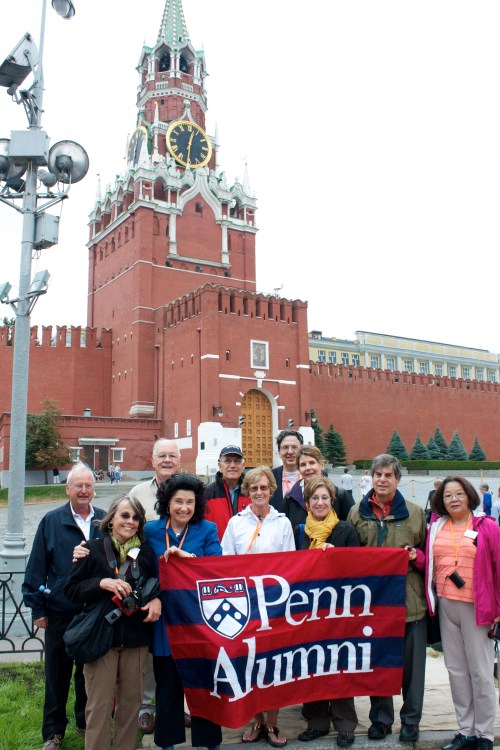
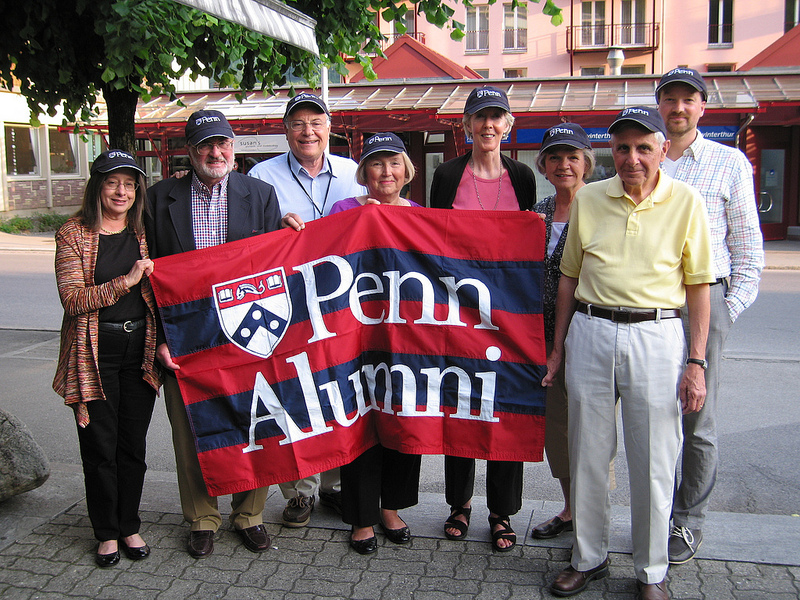
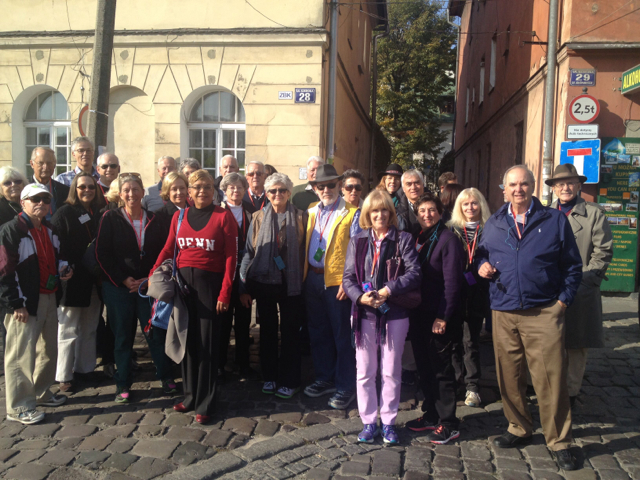
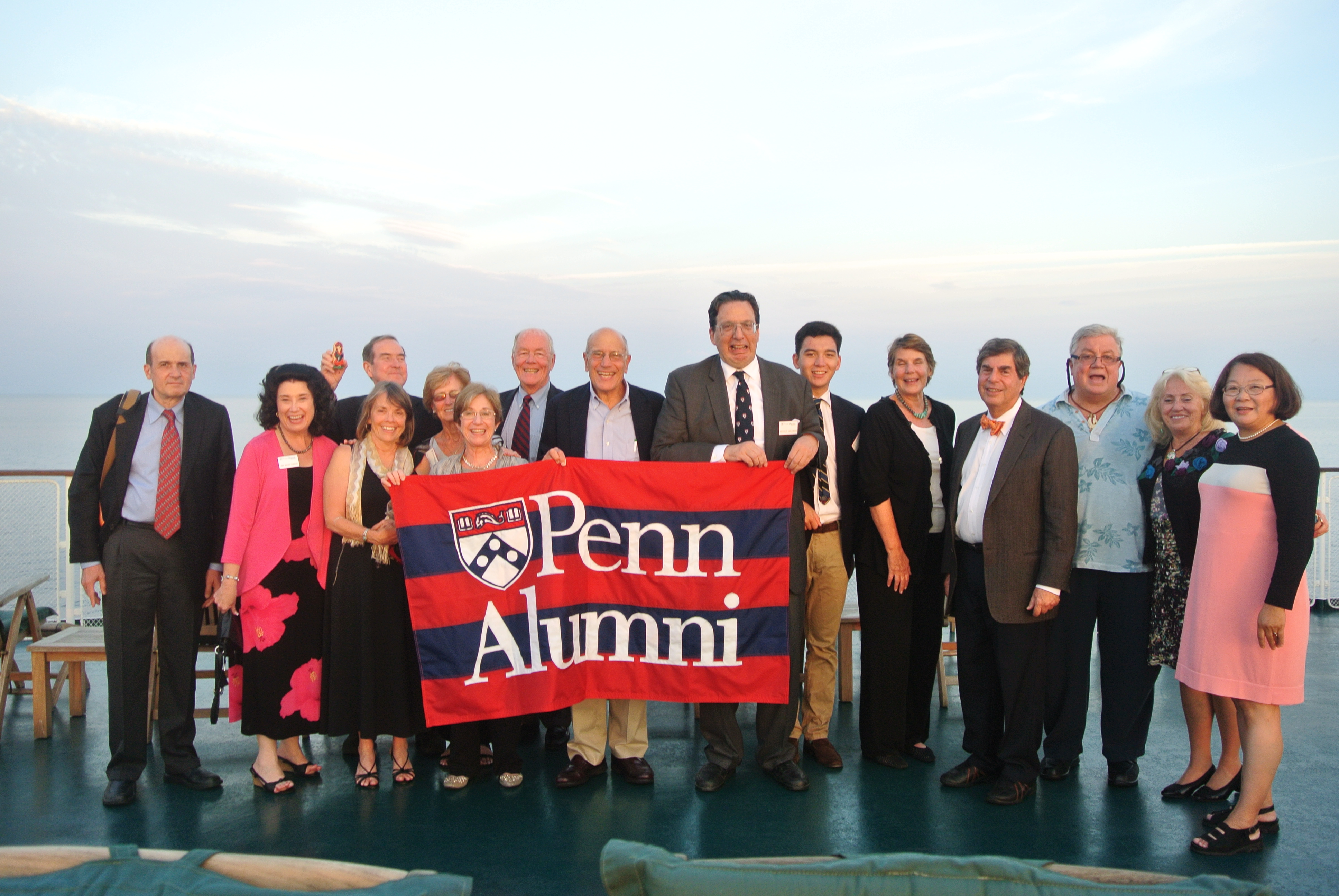
Proud Penn Alumni in Moscow.

Proud Penn Alumni in Moscow.

Moscow- The Red Square

Moscow- The Red Square

After lunch, we were off to the Kremlin where lines were long but whose treasures are well worth it. There we visited the Uspensky (Dormition) Cathedral, where all tsars were crowned as well as the armory museum.  We made our way through a huge gallery containing the wasp-waisted wedding dresses of Tsarinas, and the formal attire of Nicholas II, the last Romanov Tsar. The high spot for me was found in the lower right corner of a case of precious crowns, including that of Ivan the Dread. This crown consisted of a circle of rich fur, surmounted by a small precious metal cap and cross obviously of great antiquity. “The shapka (cap) of Monomakh ?” I wondered to myself. I had heard of it in sophomore year at Harvard and lectured on it. It is a Central Asian crown, dating perhaps to the eleventh century, that demonstrates the continuity in ruling style, court etiquette, etc. from the Mongols and their nomadic forebears to the early years of the Muscovite Russian dynasty that emerged several centuries later. Other group members took real interest. This made my day more than worth it. I even sent an email to my old professor saying that I had finally seen the cap and that in my memory I could still hear him lecturing passionately about its significance.
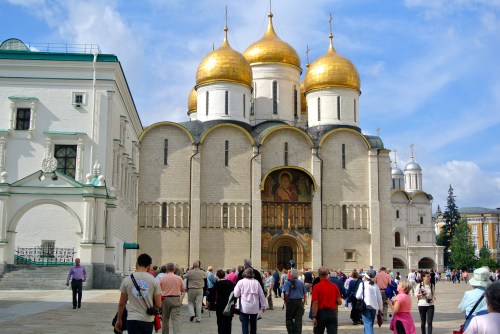
The Uspensky (Dormition) Cathedral.
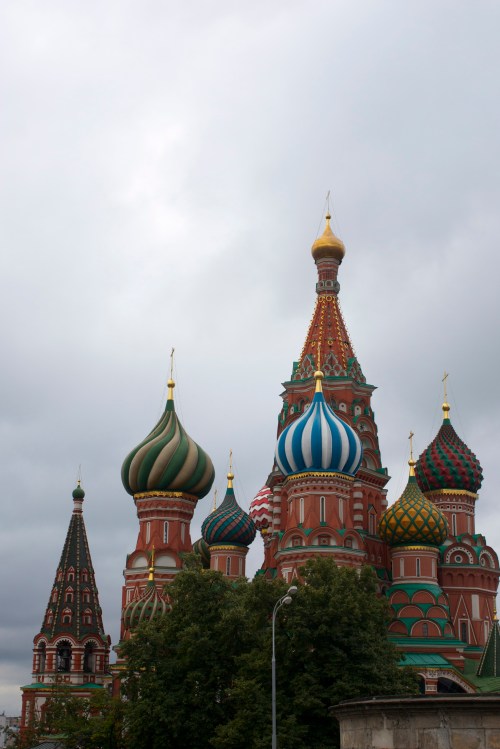
The Uspensky (Dormition) Cathedral.

Moscow- The Kremlin.

Moscow- The Kremlin.

After cruising nearly all of the following day, which filled with a lecture (this one given by me on rivers, trade and the origins of the Russian state), group gatherings, briefing from the cruise director and the all-important lifeboat drill, we arrived at the ancient city of Uglich, famous as the place where the last son of Ivan the Terrible (or more accurately, “Dread”), Dmitry, had his throat cut–to this day no one can agree exactly how. This left Russia without a legitimate ruler, precipitating a general crisis known as “the time of troubles” which ended only in 1613, when Michael Romanov was elected by an assembly of nobles. He founded a dynasty that fell only with the disaster of World War I, three hundred years later. A church (one of at least two with this name) “on the spilled blood” was built where Dmitry was killed (it is said that the ambitious Boris Godunov, who sought to be Tsar, was the black hand, but this is not proven).  It probably has not looked better since 1917. Then we stumbled on an actual liturgy in another church, with an amateur choir of five or so women, one with a toddler clinging to her knees. This small ensemble, singing like angels, confirmed my opinion that of all the liturgical music in the world, that of Russia is the most sublime.

Uglich from the river.

Uglich from the river.

The scenery, as well as our guides, reminded us that the continuous waterway over which we were cruising was the product of a vast and destructive project to create the “Moscow-Baltic” canal, undertaken by Stalin in 1932-1937, and costing the lives of perhaps tens of thousands of forced laborers—as well as destroying much of great cultural importance. Thus, at Uglich, the oldest settlement on our route, the Intercession monastery and other buildings were dynamited to make way for what even the official map calls the “huge and ugly structure” of a hydroelectric station today. Nearby, in the midst of the navigation channel at Kalyazin, a neoclassical campanile from the destroyed Monastery of St. Nicholas rises some 244 feet over the Uglich reservoir. Other medieval buildings were submerged. Times have changed, however, and today Divine Liturgy is celebrated several times a year in this isolated and melancholy-seeming belfry.

We were under way again by 7:30 PM and arrived at Yaroslavl in the middle of the following morning. This is a medium-sized city, having a population of nearly 600,000 and a provincial capital—of the province, our outspoken and amusing guide (she is a professor of ancient history) told us, it gave President Putin the fewest votes in the last election, and is thus very much out of favor (they elected a mayor and he was put in jail).  Yaroslavl is home to many churches, including the impressive Cathedral of the Transfiguration, but perhaps most notably of that of Elijah the Prophet, in the city square, which many consider to be the most perfect example of Russian ecclesiastical architecture. In a nearby hall a group of five young men sang to us, unaccompanied, their sound beginning softly but then swelling to the full power, complete with the deep bass, that is so characteristic of Russian music, an expression we felt of the proverbial “Russian soul.”
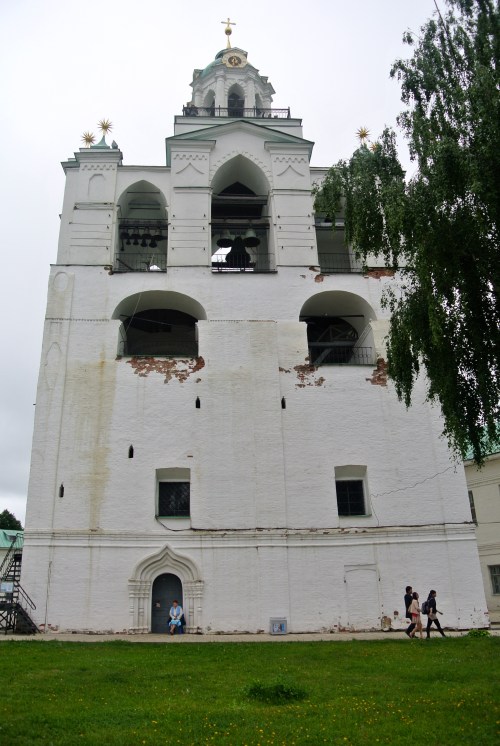
Cathedral of the Transfiguration in Yaroslavl.
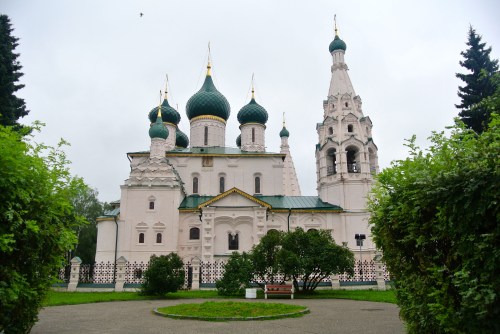
Cathedral of the Transfiguration in Yaroslavl.

St. Elijah’s Church on the Central Square of Yaroslavl.

St. Elijah’s Church on the Central Square of Yaroslavl.

An afternoon and night of cruising brought us to Goritsy, the highest elevation, after Moscow, on our water route. The area is famous for its cluster of monasteries. The most impressive of these is the extensive and beautiful Kirillo-Belozersky, which the group visited.
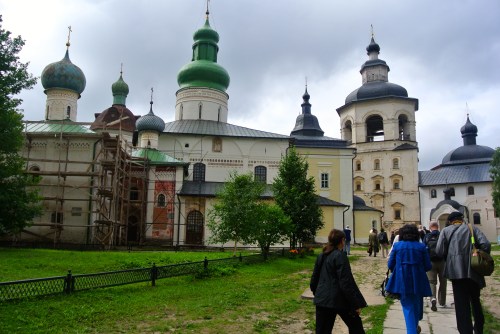
Kirillo-Belozerski Convent in Goritsy.

Kirillo-Belozerski Convent in Goritsy.

After Goritsy, the character of the cruise changes. Yaroslavl was on solid land, with some elevation though no real hills, beautiful, and even cozy–a great favorite of the group. Beyond, however, the landscape to my eye turned bleak, the same word another passenger chose to describe it. From Uglich to Goritsy, the towns stood above the rivers, on solid ground. Reeds, shrubs, and evergreen trees lined the shore.

A few miles beyond Goritsy, however, a series of six locks took the ship steeply downward toward sea level. Thereafter, we entered an uncongenial and barren landscape, flooded with water, dotted with numerous clusters of reeds, then hummocks on which shrubbery eked out an existence, followed by scrawny evergreens as far as the eye can see. One passed few traces of human habitation. Ecologically, the evergreen-birch-reed-mud-water system is very poor. Even if you can find soil, it is not fertile. It was a jolt to recall that it was in such a forbidding landscape that St. Petersburg itself was built, on mud and pilings, by diktat of Peter the Great in 1703, at a cost of serf laborers estimated at 100,000 or more dead.
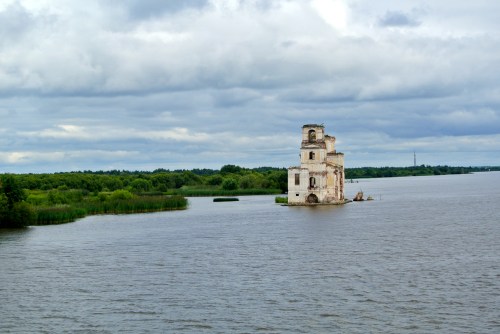
Traveling past Goritsy and down towards sea-level.

Traveling past Goritsy and down towards sea-level.

Following the canal we came to Lake Onega, the third largest body of fresh water in the world. In the lake is Kizhi island, a museum of Russian wooden architecture, all built without nails, including the Transfiguration Cathedral and the Church of the Intercession, both capped with rank upon rank of partial domes. There is also a small wooden chapel so perfect it could be in a picture book, a windmill, and a peasant house. The latter is rather ample in size. The “izba” which we were told meant sleeping, sitting, and living room, seemed very cozy and comfortable, with a big block-like heater about half the height of the room. On the top were furs, so that the oldest and youngest can sleep with its warmth. It is also used for cooking and heating the room.
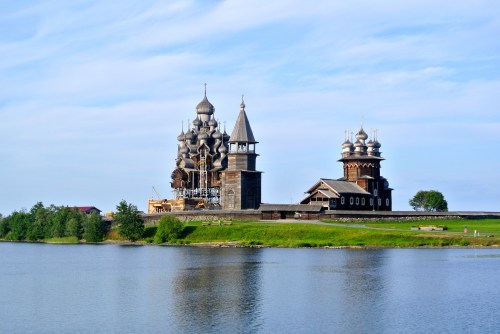
The Transfiguration Cathedral and the Church of the Intercession on Kizhi Island.

The Transfiguration Cathedral and the Church of the Intercession on Kizhi Island.

Close-up of the domes.

Close-up of the domes.

For all the seeming coziness of this dwelling, however, one must remember that the serfs, who comprised more than ninety percent of the Russian population until they were liberated in 1861, were tied to the land, and deeply impoverished. It is thought that famines struck about once every seven or eight years. From the agricultural labor of the serfs derived all the opulence and wealth of the nobility and royal house. But massive starvation–tens of millions dead in the countryside–came only with the Soviets and the confiscation of food from the rural people to feed the new and growing populations of industrial towns.

We walked through Kizhi at about eight in the evening. In the summer, the sun at that latitude does not really set. So at that hour the island was enchanting– fragrant pasture, the wooden buildings loosely grouped at one end, water all around. A fireboat sits just at the shore of the island at all times–I hope and expect they have elaborate detection and extinguishing systems. Word was that today Kizhi is on the international itinerary, and that huge ships, for example from the Norwegian line, dock there, with thousands of passengers at a time. By arriving late (fog had kept us immobile on the river for many hours over the night) we avoided such a nightmare.
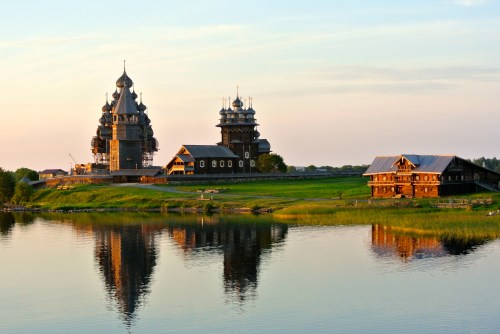
Kizhi glowing in the eight o’clock light.

Kizhi glowing in the eight o’clock light.

Not only that. Our late return drew many passengers to the top deck, where colored champagne was provided, and music. Soon passengers were dancing. The ship slowly and gently pulled away. The party continued, against the incomparable background of the ancient wooden buildings glowing in the rays of the slowly setting sun, as their images were reflected with great clarity on the still waters of the vast lake. It was a magical moment.
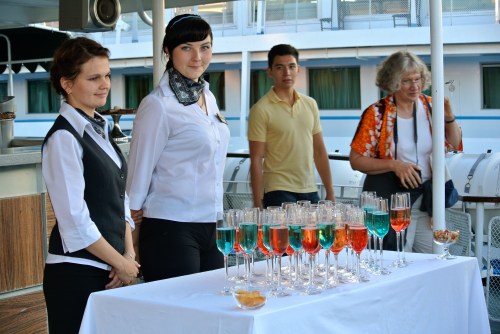
The crew offers passengers colored champagne as they depart Kizhi.

The crew offers passengers colored champagne as they depart Kizhi.

On the Svir river, which connects Lake Onega to the even larger Lake Ladoga is a low-quality “old Russian” theme park called Mandrogi, constructed by a friend of Mr. Putin. It promises blacksmiths and weavers demonstrating their ancient crafts (they were not at their posts when we visited), but in fact consists mostly of food stalls and souvenir shops, as well as an array of luxury villas, one of which is reportedly the favorite of the Russian president. No one was fooled by this “man made tourist trap” as one reviewer describes it. The passengers were back on the ship in a flash. They had paid good money for a first class tour, and this did not belong. But we learned that Mandrogi was, by government fiat, a legally obligatory stop for all Volga cruises, so nothing could be done.

Mandrogi was followed by a vodka tasting and a farewell dinner at which the peerless Kira, the ship’s cruise director, introduced many of the ship’s key personnel, from captain and chief chef to housekeepers and the kitchen staff, all to thunderous applause from the passengers. I am proud to say also that in the Matryoshka doll painting competition our Penn experts took first and third of the three prizes. Indeed, as I observed the groups, I found ours perhaps the most active (they attended all the lectures) and certainly most deeply engrossed in serious conversation at mealtime. We reached St. Petersburg the following morning.

Penn alumni win first and third prizes in the Matryoshka doll painting competition.

Penn alumni win first and third prizes in the Matryoshka doll painting competition.

The city is of an indefinable and elusive beauty: a network of rivers and canals that catch and transform in their seemingly fathomless waters every fugitive shift of color and mood of the northern sky. Its largely nineteenth-century buildings have mostly been repainted in characteristic bright, sometimes pastel, colors. But to see it all would take weeks.

We spent our first morning visiting the Catherine Palace at Tsarskoye Selo (“The tsar’s village” also called “Pushkin”), a clear attempt to overshadow even Versailles, with gold and gilding laid on thickly everywhere, parquet floors, and great high windows that fill the interior with the pure northern light. The palace was long celebrated for its room lined entirely with semi-precious Baltic amber. Hitler’s forces had packed up the whole room, which was then never seen again, before setting the palace ablaze as they retreated in 1944. Over the following decades roughly fifty of the original one hundred fifty rooms of the palace were restored, As for the most famous of them, in 2003 a meticulous restoration was completed and the fabled Amber Room was reopened.
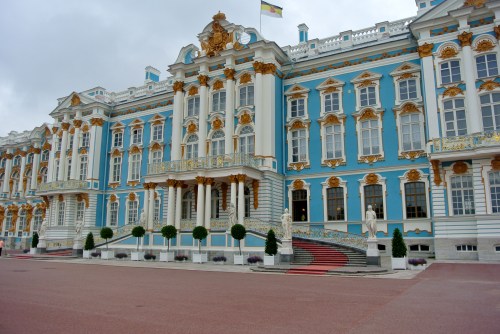
The Catherine Palace at Tsarskoye Selo, St. Petersburg.

The Catherine Palace at Tsarskoye Selo, St. Petersburg.

The visit concluded with a lunch overlooking the garden, where we enjoyed an energetic display of Russian song and dance, with clackers, accordion, soaring female voices and one classic Russian bass—all from just four people.

In the afternoon we visited St. Isaac’s Cathedral, which one imagines was designed to rival St. Peter’s in Rome. Its huge dome, on a tall cylindrical base, dominates the city skyline. When we visited, the Cathedral was ringed with dozens and dozens of tourist buses—more than I have ever seen in one place except the Great Wall of China. But once inside one scarcely felt crowded: the building can accommodate 14,000 worshippers.

We also explored the Fortress of St. Peter and St. Paul, one of the earliest structures built in St. Petersburg, and, in a rather western looking cathedral having a golden spire, the burial place of all the tsars since Peter the Great. The entire imperial family was murdered in 1918 in Yekaterinburg, in the south, as they fled, and their bodies thrown down a dry well and covered with acid and then cement. In the last days of communism the house where the murders took place was demolished, lest it become a shrine of sorts (irony of ironies, an Orthodox memorial chapel now stands on the site). All the remains have now been recovered and their identities confirmed using DNA. Today the entire group—Tsar, Tsarina, five children (including Anastasia) and four attendants (one a doctor) who refused offers to be allowed to leave them–rests in special chapel in this cathedral, with fresh flowers. Both Nicholas and Alexandra are now martyrs and saints of the official Russian post-Soviet Orthodox Church.
The Fortress of St. Peter and St. Paul with its tall spire.

The Fortress of St. Peter and St. Paul with its tall spire.

Also in St. Petersburg, the shrine church of “The Savior on the Spilled Blood,” is beautifully restored and full of visitors. This marks the spot where Alexander II, the “tsar liberator” who freed the serfs and was well along in planning more constitutional reforms, including the more liberal Loris-Melikov constitution he had signed that very morning, was murdered in 1881 by the terrorist “People’s Will” organization—perhaps the single most important setback contributing to the throwing of Russia off the constitutional democratic track. (The Tsar’s son Alexander III was a narrow-minded disciplinarian who promptly rescinded the new constitution). Fresh flowers mark the place on the sidewalk, now enclosed by the church, where the Tsar collapsed after he had survived a first bomb in his armored coach, gotten out to see if he could help, was hit again, and then fallen to the ground. Returned to the palace, he died a few hours later.
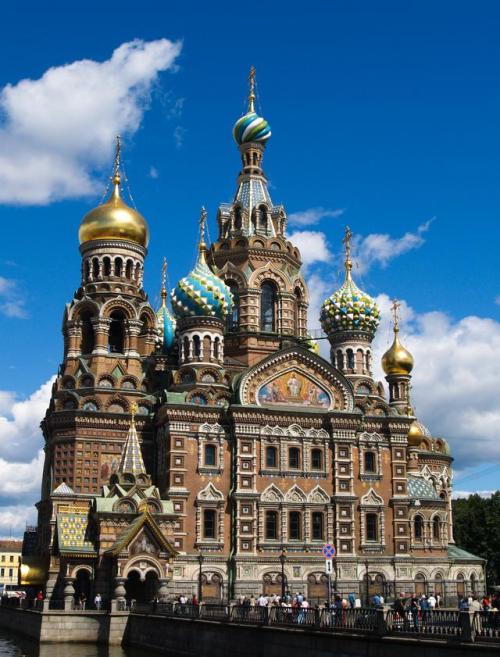
The shrine church of “The Savior on the Spilled Blood.”

The shrine church of “The Savior on the Spilled Blood.”

That evening in St. Petersburg many passengers stayed in town for dinner and entertainment. A rollicking Russian folk show was available, along with the Swan Lake ballet. Our guides showed us some fine and inexpensive places to eat—a Belgian restaurant proved particularly good—but quite naturally some chose to splurge on caviar, champagne, and the works at the queen of St. Petersburg hotels, the legendary Evropeiskaya, or Grand Hotel Europe, built in 1875.

Even so, nearly all were on board early the next morning for special entrance into the Hermitage Museum before the public was admitted. This is of course one of the three or four most important museums in the world and the guides did a splendid job. My colleague from Columbia University Michael Stanislawski also found in the vast building several rooms of modern Jewish art—somewhat unexpected, but an indication, he said, of the status of Jews in Russia today, which is not perfect, but better than it has been in a very long time.
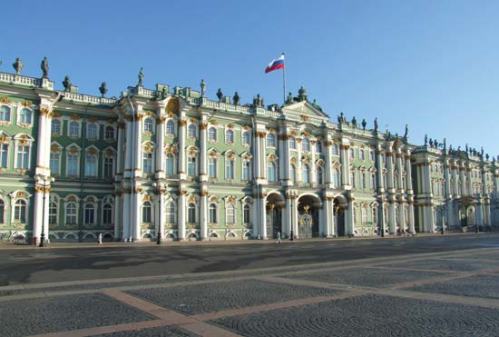
The Hermitage Museum in St. Petersburg.
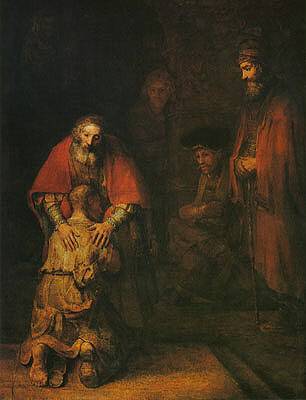
The Hermitage Museum in St. Petersburg.

Return of the Prodigal Son by Rembrandt van Rijn (c. 1669). One of the many masterpieces held at the Hermitage Museum.

Return of the Prodigal Son by Rembrandt van Rijn (c. 1669). One of the many masterpieces held at the Hermitage Museum.

The finale was a hydrofoil trip across the Gulf of Finland to Peterhof, the palace started by Peter the Great. It has extensive grounds, with great water cascades and statues, as well as “tricks” put in place long ago—points where a footstep will earn the incautious visitor a squirt of water in the eye, or something similar.

All in all it is difficult to imagine a Russian trip in which better use was made of time. Or one with a more congenial, enthusiastic, and well-educated group of passengers. Although we saw far from everything, we were guided unerringly to the most important attractions. Our six lectures ranged from the doctrines of Orthodoxy to Chinese-Russian relations, and were presented by Michael Stanislawski, John Meffert of the National Trust for Historical Preservation, and myself. Our local guides were superb, as was the travel agency staff, who seemed omnipresent and all-competent. The ship is a gem and the itinerary endlessly interesting.
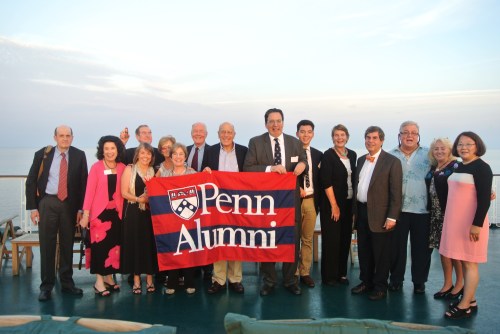
The superb Penn group aboard the M.S. Volga Dream.

The superb Penn group aboard the M.S. Volga Dream.

Every member of our group will have his or her unique and valuable memories of the trip, and insights and reflections drawn from them. Permit me to conclude with some of my own.

For those who, like this writer, remember Soviet times vividly, the experience was an astonishing revelation of how much Russia has changed, mostly but not entirely for the better, since the end of Communism in 1991. It was a reminder as well that history is full of real surprises, in this case one on a scale such as to overturn almost all of the accepted wisdom (and copious writings) with respect to Russia of most of the twentieth century.  If I had told my college professor of Soviet History back in 1970 that in the year 2000 Tsar Nicholas and his wife Alexandra would have been proclaimed martyrs and saints of the Moscow Patriarchate of the Russian Orthodox Church, he would have thought me simply mad. The thought was beyond inconceivable. It is all a salutary lesson too for historians and others a little too sure of themselves and of what they believe, as well as a memento mori for aspiring social engineers.

On the other hand the changes are understandable and in retrospect (always retrospect!) seem to have been essential. The economy, though riddled with corruption, inefficiency, and personal dealing, particularly at the top, is now fundamentally free and dynamic, and like nearly all the others of the former Soviet bloc (Belarus is a clear exception) comparable to the leading economies in the world.  The Soviet Union had been, in the words of its own leaders, “stagnant”—which is why Gorbachev was summoned in an attempt to re-instill vigor.

The changes in Russia remind us of something else important too. This is that progress need not be a headlong leap into an unknown future that seeks only the new and novel. Restoration of that which has been lost or destroyed is also progress. In communist days life was hard; food, housing, and consumer goods were scarce; all sorts of freedom, intellectual and religious not least, were lacking, while information was impossible to obtain. At the same time, though the standards at the great Russian universities, conservatories, orchestras, ballet companies, and research laboratories—the level of non-political culture in general—was maintained among the highest in the world.

Swan Lake advertised in St. Petersburg.

Swan Lake advertised in St. Petersburg.

It is scarcely surprising that after seventy years of the attempted imposition of the originally German doctrines of Marxism without success (they have failed wherever they have been tried) coupled with decades of sustained attack on the culture Russians had always cherished (and for which it became clear nothing could be substituted, despite grandiose efforts and abundant coercion), the Russians should return to their past—which includes the Orthodoxy (with state patronage of course, but that is not the whole story, for the state seeks legitimacy and popularity through its largesse), whose revival I found perhaps the most striking revelation of the trip, but not that alone. The list of changes is very long. Several of us concluded that Russia was not yet out of the wood, but was steadily moving closer to its edge.

In forty years, as a professor and before, I have traveled a great deal, including five visits to Russia, one for a semester as a student in the vanished Leningrad. I knew from the start that “Waterways of Russia” would be something new and memorable. I had expected the fellowship and intellectual sharpness of the Penn group would be an endless source of pleasure, which it was. What I did not suspect, however, was how deeply what we saw would stir and move me. Russia is an ancient country and one I had known, in its Soviet form, and through émigré teachers and friends, since high school. Yet here it presented itself, clearly the same place it had been forty years ago, yet changed completely—bright with the splendor and beauty of its ancient culture restored, the streets alive with people and commerce, guides and colleagues speaking freely as never before. Russia had shed the incubus of nearly seventy years and was herself again. For a historian this provided much to ponder, and for a confessed Russophile, a sort of joy of which I had never dreamed.

I suspect that other passengers may have had similarly deep, or for that matter quite different, reactions. Whatever the case, I know that for me, and I hope for our group, “Waterways of Russia” was a high point of my life.
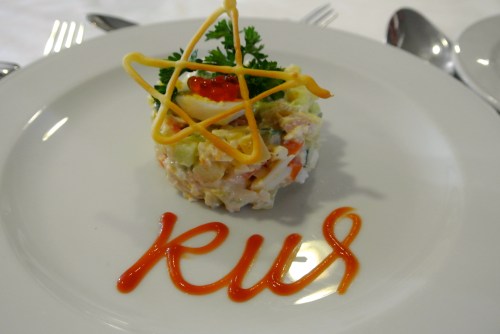
Food aboard the M.S. Volga Dream.

Food aboard the M.S. Volga Dream.

[Interested in traveling with Penn Alumni Travel? Visit our 2014 schedule here. Professor Arthur Waldron will be joining our 2014 Black Sea Cruise.]

Leave a comment

Filed under Faculty perspective, Penn Alumni Travel, Travel

Lunch-Time Learning

Author: Emilie C. K. LaRosa

This fall, use your lunch break (or your coffee break) to learn something new and interesting. Penn Alumni Office Hours is offering six great webinars on topics as varied as Burma, self control, and the benefits of pet ownership from renowned Penn faculty members. The best part? They’re all free! The second best part? They’re easy to access; it’s as simple as clicking on a web link. No special software, hardware, or downloads required.

Learn more about our Office Hours online webinar series here or check out our six sessions below. Registration for all webinars is required.

Penn Professor Carol Muller

Penn Professor Carol Muller

Teaching World Music Using New Technology (October 22, 2013 at 3 p.m. EST) With Penn Professor Carol Muller. This webinar will discuss the advantages and limitations of using new technologies–specifically online learning platform for teaching about music of the worlds peoples. This will include classes for conventional Penn students and those in MOOC (massively open online courses) style. You will hear a sampling of the music that students hear in Muller’s classes, from pygmy “hoots” to Australian aboriginal chanting, and think about how new technologies are reshaping the way we access knowledge from around the world.

Lisa and George travel through Burma.

Lisa and George travel through Burma.

Explore Exotic Burma (October 23, 2013 at 3 p.m. EST)  With Lisa Ellen Niver (C’89) and her husband George Rajna, founders of We Said Go Travel. Myanmar holds a special place in the hearts of Lisa and George. They met online because Lisa told George, “The Shwedagon Pagoda is my favorite place on the planet.”  Join them for a webinar on the highlights of this unique and unspoiled land. [Penn Alumni Travel will be visiting Myanmar in November 2014. Click here for more information.]

Amazing Machu Picchu in Peru.

Amazing Machu Picchu in Peru.

The Art and Culture of Peru (October 30, 2013 at 12 p.m. EST) With Larry Silver, the Farquhar Professor of Art History. Professor Silver will discuss the arts and culture of Peru and its extraordinary monument Machu Picchu. [Penn Alumni Travel will be visiting Peru and the Amazon in 2014. Click here for more information.]

Wharton Professor Katherine Milkman

Wharton Professor Katherine Milkman

The Science of Self Control (November 6, 2013 at 12 p.m. EST) With Wharton Professor Katherine Milkman. The obesity epidemic is just one example of a major societal problem that is driven in large part by self-control failures.  Other examples include under-saving for retirement, under-utilization of preventive medical care, and under-investing in education.  This talk will provide a short overview of past research on self-control as well as findings from a new branch of psychology and economics that are being used to help policy makers and individuals reduce the incidence of self-control failures.

Could these little pups increase your life expectancy?

Could these little pups increase your life expectancy?

The Effects of Pet Ownership (Is owning a pet healthy?) (December 3, 2013 at 12:00 p.m.) With Penn Vet Professor James Serpell. More than 30 years ago, the results of a single landmark study appeared to indicate that pet owners were more likely to survive for one year following a heart attack than non-owners. In the ensuing years, continued research has elaborated and expanded upon those original findings, as well as shedding light on some possible mechanisms that could account for the salutary effects of pet ownership on people. This presentation will provide an overview of this developing field and its implications.

Vintage cars in Cuba.

Vintage cars in Cuba.

The Art and Culture of Cuba (December 4, 2013 at 12:00 p.m.) With Penn Professor Ezekiel Dixon-Roman. Professor Dixon-Roman will discuss the history, culture, and economics of the Communist-run island nation of Cuba.

To register for any of these great webinars, simply click on the webinar’s title to be directed to the free registration page.

1 Comment

Filed under Alumni Benefits, Alumnni Education, Emilie, Penn Alumni Travel, Penn Vet, Travel, Wharton