Monthly Archives: January 2013

The Graduate Student Center

Author: Rebecca Eckart, GEd‘13

After taking five years off between undergrad and grad school, I imagined it would take me a while to readjust to being a student again.  I also imagined I’d spend a lot of time in the library.  The first of these expectations was true: it took me half of fall semester to get used to managing classes, papers, reading, and work again.  But surprisingly, the second was not.  Although I do go to the library sometimes when I study on campus, more often I tend to go to the Graduate Student Center (GSC).

For those of you who may not be familiar with the GSC, it opened in 2001 and is located between 36th and 37th Streets on Locust Walk.  It has a large common room with tables, couches, computers, a café that has great lunch deals, and free coffee and tea all day (if you bring your own cup).  There are a lot of programs for students—foreign language chats, teaching workshops, and other activities.  And there are also cute gnomes scattered throughout the building, sure to brighten anyone’s day.

The GSC has a great community atmosphere.  I almost always see someone I know when I stop by for lunch or to read.  The GSC is also a unifying space for grad students.  There are twelve different graduate and professional schools at Penn, and the GSC is a place where students from all schools can come, like me, to study, eat, or take a break between classes.

GSC

Leave a comment

Filed under GSE, Rebecca E., Student Perspective

Student to Alumnae: An Student Interview with Dr. Heidi Cohen, C’83, PAR’13

Author: Deirdre Bullard, C’14

Despite the thousands of alumni carrying the name of our proud alma mater, it really is a small world.

I say this after meeting Dr. Heidi Cohen (C’83, PAR’13, B.A. Biology with a concentration in microbiology), who returned to Penn recently to visit her son, Harrison Lieberfarb (C’13). But Dr. Cohen, a pre-med graduate of the college in 1983 and now a successful Assistant Medical Director of pediatric emergency medicine at Joe DiMaggio Children’s Hospital in Hollywood, FL, came not only for a family visit. She attended her son’s class (led by Dr. Helen Davies, Professor of Microbiology), to give a lecture on malaria.

What makes the world so intimate is  that Dr. Cohen took this same class as an undergraduate student in the 80’s with the same professor. Furthermore, the course influenced a large amount of Dr. Cohen’s professional experiences both in medical school and afterwards. Below, you will see what I mean after reading our interview.

Cohen

Pictured from left to right: Harrison Lieberfarb, C’13, Dr. Helen Davies, Professor of Microbiology at University of Pennsylvania, and Dr. Heidi Cohen, C’83, PAR ’13.

How did you join Helen Davies’ class?

A friend recommended that I take this class, which is a Benjamin Franklin Seminar. I had to get permission from Dr. Davies to join it because it was reserved for juniors and seniors. Our main project was a presentation on an infectious disease. My infectious disease for study was HIV. We had no access to computers like students to today, so I had to go the library and just research everything about HIV; everything about its symptoms. As an undergrad, I learned quickly how to synthesize this information and organize it. This influenced my later work greatly.

The way I presented the material also had a huge affect on my work methods today. Because we had no Powerpoint, I just had to get up in front of a class and talk. Now I teach and lecture in universities and at conferences.

What was it like to move from the instruction of a classroom to real-life practice of medicine?

Working in the ER puts you first in line to witness some historical outbreaks, like HIV. Even when working in emergency rooms after graduating, I saw this—it was the disease—all the time. Back then in the 80’s, there were no antivirals, no medicines, and nobody really knew what kind of disease it was—HIV was a death sentence.  It was depressing. Today, I couldn’t even tell you where the HIV positive children in the ER are. It’s been fascinating to move from seeing it in tons of children all the time, to never seeing it again.  In my residency, our emphasis was not on reading. We were told we would learn about medicine by seeing it. I own it now because I did it.

I chose a program where I had to make decisions quickly. I’m good with observing, making diagnoses, and dealing with anxious parents. At work I have five minutes to observe a patient, establish trust with them, order whatever they need, and convince them that the treatment is appropriate or alleviating. When you know your style, you learn about how you learn, and that can be very beneficial when you have to think on your feet.

What kinds of activities at Penn helped you prepared for your career?

I started research at the medical school as a sophomore. I knocked from door to door of various professors to see if any were hiring, even though I had only taken Intro to Biology at this point. Dr. Akira Kaji eventually hired me. In his lab I learned how to pipette, sterile plates, and map E.Coli. The work was published in well-known magazines like Science and Nature. I spent three years and every summer doing this work, along with working at CHOP. I also volunteered with high risk OBGYN organization. While other students were out there partying, I was helping deliver babies. Other times, I would work with rehabilitation patients, and we would do great things with them. We would walk the patients, in their wheelchairs, to Hutchinson’s gym, change them into bathing suits, and swim for therapy. It was a great experience.

Outside of Penn, such as at a public health clinic in Long Island, I was a translator. They needed someone to translate between Spanish and English. I offered to do this work if they let me cycle through their clinic. Altogether, when I started medical school I was in great shape, because I had all of this experience and exposure.

What kinds of cases do you see in the emergency room today?

The most frequent cases I see are common conditions—things like asthma and trauma, mostly from tourists. Most people come into the ER because they overreact to things that can be addressed by a visit to a general practitioner. I’d say about 80 percent of the cases I see should go to a regular office. Still, you never know what will walk in the door. I’ve seen some of the most unusual cases, like Addison’s disease. I once had a mother bring her young daughter in. She was scrawny, pale, and obviously very sick. The mother was mostly worried about a rash, but I noticed right away her gigantic lymph nodes. It took 20 minutes for us to confirm some suspicions. She had lymphoma.

Has being a female practitioner affected your career or work place?

I find it harder for women because we have to balance our families and children with our work. I had three children to take care of w. Working in the ER is exhausting, and you really learn to cope with the stress both from that environment and that constant balancing. But I never tolerated that I was weaker or inferior because I was a woman. That attitude, along with raising my children, really gave me better training as a pediatrician.

How does this job affect your family life?

As I said earlier, some things never leave you. My children, for example, do not go to carnivals since I dealt with an outbreak of an STD at one in New York. But my children have a unique perspective on what’s important. I try to remember that what’s important for me can be very different from them. They might be preoccupied with getting an A on their papers, or making it to practice on time, while I am dealing with all kinds of emergencies during work. But overall, they’ve heard a lot of different stories from me, so they know how to prioritize things.

My daughter, though, was Pre-Med at Georgetown for about 15 minutes. When asked why, she replied, “I will never leave the library.” And it’s true; if I could relive my experience at Penn, I would still study medicine, but I would spend less time in the library, and more time having fun.

You certainly see a lot of fascinating but disturbing things in your work. How do you handle emotional distress?

If I don’t get upset, then I know I have a problem; you should feel that way in this job, or you shouldn’t be working. I have to do my job, but I have to remember the emotional side when telling someone about their injuries and sickness, or telling a mother that her child just died. Would you want a doctor who wasn’t empathetic?

Any special messages for the classmates from 1983?

I am very excited to return for reunion to see what my old friends have done in the last 30 years since we graduated! As medicine has evolved so have we as providers, wives, husbands and parents. As my son Harrison will be graduating it will be like reliving my own graduation experience. I think his participation in Mask and Wig has brought my family closer to Penn as we have gotten to know the company, hosted them in our home for two tours and have seen countless productions.  Coming back for reunion will bring me full circle and enhance my memories of Penn both from the class of 1983 and from Harrison’s class of 2013.

Leave a comment

Filed under Alumni Profile, Deirdre B., Student Perspective

Sketches of Spain – Penn Alumni Travel 2012

Author: Gwendolyn DuBois Shaw, Associate Professor of American Art, Faculty Host

It was a rainy day in October when our airplane touched down at Aeroport del Prat on the outskirts of Barcelona.  From the first moments in the baggage claim, when our Penn Alumni Travel luggage straps identified me and my husband John as fellow voyagers on the Sketches of Spain, 2012, we were surrounded by new friends from the family of Penn alums – friends that I have come to know and appreciate during the past four years that I have been accompanying these trips as a faculty host.  Our choice to travel off of the standard itinerary meant that we were not met at the airport by the tour director, Nani Gonzalo-Vargas, but thankfully, those magical luggage straps meant that we soon connected with another Penn couple in the same situation and were able to share a cab together into Barcelona.

Our new friends were on their third or fourth alumni trip and, like us, were traveling independently so that they could add a few extra days on at the end and visit a few cities that were not on the itinerary.  As the four of us discovered toward the end of the trip, and the gathering force of Hurricane Sandy began to threaten our easy return to the East Coast of the United States, this was both a good and a bad decision to have made.  But more on that later.

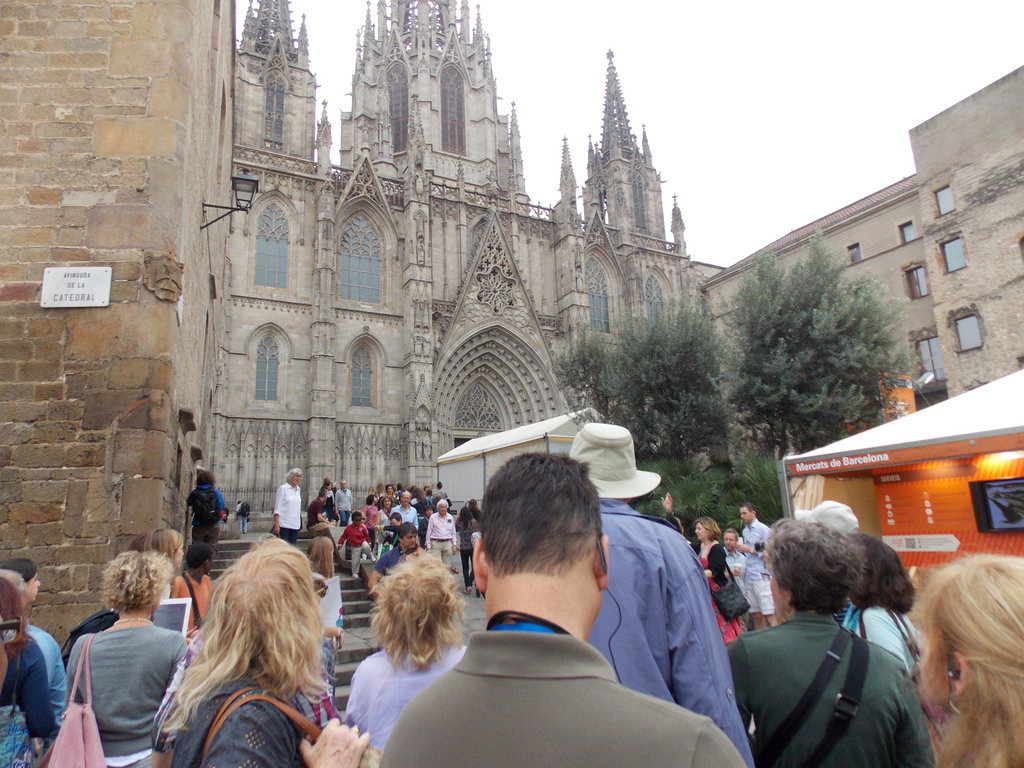
The Group at the Cathedral of Barcelona in the Medieval Quarter

The Group at the Cathedral of Barcelona in the Medieval Quarter. View all my pictures here.

Once at the Hotel Cristal, we met up with Nani, the tour director, and the other members of the group.  We were sharing the trip with members of the Rutgers and University of Maryland alumni associations, several of whom had made couples or family trips by bringing friends or siblings. After a day of recovery spent strolling the shopping districts of the nearby Rambla and eating marvelous food at La Boqueria, the largest and most dazzling of the many markets that characterize the sophisticated culinary world of the Catalunya region that Barcelona dominates, we adjusted to the time difference and were ready for the delightful and educational tours that make Penn Alumni Travel so special.

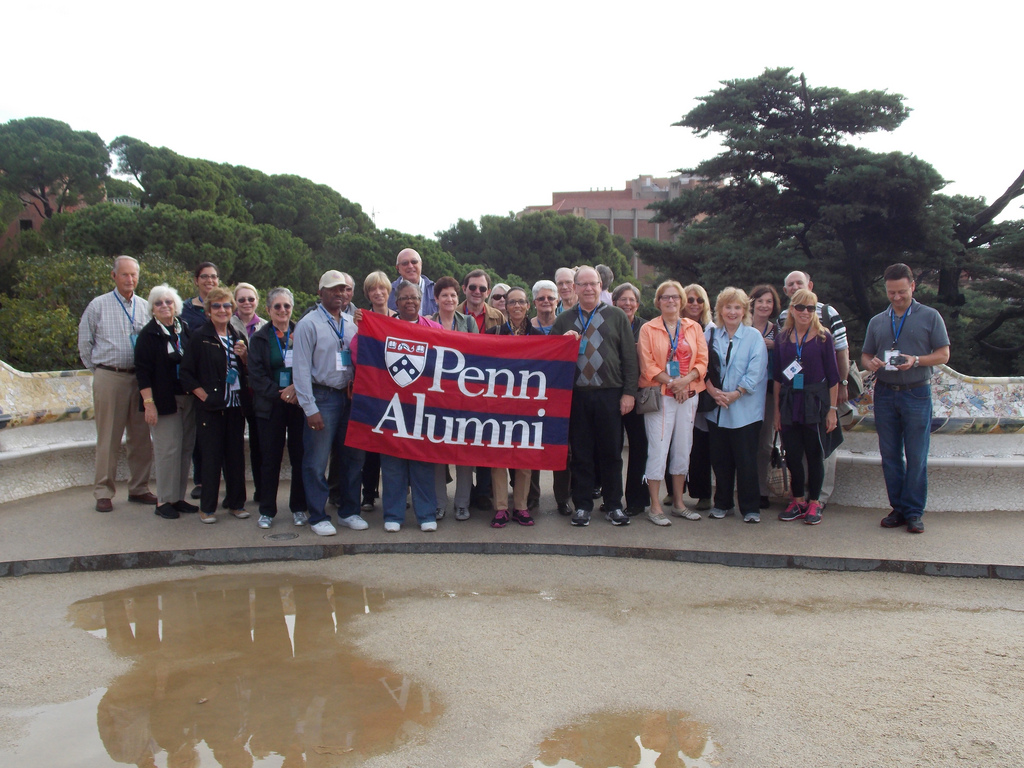
Our local tour guide in Barcelona was Santi, short for Santiago, a specialist in the rich architectural heritage of the city. We traveled with him by bus to the Olympic Park, the waterfront Athlete’s Village, and the absolutely stunning Cathedral of the Sagrada Familia and the Park Guell, both designed by the renowned art nouveau architect Antonio Gaudí.  At the Park Guell we learned about the innovative techniques of glass and ceramic mosaic used by Gaudí and his workmen.  While there I was able to talk our whole group into posing for a picture!  Say, “Queso!”

The Group at Park Guell

The Group at Park Guell.

Later that day, Santi guided us through the complex architectural program of the Sagrada Familia, a vast and breath-taking cathedral that was begun over one hundred years ago and is still under construction. While waiting for our entry time to be called, we were fortunate to see the building of a human castle, a community activity in which groups of Catalans compete to see who can successfully build and deconstruct the tallest human tower!  This was a really a remarkable undertaking to witness, and I enjoyed seeing the little children, whose job it is to stand steady atop the shoulders of their older compatriots, prepare themselves by strapping on protective head gear and wrapping their waists in the characteristic scarves that are used as grappling tools when climbing atop the stacked bodies!

Here is a link to the video of the Castle Competition.

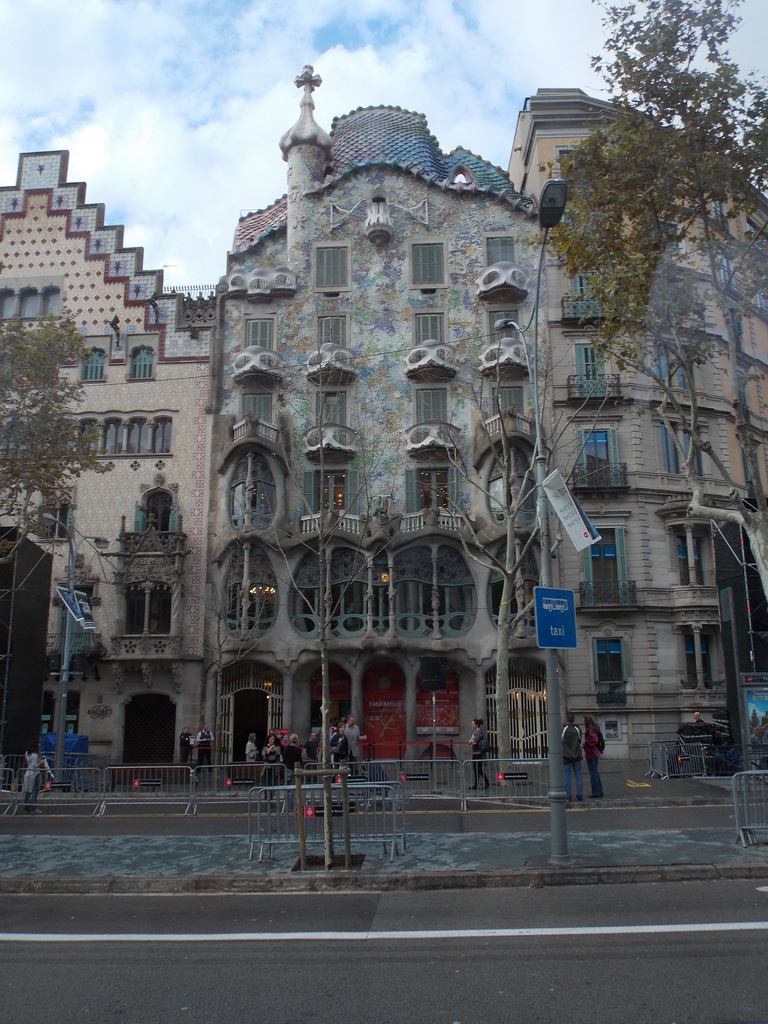
Our last night in Barcelona we had a beautiful and exceptionally tasty group dinner across the street from another Gaudí building, Casa Battló on the fashionable Passeig de Gràcia.  That night the elegant art nouveau building was the site of an elaborate series of digital video projections that caused the façade of the structure to appear to come to life!  The narrative of the projection involved the animation of the dragon motif that Gaudí integrated into the building’s program, an homage to Barcelona’s patron saint George, who is known for his heroic feat of slaying a dragon.  It was remarkable to witness this contemporary artistic transformation of a cultural landmark into an evening’s entertainment for both residents of the dynamic city and tourists alike.

Here is a link to the video of the Casa Battlo animation.

Casa Battlo during the day

Casa Battlo during the day.

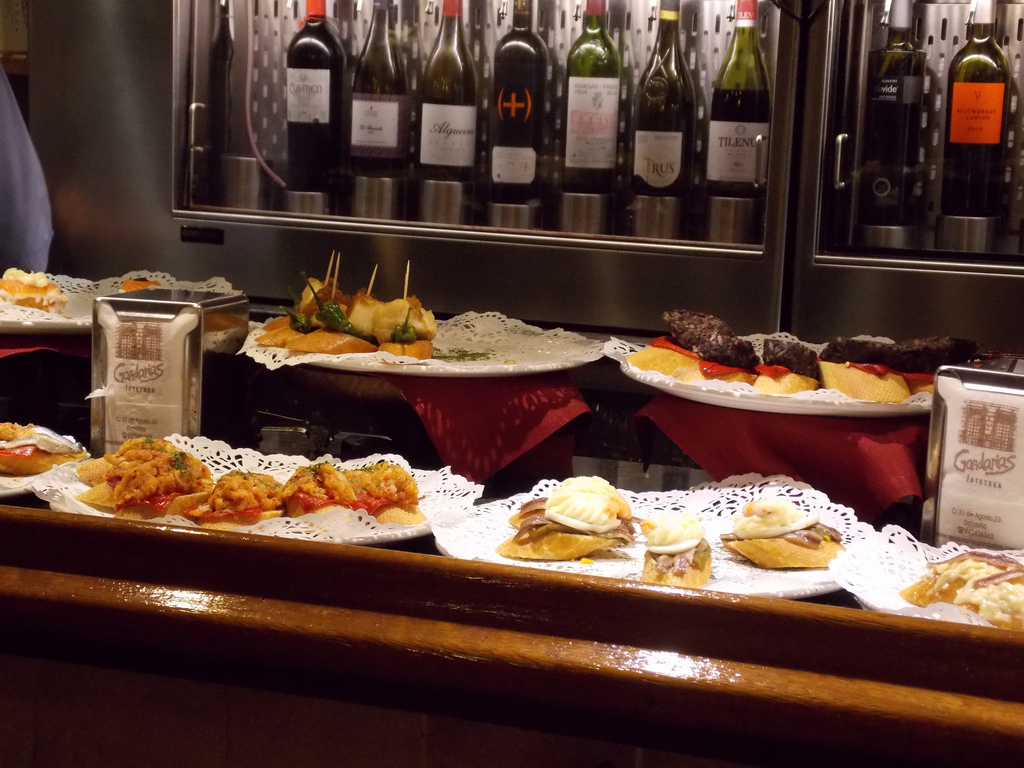
The following day, we departed Barcelona and Catalunya for the north of Spain and our visit to the Basque Country.  After a short plane ride we found ourselves in the charming seaside town of San Sebastián.  That day, we had (hands down) the best group meal of the trip at an unassuming little pintxos bar in that city’s old quarter.  Pintxos are small bites of food, similar to tapas, that are typically served on little wooden skewers that pierce their centers, thereby giving them their common name (pintxo being Basque for spike).  Over the course of two hours, we feasted on succulent lamb, incredibly fresh seafood harvested from the region’s cold Atlantic waters, and fragrant cheeses made in the grassy hillsides to the east, washing it all down with bottomless glasses of refreshing local wines.

Pintxos in San Sebastian

Pintxos in San Sebastian.

After lunch, the group dispersed, and my husband and I chose to stroll through the city and enjoy the vibrant street life, watching Basque families chatting with their friends and neighbors as their children played in the numerous squares and parks that characterize this close-knit community of about 200,000.  That night we learned a great deal more about the region and its remarkable history from a local specialist who told us about the history of the Basque language (one of the oldest and most unique in Europe) and the difficulties that this culturally and linguistically distinct group of people have historically had with their ambitious neighbors.  It was especially affecting to learn of the fascist persecution of the Basque when during the 1930s General Franco attempted to dominate them through a program of genocidal bombing.  Following the lecture we were joined for dinner by a dozen English-speaking residents of San Sebastián who ranged in age from about 15 to 50.  This was a real treat as it allowed members of our group to better understand the cultural differences and similarities between not only the Basque and other Spaniards, but with ourselves as well. Zorragarri! (“Wonderful” in Basque).

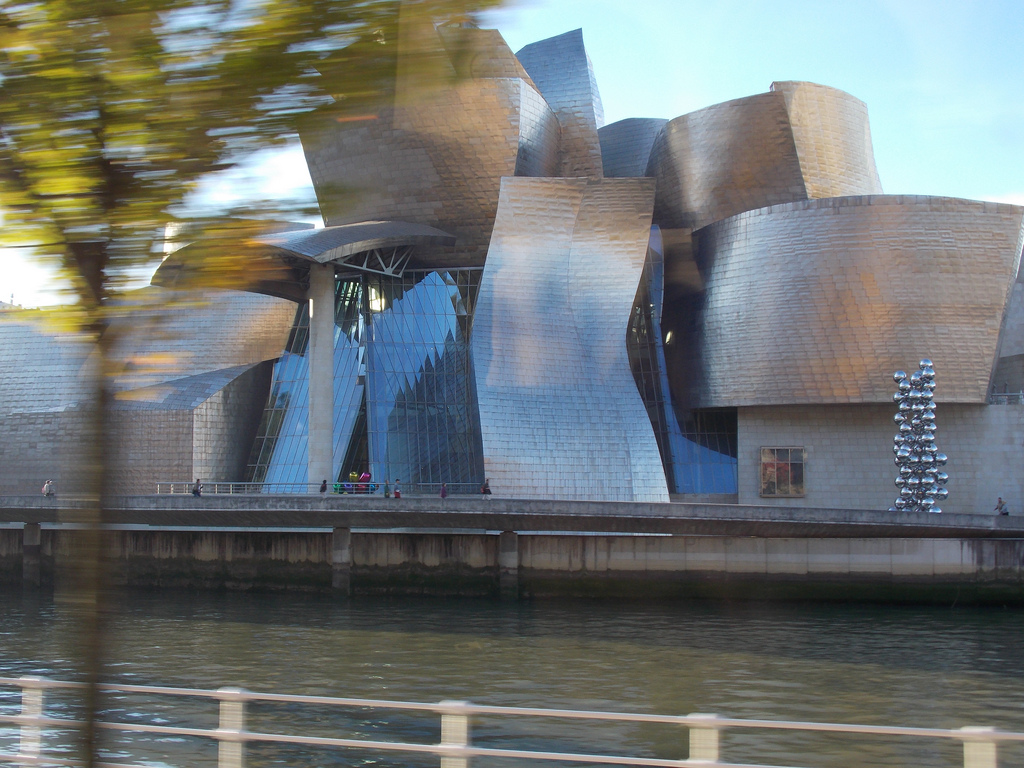
While in San Sebastián and the Basque Country, we also visited the Guggenheim Museum in the industrial hub of Bilbao and the small city of Pamplona.  Certainly, the works of modern and contemporary art that were on view in Frank Gehry’s masterpiece of museum design were impressive, but I was most charmed by the narrow medieval streets of Pamplona. Best known to Americans as the site of the Festival of San Fermín and the running of the bulls through the streets to the arena, Pamplona is also a stop on the Camino de Santiago, which runs across the north of Spain to the pilgrimage site of Santiago de Compostela.  While strolling the streets here we encountered many pilgrims with their heavy rucksacks and walking sticks, all walking toward their final goal of reaching the resting place of the bones of Saint James.  That afternoon we had lunch at the Café Iruña, a favorite restaurant for the author Ernest Hemingway, who first made the city known to Americans in his 1926 novel The Sun Also Rises.  With its tin ceiling and brocade wall paper, the Iruña is an incredible time capsule back to the 1920s and the days when bullfighting was a bit nearer to the heart and soul of Spanish culture.

The Guggenheim, Bilbao

The Guggenheim, Bilbao

City Hall in Pamplona

City Hall in Pamplona

We departed the Basque Country by bus, stopping briefly in Burgos, where we toured the great Gothic Cathedral that is the resting place of the medieval warrior El Cid and his wife Doña Jimena.  At the end of the day we arrived in the Spanish capital of Madrid and checked into the Hotel Wellington, a truly gracious English hotel where many of us were given unbelievably large junior suites!  What a treat and what a nice way to close out our travels through Spain: in its largest and most impressive city.  Here we see a group of Quakers posing before the famous sculpture of Don Quixote and Sancho Panza!

Quakers with Don Quixote and Sancho Panza in Madrid

Quakers with Don Quixote and Sancho Panza in Madrid.

While in Madrid, our tour director Nani served as our local guide and gave us both a highly informative lecture on modern Spain as well as an absolutely stunning tour of the treasures of that country’s most important museum, the Prado.  As a professional art historian, I often find typical docent tours in museums to be a little less than stimulating as many of them choose to focus on the biography of the artist or the story that is depicted in the painting. Because this information often mirrors the didactic materials that are found on the wall labels, I don’t usually find that such tours give me much new information.  But Nani’s tour was a real stand out in that she really encouraged the members of our group to look closely at the paintings and appreciate the skill and technique of each of the artists.  She also placed each of the works in a historical context of their own and in relation to each other, Spanish art history, and Western art history as a whole.  It was really marvelous and I learned so much!  Brava y muchas gracias, Nani!

The view of Toledo.

The view of Toledo.

The second to last day on the itinerary found us in nearby Toledo, where we visited the Cathedral and the Jewish Quarter.  For many members of the group (including myself), who come from Jewish backgrounds, this was one of the most spiritually affecting parts of the trip as we walked narrow medieval streets and toured the old Sinagoga del  Transito, where our Sephardic ancestors had not lived and worshipped openly since the Inquisition.  Founded in 1356 and used as a temple for less than two hundred years, this remarkable building bears the visual confluences of the region with both Hebrew and Arabic inscriptions as well as a massive Mudéjar paneled ceiling.

As our trip came to a close, many of us began to worry about making a safe return to United States as the international news was now dominated by reports of the gathering force of Hurricane Sandy, which was due to make landfall on Tuesday – the very day on which my own flight was booked to return to Philadelphia!  The majority of the group was able to return home on Sunday as planned, but those of us who had made other arrangements were a bit more up in the air (so to speak) with our travel plans.  Thankfully, the folks at Penn Alumni Travel and Alumni Holidays International worked around the clock to make sure that everyone who needed to be was rebooked and felt comfortable with their new itineraries.  It was really comforting to know that we were not alone in making our new arrangements and that we had professional travel specialists on our side – a very different feeling than working with the interchangeable and often harried airline representatives on one’s own!

A night view of the Alhambra in Granada.

A night view of the Alhambra in Granada.

Because my planned flight on Tuesday was no longer an option, I was rebooked for Friday morning.  This was a change in plans for which I found no sympathy from friends or colleagues!  Being “stuck” in Madrid due to inclement weather is very different on the scale of travel inconveniences than being stranded in Charlotte or some other domestic location!  Needless to say, my husband and I took advantage of this extra time in Spain and visited a few other cities that had not been on the tour.  Purchasing a special SpainPass rail ticket, we went south to the Andalusia region of Spain, traveling first to the breath-taking Alhambra in Granada, then to the gorgeous city of Seville (known for its vibrant night life and flamenco culture), before ending up on the whitewashed streets of Cordoba, where we toured the Great Mosque and visited the once-forgotten, pre-expulsion synagogue in the old Jewish Quarter.  This final encounter with the architectural remnants of Sephardic culture in Spain was emotionally overwhelming for me: being both a cathartic and an inspiring way to close out my adventure in Spain.  My mother’s family is of both Ashkenazi and Sephardic origins, but we know far more about our ancestors who came from Central and Eastern Europe than we do those who once lived on the Iberian Peninsula.  Seeing these once vibrant spaces with their moorish-inflected Mujédar architecture gave me fresh insight into that past and sparked new interest in trying to recover this important part of who I am and where my people come from.

The interior of the synagogue in Cordoba.

The interior of the synagogue in Cordoba.

When I was finally able to return to the United States, I spent several days dealing with downed trees on our property and rescheduling missed appointments.  Ultimately, however, I was thankful for the extra days in Spain the storm had given me and for another fantastic trip with Penn Alumni Travel!

[Interested in traveling with fellow Penn alumni? Visit our website to learn more about our program and to browse upcoming trips. You can view all of Gwendolyn’s pictures here].

1 Comment

Filed under Faculty perspective, Penn Alumni Travel, Travel

Philly Arts and Culture Check List

Author: Lillian Gardiner, GEd’11

Since I moved to Philly two years ago, I’ve frequently found myself thinking: “I want to do that!” in reference to some cool Philly thing. But until recently, all I had to show for my enthusiasm was a night at Eastern State Penitentiary’s “Terror Behind the Walls”—which I attended for a work event.

Working at Penn, I find myself confronted often with a myriad of activities, both in and around Philadelphia. Having a job in West Philly near the trolley and El lines makes getting to these events that much easier.

I decided to make a list of these “cool things” and check them off one by one. So, I did what any Type A personality would do when setting out to achieve a goal, I created an Excel spreadsheet. Now, all of the fun places to visit are nicely laid out in columns, along with web links, price of attendance, status updates, and a rating of my level of interest in said fun thing.

The Morris Arboretum’s Summer Palace Credit: M. McClellan for GPTMC.

Many of these events have a Penn connection, such as the Morris Arboretum and the Mural Arts Tour, but others are off campus. So far, I’ve gone to the new Barnes (free because of the Free First Sunday program), toured the “American Spirits: The Rise and Fall of Prohibition” at the Constitution Center (with discounted tickets as advertised through Uwishunu), and attended a Sixers game, followed by a beverage at Xfinity Live (biggest TV screen ever).

Up next, part two of the discounted tickets will be the Titanic Exhibit at the Franklin Institute. Then, a trip over to the Please Touch Museum, primarily because it’s housed in Memorial Hall, a remaining structure from the Centennial International Exhibition of 1876, the first official World’s Fair in the United States.

Image from upcoming exhibition at ICA, White Petals Surround Your Yellow Heart.

Image from upcoming exhibition at ICA, White Petals Surround Your Yellow Heart.

Also on the list are the Aquarium, the Kimmel Center, the ICA, and the Penn Museum. I also hope to make it to a free student rehearsal at the Curtis Institute and take a free class at Fleisher Art. Along with my cultural pursuits, I plan to include some less highbrow outings to Silk City Diner, Barcade, the Union Transfer. And maybe, if I get lucky, an Eagles game.

Feel free to post your suggestions as I’m sure there’s a lot I still don’t know about this awesome city both on and off campus!

Leave a comment

Filed under Alumni Perspective, Campus Life, Lillian G., The Arts, The Arts at Penn

Fels: Make a House a Home

Author: Dan Bernick, C’14

In December, I was invited to attend the 2012 Fels Institute of Government holiday party.  The turnout was unbelievable – close to 300 registered guests (not including those, like me, who forget to register…oops!).  I was amazed by how many people attended and how they all seemed to know each other.  It is a small school, but a big family.

The Fels Institute of Government is Penn’s graduate school for public policy and public management.  The school itself is inside a small mansion.  But the school is much more than a house.  It is a home.

As an undergraduate, I am privileged to have the opportunity to take courses at Fels.  The graduate students all have diverse experiences in the public, private, and non-profit sectors, and they bring their knowledge to bear in the classroom.  However, I do not feel out of place, because the students are so welcoming.

In fact, it’s normal for classmates to meet in the house on a Saturday morning – outside of class – to collaborate on a project.   It is expected they use the kitchen to cook and store snacks, and they all have coffee mugs on the counter for morning classes.  Last semester, while taking a few courses at Fels, I spent more time there than in my dorm.

The relationships one develops, the experiences and the memories are part and parcel of a Penn education.  The small Fels house kitty-corner from Philly Diner (RIP) is a huge part of that, and is my home away from home.

Photo Credit: Fels (Holiday Party)

Photo Credit: Fels (Holiday Party)

Leave a comment

Filed under Campus Life, Daniel B., Events, Student Perspective

Alumni Fitness Success Stories

Author: Nicole C. Maloy, W’95

In January, while hopeful new year’s resolutioners fill gyms across the land, others stay home with their own personal “Ghosts of Broken Resolutions Past:” the dusty, still-squeaky athletic shoes they haven’t touched since January 2012. Is there any real hope for people who want to make a lifestyle change that lasts beyond a week or two? The answer is yes.

Prompted by some sobering news at the doctor’s office in the summer of 2012, Penn alumni husband and wife, Steve Miller, W’96, and Lucy Ramos Miller, C’97, made a genuine commitment to improving their health. They are still going strong in 2013 despite the challenges of full time jobs (he leads business innovation for a cluster of countries in Goodyear’s Latin America operation, she is a General Magistrate at the Seventeenth Judicial Circuit Court in Ft. Lauderdale, Florida) and raising three children ages 12, 9, and 4. What are their results? Where do they get their inspiration? And, most importantly, HOW ON EARTH DO THEY DO IT? Read on to find out, because you can do it, too.

Lucy and Steve - ‘90s pic from the Penn days.

Lucy and Steve – ’90s pic from the Penn days.

To what degree were you athletic or physically active in your student days?

STEVE: Some of my earliest memories include playing basketball in our front yard, tackle football in the back yard, or “any bounce” baseball in the street. As a teen, I focused my efforts on my best sport, wrestling. I was recruited by Coach Roger Reina to wrestle at Penn, but I realized early in my first season that I probably didn’t have the passion to do it for 4 years. Furthermore, my body was spent, and I couldn’t imagine more years of cutting weight. I “retired” from wrestling in my freshman year. In 1994, I became very restless and, as a result, joined Penn’s sprint football team. I thoroughly enjoyed my two years with Coach Bill Wagner and the team.

LUCY: I was never really active growing up. I played basketball and volleyball from grade school through high school, but that was really it. In college and graduate school, I always had lofty “plans” of becoming more active, but those plans never really came to fruition. Once I started my post graduate career, I no longer even had plans.

What prompted you to take on a fitness program?

STEVE: I’ve always tried to be active. After graduating from Penn, I played summer league baseball in Cleveland. I’ve played flag football sporadically for years. In 2006, while living in Jamaica, Lucy and I joined a running club in Kingston. We met some wonderful people through the group and learned a lot about distance running. However, after leaving Jamaica in 2008, I didn’t keep a consistent, organized workout regimen. At the end of 2011, I ran my first mud race. I started mud running because it looked fun. They seemed to be the perfect mix of short distance running and challenging obstacles. This seemed well-suited for my attention span.

LUCY: Sometime after relocating to Kingston, Jamaica in 2006, Steve and I decided to become more active. We started doing some distance running with the goal of running a half marathon. However, at that time we still weren’t completely committed and I became pregnant with our third child. Shortly after relocating from Kingston to Miami in late 2008 and delivering our third child, Steve and I began to revisit the half marathon goal. For me personally, I needed to shed the additional pregnancy weight, and I wanted to accomplish something physically that I never thought that I could do. In January 2012, Steve and I ran our first half marathon together.

What sparked your renewed commitment to fitness in summer 2012?

STEVE: For years, my HDL cholesterol level was too low. My doctor wanted to prescribe niacin to help improve my levels. He gave me the option of making a lifestyle adjustment or taking medication, but he stressed to me that two-thirds of my HDL level was genetic, so there was limit to how much I could change that with lifestyle alterations. I knew I would likely have to go on niacin, but I wanted to give 100% toward lifestyle changes to see how close I could get to the target. I needed to know, empirically, how much control I really had to influence the outcome. I asked him to give me 90 days to improve my numbers.

LUCY: After completing the half marathon, I took a period of time off from training with the idea of allowing my body to rest. However, as time passed I seemed to have lost the motivation to train for distance running. In June 2012, Steve and I both had annual routine physicals done. We both had some cholesterol issues and were threatened to be placed on medication to manage them. My triglyceride level was very high. Additionally, I was labeled as “clinically obese.” Wanting to avoid medication and ensure that we’d be around to watch our children grow, Steve and I decided we *had* to start and stick with a fitness.
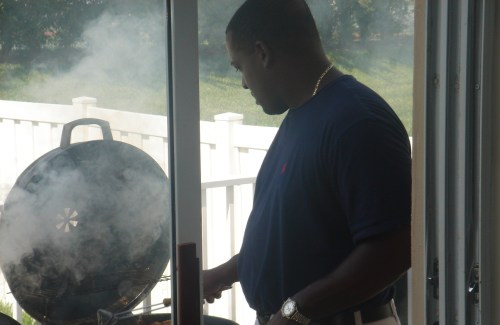
Steve, before (2011).

Steve, “before” (2011).

Lucy, before (2011).

Lucy, “before” (2011).

How did you choose the right program for you?

STEVE: It was accidental. I had watched the CrossFit games on ESPN and thought it was interesting, but I never seriously considered starting CrossFit. However, a few folks from my office joined and really talked it up. When my doctor told me I needed to exercise with greater intensity, I immediately thought of CrossFit. The icing on the cake was when I realized a location opened less than 5 minutes from home. I signed up in June 2012.

LUCY: Steve loved CrossFit and encouraged me to try it as well. So in July 2012, I did and, like Steve, I loved it! I made a promise to commit to it for two months to see if I still liked it. I am now in my sixth month. I love it because it is varied, intense, and incorporates both cardiovascular and weight training. I realized that I need a program that simply requires me to show up and do as I am instructed. I tend not to stick with programs that require me to plan and create workouts. I also don’t have a lot of time to commit, so I need an intense workout in a condensed amount of time, and one that will maintain my interest. I get bored with workouts that repeat the same routine.

How would you describe your results?

STEVE: Quantitative – within 90 days, my HDL (mg/dl) increased from 36 to 44. My triglyceride level decreased from 197 to 121. I’ve lost 20 pounds while also gaining muscle. Dropped 2 sizes in pants. I’ve worn XL casual shirts since my days at Penn. I’m now uncomfortable in XL and prefer a large.

LUCY: After just three short months, my triglyceride level improved from 256 to 106. I had also lost approximately 20 lbs. and three dress sizes. I have gained muscle mass and am stronger than I have ever been.

What can you do now that you couldn’t do before?

STEVE: Sprint 400 meters without passing out.

LUCY: When I began CrossFit I could not do a box jump. Box jumps are when you jump onto the top of a box. I could not do a single jump onto the smallest box, which is 12 inches in height. I can now do box jumps on a 20 inch box. There are other examples, but this is the classic example for me.

Describe your proudest accomplishment since starting on this path.

STEVE: Competing in my first CrossFit competition in December. It was an important milestone. I was also proud to compete (and hold my own) against competitors half my age.

LUCY: Aside from achieving weight loss, my proudest accomplishment has been doing things (physically) that I never imagined I’d ever be able to do.

Lucy, today.

Lucy, “after” (2012).

Steve, "after," 2012 Color Run.

Steve, “after,” 2012 Color Run.

What has been the most challenging part of this journey?

STEVE: In the past, Lucy and I wouldn’t be on the same page. We preferred different workouts and different diet strategies. Of course, having two different tactical approaches is a burden and it sharply diminishes the probability for success for each of us. Now we are both on the same page. We speak the same language. We talk about our workouts. We empathize more. This has helped us stick with it.

LUCY: The most challenging part has and continues to be frustration with the rate of progress. Too often we are driven by instant gratification, and when we don’t get instant gratification we tend to quit the program. I have to constantly remind myself that slow/small progress is still progress!

How have others responded to this undertaking?

STEVE: Very positive feedback. I think people respect the process as well as the results. With this program, there aren’t any shortcuts. It requires hard work. As such, people seem to respond favorably to what we’ve been able to accomplish.

LUCY: Initially my family and friends thought that my goals were lofty and the fitness program insane. Many doubted that I would remain committed to the program. However, all of my friends and family are amazed with the outward physical results. When I inform them of the internal physical results, they are in disbelief. They now encourage me to stay committed to this lifestyle are some have even expressed motivation to start a program of their own.

You have three children, and you each have a full-time job. How, and why, do you maintain your commitment to exercise?

STEVE: Since health is my primary motivator, I’m not willing to accept the alternative. Although we have time constraints and competing priorities, it’s imperative that we make room for our fitness requirements. Plus, I’m a strong believer that kids do what they see every day. Creating a healthy lifestyle for our family is incredibly important. Family heirlooms aren’t always physical objects.

LUCY: Steve and I are both committed to maintaining the lifestyle changes that we’ve implemented. We include exercise into our daily routine just like any other activity that must be done on a daily basis such as going to work. We work together and coordinate schedules to ensure that we are each able to get our workouts in. We are also accountable to one another so that neither falls off of the wagon too much.

How has this endeavor effected the way you raise your children?

STEVE: We have transitioned from a “Dad thing” to a “Mom and Dad thing,” to a “Miller family thing.” Our kids are truly excited about participating in the same activities. In fact, Sidney, or younger daughter, listed “run more races with Mom and Dad” on her Christmas wish list. I think we’re on the right path.

LUCY: We have altered the way we eat and are teaching our children how to make good food choices. We also encourage them to live active lifestyles. To that end, we encourage the kids to play intramural sports, we encourage them to join us in 5k races, and we have even enrolled them in CrossFit for kids! The children really seem to have embraced these lifestyle changes and understand that the motivation behind them is healthy living.

Daughters Sidney (9) and Sam (12) starting a mud run. Son Nicholas (4) participates in CrossFit Kids with his big sisters.

Daughters Sidney (9) and Sam (12) starting a mud run. Son Nicholas (4) participates in CrossFit Kids with his big sisters.

Where are you in relation to your goals?

STEVE: My original goal was to improve my body chemistry. I’ve done that. Looking forward, I want to continue to do that and get stronger as an athlete while helping others accomplish big goals.

LUCY: My original goal was simply a fifty pound weight loss goal. By that measure, I have another twenty lbs. to go. However, as time passed I realized that the number on the scale is much less important than how I look and feel. I have lost three dress sizes. I would love to lose another dress size. If I lost another twenty pounds I’d be happy, but my size and shape are much more important to me than my actual weight.

How has your dedication to your fitness goals affected other areas of your life?

STEVE: For me, it has rekindled a passion for teaching and helping people reach their respective goals. Most of the hours I spend at the CrossFit box are dedicated to helping folks get better and stronger. I thoroughly enjoy being a cheerleader there, and that skill has helped me be a better cheerleader in the workplace as well.

LUCY: I have noticed an improved self-confidence socially and professionally.

What advice would you offer to those *without* a workout partner who want to take on a similar challenge?

STEVE: First of all, although having a partner helps, don’t use that as an excuse to sit on the couch. Even if you have to start as a solo act, get moving. Second, think about group classes or exercise clubs that usually bring together people at a variety of skill levels. They help create an ecosystem – a distinct subculture – that provides friendships, support, and best practices, and will improve your chances of success.

LUCY: I would encourage you to start off at a program where you have other members that can serve as sources of support. Other members of a box/gym can serve as your partner. You can likely find someone to workout with, but they can also be a source for support and motivation. Making these kinds of permanent lifestyle changes is difficult to do on your own. You will need a support system of some kind.

Steve (far left, shirtless) & Lucy (in “Don’t Bother Me” shirt) in the 2012 Mud Run with part of their CrossFit Siege family.

Steve (far left, shirtless) & Lucy (in “Don’t Bother Me” shirt) in the 2012 Mud Run with part of their CrossFit Siege family.

Many people start programs and don’t stick with them, but you are both still at it. Why? 
STEVE: I thoroughly enjoy what I’m doing. That wasn’t always the case. Although I enjoyed the camaraderie of my running group, I’m not very enthusiastic about running. It is a chore to train. Even though I accomplished a few significant milestones, I always loathed the training. Today, I love running through mud and jumping over fire. I enjoy the challenge and variability of my workouts. Making fitness fun is a key component to sustainable success.

LUCY: I have had to change the way I think about my fitness goals. I have had to retrain my brain to think of fitness as a permanent lifestyle change as opposed to a short term fitness goal. Doing this has forced me accept that this is a necessity in my life. And honestly, witnessing Steve maintaining his commitment and resolve gives me the strength and motivation to maintain mine.

What words of wisdom do you have for the person reading this who is seriously thinking about taking on his or her fitness goals?

STEVE: Think about sustainable lifestyle changes. Also, think about establishing your finish line some place beyond a dress size or some magical number on the scale.

LUCY: Stop thinking about it, and do it! There is no better time than the present. Don’t wait for January, or Monday, or after vacation, etc. The day is today, and the time is now. The other piece of advice that I would offer is to break down the ultimate goal into stages or smaller goals. Doing this not only makes the goal appear less far reaching and daunting, but accomplishing the smaller goals will also give you the confidence and motivation to work toward the next goal/stage.

Steve and Lucy one year ago, in January 2012, after completing their first half-marathon.

Steve and Lucy one year ago, in January 2012, after completing their first half-marathon.

Special thanks to Steve and Lucy for taking the time to answer these questions. I know they join me in cheering you on, reader, if you are considering new health and fitness goals in 2013 because, as mentioned, you can do it, too. So, without further ado, take your mark… get set… go.

3 Comments

Filed under Alumni Perspective, Alumni Profile, Nicole M.

My Top Penn List: Looking Forward to 2013

Author: Casey Ryan, C’95

While we are hopeful for the year and are committing to affirm our resolutions, I wanted to share with you my top Penn list of the Penn events I’m looking forward to in 2013.

10.          Ben’s Birthday Bash (January)

“Life’s Tragedy is that we get old too soon and wise too late.”

Our founder, Benjamin Franklin, is celebrating his 307th birthday this year on January 17. In his honor, many of our Penn Alumni Regional Clubs will be hosting get-togethers during the month of January all throughout the world. Visit the Regional Club’s Ben’s Birthday Bash page to join Penn alumni in a city near you for this year’s festivities!

9.            The Interview Program Training (year-round)

Each year, thousands of Penn alumni volunteers interact with tens of thousands of prospective Penn students around the world.  This volunteers interviewers help high school students learn more about Penn, and they help the Admissions Office learn more about applicants to the university.  As the Interview Program moves forward with the goal of being able to offer an interview to every student who applies as a prospective undergraduate, the Interview Program team will be traveling out to our alumni to help provide training and the information our alumni interviewers will need to help Penn see its goal come true. More information will be available on the Penn Alumni Interview Program page.

8.            Penn Spectrum 2013 (Philadelphia: September 20 -22, 2013)

Panel discussion: Penn and the Importance of Community Involvement

In 2010, Penn Spectrum was the University’s first-ever weekend-long alumni conference devoted entirely to celebrating diversity. After three years of taking the event on the road, Penn Spectrum returns to campus, capping the momentum of our diverse alumni. All alumni are welcome. More information will be available on the Penn Spectrum page.

7.            Alumni Weekend (Philadelphia: May 10-13, 2013)

Alumni Weekend is one of Penn’s two hallmark weekends which invite all alumni back to their intellectual home away from home. This year, our alumni classes – ending is threes and eights – will return for their quinquennial reunions as campus opens up its doors for all alumni to celebrate, engage and reminisce.

6.            Healthy Cities: Healthy Women (Washington, DC & London, UK: October)

In 2009, Penn Nursing, The Trustee’s Council of Penn Women and Penn Alumni jointly launched a series of global Healthy Cities: Healthy Women events focused on women’s health in urban areas and the pivotal role that women play in developing and sustaining healthy lives, families and communities around the world.  Other Healthy Cities: Healthy Women events in Miami, Philadelphia, New York and Los Angeles have brought together local, national and international experts coupled with leading faculty from a variety of the University of Pennsylvania’s schools and centers to focus on challenges and multi-disciplinary solutions related to urban women’s health.  This year Nursing’s flagship event will be traveling to Washington, DC and London, UK.

5.            Penn Alumni Volunteer Appreciation Event (Philadelphia: March 2, 2013)

Our Penn Alumni volunteers work hard year round, so once each year we throw them a party!  This year’s Volunteer Appreciation Event will be held in Houston Hall.  All 10,000+ Penn volunteers—including Penn parents and friends—are invited to Dr. Gutmann will attend as well to thank those present for sharing their time and talents. The reception is followed by the Penn vs. Harvard basketball game.

A full Hutchingson gym.

A full Hutchinson gym for last year’s Appreciation Event

4.            Homecoming Weekend Featuring Arrts and Culture (November 8-9, 2013)

Homecoming is Penn’s other hallmark weekend.  The enthusiasm of watching our Quakers take on the Tigers of Princeton spreads throughout campus as alumni return and join students in a festive weekend in West Philadelphia. Now toted as Homecoming featuring Arts and Culture as Penn, this event highlights many of the rich talents of our fellow Pennsylvanians, from their athletic prowess, their craft in film and their detail in art for all alumni to reveal in.

3.            Hey Day/Final Toast (April 24, 2013)

Following a tradition that reaches back to 1916, Penn juniors celebrated Hey Day by donning red shirts, strutting along Locust Walk carrying canes and biting into straw hats. A celebration that is unique to Penn, Hey Day marks the “moving up” of juniors to the senior class. This year’s event began with a class picnic, followed by the boisterous class procession.

Penn President Amy Gutmann met the students at College Hall, where, before officially declaring the current junior class seniors, she gave them “one final test.” After the students roared out their answers, Gutmann said, “You’ve passed. Now, by the power vested in me by the Trustees of the University of Pennsylvania, I hereby declare you, seniors. Congratulations.”

In the meantime, the soon-to-be-graduating class celebrates the arrival of the juniors on College Green at the Final Toast. This event, sponsored by the Penn Traditions program, brings together the senior class to welcome juniors into the alumni community with great food, live music, and a toast as the class of 2013 “moves up” into their senior year on Hey Day.

2.            Graduation (May 13, 2013)

The University of Pennsylvania’s 257th Commencement will be held on Monday, May 13, 2013 in Franklin Field, located at 33rd and South Streets.  That morning the Class of 2013 will parade into our revered football stadium and will exit as the newest members of the Penn Alumni Network after Dr. Gutmann  has “freely granted all rights, honors and privileges pertaining” their degrees to our most recent alumni.

Updated information will be provided during the year, on the Office of the University Secretary’s Commencement page, including information on the ceremony, travel and lodging, students and faculty/administration for Commencement 2013, as well as historical information on Penn’s previous commencement ceremonies.

1.            Campaign Celebration (Philadelphia: April 19, 2013 and other locations this year and beyond)

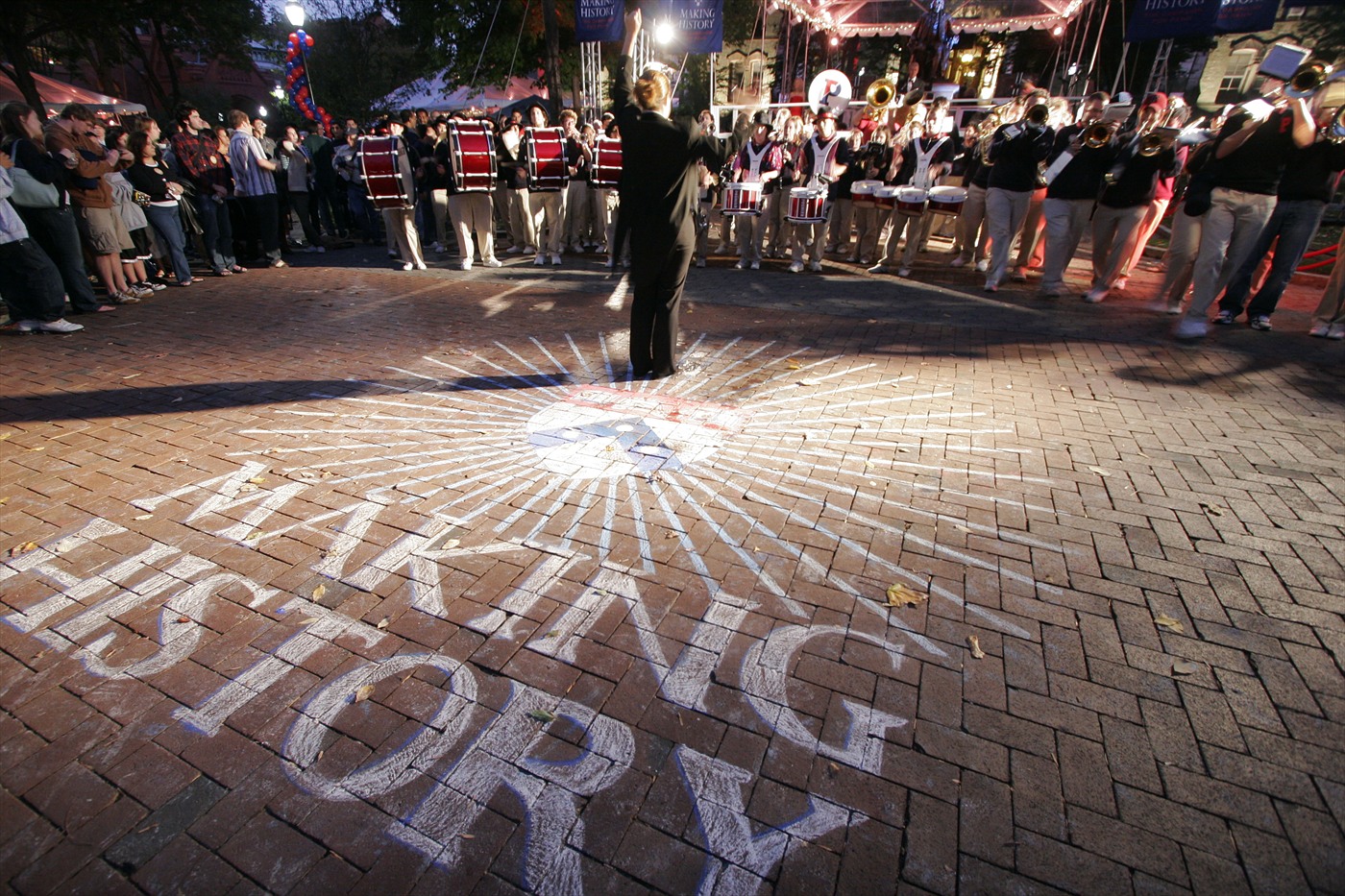
The Making History Campaign ended December 31, 2012. While we don’t have final numbers yet, we are looking forward to share the outcome with the Penn community with our Campaign Celebrations.

As you know, Penn makes history by shaping the future. We started with the revolutionary ideas, passionate people, and practical pursuits that have always defined Penn and added our 18 amazing schools and centers on one compact campus, a university-wide culture of collaboration, and a genuine desire to do good, and the result is a university singularly prepared to bring new vision and fresh solutions to the most important issues of our day.

Making History Kick-off, October 2007.

Making History Kick-off, October 2007

The University will be kicking off the Campaign Celebrations in Philadelphia in April and around the world for the next year and half.  We look forward to seeing you at one of our parties soon.

Leave a comment

Filed under Alumni Perspective, Alumni Weekend, Campus Life, Casey R., Commencement, Homecoming Weekend featuring arts and culture, Philadelphia, Reunions, Top Ten

A New Year for Penn Alumni Families!

New Image gif
We’re kicking off a new year filled with Penn Alumni Family Programming!

FAMILY NIGHT at the PALESTRA
On February 22, 2013, you’re invited to join the Penn Women’s Basketball team at the Palestra for our 2nd Annual Family Night at the Palestra!  You will get to shoot hoops with the team before the game, hear from Coach McLaughlin, and then enjoy pizza or hot dog, pretzel and a soda — all for $5 person.   Last year, it was a wonderful event c0-hosted by the Association of Alumnae, and we had over 200 attendees.  Hope to see you on February 22nd when Penn takes on Cornell!

FAMILY DAY at MASK and WIG
On March 16, 2013, Alumni Relations will be hosting it’s 3rd Annual Family Day at Mask and Wig!  Bring the kids to the Mask and Wig Clubhouse, 310 S. Quince Street, Philadelphia, for a fun-filled afternoon!  Lunch begins at 11:30 followed by showtime at 12:30pm.  Penn’s Mask and Wig is an all-male comedy troupe that has entertained Philadelphians and the Penn community since 1889 with its original revues.  This year’s production, Beatuopia: A Face Odyssey, has been adapted to appeal to children ages 12 and under.  Bring the kids for lunch (hot dogs, chips, pretzels, beverage) and the show.  Ticket costs: $25/adults and $10/children 12 and under.

4O WINKS with the SPHINX and PENN ALUMNI
On Friday and Saturday, March 29 and 30, 2013, join Penn alumni and their children for an overnight adventure at Penn’s Museum for 40 Winks with the Sphinx and Penn Alumni. The night’s activities are geared to take intrepid explorers on a journey through time and across continents, with hands-on opportunities, through games and crafts, to explore ancient Egypt, the mummies and hieroglyphics, the ancient Greeks and Romans, the world of the ancient Maya, and more!  Following a scavenger hunt and an evening expedition through the galleries by flashlight, explorers roll out their sleeping bags to doze at the foot of the third largest granite Sphinx in the world. The program concludes with a light breakfast in the Museum Cafe at 8am.  The cost is $45/person (children 6-12 years old and their chaperones, 21 years or older).  One adult chaperone is required for every 1-5 children.  Absolutely no walk-in registrations are permitted.

Look for additional family programming throughout the year!  If you live outside of the 8-county Philadelphia area and wish to be included on our e-mailing list for Penn Alumni Family Events, please send an email with your request to Kristina Clark at krclark@upenn.edu.

Leave a comment

Filed under Alumni Programming, Association of Alumnae, Athletics, Events, Kristina C., Penn Basketball, Philadelphia, Uncategorized

Celebrate Chinese New Year in Philadelphia

Author: Stephanie Yee, C’08

January 1st has come and gone. Now it’s time to prepare for another new years celebration: Chinese New Year!

 2013 is the year of the snake.

2013 is the year of the snake.

The Penn Alumni Club of Philadelphia is celebrating Chinese New Year by going to dim sum on Sunday, February 3rd, only one week before Chinese New Year. Think of dim sum as Chinese tapas. There is a huge selection of sweet and savory dishes and something for both vegetarians and meat lovers.

A sample of dim sum dishes.

A sample of dim sum dishes.

This event is great for anyone who is looking for an alternative to the typical brunch. Dim sum is affordable, fun, and always delicious! Sign up for the event here. See you at Joy Tsin Lau. I will be the one eating the turnip cakes.

Leave a comment

Filed under Alumni Perspective, Penn Club of Philadelphia, Penn Clubs, Philadelphia, Stephanie Y.

A History of Exploration and Discovery—Online

Author: Alex Fleischman

Happy 2013 to all Penn alumni.

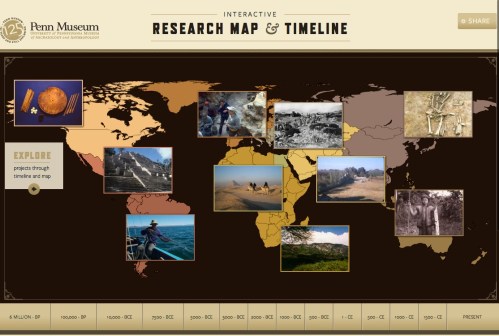
With the holiday break still in session and spring classes still on the horizon, I find myself with time to kill. For those in a similar predicament, I recommend taking a look at the Penn Museum’s website for a compelling diversion. In this new year, we also have a new interactive map and timeline of the museum’s 125 years of anthropological and archaeological research.  The timeline combines pictures, stories, and fascinating information in a fun, accessible format. You can view it all here.

Just make sure you don’t spend more time exploring than you intended and consider getting out of the house and taking a drive into campus to check it out in person. In the meantime, here’s a screenshot of what you’ll see.

museum timeline (2)

Leave a comment

Filed under Alex F., Penn Museum, The Arts, The Arts at Penn